27+ Backyard Patio Flooring Ideas for Stunning Outdoor Spaces

Your backyard patio looks tired and uninviting. Every time you step outside, you notice cracked concrete, faded surfaces, or boring builder-grade materials that make your entire outdoor living space feel neglected and unusable. Meanwhile, neighbors host beautiful gatherings on stunning patios featuring magazine-worthy flooring while you avoid your own backyard because the surface feels uncomfortable, looks dated, or has become genuinely unsafe with uneven sections and drainage problems. The frustration intensifies when you realize your patio should be an extension of your home, a place where you actually want to spend time but instead it’s wasted square footage depressing your property value and daily enjoyment.
Here’s the transformation secret: strategic backyard patio flooring ideas deliver dramatic visual and functional improvements that turn unusable spaces into favorite gathering spots, increase home values by 12-20%, and create surfaces lasting decades with minimal maintenance. With proven material selection strategies and smart design principles, you can create the outdoor retreat you’ve always imagined without the overwhelming costs or complexity you’ve been dreading.
Why Your Patio Flooring Choice Matters More Than You Think
Quality patio flooring represents one of the smartest outdoor investments you can make. According to the National Association of Realtors, outdoor living spaces with quality surfaces return 60-90% of costs at resale, outperforming many interior renovations. Beyond financial returns, proper flooring solves persistent problems standing water from poor drainage, slippery surfaces creating liability concerns, and uncomfortable textures discouraging barefoot use during peak enjoyment seasons.
Weather resistance determines whether your investment lasts five years or fifty years. Materials engineered for outdoor exposure handle UV degradation, freeze-thaw cycles, moisture absorption, and temperature extremes that destroy inappropriate selections within seasons. The right flooring protects your patio substrate from water damage, prevents erosion around foundations, and maintains appearance through decades of weather exposure functional benefits extending far beyond initial aesthetics.
Understanding Different Patio Flooring Material Categories
Concrete patio solutions range from basic poured slabs to sophisticated decorative finishes. Standard concrete costs $4-8 per square foot offering durability and versatility, while stamped concrete mimicking stone or brick patterns runs $8-18/sf delivering premium looks at mid-range prices. Stained or polished concrete creates contemporary elegance for $6-15/sf. All concrete options require proper installation with control joints preventing cracks and adequate slope ensuring drainage rushed concrete work fails regardless of finish quality.
Stone pavers deliver timeless elegance through natural materials that age beautifully over decades. Bluestone, flagstone, and limestone each offer distinct character bluestone provides formal elegance with consistent blue-gray tones ($15-30/sf), flagstone delivers rustic charm through irregular shapes and varied colors ($15-25/sf), and travertine creates resort-style luxury with distinctive pitting and warm hues ($10-20/sf). Natural stone requires occasional sealing but develops a rich patina impossible to replicate with manufactured alternatives.
Manufactured pavers balance aesthetics and affordability through engineered materials mimicking natural stone. Concrete pavers cost $8-15/sf offering countless colors, textures, and patterns while providing superior strength and consistency. Porcelain pavers deliver premium performance at $12-25/sf with minimal water absorption making them climate suitable for harsh freeze-thaw regions. Both manufactured options resist staining better than natural stone while requiring virtually no maintenance beyond occasional cleaning.
Read More About: 40+ Backyard Garden Design Ideas for a Dream Outdoor Space
Budget-Friendly Backyard Patio Flooring Ideas Under $1000
Gravel patios create functional surfaces for $2-5 per square foot including base preparation. Decomposed granite, pea gravel, or crushed stone provide permeable surfaces handling drainage naturally while offering design flexibility through varied colors and textures. Edge restraints keep materials contained, and fabric underlayment prevents weed growth. These affordable surfaces suit casual backyard patio flooring ideas beautifully, though they require occasional replenishing and aren’t ideal for furniture with narrow legs that sink.
Concrete staining transforms existing boring slabs into attractive surfaces for $3-6/sf. Acid stains create variegated earth tones with organic patterns, while water-based stains offer broader color selections from subtle to bold. This DIY-friendly option requires thorough cleaning, careful application, and sealing for protection of a weekend project dramatically improving appearance without demolition costs. Staining works only on structurally sound concrete; cracked or spalling surfaces need replacement regardless of finish treatments.
Reclaimed pavers or brick sourced from salvage yards deliver character at $4-10/sf versus $12-20/sf for new materials. Old street brick, vintage concrete pavers, or reclaimed stone bring authentic aged patina impossible to manufacture. Availability varies by region, and you’ll need extra materials accounting for breakage, but the unique aesthetic and environmental benefits justify the treasure-hunting effort for budget-conscious renovators wanting distinctive results.
How to Choose Flooring Based on Climate Conditions
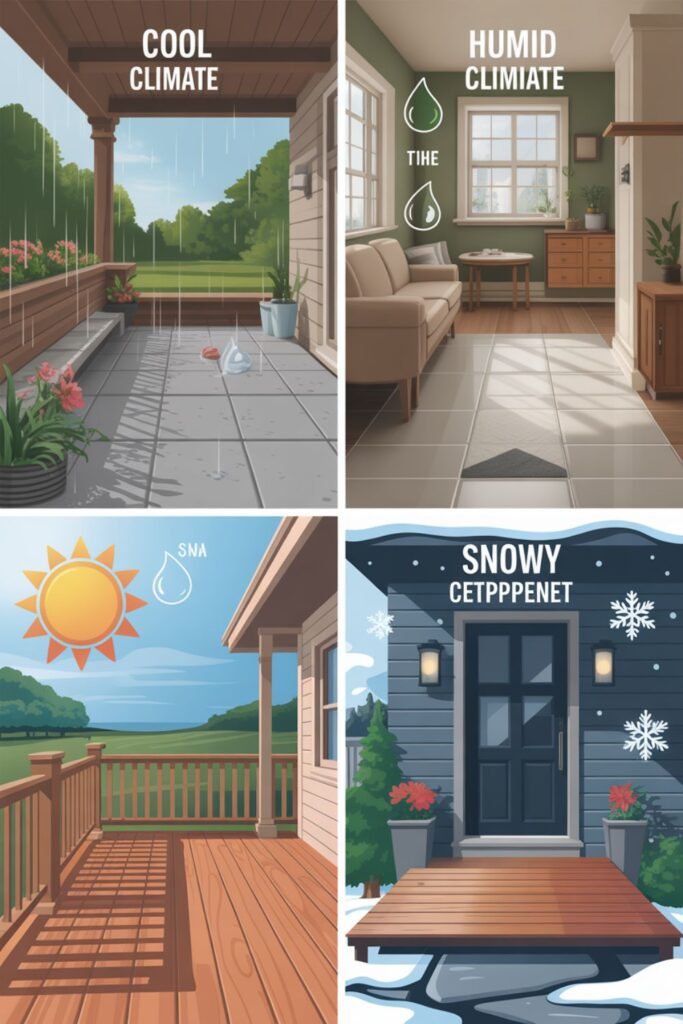
Freeze-thaw climates demand materials resisting ice damage through minimal water absorption. Porcelain pavers absorb less than 0.5% water surviving countless freeze cycles without cracking or spalling. Concrete pavers and brick with proper installation handle freezing well, while natural stone varies, granite and slate excel, but limestone and sandstone fail rapidly. Always verify frost ratings rather than assuming all outdoor flooring tolerates winter conditions many attractive options simply can’t survive regions with hard freezes.
Hot climates require backyard patio flooring ideas managing heat reflection and absorption preventing uncomfortable surfaces. Light-colored materials stay 15-25°F cooler than dark alternatives crucial for barefoot comfort around pools or play areas. Travertine’s natural cooling properties make it ideal for hot regions, while dark stone or concrete becomes painfully hot in direct sun. Consider shade patterns from structures or trees when selecting colors; shaded areas handle darker tones comfortably where sunny exposures demand light colors.
Coastal environments need materials resisting salt air corrosion and constant moisture. Porcelain handles these aggressive conditions excellently, while certain natural stones weather poorly near oceans. Avoid metal accents that corrode rapidly and select sealants specifically formulated for coastal applications. Standard products fail prematurely in salt air requiring expensive maintenance or replacement that proper material selection eliminates entirely.
What Are the Best Low Maintenance Patio Flooring Options
Porcelain pavers top the low maintenance category requiring only occasional sweeping and hosing for decades of beauty. They resist staining from food, beverages, and outdoor elements while never needing sealing. Colors remain vibrant indefinitely without fading premium porcelain looks virtually identical after 20 years as installation day. This minimal maintenance makes porcelain ideal for busy homeowners wanting beautiful outdoor spaces without weekend care commitments.
Composite decking eliminates wood’s maintenance demands through engineered materials resisting rot, insects, and weathering. Quality composites never need staining or sealing, resist mold and mildew, and maintain appearance for 25+ years with simple cleaning. They cost $8-15/sf installed comparable to pressure-treated wood decks requiring annual maintenance making them smart long-term investments. Modern composites overcome early generation problems with fading and heat absorption that plagued first-generation products.
Concrete pavers with quality sealants deliver near-maintenance-free performance for 10-15 years between resealing. Unlike poured concrete requiring crack repairs and frequent resealing, individual pavers handle ground movement without cracking, and damaged units replace individually without visible patches. Power washing annually plus resealing every decade keeps them looking for new minimal effort for decades of service making pavers excellent budget-friendly options balancing initial costs with lifetime care requirements.
Creating Visual Interest Through Pattern and Layout
Herringbone patterns add sophisticated movement and visual interest to rectangular pavers or planks. This classic layout creates dynamic energy perfect for contemporary or traditional designs while using standard materials. Herringbone requires 10-15% more material than running bond through cutting waste, but the distinctive appearance justifies modest additional costs. This pattern also provides superior interlock strength preventing shifting better than simpler layouts.
Mixed material combinations create custom looks distinguishing your backyard patio flooring ideas from generic installations. Combine concrete pavers with natural stone borders defining edges affordably, insert decorative tile accents into paver fields, or alternate wood deck sections with stone creating distinct activity zones. These hybrid approaches deliver designer aesthetics at a fraction of all-premium material costs while solving functional challenges through strategic material placement.
Border treatments frame patio areas defining boundaries while adding polish. Contrasting colors, different materials, or size variations signal edges clearly preventing undefined transitions between patio and yard. Soldier course borders (pavers oriented perpendicular to field) provide traditional elegance, while modern designs use complementary colors maintaining material continuity. These finishing details cost little extra but dramatically elevate perceived quality and intentionality.
DIY Installation Versus Professional Services
DIY installation saves 40-60% on labor for materials suitable to ambitious homeowners. Gravel patios, concrete paver projects under 200sf, and simple deck installations suit confident DIYers with proper research and tools. However, success demands meticulous base preparation, precise leveling, and proper drainage planning shortcuts during installation waste entire material investments creating failing surfaces within seasons requiring professional correction costing more than hiring experts initially.
Professional installation delivers guaranteed results for complex projects, large areas, or premium materials. Experts handle challenges like drainage solutions, substrate stabilization, and pattern complexity that overwhelm homeowners. They complete projects 3-4x faster than DIY efforts, provide warranties covering workmanship, and possess specialized equipment ensuring professional results. For patios exceeding 300sf, materials costing $15+/sf, or projects involving grading changes, professional installation protects your investment through expertise DIY efforts can’t match.
Hybrid approaches balance costs and quality by hiring professionals for critical elements while handling simpler tasks yourself. Pay experts for base preparation, drainage systems, and initial layout establishing level references, then install pavers or surface materials yourself following professional foundation work. This strategy saves significant labor costs while ensuring structural elements affecting long-term performance receive professional attention preventing expensive failures.
How to Design Patios for Proper Drainage
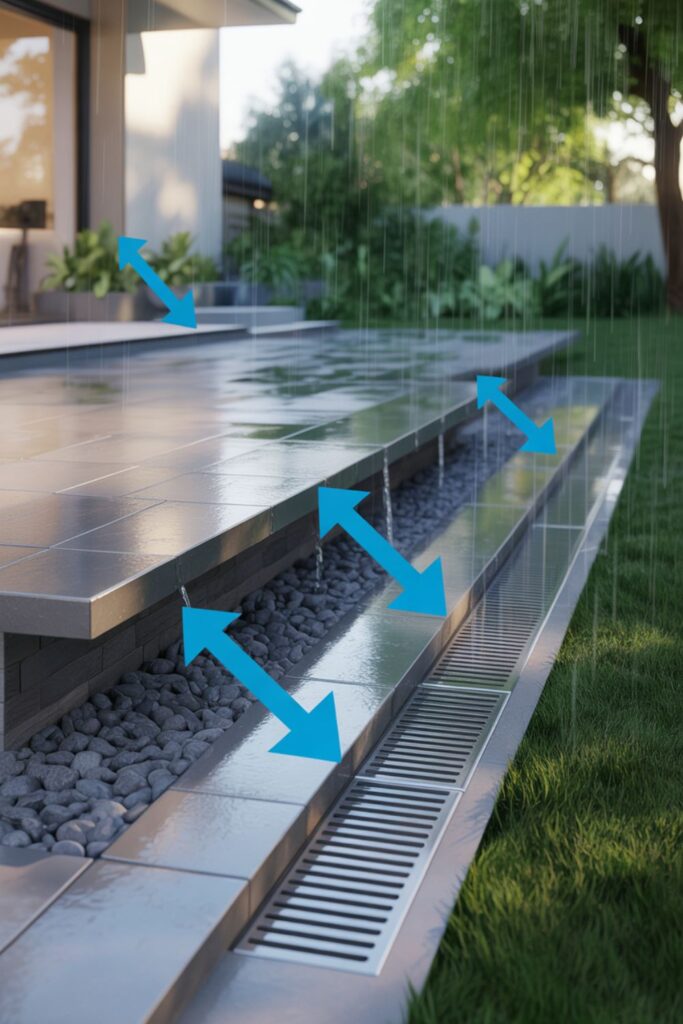
Slope requirements prevent standing water that damages flooring and creates slippery hazards. Patios need a minimum 1/4″ per foot slope (2% grade) away from structures. This gentle pitch appears flat to eyes while directing water effectively. Larger patios may require multiple slope directions creating subtle valleys draining toward edges or permeable areas. Never install level patios regardless of material; even permeable surfaces need slope directing overflow during heavy rains.
Drainage solutions for problem areas include French drains, channel drains, or dry wells handling water volumes exceeding surface drainage capacity. French drains installed along patio edges collect water through perforated pipes surrounded by gravel, directing it away from structures toward appropriate discharge points. Channel drains capture surface water through grated trenches, ideal for transitions between patio and lawn preventing water backup. These hidden systems cost $500-2,000 installed but solve chronic moisture problems with no surface treatment addresses.
Permeable paver systems allow water infiltration reducing runoff while maintaining solid walking surfaces. These specialized pavers feature wide joints filled with gravel or aggregate allowing water to drain through rather than running off. They suit driveways, walkways, and patio edges where drainage improvements benefit both your property and broader environmental health. Permeable systems cost 15-25% more than standard paver installations but increasingly satisfy municipal stormwater requirements while preventing standing water issues.
Best Flooring Options for High-Traffic Outdoor Areas
Concrete pavers rated for commercial applications deliver residential durability exceeding normal use expectations by 3-4x. Look for a minimum 8,000 PSI compressive strength commercial-grade pavers to handle vehicle traffic, never mind foot traffic. Thickness matters tremendously; 60mm (2.4″) pavers last indefinitely under foot traffic while thinner options crack under concentrated loads over time. This overbuilt approach seems excessive but virtually guarantees your backyard patio flooring ideas outlives your homeownership.
Natural stone provides unmatched longevity when properly selected and maintained. Granite resists scratching, staining, and weathering better than other stones, lasting 50+ years with minimal care. Bluestone’s density handles heavy traffic beautifully while maintaining slip-resistant texture through decades. Avoid soft stones like sandstone or limestone in high-traffic zones they scratch easily and weather poorly compared to harder alternatives regardless of initial beauty.
Composite decking engineered for commercial applications tolerates residential traffic effortlessly. Premium composites with protective caps resist staining, scratching, and fading far better than uncapped products. They cost $12-18/sf versus $8-12/sf for basic composites, but the performance difference justifies premiums for patios receiving constant use. Commercial-grade composites maintain appearance for 25+ years in high-traffic residential settings where basic products show wear within 10-12 years.
Creating Slip-Resistant Surfaces for Safety
Textured finishes provide essential traction on patio flooring exposed to rain, snow, or pool splash. Natural cleft stone, broom-finished concrete, and textured pavers offer inherently slip-resistant surfaces without additional treatments. Avoid honed, polished, or glazed finishes in outdoor applications; they become dangerously slippery when wet regardless of how attractive they appear in showrooms. Prioritize safety over aesthetics, especially for families with children or elderly visitors.
Aggregate exposure creates slip-resistant concrete surfaces through attractive natural textures. Salt-finished concrete reveals beautiful aggregate while providing excellent traction. Exposed aggregate costs $8-15/sf combining aesthetic appeal with functional safety is one of the best value propositions in backyard patio flooring ideas. These surfaces handle wet conditions confidently while requiring minimal maintenance and aging gracefully over decades.
Anti-slip treatments applied to existing surfaces improve safety on patios where original flooring proves too slippery. Clear grip coatings add textured layers increasing traction without changing appearance dramatically. Abrasive additives mixed into sealers create subtle grip during application. These retrofits cost $2-5/sf providing economical safety improvements without complete flooring replacement, though they require reapplication every 3-5 years maintaining effectiveness.
Wood and Composite Decking as Patio Flooring
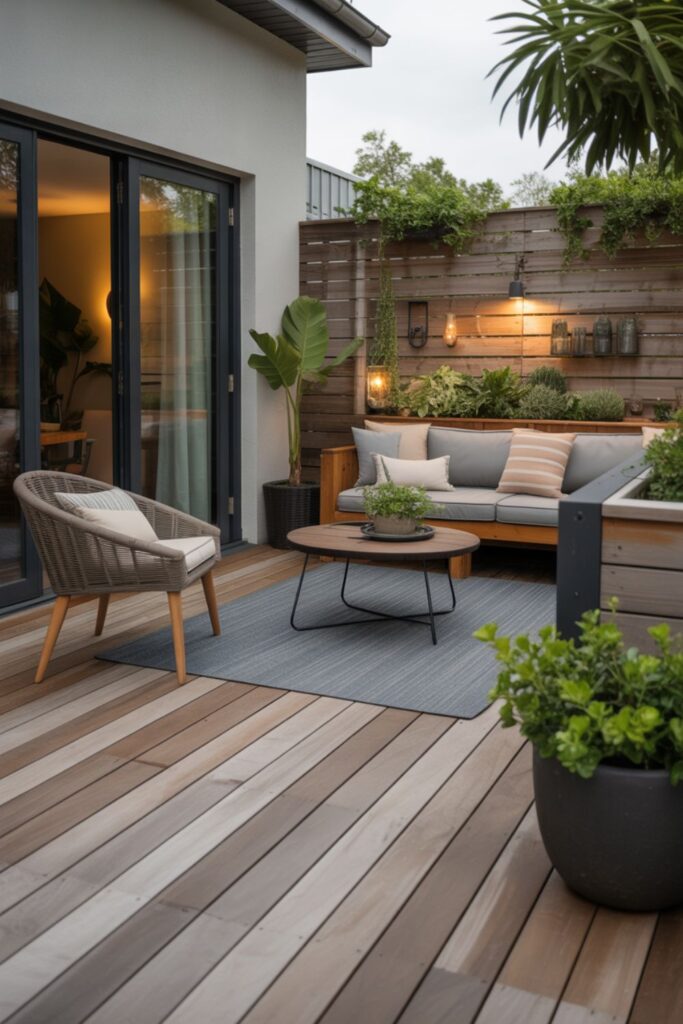
Natural wood decking offers warmth and organic beauty no manufactured material perfectly replicates. Cedar, redwood, and tropical hardwoods resist rot naturally while developing beautiful silvery patina when left unsealed. Wood costs $6-15/sf for materials plus $8-15/sf installation, totaling $14-30/sf completed. However, wood demands annual cleaning, staining every 2-3 years, and eventual board replacement accepting these maintenance requirements as part of authentic wood ownership.
Composite decking eliminates wood’s maintenance through engineered materials combining wood fibers with polymers. Quality composites resist fading, staining, mold, and insects while maintaining appearance for 25+ years with simple cleaning. They cost comparably to premium wood initially but save thousands in lifetime maintenance; the total cost of ownership over 20 years runs 30-40% less than wood requiring regular care. Modern composites also offer realistic wood grain textures and colors overcoming the plastic appearance that plagued early products.
Deck tiles provide modular alternatives for renters or temporary installations. Interlocking tiles in wood, composite, or plastic snap together over existing surfaces without permanent attachment. They cost $5-12/sf installed in hours versus days for traditional decking. However, tiles suit only flat, stable substrates and don’t address underlying drainage or structural issues; they’re surface treatments rather than comprehensive solutions appropriate for certain situations but not replacements for proper patio construction.
Natural Stone Patio Flooring Selections
Flagstone delivers rustic charm through irregular shapes and natural color variations. Each flagstone patio becomes unique through random-sized pieces fitted puzzle-like or formal patterns using similarly sized stones. Flagstone costs $15-30/sf installed depending on stone type, thickness, and regional availability. It requires setting in mortar over concrete bases for permanent installations or sand-setting over gravel for permeable DIY-friendly projects. Sealed flagstone resists staining while maintaining natural appearance beautifully.
Bluestone provides formal elegance with consistent blue-gray coloring and smooth cleft surface. Its density handles traffic excellently while natural texture offers good traction wet or dry. Thermal (flamed) bluestone increases slip resistance for pool surrounds or high-exposure areas. Bluestone costs $20-35/sf installed premium pricing reflecting superior performance and refined aesthetic suiting traditional architecture beautifully. Full-color bluestone offers more variegation at slightly lower costs versus premium select grades maintaining uniform coloring.
Travertine creates Mediterranean resort aesthetics through distinctive pitting and warm honey to silver tones. Its porous nature provides natural cooling travertine stays notably cooler than granite or concrete in hot sun making it ideal for bare-foot areas in warm climates. Travertine costs $15-25/sf installed requiring annual sealing protecting the relatively soft stone from staining and weathering. Fill pits during installation creating smooth walking surfaces versus leaving naturally textured for different aesthetic effects.
Concrete Patio Flooring Options and Finishes
Stamped concrete mimics expensive stone, brick, or wood at a fraction of authentic material costs. Patterns impress into wet concrete creating realistic textures, while integral colors and stains add authentic hues. Stamped concrete costs $8-18/sf delivering premium aesthetics at mid-range pricing. However, quality varies tremendously with contractor skill. Poorly executed stamped concrete looks fake and performs poorly, while expert work is convincing even from close inspection. Always review portfolio examples before hiring.
Polished concrete offers industrial chic aesthetics through mechanically refined surfaces. Grinding exposes aggregate creating terrazzo-like appearances, while polishing achieves glass-smooth finishes. Polished concrete costs $6-12/sf for basic levels, $12-20/sf for high-gloss finishes with decorative saw cuts or dyes. This ultra-low maintenance option suits contemporary homes beautifully, though high-polish surfaces become slippery when wet, reserve them for covered patios avoiding direct rain exposure.
Stained concrete transforms standard gray slabs into custom surfaces through chemical or water-based stains. Acid stains create variegated earth tones with organic mottling impossible to replicate uniformly each application produces unique results. Water-based stains offer predictable solid colors from subtle to bold in broader palettes. Staining costs just $3-8/sf revitalizing existing concrete affordably, though it only works on structurally sound surfaces without extensive cracking or spalling requiring replacement.
Outdoor Tile Patio Flooring Ideas
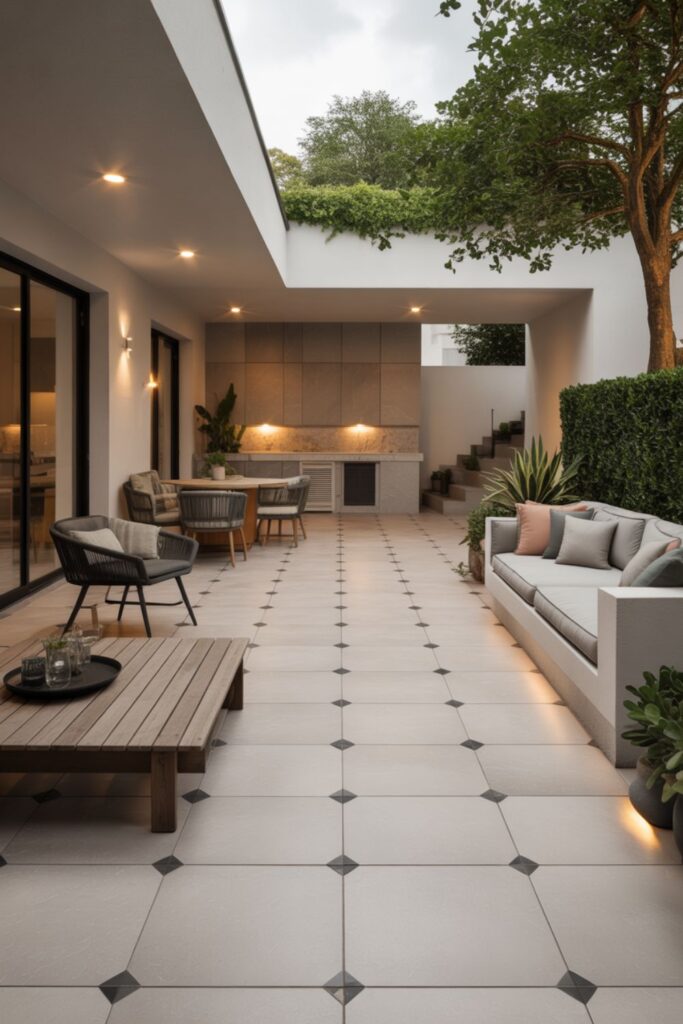
Porcelain tile designed for outdoor use delivers virtually indestructible surfaces resisting everything nature offers. Large-format tiles (12×24″ or larger) create contemporary looks with minimal grout lines, while smaller formats add traditional charm. Porcelain costs $8-20/sf for materials plus $8-15/sf installation, totaling $16-35/sf completed. Choose textured surfaces rated R11+ for slip resistance and verify freeze ratings for cold climates not all porcelain handles freezing despite superior overall durability.
Ceramic tile suits backyard patio flooring ideas in mild climates without freeze concerns. It costs 30-40% less than porcelain while offering similar design flexibility through countless colors, patterns, and sizes. However, ceramic’s higher water absorption makes it inappropriate for freeze-thaw regions where absorbed water expands when frozen causing rapid cracking and spalling. Reserve ceramic for covered patios in warm climates or accept shorter 10-15 year lifespans versus 25+ years porcelain delivers.
Decorative tile patterns create custom Mediterranean, Spanish, or coastal aesthetics impossible with most patio flooring alternatives. Hand-painted ceramic accents, geometric patterns mixing colors and shapes, or traditional Moroccan-inspired designs make patios true outdoor rooms reflecting personal style. These distinctive treatments cost $15-35/sf installed but create unique spaces distinguishing your property from generic backyard designs throughout neighborhoods.
Brick Patio Flooring Design and Installation
Brick pavers offer timeless appeal through classic materials used for centuries. Clay brick develops beautiful patina over decades while requiring virtually no maintenance beyond occasional sweeping. Brick costs $10-20/sf installed for quality pavers properly set over stable bases. Traditional running bond patterns suit colonial homes, while herringbone creates formality, and basket weave offers casual charm pattern selection dramatically affects the same material’s final impression.
Reclaimed brick brings authentic aged character impossible to manufacture. Salvaged street brick or building demolition brick features worn edges, varied colors, and historical patina creating instant maturity. Availability varies regionally, and condition ranges from excellent to marginal requiring careful selection. Reclaimed brick costs similarly to new ($12-20/sf installed) when sourcing from architectural salvage, but delivers irreplaceable aesthetic for restoration projects or homeowners wanting Old World charm.
Brick installation methods affect longevity and maintenance requirements significantly. Sand-set brick over gravel bases allows permeability and easy individual replacement but requires occasional re-sanding preventing weeds. Mortar-set brick over concrete provides permanent solid surfaces but cracks if substrates move and costs 40% more for labor-intensive installation. Choose methods matching your climate, budget, and aesthetic preferences both deliver quality results when properly executed.
Rubber and Recycled Patio Flooring Solutions
Rubber patio tiles offer slip-resistant, cushioned surfaces ideal for play areas or poolside locations. Interlocking tiles install easily over any flat surface without adhesives, cost $4-8/sf, and provide comfort underfoot reducing fall injuries. Rubber resists weathering, mold, and UV degradation while maintaining color for years. However, rubber suits functional applications better than aesthetic showpiece patios. It solves specific problems beautifully but won’t impress design-conscious guests like stone or tile.
Recycled plastic pavers combine environmental benefits with practical performance. Made from post-consumer plastics, these pavers never rot, splinter, or need painting while costing $6-12/sf. They suit contemporary sustainable designs where material story matters as much as appearance. Modern recycled pavers come in varied colors and textures overcoming the artificial look of early products, though they still don’t match natural material aesthetics and choose them when sustainability priorities outweigh pure visual goals.
Permeable rubber surfaces allow water infiltration while providing comfortable, slip-resistant walking areas. Poured-in-place rubber costs $8-15/sf creating seamless surfaces in custom colors. This specialized application suits pool surrounds, rooftop patios with weight restrictions, or accessibility-focused designs where comfort and safety outweigh traditional aesthetics. Rubber’s unique properties solve specific challenges no other material addresses as effectively.
Read More About: 30+ Best House Tiles Design Ideas for Every Room
How to Coordinate Patio Flooring With Home Style
Architectural harmony ensures flooring complements rather than clashes with your home’s design language. Traditional homes suit classic materials brick, flagstone, or wood decking installed in timeless patterns avoiding trendy treatments that date quickly. Contemporary homes handle bold geometric pavers, polished concrete, or large-format porcelain reflecting modern minimalism. Mediterranean styles embrace travertine, terra cotta, or decorative tile patterns capturing regional flavor authentically.
Color coordination connects outdoor and indoor spaces creating seamless transitions. Match or complement interior flooring visible through patio doors if you have gray tile inside, echo those tones outside or choose warm wood tones for intentional contrast. Consider exterior trim colors, roofing materials, and landscaping elements selecting flooring colors harmonizing with these permanent features you won’t change easily.
Scale appropriateness prevents flooring from overwhelming or disappearing in your space. Large patios (400+ sf) handle big-format pavers or planks without looking busy, while small patios need smaller formats preventing oversized materials from dominating compact areas. Use 12×24″ or larger in expansive spaces, 12×12″ or smaller in intimate areas; this intuitive scaling creates balanced relationships between flooring and space dimensions.
Cost Comparison of Popular Patio Flooring Options
Budget-friendly options ($5-12/sf total installed) include basic concrete, gravel, concrete pavers, and pressure-treated wood decking. These materials deliver solid performance and acceptable aesthetics for cost-conscious projects. They typically last 15-25 years with proper maintenance, requiring occasional repairs or refinishing, maintaining appearance and function over time.
Mid-range selections ($12-20/sf total installed) include stamped concrete, composite decking, standard porcelain pavers, brick, and certain natural stones like flagstone. These options balance aesthetics and performance well, lasting 25-35 years with minimal maintenance. They suit most backyard projects delivering quality results without luxury pricing while offering enough design flexibility creating distinctive attractive spaces.
Premium materials ($20-40+/sf total installed) include bluestone, travertine, high-end composite decking, large-format porcelain, and exotic hardwoods. These selections deliver maximum aesthetic appeal, superior longevity (35-50+ years), and minimal maintenance justifying higher costs through lifetime value. Choose premium materials for high-visibility areas, luxury homes, or when longevity priorities outweigh initial budget concerns.
Integrating Outdoor Heating Into Patio Flooring
Radiant heating systems installed beneath backyard patio flooring ideas extend usable seasons dramatically. Electric or hydronic tubing embedded in sand beds or concrete substrates provides even warmth, melting snow and ice while creating comfortable spaces through cool months. Radiant systems cost $10-20/sf installed but deliver 30-40% more efficiency than overhead heaters through direct contact warming. They work beneath pavers, stone, and tile but require planning during initial installation and retrofitting proves expensive and disruptive.
Fire pit integration provides focal points and ambient warmth without mechanical systems. Built-in fire pits using gas or wood create gathering spots extending patio usability into cool evenings. Position them on non-combustible flooring like concrete, stone, or pavers never directly on wood decking even with protective barriers. Plan fire features during flooring design ensuring proper clearances, fireproof surrounds, and comfortable seating distances from heat sources.
Heating transitions allow moving between warm interior and cool outdoor spaces comfortably. Heated entry zones near patio doors eliminate cold flooring shock stepping outside. These targeted applications cost less than heating entire patios while solving the specific discomfort preventing outdoor use during shoulder seasons. Strategic heating placement maximizes comfort and usability within budget constraints.
Frequently Asked Questions
What’s the most durable patio flooring for all climates?
Porcelain pavers rated for commercial use with water absorption below 0.5% provide maximum durability across all climates. They resist freezing, staining, scratching, and fading while requiring virtually no maintenance for 25+ years. Among natural materials, granite offers comparable performance but requires occasional sealing. Both options handle extreme weather, heavy traffic, and aggressive UV exposure better than alternatives.
Can I install patio flooring myself to save money?
Small straightforward projects (under 200 sf) using concrete pavers, gravel, or simple deck installations suit confident DIY homeowners with proper research and tools. However, proper base preparation, precise leveling, and drainage planning determine success shortcuts and waste entire material investments. For projects exceeding 300 sf, complex patterns, or premium materials costing $15+/sf, professional installation protects investments through expertise ensuring longevity.
How do I choose between pavers, concrete, and wood decking?
Consider climate (freeze-thaw demands pavers or porcelain), maintenance tolerance (wood requires annual care, pavers need minimal attention), budget (concrete costs least, stone most), and aesthetics (formal vs. casual, traditional vs. contemporary). Pavers offer best all-around performance balancing durability, flexibility, and reasonable costs. Wood suits specific aesthetic goals accepting maintenance demands, while concrete delivers budget-friendly solutions for large areas.
Conclusion
Strategic backyard patio flooring selection transforms underutilized outdoor spaces into favorite gathering spots that extend your living area, boost property value, and provide decades of enjoyment with appropriate maintenance. Whether you’re replacing failing concrete, creating new outdoor rooms, or upgrading boring surfaces, the right flooring material and thoughtful design determine your project’s success and satisfaction. The most effective patio flooring ideas balance aesthetic goals with practical considerations including climate suitability, maintenance requirements, budget realities, and installation complexity ensuring beautiful results you’ll enjoy for years rather than regret within seasons.
Start with an honest assessment of your priorities budget, maintenance tolerance, aesthetic preferences, and climate demands then select materials matching these realities rather than aspirational ideals you can’t sustain. Invest properly in base preparation and drainage even though invisible these foundational elements determine whether your flooring lasts a decade or a lifetime regardless of surface material quality. Your ideal patio flooring complements your home’s architecture, serves your actual lifestyle needs, and creates the outdoor living space you’ve been dreaming about. Take action today implementing even one idea from this guide, and you’ll quickly understand why quality patio flooring ranks among the most satisfying home improvements delivering daily enjoyment and substantial value returns.