25+ Backyard Small Space Ideas For Smart Designs

You stare at your cramped backyard and see limitations. That 200-square-foot patch feels too small for meaningful outdoor living, nowhere for furniture without blocking pathways, no room for gardens without sacrificing function, and certainly no space for the entertaining area you’ve envisioned. Meanwhile, neighbors with equally modest yards have somehow created outdoor rooms that feel surprisingly spacious and surprisingly useful despite identical dimensions.
Backyard small space ideas prove that square footage matters far less than strategic design decisions. The right approaches make compact yards feel twice their actual size while delivering functionality that careless large yards often lack. Smart space maximization through vertical design, multi-functional elements, and clever visual tricks creates outdoor environments that punch well above their weight class.
This guide reveals proven compact backyard design strategies emphasizing efficient layouts, proportional furniture, and boundary illusions that expand perceived space dramatically. You’ll discover zone stacking techniques that layer multiple functions without crowding, learn which smart storage solutions hide necessities while preserving usable area, and master perception expansion principles that make walls disappear and dimensions feel generous. Whether working with narrow backyard layouts or truly micro backyards, these tiny yard solutions ensure your limited outdoor space delivers the quality outdoor living experience you deserve despite its modest footprint.
Why Small Backyards Offer Hidden Advantages
Backyard small space ideas actually benefit from constraints that force intentional design. Limited square footage eliminates the paralysis of endless options that plague large property owners. Your compact backyard design demands purpose for every element naturally producing focused, cohesive spaces that feel complete rather than scattered. According to environmental psychology research, well-designed small spaces trigger stronger satisfaction than poorly planned large areas because purposeful design trumps raw size.
Maintenance advantages make small outdoor spaces practical for busy lifestyles. A 200-square-foot yard requires 30-45 minutes weekly upkeep versus 2-3 hours for 800-square-foot properties. Lower material costs, faster project completion, and reduced utility expenses make improvements accessible. According to time-use studies, homeowners with petite garden ideas report 40-50% higher outdoor space usage because maintenance doesn’t become an overwhelming obligation preventing enjoyment.
Intimate scale creates psychological comfort that vast yards cannot replicate. Tiny yard solutions naturally provide the enclosure humans instinctively prefer the “prospect and refuge” that evolutionary psychology identifies as optimal environments. Your limited yard space inherently delivers cozy atmospheres that larger properties must artificially create through costly structures and extensive plantings. According to landscape psychology research, properly designed compact spaces feel more comfortable than equivalent large areas because scale matches human proportions.
Space Maximization Through Vertical Design
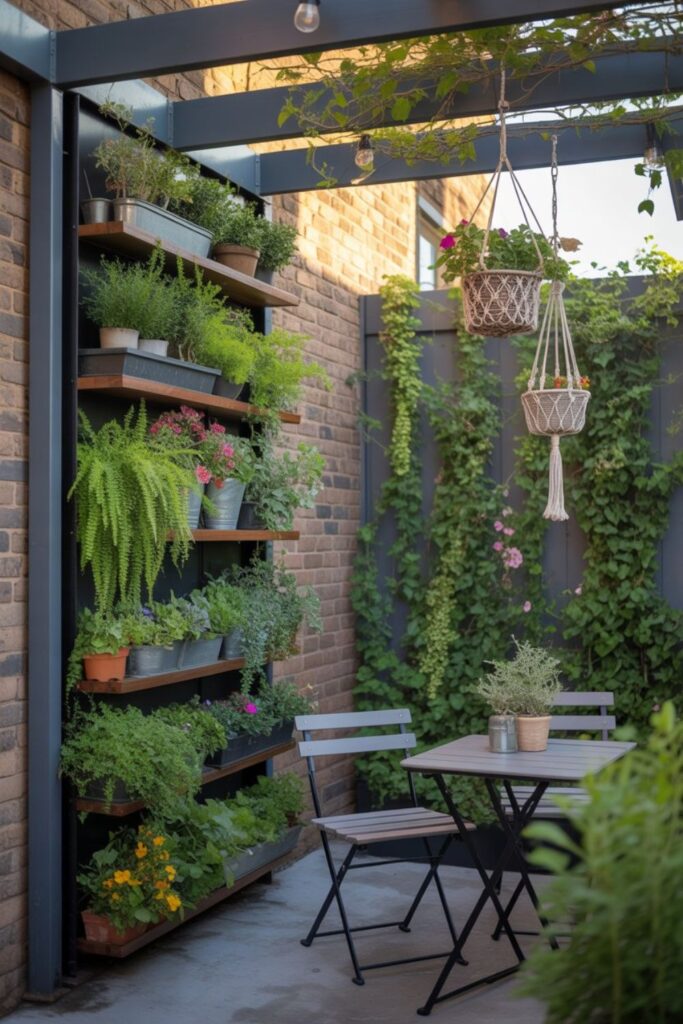
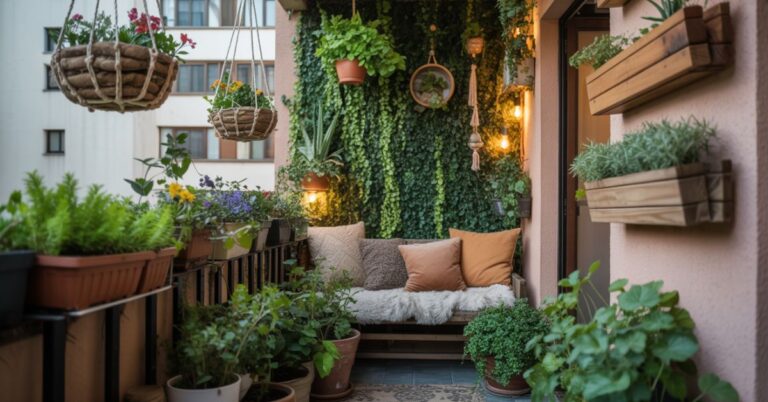
Vertical design revolutionizes backyard small space ideas by activating walls and fences typically wasted in horizontal-only thinking. Wall-mounted planters, vertical gardens, and climbing structures multiply growing area without consuming floor space. A 6×8 foot fence section accommodates 20-30 plants in vertical configuration versus 4-6 in ground-level beds occupying equivalent floor area. According to vertical gardening research, upward expansion increases functional space by 200-400% in Backyard small space ideas applications.
Install floating shelves, wall-mounted fold-down tables, or hanging storage that lives overhead rather than underfoot. These elements provide functionality while preserving precious floor area for movement and primary activities. According to spatial efficiency studies, vertical storage solutions recover 30-40% of floor space typically consumed by ground-level equivalents dramatic gains in Backyard small space ideas contexts where every square foot matters tremendously.
Train climbing vines on trellises, arbors, or pergola structures creating green ceilings and living walls without horizontal footprints. Clematis, jasmine, or climbing roses reach 8-12 feet vertically while occupying less than one square foot of ground space. These living vertical elements provide privacy screening, shade, and beauty without the land consumption that shrubs or trees demand. According to horticultural space planning, vertical plant strategies deliver 70-80% of aesthetic benefit using 10-15% of ground space compared to traditional landscape beds in petite garden ideas efficiency.
Multi-Functional Elements That Serve Double Duty
Multi-functional elements separate successful backyard small space ideas from cramped failures. Built-in benches with lift-up storage seats provide both seating and hidden organization for cushions, garden tools, and outdoor accessories. These dual-purpose pieces cost $300-800 to build or purchase but eliminate the need for separate storage sheds consuming 15-30 square feet. According to space efficiency analysis, multi-functional furniture recovers 40-60% more usable area than single-purpose equivalents in compact backyard design planning.
Planters doubling as privacy screens or low walls create boundaries while supporting greenery serving structural and aesthetic functions simultaneously. These integrated elements eliminate separate fencing or screening installations that would consume additional space and budget. According to landscape architecture principles, dual-function structures increase perceived value by 30-50% through elegant problem-solving that single-purpose elements cannot match.
Tables with built-in fire features, coolers, or planters combine multiple functions in single footprints. A coffee table incorporating a fire bowl and surrounding planter beds serves as heating, lighting, and garden all in 4-6 square feet. These specialty pieces cost $400-1,200 but replace separate elements that would collectively consume 12-20 square feet. According to outdoor furniture innovation research, integrated multi-function pieces represent the future of small outdoor space furnishing where efficiency matters tremendously.
Multi-Functional Space Savers
| Single-Purpose Elements | Combined Sq Ft | Multi-Function Solution | Actual Sq Ft | Space Saved |
| Bench + Storage Shed | 25-35 sq ft | Storage Bench | 8-12 sq ft | 60-70% |
| Fence + Planter Bed | 15-20 sq ft | Planter-Top Wall | 8-10 sq ft | 45-50% |
| Table + Fire Pit + Planter | 20-28 sq ft | Integrated Fire Table | 6-10 sq ft | 60-65% |
| Seating + Dining + Bar | 35-45 sq ft | Convertible Table System | 15-20 sq ft | 55-60% |
Visual Tricks That Expand Perceived Space
Visual tricks make backyard small space ideas feel dramatically larger through optical illusions manipulating perception. Paint fences and walls in light colors whites, pale grays, or soft creams that reflect light and recede visually. Dark colors advance, making boundaries feel closer and spaces smaller. According to color psychology research, light-painted boundaries increase perceived space by 15-25% compared to dark equivalents without changing actual dimensions in tiny yard solutions.
Create diagonal pathways rather than straight perpendicular routes that emphasize shortness. Diagonal lines trick eyes into perceiving greater distance because they travel longer routes between boundaries. A 12-foot-wide yard feels more spacious with a diagonal 15-foot path than a straight 12-foot route despite identical width. According to spatial perception studies, diagonal circulation increases perceived depth by 20-30% in narrow backyard layouts.
Install mirrors on fences or walls doubling visual space through reflection. Strategic mirror placement creates illusions of extended yards or additional garden areas that don’t physically exist. Position mirrors to reflect attractive views or plantings rather than unappealing utility areas. According to landscape design psychology, mirrors increase perceived space by 40-60% when properly positioned, the single most effective boundary illusion technique available for limited yard space expansion.
Read More About: 20+ Patio Simple Ideas That Instantly Improve Comfort
Proportional Furniture Selection
Proportional furniture separates comfortable backyard small space ideas from cramped disasters. Oversized furniture overwhelms small yards that 80-inch sectional perfect for spacious patios suffocates 150-square-foot spaces. Scale down to apartment-sized or bistro-scale pieces specifically designed for compact areas. A 54-inch loveseat replaces 78-inch sofas, bistro tables substitute for full dining sets. According to furniture ergonomics research, appropriately scaled pieces maintain comfort while consuming 30-40% less space than standard residential furniture.
Choose furniture with visible legs and open frames rather than solid bases. Visual transparency reduces perceived bulk you see through and under pieces rather than confronting solid mass. Acrylic or glass elements maximize this transparency while metal frames with open weaving appear lighter than solid wood. According to visual weight studies, transparent furniture reduces perceived space consumption by 25-35% compared to solid equivalents in compact backyard design applications.
Select slim-profile pieces with shallow depths 25-inch-deep seating versus standard 32-36 inches. This 6-10 inch reduction per piece accumulates dramatically in small spaces. A 25-inch-deep sofa against a fence leaves 4-5 feet clearance in 10-foot-deep yards versus 2-3 feet with standard depth furniture. According to spatial planning analysis, shallow-profile furniture increases functional circulation space by 40-50% in petite garden ideas configurations.
Efficient Layouts Maximizing Every Inch
Efficient layouts for backyard small space ideas position furniture and features deliberately along perimeters leaving central areas open. This arrangement maintains clear sightlines and circulation paths that make spaces feel larger than furniture-scattered equivalents. Position seating against fences or walls, planters at corners and edges, with open center zones for movement and visual breathing room. According to spatial organization research, perimeter-focused layouts increase perceived space by 30-40% compared to center-blocking arrangements in micro backyard planning.
Create single functional zones rather than attempting multiple competing areas. A 200-square-foot yard works beautifully as an intimate dining space OR cozy lounge area not both simultaneously without compromising each function. Commit to primary purpose matching your actual usage priorities. According to space functionality studies, single-purpose spaces deliver 60-70% higher satisfaction than multi-purpose attempts that accomplish nothing well in small outdoor space configurations.
Use area rugs or material changes defining zones without physical barriers that fragment space. An outdoor rug under the seating area suggests boundaries while maintaining visual and physical openness. These implied divisions provide organization without the space-consuming walls or screens that would make compact yards feel claustrophobic. According to environmental psychology, suggested boundaries deliver 70-80% of organizational benefit using zero physical space in compact backyard design efficiency.
Smart Storage Solutions
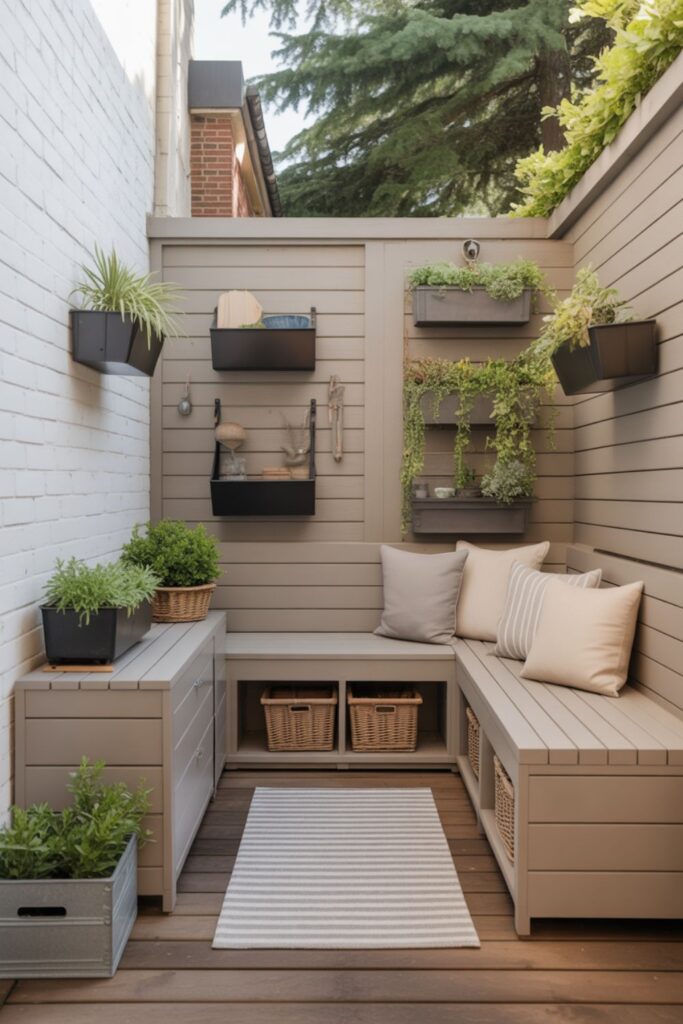
Smart storage prevents backyard small space ideas from becoming cluttered chaos where tools, cushions, and accessories overwhelm limited areas. Built-in benches with lift-up seats hide cushions, garden supplies, and outdoor games in 8-12 cubic feet of concealed space. These integrated solutions cost $300-800 but eliminate freestanding storage sheds consuming 15-30 square feet of precious ground area. According to storage efficiency research, built-in solutions recover 60-75% more usable space than equivalent standalone storage in tiny yard solutions.
Wall-mounted cabinets or pegboard systems organize tools vertically rather than in ground-level sheds. A 3×4 foot wall-mounted system holds the same equipment as a 6×8 foot shed while using zero floor space. These vertical storage installations cost $150-400 for materials and preserve ground area for actual living rather than storage functions. According to vertical storage analysis, wall-mounted systems recover 100% of floor space compared to ground structures in limited yard space applications.
Furniture with hidden storage hollow ottomans, tables with shelf storage, or planters with false bottoms integrates organization without dedicated storage footprints. These pieces cost 20-40% more than standard furniture but eliminate separate storage needs. According to multi-function furniture research, storage-integrated pieces provide equivalent capacity to standalone solutions while consuming 70-80% less dedicated space in narrow backyard layout configurations.
Zone Stacking for Multiple Functions
Zone stacking allows backyard small space ideas to serve different purposes at different times rather than attempting simultaneous multi-use. Your dining table might transform into a work surface during days, entertainment center during the evenings. Flexible furniture arrangements adapt to changing needs throughout days and seasons. According to adaptive space research, time-based function shifting increases space utility by 100-150% compared to static single-purpose configurations in compact backyard design.
Convertible elements enable stacking folding tables expanding for dining then collapsing for lounging space, moveable planters creating privacy when needed then opening spaces for larger gatherings. These adaptable components cost 30-50% more than fixed equivalents but deliver 200-300% more functional versatility. According to flexible design studies, convertible elements justify premium costs through expanded utility in space-constrained micro backyard applications.
Seasonal stacking extends year-round value; winter fire pit areas become summer dining zones, spring gardening spaces transition to fall entertainment areas. This temporal flexibility maximizes annual utility rather than optimizing for single season. According to seasonal use analysis, spaces designed for adaptation deliver 40-60% higher year-round satisfaction than single-season optimization in petite garden ideas longevity.
Boundary Illusions and Borrowed Landscapes
Boundary illusions make backyard small space ideas feel larger by obscuring or softening hard edges. Replace solid fences with open designs horizontal slats, lattice panels, or wire fencing that allow partial views beyond properties. These semi-transparent boundaries prevent the boxed-in feeling that solid fences create. According to visual psychology research, transparent boundaries increase perceived space by 25-40% by extending sight lines beyond actual property limits in tiny yard solutions.
Plant ascending height gradients low plants at front edges, medium shrubs mid-ground, tall specimens at rear boundaries. This layered depth creates the illusion of distance through forced perspective. According to landscape optical illusions, graduated planting increases perceived depth by 30-50% compared to uniform height plantings in narrow backyard layout visual expansion.
Borrow neighboring trees and attractive views by designing sightlines that incorporate these external elements into your perceived space. If neighbors mature tree crowns over your fence, embrace it as “yours” visually rather than blocking it. According to borrowed landscape principles refined in Japanese garden traditions, incorporating external beauty expands psychological space dramatically without increasing actual property dimensions in limited yard space perception.
How Can I Make My Small Backyard Look Bigger?
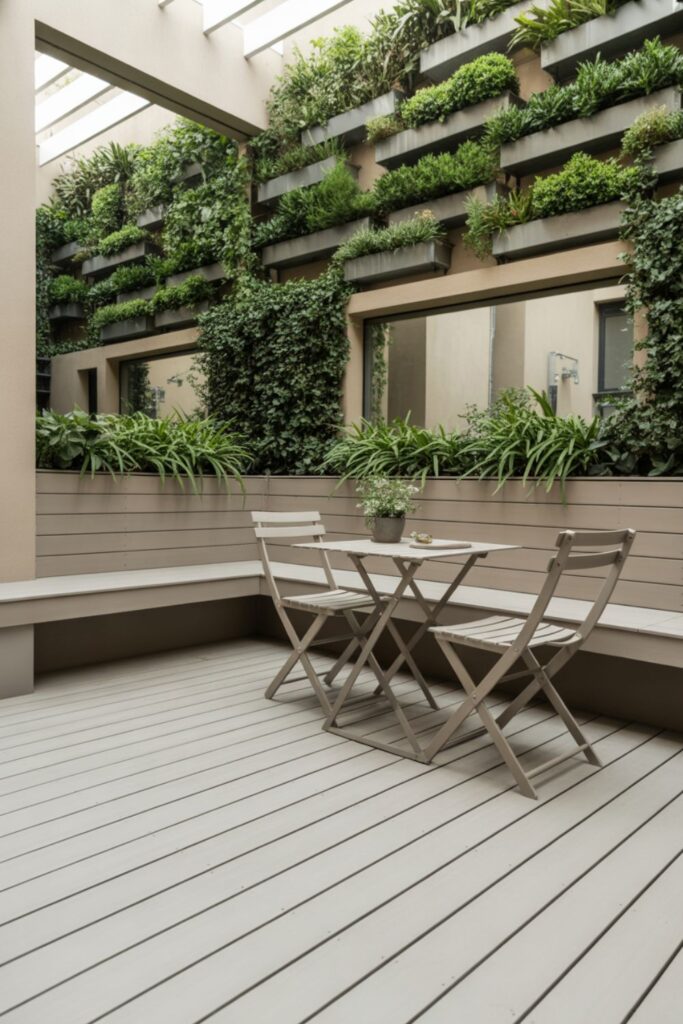
Making small backyards look bigger through backyard small space ideas starts with reducing visual clutter, removing excessive furniture, decorative accessories, and competing elements creating busy confusion. According to visual psychology research, eliminating 30-40% of elements from cluttered spaces increases perceived size by 20-30% without changing dimensions. Embrace “less is more” philosophy where every element justifies presence through function or aesthetic contribution.
Use light colors on walls, fences, and paving materials that reflect light and recede visually. Dark surfaces absorb light and advance toward viewers, making boundaries feel closer. Paint fences white or pale gray, choose light-colored pavers or decking, and select light-toned furniture maintaining brightness throughout your compact backyard design. According to color-space relationships, light palettes increase perceived size by 15-25% compared to dark schemes.
Create diagonal lines through pathways, decking patterns, or planter arrangements that lead eyes on longer visual journeys. Diagonal orientations emphasize yard dimensions better than parallel or perpendicular alignments that highlight limitations. According to spatial perception research, diagonal design elements increase perceived depth by 20-35% in small outdoor space optical expansion.
What Size Furniture Works for Small Backyards?
Proportional furniture for small backyards means selecting pieces 20-30% smaller than standard residential scales. Bistro tables (24-30 inches diameter) replace full dining tables (36-60 inches), loveseats (54-60 inches) substitute for sofas (78-84 inches), and apartment-scale chairs with narrower widths (24-28 inches versus 30-36 inches) maintain comfort while reducing footprint. According to furniture scaling research, appropriately sized pieces preserve 25-40% more circulation space in tiny yard solutions.
Measure carefully before purchasing, create cardboard templates at actual furniture dimensions and position them in your yard testing clearances and traffic flow. Ensure 24-inch minimum pathways between furniture and boundaries, preferably 30-36 inches for comfortable passage. According to circulation standards, inadequate clearances make spaces feel cramped regardless of furniture quality or total square footage in compact backyard design planning.
Prioritize seating depth and width over length select fewer, properly proportioned pieces rather than cramming in multiple undersized items. A single quality 54-inch loveseat serves better than three cheap 24-inch chairs creating visual clutter. According to furniture psychology, fewer substantial pieces feel more generous than numerous small items creating busy confusion in petite garden ideas selection.
Read More About: Contemporary Terrace Ideas for Luxury Homes
Can You Entertain in Small Backyards?
Small backyards absolutely accommodate entertaining through backyard small space ideas emphasizing flexibility and realistic capacity planning. Define your entertaining style of intimate dinners for 4-6 or standing cocktail receptions for 12-15 require different approaches. Plan primary seating for regular capacity (perhaps 4-6) with supplemental folding chairs stored and deployed for occasional larger gatherings. According to entertaining space research, flexible capacity planning increases satisfaction by 40-50% over fixed arrangements that either waste space daily or feel inadequate during events.
Adopt standing-reception formats rather than seated dinners when hosting larger groups in micro backyards. Cocktail parties accommodate 2-3x more guests than sit-down meals in identical square footage. Provide high-top tables and ledges for drink setting rather than full seating for everyone. According to hospitality space standards, budget 6-8 square feet per guest for standing events versus 12-15 square feet for seated affairs in limited yard space entertaining.
Create indoor-outdoor flow opening house doors and treating both spaces as connected entertaining areas. This integration doubles effective space allowing guests to circulate naturally between zones. According to event flow research, integrated indoor-outdoor setups increase functional capacity by 60-80% compared to outdoor-only entertaining in narrow backyard layout flexibility.
Budget-Friendly Small Space Improvements
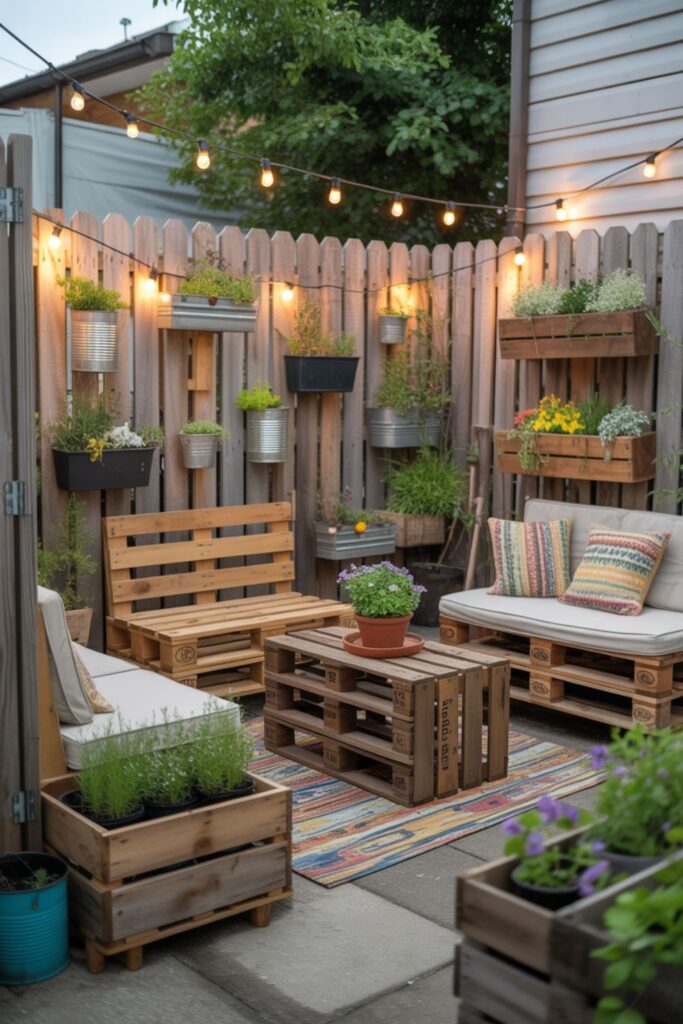
Backyard small space ideas on modest budgets prioritize high-impact improvements over expensive installations. Start with thorough cleaning and editing pressure wash surfaces, remove dead plants, eliminate broken furniture. This zero-cost first step often delivers 30-40% appearance improvement before spending money. According to budget improvement research, cleaning and decluttering provides the best return-on-effort of any enhancement in compact backyard design optimization.
Add outdoor rugs ($50-150), string lights ($20-50), and container plants ($80-200 for 5 substantial pots with plants) creating furnished, illuminated, green spaces for $150-400 total. These portable, renter-friendly improvements deliver immediate impact without permanent installation or major expense. According to budget landscape surveys, these three elements provide 60-70% of the aesthetic benefit that $3,000-5,000 renovations achieve in small outdoor space transformations.
Tackle DIY projects like building simple benches ($100-200 in materials), painting fences ($50-150 for paint), or creating vertical gardens from pallets ($30-80). These hands-on improvements build equity through labor rather than cash while teaching valuable skills. According to DIY satisfaction research, self-completed projects increase attachment to spaces by 40-50% beyond equivalent professional work in petite garden ideas engagement.
Frequently Asked Questions
How can I make a small backyard look bigger?
Use light colors, minimal furniture, vertical landscaping, and multi-functional features to visually expand a small backyard.
What are the best layout ideas for small backyards?
Open layouts, corner seating, linear pathways, and defined zones for dining or lounging work best in limited outdoor spaces.
Which furniture is ideal for small backyard spaces?
Foldable, stackable, or built-in furniture with slim profiles is ideal for maximizing space without overcrowding.
Can I add a seating area in a small backyard?
Yes, compact sectionals, benches with storage, or bistro sets are excellent seating solutions for small backyards.
How do I create privacy in a small backyard?
Use vertical screens, tall plants, trellises, pergolas with curtains, or privacy panels to maintain openness while adding seclusion.
Conclusion
Your backyard small space ideas exploration proves that limited square footage never limits outdoor living potential when approached with strategic design intelligence rather than size envy. Those compact yards feeling constraining actually offer advantages lower maintenance, inherent intimacy, and focused design that many large property owners try desperately to recreate through expensive structures and extensive plantings.
Exceptional compact backyard design emerges through embracing rather than fighting your dimensions. Vertical design activates overlooked wall space, multi-functional elements deliver double value from single footprints, and visual tricks manipulate perception making spaces feel dramatically larger than measurements suggest. Your small outdoor space transforms from limitation to asset through proportional furniture, efficient layouts, and zone stacking that maximize every square inch while maintaining the breathing room that prevents claustrophobic crowding.
Start by measuring accurately, editing ruthlessly, and planning specifically for your actual usage rather than aspirational fantasies. Whether designing narrow backyard layouts alongside homes or working with truly micro backyards in urban settings, success comes through intentional choices honoring your space’s realities while leveraging every technique that tiny yard solutions offer. The most beloved compact yards demonstrate that thoughtful 200 square feet outperforms careless 800 square feet every time your small space deserves becoming the outdoor sanctuary you’ve envisioned through strategic decisions that make dimensions irrelevant to enjoyment.