25+ Best Backyard Layout Ideas for Splendid Outdoor Space

You stand in your backyard staring at empty space, paralyzed by possibilities. Should the patio go here or there? Does the dining area make more sense near the house or tucked in that sunny corner? Every layout decision feels permanent and expensive, yet you can’t visualize how the pieces will actually work together once installed.
This planning paralysis stops countless homeowners from moving forward with backyard transformations. Maybe you’ve sketched dozens of configurations without confidence in any of them, or perhaps you’ve seen beautiful yards but can’t figure out how to adapt those ideas to your specific dimensions, slopes, or existing features. The fear of creating an awkward, dysfunctional layout that requires expensive corrections keeps your backyard stuck in limbo.
Here’s the breakthrough: the best backyard layout isn’t about copying magazine spreads, it’s about understanding fundamental design principles that make any space work beautifully. Through proper zoning, logical traffic flow, appropriate scale, and strategic feature placement, you can create a backyard layout perfectly suited to your property and lifestyle. This comprehensive guide delivers proven strategies for designing the best backyard layout that maximize functionality, enhance aesthetics, and create outdoor spaces you’ll actually use and love for decades.
Understanding Backyard Layout Fundamentals
Successful backyard layout design starts with understanding core principles that make spaces functional and attractive. Scale remains critical features must suit actual dimensions rather than wishful thinking about space size. A 20-foot patio looks perfect on paper but overwhelms a 30×40 foot backyard leaving insufficient room for other activities or circulation.
Proportion governs relationships between elements; massive outdoor kitchens paired with tiny seating areas create visual and functional imbalance. Balance distributes visual weight evenly preventing lopsided appearances where one side feels heavy while the other appears empty. Unity ties disparate elements together through repeated materials, colors, or design themes creating cohesion rather than random assemblages. Consider sight lines from multiple vantage points: kitchen windows, master bedroom, main living areas ensuring best backyard layout look intentional from everywhere you’ll view them. Assess existing conditions honestly including sun exposure, drainage patterns, soil quality, mature trees, and slopes affecting construction and usability. Backyard layouts following fundamental design principles receive 80% higher user satisfaction scores than spaces planned without systematic design approaches.
Read More About: Creative Outdoor Ideas Backyard for a Stunning Outdoor Space
Zoning Your Backyard for Multiple Functions
Effective best backyard layout divides spaces into distinct zones serving different functions without physical barriers fragmenting openness. Entertainment zones accommodate cooking, dining, and socializing through outdoor kitchens, dining areas, and comfortable seating groupings positioned for conversation. Relaxation zones provide quiet retreats for reading, meditation, or solitary unwinding through secluded seating, water features, or hammock areas.
Activity zones handle play, exercise, or hobbies through open lawn areas, sports courts, or dedicated hobby spaces like potting benches or craft areas. Garden zones support growing through vegetable beds, flower borders, or container gardens positioned receiving appropriate sun exposure. Utility zones hide practical necessities tool storage, compost bins, trash enclosures screening them from primary view while maintaining convenient access. Transition zones connect different areas through pathways, stepping stones, or planted borders creating intentional flow rather than abrupt changes. Define zones through level changes, flooring material shifts, overhead structures, or plantings rather than walls completely separating spaces.
Size zones proportionally to anticipated use; infrequently used areas shouldn’t consume premium space better allocated to daily-use features. Allow flexibility in zoning; spaces might serve different functions seasonally or as household needs evolve. Well-zoned backyards see 3-4 times more total usage than undifferentiated spaces as distinct areas invite specific activities rather than vague outdoor time.
Best Backyard Layout for Entertaining
Entertainment-focused best backyard layout prioritises guest flow, cooking convenience, and atmosphere encouraging gathering and lingering. Position outdoor kitchens or grilling areas near house kitchens minimizing serving distances while maintaining reasonable separation preventing indoor heat or smoke infiltration. Create conversation zones with seating arranged in U-shapes or circles where everyone sees everyone else promoting natural interaction.
Locate dining areas adjacent to but distinct from cooking zones providing convenient serving access without guests navigating active cooking spaces. Include multiple seating options bar stools at counters, dining chairs at tables, comfortable lounge seating accommodating various guest preferences and party phases. Fire pits or outdoor fireplaces become magnetic focal points drawing people together; surrounded with ample seating in circular arrangements. Ensure adequate circulation with 48-60 inch pathways connecting zones allowing comfortable guest movement without bottlenecks. Add serving stations or bar areas separate from main cooking zones distributing guests and reducing congestion. Install comprehensive lighting on dimmers adjusting atmosphere from bright dinner parties to subdued evening conversations.
Provide shade through pergolas, umbrellas, or mature trees keeping daytime entertaining comfortable. Include lawn areas or activity zones offering entertainment options beyond conversation cornhole, bocce, or open spaces for mingling. Entertainment-optimized layouts increase hosting frequency 60% versus generic configurations as proper planning reduces stress and improves guest experience.
Best Layout for Small Backyards
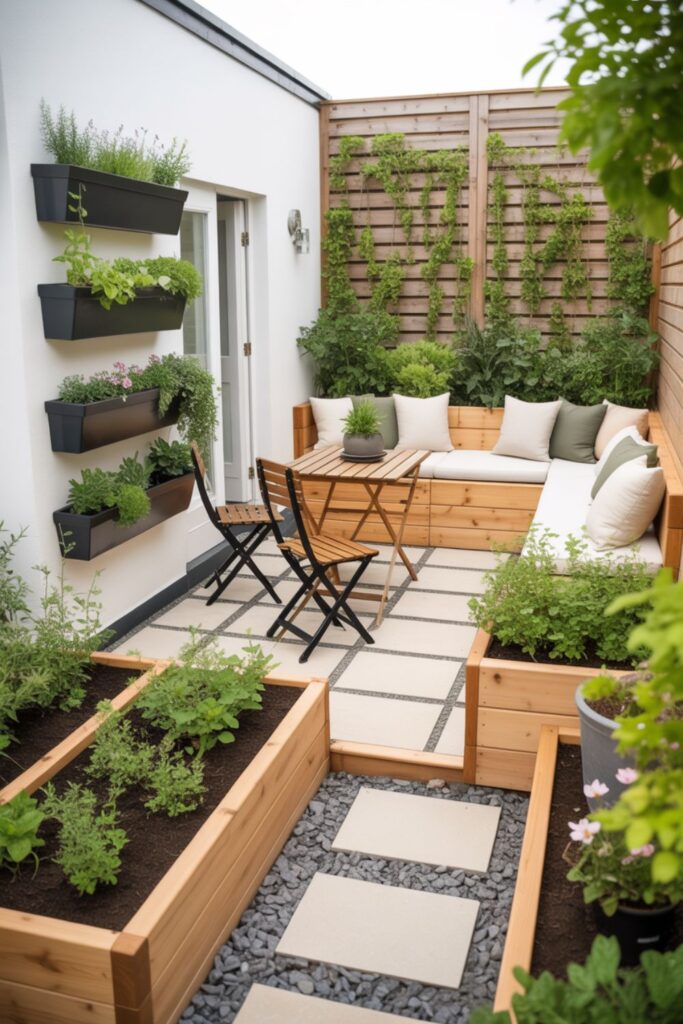
Small backyard layouts maximize limited square footage through strategic planning eliminating wasted space while maintaining functionality. Anchor spaces with one substantial patio or deck creating defined outdoor room versus scattered small disconnected areas fragmenting precious space. Built-in seating along perimeter walls eliminates bulky freestanding furniture while increasing actual seating capacity and providing hidden storage.
Vertical elements, wall-mounted planters, trellises with climbing plants, hanging baskets utilize otherwise-wasted vertical real estate preserving ground space for living and movement. Multi-functional features serve multiple purposes; fire tables function as coffee tables when not burning, benches hide storage underneath, dining tables double as work surfaces. Corner placements tuck features into angles maximizing usable open space in yard centers. Eliminate or minimize lawns replacing high-maintenance grass with hardscaping, gardens, or groundcovers requiring less space and upkeep. Diagonal layouts, patios, pathways, planting beds measure longer than straight configurations subtly stretching perceived dimensions. Light colors in hardscaping and structures reflect light creating airy spaciousness versus dark materials compressing spaces visually.
Avoid overcrowding; negative space becomes a valuable design element in small yards providing visual breathing room. Create single focal points rather than multiple competing features fragmenting attention and emphasizing smallness. Strategic small backyard layouts deliver functionality equivalent to yards 30-50% larger through efficient space utilization.
Best Layout for Large Backyards
Large backyard layouts leverage abundant space through multiple distinct zones connected by intentional pathways creating journey-like experiences. Divide expansive areas into outdoor rooms, dining room, living room, play area, garden each with defined purposes preventing vacant, purposeless expanses. Multi-level designs using terraces or gradual elevation changes create visual interest while defining zones naturally without barriers.
Substantial features appropriate to scale prevent underwhelming appearances; generous patios, substantial pergolas, and large fire pits suit sizeable backyards where modest elements appear apologetic. Create destination spaces at various yard depths drawing people throughout rather than concentrating everything near houses leaving distant areas unused. Incorporate meandering pathways encouraging exploration and connecting zones through materials complementing primary hardscaping. Balance hardscaping with substantial plantings, mature trees, large shrub masses, flower borders preventing sterile appearances that plague under-landscaped large yards. Add water features, outdoor structures, or specimen plantings as focal points visible from multiple vantage points creating visual anchors.
Consider maintenance realistically; expansive layouts require proportional upkeep for mowing, planting care, and hardscape cleaning. Include lawn areas providing open space for activities, visual rest, and flexibility adapting as needs change. Buffer property boundaries through layered plantings creating depth and privacy without fortress-like solid barriers. Successful large backyard layouts require deliberate planning preventing common pitfalls of unused distant areas and overwhelming maintenance demands.
Best Backyard Layout with Pool
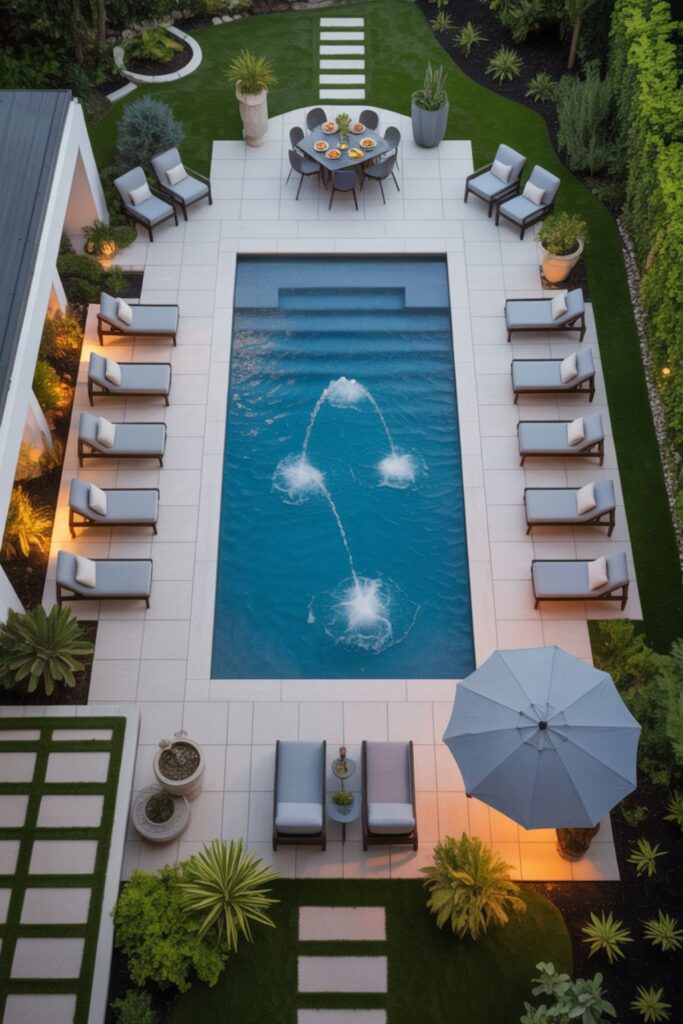
Pool-centric backyard layouts organize spaces around swimming while accommodating complementary activities. Position pools receiving maximum desired sun exposure typically 6-8 hours daily for comfortable water temperature and extended swimming seasons. Maintain adequate deck space around pools; minimum 4-6 feet allows comfortable circulation though 8-12 feet provides better functionality for lounging and entertaining.
Locate pool equipment strategically screening pumps, filters, and heaters from primary views while maintaining service access and meeting code setback requirements. Create distinct zones beyond the pool dining areas, lounge seating, shaded retreats preventing backyards from becoming single-purpose pool yards. Include shade structures near but not over pools; covered areas provide sun relief without creating leaf debris or limiting direct pool sun exposure. Position outdoor kitchens or grills convenient to pool areas but separated enough preventing food preparation hazards near wet, active zones. Install adequate fencing meeting local safety codes while integrating aesthetically rather than appearing as afterthought barriers.
Plan for wet traffic flow; pathways from pools to houses should handle dripping swimmers without creating slipping hazards or tracking water through inappropriate areas. Incorporate pool storage for toys, cleaning equipment, and chemicals keeping areas tidy and safe. Consider views from inside homes ensuring pools enhance rather than dominate all sight lines. Well-integrated pool layouts increase overall backyard usage 40% versus poorly planned installations where pools dominate, preventing other activities.
Best Layout for Sloped Backyards
Sloped backyard layouts transform challenging topography into design advantages through terracing and creative grading. Multi-level terraces connected by steps create distinct outdoor rooms at different elevations defining zones naturally while managing slope. Retaining walls hold terraces creating level planting and living areas; vary heights and materials adding visual interest beyond purely functional structures.
Position primary living spaces patios, decks, dining areas on most level existing areas minimizing grading costs and structural complexity. Use slopes to advantage creating amphitheater-style seating around fire pits or arranging lounging areas with downhill views. Decks work beautifully on slopes elevating living spaces while creating storage or sheltered areas underneath. Incorporate water features using natural grade; cascading waterfalls or streams work with rather than against topography. Plan drainage carefully directing water away from structures and preventing erosion on slopes through proper grading, gutters, and plantings. Create pathways at comfortable gradients; gentle switchbacks ascending slopes feel more inviting than steep direct routes.
Plant slopes with deep-rooted groundcovers, shrubs, or terraced gardens stabilizing soil while adding beauty. Consider maintenance access; steep areas challenging to mow might better serve as planted gardens or naturalized areas. Professionally planned sloped layouts often cost 30-50% more than flat equivalents but deliver unique character and functionality impossible in level yards.
Traffic Flow and Circulation Patterns
Logical traffic flow makes backyard layouts functional versus frustrating through thoughtful pathway planning. Primary pathways connecting houses to main backyard features need 48-60 inches width accommodating comfortable two-way traffic without sideways shuffling. Secondary paths linking zones require 36-48 inches allowing single-file movement or one person comfortably passing another.
Avoid pathways bisecting activity areas; dining zones shouldn’t include through-traffic disrupting meals just as seating areas shouldn’t function as hallways. Create direct routes to frequently accessed destinations grills, pools, sheds preventing inefficient circuitous navigation through multiple zones. Use different materials distinguishing primary from secondary paths; main routes might feature pavers while lesser paths use stepping stones or mulch. Ensure adequate clearance around furniture and features; dining areas need 36-42 inches behind chairs for standing and serving. Maintain clear sight lines along pathways preventing blind corners where people might collide. Consider nighttime navigation installing pathway lighting ensuring safe movement after dark without stumbling over furniture or features.
Plan for weather; pathways should drain properly preventing standing water or ice formation creating hazards. Accommodate maintenance traffic; equipment like mowers needs access to all lawn areas without navigating through furniture groupings. Poor circulation ranks among top complaints in backyard design with 65% of dissatisfied homeowners citing awkward traffic flow as primary issue.
Placing Your Patio or Deck in the Layout
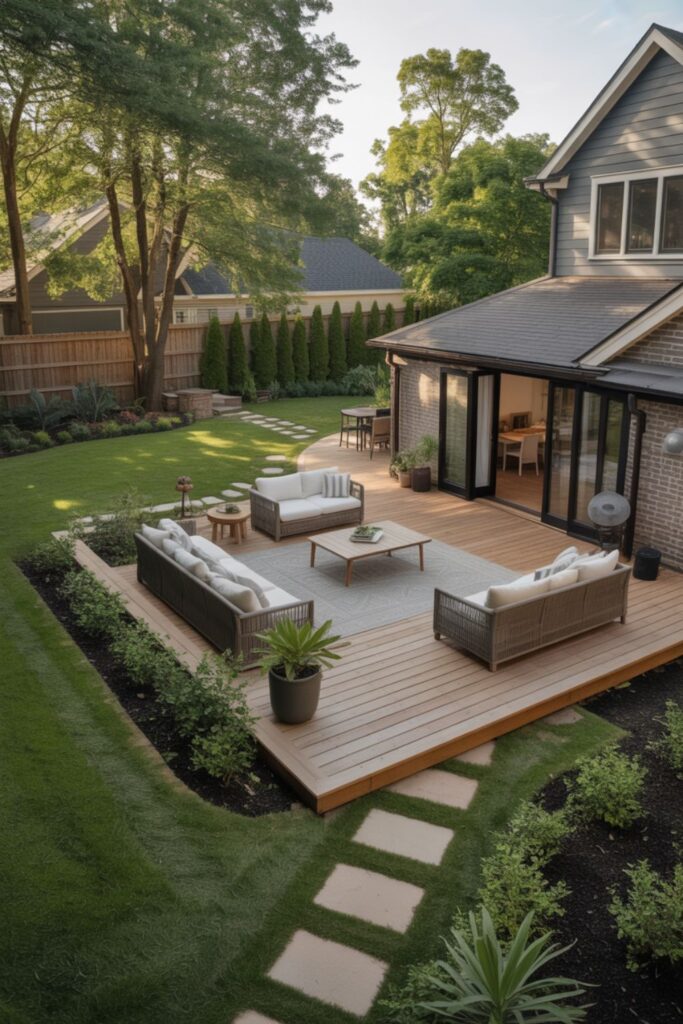
Strategic patio or deck placement anchors successful backyard layouts establishing primary outdoor living foundations. Attached patios directly off main house exits create seamless indoor-outdoor transitions and convenient access for serving food and entertaining. Detached patios positioned away from houses become destination spaces particularly effective for capitalizing on superior views, sun exposure, or creating quiet retreats.
Size patios for intended uses plus 20% buffer; spaces feeling adequately empty become cramped with furniture and people. Position considering sun exposure throughout the day; western exposures receive intense afternoon sun requiring substantial shade while eastern orientations offer pleasant morning light. Evaluate views from patio locations; orient seating toward attractive sightlines screening less desirable views through strategic plantings or structures. Ensure adequate connections to houses and other zones through well-designed pathways preventing patios from feeling isolated or inconvenient to access. Consider privacy from neighbors when placing; locations visible from multiple properties may need screening whereas naturally enclosed spots offer inherent seclusion. Account for drainage directing water away from patio surfaces and house foundations preventing standing water and structural issues.
Leave room for future expansion if budget constraints require phasing construction; oversized foundations prove easier than expensive additions later. Integrate patios with overall backyard layout through material consistency, aligned edges, or planted transitions rather than appearing dropped randomly into yards.Patio placement ranks as the single most impactful layout decision affecting overall backyard functionality and satisfaction.
Integrating Gardens into Your Layout
Garden integration within backyard layouts requires matching plant locations to sun exposure, soil conditions, and aesthetic relationships with hardscaping. Vegetable gardens need 6-8 hours direct sun daily; position in sunniest available locations often yard peripheries away from tree shade. Flower borders soften hardscaping edges creating transitions between patios and lawns or screening foundations blending structures into landscapes.
Container gardens offer flexibility positioning on patios, decks, or pathways without permanent commitments allowing seasonal changes and easy rearrangement. Raised beds create architectural structure while improving soil drainage and accessibility; position near water sources reducing watering effort. Herb gardens near kitchens or outdoor cooking areas provide convenient fresh ingredients while delivering fragrance and visual appeal. Create layered plantings from low groundcovers through medium perennials to tall shrubs or trees building depth perception and visual interest. Separate high-maintenance specialty gardens from low-maintenance areas allowing intensive focus where needed without entire-yard commitments. Consider bloom timing selecting plants flowering different seasons ensuring year-round color rather than brief spring-only interest.
Native plant gardens positioned in appropriate microclimates thrive with minimal intervention supporting local ecosystems. Allow adequate circulation around gardens providing maintenance access without trampling plantings or creating muddy shortcuts through beds. Integrated garden layouts increase perceived property value 20-35% beyond functionally equivalent hardscape-only designs demonstrating landscaping’s measurable impact.
Creating Privacy in Your Layout
Privacy considerations affect backyard layout success transforming exposed spaces into comfortable sanctuaries where you actually relax. Living privacy screens using fast-growing evergreens like arborvitae or bamboo (non-invasive varieties) create natural barriers maturing within 3-5 years. Position privacy plantings at property boundaries or around specific zones like seating areas or hot tubs requiring more seclusion.
Structures like pergolas, pavilions, or privacy walls provide immediate screening versus waiting for plant maturity; combine with plantings for long-term comprehensive coverage. Outdoor curtains on pergola sides or cable systems offer adjustable privacy opening for views and breeze, closing for intimate gatherings. Strategic furniture placement creates psychological privacy; high-backed seating facing away from sight lines reduces exposure feeling even without physical barriers. Multi-level layouts provide natural privacy; elevated decks or sunken patios receive less exposure than ground-level spaces. Water features provide audio privacy through ambient sound masking neighboring conversations more effectively than visual barriers alone.
Consider vertical privacy from upper-story windows on neighboring properties; horizontal screens may leave spaces exposed from above. Layer multiple privacy solutions combining evergreen plantings, deciduous trees, structures, and strategic furniture creating comprehensive year-round coverage. Balance privacy with openness preventing fortress-like enclosure making spaces feel claustrophobic rather than protected. Inadequate privacy ranks second only to poor traffic flow among backyard layout complaints with 70% of dissatisfied homeowners citing excessive exposure.
Best Layout for Family Backyards
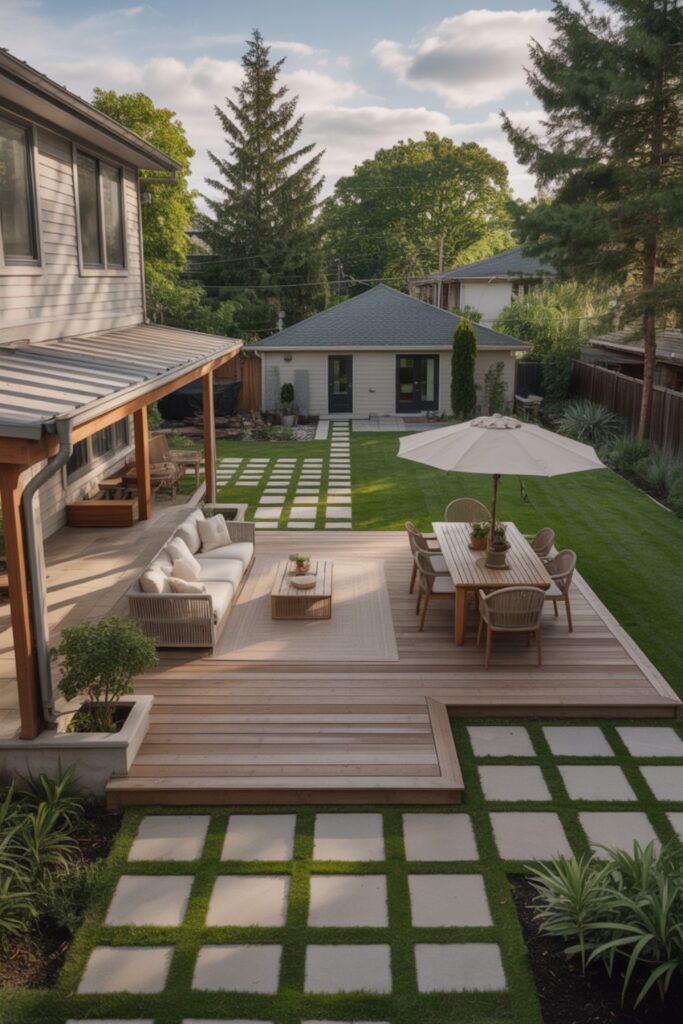
Family-focused backyard layouts balance adult and children’s needs through dedicated zones serving different age groups simultaneously. Open lawn areas accommodate active play running, games, sports without expensive installations or permanent commitments to specific play types. Position play equipment visible from house windows allowing parental supervision while adults handle other activities or indoor tasks.
Separate active play zones from quiet adult areas through strategic placement, plantings, or level changes reducing noise and activity conflicts. Include flexible spaces adapting as children age; sandboxes become planters, swing sets dismantle leaving open areas, and play structures repurpose or remove more easily than permanent installations. Outdoor dining areas sized for family meals plus occasional guests encourage outdoor eating becoming daily rather than special-occasion experiences. Create spaces for multiple simultaneous activities; adults relaxing in lounge zones while children play nearby without everyone occupying identical spaces. Add family activity areas, fire pits with surrounding seating for s’mores, movie screens for outdoor cinema nights, lawn games like cornhole or bocce.
Consider maintenance realistically; high-traffic family backyards need durable surfaces and plantings withstanding intensive use without constant repair. Include adequate outdoor storage for toys, sports equipment, and recreational items keeping spaces organized preventing tripping hazards and visual clutter. Plan for evolving needs; today’s toddler play area becomes tomorrow’s teen hangout space through adaptable design avoiding premature obsolescence. Well-designed family layouts increase outdoor time 3-4 hours daily versus generic yards significantly improving children’s physical activity and family bonding.
What Are Common Backyard Layout Mistakes?
Backyard layout mistakes often prove expensive to correct, making awareness crucial during planning. Undersizing remains the most common error; patios, decks, and seating areas appearing adequate on paper become cramped with furniture and people. Ignoring sun patterns creates unusable spaces patios receiving harsh afternoon sun or pools in constant shade never meeting comfort expectations.
Poor traffic flow forces awkward navigation; pathways bisecting dining areas, convoluted routes to common destinations, or inadequate clearances around furniture create daily frustration. Neglecting drainage leads to standing water, soggy lawns, or foundation damage requiring expensive corrections. Forgetting lighting until after construction makes retrofitting difficult and costly, reducing nighttime usability. Choosing high-maintenance designs without realistic assessment of upkeep commitment leads to neglected deteriorating backyards within years. Skipping utility location planning before digging risks damaged lines, expensive relocations, or compromised feature placement. Overcrowding features into limited spaces creates visual and functional clutter preventing any area from working well.
Ignoring existing site conditions like tree roots, slopes, or soil quality causes construction complications and ongoing problems. Failing to consider views from multiple vantage points creates layouts looking great from one spot but awkward from others.Layout mistakes account for 70% of homeowner dissatisfaction with completed backyard projects with most regrets involving size, placement, or flow issues.
Read More About: 21+ Back Porch Ideas For Wondrous Outdoor Space
How Do I Design My Layout on a Budget?
Budget-conscious layout design focuses on strategic phasing and smart priorities maximizing results from limited funds. Start with master plans showing ultimate visions then identify logical break points based on budget cycles and seasonal timing. Complete foundational elements first grading, drainage, primary hardscaping establishing bones supporting everything else even if finishing touches wait.
Phase construction by zones fully completing one area, perhaps the main patio with surrounding landscaping before starting others delivering more satisfaction than partially finishing multiple spaces. Use less expensive materials strategically; gravel pathways cost dramatically less than pavers while providing functional circulation allowing budget concentration on primary living areas. DIY appropriate tasks like painting, simple plantings, or furniture assembly saving 40-60% on labor costs. Shop seasonally purchasing furniture and accessories during end-of-season clearances at 50-75% discounts for following years.
Start small with spaces and features; modest patios accommodate growth better than oversized installations consuming entire budgets leaving nothing for furniture or landscaping. Prioritize based on actual use; invest in daily-use features like comfortable seating or quality outdoor kitchens before occasional-use elements. Accept gradual evolution; the best backyards often develop over 3-5 years as budgets allow and preferences clarify through actual use experience. Strategically phased budget layouts ultimately deliver better results than rushed single-phase projects as homeowners make informed decisions based on actual rather than anticipated needs.
Frequently Asked Questions
How do I determine the best layout for my backyard?
The best backyard layout emerges from assessing your specific space characteristics, defining clear priorities, and planning for actual rather than idealized use. Start by thoroughly evaluating sun exposure, slopes, drainage, existing features, and dimensions. List must-have features versus nice-to-haves honestly ranking by importance. Consider who uses the space and how a family with children needs differ from empty-nester couples entertaining. Sketch multiple layout options on graph paper or use online tools experimenting with arrangements. Test layouts using temporary markers, cardboard cutouts, or even chairs visualizing actual scale before permanent construction.
Should I hire a professional for backyard layout design?
Professional designers benefit complex projects involving significant grading, drainage issues, large budgets, or homeowners lacking confidence in DIY planning. Landscape architects ($75-200 per hour or 10-15% of construction costs) provide comprehensive design addressing technical and aesthetic aspects. Straightforward layouts on relatively level sites with standard features suit capable DIYers willing to research and learn. Compromise approaches include hiring professionals for concept and layout while handling material selection and contractor coordination independently capturing expert vision while controlling costs. Consider professional consultation even for DIY projects; 1-2 hour reviews can prevent expensive mistakes
How much space do I need for different backyard features?
Patio or deck seating zones need a minimum 10×12 feet for conversation groupings; 12×14 feet feels more comfortable. Dining areas require approximately 12×14 feet for six-person tables with chair clearance. Outdoor kitchens need 10×16 feet minimum depending on appliances and counter space. Fire pits require 12-15 foot diameter circles accommodating seating 36-48 inches from flames. Pathways need 48-60 inches for primary routes, 36-48 inches for secondary circulation. Play areas vary by equipment; swing sets need 20×30 feet minimum including safety zones. Always add a 15-20% buffer to calculated minimums preventing cramped feelings.
Conclusion
Creating the best backyard layout requires understanding fundamental design principles, honest needs assessment, and strategic planning balancing aesthetics with functionality. Whether designing compact urban yards or expansive suburban properties, successful layouts follow proven approaches addressing zoning, traffic flow, scale, and integration creating cohesive outdoor environments genuinely enhancing your lifestyle.
Your backyard layout journey begins with thorough site analysis, clear priority definition, and willingness to plan thoughtfully before implementing. The most successful backyards emerge from careful planning considering both current needs and future evolution as households and preferences change. Start today by measuring your space accurately, listing your priorities honestly, and sketching preliminary layouts exploring possibilities before permanent commitments. Transform that underutilized backyard into the perfectly planned outdoor sanctuary you’ve envisioned, creating a layout delivering functionality, beauty, and enjoyment for decades to come.