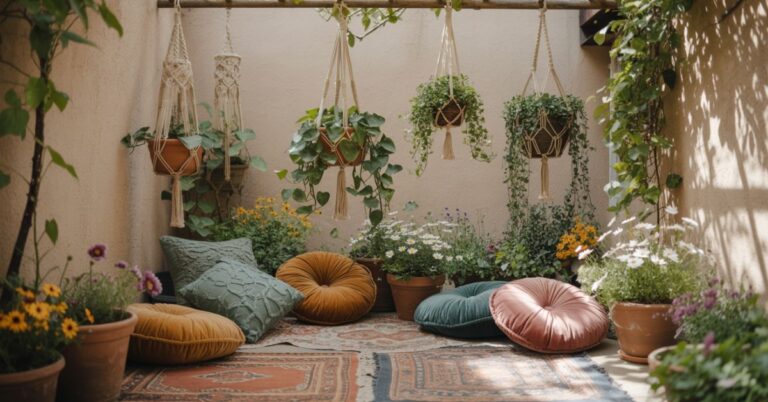
Best Outdoor Patio Designs for a Perfect Backyard Retreat

Your backyard sits empty and underutilized. You look outside and see wasted potential: a bland concrete slab or overgrown grass where memorable gatherings and peaceful mornings could happen. You’ve invested in your home’s interior, but your outdoor living space remains an afterthought, a missed opportunity to extend your home’s functional square footage and create a true sanctuary.
The best outdoor patio designs transform neglected backyards into destinations where families gather, friends linger, and you escape daily stress without leaving home. Whether you’re working with a compact urban courtyard or an expansive suburban lot, thoughtful patio ideas maximize your space’s potential while reflecting your lifestyle and aesthetic preferences. From intimate conversation areas with comfortable seating areas to expansive outdoor dining zones perfect for hosting dinner parties, the possibilities span every budget and skill level. This comprehensive guide reveals proven design principles, material selections, layout strategies, and styling techniques that help you create a backyard patio that becomes your home’s most-used and most-loved space. You’ll discover how professional designers approach spatial planning, material selection, and functional zoning then learn to apply these strategies to your own outdoor transformation project.
What Makes a Patio Design Successful?
Successful best outdoor patio designs balance functionality, aesthetics, and durability while seamlessly integrating with your home’s architecture and your family’s lifestyle patterns.
Functionality determines whether your patio gets used daily or sits empty. Start by identifying primary uses: do you envision morning coffee spots, family dinners, large-scale entertaining spaces, or quiet reading nooks? Each purpose demands different layouts, furniture arrangements, and amenities. A patio designed for frequent dinner parties needs substantial outdoor dining surfaces, adequate lighting, and convenient access to your kitchen. Contemplative spaces prioritize comfortable seating positioned to capture views, morning sun, or evening breezes. Multi-use designs incorporate flexible zones that adapt to different activities throughout the day and seasons.
Aesthetic cohesion connects your patio to your home’s existing style rather than feeling like a disconnected add-on. Matching architectural elements, modern homes pair beautifully with clean-lined concrete or porcelain pavers and minimalist furniture, while traditional homes complement natural stone, brick, and classic wrought iron pieces. Color palettes should reference your home’s exterior and pick up accent colors from shutters, doors, or trim. Scale matters tremendously too. Massive furniture overwhelms small patios, while undersized pieces look lost on expansive slabs. Walk your space during design phases, using cardboard boxes or painter’s tape to outline proposed furniture footprints and traffic flow paths before committing to layouts.
Durability protects your investment from weather extremes and heavy use. Select patio materials appropriate for your climate freeze-thaw cycles demand different solutions than desert heat or coastal humidity. Quality construction prevents cracking, settling, and drainage problems that plague poorly built patios. Weather-resistant furniture fabrics, rust-proof frames, and UV-stable finishes ensure your pieces look fresh for years rather than degrading after a single season. Consider maintenance requirements realistically elaborate designs requiring constant upkeep won’t serve busy households well, regardless of their initial beauty.
Patio materials fundamentally shape your outdoor space’s appearance, longevity, and maintenance requirements while dramatically impacting project budgets.
Concrete offers the most versatile and budget-friendly foundation for best outdoor patio designs. Basic poured concrete costs $6-12 per square foot installed, creating durable surfaces that withstand decades of use. Stamped concrete adds texture and pattern, mimicking stone, brick, or tile at $12-18 per square foot significantly less than authentic materials. Stained or dyed concrete introduces color beyond standard gray, from earthy terracotta to contemporary charcoal. The material’s drawbacks include potential cracking in freeze-thaw climates and a somewhat industrial appearance that doesn’t suit all architectural styles. Proper installation with control joints, adequate base preparation, and correct thickness (minimum 4 inches for patios) prevents most structural issues.
Natural stone delivers unmatched beauty and character, with each piece unique in color and texture. Flagstone, slate, and bluestone create timeless backyard patio surfaces that age gracefully and complement virtually any home style. Costs range from $15-30 per square foot installed depending on stone type, thickness, and regional availability. Irregular flagstone set in gravel or sand creates casual, cottage-garden aesthetics, while cut bluestone laid in geometric patterns suits formal settings. Stone remains cool underfoot even in hot sun, a significant advantage for pool areas or southern exposures. Maintenance involves occasional re-sanding joints and sealing every few years to prevent staining and weed growth.
Pavers whether concrete, clay brick, or porcelain combine durability with design flexibility and easier DIY installation than poured surfaces. Interlocking concrete pavers cost $10-25 per square foot and come in countless colors, shapes, and patterns. Their modular nature allows creative layouts including herringbone, basketweave, or circular patterns. Clay brick pavers deliver classic appeal with warm red and brown tones, though they cost slightly more at $15-30 per square foot. Porcelain pavers represent the premium option at $20-40 per square foot, offering wood-look or marble-look surfaces that resist staining, fading, and damage better than natural materials. All paver types allow easy repairs simply remove and replace damaged units rather than patching visible repairs that mar monolithic surfaces.
What Are the Most Popular Outdoor Patio Design Styles?
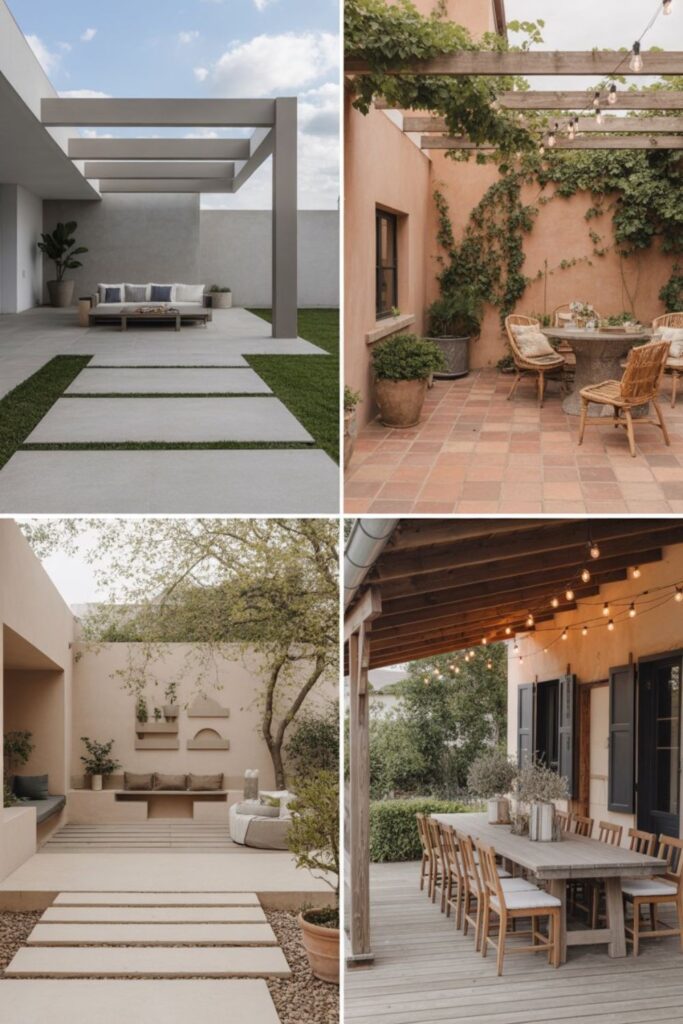
Understanding established design styles helps you articulate your vision and make cohesive selections across materials, furniture, and accessories. Exploring the best outdoor patio designs also clarifies which aesthetic fits your home and lifestyle.
Modern minimalist patios emphasize clean lines, neutral palettes, and uncluttered spaces that create serene outdoor living areas. Large-format concrete or porcelain pavers in gray, white, or black establish sleek foundations. Furniture features geometric shapes with powder-coated aluminum or teak frames and solid-color cushions in whites, grays, or blacks. Built-in seating with hidden storage maximizes function while minimizing visual clutter. Container gardens showcase architectural plants like grasses, succulents, or sculptural specimens in streamlined pots. Lighting remains understated recessed fixtures, linear LED strips, or simple pendants rather than ornate chandeliers. This look represents some of the best outdoor patio designs for contemporary homes and urban settings where simplicity feels sophisticated.
Mediterranean-inspired layouts evoke vacation destinations with warm colors, natural materials, and lush plantings. Terra cotta pavers or tumbled travertine create authentic foundations, while stucco walls or columns add architectural interest. Wrought iron furniture with curved details and earth-toned cushions in terracotta, gold, or deep blue establish the palette. Climbing vines on pergolas, potted citrus trees, and fragrant herbs like lavender and rosemary complete the sensory experience. Water features fountains, tiled pools, or simple bubblers add cooling sounds and visual charm. Decorative tiles, colorful pottery, and lantern-style lighting enhance the setting. For homeowners seeking the best outdoor patio designs inspired by classic European ambiance, this style feels timeless and immersive.
Rustic farmhouse patios celebrate natural, weathered materials and comfortable, unpretentious furnishings that invite relaxation. Reclaimed wood beams on overhead structures, aged brick pavers, or weathered stone create foundations full of character. Furniture blends metal and wood galvanized planters, wooden benches with peeling paint, and vintage watering cans repurposed as décor. String lights or vintage-inspired Edison bulb fixtures provide warm illumination.
The style incorporates vintage treasures: old wheelbarrows as planters, antique shutters as wall art, or weathered ladders displaying potted plants. Color palettes draw from nature whites, creams, soft greens, and warm wood tones. This cozy approach ranks among the best outdoor patio designs for traditional homes and country properties where comfort matters most.
How Do You Plan an Outdoor Patio Layout?
Strategic patio layout planning ensures your space functions efficiently while feeling spacious and inviting regardless of actual square footage. Many of the best outdoor patio designs start with understanding how your space is used and how each zone can serve a purpose.
Begin by mapping your space accurately, measuring overall dimensions and noting fixed elements like doors, windows, trees, and utilities. Identify sun patterns throughout the day which areas receive morning sun, harsh afternoon heat, or pleasant evening light? This guides ideal placement for dining zones (morning sun for breakfast, shade for dinner), relaxation areas (afternoon shade), and gardens (sun requirements). Note prevailing winds and privacy concerns from neighbors. Sketch your space to scale on graph paper or use free online patio planning tools that let you experiment with layouts digitally before committing. This foundational step mirrors what designers do when creating the best outdoor patio designs tailored to comfort and usability.
Functional zoning divides larger patios into distinct areas serving different purposes, much like interior rooms. An entertaining zone might include a fire pit surrounded by comfortable seating, separate from the outdoor dining table and grill station. Create visual separation between zones using level changes, different paving materials, outdoor-rated area rugs, or strategic furniture arrangement. Traffic flow must connect zones smoothly; main pathways should measure at least 3–4 feet wide to allow two people to pass comfortably. Leave adequate clearance around furniture; dining chairs need 3 feet of pull-back space, while conversation areas work best with 18–24 inches between seats and coffee tables. These principles are common across the best outdoor patio designs because they enhance both function and comfort.
Furniture placement ultimately makes or breaks functionality and flow. Outdoor dining tables require a minimum of 10×12 feet for six-person settings, including chairs and clearance. Conversation areas thrive with seating arranged in U-shapes or circles that encourage interaction and never line furniture along walls like a waiting room. Anchor seating areas with outdoor rugs that extend 12–24 inches beyond furniture edges, visually defining the zone while protecting bare feet from hot paving.
Float furniture away from patio edges when space allows to create spaciousness and natural pathways. Position larger pieces first dining tables, sofas, daybeds then layer in accent chairs, side tables, décor, and lighting. This thoughtful approach aligns with how the best outdoor patio designs achieve balance between beauty and usability.
What Are Essential Features for Outdoor Entertaining Spaces?
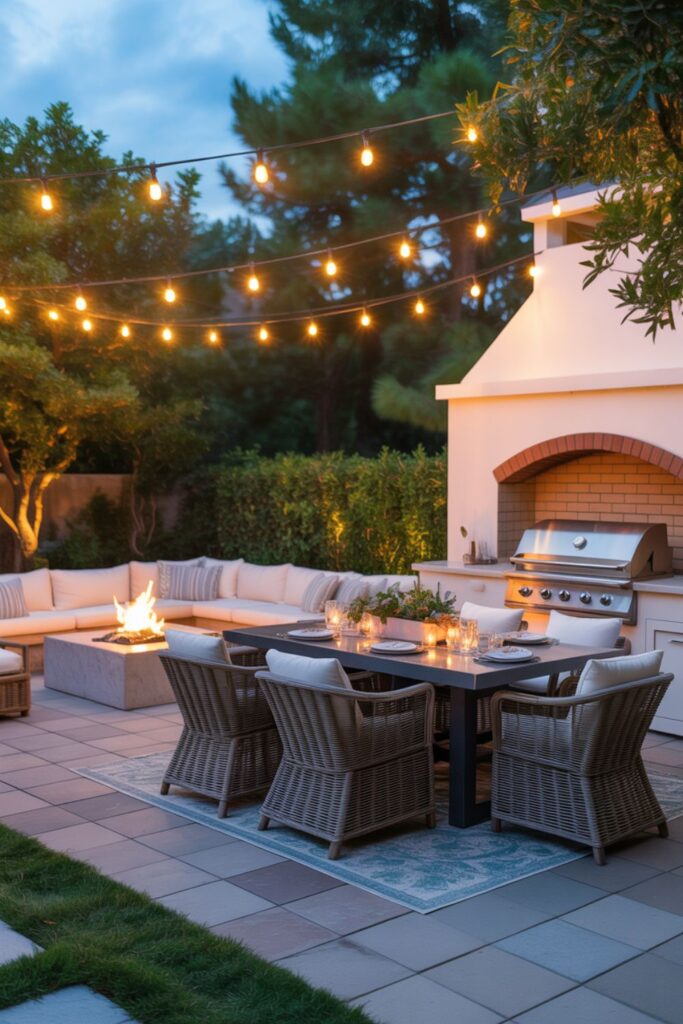
Purpose-built entertaining spaces require specific elements that support hosting guests comfortably while simplifying your role as host. Many of the best outdoor patio designs prioritize features that enhance convenience, flow, and guest experience.
Outdoor kitchens or well-equipped cooking zones keep you engaged with guests rather than isolated indoors. Built-in grills anchor most setups, with sizes and fuel types (gas, charcoal, pellet) matching your cooking style and budget. Add prep counters on either side 30–36 inches provides adequate workspace. Mini-refrigerators store drinks and ingredients at hand, eliminating constant indoor trips. Sinks with hot and cold water allow cleanup without tracking through your home. Storage cabinets protect supplies from weather while keeping frequently used items accessible. Full outdoor kitchens with these features cost $5,000–$25,000+ depending on appliances, materials, and utilities required, but even basic setups with a quality grill and portable prep cart dramatically improve functionality. It’s easy to see why outdoor kitchens remain key components in the best outdoor patio designs for entertaining.
Adequate seating areas accommodate your typical guest count plus a few extras. Plan for one seat per regular guest plus 20% overflow. Mix seating types: dining chairs for meals, deep lounge seating for conversation, and ottomans or poufs that double as extra seats or footrests. Flexible furniture arrangements adapt to different gatherings, modular sectionals reconfigure for intimate groups or large parties, while lightweight chairs easily move between zones.
Consider weatherproof storage for cushions and pillows; constant exposure degrades fabrics quickly, but hauling cushions inside after each use becomes tedious. Storage benches offer dual-purpose value by providing seating while protecting textiles. Thoughtful seating strategies like these are common across the best outdoor patio designs because they blend comfort with practicality.
Outdoor dining setups need appropriately sized tables, allowing a minimum of 24 inches of table space per person. Rectangular tables seat more people in tighter spaces, while round tables facilitate conversation. Extendable tables offer flexibility for everyday meals and special occasions. Weather-resistant dining chairs with supportive backs encourage guests to linger and avoid backless benches for elderly guests or long gatherings.
Shade is essential for daytime dining: parasol umbrellas provide portable solutions, while pergolas or permanent awnings cover larger areas. Ambient lighting extends usability into the evening, combining overhead fixtures for general illumination with candles or lanterns for intimate atmosphere. These thoughtful combinations reflect the balance of form and function seen in the best outdoor patio designs worldwide.
Read More About: 75+ best Patio Decorating Ideas to Transform Your Outdoor Space
How Can You Add Privacy to Your Outdoor Patio?
Privacy transforms patios from exposed, uncomfortable spaces into intimate retreats where you can relax without self-consciousness or neighbor scrutiny. Many of the best outdoor patio designs prioritize privacy solutions that feel intentional, stylish, and functional.
Living screens created with fast-growing plants soften boundaries while providing seasonal interest. Bamboo grows rapidly; some varieties add 3–5 feet annually and create dense barriers, though running varieties require rhizome barriers to prevent invasive spread, so choose clumping bamboo instead. Tall ornamental grasses like miscanthus or switchgrass reach 6–8 feet and sway beautifully in breezes. Evergreen shrubs such as arborvitae, boxwood, or holly maintain year-round privacy but grow more slowly. Position plants in staggered double rows for maximum screening density. Container-grown specimens offer flexibility to move them seasonally or take them with you when relocating. These plant-based solutions frequently appear in the best outdoor patio designs because they enhance privacy while adding natural beauty.
Hardscape privacy structures deliver instant results without the wait time required for plant growth. Fences remain the most straightforward option, with heights, materials, and styles tailored to your home’s architecture and local zoning rules (most areas limit fence heights to 6–8 feet). Horizontal board fences suit modern homes, while picket or lattice styles complement traditional architecture.
Living walls that combine vertical planters with structural supports create green screens while using less ground space than hedge rows. Decorative metal or composite panels add artistic elements and block sightlines; laser-cut designs even cast beautiful shadow patterns without requiring full opacity. Outdoor curtains on pergolas or freestanding frames offer adjustable privacy: draw them closed when needed, tie them back for open views. These solutions are common in many of the best outdoor patio designs because they blend function with aesthetic appeal.
Strategic placement of privacy features blocks specific views without creating fortress-like enclosures. Identify problem sightlines, second-story neighbor windows, nearby sidewalks, or adjacent patios then place screening elements to interrupt those views rather than enclosing your entire patio. Tall planters elevate greenery to eye level even in compact spaces. Partial walls or half-height structures with top lattice sections balance privacy with openness, preventing claustrophobic feelings.
Layer screening elements at different depths: a pergola with climbing vines, mid-height planters, and a distant fence create dimension while obscuring views from multiple angles. This layered approach reflects the thoughtful planning seen in the best outdoor patio designs, where privacy and openness coexist in perfect balance.
What Shade Solutions Work Best for Patios?
Adequate shade solutions determine whether patios remain comfortable during peak summer heat or become unusable furnaces avoided until evening.
Pergolas top the list for their combination of style, function, and property value addition. These overhead structures feature open roofs with cross-beams spaced to filter sunlight ideal for hot climates where complete coverage would feel oppressive. Traditional pergolas cast dappled shade from their beam pattern alone, while adding retractable canopies, shade cloth, or climbing vines increases coverage. Freestanding versions install anywhere on your property, while attached pergolas connect to your home and extend covered living space. Costs range from $3,000-8,000 for basic 10×10 foot structures, with custom designs in premium materials reaching $15,000+. The investment pays dividends in increased patio usability and potential home value.
Retractable awnings offer adjustable coverage, extend them during harsh midday sun, retract for stargazing or winter sun exposure. Motorized models operate via remote or smartphone apps, with wind sensors automatically retracting them during storms to prevent damage. Manual versions cost less but require physical effort to operate. Quality awnings rated for sun and rain cost $1,000-3,000 for typical patio widths, with premium motorized versions reaching $5,000-8,000. Most mount to home exteriors, so installation requires solid attachment points and potentially exterior work permits. The ability to adjust coverage throughout the day and seasons makes awnings exceptionally versatile shade solutions.
Umbrellas provide portable, affordable shade perfect for targeted coverage over dining tables or lounge areas. Market umbrellas mount through table centers, while cantilever designs suspend shade from offset poles that don’t interfere with furniture placement. Quality outdoor umbrellas with weather-resistant fabrics, sturdy frames, and stable bases cost $200-800 cheap versions tip in winds and fade within seasons. Position umbrellas to block sun during your primary usage times. Offset cantilever umbrellas work beautifully for seating areas where center poles would disrupt arrangements. Weighted bases prevent tipping figure 50-75 pounds for typical residential umbrellas, more for oversized or windy locations. Close umbrellas during storms and winter storage extends their lifespan significantly.
How Do You Incorporate Fire Features into Patio Designs?
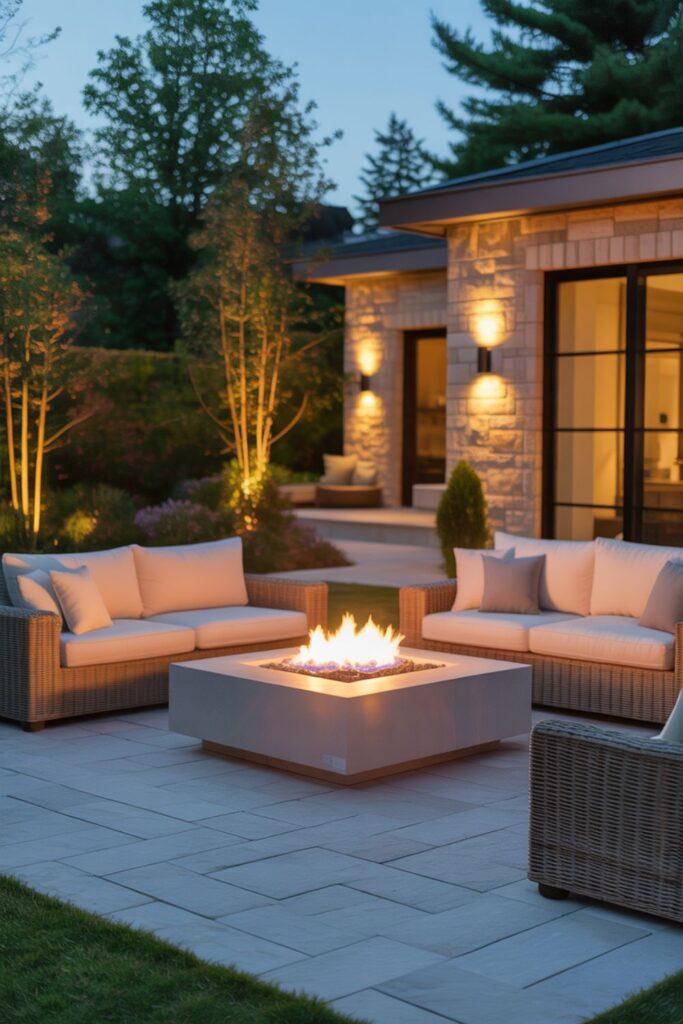
Fire pits and fireplaces extend patio seasons into cool evenings while creating magnetic focal points that draw people together naturally.
Fire pit styles range from simple portable metal bowls to elaborate built-in installations with surrounding seating walls. Portable fire bowls offer maximum flexibility at minimal investment $100-500 for quality units that move around your patio or store during off-seasons. Built-in fire pits with stone or brick surrounds cost $2,000-6,000 installed but become permanent focal points that anchor your patio layout. Wood-burning pits deliver authentic crackles and that distinctive campfire aroma, though they require ash cleanup and constant tending. Gas fire pits light instantly with consistent flame control and zero ash, though installation requires natural gas lines or propane tank connections. Consider your typical guest count when sizing 48-inch diameter pits accommodate 8-10 people comfortably, while smaller 30-36 inch versions suit intimate gatherings.
Placement requires careful planning for both safety and functionality. Position fire pits at least 10-15 feet from structures, overhangs, and combustible materials. Check local fire codes many municipalities regulate or prohibit wood-burning fire features due to air quality concerns. Ensure adequate clearance overhead trees, awnings, and pergolas need sufficient height to prevent damage. Arrange seating in complete or partial circles around fire features, maintaining 3-4 feet from the fire edge for safety and comfort. Built-in bench seating defines the conversation zone while providing permanent seating that never needs rearranging.
Outdoor fireplaces create dramatic focal points with more directed heat output than open fire pits. They suit corner locations or property boundaries, with their backs providing visual screening. Costs start around $3,000 for manufactured metal units and reach $10,000-20,000 for custom stone constructions with chimneys. The vertical design draws eyes upward, adding architectural interest to flat patio spaces. Many include storage nooks for firewood, built-in seating walls, and mantels for displaying planters or decorative items. Gas models offer convenience while wood-burning versions deliver authentic ambiance. Considering prevailing winds, smoke should blow away from main seating areas rather than directly into guests’ faces.
What Lighting Strategies Enhance Outdoor Patios?
Strategic lighting extends patio usability after dark while creating ambiance that transforms spaces from merely functional to truly magical.
Layered lighting combines multiple fixture types at different levels, creating depth and flexibility for various activities and moods. Start with ambient lighting that provides overall illumination overhead fixtures on pergolas, wall-mounted sconces flanking doors, or post lights defining patio perimeters. This foundation layer should offer enough brightness for safe navigation without harsh glare. Dimmable fixtures or fixtures on separate switches allow adjustment for different occasions brighter for active dining, softer for relaxed conversation.
Task lighting focuses on specific activity zones. Position fixtures above outdoor dining tables pendants hung 30-36 inches above tabletops or chandelier-style fixtures centered over tables. Lighting near grills and prep areas illuminates cooking surfaces for safety and convenience. Reading lights near lounge areas support evening relaxation. These targeted fixtures should be brighter than ambient lighting but still avoid harsh glare. Warm color temperatures (2700-3000K) feel more inviting than cool white lights.
Accent lighting adds drama and highlights landscape features, architectural elements, or special plantings. Uplighting trees or architectural columns creates dramatic shadows and emphasizes vertical elements. Path lighting defines walkways while adding visual interest stake lights every 6-8 feet along pathways provide adequate illumination. String lights draped overhead create instant ambiance with minimal installation LED versions last year and consume little electricity. Candles and lanterns introduce flickering warm light that no electric fixture replicates, use them on tables, group them on steps, or hang lanterns from shepherd’s hooks. Fire features provide substantial ambient light plan other lighting accordingly to avoid over-illumination that diminishes the fire’s glow.
How Can You Make Small Patios Feel Larger?
Patio ideas for compact spaces focus on visual tricks, smart furniture selection, and multi-functional elements that maximize every square foot.
Furniture scale matters tremendously in small patios; oversized pieces overwhelm tight quarters while appropriately sized furniture maintains comfortable circulation. Choose streamlined profiles over bulky cushioned furniture. Armless chairs tuck under tables completely, appearing to take no space when not in use. Benches with hidden storage serve dual purposes. Folding or stacking furniture stores when extra space is needed for gatherings. Transparent materials like acrylic or glass tables maintain function without visual weight you see through them rather than perceiving them as solid masses.
Vertical elements draw eyes upward, creating the perception of height that makes spaces feel larger. Tall, narrow planters emphasize vertical lines. Pergolas or overhead trellises define space without enclosing it. Climbing vines on walls or fences add greenery without consuming floor space. Vertical gardens maximize planting area in minimal footprints. Light-colored overhead elements feel airier than dark materials that appear to lower ceilings. Hang planters from walls or overhead structures rather than placing them on the ground.
Continuous surfaces unify small patios visually. Use the same paving throughout rather than dividing the space with different materials visual breaks make areas appear smaller. Extend your flooring material slightly up surrounding walls to blur boundaries. Minimize clutter by providing adequate hidden storage. Keep accessories and plantings edited rather than cramming every available surface. Mirrors mounted on fences or walls reflect views and light, doubling perceived space. Strategic lighting makes small patios usable after dark, effectively expanding their functional hours even if physical size remains limited.
What Are the Best Plants for Patio Landscaping?
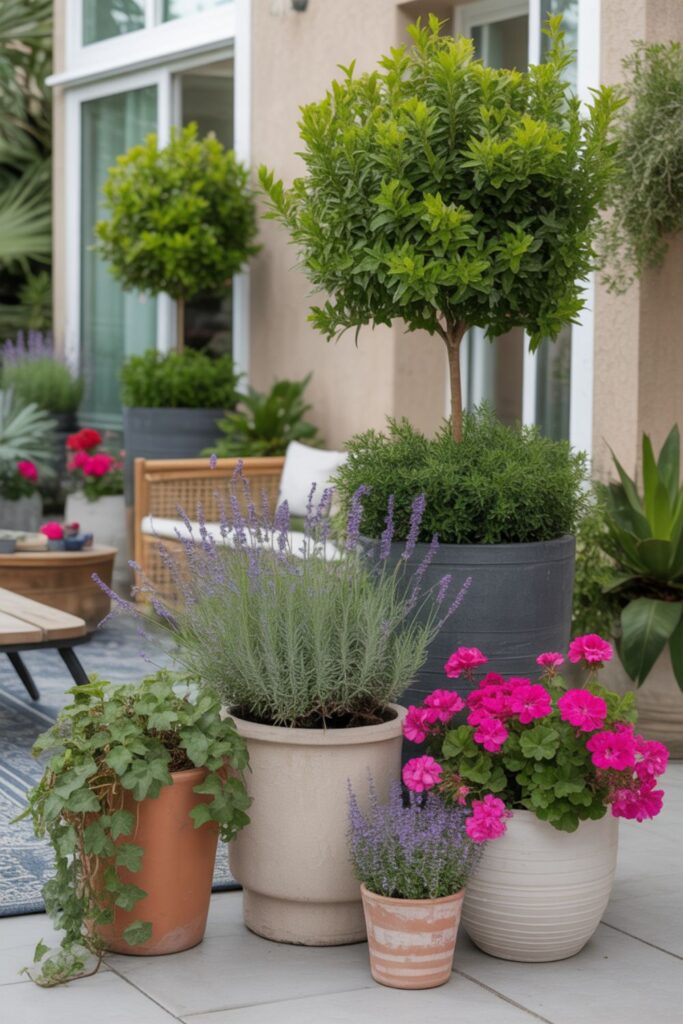
Strategic plant selection softens hard surfaces, provides privacy, and creates lush surroundings that make patios feel like garden sanctuaries.
Container gardens offer maximum flexibility for patio landscaping, move them seasonally, swap out tired plants, and adjust arrangements as needs change. Choose containers matching your design style sleek concrete or metal planters for modern spaces, terra cotta or ceramic for Mediterranean or traditional themes. Group pots in odd numbers at varying heights for visual interest. Combine thrillers (tall focal plants), fillers (mounding plants), and spillers (trailing plants) in single containers for professional-looking arrangements. Ensure all containers have drainage holes to prevent root rot from overwatering or rain accumulation.
Select plants based on sun exposure and maintenance preferences. Full-sun patios (6+ hours direct sun) support petunias, geraniums, succulents, and sun-loving herbs. Part-shade areas (3-6 hours sun) accommodate impatiens, begonias, coleus, and hostas. Shade patios need ferns, caladiums, or shade-tolerant perennials. Evergreen shrubs like boxwood or dwarf conifers provide year-round structure. Ornamental grasses add movement and texture while requiring minimal care. Flowering plants introduce seasonal color rotate containers with blooming annuals throughout the growing season for continuous interest.
Landscaping around patio perimeters softens edges and integrates hardscape with surrounding gardens. Plant borders between patios and lawns create definition while providing planting space. Raised beds built at patio edges offer seating height while containing plant cap walls with flat stones creating seating surfaces. Corner plantings fill awkward spaces while softening hard 90-degree angles. Climbing vines on trellises, walls, or pergola posts add vertical interest without consuming floor space. Choose non-invasive varieties like clematis, climbing roses, or annual vines aggressive vines like wisteria can damage structures. Fragrant plants like jasmine, lavender, or gardenia positioned near seating areas engage additional senses beyond sight.
How Do You Design Patios for Different Climates?
Climate-responsive design ensures your patio remains comfortable and functional despite local weather extremes while minimizing maintenance headaches.
Hot, arid climates demand substantial shade solutions and heat-reflective materials. Light-colored paving stays cooler underfoot than dark surfaces that absorb and radiate heat. Position patios on north or east sides of homes where they receive shade during hot afternoons. Substantial overhead coverage solid roof panels, dense shade cloth on pergolas, or mature trees blocks intense sun. Misters or cooling fans make extreme heat tolerable. Drought-tolerant landscaping with succulents, native plants, and xeriscaping principles reduces water usage and maintenance. Create microclimates with walls or fencing that block hot winds while channeling breezes. Water features provide evaporative cooling and soothing sounds.
Cold climates with freeze-thaw cycles require proper drainage and frost-resistant materials. Concrete should be air-entrained specifically for freeze-thaw durability. Ensure patios slope at least 1-2% away from structures for drainage standing water that freezes causes cracking. Apply sealers to protect concrete and pavers from salt damage and moisture infiltration. Choose furniture and accessories rated for winter storage, or invest in weather-resistant materials that tolerate snow and ice. Consider radiant heat systems installed beneath paving for year-round use; these systems cost $10-25 per square foot installed but make patios usable even in winter. Fire features extend shoulder seasons significantly, making cool evenings enjoyable.
Humid, rainy regions need exceptional drainage and mildew-resistant materials. Slope patios adequately and install French drains if necessary to handle heavy rainfall. Choose non-porous materials like concrete, porcelain pavers, or composite decking that resist moisture absorption and mildew growth. Allow excellent air circulation to prevent mold and avoid completely enclosed spaces. Select furniture with quick-drying fabrics or sling-style seating that sheds water. Apply mildew-resistant sealers to wood elements. Covered areas need adequate height and ventilation to prevent moisture accumulation minimum 8-foot clearance under roof structures. Consider retractable enclosure systems that protect from rain while opening completely during nice weather.
What Are Budget-Friendly Outdoor Patio Design Ideas?
Beautiful, functional outdoor patio designs don’t require unlimited budgets, strategic choices and DIY efforts create impressive results at reasonable costs.
Concrete patios offer the most economical foundation basic poured slabs cost $6-8 per square foot for materials and installation combined when hiring contractors. DIY installation reduces costs to $2-4 per square foot for materials only. Stain or paint basic concrete for minimal investment concrete stains cost $0.30-0.50 per square foot applied, transforming gray slabs with earthy or contemporary colors. Add visual interest with scored patterns using a grinder to create geometric designs, faux tile patterns, or simple border details. These techniques deliver custom looks at fraction-of-material costs.
Gravel patios with pavers or stepping stones provide ultra-budget-friendly solutions perfect for casual, cottage-style spaces. Decomposed granite or pea gravel costs $1-3 per square foot installed over proper landscape fabric. Add concrete pavers, flagstones, or repurposed materials in stepping-stone patterns through gravel. The natural, informal look suits rustic or country properties beautifully. Good drainage makes gravel ideal for rainy climates. Occasional re-leveling maintains neat appearance and simple rake work rather than expensive repairs.
Furnish strategically by mixing investment pieces with budget finds. Splurge on one quality seating piece: a durable sofa or dining set that anchors your design. Fill in with budget-friendly accent chairs, side tables, or accessories. Scour estate sales, salvage yards, and online marketplaces for vintage metal furniture that needs only cleaning and fresh paint. DIY projects slash costs: build simple benches from cedar or composite materials ($100-200 in materials), construct concrete-filled cinder block benches topped with wood plank seating, or repurpose pallets into vertical gardens or sectional frames. Focus budget on elements you use most comfortable seating and adequate lighting while economizing on purely decorative items.
How Do You Maintain Different Patio Materials?
Proper maintenance protects your investment and keeps outdoor patio designs looking fresh for decades rather than deteriorating within years.
Concrete maintenance starts with annual cleaning using pressure washers (1500-2000 PSI) or dedicated concrete cleaners. Address stains promptly oil stains respond to degreasers, rust stains need oxalic acid treatments. Reseal every 2-3 years with quality concrete sealer to prevent moisture penetration, staining, and freeze-thaw damage. The process costs $0.50-1.00 per square foot professionally or $0.15-0.30 DIY for materials. Repair cracks immediately before they expand, use concrete crack filler for small cracks, professional patching for larger damage. Prevent damage by clearing snow promptly and avoiding harsh de-icing chemicals that spall concrete surfaces.
Natural stone requires gentler care than concrete. Sweep regularly to remove grit that scratches surfaces. Clean with pH-neutral stone cleaners acidic cleaners etch limestone and marble while harsh alkaline products damage most stones. Power washing works for durable stones like granite and bluestone but can damage softer varieties like sandstone. Reseal annually with penetrating stone sealer appropriate for your stone type costs match concrete sealing. Re-sand joints between stones every 2-3 years as material washes away. Control weeds promptly before roots disrupt stone placement. Some homeowners embrace natural patina and moss growth for aged appearance, while others prefer pristine looks requiring more intervention.
Pavers need periodic releveling as base materials settle. Remove sunken pavers, add base material to correct height, then reset and compact. Re-sand joints every 1-2 years with polymeric sand that hardens when wetted, resisting erosion and weed growth better than regular sand. Power wash annually on low settings to avoid displacing joint sand. Seal pavers every 3-5 years to enhance color and resist staining especially important for concrete pavers that fade without protection. Replacing individual damaged pavers rather than repairing the modular nature makes this simple. Store several extra pavers when installing to ensure perfect matches for future repairs.
Read More About: Inspiring Backyard Plants Ideas to Transform Your Outdoor Space
What Furniture Materials Work Best Outdoors?
Patio furniture material selection determines longevity, maintenance requirements, and year-round appearance. Cheap furniture becomes expensive when it needs replacing every few seasons.
Teak and other premium hardwoods deliver exceptional durability with proper care. Teak naturally resists moisture, insects, and rot through high oil content. Left untreated, it weathers to attractive silver-gray patina. Apply teak oil annually to maintain golden brown color, though this requires ongoing commitment. Teak furniture costs significantly more than alternatives dining sets range from $2,000-8,000+ but lasts decades and can remain outdoors year-round in most climates. Eucalyptus offers similar weather resistance at lower prices ($800-3,000 for sets), though it requires more frequent treatment and has slightly shorter lifespan. Both hardwoods work beautifully in traditional and transitional designs.
Aluminum furniture combines lightweight portability with complete rust resistance. Powder-coated finishes resist chipping and fading when properly maintained. Modern aluminum furniture features substantial designs that don’t feel cheap or flimsy like older versions. Prices range from $500-3,000 for quality sets. The material suits contemporary and transitional styles beautifully. Cast aluminum replicates traditional wrought iron designs with a fraction of the weight and zero rust concerns. Aluminum requires minimal maintenance, occasional washing with mild soap preserves appearance. Its lightweight nature means securing furniture during storms or providing winter storage in windy locations.
Wicker and rattan deliver classic resort aesthetics when constructed from synthetic materials. Natural wicker and rattan degrade outdoors within seasons, but synthetic versions using resin wicker (PE or HDPE plastic) resist moisture, fading, and cracking. Quality synthetic wicker furniture costs $1,000-4,000 for complete seating area sets and lasts 10+ years. The woven texture provides visual warmth while remaining genuinely weather-resistant. Pair with fade-resistant cushions using solution-dyed acrylic fabrics like Sunbrella that resist moisture, fading, and mildew. Most cushions still benefit from covered storage during winters or prolonged rain waterproof storage boxes protect them while providing extra seating or table surfaces.
Frequently Asked Questions
What is the ideal size for an outdoor patio?
Typical residential patios measure 12×12 feet minimum for basic functionality, though 16×16 to 20×20 feet better accommodates dining and lounging zones. Plan 10-12 square feet per person for entertaining spaces, so a patio hosting 12 guests needs 120-144 square feet minimum. Balance size with your yard’s proportions oversized patios overwhelm small yards while undersized ones look lost in large properties.
How much does it cost to build an outdoor patio?
Basic concrete patios cost $2,400-4,800 for typical 300-square-foot installations ($8-16 per square foot). Mid-range paver patios run $4,500-9,000 ($15-30 per square foot), while premium natural stone installations reach $9,000-15,000+ ($30-50+ per square foot). Costs increase with site preparation needs, complex shapes, built-in features, and premium materials. DIY installation saves 40-60% on labor but requires proper tools, skills, and time commitment.
Do I need a permit to build a patio?
Requirements vary by municipality; most areas require permits for patios attached to homes, those exceeding certain sizes (often 200 square feet), or any patio requiring concrete footings. Freestanding patios under size thresholds frequently don’t need permits. Check with your local building department before starting construction. Permit costs typically range $50-500 depending on project scope. Unpermitted work can complicate future home sales and void insurance coverage if problems arise.
What direction should a patio face?
North-facing patios receive limited direct sun, staying coolest in hot climates but feeling chilly in cool regions. South-facing patios get maximum sun exposure ideal for cool climates, overwhelming in hot areas without substantial shade solutions. East-facing patios enjoy pleasant morning sun and afternoon shade, perfect for breakfast spots. West-facing patios receive intense afternoon sun ideal for sunset viewing but requiring shade during summer heat. Consider your usage patterns and install adjustable shade for flexibility.
How do I prevent water pooling on my patio?
Proper slope during installation prevents standing water patios should slope 1-2% (⅛ inch per foot) away from structures toward drainage areas. French drains installed at patio edges collect and redirect water. Permeable pavers or gravel joints allow water to drain through the surface rather than running off. For existing patios with drainage issues, mudjacking or slab leveling can correct improper slopes. Ensure downspouts direct water away from patio areas using extensions or underground drainage.
Can I build a patio over existing concrete?
Yes, when existing concrete remains structurally sound without major cracking or settling. Pavers, outdoor tiles, or additional concrete overlays installed over existing slabs, saving demolition costs. Ensure the existing slab slopes properly for drainage and can support additional weight. Clean thoroughly and apply bonding agents when overlaying new concrete. This approach works well for updating dated patios without starting from scratch, though it raises finished height which may affect door thresholds.
Conclusion
Outdoor patio designs transform neglected backyards into valuable living spaces that expand your home’s functional square footage while creating environments where life’s best moments happen. Whether you pursue elaborate multi-zone designs with outdoor kitchens and fire features or modest retreats focused on comfortable seating and thoughtful landscaping, success comes from matching designs to your lifestyle, climate, and budget realities. The best outdoor patio designs seamlessly blend form and function, using quality materials appropriate for your region while reflecting architectural styles that complement your home rather than conflicting with it.
Your perfect backyard patio awaits start by defining your primary uses and budget parameters, then make informed decisions about materials, layouts, and features that support those goals. Don’t let analysis paralysis prevent action. Begin with solid foundations using appropriate patio materials for your climate, add comfortable weather-resistant furniture that invites regular use, then layer in shade solutions, lighting, and plantings that create your personal outdoor sanctuary. Even modest investments in thoughtful design deliver substantial returns in daily enjoyment and property value. Transform your outdoor space today by implementing these proven strategies, and discover how outdoor living spaces become your home’s most cherished rooms where morning coffee tastes better, dinner parties linger longer, and everyday life feels more connected to nature’s rhythms and seasons.