Candy Land Christmas Tree Ideas For Sweet Holiday Decor
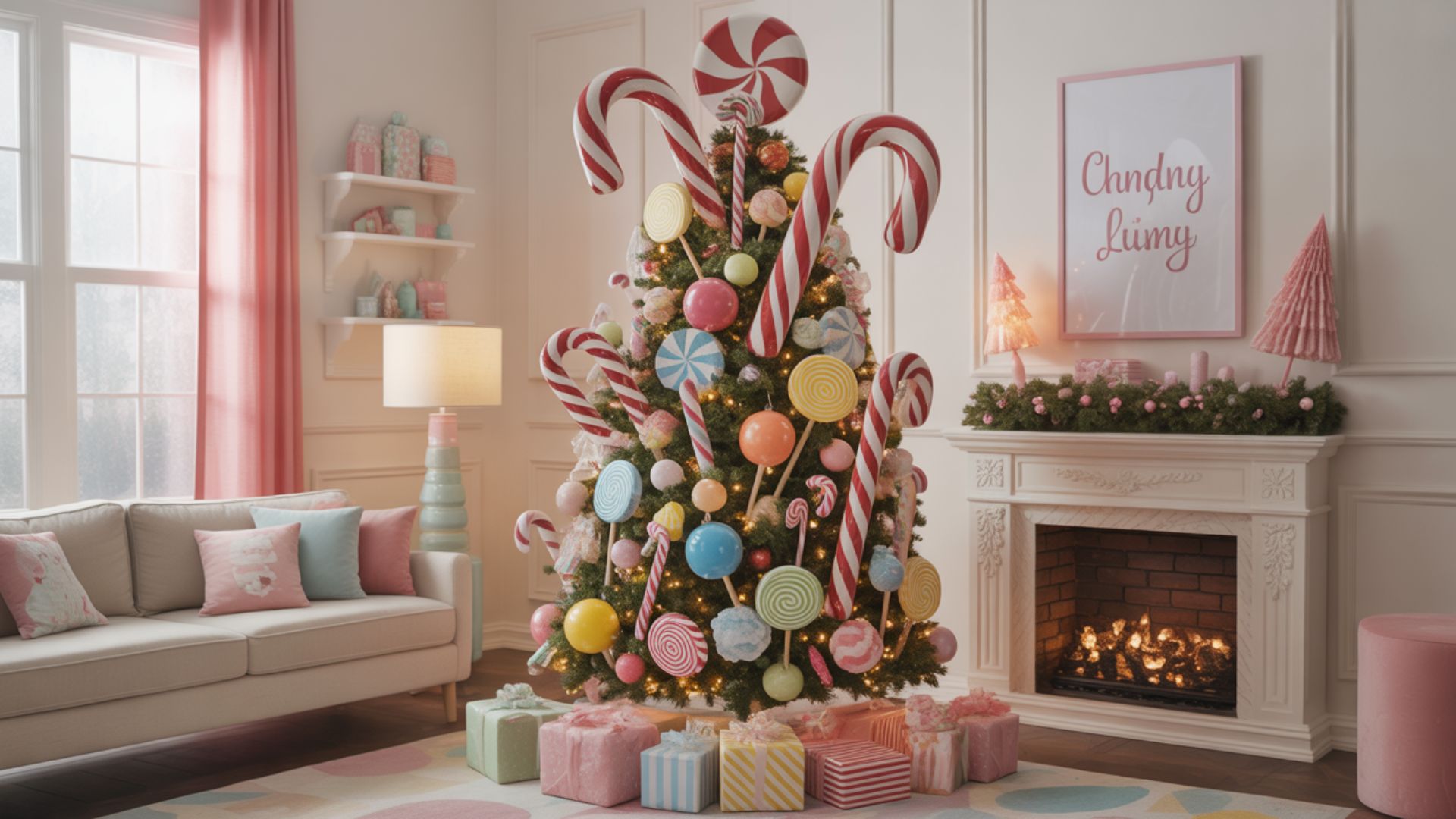
Your traditional Christmas tree feels boring this year. Same old red and green ornaments hang predictably from branches that desperately need a refresh. You scroll through Pinterest seeing magical candy land Christmas tree ideas that look like they belong in a storybook, while yours sits in the corner looking tired and uninspired.
The frustration mounts as another holiday season approaches. Your kids beg for something special and different. You want to create those Instagram-worthy moments, those childhood memories that last forever. Meanwhile, your budget tightens and you wonder how anyone affords those stunning displays. The gap between your vision and reality widens with each passing day.
Welcome to your complete guide for creating spectacular candy themed Christmas trees without breaking the bank. This comprehensive resource delivers everything you need from budget-friendly DIY candy ornaments to professional decorating techniques, from choosing perfect pastel Christmas color schemes to sourcing adorable candy decorations. Whether you want traditional peppermint stripes or trendy pastel desserts, you’ll discover actionable strategies to transform your tree into a sweet wonderland that delights both children and adults.
Read More About: 21+ Fairy Garden Ideas for Stunning Mini Gardens
Why Candy Land Christmas Trees Create Magic
The Psychology Behind Sweet Holiday Themes
Candyland Christmas decorations tap into powerful nostalgia that transcends generations. Adults remember playing the beloved board game during childhood, fantasizing about walking through forests of edible treats. Children naturally gravitate toward anything resembling sweets, making candy trees irresistible focal points.
Interior designers report that whimsical Christmas trees consistently generate the strongest emotional responses from families. These playful displays encourage participation from every family member, creating bonding opportunities during tree decoration. Everyone gets excited selecting favorite candy ornaments.
The beauty of candy Christmas tree themes lies in their universal appeal. Unlike sophisticated adult-only aesthetics, candy themes welcome everyone into the holiday experience. Grandparents smile remembering vintage ribbon candy, while toddlers squeal at lollipop ornaments. This inclusive quality makes candy trees perfect for homes hosting multi-generational celebrations.
Versatility Across Different Styles
Your candy land tree doesn’t require a single approach. Classic red and white Christmas tree designs feature traditional peppermint stripes and candy canes for timeless elegance. These work beautifully in traditional homes with existing holiday décor.
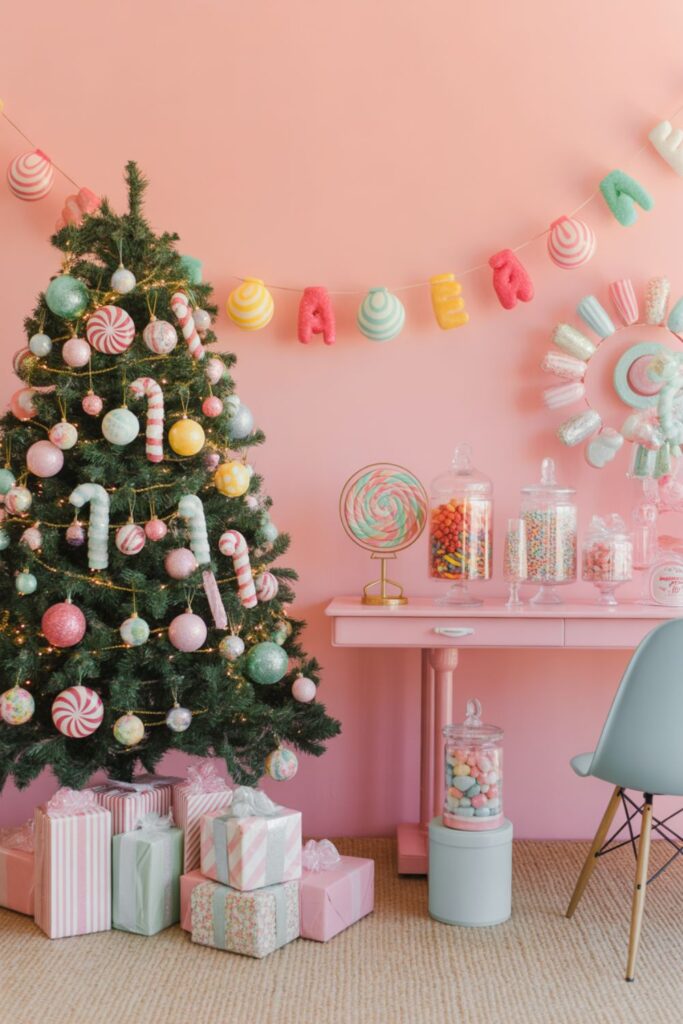
Alternatively, pastel candy Christmas trees offer contemporary twists with soft pinks, mint greens, lavender, and baby blues. These sophisticated palettes appeal to design-conscious adults while maintaining playful whimsy. The pastel approach works particularly well in modern farmhouse, coastal, or shabby chic interiors.
Rainbow candy themes embrace every color imaginable, creating vibrant, energetic displays that children absolutely adore. These maximize visual impact and photograph beautifully for social media sharing. Consider your existing décor and personal preferences when choosing your candy tree direction.
Essential Color Schemes for Candy Land Trees
Classic Red and White Peppermint Paradise
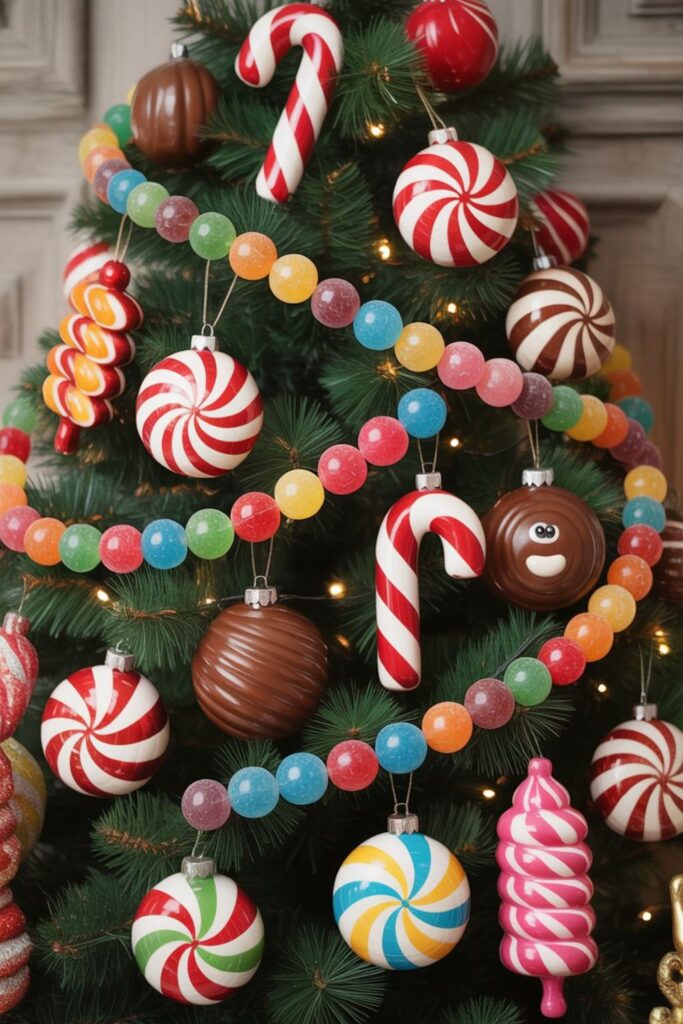
The traditional red and white candy cane theme remains timelessly popular for excellent reasons. This color scheme delivers instant recognition as candy-inspired while maintaining sophisticated elegance. Red and white creates high contrast that photographs beautifully and reads clearly from across rooms.
Start with either white or flocked Christmas trees as your foundation. The snowy appearance enhances candy themes by suggesting sugar coating or winter wonderlands. If using green trees, simply increase the density of your decorations to minimize visible greenery.
Layer peppermint ornaments in various sizes throughout branches. Large statement pieces anchor bottom sections while smaller versions fill upper areas. Include candy cane picks, peppermint swirl garlands, and striped ribbon in coordinating patterns. Mix glossy and glittered finishes for textural variety that catches light dynamically.
Red and white works brilliantly in traditional dining rooms, classic living spaces, and homes where Christmas already features these colors. The beauty lies in versatility you can keep existing red decorations and simply add candy-specific elements for instant transformation.
Pastel Candy Dreams
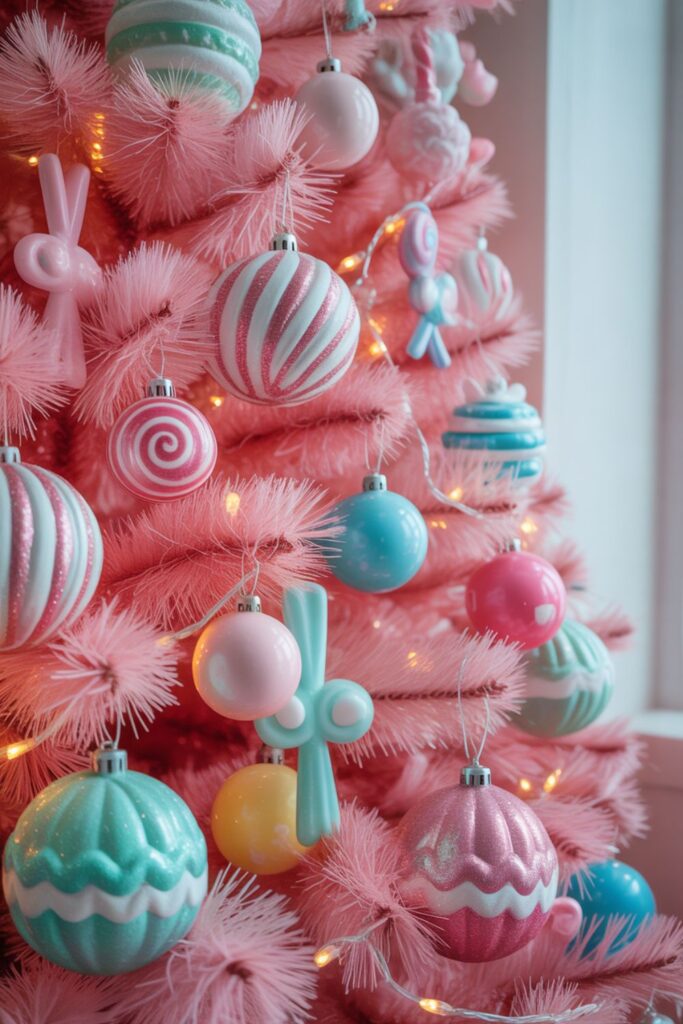
Pastel Christmas decorations represent the fastest-growing trend in candy tree design. Soft colors create sophisticated, contemporary aesthetics while maintaining playful candy references. Popular palettes include bubblegum pink, mint green, lavender, Tiffany blue, and buttery yellow.
Choose white or silver trees as neutral backdrops that let pastels shine. These lighter bases prevent color overwhelm while providing elegant contrast. Pre-lit white trees work particularly well, as warm white lights enhance pastel tones beautifully.
Select pastel candy ornaments featuring ice cream cones, macarons, donuts, cupcakes, and lollipops in coordinating hues. Many retailers now offer complete pastel candy collections making color coordination effortless. Mix in white or silver accent pieces to prevent colors from competing.
Pastel pink Christmas trees specifically deliver feminine, elegant vibes perfect for guest rooms, girls’ bedrooms, or kitchen displays. These softer interpretations feel grown-up enough for adult sensibilities while maintaining enough whimsy to delight children. Consider metallic accents in rose gold or silver for added sophistication.
Rainbow Candy Explosion
For maximum visual impact and child appeal, embrace full rainbow colorful candy Christmas trees. This approach celebrates every possible candy color simultaneously, creating vibrant, energetic displays that become instant conversation starters.
White flocked trees work beautifully as neutral foundations, allowing rainbow colors to pop dramatically. The white suggests powdered sugar or snow, enhancing the candy theme conceptually. Alternatively, use traditional green trees and simply pack them densely with colorful decorations.
Include candy ornaments spanning the entire spectrum red lollipops, orange gumdrops, yellow lemon drops, green candies, blue mints, purple taffy, and pink peppermints. Add multicolored ribbon candy, rainbow sprinkle decorations, and colorful string lights. The goal becomes organized chaos that feels intentionally abundant rather than accidentally cluttered.
This approach works wonderfully in playrooms, family rooms, basement entertainment spaces, or as secondary trees in less formal areas. Kids absolutely adore rainbow candy trees, making them perfect for creating magical childhood memories.
DIY Candy Ornaments: Budget-Friendly Projects

Melted Peppermint Candy Ornaments
These stunning DIY peppermint ornaments cost pennies while delivering professional-quality results. You need only peppermint candies, cookie cutters, parchment paper, and ribbon supplies most households already own.
Preheat your oven to 350 degrees Fahrenheit. Line baking sheets with parchment paper, positioning metal cookie cutters directly on the parchment. Spray cookie cutter interiors lightly with cooking spray for easier removal. Fill each cutter with a single layer of unwrapped peppermint candies, arranging them tightly together.
Bake for five to ten minutes, watching carefully as candies melt. They’ll bubble slightly then settle into smooth, glassy surfaces. Remove from the oven once fully melted but before they brown. Let cool for approximately 15 minutes not completely cold, as this makes removal difficult.
Carefully pop ornaments from cookie cutters while still slightly warm. Thread ribbon through any natural openings or use a heated needle to create hanging holes. These homemade candy ornaments look absolutely professional while costing under five dollars for dozens of pieces. They last one season beautifully when handled carefully.
Pool Noodle Candy Creations
Transform inexpensive pool noodles into oversized peppermint candy decorations that create stunning focal points. This clever hack delivers large-scale impact at fraction of retail costs for similar items.
Purchase red, white, or pastel pool noodles from dollar stores. Cut into five-inch sections using sharp knives or electric knives for clean edges. Wrap each section with striped fabric cut to eight by ten inches, securing ends with hot glue. The fabric creates traditional candy stripes or customized patterns matching your color scheme.
Wrap completed pieces in cellophane sheets or basket wrap cut to eight by twelve inches. Gather cellophane at both ends, securing with curling ribbon tied in bows. These wrapped candy ornament decorations measure large enough to become tree statement pieces while remaining lightweight enough to hang safely.
Create variations using different fabric patterns, wrapping paper, or spray-painted noodles in candy colors. Make traditional peppermints, pastel bonbons, or rainbow lollipops depending on your tree theme. Total cost runs under twenty dollars for enough large ornaments to fill an entire tree dramatically.
Wooden Candy Ornaments
Craft timeless vintage candy ornaments using wooden cutouts, paint, and painter’s tape. These durable decorations become family heirlooms used year after year, making them worthwhile investments of time and money.
Purchase wooden candy shapes from craft stores or cut your own from thin plywood. Sand edges smooth and wipe away dust. Choose craft paint colors matching your tree palette traditional reds and whites, soft pastels, or vibrant rainbow hues.
Paint entire ornaments in base colors, letting dry completely. Use painter’s tape to mask off stripes at regular intervals. Paint exposed sections in contrasting colors for classic candy striping. Remove tape once paint dries to reveal clean, professional lines.
Add wire loops or ribbon hangers to ornament tops using hot glue. These handmade Christmas candy decorations withstand decades of use when stored properly. Children love helping with this project, making memories while creating decorations they’ll treasure into adulthood.
Felt Candy Ornaments
Sew or glue simple felt Christmas ornaments shaped like ribbon candy and peppermints. Felt works beautifully for beginners and children, requiring no special equipment beyond basic supplies.
Cut felt into strips measuring one and a quarter inches wide. For peppermint candies, roll alternating red and white strips together tightly, gluing as you go. Secure completed rolls with additional glue and clear fishing line threaded through centers for hanging loops.
Create ribbon candy by accordion-folding strips in alternating colors, then gluing folds in place. These wavy, folded pieces perfectly mimic vintage ribbon candy that decorated Christmas celebrations for generations. The nostalgic quality appeals strongly to adult decorators while remaining simple enough for children to help create.
Felt ornaments cost almost nothing to produce while delivering handmade charm that mass-produced decorations cannot match. These soft, safe ornaments work perfectly in households with young children or curious pets, as they pose no breaking hazards.
Store-Bought Candy Decorations Worth Buying
Oversized Candy Statement Pieces
Invest in several large candy Christmas ornaments as focal points anchoring your overall design. These dramatic pieces immediately establish your candy theme while providing visual weight that grounds lighter decorations.
Look for lollipops measuring twelve inches or larger, giant wrapped candies spanning seventeen to twenty-five inches, and oversized candy canes reaching twenty-four inches. These substantial pieces cost more per item but deliver impact that dozens of smaller ornaments cannot match.
Position large candies strategically throughout trees rather than clustering them together. Place one prominent piece near the top third, another at middle height facing your main viewing angle, and additional pieces toward the bottom where they anchor the design visually.
Many retailers now offer candy ornament collections specifically designed for trees. These coordinated sets eliminate guessing about color combinations and style mixing. Sets typically include various sizes of matching designs, providing instant cohesion while saving shopping time.
Specialty Candy Picks and Sprays
Candy cane picks and peppermint sprays fill gaps between ornaments while extending your budget significantly. These branching decorations feature multiple candies attached to single stems that insert directly into tree branches.
Sprays typically measure twenty to thirty inches long with three to five candy elements per stem. Position them deep within branches rather than on outer edges for natural, layered appearances. The varied depths create dimensional, professional-looking displays rather than flat, two-dimensional effects.
Specialty picks featuring unique elements like velvet peppermints edged with glitter, rainbow sprinkle candies, or metallic wrapped sweets add variety without requiring dozens of individual ornaments. One quality spray provides visual interest equivalent to multiple separate pieces.
Mix spray styles throughout your tree for textural interest. Combine glittered pieces with matte finishes, metallic with fabric, smooth with textured. This variety prevents monotony while maintaining your overall candy theme cohesively.
Dessert and Sweet Treat Ornaments
Expand beyond traditional hard candies by incorporating dessert ornaments featuring cupcakes, donuts, ice cream cones, macarons, and cookies. These whimsical additions broaden your candy theme into general confectionery wonderland.
Pastel dessert ornaments work particularly beautifully on softer color schemes. Glittered donuts in pink and mint, sparkly ice cream cones in lavender and blue, and frosted cupcakes in peach and yellow create cohesive candy-shop aesthetics. These pieces appeal to adults who appreciate refined color palettes.
Shatterproof ornament sets featuring desserts solve safety concerns in households with children or pets. These plastic alternatives withstand drops and bumps while photographing beautifully. Many shatterproof options now rival glass ornaments in appearance while providing peace of mind.
Dessert ornaments particularly suit kitchen trees, dining room displays, or themed trees in baking-enthusiast homes. They extend candy themes naturally while adding personality that reflects homeowner interests and hobbies.
Step-by-Step Candy Land Tree Decorating
Choosing and Preparing Your Tree
Select tree types that enhance rather than compete with candy decorations. White Christmas trees and flocked trees provide ideal backdrops for any candy color scheme. The neutral, snowy appearance suggests sugar coating while allowing candy colors to dominate visually.
For traditional green trees, choose fuller, denser varieties that can support abundant decoration coverage. Sparse trees require more ornaments to minimize visible greenery, increasing overall costs. Dense trees look fuller with less effort.
Fluff artificial tree branches meticulously before decorating. This tedious process dramatically impacts final results. Bend each branch tip upward and outward, separating individual needles to create volume. Well-fluffed trees look substantially fuller than identical trees poorly fluffed.
For real trees, allow them to settle for twenty-four hours after bringing them home. This settling period lets branches drop naturally before decorating begins. Keep trees well-watered to maintain freshness throughout the season. Fresh trees hold ornaments better than dried-out versions.
Lighting Your Candy Tree
Pre-lit trees continue as convenient options, particularly white lights on white or flocked trees. Warm white lights enhance pastel candy colors beautifully, while cool white creates crisp, modern effects. Avoid multicolored lights unless specifically pursuing rainbow candy themes they compete with ornament colors.
When stringing lights manually, plan approximately one hundred lights per foot of tree height. This generous ratio creates the glowing, abundant effect candy themes deserve. Start at tree bases, working upward in spiral patterns that ensure even distribution.
Push light strings deep into branches rather than wrapping only outer edges. This layering creates depth and prevents flat appearances. Lights should glow from within tree depths, making candy ornaments sparkle from multiple angles rather than just the front.
Consider adding battery-operated LED candles or small string lights inside transparent or translucent candy ornaments. This clever technique creates glowing candy effects that look absolutely magical when room lights dim. The internal illumination makes ornaments appear lit from within.
Adding Garlands and Ribbons
Candy Christmas ribbon in coordinating colors adds softness and movement to rigid ornament displays. Choose ribbon widths between four to six inches for substantial visual presence without overwhelming candy decorations.
Try deco mesh in candy colors as alternative garland material. This lightweight, flexible mesh creates volume easily while remaining inexpensive. Wrap mesh around trees in loose spirals, leaving six-inch gaps between passes. Two rolls of ten-inch by thirty-foot mesh typically covers seven-foot trees generously.
Combine multiple ribbon types for textural interest. Pair peppermint-striped grosgrain with solid velvet ribbon in coordinating colors. Add polka dot patterns, metallic accents, or glittered ribbon for sparkle. Weave different ribbons throughout trees rather than using single types, creating dynamic, interesting visual journeys.
For easier ribbon application, cut lengths approximately twelve to eighteen inches long. Fold each length in half and tuck folded centers into branches, letting tails cascade naturally. This technique distributes ribbon quickly and evenly without tedious wrapping or complex bows.
Ornament Placement Strategy
Start ornament hanging with your largest, most dramatic pieces. Position these focal ornaments first at eye level and slightly above, ensuring they occupy prime viewing positions. These statement pieces establish your overall design before smaller decorations fill gaps.
Distribute ornament sizes using the pyramid principle. Place largest pieces toward bottom branches, medium sizes through middle sections, and smallest ornaments near tops. This graduated sizing creates balanced, intentional appearances while preventing top-heavy or bottom-heavy looks.
Vary ornament depths throughout branches. Hang some ornaments on outer tips for visibility, others deeper within branches for dimension. This layering creates fullness from multiple viewing angles rather than just frontal perspectives. Walk completely around your tree during decoration, ensuring all sides receive attention.
Group similar candy types in small clusters rather than scattering them completely randomly. Position three peppermints together here, five lollipops there, four wrapped candies elsewhere. These small groupings create visual cohesion while preventing scattered, chaotic appearances.
Completing Your Candy Land Display
Tree Toppers and Tree Skirts
Crown your candy themed tree with appropriate toppers that extend rather than contradict your sweet theme. Oversized lollipops, giant peppermint swirls, candy cane arrangements, or gingerbread-themed toppers all work beautifully.
For traditional approaches, consider large bows made from candy-striped ribbon. These classic toppers feel elegant while maintaining theme consistency. Velvet bows in candy colors add sophisticated touches appropriate for adult-oriented candy trees.
Christmas tree skirts in coordinating colors complete polished presentations. Choose red and white stripes for traditional candy cane themes, soft pastels for pastel candy Christmas, or multicolored options for rainbow approaches. Alternatively, wrap tree bases with coordinating fabric for custom appearances.
Consider using large candy props around tree bases as alternative skirt options. Position inflatable candy decorations, wrapped candy floor pieces, or candy-themed figures around trees to extend themes beyond tree boundaries. This approach creates immersive candy land experiences rather than isolated tree displays.
Extending the Theme Beyond Your Tree
Create cohesive candyland Christmas decor throughout rooms housing your tree. This comprehensive approach transforms entire spaces into sweet wonderlands rather than isolating candy elements to trees alone.
Add candy-themed wreaths to doors and walls. Hang garlands featuring candy picks from mantels and stair railings. Display candy jars filled with actual sweets on side tables. Place candy-themed throw pillows on sofas and chairs. These coordinating touches reinforce your theme while creating photographable moments throughout entire rooms.
Use candy-scented candles, diffusers, or potpourri to engage multiple senses. Peppermint, vanilla, cinnamon, and sugar cookie scents enhance candy themes naturally. Scent creates powerful emotional responses that strengthen holiday memories significantly.
Consider candy-themed table settings for holiday meals. Peppermint plate sets, candy cane napkins, and candy ornament centerpieces extend your tree theme to dining experiences. This comprehensive approach creates memorable, immersive celebrations that guests remember long after holidays end.
Photography Tips for Sharing Your Creation
Capture your candy land Christmas tree beautifully for sharing with family or social media. Great photos preserve memories while inspiring others to create their own candy displays.
Photograph during early evening when natural window light combines with tree lights for magical glow. Turn off harsh overhead lighting, relying instead on tree lights and nearby lamps. This softer illumination creates warmth and sparkle that harsh lighting cannot match.
Include people in some photos to establish scale and add emotional warmth. Photograph children looking at the tree with wonder, families decorating together, or pets curiously investigating new ornaments. These human moments resonate more deeply than tree-only shots.
Shoot from multiple angles including straight-on, from above looking down, from floor level looking up, and close-ups highlighting favorite ornament details. Variety ensures you capture the full experience rather than repetitive similar shots.
Budget-Friendly Candy Tree Strategies
Shopping Smart for Maximum Impact
Create stunning candy Christmas trees on modest budgets through strategic shopping and creative resourcefulness. Beautiful displays require more creativity than money when approached thoughtfully.
Shop after-Christmas sales the previous year for deeply discounted candy ornaments. Retailers clear inventory at seventy-five to ninety percent off, allowing you to stock up affordably. Store purchases carefully in labeled bins for next season. This advance planning yields high-end looks at budget prices.
Visit dollar stores and discount retailers for surprising candy decoration finds. These budget-friendly sources increasingly stock trendy items including candy ornaments, ribbon, and decorative picks. Three trips to dollar stores often yield more decorations than one trip to specialty retailers.
Make approximately half your ornaments using DIY candy crafts from this guide. Handmade pieces cost pennies while adding personalized charm that purchased decorations cannot match. The mixed approach balances handmade character with store-bought polish.
Read More About: 27+ Christmas Tree Ideas 2025 Trends The Ultimate Guide to Festive Decor
Maximizing What You Already Own
Audit existing Christmas decorations before purchasing anything new. You likely already own pieces that work beautifully in candy themes with minor modifications or fresh styling.
Clear glass ball ornaments accept candy-colored ribbon, tissue paper, or fabric scraps tucked inside for instant candy-themed makeovers. Red ornaments work perfectly in candy cane Christmas trees, while pink, purple, and blue pieces suit pastel Christmas themes. Simply supplement existing collections with candy-specific accents rather than replacing everything.
White string lights, which most households already own, work perfectly on candy trees. Skip purchasing new colored lights unless specifically wanting that effect. Your existing lights probably work beautifully already.
Repurpose non-Christmas items temporarily for December decorating. Pretty candy jars, colorful bowls, pink pillows, and patterned fabric scraps all extend candy themes inexpensively. Return these items to regular uses once holidays end.
One-Time Investments Worth Making
Prioritize spending on durable items you’ll reuse for many years. Quality tree stands, reliable light strings, and timeless candy ornaments justify higher prices through repeated use.
Invest in several large statement candy pieces as mentioned earlier. These focal ornaments deliver dramatic impact year after year, making them worthwhile investments. Three to five oversized candy decorations transform trees more effectively than dozens of tiny pieces.
Purchase one quality candy-themed tree topper you absolutely love. This crowning element impacts overall impressions significantly while being used annually. Spending thirty to fifty dollars on the perfect topper makes sense when it lasts decades.
Buy sturdy storage containers specifically for candy ornaments. Proper storage prevents damage that forces replacement purchases. Clear plastic bins with dividers protect ornaments while keeping them visible and organized for next season.
Frequently Asked Questions
What colors work best for candy land Christmas trees?
Classic red and white creates timeless peppermint aesthetics perfect for traditional homes. Pastel palettes featuring soft pinks, mint greens, lavenders, and baby blues deliver contemporary sophistication while maintaining whimsy. Rainbow candy schemes using every color simultaneously maximize visual impact and child appeal. Choose colors complementing your existing décor and personal preferences. White or flocked trees provide neutral backdrops for any candy color scheme.
How can I make DIY candy ornaments with kids?
Melted peppermint ornaments using cookie cutters work beautifully as supervised family projects kids arrange candies while adults handle baking. Felt candy ornaments require no sewing or special equipment, just cutting, gluing, and rolling fabric. Pool noodle candies let children wrap fabric and tie ribbons with minimal adult assistance. Wooden candy ornaments allow kids to paint and design personalized pieces. All these projects cost under twenty dollars total while creating lasting family memories.
Are candy Christmas trees appropriate for formal spaces?
Absolutely, when executed thoughtfully. Pastel candy trees featuring refined color palettes, quality ornaments, and elegant accessories suit formal living rooms beautifully. Choose sophisticated dessert ornaments like macarons and éclairs rather than cartoon-style candies. Use velvet ribbons, metallic accents, and glass ornaments for elevated aesthetics. The key lies in color restraint and quality materials sophisticated candy trees definitely exist beyond children’s playrooms.
How do I prevent candy trees from looking cluttered?
Limit your color palette to three main colors plus one metallic accent maximum. This restraint prevents visual chaos. Use the pyramid principle, placing largest ornaments on bottom branches and gradually decreasing sizes toward tops. Distribute similar candy types in small clusters of three to five pieces rather than scattering them randomly. Leave some branch visibility completely obscuring all greenery often creates cluttered appearances. Step back frequently during decorating to assess overall balance.
Can I create candy land trees on white or colored artificial trees?
White artificial trees provide ideal backdrops for any candy theme by suggesting snow or sugar coating. Pink artificial trees work beautifully for pastel candy themes, particularly with mint and lavender accents. Black trees create dramatic, modern candy displays when paired with bright neon candy colors and metallics. Flocked trees in any color enhance candy themes naturally. Traditional green trees certainly work when decorated abundantly, though they require more ornaments to minimize visible greenery.
Conclusion
Your candy land Christmas tree ideas journey ends with comprehensive strategies for creating magical holiday displays that delight every age. From budget-friendly DIY candy ornaments costing pennies to professional decorating techniques worthy of magazines, you now possess complete knowledge for transforming ordinary trees into extraordinary candy wonderlands. Whether embracing traditional peppermint Christmas decorations or trendy pastel candy themes, success requires more creativity than money.
The beauty of candy Christmas trees lies in their universal appeal and emotional impact. These whimsical displays create childhood memories that last lifetimes while bringing smiles to adults navigating stressful holiday seasons. Your candy tree becomes more than decoration it transforms into a focal point for family bonding, photograph opportunities, and joyful celebration.
Start planning your candy tree transformation today by choosing your preferred color scheme, inventorying existing decorations, and selecting two or three DIY projects to tackle. Set a realistic budget that balances handmade charm with strategic store-bought investments. Remember that stunning candy trees develop gradually you need not purchase everything in one season. Shop post-holiday sales this January to stock up for next year at remarkable discounts. Your perfect candy themed Christmas tree awaits, ready to become the sweet centerpiece of your most memorable holiday season yet.