Cinder Block Flower Garden Ideas for a Colorful Outdoor Space

Bland concrete blocks seem like the last material you’d choose for beautiful flower displays. You’ve probably invested hundreds in decorative planters that cracked, faded, or fell apart within seasons while your vision of overflowing floral abundance remained unrealized. Commercial flower beds require constant maintenance, professional installations cost thousands, and traditional borders never quite achieve the dramatic impact you’re seeking. The disconnect between inspiration and reality grows frustrating.
Here’s what creative gardeners discovered: a cinder block flower garden transforms industrial materials into stunning floral showcases through strategic design, smart plant selection, and techniques that deliver continuous blooming garden beauty from spring through frost all at costs that make specialty planters seem wildly overpriced.
Why Cinder Blocks Excel for Flower Gardens
A cinder block flower garden offers advantages traditional flower beds can’t match. The elevated structure provides superior drainage that prevents root rot in moisture-sensitive flowering plant arrangements. The hollow cores create multiple planting zones within compact footprints; a single structure accommodates upright specimens in the center bed plus cascading varieties in block openings. This vertical dimension adds drama while maximizing bloom times visibility from all angles.
Concrete blocks last indefinitely without the rotting, rusting, or fading that plagues other materials. Your initial investment serves for decades without replacement costs or ongoing maintenance beyond basic cleaning. The modular nature allows unlimited creativity in shapes, sizes, and configurations. Build straight flower bed designs for formal aesthetics, curved borders for organic flow, tiered pyramids for dimensional impact, or vertical walls for small-space solutions. Paint blocks to complement your color schemes or leave natural gray for contemporary industrial-chic styles that let flowers take center stage.
Read More About: 15+ Cinder Block Garden Planters Ideas for a Stunning Yard
Planning Your Cinder Block Flower Garden
Assessing Sun Exposure and Site Conditions
Observe your intended location throughout the day, noting sun patterns across different seasons. Full sun means 6+ hours of direct sunlight ideal for sun-loving perennial flower beds featuring coneflowers, black-eyed Susans, or salvia. Partial sun (4-6 hours) suits versatile performers like begonias, impatiens, or coleus. Shade flowers including hostas, astilbe, and bleeding heart thrive with less than 4 hours of direct light.
Consider microclimates your structure creates. South-facing sides receive maximum sun and warmth perfect for heat-lovers. North-facing sections stay cooler and shadier, accommodating different plant palettes within the same structure. East-facing areas get gentle morning sun ideal for plants that scorch in hot afternoon exposure. West-facing sections endure intense afternoon heat and sun choose drought-tolerant flower varieties for these locations. This awareness lets you match plants precisely to conditions rather than forcing incompatible choices.
Choosing Colors and Design Themes
Successful color schemes follow basic principles that create cohesion rather than chaos. Monochromatic designs using shades of a single color all pinks from pale blush to deep magenta create sophisticated, harmonious displays. Analogous schemes combine adjacent colors on the color wheel yellows, oranges, and reds create warm, energetic feelings. Complementary pairings use opposite colors purple and yellow, blue and orange for vibrant contrast that demands attention.
Consider bloom progression when planning seasonal rotation strategies. Early spring bulbs give way to late spring perennials, followed by summer annual flower planters, finishing with fall asters and ornamental kale. Stagger varieties ensure something always looks good rather than everything peaking simultaneously then fading. Include foliage plants with interesting textures or colors coleus, dusty miller, or ornamental grasses that provide consistent visual interest even when flowers rest between bloom cycles.
Construction and Setup
Building Basic Flower Bed Structures
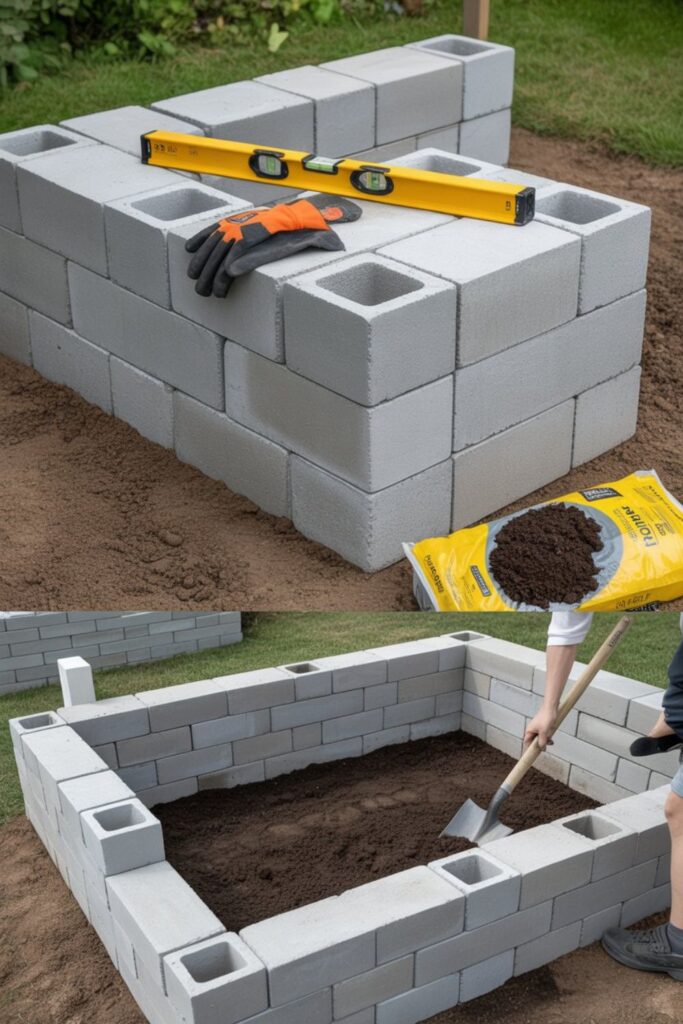
Start with a simple rectangular flower bed design approximately 3-4 feet wide narrow enough to reach the center from either side without stepping in. Length depends on available space 4, 6, or 8 feet all function well for most gardens. Single-block height (8 inches) provides adequate depth for most flowers’ root systems. Two blocks high (16 inches) accommodates deeper-rooted perennials while bringing displays to more prominent viewing heights.
Position blocks with hollow cores facing upward to maximize planting opportunities. Level the ground or create a stable gravel base for permanent installations. Butt blocks tightly together around your perimeter, checking frequently with a level to ensure everything sits flat. For structures over two blocks high, stagger upper rows by half a block length like bricklaying to increase stability. Construction adhesive between layers adds security for permanent displays, though weight from soil usually suffices for flower gardens.
Creating Curved and Flowing Designs
Organic curves feel more natural and inviting than rigid rectangles. Cinder blocks adapt to gentle curves when positioned at slight angles to each other. Build kidney-shaped island beds that float in lawn areas, sinuous borders following property edges, or circular planters surrounding specimen trees. These flowing shapes add movement and visual interest while softening angular yards dominated by straight architecture.
Combine curves with varying heights for increased drama. Build outer curves two blocks high while keeping inner sections single-block height, creating terraced effects. The irregular contours work beautifully for dividing spaces using curved flower container ideas as living borders that define outdoor rooms without blocking views completely. These dynamic shapes catch eyes from multiple angles, encouraging visitors to walk around and discover different perspectives throughout your colorful garden beds.
Soil Preparation and Planting Techniques
Creating Optimal Growing Medium
Quality potting mix determines flowering success more than any other factor. Blend equal parts compost, peat moss or coconut coir, and perlite or vermiculite. This combination provides nutrients flowers need for abundant blooming, retains moisture between waterings, and drains quickly preventing waterlogged conditions. For a 4×8-foot bed one block high, budget 10-12 cubic feet of mixed soil.
Enhance your base mix with amendments supporting vigorous flowering. Add bone meal or rock phosphate for phosphorus that encourages blooming. Incorporate aged manure or worm castings for gentle, sustained nutrient release. Mix slow-release organic fertilizer pellets throughout for season-long feeding. These preparations minimize maintenance and later plants access consistent nutrition without frequent supplemental feeding. Moisten soil thoroughly as you fill blocks, packing gently to eliminate air pockets while maintaining fluffiness.
Strategic Planting Layout
Design plantings using traditional “thriller, filler, spiller” principles. Thrillers are tall, dramatic focal points, lilies, delphiniums, or ornamental grasses. Position these toward the back or center depending on viewing angles. Fillers are medium-height plants that create mass zinnias, marigolds, or salvia. Distribute these throughout middle areas. Spillers trail over edges of sweet potato vine, petunias, or bacopa. Plant these in outer block holes where they cascade attractively.
Consider mature sizes when spacing plants. That tiny transplant needs room to reach full dimensions, crowding causes poor air circulation, increased disease pressure, and competition for resources. Most annuals need 10-12 inches between centers. Perennials often require 12-24 inches depending on variety. Plant closer than recommended for immediate fullness if desired, then thin as plants grow. Include different bloom heights creating layers of tall backgrounds, medium middles, low fronts that showcase all plants rather than hiding some behind others.
Best Flowers for Cinder Block Gardens
Sun-Loving Annuals for Continuous Color
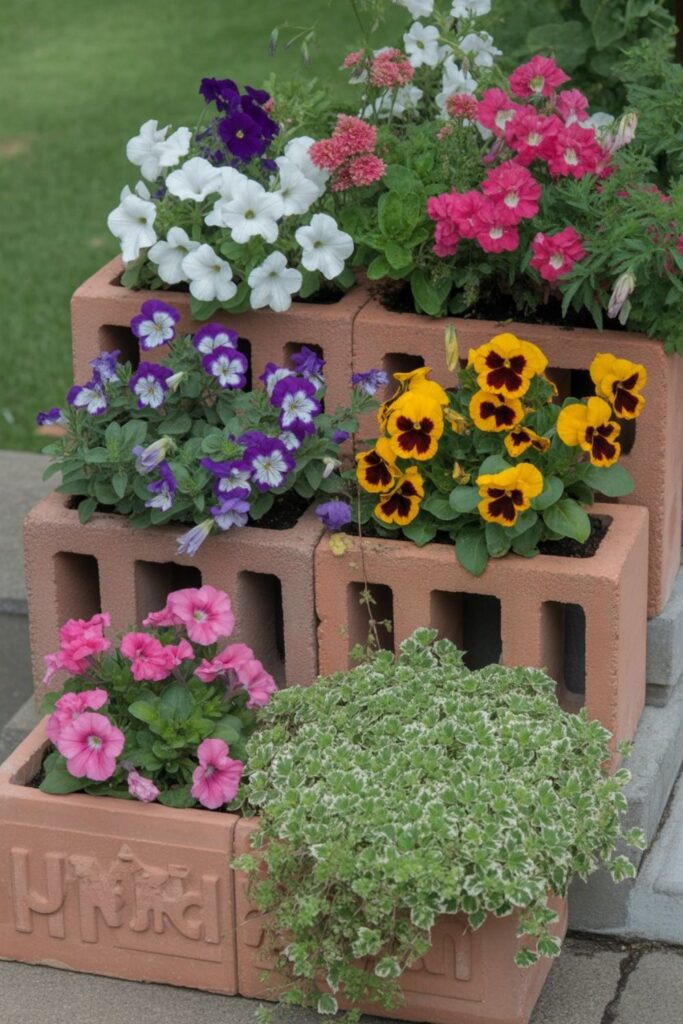
Annual flower planters provide nonstop blooms from spring through frost with proper care. Petunias offer an incredible variety of solid colors, stripes, doubles, or trailing types in virtually every hue except true blue. Deadhead regularly or choose self-cleaning varieties that drop spent blooms automatically. Zinnias produce abundantly in full sun, attracting butterflies while providing excellent cut flowers. They’re among the easiest flowers from seed direct sow for budget-friendly mass plantings.
Marigolds repel certain pests while blooming prolifically in yellows, oranges, and burgundies. Cosmos creates airy, cottage-garden aesthetics with delicate flowers on tall stems. Lantana thrives in heat and drought once established, producing clusters of multi-colored blooms that change as they age. Calibrachoa (million bells) offers petunia-like flowers in compact, trailing forms perfect for block holes. These reliable performers deliver maximum impact with minimal fuss, ideal for beginners building confidence.
Perennial Flowers for Long-Term Beauty
Perennial flower beds return annually, reducing replanting work while establishing permanent structure. Coneflowers (Echinacea) bloom for months in purples, pinks, whites, or oranges. Their daisy-like flowers attract pollinators while seed heads provide winter interest and bird food. Black-eyed Susans produce cheerful yellow blooms from midsummer through fall. Both tolerate heat, drought, and neglect once established perfect for low-maintenance gardens.
Daylilies offer thousands of varieties in every color except true blue. Each flower lasts just one day, but plants produce so many buds that blooms continue for weeks. Salvia provides vertical flower spikes in blues, purples, reds, or whites that hummingbirds adore. Catmint creates billowing mounds of lavender-blue flowers and aromatic foliage. Shasta daisies produce classic white blooms with yellow centers that brighten any floral display ideas. These workhorses bloom reliably year after year, increasing in size and flower production as they mature.
Trailing Flowers for Cascading Beauty
Trailing flowers transform hard concrete edges into flowing displays of color. Sweet potato vine provides incredible foliage color chartreuse, burgundy, or tricolor varieties with vigorous trailing growth that cascades dramatically. Petunias in spreading varieties create waterfalls of blooms in every color. Bacopa produces tiny flowers densely covering trailing stems delicate appearance but tough performance in heat.
Creeping Jenny (Lysimachia) offers chartreuse foliage that brightens shady block holes while trailing attractively. Lobelia creates masses of delicate blue, purple, white, or pink flowers on cascading stems. Sweet alyssum produces fragrant clusters of tiny flowers that attract beneficial insects. Verbena trails beautifully while blooming in clusters of vibrant colors. Plant these spillers in outer block openings where gravity pulls growth downward, creating the softening effect that makes cinder block flower gardens feel less utilitarian and more garden-like.
Shade-Tolerant Options
Shade flowers expand possibilities for north-facing sides or areas beneath trees. Impatiens bloom prolifically in shade with minimal care; traditional or New Guinea types both perform well. Begonias offer both attractive flowers and interesting foliage in shade conditions. Coleus provides incredible leaf color and pattern variety technically grown for foliage but some varieties also produce attractive flower spikes.
Hostas create dramatic foliage displays in shades from chartreuse to blue-gray, with variegated options adding extra interest. They produce flower spikes in summer, some fragrant though most gardeners grow them primarily for leaves. Astilbe produces feathery plumes in pinks, reds, or whites rising above ferny foliage. Bleeding hearts creates romantic, arching stems with heart-shaped flowers in spring. These shade-lovers let you create beautiful blooming gardens in locations where sun-worshippers would struggle and fail.
Designing for Continuous Bloom
Seasonal Succession Planning
Achieve constant color by selecting plants with staggered bloom times. Early spring starts with bulbs, tulips, daffodils, crocuses planted in fall for spring glory. Late spring perennials including peonies, iris, and bleeding heart take over as bulbs fade. Summer explodes with annuals and warm-season perennials zinnias, coneflowers, daylilies, and salvia. Fall finishes strong with asters, mums, and ornamental grasses that shine into winter.
Map your garden noting each plant’s bloom period. Identify gaps where nothing flowers, then add varieties filling those voids. This planning ensures your cinder block flower garden always looks interesting rather than spectacular briefly then dull for months. Include some plants valued for foliage ornamental grasses, coleus, or coral bells that look good even when not blooming. These consistent performers fill gaps between bloom cycles, maintaining visual interest through entire growing seasons.
Color Rotation Through Seasons
Create dynamic displays by rotating color schemes seasonally. Spring might feature pastels soft pinks, lavenders, pale yellows that feel fresh and hopeful. Summer intensifies with hot colors reds, oranges, bright yellows that energize spaces. Fall shifts to warm, rich tones burgundies, russets, golds that complement autumn foliage. This seasonal rotation keeps gardens feeling current and interesting rather than static.
Annual replanting lets you experiment with different color palettes yearly without permanent commitment. Try complementary color schemes one year, monochromatic the next, then jewel tones the following season. This flexibility keeps gardening exciting while teaching you which combinations resonate most with your aesthetic preferences. Perennials provide reliable backbone while annuals offer creative freedom to change themes as inspiration strikes or trends evolve.
Maintenance for Peak Performance
Deadheading and Pruning Techniques
Deadheading removing spent flowers encourages continuous blooming in most annuals and many perennials. Plants produce flowers primarily to set seed. When you remove faded blooms before seeds form, plants respond by producing more flowers attempting to complete their reproductive cycle. This simple practice dramatically extends bloom periods and keeps displays looking fresh rather than tired.
Learn each plant’s deadheading needs. Petunias and zinnias respond dramatically to deadheading. Marigolds improve significantly. Self-cleaning varieties like certain petunias or calibrachoa drop spent blooms automatically, requiring less intervention. For perennials, removing entire flower stalks after blooming finishes cutting to foliage level encourages energy redirection into root growth rather than seed production. Some perennials like catmint or salvia rebloom if cut back hard after their first flush, providing second waves of flowers in late summer.
Fertilizing for Abundant Blooms
Annuals in particular need consistent feeding for continuous flowering. Apply liquid fertilizer every 2-3 weeks using products formulated for blooming plants higher phosphorus (the middle number in fertilizer ratios) encourages flowering. Organic options like fish emulsion or compost tea provide balanced nutrition without chemical buildup. Alternatively, incorporate slow-release granular fertilizers into soil at planting time for season-long feeding with minimal ongoing effort.
Perennials require less frequent feeding applications in early spring as growth begins and again in early summer usually suffice. Avoid fertilizing perennials after midsummer, as late-season growth doesn’t harden properly before winter and becomes vulnerable to frost damage. Top-dress annually with compost worked into the top 2 inches of soil. This practice replenishes organic matter while providing gentle, sustained nutrition as compost decomposes. Heavy feeders like roses benefit from monthly applications, while tough perennials like coneflowers thrive on neglect once established.
Watering Requirements and Techniques
Container gardens which cinder block flower gardens essentially are dry faster than ground beds due to exposure from all sides. Check soil moisture daily during hot weather by inserting your finger 2 inches deep. Water thoroughly when soil feels dry at that depth. Deep, infrequent watering encourages roots to grow throughout the soil volume rather than concentrating near surfaces where they’re vulnerable to heat and drought.
Install drip irrigation on timers for consistent moisture without daily hand-watering. Run lines through central bed areas with emitters positioned near each plant. For block holes, insert individual drippers into each pocket. Set timers based on weather more frequently during summer heat, less during cool spring or fall periods. Mulch soil surfaces with shredded bark or compost to retain moisture, regulate temperature, and suppress weeds. This organic layer reduces watering frequency by 30-50% while improving soil structure as it decomposes over time.
Creative Design Enhancements
Painting and Decorating Blocks
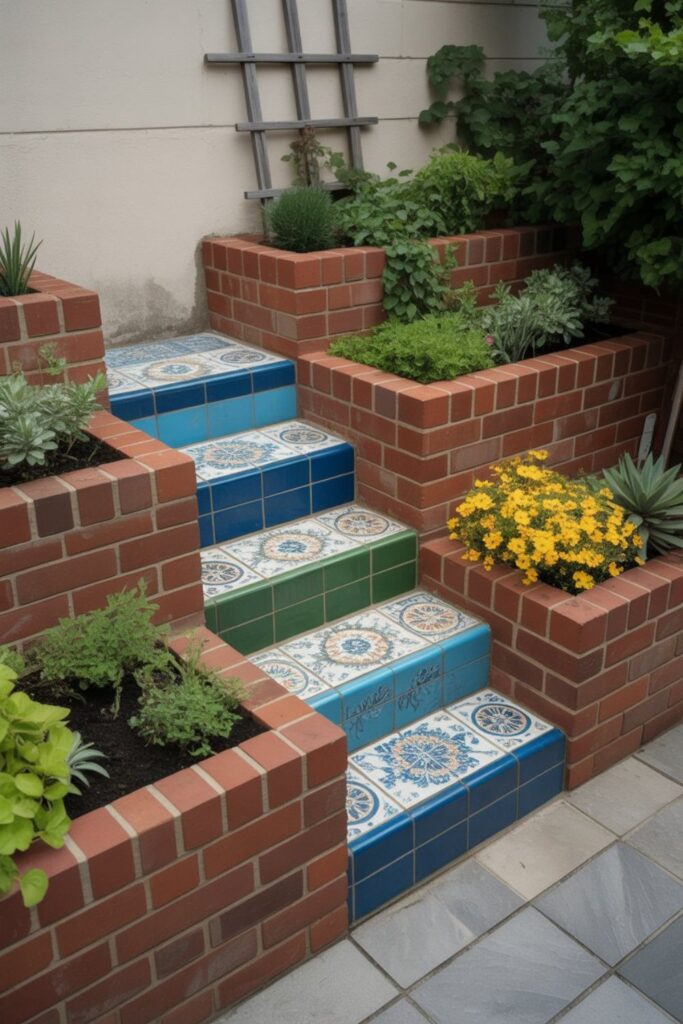
Transform plain gray concrete into colorful elements complementing your floral palette. Clean blocks thoroughly, apply masonry primer, then two coats of exterior latex paint. Choose colors strategically soft pastels create romantic cottage-garden feels, bold jewel tones deliver contemporary drama, earth tones provide natural backdrops letting flowers star. Coordinate block colors with dominant flower hues for cohesive aesthetics that feel intentionally designed.
Create patterns using painter’s tape horizontal stripes in graduating shades, geometric color blocking, or ombre effects that transition gradually from dark to light. Stencil decorative motifs of butterflies, bees, flowers, or abstract designs directly on block faces. These embellishments cost little but dramatically elevate industrial materials into intentional decorative planters that showcase your personality. Apply exterior sealer over finished paint to protect from weather and extend longevity while making surfaces easier to clean.
Incorporating Functional Elements
Integrate lighting by installing solar lights in upper block holes. These fixtures illuminate floral display ideas after dark while creating ambiance for evening enjoyment. String café lights between taller sections or add landscape spotlights highlighting specimen plants. The combination of beautiful flowers and atmospheric lighting transforms basic structures into genuine outdoor living spaces that extend usability beyond daylight hours.
Add trellises behind blocks for vertical growing space supporting climbing roses, clematis, or morning glories. These vertical elements add height and dimension while increasing flower production per square foot. Include small water features fountains or bubbling rocks within larger structures for soothing sounds that mask traffic noise while attracting birds and beneficial insects. Build integrated seating using extended block walls topped with wooden planks and cushions, creating comfortable viewing spots to enjoy your pollinator garden up close.
Read More About: 23+ Cinder Block Garden Ideas for a Beautiful Yard
Special Garden Themes
Cut Flower Gardens
Design cut flower garden displays specifically for harvesting. Choose varieties with long stems and extended vase life zinnias, cosmos, sunflowers, dahlias, and gladiolus all excel. Plant densely in rows within central bed areas for maximum production. Succession plant every 2-3 weeks for continuous cutting rather than one big harvest. This approach ensures constant supply of fresh blooms for indoor arrangements throughout the season.
Include filler flowers and foliage baby’s breath, statice, ornamental grasses that complete arrangements. Plant these in block holes surrounding the main cutting area. Harvest flowers early in the morning when stems are turgid and hydrated. Cut at an angle using sharp, clean shears, then plunge immediately into water. This dedicated cut flower garden approach provides both outdoor beauty and indoor enjoyment, maximizing value from your planting efforts.
Pollinator-Friendly Gardens
Create pollinator garden havens that support bees, butterflies, and hummingbirds while delivering stunning displays. Choose native flower varieties that evolved alongside local pollinators; these partnerships ensure optimal nectar and pollen provision. Include flowers with different bloom shapes serving various pollinator types: flat-topped flowers for butterflies, tubular blooms for hummingbirds, simple single flowers for bees.
Plant diverse species ensuring something blooms spring through fall. Early flowers feed pollinators emerging from winter dormancy. Late-season blooms provide crucial nectar for migrating butterflies and hummingbirds. Avoid hybrid double flowers that often lack nectar despite showy appearances stick with species or single-flowered varieties. Eliminate pesticides entirely, as these chemicals harm beneficial insects along with pests. Your companion planting approach creates ecosystems where predatory insects control pests naturally, reducing need for chemical interventions.
Frequently Asked Questions
What flowers bloom longest in cinder block gardens?
Annuals like petunias, zinnias, marigolds, and calibrachoa bloom continuously from spring through frost with proper deadheading and fertilizing schedule. Among perennials, coneflowers, black-eyed Susans, and salvia offer extended bloom periods 8-12 weeks or more. Combining both types ensures your continuous bloom displays remain colorful throughout entire growing seasons with strategic seasonal rotation.
Can I grow roses in cinder block flower gardens?
Yes, cinder block flower gardens two blocks high (16 inches) provide adequate depth for most roses. Choose compact varieties like miniature roses, patio roses, or smaller floribundas. Avoid large hybrid teas or climbing roses unless building very large, deep structures. Roses need full sun, excellent drainage (which blocks provide naturally), and consistent feeding apply rose-specific fertilizer monthly during active growth for best flowering performance.
How do I prevent cinder blocks from making soil too alkaline?
Concrete blocks may initially leach small amounts of lime, slightly raising pH. This effect is minimal and temporary. Annual compost additions naturally acidify soil as organic matter decomposes. Test pH yearly and adjust with sulfur if needed for acid-loving plants like azaleas. Most common flowers tolerate the slight alkalinity without issues petunias, marigolds, zinnias, and most perennials thrive in neutral to slightly alkaline conditions.
What’s the best way to arrange flower colors?
Successful color combinations follow design principles: monochromatic schemes using shades of one color create sophistication, analogous colors (adjacent on the color wheel) feel harmonious, complementary opposites deliver maximum contrast and energy. Consider foliage colors too chartreuse, burgundy, or variegated leaves add interest. Repeat key colors throughout displays rather than using each just once repetition creates unity rather than chaos.
How often should I replace flowers in block gardens?
Annuals need replacing each spring after frost kills previous season’s plants. Perennials return annually for years, divide them every 3-5 years when centers die out and vigor declines. Some perennials like daylilies and hostas can remain undisturbed for decades. This combination approach minimizes replanting work perennials provide backbone while annuals offer flexibility to change colors and themes seasonally without long-term commitment.
Conclusion
A cinder block flower garden proves that beautiful, abundant floral displays don’t require expensive materials or professional installation. These versatile concrete blocks create permanent structures that showcase flowers brilliantly through superior drainage, modular flexibility, and customization possibilities limited only by imagination. Whether building simple flower bed designs for traditional borders, dramatic tiered pyramids for dimensional impact, or vertical walls for small-space solutions, the fundamental advantages remain constant durability, affordability, and functionality that makes flowering gardens accessible to everyone.
Start your floral transformation today by assessing your space, choosing a color scheme that resonates with your aesthetic, and sketching initial designs. Select plants matched to your sun conditions and maintenance preferences, then build and plant during optimal seasons for your climate. Your colorful garden beds will provide continuous beauty, attract beneficial pollinators, and deliver lasting satisfaction that far exceeds the modest investment required. The blooming garden showcase you create becomes a permanent source of joy, changing seasonally while maintaining year-round structural presence that enhances your property’s beauty and value for decades to come.