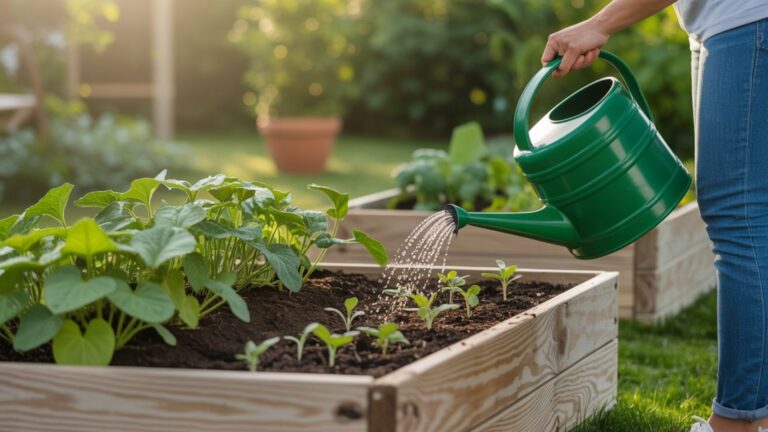
23+ Cinder Block Garden Ideas for a Beautiful Yard

Your outdoor space deserves better than cookie-cutter solutions from big-box stores. You’ve scrolled through gorgeous garden photos feeling envious, assuming those transformations required massive budgets or professional help. Meanwhile, your yard sits unchanged because manufactured planters cost hundreds, landscape quotes reach thousands, and DIY projects seem complicated. That frustration ends now. Cinder block garden ideas unlock creative possibilities limited only by your imagination, not your wallet.
These humble industrial blocks become whatever your landscape needs: raised beds, vertical gardens, furniture, fire pits, or artistic installations all at costs that make professional landscaping seem absurdly overpriced.
Why Cinder Blocks Excel for Creative Gardens
Cinder blocks provide unmatched versatility through simple modular construction. The uniform 8x8x16-inch dimensions create endless arrangement styles when you think beyond basic rectangles. Stack them tall for drama, lay them flat for sprawl, angle them for curves, or combine orientations for sculptural effects. The hollow cores transform from structural voids into planting spaces perfect for cascading succulents, trailing flowers, or compact herbs.
Cost-effectiveness makes ambitious projects accessible. Individual blocks run $1.50-$3.00 less than specialty coffee. A weekend project using 50 blocks costs under $150 yet creates features worth thousands in landscape value. Paint transforms industrial gray into any color scheme imaginable. This combination of affordability, flexibility, and customization makes creative garden projects achievable regardless of experience or budget. The instant gratification appeals to most ideas complete in hours or a single weekend without specialized tools.
Raised Bed Garden Ideas
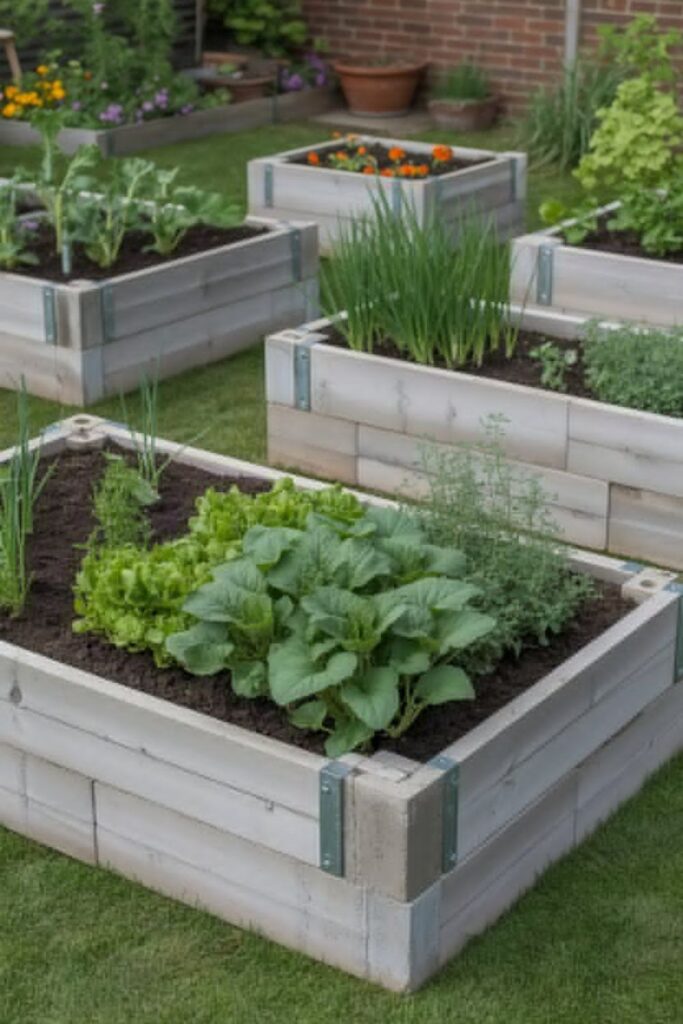
Tiered Pyramid Planters
Build dramatic multi-level structures that maximize vertical space while creating architectural interest. Start with a base row of 8-10 blocks arranged in a square or rectangle. Stack a second tier using 6-8 blocks centered on the first, then finish with 4-6 blocks at the peak. This stepped pyramid provides growing areas at multiple heights no bending required for upper levels, making them perfect for gardeners with mobility issues.
Fill each tier with different plant types based on their needs and your design vision. Place sun-loving vegetables like tomatoes or peppers on top where light is strongest. Middle tiers work beautifully for herbs that appreciate good drainage and moderate sun. Lower levels suit shade-tolerant plants or trailing varieties that cascade down, softening hard edges. Paint each tier a different coordinating color for rainbow effects, or use ombre techniques graduating from dark at the base to light at the top.
Curved and Flowing Raised Beds
Break free from rectangular constraints by creating organic, curved raised bed designs that add visual flow to landscapes. Cinder blocks adapt to gentle curves when positioned at slight angles to each other. Build kidney-shaped beds that mimic natural pond forms, flowing S-curves along property edges, or circular planters surrounding specimen trees. These softer shapes feel more inviting while adding dimension to boxy yards.
Combine curves with varying heights for increased drama. Build outer curves two blocks high while keeping inner sections single-block height. This elevation change creates terraced effects perfect for displaying plants at multiple levels. The irregular shapes also work brilliantly for dividing large yards into distinct outdoor rooms use curved block garden designs as living borders that define spaces without blocking views completely.
Read More About: 25+ Garden With Cinder Blocks Ideas for Stylish Outdoor Spaces
Vertical Garden Solutions
Living Wall Installations
Transform blank fences, garage walls, or property boundaries into lush vertical planters bursting with life. Stack cinder blocks horizontally so hollow cores face outward, creating a grid of individual planting spaces. A wall measuring 8 feet wide and 4 blocks high provides 32 planting pockets in just 18 inches of depth. These space-saving solutions work brilliantly for small yards, balconies, or narrow side yards where ground space is precious.
Secure walls by driving rebar through select block holes into the ground every third or fourth block should have this reinforcement. Fill holes with specialized vertical garden soil mixture that drains quickly while retaining adequate moisture. Plant densely with trailing succulents like string of pearls, sedum varieties, or sempervivums that create living tapestries. Mix texture combinations by pairing fine-leaved plants with bold architectural varieties. Add small herbs or strawberries for edible living walls that are both beautiful and productive.
Herb Spiral Towers
Create space-efficient herb gardens by building spiral towers that provide multiple microclimates in compact footprints. Start with a circular base of 6-8 blocks, then spiral upward using progressively offset blocks that create a corkscrew effect. This design naturally creates gradients drier conditions at the top, moister at the bottom, sunny on south sides, shadier on north exposures. Different herbs thrive in each zone.
Plant Mediterranean herbs like rosemary, thyme, and oregano at the top where drainage is fastest and sun strongest. Moisture-loving basil and parsley go lower where water accumulates. Mint which spreads aggressively gets isolated in individual block holes where it can’t invade other plants. The vertical structure brings herbs to comfortable harvesting height while looking like intentional garden art rather than utilitarian growing space.
Garden Furniture and Seating Ideas
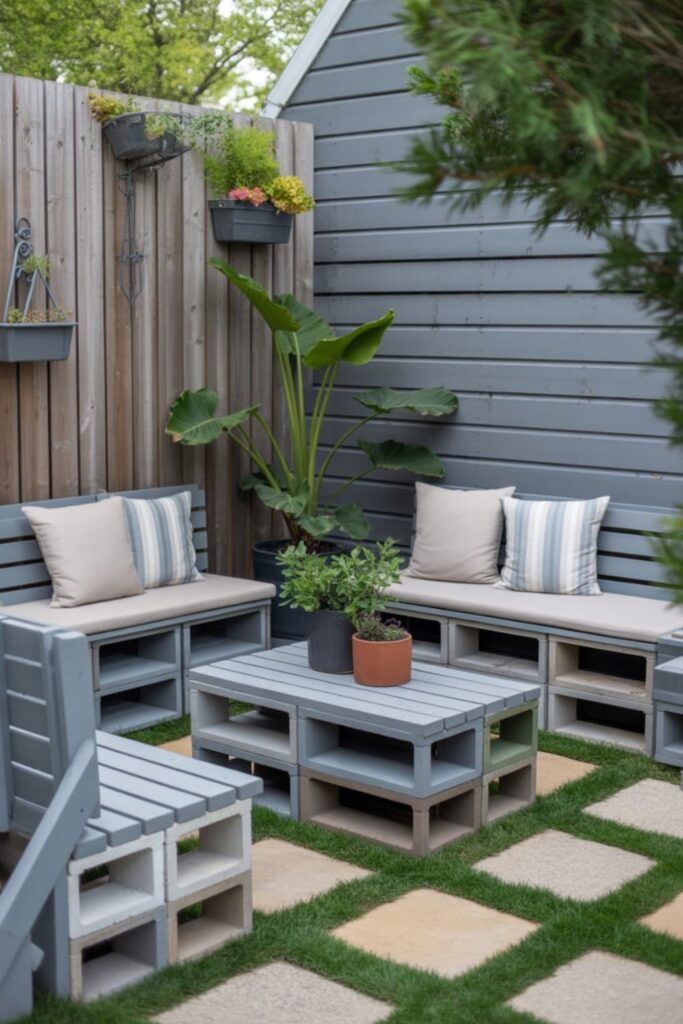
Built-In Bench Planters
Combine comfortable seating areas with productive growing space through integrated bench designs. Build two parallel walls of stacked blocks approximately 4-5 feet apart, each 2-3 blocks high. Bridge them with weather-resistant wooden planks, composite decking, or concrete pavers topped with outdoor cushions. Fill the block walls with trailing flowers, cascading succulents, or compact herbs that soften hard edges while releasing fragrance when brushed.
Create L-shaped corner seating by arranging blocks in perpendicular configurations with continuous bench surfaces across both sections. Add backs using taller block walls positioned behind seating areas fill these vertical sections with colorful plantings that create living artwork behind sitters. Paint blocks in bold colors that complement outdoor cushions, or leave natural for industrial-modern aesthetics. These dual-purpose structures maximize value from limited space while costing a fraction of manufactured outdoor furniture.
Garden Tables and Work Surfaces
Build sturdy potting tables using cinder block bases topped with reclaimed doors, butcher block, or thick plywood. Standard dining height requires stacks of 3-4 blocks depending on tabletop thickness. Bar height needs 5-6 blocks per leg. Position blocks to create lower shelves between ground and work surface perfect for storing bags of soil, pots, tools, or watering equipment. Fill some hollow cores with trailing plants while leaving others empty for functional storage.
Create permanent outdoor kitchens or serving stations by building counter-height surfaces with blocks. Top structures with tile, concrete, or stone slabs for durable, weather-resistant work areas. Include built-in coolers by leaving central sections open and inserting large galvanized tubs filled with ice for beverage service during parties. Add small sinks by cutting holes in work surfaces and connecting garden hoses. These elaborate setups transform basic blocks into complete outdoor entertaining centers.
Decorative and Artistic Installations
Painted Block Sculptures
Transform ordinary concrete blocks into striking outdoor decor through creative stacking and painting. Build abstract sculptures by arranging blocks in interesting configurations: pyramid shapes, spiraling columns, asymmetrical towers, or geometric abstracts. Use exterior masonry paint in bold color schemes, complementary colors for vibrant contrast, analogous colors for harmonious blends, or monochromatic schemes for sophisticated restraint.
Create ombre effects by painting individual blocks in graduating shades from dark to light, then stacking them to create smooth color transitions. Geometric patterns using painter’s tape add graphic punch stripes, chevrons, color blocking, or checkerboard designs. Stencil mandalas, nature motifs, or abstract patterns directly on block faces. These painted installations become conversation pieces that inject personality into neutral landscapes while costing virtually nothing beyond paint and creativity.
Mosaic and Textured Finishes
Apply mosaic tiles to block faces using construction adhesive for Mediterranean flair. Create intricate patterns, random designs, or mural-like images across entire structures. Broken ceramic plates, glass gems, or tumbled stone pieces all work beautifully. Grout between tiles for professional finishes that look custom-crafted rather than DIY assembled. This technique transforms utilitarian blocks into genuine garden art worthy of design magazines.
Experiment with alternative decorative finishes: attach cork trivets in patterns, glue on metal wall art pieces, or wrap blocks with jute rope for coastal aesthetics. Press decorative impressions into fresh concrete poured over block surfaces for custom textures. Apply stone veneer or brick facing to mimic expensive materials at a fraction of costs. These embellishment techniques let you create truly unique garden features that reflect your personality and complement your home’s architecture.
Practical Garden Features
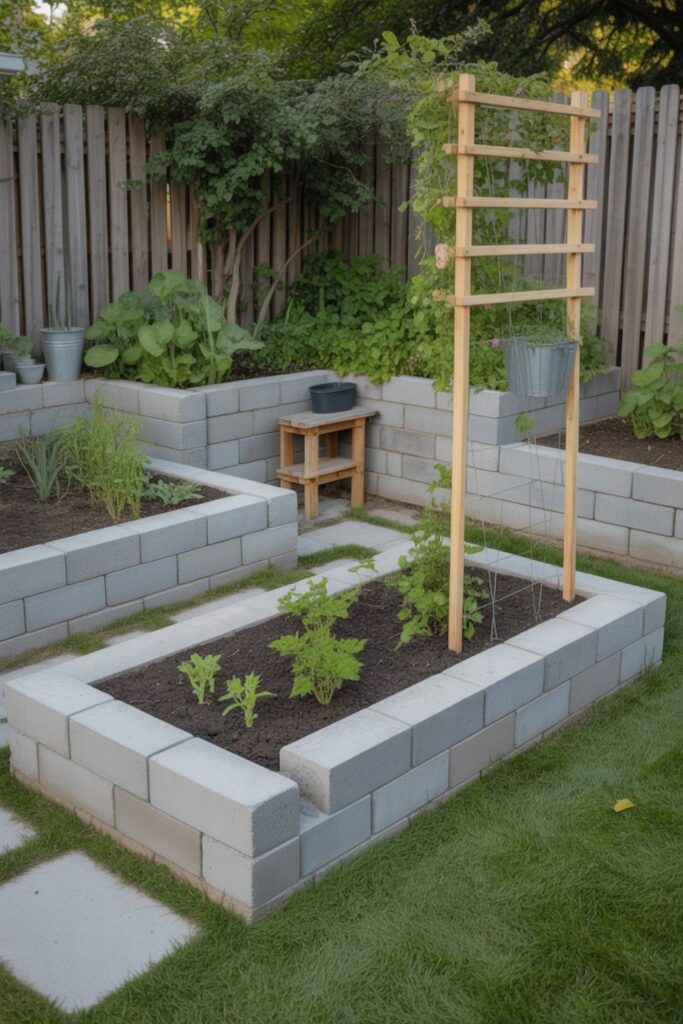
Fire Pit Gathering Areas
Build inviting fire pit zones using blocks arranged in circles or squares. A basic round pit requires roughly 30 blocks laid in concentric rings inner ring for the fire area, outer rings for seating walls. Keep the fire ring low (single block height) for safety and proper draft. Build seating walls 2-3 blocks high for comfortable perching. Leave gaps between blocks in the inner ring for essential airflow.
Position fire pits at least 10 feet from structures, overhanging trees, or flammable materials. Create the base using compacted gravel for drainage and stability. Add steel fire ring inserts for contained burning. Paint exterior seating blocks in warm tones terracotta, rust, bronze, or burnt orange that complement the firelight glow. Fill some outer block holes with solar lights that illuminate the gathering space while adding ambiance. These focal point features become natural entertainment centers that extend outdoor living into cooler seasons.
Garden Pathways and Borders
Create clean, defined pathways by laying cinder blocks flat as oversized pavers. Space them at comfortable stride intervals roughly 24 inches works for most adults. Fill gaps with pea gravel, decorative river stones, or groundcover plants like creeping thyme that tolerate foot traffic. Paint blocks before installation for colorful paths children especially enjoy create hopscotch patterns, rainbow sequences, or geometric designs.
Use blocks as landscaping projects borders separating lawn from planting beds. Lay them end-to-end along bed perimeters, either flat or on sides depending on desired height. The uniform dimensions produce precise lines impossible with flexible edging. Fill hollow cores with cascading plants that soften transitions. Build raised borders using single rows that prevent grass encroachment while clearly delineating spaces. Checkerboard patterns using painted and natural blocks add visual interest to long borders without additional cost.
Container Garden Alternatives
Succulent Display Gardens
Create stunning low-maintenance gardens by dedicating structures entirely to succulents. These drought-tolerant plants suit the quick-draining conditions block planting spaces naturally provide. Build walls, pyramids, or freestanding structures with blocks positioned to maximize planting holes. Fill each opening with different succulent varieties sempervivums, sedums, echeverias, aeoniums, and crassulas.
Mix colors and textures for tapestry effects burgundy, chartreuse, blue-gray, pink, and green varieties create living mosaics that change throughout seasons. Succulents require water only every 2-3 weeks once established, making them perfect for busy gardeners or vacation-prone households. The architectural quality of both blocks and succulents creates modern, sculptural installations that look professionally designed. Position in full sun locations where succulents develop their most vibrant colors and compact growth.
Strawberry Towers and Berry Gardens
Build vertical berry gardens that produce abundantly in minimal space. Stack blocks 4-5 high with hollow cores facing outward. Plant strawberries in each opening June-bearing varieties for large crops in early summer, or everbearing types for continuous production. The elevation protects berries from ground-dwelling pests and keeps fruit clean and visible for harvesting.
Paint blocks in cheerful reds, pinks, or greens that complement strawberry foliage and fruit. Position towers in full sun for maximum production. Add companion plants like borage or nasturtiums in select holes to attract pollinators. These productive towers work beautifully on patios, balconies, or small yards where traditional strawberry beds consume too much space. Harvest becomes a simple walk around towers picking ripe berries at eye level rather than crawling through sprawling ground plantings.
Read More About: 24+ DIY Cinder Block Garden Ideas for Modern Outdoor Spaces
Small Space Garden Solutions
Balcony and Patio Gardens
Maximize limited square footage by building compact modular layouts perfect for apartment balconies or small patios. Create L-shaped planters fitting into corners one leg against the railing, one against the building wall. Use single-block height to minimize weight while still providing adequate root depth for most plants. Fill with herbs, compact vegetables, or colorful flowers that thrive in containers.
Build vertical structures against blank walls using blocks stacked horizontally. These shallow installations (just 8 inches deep) create dramatic living walls without consuming precious floor space. Choose lightweight potting mix rather than heavy garden soil to reduce structural load on balconies. Add casters beneath structures for mobility rearrange gardens seasonally to follow sun patterns or create different layouts for parties versus everyday use.
Vertical Vegetable Gardens
Grow surprising amounts of food in tight spaces using vertical block garden designs. Build walls or columns with blocks positioned horizontally, creating multiple planting spaces at different heights. Fill with lettuce, spinach, radishes, green onions, or compact herbs all produce well in confined root zones. Add small trellises behind structures for climbing crops like peas, pole beans, or cucumbers trained vertically.
Position vegetable walls in full sun locations receiving 6-8 hours of direct light. Install drip irrigation lines through structures for consistent moisture without daily hand-watering. Plant densely for maximum production succession by harvesting one hole while others mature. These intensive growing systems produce far more food per square foot than traditional gardens while keeping everything at comfortable harvesting height.
Seasonal and Holiday Displays
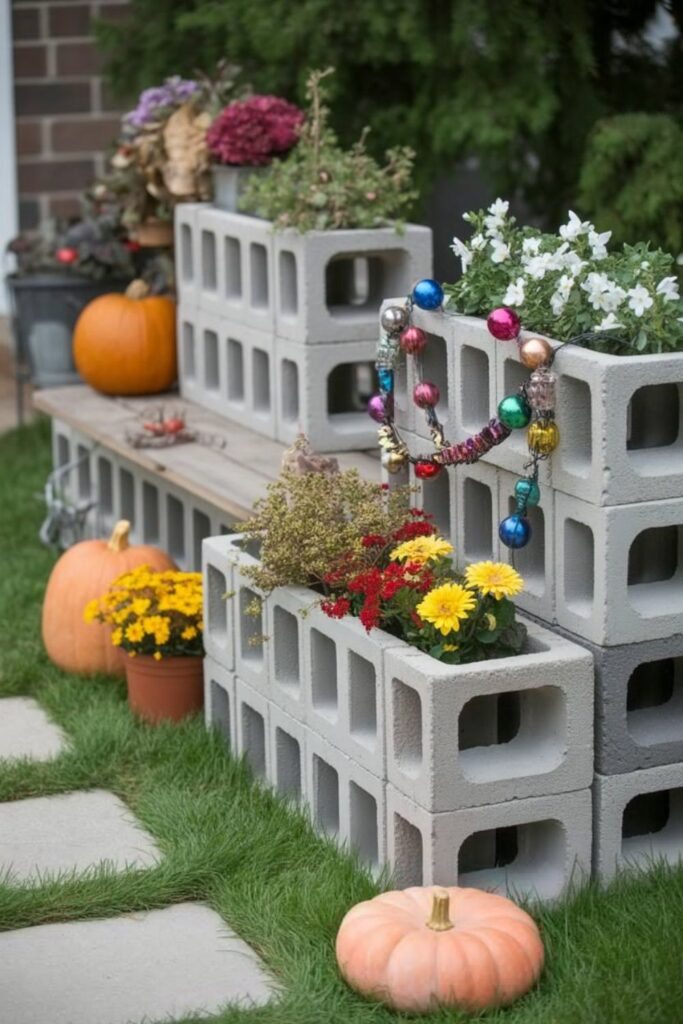
Living Christmas Tree Alternatives
Build pyramid structures as living Christmas tree alternatives that reduce holiday waste. Stack blocks in graduated tiers creating triangle silhouettes. Paint blocks green, or leave natural and decorate with string lights, ornaments, and garland. Fill block holes with small potted evergreens, holly, or winter-blooming pansies. Top the pyramid with a star or angel.
These reusable structures store easily after holidays simply disassemble and stack blocks in garages or sheds. Repurpose them for other creative garden projects during warmer months. The sustainable approach eliminates buying and disposing of cut trees annually while creating unique holiday displays neighbors admire. Add solar lights in block holes for illumination that costs nothing to operate throughout the season.
Seasonal Planter Rotations
Design functional design structures that accommodate changing seasonal displays. Build basic frameworks keeping them neutral (unpainted or earth-toned), then rotate plantings throughout the year. Spring bulbs give way to summer annuals, followed by fall mums and ornamental kale, finishing with winter evergreens and berries. This rotation keeps gardens looking fresh and relevant across all seasons.
Create themed displays for holidays: red and white flowers for Valentine’s Day, pastels for Easter, red/white/blue for Independence Day, orange and purple for Halloween, burgundy and gold for Thanksgiving. The permanent block structures provide consistent frameworks while changing plantings deliver variety. This approach costs less than buying new decorations annually since you’re only purchasing plants rather than complete display systems.
Frequently Asked Questions
What are the most creative ways to use cinder blocks in gardens?
The most innovative cinder block garden ideas include vertical living walls, tiered pyramid planters, integrated furniture with built-in planters, fire pit seating areas, painted sculptural installations, and herb spiral towers. Combining functional design with aesthetics creates dual-purpose structures that maximize space while looking intentionally designed rather than utilitarian.
How do I make cinder block gardens look attractive?
Transform blocks through painting with exterior masonry paint in coordinating color schemes, adding mosaic tile decorations, applying textured finishes, or planting trailing varieties that cascade over edges softening hard lines. Strategic plant selection using texture combinations of fine-leaved plants with bold architectural specimens creates visual interest that distracts from industrial origins.
Can cinder block gardens work in small spaces?
Absolutely space-saving solutions like vertical walls, corner L-shaped planters, and tiered pyramids maximize production in minimal footprints. Balcony and patio gardens using single-block height provide adequate growing depth without excessive weight. These modular layouts adapt to any odd-shaped or undersized area, making them ideal for urban gardening or compact yards.
What plants work best in cinder block gardens?
Herbs excel in block hollow cores thanks to modest root systems and excellent drainage. Succulents thrive in quick-draining conditions requiring minimal maintenance. Compact vegetables like lettuce, radishes, and bush tomatoes produce well in confined spaces. Trailing flowers including petunias and sweet potato vines soften hard edges with cascading growth.
How much do cinder block garden projects typically cost?
Most budget garden makeover projects using blocks cost $50-$200 for complete materials including blocks ($1.50-$3.00 each), soil, paint, and embellishments. A basic raised bed runs $75-$125. Elaborate furniture or sculptural installations might reach $200-$300. All remain far cheaper than equivalent manufactured products or professional landscaping, making them accessible regardless of budget constraints.
Conclusion
Cinder block garden ideas prove that creativity trumps cost when transforming outdoor spaces into functional, beautiful environments. These versatile blocks adapt to countless applications from productive raised beds and vertical gardens to comfortable furniture and artistic installations. Their affordability, durability, and modular nature make ambitious landscaping projects accessible for any skill level while delivering professional results that enhance property value and create genuine enjoyment.
Start your transformation today by exploring which creative garden projects resonate with your space, needs, and aesthetic preferences. Begin with simple raised bed designs or basic planters to build confidence, then progress to more ambitious furniture, fire pits, or artistic outdoor decor as skills develop. The beauty of cinder blocks lies in their forgiveness of mistakes corrected easily, designs evolve without waste, and your garden grows more functional and attractive with each addition. Your unique garden features await, limited only by imagination rather than budget or experience.