20+ Cinder Blocks Garden Ideas for Any Yard

Your backyard sits empty while landscaping quotes pile up into the thousands. Cinder blocks garden projects offer an elegant escape from this frustration delivering professional-quality results for a fraction of traditional costs while requiring zero carpentry skills. Most homeowners walk past these humble concrete blocks at hardware stores, never realizing they hold the key to creating stunning raised beds, vertical planters, and functional outdoor spaces in a single weekend.
Cinder blocks (technically concrete blocks) cost just $1.50–$3 each, yet they build garden structures that outlast wood by decades while supporting hundreds of pounds without deterioration. Whether you’re establishing your first vegetable patch, designing a modular garden design that adapts to changing needs, or creating architectural focal points that boost property value, these versatile blocks deliver unmatched value. This comprehensive guide reveals everything you need to know about building, planting, and maintaining a thriving cinder blocks garden that transforms your outdoor space while staying within budget.
What Is a Cinder Blocks Garden?
A cinder blocks garden utilizes stackable concrete blocks as the primary building material for raised beds, planters, borders, and structural elements. This cost-effective gardening approach leverages the blocks’ hollow cores and modular nature to create flexible growing spaces.
The terminology deserves clarification. True cinder blocks contained coal ash and disappeared from production in the 1950s-60s. Today’s products are concrete blocks made from Portland cement, sand, and aggregate. However, “cinder blocks” remains the common term gardeners use when referring to these 8×8×16-inch building units with characteristic hollow cores.
Concrete block garden designs exploit multiple advantages simultaneously. The hollow cores serve dual purposes; they reduce block weight to manageable 30-38 pounds while creating perfect planting cavities when oriented upward. This eliminates the need for separate containers and maximizes growing space within compact footprints. Urban gardeners particularly appreciate how vertical stacking multiplies planting area without expanding horizontal square footage.
Stackable blocks require no mortar, fasteners, or specialized tools for basic installations. Gravity holds structures together when properly leveled, allowing complete beginners to build impressive gardens in hours rather than days. The modular garden design philosophy means you start small, perhaps a single raised bed then expand annually as skills and enthusiasm grow. Reconfiguration happens easily since blocks simply stack and unstack without destruction or waste.
Thermal properties benefit plant health year-round. Concrete’s thermal mass absorbs daytime heat and releases it slowly overnight, moderating temperature swings that stress plants. This proves especially valuable during spring and fall when nighttime temperatures drop suddenly. The porous material also facilitates air circulation around root zones, preventing the waterlogged conditions that cause root rot in solid containers.
Benefits of Building a Cinder Blocks Garden
Cinder blocks garden structures deliver compelling advantages over traditional wooden beds and commercial planters. Financial savings represent just the beginning of their appeal.
Affordability transforms garden budgets dramatically. A standard 4×8-foot raised bed built from Cinder blocks garden costs $25-45 in materials. Equivalent cedar beds run $300-500, while composite alternatives demand $400-600. Professional installation adds another $200-300 to wooden options. The concrete alternative achieves identical functionality at 90% less cost, freeing budget for quality soil, plants, and amendments that actually improve growing results.
Durability extends beyond human lifespans in most cases. Properly installed Cinder blocks garden features withstand 50+ years of freeze-thaw cycles, UV exposure, and moisture without structural degradation. Compare this to untreated pine beds rotting within 3-5 years or even cedar requiring replacement after 10-15 years. The blocks never warp, splinter, or harbor wood-boring insects. Maintenance consists solely of occasional hosing to remove dirt, no staining, sealing, or replacing deteriorated boards every few seasons.
Flexibility adapts to evolving garden plans effortlessly. Spring might bring ambitions for a small herb garden. By summer, you’re ready to expand into vegetables. Fall inspires adding a flower border. Stackable blocks accommodate these changes by simply adding more units wherever needed. No demolition, no waste, no commitment to permanent configurations that might not suit future needs. Remove entire sections just as easily if priorities shift toward lawn space or hardscaping.
Drainage system superiority prevents common planting failures. The blocks’ porous nature allows water movement while preventing soil from washing through. Elevated beds drain faster than ground-level plots, protecting plants from root rot during heavy rains. The open bottom design (when leaving the base unmortared) promotes beneficial soil organism migration between garden and native ground, supporting healthier soil ecosystems than isolated container gardens.
Versatility extends beyond basic planting applications. The same blocks building raised beds also construct seating walls, outdoor kitchens, fire pit surrounds, and privacy screens. This multi-purpose capability means one material handles diverse projects, simplifying shopping and ensuring visual cohesion across your landscape. Leftover blocks from one project become supplies for the next, minimizing waste and maximizing value from every purchase.
How to Plan Your Cinder Blocks Garden Layout
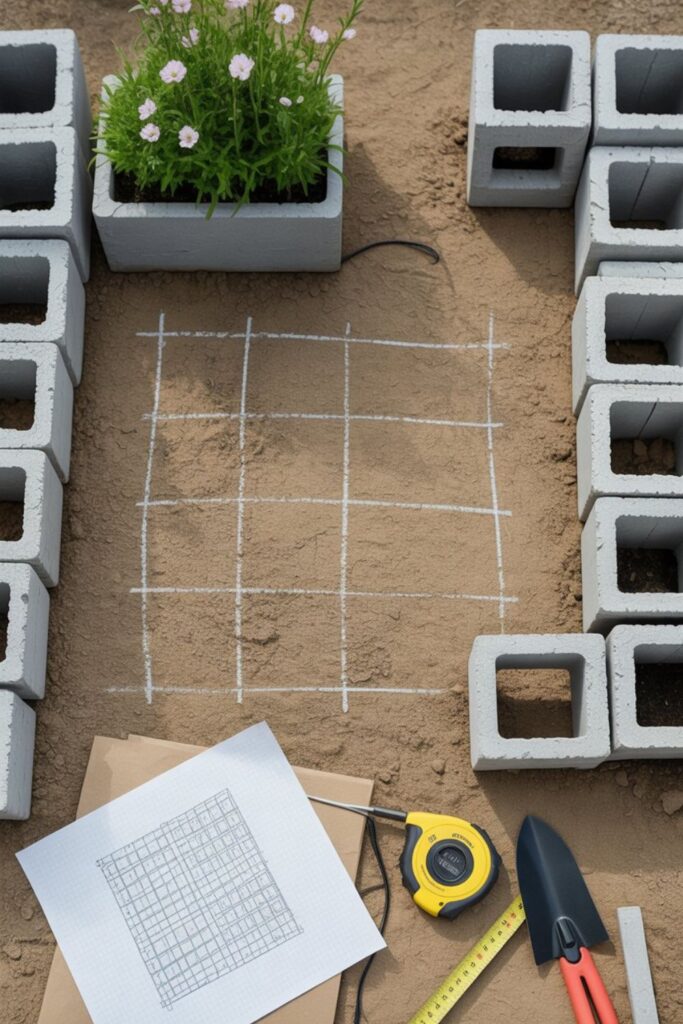
Strategic planning prevents costly mistakes while optimizing your cinder blocks garden for success. Thoughtful design decisions made before purchasing materials save time, money, and frustration.
Site selection determines what grows successfully and how much maintenance your garden demands. Map sun exposure patterns throughout the day full-sun vegetables need 6-8 hours of direct sunlight, while shade-tolerant ornamentals thrive with less. Observe water drainage during rainstorms, avoiding low spots where puddles form. Position gardens near water sources to simplify irrigation, especially important during establishment periods when plants need consistent moisture. Consider accessibility to beds located conveniently near your kitchen door that get tended more frequently than those requiring treks across the yard.
Dimension planning balances ambitious visions with practical realities. Standard Cinder blocks garden measure 8×8×16 inches, determining your garden’s modular increments. Popular bed sizes include 4×8 feet (requiring 12 blocks per layer) and 4×4 feet (using 8 blocks per layer). Width matters more than length: keep beds under 4 feet wide so you reach the center without stepping on soil, which compacts it and damages plant roots. Length extends as far as desired since you access from the sides.
Height considerations impact both aesthetics and functionality. Single-layer beds (8 inches tall) suit shallow-rooted crops like lettuce and herbs but limit options. Two-layer structures (16 inches) accommodate most vegetables comfortably while remaining accessible for everyone. Three-layer beds (24 inches) reduce bending for people with mobility issues but require more materials and careful leveling. Taller structures need stabilization either mortar between layers or rebar driven through aligned hollow cores for lateral support.
Path planning often gets neglected until after installation when awkward access frustrates daily maintenance. Allow 2-3 feet between beds for comfortable walking and wheelbarrow maneuvering. Mulch or gravel paths between Cinder blocks garden beds suppress weeds while keeping feet clean during wet weather. Consider future expansion when positioning initial beds leave room for additional structures as your gardening ambitions grow.
Sketching your design on graph paper (one square per block) visualizes the final layout before purchasing materials. This simple step reveals spacing issues, awkward proportions, or access problems that only become obvious once represented visually. Photograph your yard and sketch directly on printed images to see how proposed gardens integrate with existing landscaping. Share plans with household members to ensure everyone’s needs get considered. Kids might want space for a play area while adults prioritize vegetable production.
Step-by-Step: Building Your First Cinder Blocks Garden Bed
Constructing a cinder blocks garden bed requires no special skills, just attention to detail and proper preparation. This straightforward process typically completes in 2-3 hours.
Site preparation establishes the foundation for structural stability. Mark your bed perimeter using stakes and string, ensuring corners form true right angles by measuring diagonals they should be equal. Remove all vegetation within the marked area plus 6 inches beyond on all sides. Scrape away topsoil to a depth of 2-3 inches, creating a shallow depression. This prevents blocks from sitting atop grass that compresses unevenly and causes settling.
Base installation prevents the tipping and misalignment that plague improperly built structures. Spread a 2-inch layer of compacted gravel or decomposed granite across the excavated area. This provides drainage while creating a stable, level platform. Use a hand tamper or simply walk across the gravel repeatedly to compact it firmly. Rake the surface level invest time here because correcting an unlevel foundation after stacking blocks proves frustrating.
First course placement determines whether your entire structure aligns properly. Position your first block at a corner with hollow cores facing upward (this orientation maximizes planting space). Place a 4-foot level across the block, checking in both directions. Adjust the gravel base as needed until the block sits perfectly level. Position adjacent blocks, maintaining consistent spacing and checking level continuously. The first layer must be absolutely level or upper courses won’t align correctly.
Corner construction requires attention to create strong, stable joints. At corners, alternate block orientation between layers: if the first layer has blocks running north-south on one side, the second layer switches to east-west. This running bond pattern (identical to traditional brick masonry) distributes weight evenly and prevents the weak vertical joints that cause structural failures. Each upper block should span two lower blocks, never aligning directly above the joints below.
Additional layers stack quickly once the foundation layer sits properly. Place second-layer blocks with hollow cores aligned above those below this creates vertical cavities extending through multiple layers. Fill these aligned cavities with soil as you build, adding weight that stabilizes the structure. Most vegetable gardens need just 2-3 layers (16-24 inches) for adequate root depth. Check level periodically as you stack even small deviations compound across multiple layers.
Soil filling completes your raised bed for planting. Line the interior perimeter with cardboard or landscape fabric to suppress weeds while allowing water drainage. Fill the bed with quality garden soil or create custom blends equal parts compost, peat moss, and vermiculite produces excellent results for most vegetables. Avoid using native soil alone unless it’s exceptionally fertile and well-draining. Fill to within 1-2 inches of the top edge, as soil settles 10-15% during the first season.
Best Soil Mix for Cinder Blocks Garden Beds
Soil preparation determines whether your cinder blocks garden thrives or struggles. The right blend provides nutrition, drainage, and structure plants need for vigorous growth.
Raised bed soil differs fundamentally from in-ground garden soil. You’re creating an entirely new growing medium rather than amending existing earth. The ideal mix balances water retention with drainage holding enough moisture between waterings while preventing waterlogged conditions that suffocate roots. Most successful Cinder blocks garden blends combine three core components in equal proportions.
Compost provides organic matter and slow-release nutrients essential for healthy plant growth. Quality compost contains decomposed plant materials, not manure-heavy blends that burn tender roots. Look for dark, crumbly texture and earthy smell to avoid compost with woody chunks or ammonia odors indicating incomplete decomposition. Homemade compost works wonderfully if aged at least 6 months. This component feeds soil microorganisms that convert nutrients into plant-available forms.
Peat moss or coconut coir improves moisture retention without causing compaction. Peat moss offers acidic pH (beneficial if your blocks’ alkalinity needs counterbalancing) but raises environmental concerns due to bog ecosystem impacts. Coconut coir provides similar water-holding properties with neutral pH and sustainable sourcing. Either material fluffs soil, preventing the dense, airless conditions where roots struggle. Moisten thoroughly before mixing since dry peat or coir resist water absorption initially.
Vermiculite or perlite creates air pockets within soil, facilitating oxygen exchange at root level. Vermiculite holds more water and nutrients than perlite, making it preferable for vegetables and moisture-loving plants. Perlite drains faster, suiting Mediterranean herbs and drought-tolerant species. These mineral amendments prevent soil compaction over time crucial since you cannot till raised beds annually without disturbing plant roots.
The classic recipe combines equal parts by volume (not weight): ⅓ compost, ⅓ peat moss or coir, ⅓ vermiculite or perlite. A 4×8-foot bed with 16-inch depth requires approximately 40 cubic feet of soil; purchasing ingredients in bulk saves significantly versus buying bagged products. Mix thoroughly before filling beds, or layer components and blend with a hoe during filling.
pH adjustment addresses the alkalinity issue fresh cinder blocks introduce. Weathered blocks (exposed to rain for 4-6 weeks before planting) pose minimal pH problems. For fresh blocks or acid-loving plants, incorporate elemental sulfur at 1 pound per 100 square feet to lower pH by approximately one point. Retest soil pH annually and adjust as needed the concrete’s alkalinity diminishes over time as leaching occurs.
What Plants Thrive in a Cinder Blocks Garden?
Plant selection determines your cinder blocks garden success rate and harvest abundance. Certain species naturally adapt to raised bed conditions while others struggle despite careful attention.
Vegetables dominate most raised bed gardens for good reason the controlled environment produces superior yields compared to in-ground planting. Tomatoes, peppers, and eggplants thrive in the warm, well-drained soil concrete block garden structures provide. These heat-loving crops benefit from concrete’s thermal mass moderating temperature swings. Beans and peas grow vertically, maximizing space in compact gardens. Root vegetables like carrots, radishes, and beets appreciate the loose, rock-free soil achievable in raised beds, no battling clay or compaction issues that stunt root development.
Leafy greens flourish in cinder blocks garden beds, especially during spring and fall seasons. Lettuce, spinach, kale, and Swiss chard prefer the cooler temperatures elevated beds provide during hot weather (soil stays slightly cooler than ground level). Succession planting every 2-3 weeks ensures continuous harvests rather than one-time gluts. These shallow-rooted crops work perfectly in single-layer beds, ideal for beginners testing their gardening skills before committing to larger installations.
Herbs transform planting cavities into productive mini-gardens requiring minimal maintenance. Mediterranean varieties including rosemary, thyme, oregano, and sage tolerate the alkaline conditions concrete creates while appreciating excellent drainage. Their compact root systems fit perfectly within individual hollow cores, creating living spice racks accessible steps from your kitchen. Basil and cilantro demand more water but produce abundantly when positioned in shadier cavities or watered daily during peak summer.
Ornamental flowers create season-long color displays. Marigolds deter pests while blooming continuously from spring through frost. Petunias and geraniums handle alkaline soil well and cascade beautifully over stackable blocks edges. Perennials like daylilies, coneflowers, and black-eyed Susans establish permanent plantings requiring minimal annual effort; they return bigger and more floriferous each year. Drought-tolerant species such as portulaca and moss rose survive neglect while providing intense colors in harsh conditions.
Succulents and cacti represent ideal candidates for individual block cavity plantings. Their shallow root systems fit within standard 8-inch-deep hollow cores perfectly. The alkaline concrete mimics their native desert soils. Hen-and-chicks, jade plants, and echeveria varieties propagate readily one plant eventually produces dozens of offsets that fill additional cavities without purchasing more specimens. These low-maintenance options suit busy gardeners or those new to plant care.
Avoid acid-loving plants unless willing to commit to annual pH management. Blueberries, azaleas, and rhododendrons struggle in alkaline conditions concrete creates. If growing these species, line planting cavities with landscape fabric to prevent concrete contact, then fill with acidic planting mix. Alternatively, dedicate separate non-concrete containers to acid-lovers rather than fighting chemistry.
How to Maximize Space in Your Cinder Blocks Garden
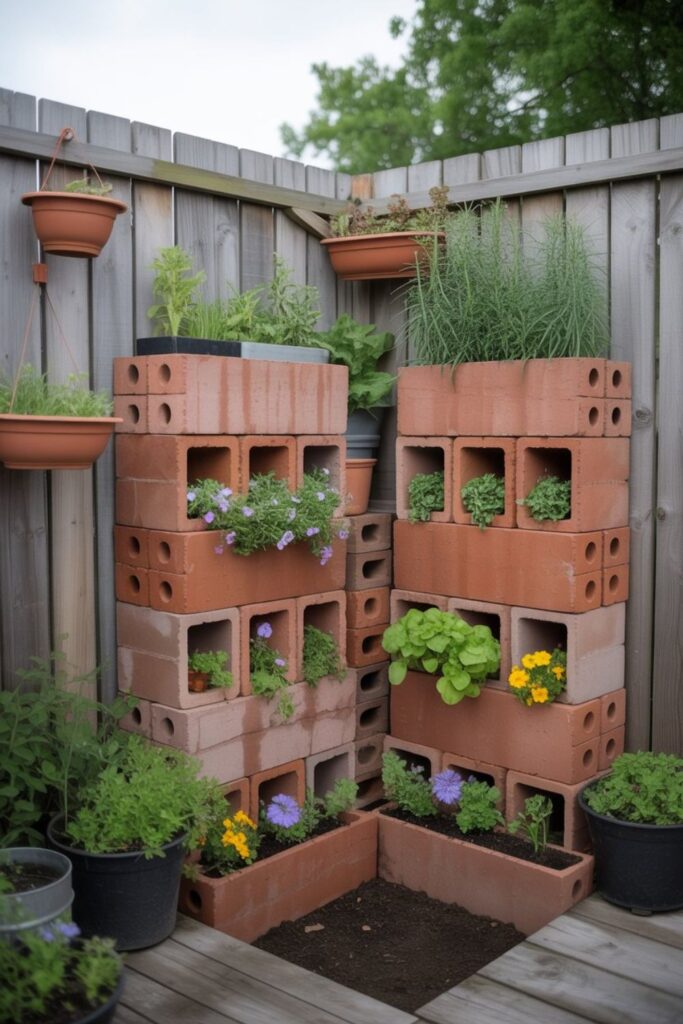
Limited square footage demands creative strategies that multiply growing capacity. Cinder blocks garden designs naturally lend themselves to space-efficient techniques.
Vertical growing exploits the third dimension most gardeners neglect. Stack blocks 3-4 layers high, creating walls suitable for trailing plants, vining vegetables, and hanging specimens. Plant cucumbers, pole beans, or small melon varieties at the base and train them up trellises attached to upper blocks. The elevated planting level improves air circulation (reducing disease pressure) while making harvest easier on your back. Strawberries planted in outward-facing hollow cores produce hanging fruit that stays clean and pest-free.
Succession planting prevents the feast-or-famine cycles common in vegetable gardens. Rather than planting an entire bed of lettuce simultaneously (which matures all at once), plant one-quarter of the space every two weeks. This staggers harvests across 6-8 weeks instead of overwhelming you with salad greens for one week followed by nothing. Quick-maturing crops like radishes and arugula fill gaps between slower vegetables, plant them around tomato seedlings in spring, harvest before tomatoes need the space in summer.
Companion planting increases productivity while naturally controlling pests. The classic “three sisters” combination corn, beans, and squash supports each other structurally and nutritionally. Corn provides bean climbing structures, beans fix nitrogen benefiting all three crops, squash leaves shade soil preventing moisture loss. Marigolds interplanted with tomatoes deter aphids and whiteflies. Basil growing near peppers improves flavor while repelling mosquitoes and thrips.
Modular garden design allows seasonal reconfiguration based on what’s actively growing. Spring gardens emphasize cool-season crops like peas, lettuce, and broccoli. When summer heat arrives, remove spent spring plants and replace with heat-tolerant tomatoes, peppers, and basil. Fall brings another transition to cool-season crops. This intensive planting approach keeps beds productive year-round in moderate climates rather than sitting empty between traditional spring/summer gardening seasons.
Square foot gardening adapts brilliantly to cinder blocks garden structures. Divide bed surfaces into 12×12-inch squares using string or wooden strips. Plant each square according to mature plant size 16 radishes per square, 4 lettuce plants, 1 tomato, etc. This organized approach prevents overcrowding while maximizing diversity. You harvest continuously as individual squares finish producing rather than waiting for entire beds to clear.
Read More About: Cinder Block Flower Garden Ideas for a Colorful Outdoor Space
Watering and Drainage Tips for Cinder Blocks Gardens
Water management makes or breaks cinder blocks garden success. Proper techniques ensure plants receive consistent moisture without waterlogging that causes root diseases.
Drainage system advantages inherent to raised bed construction prevent most overwatering problems automatically. The elevated planting surface allows gravity to pull excess water downward and out through the open bottom (assuming you haven’t mortared blocks to a solid base). This natural drainage protects against the soggy conditions that kill more plants than any other factor. Sandy soils drain too quickly, however, amend with compost to improve water retention in these conditions.
Watering frequency depends on multiple factors including weather, plant types, and soil composition. Vegetable gardens typically need 1-1.5 inches of water weekly, whether from rain or irrigation. Check moisture levels before watering and stick your finger 2 inches into soil. If it feels dry at this depth, water thoroughly. If it is still moist, wait another day. Morning watering allows foliage to dry before nightfall, reducing disease pressure from fungi and bacteria that thrive in damp conditions.
Drip irrigation delivers water directly to root zones with minimal waste. Simple systems connect to outdoor faucets via timers that automate watering schedules. Lay drip lines along concrete block garden beds, positioning emitters near each plant. This targeted approach uses 30-50% less water than overhead sprinklers while keeping foliage dry. Installation costs $50-150 for typical residential systems, a worthwhile investment if water bills run high or your schedule prevents daily hand-watering.
Mulching conserves moisture dramatically while suppressing weeds and moderating soil temperature. Apply 2-3 inches of organic mulch (shredded bark, straw, or compost) across exposed soil after planting. Mulch reduces evaporation by 50-70%, meaning you water less frequently during hot weather. As mulch decomposes, it enriches soil with organic matter, a bonus benefit other water conservation methods don’t provide.
Planting cavities in block walls drain differently than bed interiors. These small volumes dry out faster since exposed on multiple sides. Plants in hollow cores often need daily watering during peak summer, especially for moisture-loving species. Consider installing drip emitters or ollas (unglazed clay vessels that seep water slowly) in heavily planted cavities to maintain consistent moisture without daily attention.
Maintaining Your Cinder Blocks Garden Throughout Seasons
Year-round care keeps your cinder blocks garden productive and attractive. Seasonal maintenance tasks prevent problems while optimizing growing conditions.
Spring preparation begins several weeks before the last frost dates. Remove winter mulch and plant debris that harbored pests over winter. Top-dress beds with 1-2 inches of fresh compost, gently working it into the top few inches of soil without disturbing deeper layers where beneficial organisms reside. This annual compost addition replenishes nutrients previous crops consumed. Check stackable blocks for stability after freeze-thaw cycles restack any shifted blocks before filling beds.
Summer maintenance focuses on water, weeds, and harvests. Monitor soil moisture daily during heat waves when plants transpire rapidly. Weed promptly pulling small weeds requires seconds while established weeds demand minutes and disturb nearby plant roots. Harvest vegetables at peak ripeness to encourage continued production (many crops stop flowering once fruits mature to seed-bearing stage). Deadhead spent flowers on ornamentals to redirect energy into new blooms rather than seed production.
Fall transitions involve succession planting cool-season crops and beginning soil building for next year. As summer vegetables finish producing, remove plants and immediately replant with cold-tolerant greens, root vegetables, and brassicas. This second growing season maximizes your cinder blocks garden productivity. Sow cover crops (crimson clover, winter rye) in beds that won’t hold food crops until spring. These green manures prevent erosion, suppress weeds, and fix nitrogen when tilled under next spring.
Winter protection preserves infrastructure and prepares for next season. Remove annual plants completely rather than leaving them to harbor diseases or pests. Empty individual hollow cores used for annuals, refreshing soil next spring. Perennials benefit from 2-3 inches of mulch over root zones after the first hard freeze. Cover entire beds with burlap or frost blankets if growing borderline-hardy species. Concrete block garden structures themselves need no protection; the material withstands the harshest winter conditions without damage.
Soil health maintenance extends beyond seasonal tasks. Test soil pH and nutrients every 2-3 years using home kits or extension service laboratories. Adjust based on results add lime if pH drops too acidic, sulfur if too alkaline. Incorporate amendments to correct nutrient deficiencies rather than assuming fertilizer solves everything. Rotate crop families annually (avoid planting tomatoes where tomatoes grew last year) to prevent disease buildup and nutrient depletion patterns that plague monoculture planting.
Common Problems and Solutions in Cinder Blocks Gardens
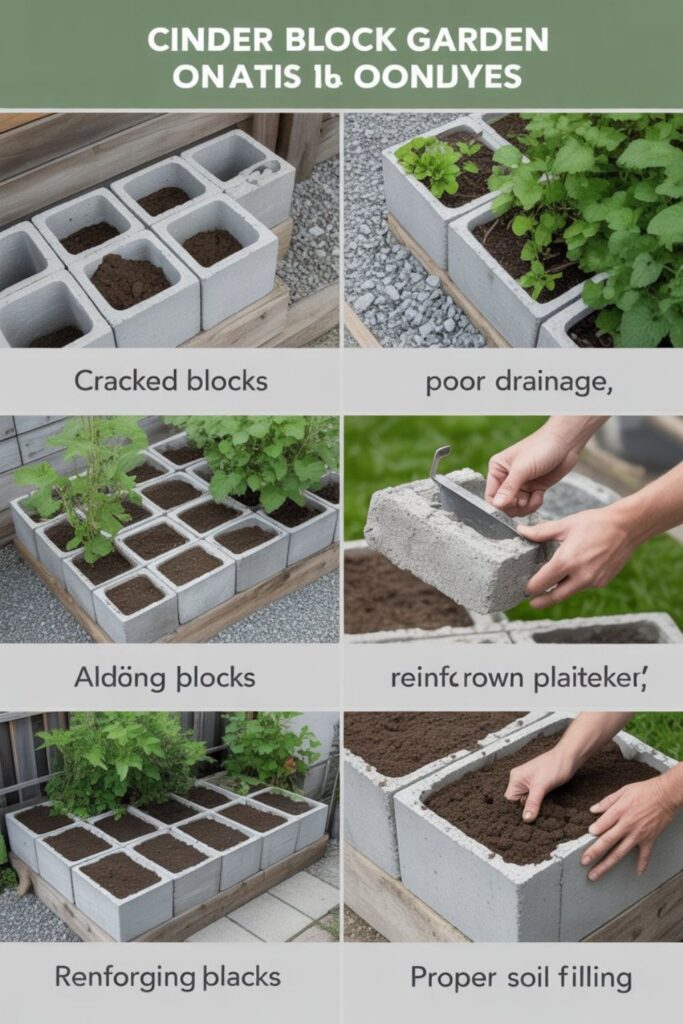
Anticipating challenges allows proactive solutions that prevent crop failures and frustration. Most cinder blocks garden problems trace to a handful of correctable issues.
Alkaline soil tops the complaint list for concrete block garden builders. Fresh blocks release lime compounds raising pH to 8.5-9.5, well above the 6.0-7.0 range most vegetables prefer. Symptoms include yellowing leaves (especially between veins), stunted growth, and poor flowering despite adequate water and sunlight. Solutions include weathering blocks 4-6 weeks before planting, incorporating elemental sulfur into soil (follow package rates carefully, too much harms plants), and adding acidic amendments like peat moss or pine bark. Many gardeners simply line planting cavities with landscape fabric to prevent concrete contact.
Poor drainage frustrates gardeners when blocks sit on clay or compacted subsoils. Water pools within beds rather than draining away, suffocating roots and promoting fungal diseases. Prevention beats cure install that gravel base during initial construction. For existing gardens, drill drainage holes through lower block courses using a masonry bit, allowing water exit routes. Amend soil with coarse sand or perlite to improve internal drainage. Consider French drains around the perimeter if positioned in low-lying areas.
Pest invasions concentrate in raised beds where tender plants grow densely. Aphids cluster on new growth, sucking sap and spreading viruses. Tomato hornworms devour foliage overnight. Slugs thrive in moist mulch conditions. Integrated pest management combines multiple strategies: hand-picking large pests daily, spraying aphids with hard water streams, introducing beneficial insects (ladybugs, lacewings), applying organic pesticides (neem oil, insecticidal soap) as needed, and using copper barriers against slugs.
Soil depletion occurs when intensive planting extracts nutrients faster than organic matter replenishes them. Plants grow slowly, flowers fail to set fruit, and yields decline annually despite consistent care. Annual compost additions and seasonal cover cropping rebuild fertility naturally. Supplement with organic fertilizers formulated for vegetables if production drops noticeably fish emulsion provides quick nitrogen boosts, while rock phosphate and kelp meal supply longer-term mineral nutrition.
Stackable blocks shifting or tilting signals foundation problems requiring immediate correction. Uneven settling creates gaps between blocks and potentially dangerous tipping hazards. Address by emptying affected beds, releveling the gravel base, and restacking carefully. For tall structures (3+ layers), run rebar through aligned hollow cores to pin layers together permanently. Apply construction adhesive between layers if mortar-free appearance isn’t essential.
Cost Analysis: Building a Cinder Blocks Garden on Any Budget
Understanding true costs helps you plan realistic cinder blocks garden projects matching your budget. Breaking down expenses by project size reveals the remarkable affordability.
A small garden budget ($50-100) creates productive growing space for beginners. A single 4×4-foot bed using 16 blocks (2 layers) costs $24-48 in materials. Add $15-25 for basic soil ingredients purchased in bags rather than bulk. Simple hand tools you likely own (shovel, rake, level) complete the project. This investment produces approximately 16 square feet of intensive growing space enough for 2-3 tomato plants, a dozen lettuce heads, herbs, and companion flowers. Cost per square foot runs $3-6, versus $15-30 for equivalent cedar beds.
Medium garden budget ($200-400) establishes comprehensive vegetable production for a family. Build three 4×8-foot beds (2-3 layers high) using approximately 100-120 blocks. Material costs include $150-360 for blocks, $100-150 for bulk soil ingredients (1 cubic yard typically suffices), $30-50 for landscape fabric and gravel base. This creates 96 square feet of intensive growing area sufficient for diverse crops throughout the growing season. Many families achieve 30-40% grocery savings on produce with this investment.
A large garden budget ($500-1000+) transforms entire yards into productive landscapes. Multiple raised beds in various configurations, vertical growing structures, integrated seating, and decorative elements create outdoor living spaces doubling as food production areas. Bulk block purchases (pallets of 90-120 blocks) reduce per-unit costs significantly. Consider drip irrigation systems ($100-200) for automated watering. This level of investment supports serious food production goals; some dedicated gardeners grow 50-70% of their annual produce consumption.
Hidden cost awareness prevents budget surprises. Delivery fees add $50-100 if you lack trucks for transporting blocks (each weighs 30-38 pounds). Quality soil ingredients cost substantially more than cheap “topsoil” that compacts and underperforms. Basic tools (level, tamper, wheelbarrow) represent one-time purchases supporting multiple projects. Seeds and transplants add $20-50 per bed depending on crop selection.
Long-term value calculation reveals true cost-effective gardening potential. Wooden beds require replacement every 5-15 years plus annual maintenance (staining, sealing). Cinder blocks garden structures last 50+ years with zero maintenance beyond soil refreshment. Amortized over two decades, blocks cost pennies annually versus hundreds for wooden alternatives. Factor in produce value ($300-600 annually from medium-sized gardens) and payback periods shrink to single seasons for most installations.
Creative Design Ideas for Cinder Blocks Gardens
Aesthetic considerations elevate functional concrete block garden structures into landscape focal points. Creative approaches prove these practical builders also serve as design elements.
Terraced hillsides transform problem slopes into productive growing areas. Build retaining walls using stacked cinder blocks, stepping each tier 2-3 feet back from the one below. This creates multiple level planting surfaces where gravity previously caused erosion. Fill terraces with soil and plant according to sun exposure full-sun crops on south-facing surfaces, shade-tolerant species on northern exposures. The dimensional interest adds visual appeal while multiplying usable space on previously unusable terrain.
Painted block gardens inject personality and color coordination into outdoor spaces. Clean blocks thoroughly, apply concrete primer, then paint with exterior masonry paint in colors complementing your home and landscaping. Geometric patterns create modern aesthetics alternating bright and neutral blocks in checkerboard patterns. Gradient designs transition from dark bases to lighter tops, visually lifting structures. Involve children by letting them paint individual blocks with stenciled designs or handprints before assembly.
Herb spiral designs showcase modular garden design flexibility. Arrange blocks in expanding circular patterns, stacking progressively higher toward the center. This creates a three-dimensional spiral with varying sun exposure and moisture levels. Plant heat-loving Mediterranean herbs (rosemary, oregano, thyme) at the sunny, well-drained summit. Position moisture-preferring herbs (mint, parsley, cilantro) at the shadier, wetter base. This single 5-foot-diameter structure grows 15-20 herb varieties in complementary microclimates.
Integrated seating converts garden borders into functional furniture. Build walls 16-18 inches high (standard chair height), cap with flagstone or concrete pavers creating smooth sitting surfaces, and cushion with weather-resistant pillows. The hollow cores become planters growing fragrant flowers or herbs that release scent when brushed against while sitting. This dual-purpose approach maximizes space efficiency while creating inviting outdoor living areas encouraging garden time.
Decorative insets break up solid block expanses with textural interest. Leave strategic blocks empty or turned sideways, creating openings for decorative inserts colored glass bottles, pottery shards arranged in mosaics, or found objects like interesting rocks. These architectural details transform utilitarian structures into artistic expressions reflecting personal style and creativity.
Read More About: 25+ Creative Garden Cinder Block Ideas
Can You Grow Organic Vegetables in Cinder Blocks Gardens?
Organic certification questions arise frequently among health-conscious gardeners considering cinder blocks garden projects. Science-based information clarifies this important topic.
Concrete composition contains Portland cement, sand, aggregate, and sometimes fly ash none of which are toxic or prohibited under organic standards. The cured material remains chemically inert, unlike pressure-treated lumber containing copper compounds or arsenic-based preservatives banned in organic production. University extension research confirms concrete blocks don’t leach harmful substances into surrounding soil or accumulate in plant tissues.
Alkalinity represents a growing condition rather than contamination issue. Fresh blocks temporarily raise soil pH through lime leaching, a natural mineral adjustment similar to agricultural limestone applications organic farmers use routinely. The weathering process neutralizes excessive alkalinity within weeks, after which pH remains stable at levels suitable for most crops. Acid-loving plants require pH adjustment whether growing in concrete, wood, or plastic containers the material doesn’t determine organic eligibility.
USDA organic regulations focus on production practices rather than container materials. The rules address soil amendments, pest management, seeds, and growing techniques. Nothing prohibits using concrete block garden beds for certified organic production. Many commercial organic farms employ concrete infrastructure for washing stations, storage areas, and growing beds without jeopardizing certification.
Home gardeners face no restrictions whatsoever on cinder blocks usage for organic vegetable production. Your personal definition of “organic” determines acceptability. If avoiding synthetic inputs and pesticides while building healthy soil defines your organic philosophy, blocks support these goals perfectly. The long lifespan eliminates treated lumber concerns while the inert composition ensures no chemicals migrate into your food.
Testing resolves concerns about reclaimed blocks from unknown sources. Lead paint contaminated many older buildings demolished for reclaimed materials. Simple lead test kits ($10-15 at hardware stores) detect surface contamination. Avoid blocks showing positive lead tests or those from industrial sites potentially contaminated with heavy metals or petroleum products. New blocks from retail sources eliminate all these concerns.
Winterizing Your Cinder Blocks Garden
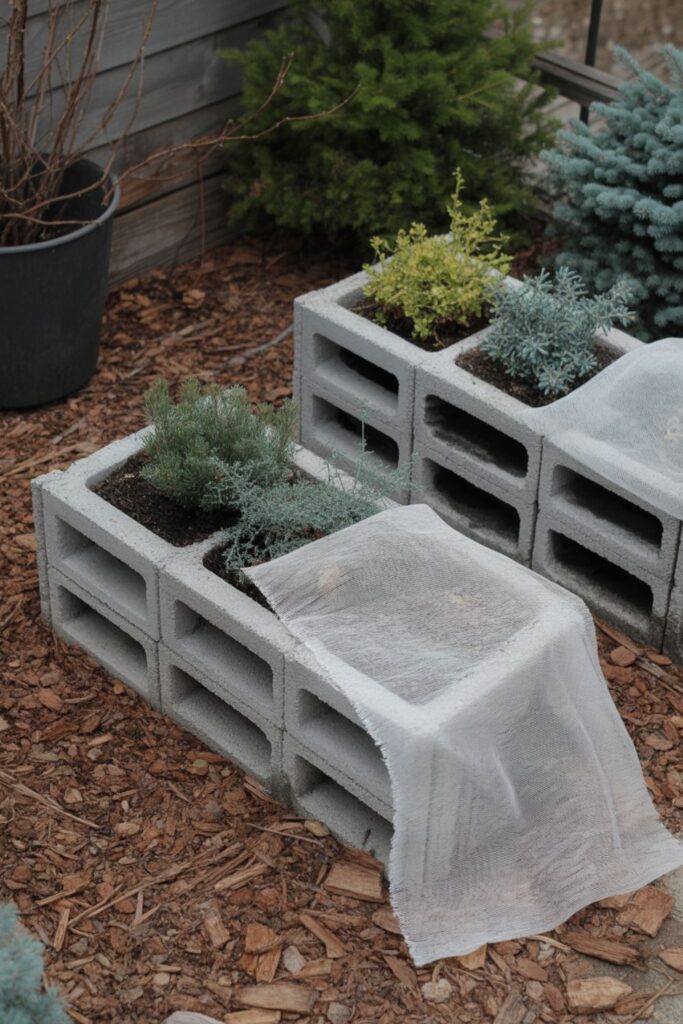
Cold climate gardeners protect investments through proper seasonal preparation. Strategic cinder blocks garden winterization extends structure lifespans while safeguarding perennial plantings.
Drainage system clearing prevents freeze-thaw damage to both blocks and plantings. Empty all annual plant-filled hollow cores of spent foliage and exhausted soil water trapped in cavities expands when freezing, potentially cracking blocks. Tip tall vertical stacks slightly forward (2-3 degrees) to encourage water drainage rather than pooling in cavities. This simple angle prevents ice formation that stresses structures.
Perennial protection preserves plants returning next spring. Hardy perennials overwintering in planting cavities benefit from 2-3 inches of mulch over root zones after the first hard freeze. This insulates against temperature extremes while allowing necessary dormancy. Avoid premature mulching applied while soil remains warm, it encourages rodent nesting and delays dormancy, increasing cold damage risk. Wait until after several nights of freezing temperatures signal true winter arrival.
Soil health maintenance continues even during dormancy. Remove all spent annual plants completely rather than leaving them to harbor diseases or pests through winter. Resisting tilling or disturbing soil winter exposure kills beneficial organisms and causes compaction from rain impact. Instead, top-dress with 1-2 inches of compost, allowing earthworms to incorporate it naturally by spring. Sow cover crops in beds that won’t hold food crops until late spring winter rye or crimson clover prevents erosion while fixing nitrogen.
Structure inspection identifies problems before they worsen. Check stackable blocks for shifting or separation caused by soil expansion during freezing. Restack any displaced blocks while soil remains workable. Fill gaps between blocks with soil to prevent water infiltration that aggravates freeze-thaw stress. Consider applying construction adhesive between layers on tall structures (3+ layers) if you experience significant shifting annually.
Regional variations dictate specific winterization needs. Mild-winter climates (USDA zones 8-10) need minimal preparation beyond removing annuals and adding compost. Moderate-winter regions (zones 5-7) benefit from the perennial protection described above. Severe-winter areas (zones 3-4) may require burlap wind screens around borderline-hardy perennials or complete emptying of above-ground hollow cores to prevent freeze damage. Local extension services provide region-specific recommendations accounting for your particular climate patterns.
FAQs
How deep should soil be in cinder blocks garden beds?
Most vegetables and flowers need 12-18 inches of soil depth for healthy root development. Two-layer cinder blocks garden beds (16 inches) accommodate the majority of common garden plants comfortably. Shallow-rooted crops like lettuce, radishes, and herbs thrive in single-layer beds (8 inches), while deep-rooted vegetables like tomatoes, carrots, and peppers prefer 18-24 inches achievable with three-layer construction.
Do cinder blocks garden beds need liners?
Soil preparation doesn’t require liners in most situations. The blocks’ porous nature allows water drainage while soil particles remain contained. However, liners prove beneficial in specific circumstances use landscape fabric along interior walls if growing acid-loving plants (prevents alkaline leaching from concrete), install hardware cloth bottoms to exclude burrowing pests like voles and gophers, or add cardboard layers beneath beds to suppress aggressive perennial weeds before filling with soil.
How long do cinder blocks gardens last?
Properly constructed concrete block garden structures last 50+ years with essentially zero maintenance beyond soil management. The concrete withstands freeze-thaw cycles, UV exposure, and constant moisture without deteriorating. This dramatically exceeds wooden raised beds (5-15 years), plastic containers (10-20 years), and galvanized metal options (15-25 years). The blocks outlive most gardeners, making them true lifetime investments supporting multiple generations of food production.
Can I move my cinder blocks garden later?
Yes, the modular garden design allows complete relocation by simply unstacking blocks, moving them individually, and reconstructing at the new location. Each standard block weighs 30-38 pounds manageable for most adults using proper lifting techniques. This flexibility proves invaluable when landscaping plans evolve, you relocate residences, or seasonal garden placement varies (moving beds to capture optimal summer sun exposure).
What’s the best height for cinder block garden beds?
The ideal height balances root depth needs with accessibility and material costs. Two-layer beds (16 inches) suit most vegetables and reduce bending during maintenance; they’re the most popular configuration among experienced gardeners. Single-layer (8 inches) works for shallow-rooted crops and tight budgets. Three-layer beds (24 inches) accommodate serious root vegetables while benefiting people with limited mobility who can’t bend easily. Heights exceeding 24 inches need stabilization through mortar or rebar.
Do I need to seal cinder blocks before planting?
Sealing is optional based on climate and plant selection. Unsealed cinder blocks perform excellently in most situations; the porous material facilitates drainage while retaining adequate soil moisture. Seal interior cavity walls in extremely dry climates to prevent excessive moisture wicking, or when growing water-intensive crops like lettuce and celery. Use concrete sealer or exterior latex paint, allowing 48 hours drying before adding soil. Never seal exterior block faces, as this traps moisture causing deterioration.
Conclusion
Cinder blocks garden projects deliver remarkable value through simple, accessible construction methods that transform ordinary yards into productive, beautiful outdoor spaces. These versatile concrete blocks build everything from basic raised beds and vertical planters to integrated seating areas and elaborate terraced landscapes all without requiring professional skills, expensive tools, or complicated techniques. The modular garden design philosophy allows starting small with a single bed and expanding annually as confidence grows and ambitions develop.
Smart gardeners recognize that cost-effective gardening doesn’t demand compromising on quality, durability, or aesthetics. Cinder blocks outperform traditional materials by lasting generations while costing a fraction of wooden or composite alternatives. Whether you’re establishing your first vegetable garden, creating urban growing spaces in limited square footage, or designing comprehensive outdoor living areas, these humble blocks provide the foundation for lasting success. Start planning your cinder blocks garden today your most productive, beautiful, and budget-friendly growing season awaits with these proven building techniques.