Contemporary Terrace Ideas for Luxury Homes

You walk onto your terrace and see tired traditional furniture that clashes with your home’s contemporary architecture. That ornate wrought iron and busy floral cushions belong to a different era, not the sleek modern aesthetic you’ve carefully cultivated indoors. Meanwhile, striking contemporary terraces in design magazines showcase the clean minimalism and architectural precision you crave but can’t quite translate to your own outdoor space.
Contemporary terrace ideas embrace the design principles defining modern architecture simplicity, functionality, and honest expression of materials. These sleek outdoor spaces reject fussy ornamentation in favor of clean lines, geometric forms, and carefully curated elements that make bold statements through restraint rather than excess. When executed properly, modern terraces become seamless extensions of interior design rather than disconnected afterthoughts.
This guide reveals proven modern terrace design strategies emphasizing minimalist furniture, premium materials, and architectural plants that create sophisticated outdoor rooms worthy of contemporary homes. You’ll discover how neutral palettes and monochromatic schemes establish calming foundations, learn which sculptural elements add visual interest without clutter, and master integrated lighting techniques that extend modern aesthetics into evening hours. Whether designing urban terrace ideas for compact city spaces or expansive Contemporary terrace ideas, these principles ensure your outdoor areas reflect the same design intelligence and refined taste expressed throughout your home.
Defining Contemporary Terrace Design Philosophy
Contemporary terrace ideas follow the “less is more” principle championed by modernist architects. Every element serves purpose either functional or aesthetic with nothing purely decorative without meaning. This intentionality creates spaces feeling curated rather than cluttered, where each piece earns its presence through contribution to overall composition. According to design philosophy research, spaces governed by restraint and purpose trigger stronger positive responses than busy arrangements competing for attention.
Clean lines dominate contemporary design through furniture profiles, planter shapes, and architectural elements that avoid curves and ornamentation. Rectangular forms, straight edges, and 90-degree angles create the geometry defining modern aesthetics. Even organic elements like plants get contained within geometric planters maintaining design discipline. According to architectural psychology studies, geometric precision creates subconscious order associations that feel calming and sophisticated in Contemporary terrace ideas execution.
Material honesty represents another core tenet: concrete appears as concrete, steel as steel, wood as wood, without disguising or imitating other materials. This authenticity respects material properties while creating the industrial-chic aesthetic characterizing contemporary design. According to material philosophy research, honest material expression increases perceived quality because viewers subconsciously appreciate authenticity versus imitation in sleek outdoor space material selection.
Neutral Palette Foundations
Neutral palette dominance creates the sophisticated backdrop defining contemporary terrace ideas. Grays ranging from charcoal to pale silver establish primary color schemes, often accompanied by whites, blacks, and warm taupes. These achromatic foundations allow architectural forms and textures to dominate rather than competing colors. According to color psychology research, neutral-heavy palettes reduce visual stimulation by 40-50% compared to multicolor schemes creating the calm sophistication contemporary design pursues.
Introduce subtle color through single accent tones perhaps warm terracotta planters against gray flooring, or deep blue cushions on white furniture. This restrained color use (typically 10-15% of total visual field) provides interest without compromising modern minimalism. According to interior design principles, limiting palettes to 2-3 colors maximum creates cohesion impossible when five or more colors compete for attention in minimalist terrace color discipline.
Texture variations within neutral palettes prevent monotony combining smooth concrete with rough stone, matte finishes with glossy surfaces, soft textiles with hard metals. These tactile differences create dimensional interest while maintaining color restraint. According to sensory design research, texture diversity in monochromatic schemes provides 60-70% of the visual interest that color provides in traditional palettes, proving you don’t need rainbow colors for engaging spaces in modern balcony design sophistication.
Premium Materials That Elevate Quality
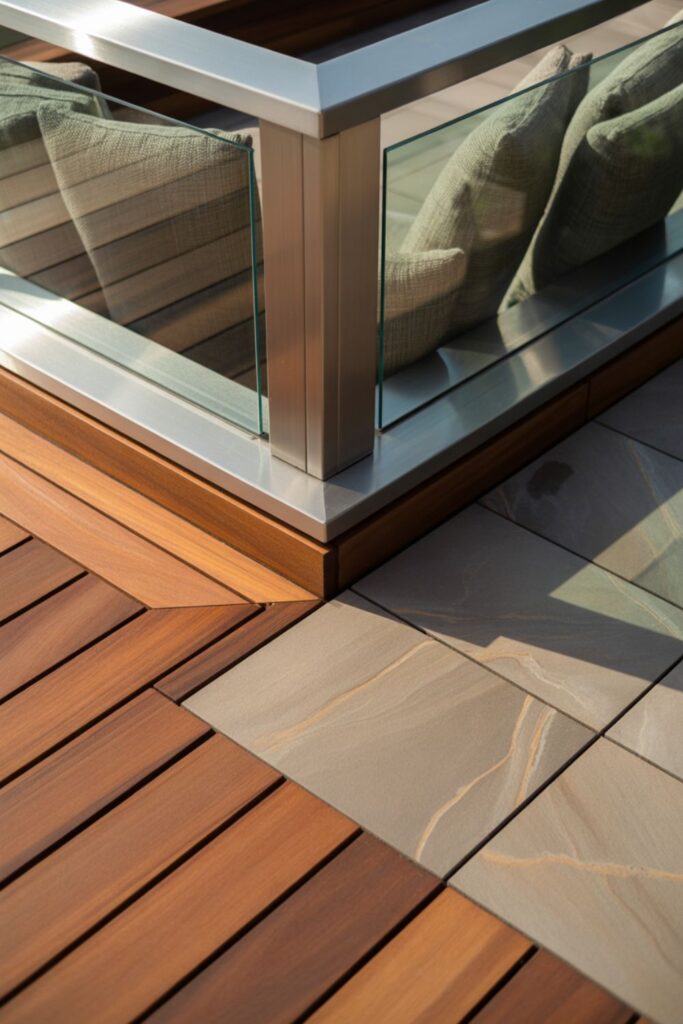
Premium materials separate genuine contemporary design from budget imitations in contemporary terrace ideas. Natural stone like bluestone, limestone, or granite provides substantial flooring that ages beautifully while conveying quality through inherent material value. These stones cost $15-35 per square foot installed but deliver the authentic luxury that cheaper alternatives cannot replicate. According to material perception studies, natural stone increases perceived space value by 30-40% compared to concrete or composite alternatives.
Porcelain pavers in large formats (24×24 inches or larger) create seamless modern surfaces with minimal grout lines fragmenting visual fields. These technical ceramics resist staining and weathering while offering consistent colors impossible in natural materials. Costs run $8-18 per square foot installed premium over basic pavers but delivering the uniformity contemporary aesthetics demand. According to tile industry data, large-format installations reduce visual busyness by 50-60% compared to smaller tiles, supporting modern minimalism in sleek outdoor space flooring.
Metal furniture and accents in stainless steel, powder-coated aluminum, or blackened steel provide industrial elegance characteristic of contemporary design. These materials weather gracefully while offering structural integrity allowing the thin profiles modern furniture features. According to materials engineering, quality metals justify 40-60% cost premiums over synthetics through superior longevity (30-40 years versus 10-15 years) and maintained appearance throughout service life in Contemporary terrace ideas durability.
Contemporary Material Selection Guide
| Material Category | Premium Options | Cost Range | Design Impact | Maintenance Level |
| Flooring | Bluestone, large porcelain, polished concrete | $12-35 per sq ft | Very High | Low |
| Furniture | Aluminum, stainless steel, teak | $800-3,000 per piece | High | Low-Moderate |
| Planters | Fiber concrete, corten steel, powder-coated metal | $100-800 each | Moderate-High | Very Low |
| Accents | Glass, polished stone, quality synthetics | Varies widely | Moderate | Low |
Geometric Forms and Clean Lines
Geometric forms create the visual order defining contemporary terrace ideas through rectangular planters, square tables, and linear seating arrangements. Avoid round or oval furniture that softens modern angularity even fire features and water elements should follow geometric rather than organic shapes. According to gestalt psychology, geometric consistency creates pattern recognition that feels intentionally designed rather than accidentally assembled in modern terrace design coherence.
Clean lines extend beyond individual pieces to overall layout furniture arranged in precise alignments, planters positioned at regular intervals, and pathways following straight trajectories. This orthogonal planning creates the architectural quality distinguishing contemporary terraces from casual outdoor spaces. According to spatial design research, aligned geometric layouts increase perceived organization by 50-60% compared to casual arrangements in minimalist terrace precision.
Allow negative space between elements rather than filling every surface contemporary design embraces emptiness as intentional rather than incomplete. Position furniture groupings with 4-6 feet separation from planters or architectural features, creating breathing room that lets each element register distinctly. According to minimalist design principles, negative space should occupy 30-40% of total terrace area, preventing the crowded feeling that undermines modern aesthetics in sleek outdoor space spatial planning.
Minimalist Furniture Selection
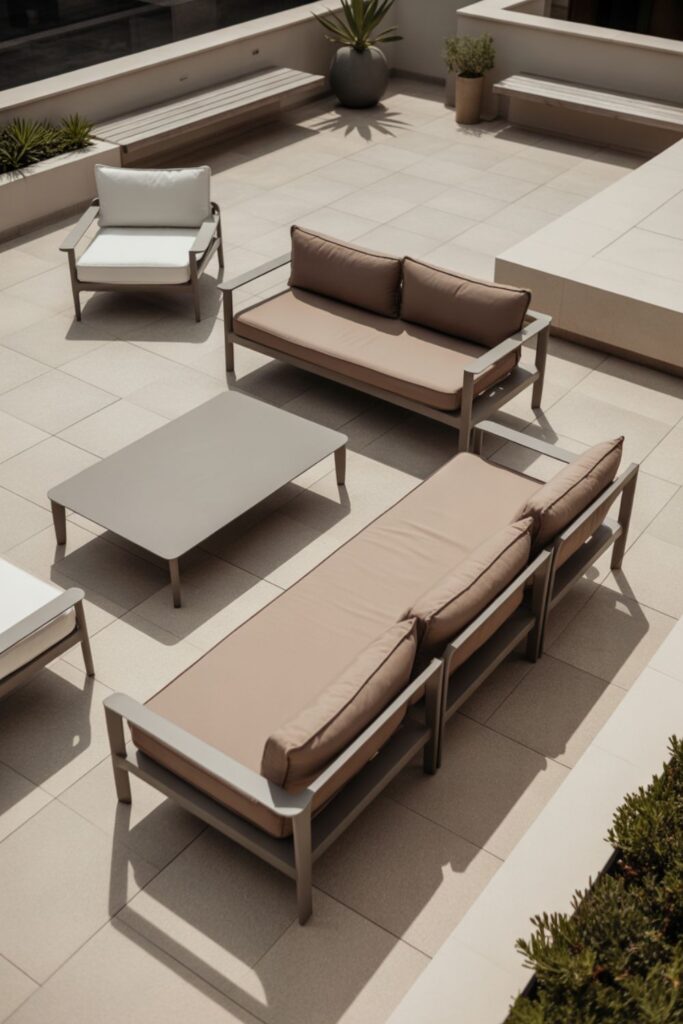
Minimalist furniture for contemporary terrace ideas features low profiles, thin frames, and absence of ornamental details. Seek pieces where structure remains visible, exposed frames showing how furniture is constructed rather than hidden beneath upholstery. Cantilever chairs, platform benches, and frame-visible sofas exemplify this honest construction aesthetic. According to furniture design philosophy, visible structure increases perceived quality because viewers appreciate engineering elegance in modern balcony design selection.
Modular furniture suits contemporary terraces through reconfiguration flexibility and clean geometric units. Individual sections arrange into various layouts without looking disjointed, important for spaces used differently across occasions. These systems typically cost more per seat ($400-800 versus $200-400 for fixed pieces) but justify premiums through versatility and sophisticated appearance. According to modular furniture research, reconfigurable systems increase space functionality by 40-50% over fixed arrangements.
Prioritizing comfort without sacrificing clean aesthetics contemporary doesn’t mean uncomfortable. Quality cushioning (4-6 inches thick) in weather-resistant fabrics provides genuine comfort while maintaining low profiles. Test furniture before purchasing because some ultra-minimal designs sacrifice ergonomics for appearance. According to furniture ergonomics, pieces allowing 2-3 comfortable sitting positions increase usage time by 50-70% compared to single-posture designs in modern terrace design functionality.
Read More About: 27+ Front Patio Cover Ideas to Enhance Curb Appeal Outdoor
Architectural Plants Over Cottage Garden Chaos
Architectural plants with strong forms and sculptural qualities suit contemporary terrace ideas better than frilly flowering varieties. Ornamental grasses like miscanthus or calamagrostis provide vertical elements and movement without busy flowers. Agaves, yuccas, and other succulents offer bold geometric forms. Bamboo creates living screens with linear elegance. According to horticultural aesthetics, architectural plants maintain visual interest through form rather than color aligning with contemporary design’s restraint.
Select plants with single-season or year-round appeal rather than brief flowering periods. Evergreen shrubs shaped into geometric forms (cubes, spheres, columns) provide consistent structure. Japanese maples offer four-season interest through branching patterns visible even in winter. According to landscape architecture principles, form-focused planting schemes maintain design integrity 12 months yearly versus flower-dependent gardens looking bare 8-9 months in minimalist terrace plant selection.
Container selection matters as much as plants themselves use large format planters (minimum 18-24 inches) in geometric shapes and neutral colors. Match all planters (same material, color, shape) for cohesive appearance, or limit to two complementary styles maximum. Avoid the collected-over-time randomness of mismatched pots. According to container design research, uniform planters increase perceived design intentionality by 60-70% compared to random collections in sleek outdoor space container discipline.
Integrated Lighting Design
Integrated lighting extends contemporary aesthetics into evening hours through fixtures becoming architectural elements rather than afterthoughts. Recessed LED strips under seating edges, along planter bases, or within architectural elements provide ambient glow without visible fixtures. These installations cost $15-30 per linear foot installed but deliver the seamless integration defining modern design. According to lighting aesthetics, hidden source lighting increases perceived sophistication by 40-50% compared to obvious fixture installations.
Linear LED fixtures mounted to pergola beams or under railings create geometric light patterns reinforcing modern design language. These runs of continuous illumination cost $20-40 per foot but transform structures into glowing architectural statements after dark. According to architectural lighting principles, linear lighting increases nighttime visual interest by 50-60% while consuming minimal energy through LED efficiency in Contemporary terrace ideas evening transformation.
Sculptural statement fixtures perhaps a single dramatic pendant or modern floor lamp can anchor seating areas while serving as daytime art objects. These pieces cost $300-1,500 but function as both lighting and sculpture. Select fixtures with clean geometric forms in quality materials (powder-coated metal, glass, polished concrete) maintaining design consistency. According to lighting design research, single statement fixtures create stronger impact than multiple modest lights while supporting minimalist restraint in contemporary rooftop patio illumination.
Monochromatic Schemes With Texture
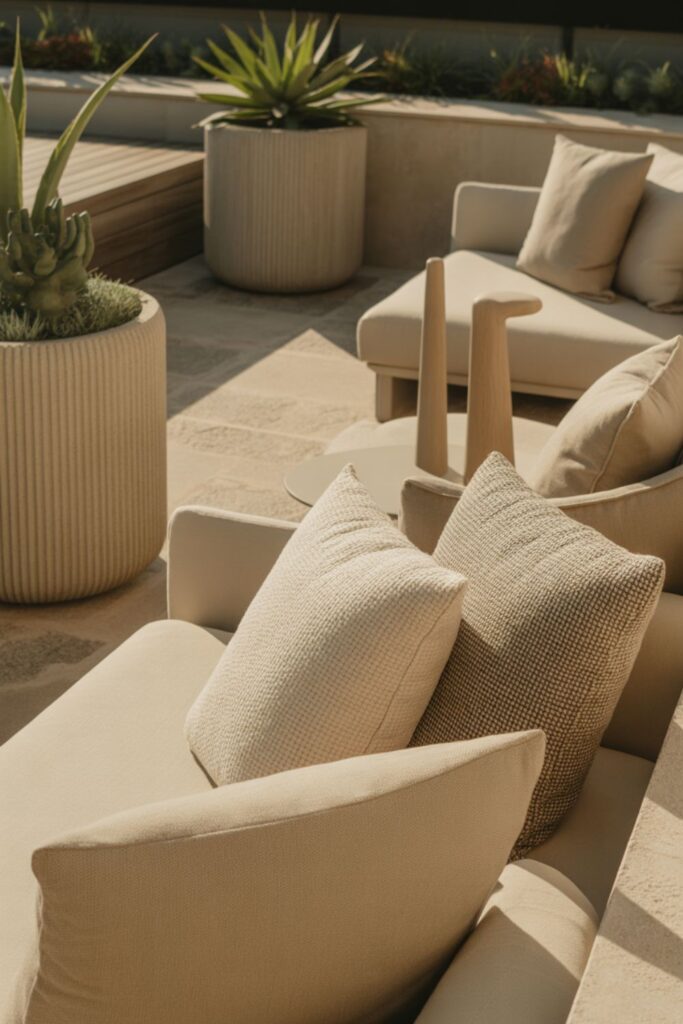
Monochromatic schemes using variations of single hues create sophisticated contemporary terrace ideas through subtle complexity. An all-gray palette might include charcoal furniture, medium gray flooring, pale gray planters, and silver-gray cushions creating depth through value changes rather than color variety. According to color theory research, monochromatic schemes reduce visual complexity by 40-50% while maintaining interest through tonal variations in modern balcony design color sophistication.
Combine multiple textures within monochromatic palettes preventing flat monotony. Smooth concrete pairs with rough stone aggregate, matte furniture with glossy planters, soft textiles with hard metals. These material contrasts provide visual interest that color variations deliver in traditional schemes. According to sensory design principles, texture variety in limited color palettes creates 70-80% of the visual engagement that multicolor schemes achieve while maintaining greater sophistication.
Consider undertones carefully when selecting neutrals; cool grays contain blue undertones while warm grays lean toward beige. Mixing cool and warm neutrals creates subtle discord. Commit to either cool or warm within your neutral palette for true cohesion. According to color psychology research, undertone consistency increases perceived harmony by 30-40% even when viewers cannot articulate why spaces feel more unified in minimalist terrace color precision.
Sculptural Elements as Focal Points
Sculptural elements provide visual anchors in contemporary terrace ideas without the business of traditional decorative accessories. A single substantial piece of modern outdoor sculpture, oversized geometric planter, or architectural fire feature creates interest while maintaining minimalist discipline. These statement pieces cost $500-5,000 depending on scale and artist but deliver disproportionate impact. According to focal point research, single bold elements increase visual interest more effectively than multiple small decorations.
Water features with modern geometries, rectangular pools, linear rills, or spherical fountains combine sculptural presence with soothing sound. Contemporary water elements cost $1,000-8,000 installed but provide both visual and auditory enhancement. Avoid naturalistic rock waterfalls that conflict with modern aesthetics; geometric precision should govern water feature design. According to water feature psychology, modern geometric designs feel 50-60% more appropriate in contemporary settings than naturalistic alternatives.
Consider furniture itself as sculptural pieces with interesting silhouettes or unusual materials become functional art. A dramatic cantilever chair, sculptural chaise lounge, or architectural bench serves both practical and aesthetic purposes. According to furniture-as-art philosophy, pieces pulling double duty as seating and sculpture justify premium pricing ($1,000-3,000) through dual value delivery in Contemporary terrace ideas efficiency.
Bold Statements Through Restraint
Bold statements in contemporary design come through dramatic simplicity rather than ornate complexity. A single massive planter with architectural specimens creates more impact than a dozen small pots with flowering plants. One oversized sectional in bold monochrome beats multiple pieces in busy patterns. According to minimalist design philosophy, restraint amplifies remaining elements making deliberate choices more powerful than abundant options in sleek outdoor space statement-making.
Material contrasts create boldness, pair rough concrete with smooth steel, warm wood with cool stone, matte finishes with glossy accents. These juxtapositions provide visual drama through opposition while maintaining modern aesthetics. According to material psychology research, intentional contrasts increase visual interest by 40-50% while supporting rather than undermining design cohesion when materials share quality and intentionality.
Scale manipulations generate impact oversized elements in compact spaces or surprisingly small features in large terraces create memorable moments through unexpected proportions. A massive fire bowl on a modest terrace or tiny precise planters in an expansive space demonstrates design confidence. According to spatial psychology, scale surprises increase memorability by 50-60% while signaling sophisticated design understanding in contemporary rooftop patio boldness.
How Do I Make My Terrace Look Modern?
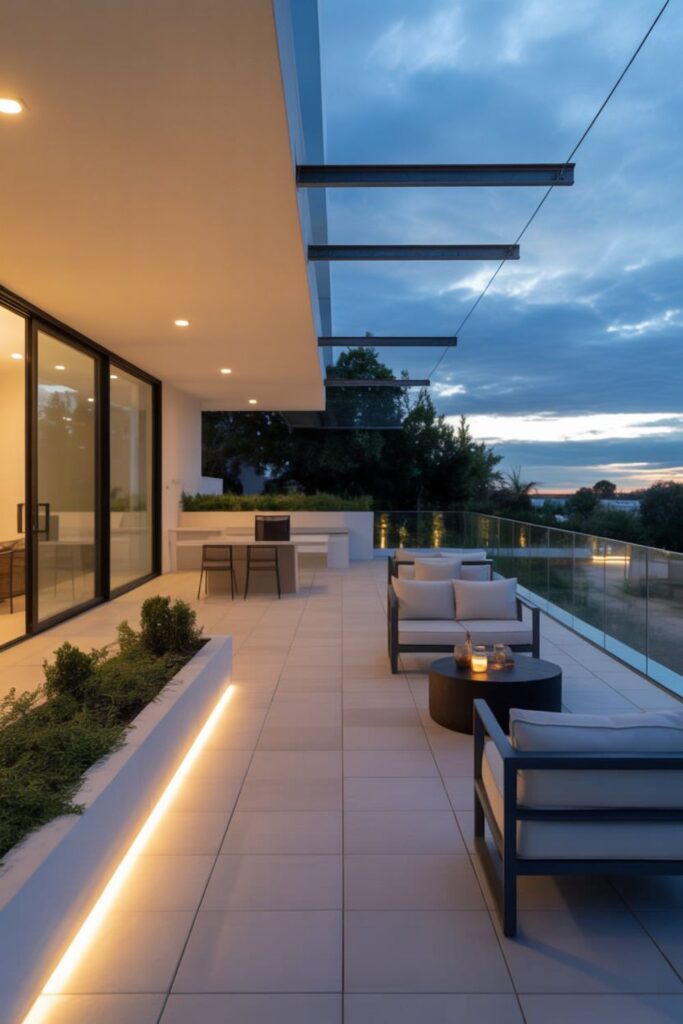
Making terraces look modern through contemporary terrace ideas starts with decluttering removed ornate furniture, busy patterns, and excessive accessories creating visual chaos. Contemporary design embraces “less is more” so editing becomes the first critical step. According to decluttering research, removing 40-50% of elements from traditional spaces typically achieves modern simplicity without requiring purchases.
Replace traditional furniture with minimalist furniture featuring clean lines, geometric forms, and quality materials. A single investment piece (substantial sectional or statement lounge) anchors modern spaces better than multiple modest pieces. Update textiles to neutral palette solids or subtle textures, no florals or busy patterns. These furniture and textile changes cost $1,000-4,000 but deliver the most dramatic modernization impact according to design transformation studies.
Add architectural elements emphasizing geometry and structure, large-format rectangular planters, linear LED lighting, geometric privacy screens. These additions cost $500-2,000 cumulatively but establish the modern vocabulary transforming traditional terraces. According to contemporary design implementation, combining decluttering, furniture updates, and architectural additions transforms spaces 70-80% toward modern aesthetics even when underlying structures remain unchanged.
What Colors Work Best for Contemporary Terraces?
Neutral palette dominance defines contemporary color schemes with grays, whites, blacks, and warm taupes creating sophisticated foundations. According to color theory research, limiting the primary palette to 2-3 neutrals creates cohesion supporting modern aesthetics. Within neutrals, commit to either cool (gray-based) or warm (beige-based) tones avoiding undertone conflicts that create subtle discord even in neutral schemes.
Introduce single accent colors sparingly perhaps one bold hue appearing in 10-15% of visual field through cushions, planters, or single furniture pieces. Deep charcoal, warm terracotta, or navy blue work as contemporary accents. Avoid bright primaries or pastels that conflict with modern sophistication. According to color psychology, restrained accent usage increases perceived refinement by 40-50% compared to multicolor schemes in modern terrace design color discipline.
Monochromatic schemes using single color in various values create sophisticated alternatives to neutral palettes. All-gray, all-blue, or all-green schemes maintain modern restraint while providing subtle color presence. These require careful value variation preventing flatness combining dark, medium, and light versions of your chosen hue. According to monochromatic design research, single-color schemes with 4-5 value variations deliver visual interest equivalent to 2-3 color palettes in minimalist terrace sophistication.
Can Small Terraces Be Contemporary?
Small terraces excel with contemporary terrace ideas because modern minimalism naturally suits compact spaces. The restraint defining contemporary design, limited furniture, negative space, geometric precision prevents the cramped overcrowding that plagues small traditional terraces stuffed with excessive elements. According to small-space design research, contemporary approaches increase perceived space by 30-40% compared to traditional decorating in equivalent square footage.
Emphasize clean lines and geometric forms in compact terraces through intentional alignment and precise positioning. Arrange elements along clear axes, perhaps furniture aligned parallel to railings or planters positioned at regular intervals. This geometric order creates the intentional appearance that makes small spaces feel designed rather than just furnished. According to spatial psychology, geometric organization increases perceived space by 20-30% through visual order associations.
Select minimalist furniture with slim profiles and exposed frames rather than bulky upholstered pieces. A sleek aluminum loveseat occupies less visual weight than overstuffed traditional furniture despite similar physical dimensions. According to visual weight research, minimalist furniture reduces perceived space consumption by 30-40% through transparency and refined profiles in modern balcony design for compact areas.
Modern vs. Contemporary: Understanding the Difference
Modern and contemporary often get confused but represent distinct design periods and philosophies. Modern design refers specifically to the mid-20th century modernist movement (1920s-1960s) featuring specific materials (molded plywood, tubular steel) and iconic designs (Eames chairs, Barcelona chairs). Contemporary means “of the moment” current design trends incorporating latest materials and evolving aesthetics. According to design history, modern remains fixed in its historical period while contemporary constantly evolves.
Contemporary terrace ideas can incorporate modern classics but aren’t limited to mid-century vocabulary. Contemporary embraces current materials (powder-coated metals, technical fabrics, composite materials) unavailable during the modernist era. Style-wise, contemporary tends toward slightly softer edges and greater material variety than strict modernism’s industrial minimalism. According to design evolution research, contemporary represents modernism’s descendants related but distinct design philosophies.
For practical purposes, both approaches share core principles: simplicity, honest materials, functional beauty, and restrained ornamentation. When furnishing terraces, mixing modern classics with contemporary pieces works beautifully if design principles align. An Eames lounge chair (modern) pairs perfectly with contemporary powder-coated planters because both embrace quality materials and functional beauty in sleek outdoor space period flexibility.
Read More About: 20+ Patio Simple Ideas That Instantly Improve Comfort
Maintaining Contemporary Aesthetics Long-Term
Contemporary terrace ideas demand discipline maintaining minimalist restraint against accumulation tendencies. Resisting adding decorative elements beyond your initial curated selection each new cushion, planter, or accessory risks diluting modern purity. According to minimalist maintenance research, spaces maintained at 60-70% of perceived capacity maintain contemporary aesthetics while fuller arrangements drift toward traditional busyness.
Clean regularly because modern design shows dirt and clutter more obviously than busy traditional spaces. Weekly sweeping and monthly deep cleaning preserve the pristine appearance contemporary aesthetics demand. According to maintenance psychology, clean minimalist spaces feel 40-50% more sophisticated than equivalently furnished but dirty environments cleanliness becomes part of the design in modern terrace design upkeep.
Replace rather than supplement when elements wear out a single quality replacement maintains design integrity better than adding supplemental pieces. If a cushion wears out, replace it with an identical or compatible version rather than introducing new patterns or colors. According to design consistency research, replacement discipline maintaining original aesthetic vision preserves contemporary character that supplementation undermines over time in minimalist terrace longevity.
FAQs
What defines a contemporary terrace design?
A contemporary terrace design focuses on clean lines, minimalist layouts, neutral color palettes, and functional furniture, often paired with modern materials like concrete, metal, glass, and wood.
How can I make my terrace look contemporary on a budget?
You can achieve a contemporary look by using simple outdoor furniture, neutral cushions, modern planters, string lighting, and uncluttered layouts without major renovations.
Which materials work best for contemporary terrace flooring?
Popular materials include porcelain tiles, composite decking, polished concrete, natural stone, and wood decking for a sleek, modern finish.
Are contemporary terrace ideas suitable for small spaces?
Yes, contemporary designs work especially well for small terraces by emphasizing space efficiency, built-in seating, vertical greenery, and minimal décor.
What furniture styles suit a contemporary terrace?
Low-profile seating, modular sofas, metal or teak furniture, and multifunctional pieces with clean silhouettes suit contemporary terrace settings.
Conclusion
Your contemporary terrace ideas exploration reveals that modern outdoor design succeeds through intentional restraint, quality materials, and geometric precision rather than elaborate ornamentation or abundant accessories. Those sophisticated terraces admired in design publications achieve their impact through what they exclude as much as what they include embracing negative space and limiting elements to carefully curated selections.
Exceptional modern terrace design emerges through commitment to core principles: clean lines, neutral palettes, premium materials, and architectural plants that create cohesive contemporary vocabulary. Your sleek outdoor space transforms from aspiration to reality through disciplined editing, thoughtful material selection, and geometric arrangement that honors modern design philosophy rather than merely applying contemporary styling to traditional approaches.
Start by removing rather than adding clear your terrace to essential elements then build back selectively with quality over quantity guiding decisions. Whether designing intimate urban terrace ideas or expansive contemporary rooftop patios, success comes through restraint and precision. The most impressive modern terraces demonstrate that true sophistication lies not in having everything but in having exactly what’s needed, nothing more, nothing less each element earning its presence through functional or aesthetic contribution to the unified whole.