Cute Fall Plant Pot Ideas Creative Container Displays for Autumn Charm

Your front porch feels plain. Summer flowers have faded, and the empty containers make your home look forgotten just when neighbors are rolling out their fall decorations. You want that cozy autumn vibe, but elaborate displays seem expensive and complicated.
Walking through garden centers overwhelms you with options of mums, ornamental kale, trailing vines but you’re unsure how to combine them into cohesive arrangements that look intentionally designed rather than randomly stuffed together. The pressure mounts as October approaches and you still haven’t created the welcoming autumn entrance you’ve been envisioning.
The answer lies in understanding proven design principles that transform ordinary containers into stunning fall container gardening displays. This guide reveals cute fall plant pot ideas that combine textures, colors, and seasonal elements into arrangements anyone can recreate. You’ll discover budget-friendly techniques, plant combinations that thrive in autumn weather, and styling tricks that make your autumn planters look professionally designed without hiring a landscaper.
What Makes Fall Plant Pots Different from Other Seasons?
Cute fall plant pot ideas embrace autumn’s unique color palette of warm oranges, deep burgundies, golden yellows, and rich purples that mirror changing leaves. Unlike spring’s pastels or summer’s bright primaries, fall containers feature earthy, sophisticated tones that create cozy, harvest-inspired displays perfectly suited to cooler temperatures and shorter days.
Autumn planters incorporate seasonal elements beyond just flowers. Ornamental grasses, dried wheat stalks, miniature pumpkins, and branches with colorful foliage become design components that add height, texture, and thematic coherence. These natural accents connect containers to the broader autumn landscape, creating visual harmony between your décor and the season itself.
Understanding Fall’s Unique Growing Conditions
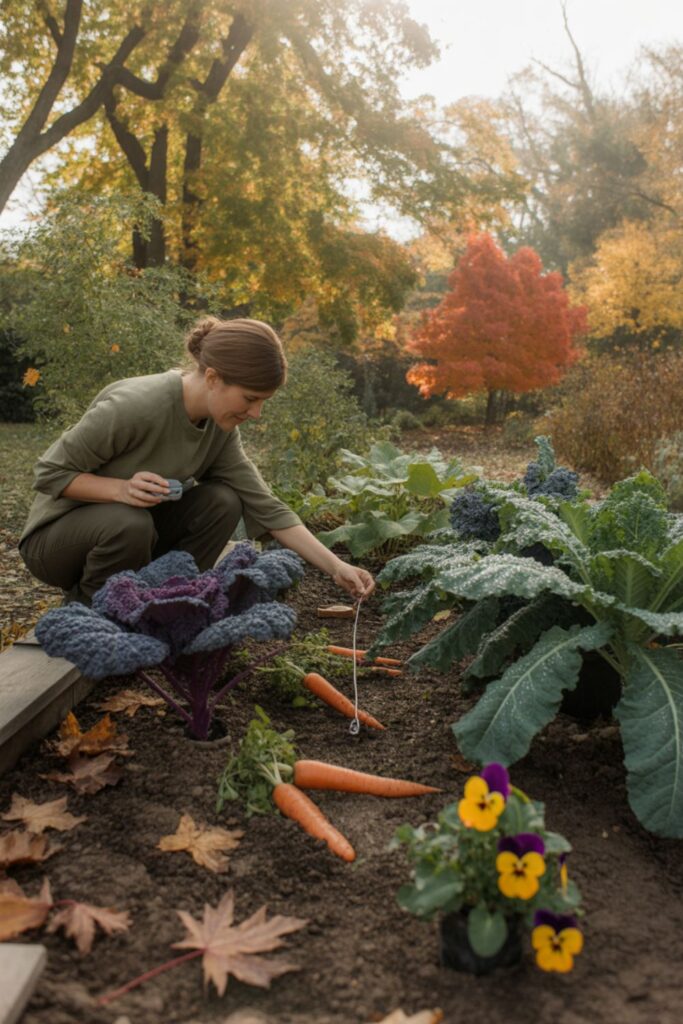
Fall container gardening works with cooler temperatures that would stress summer annuals. Many plants actually prefer the 50-70°F range that characterizes autumn days, producing more vibrant colors and requiring less water than during summer heat. Morning frosts become design considerations rather than threats when you choose cold-tolerant varieties.
Light levels shift dramatically as days shorten from September through November. Plants that need full sun in summer may tolerate partial shade locations in fall, giving you more flexibility with container size and placement. This expanded placement potential allows you to position seasonal pots in entryways, covered porches, and other areas that wouldn’t support summer plantings.
How Do You Choose the Perfect Containers for Fall Displays?
Container selection impacts both aesthetics and plant health. The right pot complements your autumn theme while providing adequate space and proper drainage holes for plant roots. Container size directly affects how many plants fit, watering frequency, and whether arrangements survive temperature fluctuations.
Traditional terracotta pots deliver classic fall appeal with their warm, earthy tones that harmonize with autumn’s color palette. Their porous nature allows soil to breathe but requires more frequent watering than glazed alternatives. For containers staying outdoors through frost, choose frost-resistant terracotta rated for freezing temperatures standard terracotta cracks when water inside freezes and expands.
Read More About: Boho Modern Corner Plant Make Stylish your Space
Exploring Creative Container Options Beyond Traditional Pots
Rustic planters crafted from weathered wood, vintage crates, or galvanized metal buckets add farmhouse charm to autumn planters. Wooden whiskey barrels work beautifully for large-scale displays near front doors, while smaller apple crates create charming groupings on porch steps. Always drill drainage holes in the bottom if they’re missing standing water kills roots faster than any other issue.
Pumpkin planters offer the ultimate seasonal twist. Hollow out large pumpkins or decorative squash, line them with plastic to protect the interior, and fill with potting mix. These living centerpieces last 2-4 weeks before the pumpkin deteriorates, making them perfect for October events. Choose white, blue, or heirloom varieties for sophisticated looks beyond traditional orange.
Considering Weather Resistance and Durability
Weather resistance matters more in fall than summer. Temperature swings from warm afternoons to near-freezing nights stress both containers and plants. Resin and fiberglass pots mimic stone or ceramic textures while withstanding freeze-thaw cycles that shatter genuine materials. They’re lighter too, making rearranging easier when you tweak your display.
Avoid unglazed ceramic and thin plastic containers for outdoor fall container gardening in cold climates. Unglazed ceramic absorbs moisture that expands when frozen, causing cracks. Thin plastic becomes brittle in cold, shattering under minimal pressure. If you love a container that isn’t frost-proof, plan to bring it indoors once temperatures consistently drop below freezing.
What Are the Best Plants for Cute Fall Container Combinations?
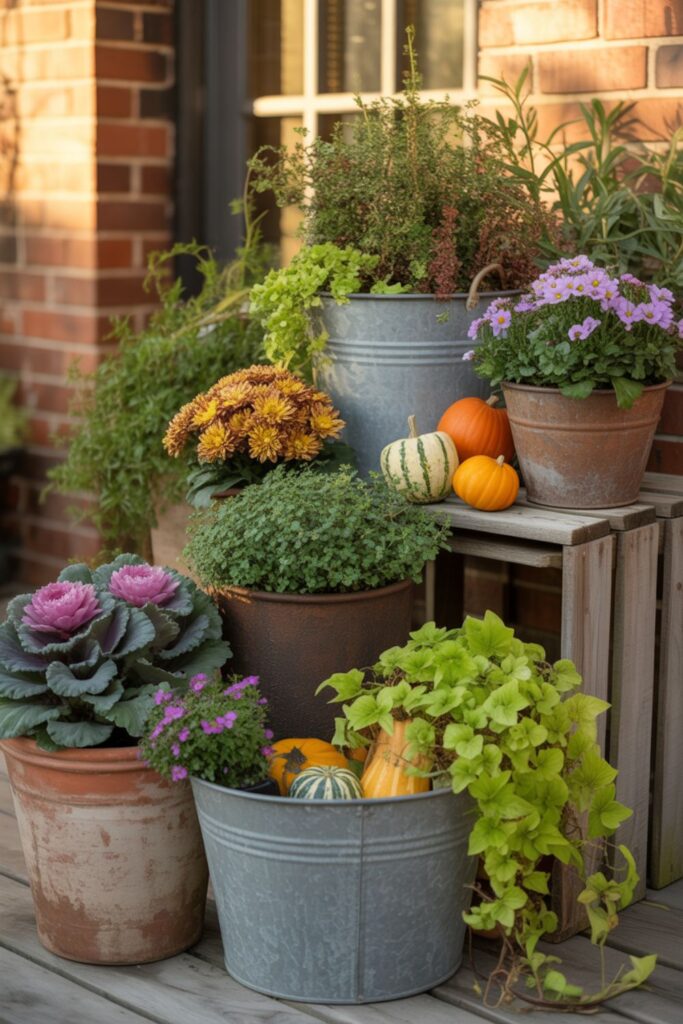
Successful cute fall plant pot ideas start with plants that peak in autumn conditions. Hardy varieties tolerate temperature fluctuations while producing the rich colors and interesting textures that define seasonal style. The best performers combine visual impact with practical resilience.
Chrysanthemums dominate fall containers for good reason. Available in burgundy, rust, gold, bronze, and white, mums provide dense flower coverage that lasts 4-6 weeks in cool weather. Choose garden mums over florist mums they’re bred for outdoor durability rather than temporary indoor display. Their compact, mounded shape works in any container size from small accent pots to large statement planters.
Top Flowering Plants for Autumn Color
Ornamental kale and cabbage deliver a unique texture with ruffled leaves in pink, purple, cream, and green combinations. Unlike traditional vegetables, these decorative varieties intensify color as temperatures drop, looking their absolute best after light frosts. They tolerate neglect better than flowers, needing minimal water once established in seasonal pots.
Pansies and violas surprise many gardeners by thriving in fall’s cool temperatures. Modern varieties tolerate light frosts and even brief snowfall, bouncing back when temperatures rise. Their cheerful faces come in autumn-appropriate colors deep purple, burgundy, orange, and golden yellow. Plant them as edging around larger focal point plants for continuous color through Thanksgiving.
Adding Texture with Foliage and Grasses
Ornamental grasses create movement and height in autumn planters. Fiber optic grass produces delicate, fountain-like foliage with seed heads that catch light beautifully. Purple fountain grass adds dramatic dark foliage that contrasts with bright flowers. Both tolerate frost and maintain structure even after freezing, extending display life into early winter.
Coral bells (Heuchera) contribute colorful foliage in burgundy, orange, caramel, and lime that complements fall’s color palette perfectly. These shade-tolerant perennials work in containers year-round but shine in autumn when summer annuals fade. Combine them with trailing plants for sophisticated texture combinations that look complex but require minimal maintenance.
How Do You Create Balanced Arrangements Using the Thriller Filler Spiller Method?
The thriller filler spiller formula eliminates guesswork from container design. This three-component approach creates professional-looking arrangements by assigning specific roles to plants based on height, coverage, and growth habit. Even beginners achieve stunning results following this proven framework.
The thriller serves as your focal point to plant the tallest, most dramatic element that anchors the design. In fall containers, ornamental grasses, tall fountain grass, or decorative millet stalks work perfectly. Position the thriller slightly off-center rather than dead-center for more natural, interesting compositions. It should be roughly 1.5 times the container size height for proper proportion.
Selecting Fillers That Complete the Design
Fillers form the arrangement’s body, surrounding the thriller with mid-height plants that add mass and color. Mums, ornamental kale, and pansies excel as fillers in fall container gardening. Use 3-5 filler plants depending on container size, placing them around the thriller to create a rounded, full appearance. Vary colors within your chosen color palette rather than using identical plants for visual interest.
Spillers cascade over container edges, softening hard lines and adding graceful movement. Trailing sweet potato vine in lime green or deep purple, creeping Jenny, or ivy work beautifully in autumn planters. Plant spillers around the container perimeter, spacing them evenly so trails develop in multiple directions rather than from just one side.
Adapting the Formula for Different Container Shapes
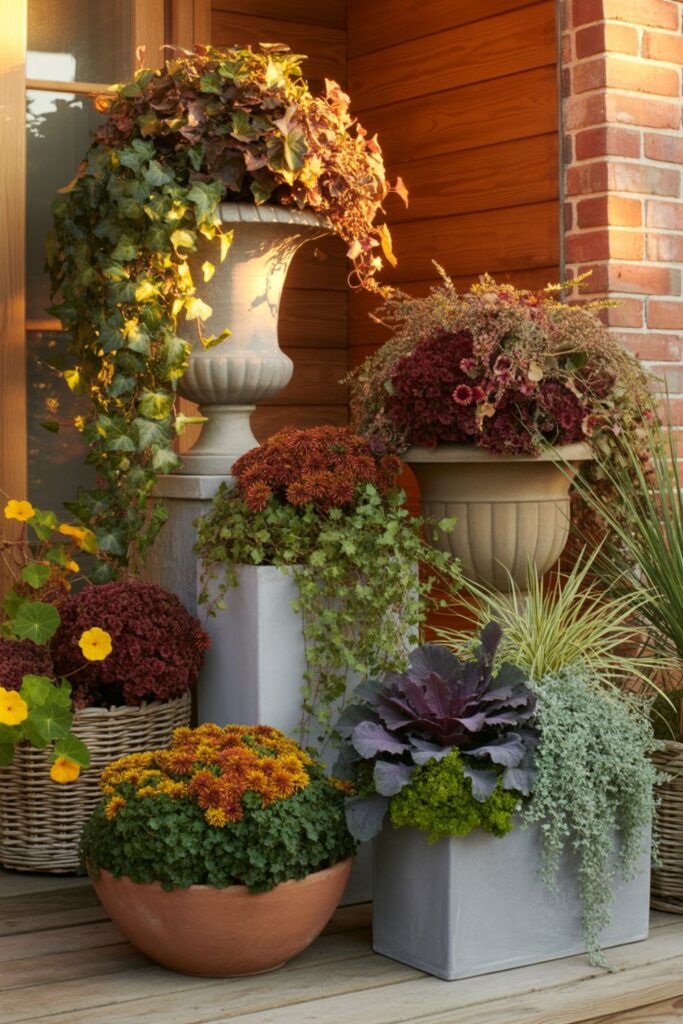
Tall, narrow containers need fewer plants than wide bowls. For urns and columnar pots, use one thriller, two fillers, and one spiller. Wide, shallow bowls accommodate multiple thrillers in a line or triangle formation, with fillers filling spaces between and spillers around the entire edge. This flexibility makes the thriller filler spiller method work for any container size or shape in your cute fall plant pot ideas.
What Color Palettes Work Best for Autumn Container Gardens?
Color palette selection transforms random plant groupings into cohesive designs. Fall offers rich, warm tones that create specific moods from elegant and understated to bold and festive. Understanding color relationships helps you mix plants confidently without clashing or creating visual chaos.
The classic autumn scheme combines oranges, yellows, and burgundies that echo fall foliage. This traditional color palette feels immediately seasonal and pairs naturally with pumpkins, gourds, and other harvest elements. Use rust-colored mums with golden marigolds and deep burgundy ornamental kale for foolproof warmth that welcomes guests to your home.
Creating Sophisticated Monochromatic Displays
Monochromatic autumn planters offer elegant simplicity that looks intentionally designed. Choose variations of a single color different shades of purple from lavender to deep eggplant, or a range of whites and creams. This restrained approach works beautifully for formal homes or when you want containers to complement rather than dominate your entrance.
Add visual interest through texture combinations rather than color contrast. Combine smooth-leafed plants with ruffled ornamental kale, fine-textured grasses with bold chrysanthemum blooms. Varying plant shapes and leaf sizes within your single-color scheme prevents monotony while maintaining sophisticated cohesion.
Experimenting with Unexpected Fall Color Schemes
Cool-toned seasonal pots surprise viewers expecting typical autumn warmth. Combine silvery dusty miller with purple pansies, blue ornamental kale, and trailing variegated ivy for sophisticated elegance. This unexpected color palette works beautifully with gray, white, or blue house exteriors that clash with traditional orange-and-rust combinations.
Jewel tones create rich, luxurious displays. Deep plum, emerald green, and sapphire blue feel autumnal without being predictable. Use burgundy coleus, purple sweet potato vine, and deep blue violas for containers that transition seamlessly from late summer through fall. These saturated colors look especially striking against neutral architecture or natural wood elements.
How Do You Incorporate Pumpkins and Gourds into Plant Containers?
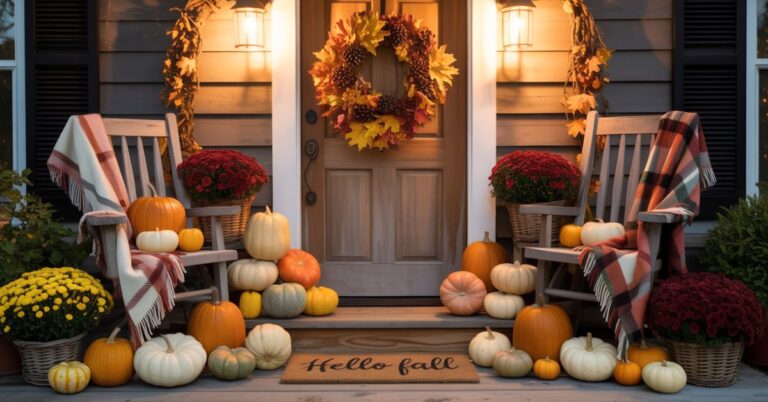
Pumpkin planters and gourd accents bridge the gap between traditional fall container gardening and seasonal décor. These harvest elements add instant autumn recognition while introducing varied shapes, textures, and heights that enhance overall composition. Strategic placement matters more than quantity; one well-positioned pumpkin creates more impact than several randomly placed.
Nestle small pumpkins and gourds between plants rather than just setting them on top of soil. This integration technique makes decorative elements feel like designed components rather than afterthoughts. Choose sizes proportional to your container size miniature pumpkins for small pots, medium varieties for standard containers, and large heirloom pumpkins beside oversized planters.
Creating Living Pumpkin Planters
Transform pumpkins into temporary containers by hollowing them and filling with planting medium. Cut a large opening in the top, scoop out seeds and pulp, and line the interior with plastic to prevent premature rotting. Fill with potting mix and plant succulents, mums, or ornamental kale. These conversation pieces last 2-4 weeks depending on temperature and pumpkin quality.
White pumpkins create elegant alternatives to traditional orange. Their neutral tone works with any color palette and looks especially sophisticated paired with burgundy, deep purple, or monochromatic plantings. Heirloom varieties in blue-gray, dusty pink, or cream offer unique options that elevate cute fall plant pot ideas beyond expected seasonal clichés.
Extending the Life of Decorative Gourds
Gourds last longer than pumpkins, often remaining attractive through Thanksgiving and into December. Choose hard-shell varieties over soft pumpkins for decorative elements meant to last. Clean gourds with a mild bleach solution (1 part bleach to 10 parts water) before placing them in containers that remove bacteria that cause premature decay.
Stack gourds at varying heights using hidden supports. Insert bamboo stakes or sturdy branches into soil, then carefully position gourds against supports to create tiered arrangements. This technique adds dimension to autumn planters without requiring additional plants. Secure gourds with floral wire if wind threatens to topple your display.
What Are Budget-Friendly DIY Fall Plant Pot Ideas?
Creating stunning cute fall plant pot ideas doesn’t require expensive materials or professional florists. Strategic shopping, repurposing household items, and focusing investment on key plants rather than elaborate containers produces impressive results at a fraction of typical costs. Smart planning stretches every dollar without sacrificing visual impact.
Shop end-of-season sales at garden centers from late August through September. Summer annuals sell at 50-75% discounts even though they’ll thrive in fall’s cooler temperatures. Coleus, sweet potato vine, and trailing petunias work beautifully in fall container gardening when purchased cheaply in late summer. Combine these bargains with a few mums or ornamental kale purchased closer to peak fall season.
Repurposing Household Items as Rustic Planters
Rustic planters crafted from repurposed items cost nearly nothing while adding unique character. Old colanders, vintage watering cans, and worn boots already have drainage holes and patina that new containers lack. Scout thrift stores, garage sales, and your own basement for weathered items that gain new life as seasonal pots.
Wooden crates and pallets transform into charming planters with minimal effort. Line crates with landscape fabric to contain soil while allowing drainage. Stack crates at different heights for tiered displays that add dimension to flat porches or patios. One bag of potting mix fills multiple small repurposed containers, maximizing plant count while minimizing expense.
Propagating Plants to Multiply Your Supply
Divide existing perennials like coral bells, hostas, and ornamental grasses in early fall to create multiple plants from single purchases. Carefully separate root clumps into 2-4 sections, ensuring each has adequate roots and foliage. These divisions establish quickly in fall’s ideal conditions, providing plenty of material for multiple containers at the cost of one plant.
Take cuttings from coleus, sweet potato vine, and other tender perennials before frost. Root them in water or moist potting mix, then overwinter indoors for free plants next season. This propagation strategy transforms annual expenses into one-time investments that compound over years. A single sweet potato vine cutting multiplies into dozens of plants within a growing season.
How Do You Maintain Fall Containers Throughout the Season?
Fall container gardening requires different maintenance than summer pots. Cooler temperatures, reduced sunlight, and eventual frost create unique challenges that demand adjusted watering, fertilizing, and protection strategies. Proper care extends display life from September through Thanksgiving and sometimes beyond.
Watering needs decrease as temperatures drop and evaporation slows. Check soil moisture before watering rather than following a rigid schedule, stick your finger two inches deep, and water only if soil feels dry. Overwatering causes more fall container failures than underwatering since cool, wet conditions promote root rot and fungal diseases that thrive in autumn dampness.
Protecting Containers from Early Frosts
Light frosts won’t harm hardy plants like mums, ornamental kale, and pansies, but tender tropicals like coleus and sweet potato vine suffer damage below 35°F. Monitor weather forecasts and cover tender containers with frost cloth or old sheets when temperatures threaten to drop into the low 30s. Remove coverings once morning temperatures rise to prevent heat buildup underneath.
Position containers strategically for natural frost protection. Outdoor fall décor placed near house foundations, under eaves, or against warm walls gains several degrees of protection compared to exposed locations. South and west-facing positions collect more daytime heat that radiates overnight, moderating temperature extremes that stress plants.
Refreshing Displays as Plants Decline
Replace spent flowers and damaged foliage mid-season to maintain attractive displays. Mums finish blooming after 4-6 weeks but can be replaced with fresh plants or removed to showcase remaining foliage plants. This staged approach keeps autumn planters looking intentional rather than neglected as individual components fade.
Add seasonal branches, seed pods, or berry stems as living plants decline. Preserved eucalyptus, curly willow branches, or stems with colorful berries fill spaces left by finished flowers. These natural elements require zero maintenance while extending container interest into November and December. Some rustic planters transition into winter displays simply by removing dead annuals and enhancing permanent elements.
What Are the Best Fall Plant Pot Ideas for Small Spaces?
Limited space doesn’t limit cute fall plant pot ideas. Vertical arrangements, compact plant selections, and strategic placement maximize impact in small entryways, apartment balconies, and urban settings. Smart design makes modest displays feel intentional rather than constrained.
Tiered plant stands multiply display area without expanding footprint. Three-tier metal or wooden stands accommodate 6-9 small pots in the space one large container occupies. Vary container size across tiers largest on bottom, smallest on top for visual balance. This vertical approach works perfectly for small porches, balcony corners, or beside front doors where floor space is precious.
Creating Impact with Groupings of Small Containers
Cluster multiple small pots rather than using single large planters. Odd-numbered groupings (3, 5, or 7) create more interesting compositions than even numbers. Vary heights by placing some pots on overturned crates, plant stands, or concrete blocks hidden beneath fabric or burlap. This elevation adds dimension that makes compact displays feel larger and more complex.
Choose a cohesive color palette across multiple small containers to unify the grouping. Three terracotta pots in varying sizes filled with burgundy, orange, and gold mums feel intentional and designed. Random container colors and plant choices read as cluttered rather than abundant. Repetition of colors, container materials, or plant varieties creates harmony that compensates for small individual scale.
Selecting Compact Plants for Small Containers
Dwarf varieties of popular fall plants perform better in limited container size than full-sized selections. ‘Yoder Garden Mums’ stay compact at 10-12 inches versus standard mums reaching 18-24 inches. Miniature ornamental kale produces the same colorful foliage as regular varieties in half the space. These proportional selections look balanced rather than cramped in small pots.
Succulents offer low-maintenance alternatives for tiny seasonal pots. Hens and chicks (Sempervivum), sedum varieties, and echeveria come in autumn tones burgundy, copper, and bronze that fit fall themes. They tolerate neglect, require minimal water, and survive light frosts. Combine them in shallow bowls with small pumpkins for easy, long-lasting displays perfect for small spaces.
How Can You Transition Fall Containers into Winter Displays?
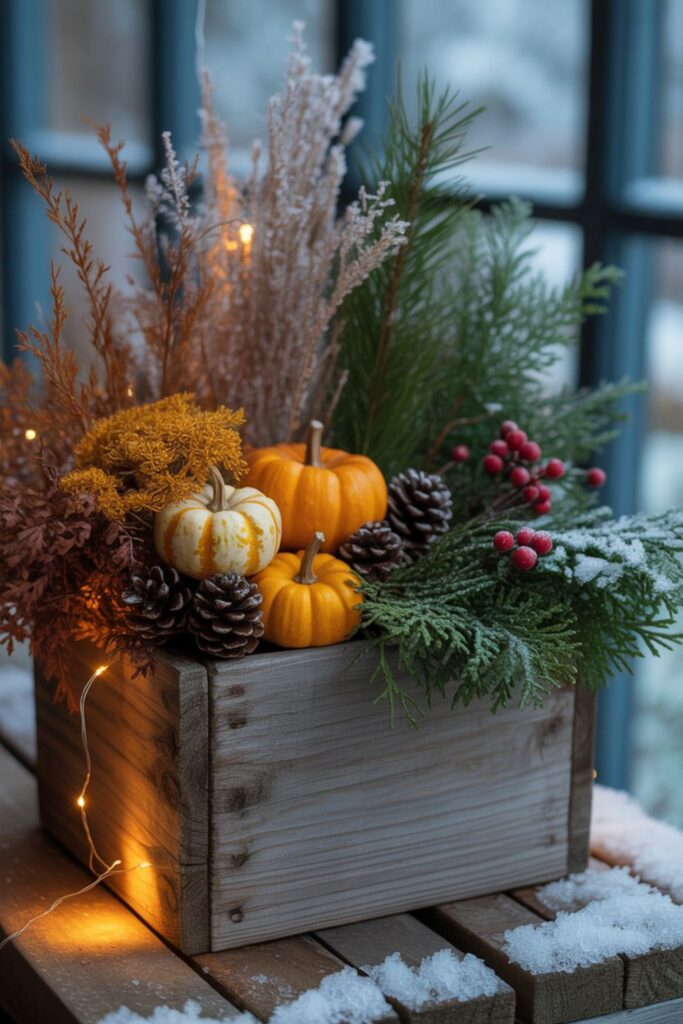
Extending autumn planters into winter maximizes value and minimizes waste. Strategic plant choices and structural elements allow seamless transitions that carry displays from October through December and beyond. This approach reduces seasonal décor expenses while maintaining visual interest through the year’s coldest months.
Evergreen elements form the foundation of transitional containers. Small conifers like dwarf Alberta spruce, juniper, or boxwood provide permanent structure that works in fall and winter. Surround evergreens with seasonal components mums and pumpkins in fall, ornamental grasses and berry branches in winter. When autumn elements fade, simply remove them while leaving the evergreen core intact.
Adding Winter Interest with Natural Elements
Birch branches, red or yellow twig dogwood stems, and pine boughs transform fall container gardening displays into winter arrangements. These natural materials withstand freezing temperatures while adding height, texture, and movement. Cut branches at varying lengths and insert directly into soil around plants, creating frameworks that remain attractive even after annual plants succumb to hard freezes.
Incorporate non-living elements designed to last. Decorative stakes, rustic signs, or metal garden art survive all weather while anchoring displays year-round. In fall, surround these permanent features with seasonal plants and pumpkins. When winter arrives, remove spent plants but leave structural elements paired with evergreens and branches. This modular approach transforms displays without starting from scratch.
Planning Cold-Hardy Plant Combinations
Select plants at autumn’s start with winter survival in mind. Ornamental kale, hardy mums, and dusty miller tolerate hard freezes and often remain attractive through December. Pansies bred for winter tolerance bounce back after snowfall, providing occasional color during warm spells. These cold-hardy selections eliminate the need to completely replant containers when temperatures plummet.
Protect container roots from freeze-thaw cycles by clustering pots together and mulching around them. Roots in containers are more vulnerable than ground-planted perennials since all sides face cold air. Move rustic planters against house walls or into protected corners where building heat moderates temperature extremes. This simple relocation can mean the difference between plants surviving or succumbing to winter cold.
What Are Trending Fall Plant Pot Styles for This Year?
Current cute fall plant pot ideas blend traditional harvest themes with modern minimalism, creating fresh takes on seasonal classics. Understanding trending styles helps you create contemporary displays that feel current rather than dated, whether you prefer cutting-edge design or timeless elegance.
Moody, dark-toned arrangements dominate current autumn planters. Deep burgundy, chocolate brown, charcoal gray, and near-black foliage plants create sophisticated palettes that look dramatic against lighter containers or architecture. Almost-black coleus varieties like ‘Black Dragon,’ dark purple ornamental kale, and burgundy coral bells combine for richly layered displays that reject traditional bright orange stereotypes.
Embracing Natural, Foraged Elements
The cottage core and farmhouse trends drive increased use of foraged natural materials in seasonal pots. Wheat bundles, dried hydrangea blooms, preserved leaves, and wild berry branches collected from nature bring organic, gathered-from-the-woods aesthetics to container displays. This approach emphasizes texture over color, with dried grasses, seed heads, and weathered branches creating neutral-toned arrangements that complement rather than compete with architecture.
DIY plant pots featuring hand-painted designs or personalized elements continue growing in popularity. Stenciled pumpkins, pots decorated with fall quotes, or containers painted to coordinate with door colors add custom touches that mass-produced décor can’t match. These personalized elements make outdoor fall décor feel special and reflective of individual style rather than generic seasonal filler.
Read More About: Front of House Shrubs Transform Your Curb Appeal
Incorporating Sustainable and Upcycled Containers
Environmental consciousness influences container choices. Repurposed vintage finds, biodegradable pots made from coconut coir or rice hulls, and weathered wood containers align with sustainable living values while delivering authentic, lived-in aesthetics. These eco-friendly rustic planters appeal to gardeners seeking to reduce environmental impact without sacrificing style.
Minimalist arrangements focusing on single plant varieties or extremely limited color palettes represent another strong trend. One type of mum in varying shades of a single color, or monochromatic white displays using only cream, white, and silver elements create clean, modern looks. This restraint feels fresh compared to traditional mixed containers packed with competing colors and textures.
FAQs
When should I plant my fall containers?
Late August through mid-September offers the ideal window for planting fall container gardening displays in most climates. This timing allows plants to establish roots before cold weather while ensuring peak display during October’s prime fall season. In warmer zones (8-10), wait until late September or early October when temperatures moderate enough for cool-season plants to thrive without heat stress.
Can I reuse potting soil from summer containers?
Yes, but refresh it first for best results. Remove old roots and debris, then mix in fresh compost or new potting soil at a 50-50 ratio to replenish nutrients depleted during the summer growing season. Add slow-release fertilizer formulated for fall plants since the existing planting medium will be nutrient-poor after months of supporting summer annuals.
How often should I water fall plant containers?
Water when the top two inches of soil feel dry to the touch, typically every 3-5 days in early fall and less frequently as temperatures drop. Autumn planters need significantly less water than summer containers due to cooler temperatures, reduced evaporation, and many plants entering dormancy. Overwatering causes more problems than underwatering in fall, so err on the side of slightly dry rather than constantly moist.
What fall plants survive the first frost?
Chrysanthemums, ornamental kale and cabbage, pansies, violas, dusty miller, and most ornamental grasses tolerate light frosts without damage. These hardy varieties often look better after frost exposure as cold temperatures intensify flower and foliage colors. Tender tropicals like coleus, sweet potato vine, and begonias turn black and die at the first freeze, requiring protection or replacement.
How can I make my fall containers last longer?
Choose cold-hardy plant varieties, provide adequate drainage holes to prevent waterlogged soil, deadhead spent flowers regularly, and position containers in protected locations near buildings or under eaves. Remove dead foliage promptly to prevent disease spread, and replace declining plants mid-season with fresh specimens. Proper weather resistance through strategic placement extends display life by several weeks compared to exposed locations.
Do I need to fertilize fall container plants?
Light fertilization helps but isn’t essential for seasonal pots designed to last 8-12 weeks. Apply diluted liquid fertilizer at half strength every 3-4 weeks, or incorporate slow-release granular fertilizer at planting time. Avoid heavy fertilization in fall since many plants naturally slow growth as daylight decreases. Excessive nutrients produce weak, leggy growth more susceptible to cold damage than lean, hardened-off plants.
Conclusion
Cute fall plant pot ideas transform ordinary containers into seasonal focal points that welcome guests and celebrate autumn’s rich beauty. Success comes from understanding the thriller filler spiller formula, choosing appropriate color palettes, and selecting plants that peak in cooler temperatures. Whether you prefer traditional harvest themes or modern minimalist arrangements, the principles remain constant balance, proportion, and plants suited to fall conditions.
The most impressive autumn planters combine living plants with seasonal accents like pumpkins, branches, and foraged elements that bridge garden and décor. Focus investment on quality plants and proper planting medium rather than expensive containers repurposed items and DIY plant pots often deliver more character than pristine store-bought options. With strategic plant selection and basic maintenance, your fall containers provide 8-12 weeks of evolving beauty that enhances curb appeal and creates the cozy autumn atmosphere that makes houses feel like homes.