24+ DIY Cinder Block Garden Ideas for Modern Outdoor Spaces

Building your own garden shouldn’t drain your bank account or require contractor-level skills. Yet you’ve probably watched landscape quotes climb into thousands of dollars while pre-made raised beds at garden centers cost hundreds for flimsy materials that won’t last. The gap between what professionals charge and what you’re willing to spend keeps growing while your yard remains unchanged. Here’s what experienced DIYers know: a DIY cinder block garden delivers professional results at a fraction of typical costs using materials available at any hardware store.
With basic tools, a free weekend, and simple construction techniques, you can build durable, attractive gardens that produce abundantly for decades without rotting, rusting, or falling apart.
Why Choose a DIY Cinder Block Garden
Cinder block gardens eliminate the frustration of temporary solutions that fail after a season or two. Unlike wooden raised garden beds that rot from constant moisture exposure, concrete blocks last indefinitely with zero maintenance. Metal beds rust and corrode. Plastic becomes brittle under UV exposure. Cinder blocks simply endure, making them the ultimate set-it-and-forget-it material for permanent garden installations.
The modular garden approach offers flexibility wooden frames can’t match. Reconfigure your layout next season without waste simply disassemble and rebuild in new patterns. Start small with a basic raised bed, then expand as confidence and needs grow. Add vertical elements, incorporate seating, or build borders using the same materials. This adaptability means your initial investment continues paying dividends for years as your garden evolves. The beginner friendly construction requires no special skills. If you can stack blocks and fill them with soil, you can build these gardens successfully.
Read More About: Outstanding Cinder Garden Ideas for a Unique Outdoor Space
Materials and Tools Needed for Your Project
Essential Materials List
Calculate cinder blocks needed by sketching your design and counting blocks in each row. Standard 8x8x16-inch blocks work for most projects. A basic 4×8-foot raised garden bed one block high requires 18 blocks costing $30-$50 total. Two blocks high doubles that quantity. Purchase 10% extra for breakage or layout adjustments during construction.
Quality soil mixture determines growing success more than any other factor. Blend equal parts compost, peat moss or coconut coir, and perlite or vermiculite. This combination provides nutrients, moisture retention, and excellent drainage roots. For a 4×8-foot bed one block high, budget for 10-12 cubic feet of soil mix. Add landscape fabric to line the bottom, preventing weeds while allowing drainage. Gravel or crushed stone for the foundation ensures stability approximately one cubic yard for a 4×8-foot bed base.
Required Tools and Supplies
Basic hand tools handle most cinder block planter projects without expensive equipment. A level ensures blocks sit flat and rows stack straight. A measuring tape and chalk line help mark layouts accurately. Work gloves protect hands from rough concrete edges. A wheelbarrow simplifies moving blocks, soil, and gravel. A shovel and rake prepare the ground and spread base materials.
For painted designs, gather exterior masonry paint, primer, paint brushes or rollers, and exterior sealer. Construction adhesive or masonry mortar secures blocks permanently if desired, though most designs work fine without it. A rubber mallet helps tap blocks into perfect alignment. Safety glasses protect eyes when cutting blocks though most DIY raised bed projects use whole blocks without cuts. A garden hose with spray nozzle settles soil and cleans finished surfaces.
Step-by-Step Construction Guide
Site Selection and Preparation
Choose locations with appropriate sun exposure for intended crops. Vegetables and most herbs need 6-8 hours of direct sunlight daily. Shade-tolerant plants like lettuce or herbs such as parsley tolerate 4-6 hours. Observe your site throughout the day, noting how shadows move. Morning sun with afternoon shade works well for heat-sensitive crops during summer.
Clear the construction area of grass, weeds, and debris. Remove sod 6-8 inches beyond your planned garden footprint to prevent grass creeping into beds. Check ground level using a long board and level. Slight slopes are acceptable, but major grade changes need addressing. Poor drainage areas require raised bases or relocated projects standing water undermines block stability and drowns plant roots. Mark your outline using spray paint or stakes with string, verifying measurements match your design before proceeding.
Building a Stable Foundation
A proper foundation prevents settling, tilting, or gaps developing over time. Excavate 2-4 inches deep across your marked area. Deeper excavation suits heavy clay soils with poor drainage. Fill this depression with crushed stone or pea gravel, spreading it evenly with a rake. Compact the gravel using a hand tamper or simply by walking over it repeatedly. This base layer provides drainage while creating a stable, level surface.
Lay landscape fabric over the compacted gravel extending 6 inches beyond all sides. This barrier prevents weeds growing up into your raised bed while allowing water to drain freely. Overlap fabric sections by at least 12 inches where pieces meet. Hold fabric in place with landscape staples or stones until blocks go down. Taking extra time perfecting this foundation rushing here causes problems later that are difficult to correct once blocks are filled with soil and planted.
Laying the First Row of Blocks
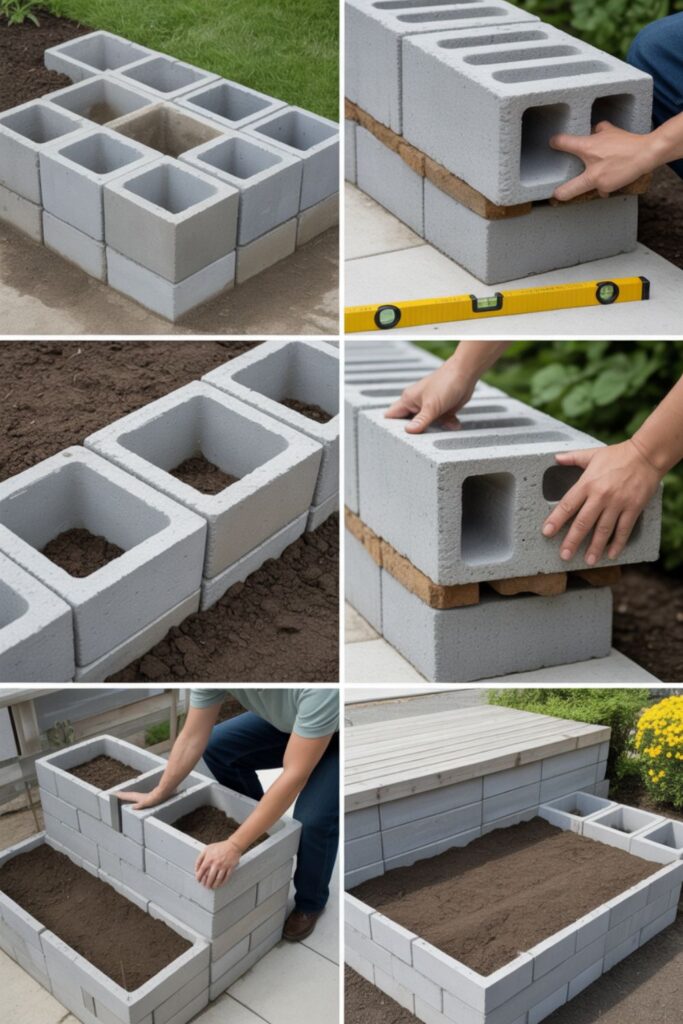
Position your first cinder blocks with hollow cores facing upward to maximize planting opportunities. Start at one corner, placing the block on your prepared foundation. Use your level to check that it sits flat in all directions front to back, side to side. Even slight tilts become pronounced when stacking multiple rows. Adjust by adding or removing gravel beneath until perfectly level.
Continue laying blocks around your perimeter, butting them tightly against each other. Check level frequently as you work every third block minimum. Maintain consistent alignment by sighting down rows from both directions. Correct small discrepancies now rather than discovering them after filling with soil. Complete the entire first row before proceeding to ensure everything looks right. Step back and view from different angles, making adjustments until satisfied with positioning and levelness.
Stacking Additional Rows
For taller raised garden beds, stack additional rows using a staggered pattern like bricklaying. Offset upper blocks by half a block length so vertical seams don’t align. This staggered arrangement dramatically increases structural stability while creating a more professional appearance. The overlapping pattern distributes weight more evenly across lower rows.
Construction adhesive between layers adds security for permanent installations, though weight from soil and plants usually suffices for structures up to three blocks high. Apply adhesive in a continuous bead around the perimeter of each block before placing the next row. Press down firmly and check level again adhesive sets quickly, making adjustments difficult after a few minutes. For temporary or experimental gardens, skip adhesive to preserve future reconfiguration flexibility.
Filling with Soil and Preparing for Planting
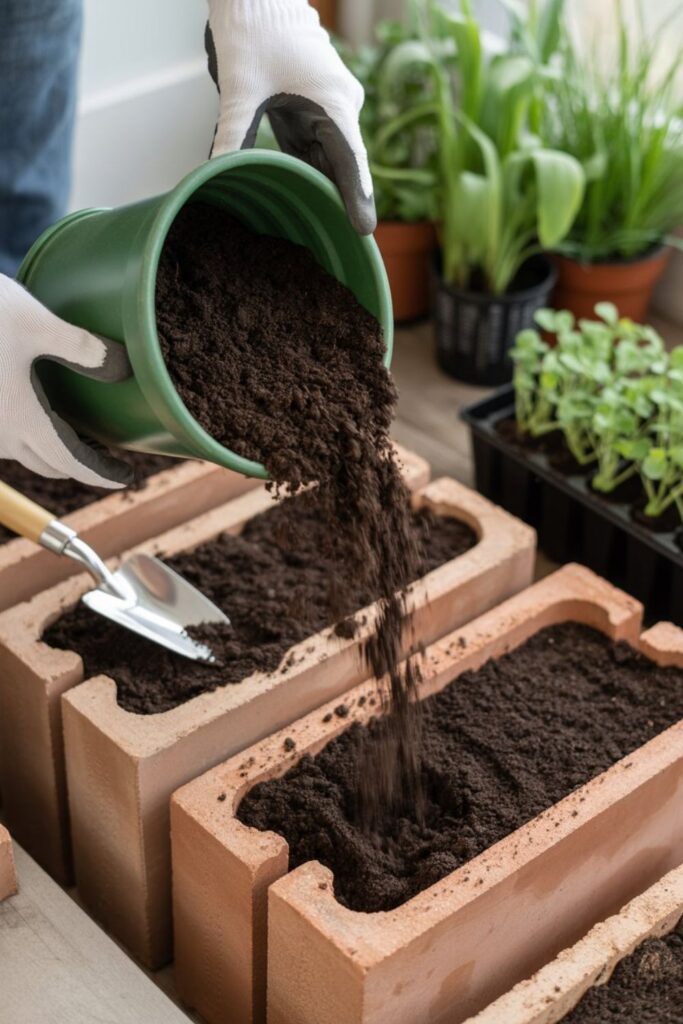
Fill lower row hollow cores with gravel if building directly on ground this improves drainage at the base. Then add your prepared soil mixture to block holes and the central bed area. As you stack additional rows, fill each level’s holes before adding the next layer. This prevents settling that creates gaps later. Pour soil slowly, compacting gently with your hands to eliminate air pockets without over-packing.
Moisten soil thoroughly as you fill, which helps it settle properly and makes it easier to pack into corners. Fill to within half an inch of block tops this lip contains water during watering and prevents soil spillage. The central bed area should have soil level with the top of your blocks. After filling completely, water deeply and let everything settle for 24-48 hours. Top up any low spots before planting, as some settling always occurs initially despite best efforts.
Design Options for DIY Cinder Block Gardens
Simple Rectangular Raised Beds
The classic rectangle remains popular because it works. Build single-row beds 2-3 feet wide for comfortable reaching from either side. Longer dimensions depend on available space 4, 6, or 8 feet all function well. Keep paths between multiple beds at least 2 feet wide to accommodate wheelbarrows. Single-block height suits most crops, while two or three blocks provide depth for root vegetables like carrots or parsnips.
Position blocks with hollow cores up, filling them with trailing herbs or edge plants like strawberries or lettuce. This arrangement maximizes production; a 4×8-foot bed provides 32 square feet of growing space plus 12 additional planting pockets in the blocks. These workhorse gardens produce abundantly while looking tidy and intentional, perfect for visible locations near homes.
L-Shaped and Corner Gardens
Backyard garden projects in corners benefit from L-shaped designs that maximize awkward spaces. Build one leg 4-6 feet long, the other 3-4 feet, creating natural zones for different crops. Plant taller items like tomatoes or trellised beans along the back wall, with shorter plants forward where they won’t be shaded. The enclosed configuration creates protected microclimates slightly warmer than open beds.
Corner gardens also provide wind protection for tender plants. The perpendicular walls slow breezes that can damage leaves or topple tall plants. These designs work beautifully against fences or buildings where one or two sides already have barriers. Add a small seating area in the open corner for a cozy garden retreat. The L-shape naturally draws you into the space, making it feel intimate despite being outdoors.
Tiered and Terraced Designs
Create dimensional interest by building stepped pyramids using progressively smaller rows. Start with a base of 8 blocks, stack 6 blocks on top, then finish with 4 blocks at the peak. This modular garden provides multiple growing levels at comfortable working heights. No bending required for upper tiers is a significant benefit for gardeners with mobility issues or back problems.
Tiered designs work exceptionally well on slopes where terracing solves drainage and erosion problems while creating level growing areas. Each tier acts as a retaining wall holding back soil above. Step heights can follow natural contours or create dramatic architectural statements. Plant cascading varieties like trailing succulents or sweet potato vines in upper block holes where they tumble down, softening hard concrete edges with living texture.
What to Plant in Your DIY Cinder Block Garden
Best Vegetables for Block Gardens
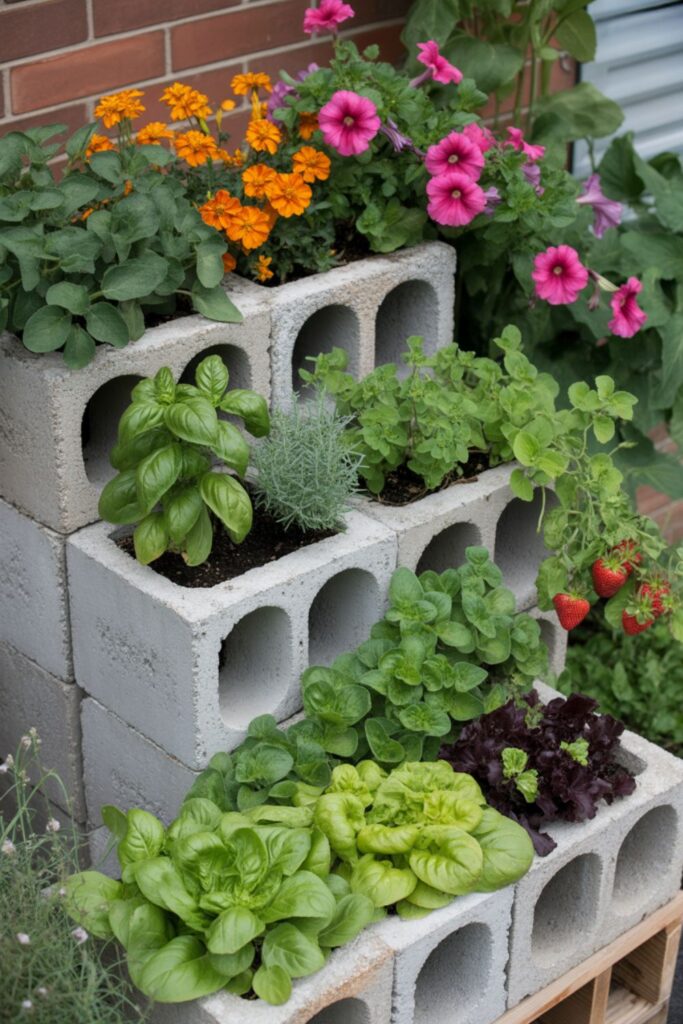
Vegetables with compact growth habits thrive in the confined volumes cinder block gardens provide. Bush tomatoes produce abundantly without sprawling like indeterminate varieties. Peppers both sweet and hot suit block gardens perfectly with their upright growth. Leafy greens including lettuce, spinach, kale, and Swiss chard grow quickly in individual block hollow cores, giving you succession planting options as you harvest and replant.
Radishes, green onions, and baby carrots mature rapidly in small spaces. Bush beans provide nitrogen-fixing benefits while producing generous harvests. Compact squash and cucumber varieties bred specifically for container growing work well in deeper beds. Strawberries planted in block holes produce for years, sending runners into adjacent spaces. Avoid deep-rooted crops like standard carrots or sprawling vines like pumpkins unless you’ve built beds with adequate depth and space.
Herbs That Excel in Cinder Blocks
Herbs represent ideal candidates for block planter box holes thanks to modest root systems and preference for well-drained conditions. Mediterranean herbs rosemary, thyme, oregano, and sage actually prefer the lean, quick-draining environment block holes provide. These woody perennials tolerate confined roots better than many plants, returning year after year with minimal care.
Annual herbs like basil, cilantro, parsley, and dill produce abundantly when harvested regularly. Plant different varieties in each hole for diverse flavors always within reach. The elevated positioning brings herbs to comfortable harvesting height, eliminating bending. Arrange by culinary use Italian herbs (basil, oregano, parsley) together in one section, Mexican herbs (cilantro, Mexican oregano) in another, Asian herbs (Thai basil, cilantro) in a third. This organization simplifies meal preparation while creating attractive displays.
Ornamental Plants and Flowers
Transform utilitarian vegetable beds into ornamental showcases by incorporating flowers throughout. Marigolds planted in block holes repel aphids and other pests while adding cheerful color. Nasturtiums attract beneficial insects and produce edible flowers and leaves. Alyssum planted along edges creates fragrant borders that attract pollinators. These companion flowers improve vegetable production while beautifying your space.
Succulents create stunning living art in block holes with minimal maintenance. Sempervivums (hens and chicks), sedums, and echeverias produce colorful tapestries requiring water only every 2-3 weeks. Mix colors and textures burgundy, chartreuse, blue-gray, and green varieties for dynamic displays. Trailing flowers like petunias, calibrachoa, or lobelia cascade from upper block holes, softening hard edges with flowing growth that changes throughout seasons.
Customizing Your Cinder Block Garden
Painting and Decorating Blocks
Exterior masonry paint transforms plain gray concrete blocks into colorful garden statements. Clean blocks thoroughly before painting, removing dust and debris that prevents proper adhesion. Apply primer formulated for masonry surfaces, then two coats of exterior paint in your chosen colors. Bright hues create cheerful focal points. Earth tones help blocks blend naturally with surrounding landscapes. Coordinate with nearby flowers or home exterior colors for cohesive aesthetics.
Creating patterns using painter’s tape stripes, geometric designs, or ombre effects add personality. Paint only front-facing surfaces to save time and materials if the back won’t be visible. Stencil designs, numbers, or plant names directly on blocks for functional decoration. Apply exterior sealer over finished paint jobs to protect from weather and extend longevity. Sealed surfaces resist staining and clean easily with garden hoses, maintaining fresh appearances for years.
Adding Trellises and Support Systems
Incorporate vertical growing space by adding trellises to cinder block gardens. Drive sturdy posts into the ground behind blocks, then attach wire mesh, wooden lattice, or string systems. Alternatively, insert bamboo stakes or metal conduit directly into block hollow cores for built-in support. These vertical elements support climbing vegetables like pole beans, peas, cucumbers, or indeterminate tomatoes.
Create attractive arbors by building taller block pillars at bed corners, then spanning them with wooden beams or metal pipes. Train vining plants up these structures, creating shaded areas beneath perfect for heat-sensitive crops like lettuce during summer. The vertical dimension adds architectural interest while dramatically increasing production per square foot. Many climbing crops actually produce better when growing upward rather than sprawling on ground where moisture and pests cause problems.
Read More About: Garden Ideas With Cinder Blocks for Creative Outdoor Spaces
Maintenance and Care Tips
Watering and Irrigation Systems
Cinder block gardens dry faster than ground beds due to excellent drainage and exposure from all sides. Check soil moisture daily during hot weather, stick your finger 2 inches deep and water when it feels dry. Deep, infrequent watering encourages roots to grow down rather than shallow, frequent sprinkles that keep roots near the surface where they’re vulnerable to heat stress.
Drip irrigation on timers eliminates watering guesswork while conserving water. Run drip lines through the central bed area with emitters near each plant. Set timers based on weather and season more frequently during summer heat, less during cool spring or fall. Soaker hoses offer budget-friendly alternatives that deliver water directly to root zones. Mulch the soil surface with straw, shredded bark, or compost to retain moisture and regulate temperature, reducing watering frequency.
Fertilizing and Soil Amendments
The confined soil volumes in raised beds deplete nutrients faster than ground gardens. Feed regularly using liquid fertilizers every 2-3 weeks during active growth. Organic options like fish emulsion or compost tea provide balanced nutrition without chemical buildup. Alternatively, incorporate slow-release organic fertilizers into soil at planting time, supplementing with additional applications mid-season.
Top-dress beds with fresh compost annually, working it into the top few inches of soil. This replenishes organic matter, improves structure, and adds nutrients naturally. Test soil pH every few years most vegetables prefer 6.0-7.0 pH. Lime raises pH in acidic soil while sulfur lowers it in alkaline conditions. These amendments take months to work, so apply well before planting season when possible. Succulents and Mediterranean herbs need minimal feeding once monthly at quarter strength suffices for these lean-living plants.
Seasonal Care and Winterization
Remove spent annual crops after frost kills them. Pull out dead plants, shake excess soil back into beds, and add plant material to compost piles unless diseased. Clean out and refresh soil in block holes, mixing in fresh compost. Replant with cool-season crops like lettuce, spinach, or pansies where climates allow. Cold-zone gardeners should mulch perennial plants heavily for winter protection.
The concrete blocks themselves withstand freezing without damage. Ensure good drainage beneath and around structures so water doesn’t freeze and heave foundations. In extremely harsh climates with severe freeze-thaw cycles, consider covering blocks with insulating materials or emptying them for winter. Come spring, remove mulch, top up settled soil, replace worn-out plants, and start fresh with new crops. Your permanent cinder block garden framework makes this annual refresh simple and quick.
Cost Breakdown and Budget Planning
Calculating Total Project Costs
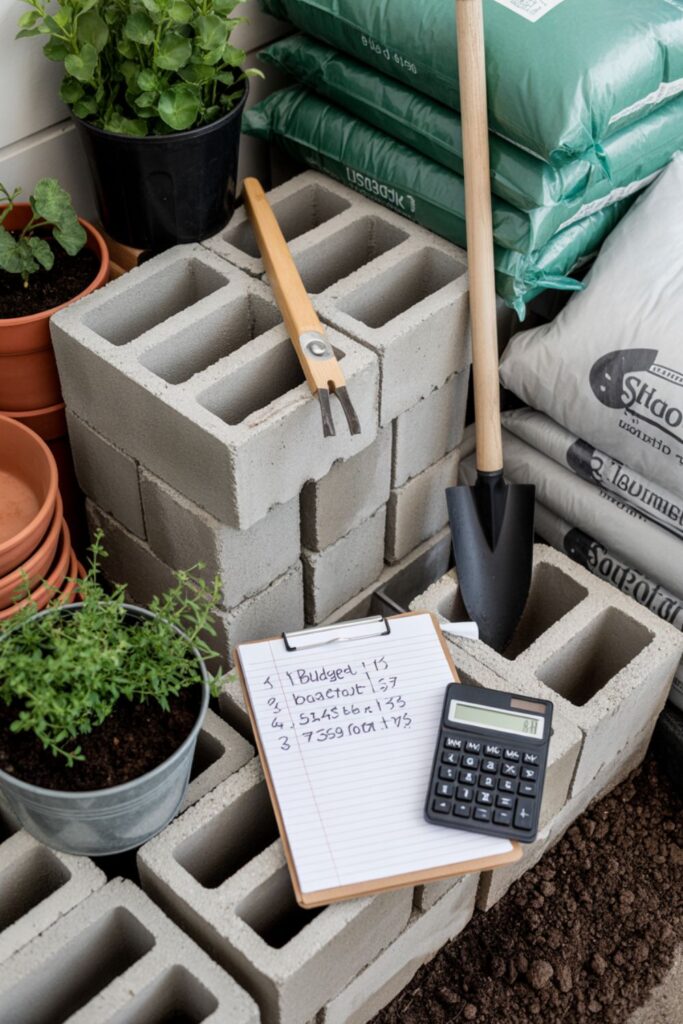
A basic 4×8-foot DIY cinder block garden one block high costs approximately $75-$125 for complete materials. Cinder blocks ($30-$50 for 18 blocks), soil mixture ($25-$40 for 12 cubic feet), landscape fabric ($5-$10), and base gravel ($15-$25) comprise the bulk. Add optional expenses for paint ($15-$30), construction adhesive ($8-$12), or decorative elements as budget allows.
Larger or taller gardens scale proportionally double the dimensions and roughly doubles material costs. However, the project cost remains far below equivalent manufactured raised beds ($200-$600) or professional landscape installation ($500-$2,000+). This dramatic savings makes DIY raised bed projects accessible for any homeowner regardless of budget constraints. Most weekend projects complete within 4-8 hours of actual work time, making the time investment reasonable even for busy families.
Money-Saving Tips
Purchase cinder blocks during off-season sales or from building material surplus stores where prices run 30-50% below retail. Check classified ads or demolition sites for free blocks to ensure they’re standard concrete blocks rather than deteriorated vintage versions with potential contaminants. Make your own soil mix by composting kitchen scraps and yard waste throughout the year rather than buying bagged products.
Split large projects across multiple phases, spreading costs over several months or seasons. Start with basic frames and minimal plantings, then add enhancements like paint, irrigation, or vertical supports as budget allows. Collect free pallets for making compost bins, tool storage, or additional garden structures. Seed-starting indoors costs pennies compared to buying transplants. These small savings accumulate quickly, making even ambitious backyard garden projects affordable on modest budgets.
Frequently Asked Questions
How long does it take to build a DIY cinder block garden?
Simple raised garden bed projects typically complete in one weekend 4-6 hours for site prep and construction, plus 2-3 hours for filling with soil and planting. More complex designs with multiple tiers, painted finishes, or extensive arrangements may require two weekends. Most time goes into site preparation and foundation work rather than actual block assembly, which proceeds quickly once groundwork is complete.
Do I need to use mortar between cinder blocks?
No, mortar isn’t necessary for most DIY raised bed gardens up to three blocks high. Weight from soil and plants provides adequate stability. Construction adhesive or mortar between layers adds security for permanent installations or structures in high-traffic areas. Skipping adhesive preserves the flexibility to reconfigure your modular garden layout in future seasons without waste.
Can I build a cinder block garden on concrete or pavement?
Yes, cinder block gardens work perfectly on patios, driveways, or other paved surfaces. Skip the gravel foundation and build directly on the hard surface. Ensure adequate drainage by drilling holes in blocks touching the ground or placing the entire structure on plastic furniture sliders. This elevation allows water to escape while protecting pavement from staining. These portable gardens suit renters or those wanting flexibility.
What size cinder blocks should I use?
Standard 8x8x16-inch concrete blocks work for most garden projects, offering good proportions and widespread availability. They’re heavy enough to stay put when filled but manageable for most people to lift. Smaller 4-inch blocks work for decorative borders but lack the planting volume for productive vegetable gardens. Larger 12-inch blocks increase capacity but weigh significantly more, making handling difficult.
How deep should soil be in a cinder block garden?
One block high (8 inches) provides adequate depth for most herbs, flowers, lettuce, and shallow-rooted vegetables. Two blocks high (16 inches) accommodates tomatoes, peppers, and most garden crops comfortably. Three blocks (24 inches) supports deep-rooted vegetables like carrots, parsnips, or potatoes. Match depth to your intended crops shallow beds work fine for many plants while wasting materials on others that won’t use the extra space.
Conclusion
A DIY cinder block garden represents one of the smartest investments any homeowner can make combining durability, affordability, and functionality in equal measure. These permanent structures eliminate the frustration of temporary solutions while costing a fraction of alternatives. The beginner-friendly construction requires no special skills, just basic tools and a free weekend to create productive growing spaces that serve for decades without maintenance or replacement costs.
Begin your cinder block planter project today by selecting an appropriate site and sketching your ideal design. Calculate materials needed, gather your tools, and dedicate one weekend to building the garden you’ve envisioned. Whether starting with a simple rectangular raised bed or tackling more ambitious tiered designs, you’ll discover that creating professional-quality gardens yourself delivers satisfaction beyond the money saved. Your backyard garden project will provide fresh produce, beautiful flowers, and lasting pride in work accomplished with your own hands.