25+ Flower Bouquet Ideas To Every happy Occasion

Choosing the right flowers feels overwhelming when you’re staring at endless options. You want something memorable, something that captures the moment perfectly, but where do you start? The pressure mounts whether you’re planning a wedding, celebrating an anniversary, or simply brightening someone’s day.
Here’s the relief you need: flower bouquet ideas span countless styles, from classic roses to wildflower arrangements that feel pulled from a meadow. This guide breaks down the best bouquet arrangements for every occasion, season, and budget. You’ll discover floral designs that match your vision, learn which flower types work together, and master the art of creating stunning arrangements that leave lasting impressions.
What Makes a Great Flower Bouquet?
A great flower bouquet combines three essential elements that work in harmony. The color combinations must complement each other while the textures create visual interest through varied petal shapes and foliage. Scale matters tremendously; large statement blooms need delicate fillers to avoid looking cluttered.
Professional florists follow the rule of thirds when designing arrangements. Focal flowers comprise roughly 60% of the bouquet, secondary blooms add 30%, and filler flowers complete the final 10%. This ratio creates balance without rigidity. Fresh flowers in peak condition make all the difference, so check stems for firmness and petals for vibrant color before purchasing.
Classic Rose Bouquet Arrangements
Rose bouquets never go out of style because they communicate emotion instantly. Red roses signal romance, while pink varieties express gratitude and admiration. White roses suit weddings and sympathy arrangements, and yellow roses brighten friendships with their cheerful disposition.
Mix rose colors for depth or stick with monochromatic arrangements for elegance. Pairing roses with eucalyptus creates a modern aesthetic that’s dominated Instagram feeds since 2020. Add baby’s breath for traditional charm or skip it entirely for contemporary minimalism. Garden roses offer fuller blooms than standard varieties, making them perfect for luxury wedding bouquets where you want maximum visual impact.
How Do You Create Stunning Wildflower Bouquets?
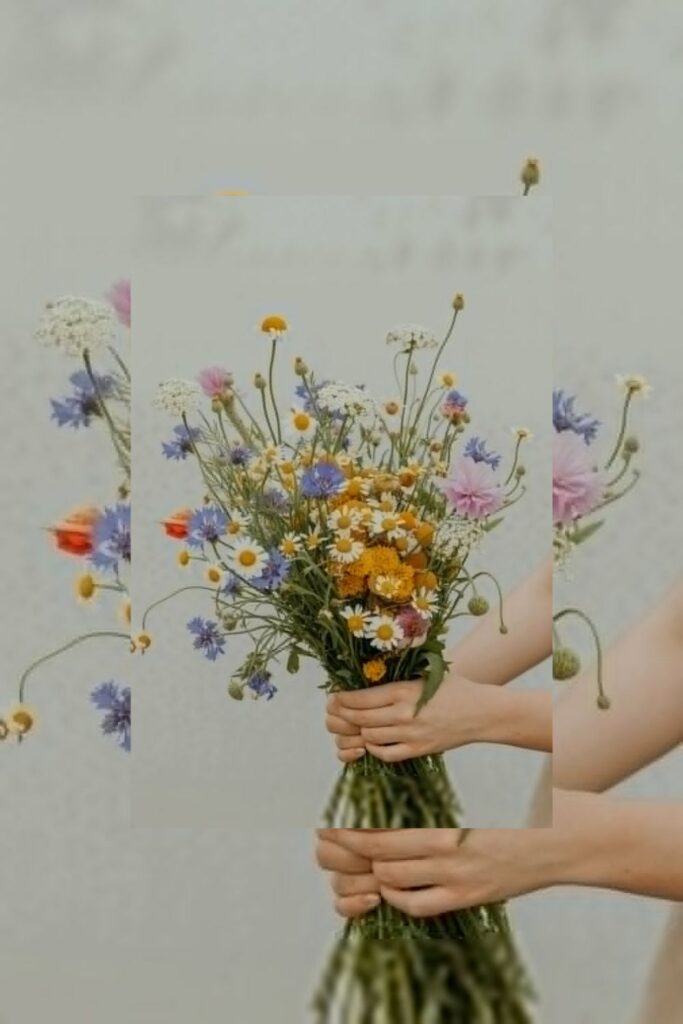
Wildflower arrangements capture effortless beauty that formal bouquets can’t replicate. Start with a base of seasonal flowers like daisies, sunflowers, or black-eyed Susans depending on the time of year. These hardy blooms form the structure of your arrangement.
Layer in delicate varieties such as Queen Anne’s lace, lavender, or cosmos to add airiness. The key sits in embracing imperfection wildflower bouquets should look freshly gathered, not overly manicured. Vary stem heights dramatically, allowing some flowers to tower while others nestle low. Wheat stalks, dried grasses, or wildflower seed heads introduce interesting textures that make DIY bouquets feel professionally designed. Wrap stems with twine or burlap rather than satin ribbon to maintain the rustic aesthetic.
Seasonal Flower Bouquet Ideas
Seasonal flowers deliver better value and longer vase life than imports. Spring welcomes tulips, peonies, ranunculus, and sweet peas that burst with soft pastels and fresh fragrances. Combine these flower types with flowering branches like cherry blossoms for height and drama.
Summer brings bold colors through dahlias, zinnias, sunflowers, and hydrangeas. These robust blooms withstand heat while providing maximum impact. Fall arrangements shine with chrysanthemums, marigolds, celosia, and ornamental kale in warm amber, burgundy, and orange tones. Winter floral designs feature amaryllis, paperwhites, hellebores, and evergreen branches accented with berries and pine cones. Seasonal selections cost 30-50% less than out-of-season alternatives while supporting local flower farms.
Wedding Bouquet Styles That Turn Heads
Wedding bouquets set the tone for your entire celebration. The cascading style drapes dramatically, featuring orchids or calla lilies that flow downward in an elegant waterfall. This formal option suits traditional church ceremonies and ballroom receptions.
Round bouquets offer versatility for any wedding style. Tightly packed roses, peonies, or garden roses create a lush sphere that photographs beautifully. Hand-tied bouquets feel organic and romantic, with stems visible and wrapped in ribbon. These relaxed arrangement styles work perfectly for outdoor or bohemian weddings. Arm bouquets make a statement think long-stemmed flowers cradled in one arm like a pageant winner. Calla lilies and gladiolus excel in this architectural presentation.
Read More About: https://growyouryards.com/backyard-landscaping-ideas/
What Are the Best Color Combinations for Bouquets?
Color combinations transform ordinary arrangements into showstoppers. Monochromatic schemes using various shades of one color create sophistication and try blush through deep burgundy roses for romantic elegance. Analogous colors sit next to each other on the color wheel, like purple, blue, and pink, producing harmonious blends that feel naturally cohesive.
Complementary color combinations use opposites orange and blue, purple and yellow for vibrant contrast that demands attention. The 60-30-10 rule applies here too: choose a dominant color for 60% of blooms, a secondary color for 30%, and an accent for 10%. White and green serve as neutrals that bridge bold choices. Jewel tones (emerald, sapphire, ruby) deliver richness for fall and winter, while pastels (peach, lavender, mint) keep spring and summer arrangements light and airy.
DIY Flower Bouquet Tips for Beginners
Creating DIY bouquets saves money and adds personal touches that store-bought arrangements lack. Start with fresh, properly hydrated flowers, cut stems at 45-degree angles and let them drink for several hours. Remove leaves that would sit below the waterline to prevent bacterial growth.
Build your bouquet in your hand rather than in the vase. Begin with focal flowers as your centerpiece, rotating the arrangement as you add stems. Insert secondary blooms at slight angles to create a spiral pattern. Fill gaps with filler flowers and foliage, checking from all angles. Secure the束 with floral tape before trimming stems to equal length. Pro tip: fresh flowers last longer when you change water daily and recut stems every few days. Add flower food or a drop of bleach to keep water clear and bacteria-free.
Occasion-Based Bouquet Ideas
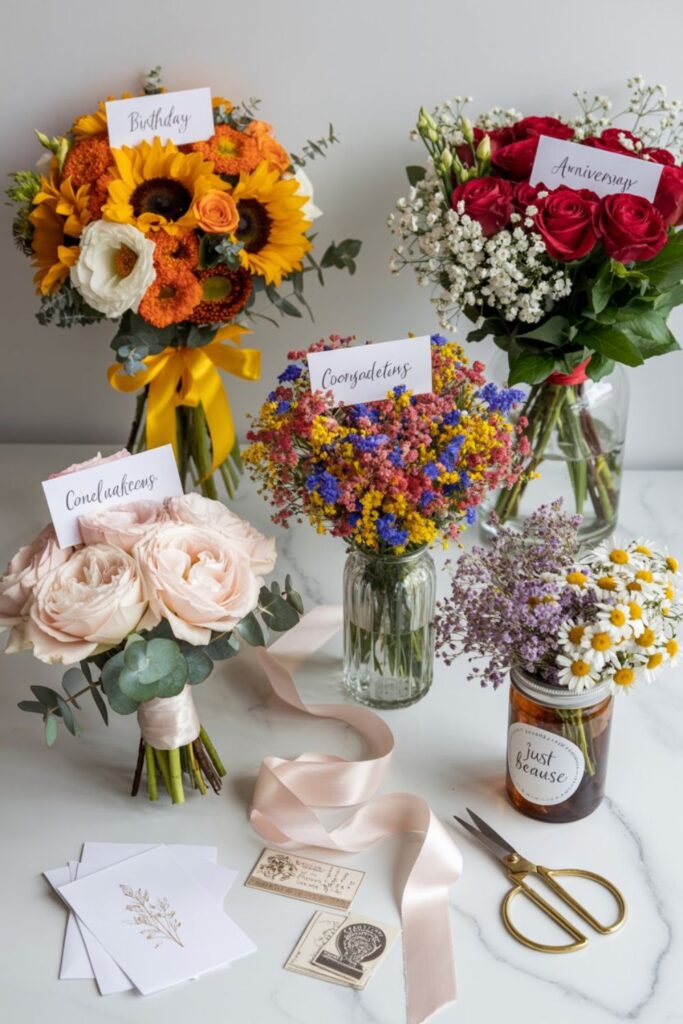
Occasion-based bouquets require thoughtful flower selection. Birthday arrangements burst with cheerful colors, gerbera daisies, sunflowers, and alstroemeria communicate celebration. Anniversary bouquets lean romantic with roses, lilies, and orchids in rich reds and soft pinks.
Sympathy arrangements favor white, cream, and soft blue tones. Lilies, roses, and carnations convey respect and comfort. Get-well bouquets lift spirits with bright yellows, oranges, and purples tulips, daisies, and irises work wonderfully. New baby floral designs traditionally use pastels, but modern arrangements embrace any color. Thank-you bouquets show appreciation through pink roses, chrysanthemums, and hydrangeas. Graduation flowers celebrate achievement with school colors incorporated into bold, festive arrangements.
Modern Minimalist Bouquet Designs
Minimalist bouquet arrangements prove that less delivers more impact. Single-variety bouquets showcase one flower type in all its glory 30 white tulips or a dozen garden roses need no embellishment. These sculptural arrangements make powerful statements through simplicity and quality over quantity.
Structural flowers like calla lilies, anthurium, and birds of paradise naturally lend themselves to minimalist design. Pair them with just one or two types of architectural foliage like monstera leaves or snake grass. Asymmetrical arrangements break traditional rules, featuring flowers clustered to one side with dramatic negative space. Modern vessels matter too; clear glass cylinders, concrete planters, or matte ceramic vases enhance the contemporary aesthetic better than ornate containers.
How Do You Choose Flowers for Different Personalities?
Matching flower bouquet ideas to personality creates meaningful gifts. Bold personalities appreciate dramatic flowers like proteas, birds of paradise, or tropical blooms in saturated colors. These statement-makers suit confident recipients who love standing out.
Romantic souls cherish classic roses, peonies, and ranunculus in soft pinks and whites. These timeless blooms speak to tradition and sentimentality. Free spirits connect with wildflower mixes, succulents, and unconventional flower types arranged loosely. Minimalists prefer clean lines; a few perfect stems beat masses of mixed blooms. Practical people appreciate long-lasting varieties like orchids, anthuriums, or dried flower arrangements that provide weeks of enjoyment. Considering your favorite colors and home decor style when selecting flowers a cohesive gift shows thoughtfulness.
Budget-Friendly Flower Bouquet Ideas
Beautiful bouquet arrangements don’t require massive budgets. Grocery store flowers offer excellent value when you know what to select. Look for bunches with mostly closed buds that will open over several days, maximizing your investment.
Focus on high-impact, affordable flower types like carnations, alstroemeria, and chrysanthemums. These workhorses last longer than expensive varieties while providing fullness. Bulk flowers from wholesale markets or online suppliers cost 50-70% less than retail florists. Buy in season, those seasonal flowers always offer better prices and quality. Stretch expensive focal flowers by using just 3-5 stems surrounded by inexpensive greenery and filler. Baby’s breath, leather leaf fern, and eucalyptus add significant volume for minimal cost. Repurpose grocery bouquets by disassembling and rearranging them into multiple smaller arrangements.
Exotic and Tropical Flower Arrangements
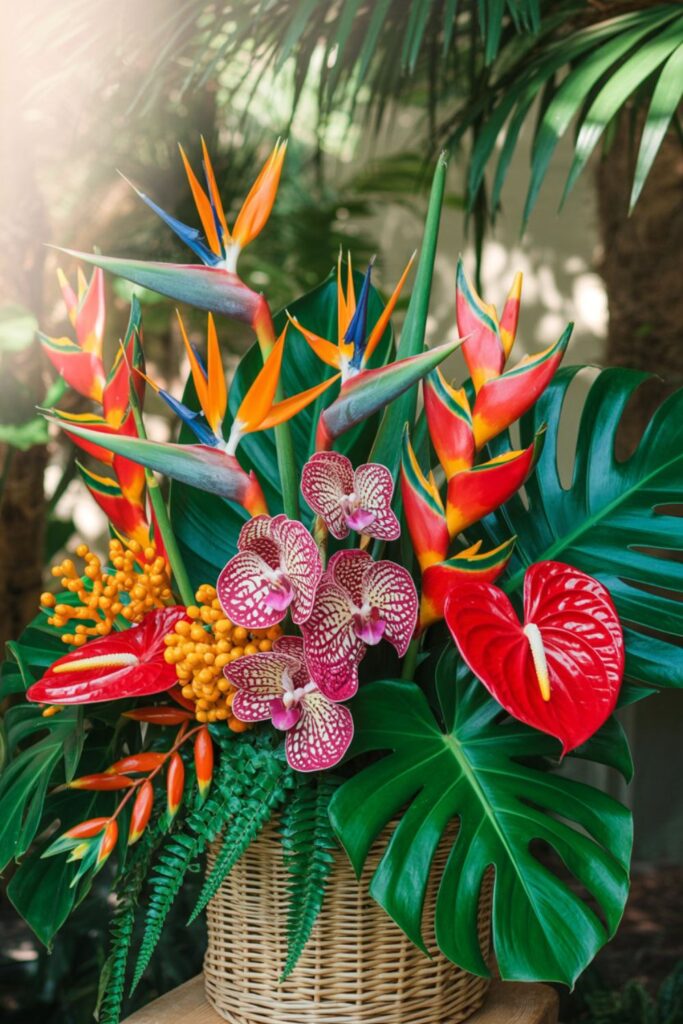
Exotic floral designs transport recipients to paradise. Orchids reign supreme in tropical arrangements, available in countless colors and varieties. Phalaenopsis orchids suit beginners while dendrobiums and cymbidiums challenge experienced arrangers.
Birds of paradise create architectural drama with their distinctive shape and vibrant orange-and-blue coloring. Anthuriums provide glossy, heart-shaped blooms in red, pink, or white that last for weeks. Ginger flowers, heliconia, and proteas add unusual textures that make arrangement styles unforgettable. Tropical foliage like ti leaves, monstera, and palm fronds provide lush backdrops. These flower types thrive in warm conditions but need higher humidity than typical arrangements. Mist daily and keep away from air conditioning vents for maximum longevity.
Garden-Style Bouquet Arrangements
Garden-style bouquets mimic flowers growing naturally in an English cottage garden. This romantic style layers multiple flower types at varying heights with loose, organic structure. Start with a mix of 5-7 different bloom varieties in complementary colors.
Include different bloom shapes spiky (delphiniums, snapdragons), round (peonies, roses), and delicate (sweet peas, cosmos). Add movement with trailing elements like jasmine vines or ivy. Herbs like rosemary, mint, or lavender contribute fragrance and texture while filling gaps. Garden bouquet arrangements should look freshly gathered, slightly wild, and abundantly full. Allow some stems to arc gracefully while others stand tall. The naturalistic approach means you can’t really make mistakes, imperfections add to the charm.
What Flowers Work Best for Long-Lasting Bouquets?
Longevity matters when you want fresh flowers to last beyond a few days. Alstroemeria tops the list, often lasting 2-3 weeks with proper care. Chrysanthemums provide similar staying power while offering diverse colors and petal shapes.
Carnations endure despite their reputation as basic modern varieties in unique colors look far from ordinary. Orchids outlast almost everything, with blooms persisting 2-4 weeks. Sunflowers bring cheerful energy for 7-10 days when purchased as tight buds. Lisianthus resembles roses but lasts longer, making them smart substitutes for wedding bouquets in hot weather. Gladiolus and snapdragons bloom sequentially from bottom to top, providing changing displays over 10-14 days. Avoid tulips and poppies if longevity matters these beauties fade within 3-5 days.
Hand-Tied Bouquet Techniques
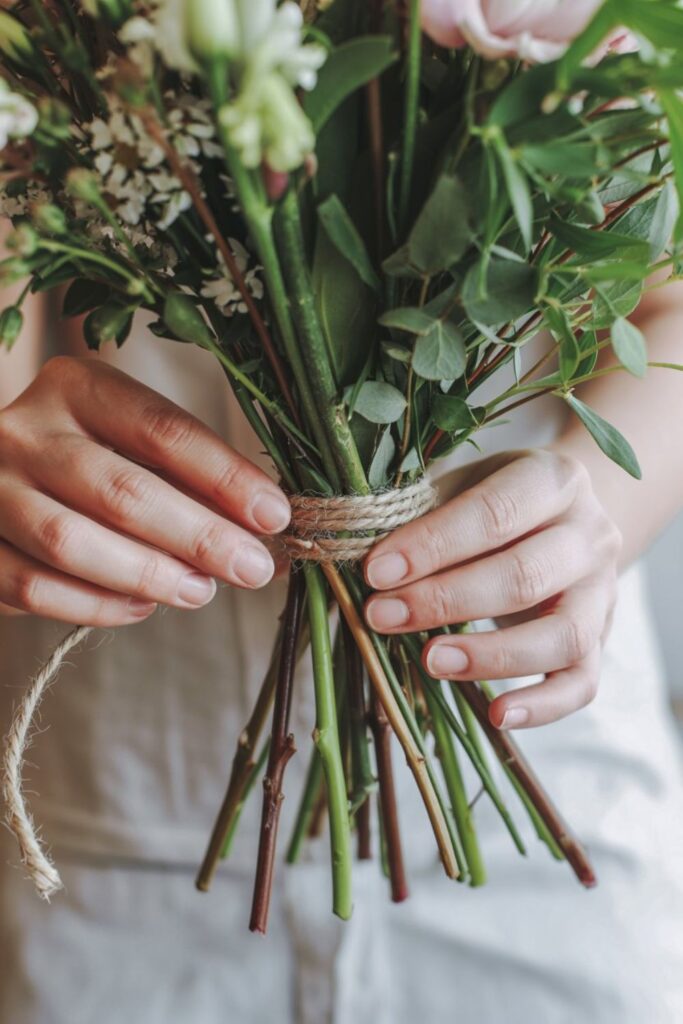
Hand-tied DIY bouquets showcase stems as part of the design. This European technique requires practice but produces professional results. Start with cleaned, de-thorned stems and a clean workspace.
Hold your first focal flower at eye level. Add the second stem at a slight angle, creating an X when viewed from above. Continue adding flowers in a spiral pattern, rotating the bouquet clockwise while placing each stem counterclockwise. This technique creates a domed shape naturally. Maintain consistent hand position, don’t grip too tightly or stems won’t spiral properly. After adding all flowers, secure just below your hand with floral tape, wrapping 3-4 times. Trim stems to equal length, cutting 2-3 inches below the binding point. Finish with ribbon, twine, or burlap wrapped over the tape. The exposed stems add rustic charm while making water changes simple.
Monochromatic Flower Bouquet Ideas
Monochromatic color combinations deliver sophisticated elegance through tonal variation. All-white arrangements suit weddings, sympathy, and minimalist preferences. Combine different white blooms roses, lilies, hydrangeas, and lisianthus with varied textures like dusty miller and eucalyptus.
Pink monochromatic bouquet arrangements range from pale blush to deep magenta, creating a romantic dimension. Layer garden roses, ranunculus, spray roses, and sweet peas for fullness. Purple schemes offer drama through shades from lavender to eggplant lisianthus, stock, delphinium, and roses blend beautifully. Yellow and orange tones energize spaces with sunflowers, roses, ranunculus, and tulips creating warm, welcoming displays. The key to successful monochromatic design lies in varying both flower size and shade use at least 3-5 different tones of your chosen color.
How Do You Preserve Wedding Bouquets?
Preserving wedding bouquets keeps memories alive long after the celebration. Air-drying works best for hardy flowers like roses, lavender, and baby’s breath. Hang the bouquet upside down in a dark, dry location for 2-3 weeks. Colors fade but the shape remains intact.
Pressing preserves individual blooms in two dimensions. Place flowers between parchment paper inside heavy books, checking after two weeks. Pressed flowers work beautifully in shadow boxes or frames. Silica gel desiccation maintains color and shape better than air-drying. Bury blooms completely in silica gel crystals for 5-7 days, checking regularly. Professional freeze-drying produces the best results but costs $150-300. Flowers retain original color and shape, though they become extremely fragile. Another modern option involves resin encase small blooms in clear resin for jewelry or paperweights. Regardless of method, start preservation within 24 hours of the wedding for optimal results.
Read More About: Beginner Gardening Guide for Lush Plants And Big Yields
Sustainable and Eco-Friendly Bouquet Options
Sustainable flower bouquet ideas reduce environmental impact without sacrificing beauty. Choose locally grown seasonal flowers to minimize transportation emissions. Visit farmers markets or join flower CSA programs supporting small growers who use organic methods.
Potted plants provide living alternatives that recipients can enjoy for months or years. Herbs, succulents, and flowering plants like orchids or African violets make practical, eco-conscious gifts. When cut flowers are necessary, seek Rainforest Alliance or Veriflora certified blooms grown without harmful pesticides. Avoid floral foam this non-biodegradable material dominates traditional arrangements but alternatives exist. Use chicken wire, pin frogs, or simply arrange flowers directly in vases. Choose reusable or compostable wrapping materials fabric, brown paper, or leaves instead of plastic cellophane. After blooms fade, compost everything except wire and ribbon.
Frequently Asked Questions
What flowers should not be together in a bouquet?
Daffodils release sap that shortens the life of other flowers, so keep them separate or condition them alone for 24 hours first. Avoid mixing ethylene-sensitive flowers like roses with ethylene-producing blooms such as carnations, as this accelerates wilting and petal drop.
How many flowers should be in a bouquet?
Small bouquets need 8-12 stems, medium arrangements use 18-25 stems, and large displays require 30-40+ stems depending on flower size. Wedding bouquets typically contain 20-30 stems for brides and 10-15 for bridesmaids, adjusted based on bloom size and desired fullness.
What is the best time to buy fresh flowers?
Shop early in the morning when fresh flowers first arrive at markets and grocery stores. Midweek purchases, especially Tuesday through Thursday, offer better selection and quality than weekends when stock depletes and turnover slows significantly.
Can you mix fake and real flowers in a bouquet?
High-quality silk flowers can supplement fresh flowers effectively, especially for greenery and filler elements. However, lighting conditions often reveal the difference, and mixing works best when silk elements play supporting roles rather than focal positions in the arrangement styles.
How do you make a bouquet look fuller without buying more flowers?
Add inexpensive greenery like eucalyptus, leather leaf fern, or salal to increase volume. Use seasonal flowers with naturally large blooms like hydrangeas or dahlias as focal points. Filler flowers such as baby’s breath, waxflower, or statice create fullness while costing significantly less than premium blooms.
Conclusion
Flower bouquet ideas span endless possibilities once you understand basic design principles and flower characteristics. The right arrangement transforms ordinary moments into memorable occasions, whether you’re celebrating milestones or simply expressing care. Fresh flowers arranged thoughtfully communicate emotions that words cannot capture, making them timeless gifts that transcend cultural boundaries. Start with seasonal flowers matching your color combinations, experiment with different arrangement styles, and don’t fear imperfection the most beautiful bouquets often emerge from creative risk-taking.
Master these techniques and you’ll create stunning floral designs that rival professional florists. Choose flower types suited to your occasion and recipient, maintain proper care for maximum longevity, and remember that personal touches matter more than perfection. Whether you prefer classic roses, whimsical wildflowers, or exotic tropicals, your next bouquet arrangement will make a lasting impression. Visit local flower markets, support sustainable growers when possible, and enjoy the creative process of bringing beauty into the world one arrangement at a time.