27+ Garden Lighting Ideas to Transform Outdoor Spaces After Dark

You invested weekends transforming your garden into something worth showing off thoughtful plantings, interesting textures, carefully placed focal points then darkness erases everything after sunset. Your beautiful landscape disappears into black voids every evening, leaving windows overlooking nothing and outdoor spaces unusable once daylight fades. You know lighting could extend enjoyment beyond dinner hours, but the options overwhelm: solar versus wired, warm versus cool, uplights versus path lights, spending hundreds versus thousands. Here’s what most homeowners miss: garden lighting ideas succeed through layering multiple light types at varied heights rather than expecting single fixture solutions to illuminate entire landscapes.
Strategic outdoor lighting design creates depth, drama, and functionality impossible during daylight by revealing textures that sun washes flat, casting shadows that add dimension, and guiding movement through spaces using light as invisible architecture. From pathway lighting ensuring safe navigation to accent lighting showcasing specimen trees, effective illumination transforms gardens into nighttime destinations rather than daytime-only features. This guide reveals professional lighting techniques, practical fixture types, and design principles that help you see your garden in entirely new light literally while avoiding the harsh, random, or excessive lighting that characterizes amateur attempts at outdoor illumination.
Why Does Garden Lighting Matter?
Garden lighting ideas extend outdoor space usability beyond the 50% of hours when natural light provides visibility. Evening entertaining, late dinners on patios, or simply enjoying gardens through windows after work all depend on artificial illumination revealing landscapes darkness would otherwise hide. This functional extension translates directly to lifestyle value. Outdoor rooms become as usable as indoor spaces when properly lit, effectively adding square footage to your home’s living area without construction costs.
Outdoor lighting design also dramatically improves security and safety. Illuminated properties deter opportunistic intruders who prefer operating under darkness cover, while well-lit pathways, steps, and transitions prevent falls causing the injuries that emergency rooms treat nightly. Strategic lighting eliminates dark corners where threats could hide while creating welcoming atmospheres that harsh security lighting undermines through prison-yard aesthetics. Beyond function, garden lights create ambiance impossible during daylight shadows, silhouettes, and selective illumination build mystery and sophistication that full sun’s even illumination cannot match, transforming familiar gardens into theatrical landscapes where light becomes the primary design medium.
What Are the Main Types of Garden Lighting?
Pathway lighting guides circulation through gardens while preventing trips and falls on uneven terrain. These fixtures typically stand 18-24 inches tall, casting pools of light downward onto walking surfaces without glaring into eyes. Space path lights 6-10 feet apart for continuous illumination, closer on curved sections requiring more frequent visual cues. Choose fixtures with downward-facing shields preventing light pollution while directing illumination where needed walkways rather than neighboring properties or night skies.
Accent lighting highlights specific features specimen trees, sculptures, water features, or architectural elements creating focal points that organize visual hierarchy within landscapes. Uplights positioned at tree bases cast dramatic shadows on trunks and branches while illuminating foliage from below, reversing daytime lighting patterns for theatrical effects. Spotlights with adjustable heads direct narrow beams onto specific elements, while floodlights wash broader areas with general illumination. Ambient lighting provides overall background illumination through fixtures like lanterns, string lights, or diffused wall sconces that create comfortable brightness levels without harsh shadows or dramatic contrast. This layering approach combining path, accent, and ambient sources creates professional landscape illumination far exceeding what single-purpose lighting achieves.
How Do You Plan a Garden Lighting Layout?
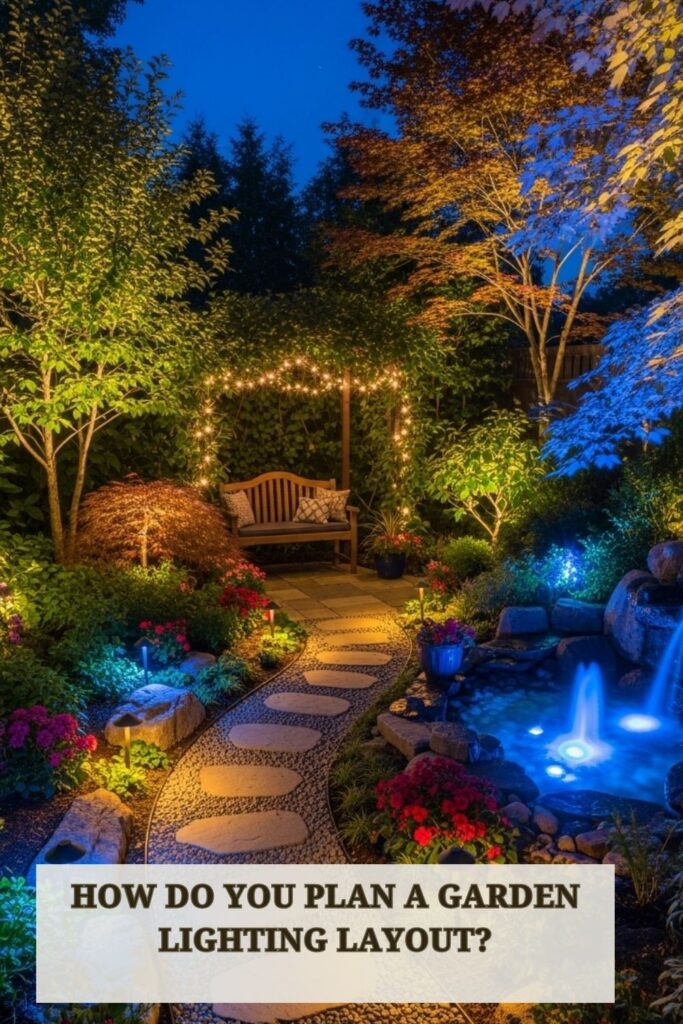
Placement strategies begin by identifying primary circulation routes requiring pathway lighting for safety and navigation. Walk your property after dark noting where you naturally move, which transitions feel treacherous, and where darkness creates uncertainty. These areas demand priority illumination regardless of budget constraints. Next, catalog features deserving emphasis mature trees, water features, garden structures, or architectural elements that anchor your landscape design. These become accent lighting candidates creating visual interest and depth.
Consider viewing angles when positioning fixtures. Light from primary viewing locations patios, windows, frequently used areas rather than creating displays visible only from rarely occupied vantage points. This audience-focused approach ensures your lighting investment delivers maximum enjoyment by illuminating views you actually see rather than theoretically impressive arrangements you never witness. Map existing electrical access points simplifying wired installations, or identify sun-exposed locations supporting solar garden lights. This infrastructure assessment determines whether low-voltage, line-voltage, or solar systems suit your specific conditions. Sketch preliminary layouts marking fixture locations and types, then walk the property at night using flashlights to simulate effects before purchasing equipment.
What Lighting Techniques Create Professional Results?
Garden Lighting Ideas can completely transform your outdoor spaces by highlighting textures, shapes, and focal points in creative ways. Uplighting is a popular approach in Garden Lighting Ideas, where fixtures positioned at ground level aim upward to reverse natural light, creating dramatic effects. This technique is particularly effective for trees, as Garden Lighting Ideas using uplights at trunk bases cast intricate branch shadows on walls or fences while illuminating foliage from unexpected angles. For best results, space uplights 2–4 feet from trunk centers depending on canopy width. Many professional Garden Lighting Ideas recommend using multiple uplights around large trees rather than a single fixture, avoiding flat, one-dimensional lighting.
Downlighting is another essential technique in smart Garden Lighting Ideas, where fixtures mounted in trees or overhead structures aim downward, mimicking natural moonlight. This approach provides subtle, functional illumination for seating areas while maintaining a soft, natural feel. Silhouetting is a dramatic element in advanced Garden Lighting Ideas, positioning lights behind objects to cast shadows on walls or fences with the source hidden by foreground elements. This works beautifully with ornamental grasses, sculptural plants, or trees with striking branch patterns.
By combining uplighting, downlighting, silhouetting, and grazing techniques, the most effective Garden Lighting Ideas transform ordinary yards into visually stunning, inviting outdoor rooms. Incorporating these strategies into your design ensures your landscape shines beautifully at night while enhancing mood, safety, and architectural interest—a hallmark of thoughtful Garden Lighting Ideas.
Read More About: 25+ Genius DIY Garden Rock Art Ideas
Should You Choose Solar or Wired Garden Lights?
Garden Lighting Ideas often start with choosing the right type of fixtures, and solar garden lights are a popular option for budget-friendly setups. Solar Garden Lighting Ideas eliminate installation complexity and electrical costs because each fixture has a self-contained battery that charges via an integrated photovoltaic panel. These solar Garden Lighting Ideas work best in areas receiving 6–8 hours of direct sunlight daily, making them ideal for open gardens but less effective in heavily shaded spaces.
For more consistent performance, low-voltage wired systems are a key element in many advanced Garden Lighting Ideas. Operating at 12 volts, these systems provide brightness and reliability that surpass solar alternatives while still supporting DIY-friendly installation. Low-voltage Garden Lighting Ideas require a transformer to reduce standard household current from 120 volts to 12 volts, connecting fixtures via buried cables. These wired Garden Lighting Ideas shine consistently in any weather and allow timers, smart controls, and dimming options that basic solar setups cannot offer. Typical residential low-voltage Garden Lighting Ideas cost $500–2,000, including the transformer, cable, and 10–20 fixtures.
For maximum brightness and professional-grade results, line-voltage (120-volt) systems are included in high-end Garden Lighting Ideas, perfect for security or illuminating tall trees. These professional Garden Lighting Ideas require licensed electricians, weatherproof junction boxes, and higher budgets, typically $1,500–5,000, but they deliver performance and permanence unmatched by other options. Whether choosing solar, low-voltage, or line-voltage setups, smart planning ensures your Garden Lighting Ideas create stunning, safe, and functional outdoor spaces.
What Light Temperature and Color Create Best Effects?
Light temperature, measured in Kelvins, plays a crucial role in shaping the mood and visual appeal in Garden Lighting Ideas. Warm white light (2700–3000K) is a staple in cozy Garden Lighting Ideas, creating inviting environments that mimic firelight or incandescent bulbs. This range flatters warm materials such as wood, brick, and copper while enhancing social areas for entertaining. Cool white light (4000–5000K) is common in modern Garden Lighting Ideas, offering crisp illumination that accurately reveals colors but can feel clinical in intimate garden spaces. Cooler temperatures are ideal in Garden Lighting Ideas focused on task lighting or contemporary landscapes where bright, neutral tones complement sleek design.
For most residential outdoor projects, 2700–3000K warm white provides natural-looking results that enhance plant colors and materials—a key principle in effective Garden Lighting Ideas. Testing light temperatures before committing to an entire system is essential, as what seems subtle in a showroom may appear dramatically different when applied to your garden. While RGB or color-changing fixtures add novelty for parties, the best Garden Lighting Ideas reserve colored light for occasional effects rather than nightly use.
How Do You Light Pathways Effectively?
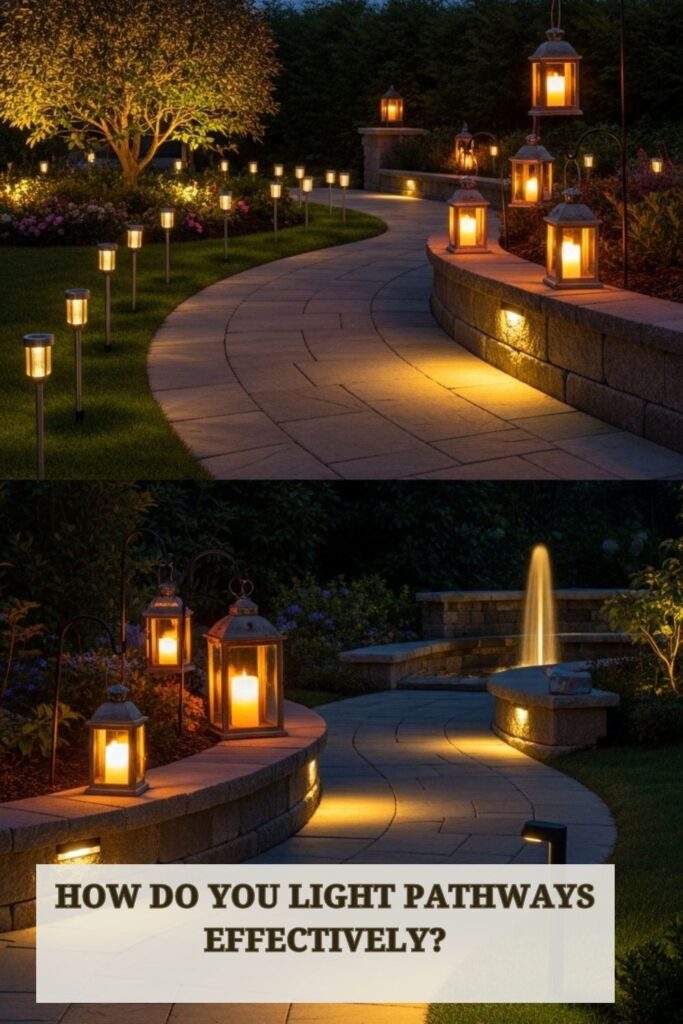
Pathway lighting requires balancing safety with aesthetics through fixture selection and spacing, preventing both under-lit hazards and over-lit monotony. Traditional path lights standing 18-24 inches create identifiable edges guiding movement, while low-profile bollards at 12-15 inches offer subtler presence in naturalistic gardens. Flush-mounted step lights recessed into risers illuminate stairs without visible fixtures, ideal for minimalist landscape illumination emphasizing architecture over equipment.
Space fixtures based on their output and your path width narrow walkways need lights every 6-8 feet, while wider paths support 10-12 foot spacing. Stagger lights on opposite path sides creating gentle weaving patterns rather than rigid parallel lines feeling institutional. This alternating placement guides movement organically while requiring fewer fixtures than both-sides-continuous arrangements. For gravel or decomposed granite paths where in-ground installation challenges durability, consider edge-mounted fixtures attached to borders or landscape timbers flanking pathways. These alternative placement strategies solve installation obstacles while maintaining necessary illumination levels. Include brighter fixtures at decision points, path intersections, steps, gates where users need enhanced visibility making directional choices safely.
What Are Creative Ways to Light Trees and Plants?
Tree lighting transforms specimens into sculptural focal points commanding attention after dark. Accent lighting positioned at trunk bases typically requires 20-35 watt equivalent LEDs for trees under 20 feet tall, while taller specimens need 50+ watts creating sufficient canopy illumination. Adjust fixture angles preventing direct views into bulbs aim lights at trunks and branches rather than positioning where approaching guests stare into glare. Multi-stem trees benefit from multiple uplights positioned around their bases, with 2-4 fixtures revealing complexity that single sources flatten.
Flowering shrubs and perennial borders gain depth through front-to-back layering using varied fixture heights. Low path lights illuminate foreground plants, while taller spotlights reach mid-ground shrubs, with uplights reserved for background trees creating three-dimensional landscapes. Grasses and ornamental plants with interesting silhouettes showcase beautifully when backlit position lights behind foliage aiming toward solid backgrounds like fences or walls where plant outlines create dramatic shadows. Solar garden lights with decorative stakes integrate into beds providing ambient glow among plantings, though their limited output relegates them to supplemental rather than primary illumination. Consider seasonal changes when positioning fixtures deciduous trees illuminated beautifully in summer may cast insufficient interest during winter dormancy, while evergreens maintain visual impact year-round justifying greater lighting investment.
How Do You Light Water Features?
Underwater lights transform ponds and fountains into glowing focal points rivaling daytime appeal. Submersible LED fixtures rated for continuous underwater use cost $30-150 each depending on brightness and features. Position lights beneath waterfalls illuminating cascades from within, or behind fountain jets creating backlit water curtains. Avoid excessive underwater illumination that makes ponds resemble swimming pools rather than naturalistic features subtle uplighting revealing a few elements trumps over-lit installations exposing every filter and pump.
For garden lighting ideas highlighting water without submersion, position uplights at pond edges aiming across water surfaces creating reflections that double visual impact. This approach illuminates surrounding plantings while water captures and mirrors light creating depth. Floating solar lights offer whimsical accents for informal ponds, though their decorative nature suits casual gardens rather than sophisticated landscape illumination projects. Stream lighting follows natural watercourses using low-voltage fixtures positioned along banks at intervals creating rhythmic points of light guiding eyes along flowing water. Cross-lighting techniques placing fixtures on opposite banks create three-dimensionality as light interacts with moving water from multiple angles, though this advanced approach requires careful adjustment preventing harsh overlap.
What Role Does Ambient Lighting Play in Gardens?
Ambient lighting establishes baseline brightness enabling comfortable vision without dramatic focal points or harsh shadows. String lights suspended overhead create casual, festive atmospheres perfect for entertaining zones, with Edison-style bulbs delivering warm glows resembling candlelight. Permanent installations using commercial-grade string products outlast consumer-grade options while supporting weather exposure that quickly degrades cheap alternatives. Expect quality string lighting to cost $100-300 for 25-50 foot runs including bulbs and weatherproof sockets.
Wall-mounted lanterns flanking doors or gates provide welcoming illumination marking entries while establishing architectural style through fixture design traditional carriage lights suit period homes, while contemporary sconces complement modern architecture. These fixtures typically connect to line-voltage systems requiring professional installation but delivering reliability and brightness solar alternatives cannot match. For dining areas, pendant lights suspended from pergolas or covered patios create intimate illumination at human scale, bringing light sources to table height rather than relying on distant overhead fixtures.
How Do Smart Controls Enhance Garden Lighting?
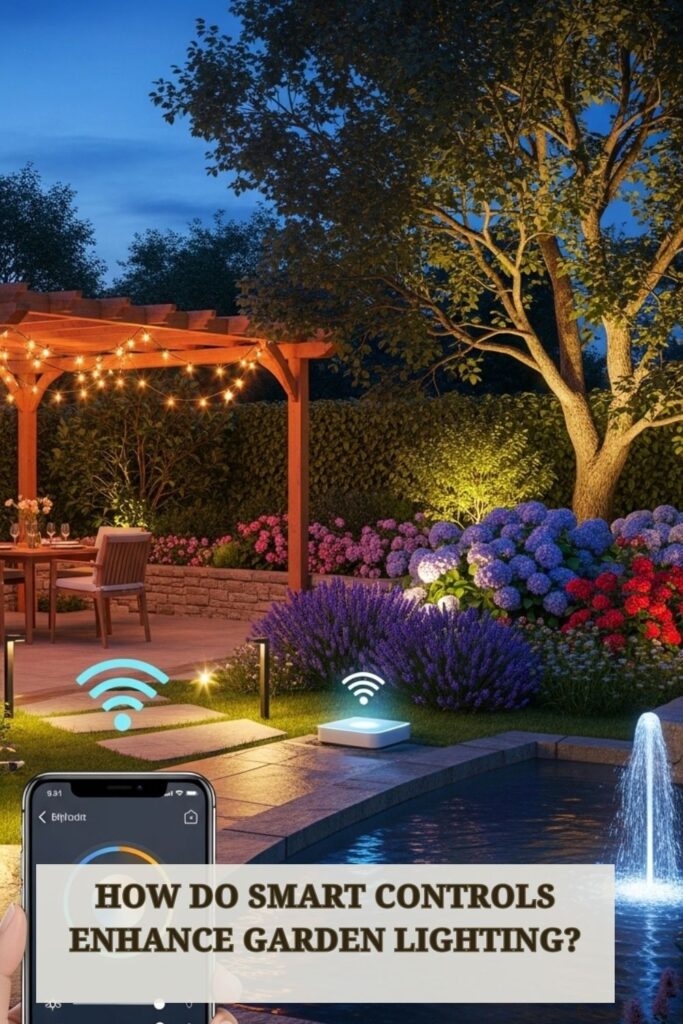
Smart controls transform static lighting into dynamic systems adapting to needs and preferences. Programmable timers automatically illuminate gardens at sunset and extinguish at preset times, eliminating manual operation while ensuring consistent performance. Basic mechanical timers cost $15-40, while astronomical timers adjust automatically for changing sunrise/sunset times throughout seasons. These simple controls slash energy costs by preventing lights from operating during unnecessary hours while maintaining security and convenience.
Wi-Fi enabled systems controlled via smartphone apps offer unprecedented flexibility, adjust brightness from indoors, create custom lighting scenes for different occasions, or control zones independently. Premium systems integrate with voice assistants enabling commands like “turn on pathway lights” or “dim garden to 30%.” These smart platforms cost $200-500 for controllers plus $30-80 per smart fixture, making them investments suited to homeowners prioritizing technology integration and customization. Motion sensors add security while conserving energy by activating lights only when needed, particularly valuable for side yards or distant garden areas rarely occupied but requiring occasional access. Photocells automatically sense darkness turning lights on at dusk without timers or smart systems, though they lack scheduling sophistication of advanced controls.
What Are Energy-Efficient Garden Lighting Options?
LED technology revolutionized outdoor lighting design by consuming 75-80% less energy than incandescent equivalents while lasting 25-50 times longer. A 5-watt LED produces light equivalent to 40-watt incandescent bulbs dramatic efficiency translating to lower utility bills and reduced bulb replacement. Quality LED garden lights cost more initially at $30-100 per fixture versus $10-30 for traditional options, but lifetime costs favor LEDs through reduced energy consumption and replacement frequency. Choose fixtures with replaceable LED modules rather than integrated units where entire fixtures require disposal when bulbs fail.
Solar garden lights offer zero operating costs through renewable energy, though their limited brightness and weather-dependent performance suit supplemental rather than primary illumination. Modern solar technology delivers improved performance over first-generation products, with quality units providing 100-200 lumens per fixture adequate for pathway lighting though insufficient for accent lighting large trees or broad areas. For maximum energy efficiency in wired systems, combine LED fixtures with smart controls or motion sensors ensuring lights operate only when needed. This integrated approach delivers professional performance while minimizing environmental impact and operational costs.
Read More About: 47+ BBQ Area Ideas for Your Patio for Elevate Outdoor Cooking Spaces
How Do You Avoid Common Lighting Mistakes?
Over-lighting creates harsh, flat illumination resembling parking lots rather than sophisticated landscapes. More fixtures don’t automatically equal better results; strategic placement of fewer, properly aimed lights outperforms scattered arrays lacking purpose or hierarchy. Aim for moonlight levels in most areas, reserving brighter illumination for task zones, safety-critical pathways, or featured elements. This restraint creates mystery and depth while preventing light pollution disturbing neighbors or wildlife.
Fixture visibility often betrays amateur installations where equipment draws more attention than illuminated features. Choose fixtures disappearing visually small, dark-colored housings that blend with surroundings rather than decorative lanterns competing for attention. Position fixtures behind plantings, within beds, or tucked against structures where they’re concealed from primary viewing angles. The goal is seeing light effects without noticing sources, creating magic rather than obvious equipment displays. Neglecting maintenance dooms even excellent designs clean fixture lenses annually removing dirt and debris diminishing output, trim encroaching vegetation blocking light paths, and adjusting fixtures as plants grow and landscape matures. Garden lighting ideas require ongoing curation maintaining effectiveness as gardens evolve rather than set-and-forget installations degrading into dysfunctional remnants.
What Lighting Works for Different Garden Styles?
Formal gardens benefit from symmetrical landscape illumination echoing their structured designs. Position matched fixtures flanking pathways, uplighting topiaries or architectural plants in balanced arrangements, and illuminating focal points centrally. Classic lantern-style path lights suit traditional aesthetics, while recessed fixtures maintain formality through invisible equipment. Bright, consistent light levels reinforce formal gardens’ organized nature rather than introducing dramatic contrast contradicting their geometric precision.
Naturalistic and cottage gardens embrace asymmetry through varied fixture heights, irregular spacing, and mixed lighting techniques creating organic feels. Solar garden lights scattered among perennial borders add whimsical touches, while uplighting specimen trees creates vertical interest above layered plantings. These relaxed landscapes tolerate visible equipment better than formal counterparts decorative lanterns and artistic fixtures become garden ornaments during daylight rather than eyesores requiring concealment. Modern minimalist gardens favor clean-lined fixtures, recessed installations, and monochromatic equipment disappearing against architectural elements. Strip lighting hidden beneath floating benches or planters creates contemporary effects, while carefully aimed spotlights emphasize sculptural plants or water features with precision unsuited to traditional settings.
How Do You Install Low-Voltage Garden Lighting?
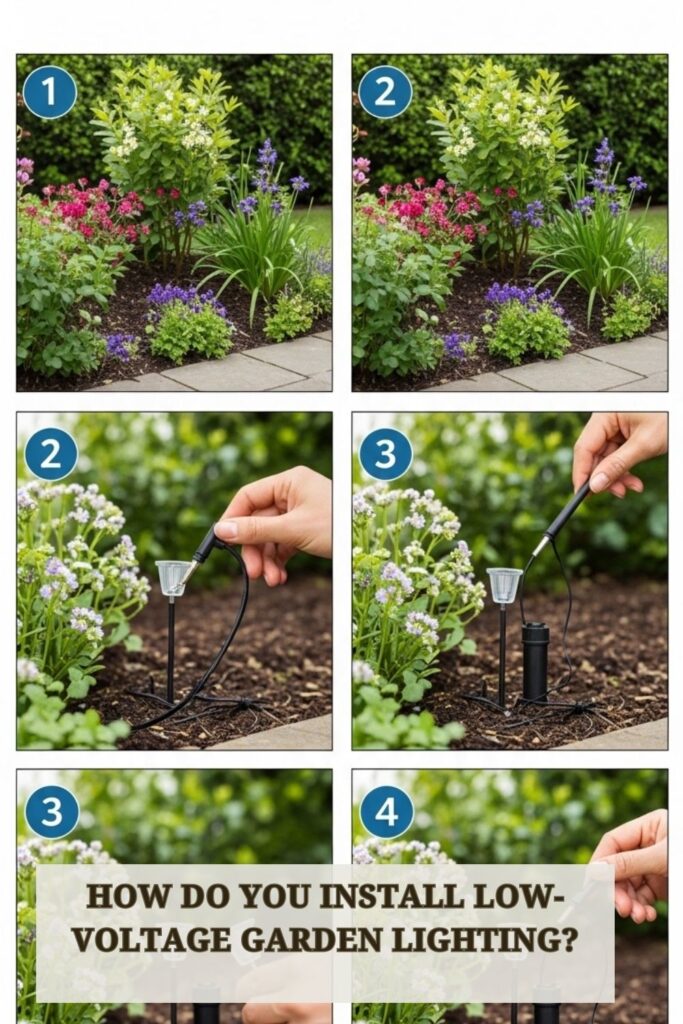
Installation methods for low-voltage systems offer DIY accessibility avoiding electrician costs while delivering professional results. Begin by positioning your transformer near a GFCI-protected outdoor outlet; these units convert 120-volt household current to safer 12-volt power feeding fixtures. Transformers with built-in timers or photocells eliminate separate control purchases, costing $100-300 depending on wattage capacity. Calculate total fixture wattage ensuring transformer capacity exceeds demand by 20% preventing overload.
Bury low-voltage cable 6-12 inches deep protecting wires from damage while maintaining easy access for future adjustments. Use direct-burial rated cable rather than standard wire the few dollars difference prevents failures requiring complete cable replacement. Run cables from transformer to farthest fixtures first, connecting closer fixtures to these home-run lines. This approach minimizes voltage drop that dims distant fixtures on shared circuits. Most fixtures connect via simple pierce-point connectors attaching to buried cables without cutting or splicing position connectors, insert cable, tighten screws piercing insulation to make electrical contact.
What Are Budget-Friendly Garden Lighting Strategies?
Prioritize high-impact areas receiving maximum attention and use rather than attempting comprehensive property illumination. Light primary pathways, main gathering spaces, and 2-3 signature features creating functional, attractive results within modest budgets. As finances allow, expand systems adding fixtures gradually rather than delaying indefinitely hoping to fund complete installations. This phased approach delivers immediate improvement while building toward comprehensive outdoor lighting design over multiple seasons.
Solar garden lights offer entry-level costs perfect for tight budgets or commitment-averse homeowners. Quality solar fixtures costing $20-40 each provide years of service through LED bulbs and durable construction, though they deliver lower performance than wired alternatives. Supplement solar fixtures with few strategic wired accent lights perhaps uplighting a single spectacular tree creating layered installations where modest wired investments gain impact from solar supporting players. DIY installation saves 40-60% versus professional landscape lighting projects, making low-voltage systems accessible to handy homeowners. Kits including transformers, cable, and multiple fixtures cost $200-500 providing everything needed for basic installations. These complete packages simplify material selection while ensuring component compatibility, ideal for first-time installers lacking experience specifying individual components.
Frequently Asked Questions
How many garden lights do I need?
Calculate based on coverage rather than arbitrary numbers. Pathway lighting requires fixtures every 6-10 feet along walking surfaces. Accent lighting uses 1-3 fixtures per featured element depending on size small shrubs need single uplights, large trees benefit from multiple sources. Start with 10-15 fixtures for typical suburban properties, expanding as needed rather than over-purchasing initially.
What wattage is best for outdoor garden lights?
LED wattage differs dramatically from incandescent ratings. For pathway lighting, 3-5 watt LEDs provide adequate illumination. Accent lighting trees or large features requires 10-20 watts, while small accent lights highlighting garden details work with 1-3 watts. Focus on lumens (light output) rather than watts (energy consumption) 200-300 lumens suits most path applications, while accent lights range from 400-800 lumens.
Can you leave garden lights on all night?
Yes, though it wastes energy and money while contributing to light pollution. Use timers turning lights off at reasonable hours like 11 PM or midnight. Most garden lighting ideas aim to illuminate evening enjoyment rather than all-night operation. Motion sensors or smart controls activate security lighting only when needed, balancing safety with efficiency.
How long do LED garden lights last?
Quality LED fixtures provide 25,000-50,000 hours of illumination equivalent to 10-25 years at typical 5-hour nightly operation. Cheap LEDs fail sooner through inferior components and poor heat management. Invest in reputable brands with multi-year warranties ensuring long-term performance and avoiding frequent replacement headaches.
Do I need an electrician to install garden lighting?
Solar garden lights and low-voltage (12-volt) systems install without electricians, making them DIY-friendly. Line-voltage (120-volt) systems legally require licensed electricians in most jurisdictions due to shock and fire risks. If projects involve new outdoor outlets, burial exceeding 6 inches, or connections to household electrical panels, hire professionals ensuring safe, code-compliant installations.
Conclusion
Garden lighting ideas prove that landscapes need not disappear after sunset, but can transform into theatrical environments where light reveals textures, creates drama, and extends usability beyond daylight hours. The techniques you’ve explored from pathway lighting ensuring safe navigation to accent lighting showcasing prized specimens demonstrate that effective illumination requires strategic thinking about layers, angles, and intensity rather than simply installing whatever fixtures appear convenient. Successful outdoor lighting design balances function with aesthetics through restrained approaches where less often delivers more by preventing over-lit spaces that feel harsh rather than inviting.
Start with essential safety lighting along pathways and stairs, then add accent lights highlighting 2-3 favorite features creating visual hierarchy. This focused approach delivers immediate impact while establishing frameworks for future expansion as budgets allow and experience builds. Your garden investing years maturing into its current beauty lighting extends that investment’s value by making landscapes enjoyable and visible during the 12-14 hours daily when darkness would otherwise hide your work. Transform your property from daytime-only landscape into round-the-clock destination where thoughtful illumination creates nighttime magic surpassing even summer afternoon’s full-sun splendor.