25+ Garden With Cinder Blocks Ideas for Stylish Outdoor Spaces

Traditional gardening methods limit what’s possible in your outdoor space. You’ve probably struggled with poor soil quality, inadequate drainage, or back-breaking bending that makes gardening painful rather than pleasurable. Commercial raised beds cost hundreds yet fall apart within seasons, while in-ground gardens become weed-infested maintenance nightmares. The disconnect between what you want for productive, beautiful gardens and what you’re achieving grows more frustrating each season.
Here’s what successful gardeners discovered: creating a garden with cinder blocks solves these persistent problems through elevated growing, superior drainage, modular flexibility, and permanent construction. These industrial materials transform into productive, attractive gardens that cost less than weekend takeout yet function flawlessly for decades.
Understanding Cinder Block Gardening Benefits
A garden with cinder blocks delivers advantages that traditional methods can’t match. The elevated structure warms soil faster in spring, extending growing seasons by 2-4 weeks on both ends. Earlier planting means earlier harvests, your tomatoes ripen while neighbors’ plants are still flowering. The concrete blocks absorb solar heat during the day, releasing it gradually at night. This thermal mass moderates temperature swings that stress plants, creating more stable growing zones than ground-level beds experience.
Drainage excellence separates cinder block gardening from alternatives. Excess moisture escapes through gaps between blocks and the porous concrete itself, preventing waterlogged soil that kills roots. This natural drainage makes overwatering nearly impossible, especially valuable for beginners still learning plant water needs. The hollow cores provide additional planting pockets beyond the main bed area, doubling or tripling productive space without consuming more ground. This vertical dimension makes cinder blocks perfect for small yards, patios, or balconies where every square foot matters.
Read More About: Garden Ideas With Cinder Blocks for Creative Outdoor Spaces
Planning Your Cinder Block Garden Layout
Assessing Your Space and Needs
Measure your available area carefully before purchasing materials. Cinder block gardens work anywhere backyards, side yards, patios, driveways, even rooftops with adequate weight support. A standard block measures 8x8x16 inches and weighs 28-35 pounds. Calculate weight capacity if building on structures a 4×8-foot bed two blocks high filled with soil weighs approximately 1,200-1,500 pounds. Most residential decks and patios handle this easily, but verify before proceeding.
Consider sun exposure across different seasons. Most vegetables and herbs need 6-8 hours of direct sunlight. Observe your intended location throughout the day, noting shade patterns from buildings, fences, or trees. Morning sun with afternoon shade suits leafy greens and heat-sensitive crops during summer. Full sun all day supports tomatoes, peppers, and sun-loving flowers. North-facing locations work for shade gardens featuring hostas, ferns, or impatiens. Match your garden design to actual conditions rather than forcing plants into unsuitable environments.
Determining Optimal Size and Configuration
Width matters more than length for raised bed construction. Keep beds 3-4 feet wide maximum so you can reach the center from either side without stepping in and compacting soil. Length can extend as space allows 4, 6, 8, or even 12 feet all function well. Leave at least 2 feet between multiple beds for comfortable walking and wheelbarrow access. These pathways prevent you from working in cramped conditions that make gardening frustrating.
Height depends on crops and physical needs. Single-block height (8 inches) provides adequate depth for herbs, flowers, lettuce, and shallow-rooted vegetables. Two blocks (16 inches) accommodate most garden crops including tomatoes, peppers, and beans. Three blocks (24 inches) support deep-rooted crops like carrots or potatoes while bringing planting surfaces to comfortable standing height. This elevation eliminates bending a game-changer for gardeners with back problems, arthritis, or mobility limitations. The investment in extra blocks pays immediate dividends in comfort and accessibility.
Essential Materials and Preparation
Selecting Quality Cinder Blocks
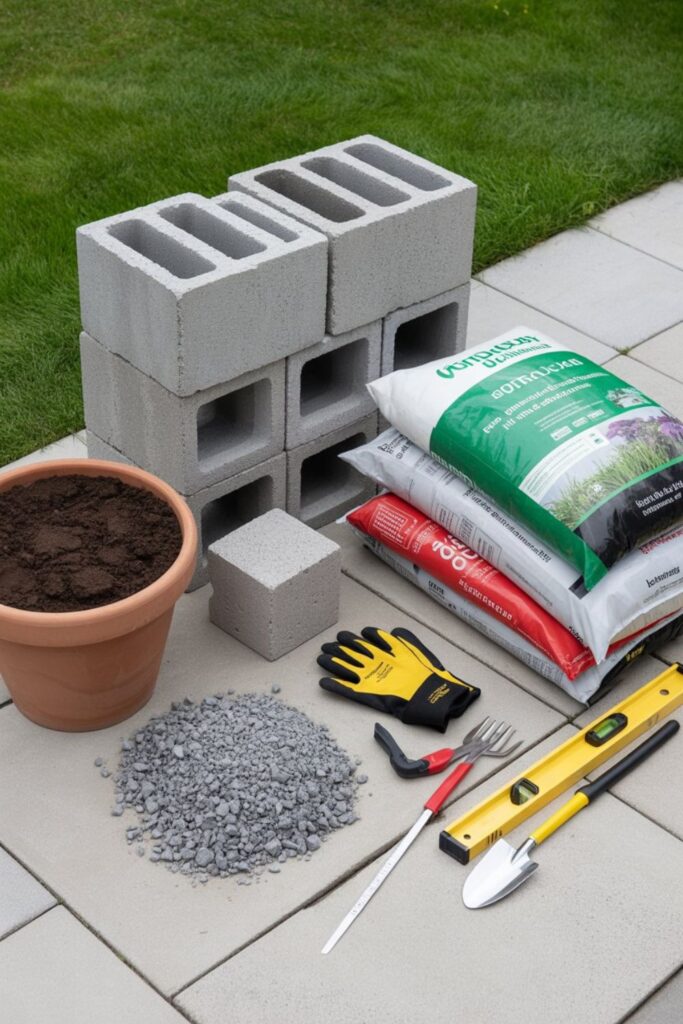
Standard concrete blocks measuring 8x8x16 inches work for nearly all garden applications. Verify blocks are rated for structural use rather than lightweight decorative versions that crumble under soil weight and moisture. Smooth-faced blocks look cleaner but textured versions cost less and function identically. Calculate quantities by sketching your design count blocks in each row, multiply by the number of rows high, then add 10% extra for breakage or adjustments.
New blocks cost $1.50-$3.00 each at home improvement stores. Used blocks from demolition sites or classified ads run 50-75% cheaper inspect carefully for cracks or significant deterioration before purchasing. Avoid vintage blocks manufactured before 1980 that may contain fly ash with trace heavy metals if growing edibles. Modern concrete blocks use standard aggregate and cement without concerning additives, making them perfectly safe for vegetable and herb gardens.
Creating the Perfect Soil Mixture
Soil mixture quality determines growing success more than any other factor. Never use garden soil alone; it compacts in raised bed environments and drains poorly. Instead, blend equal parts quality compost, peat moss or coconut coir, and perlite or vermiculite. This combination provides nutrients, moisture retention, and the fluffiness roots need. For a 4×8-foot bed one block high, budget 10-12 cubic feet of mixed soil.
Adjust ratios based on crops. Vegetables and herbs thrive in balanced mixes. Succulents and Mediterranean plants need grittier blends, increase perlite or add coarse sand for faster drainage. Heavy feeders like tomatoes benefit from extra compost. Leafy greens appreciate nitrogen-rich amendments like aged manure. Mix thoroughly before filling blocks to ensure consistency throughout. Moisten soil as you work dry materials resist wetting later and settle excessively, creating gaps and low spots that frustrate planting.
Step-by-Step Construction Process
Site Preparation and Foundation Building
Clear your construction area of grass, weeds, and debris. Remove sod 6-12 inches beyond your planned perimeter to prevent grass encroaching into beds. Check ground level using a long straight board and bubble level. Minor slopes are acceptable, but significant grade changes need correction. Standing water locations require better drainage or relocation foundations built in soggy areas settle unevenly and destabilize structures over time.
Excavate 2-4 inches deep across your marked footprint. Fill this depression with crushed stone, pea gravel, or coarse sand. This foundation preparation layer provides drainage while creating a stable, level base that prevents settling. Spread base material evenly, then compact it thoroughly using a hand tamper or by walking over it repeatedly. Proper compaction here prevents future problems rushing this step causes issues months later when blocks shift or tilt as loose material finally settles under weight.
First Row Installation and Leveling
Position landscape fabric over your compacted base, extending 6 inches beyond all sides. This barrier prevents weeds growing up into beds while allowing water to drain freely. Hold fabric in place with landscape staples or stones. Begin your first block at a corner, placing it carefully on the fabric. Use a quality level to verify the block sits perfectly flat in all directions front to back, side to side, and corner to corner.
Continue adding blocks around your perimeter, butting them tightly together. Check leveling every third block minimum. Even small tilts compound dramatically when stacking multiple rows. Adjust by adding or removing base material beneath blocks until everything sits perfectly level. This leveling precision matters; poor first-row installation causes every subsequent row to be off, creating structures that look sloppy and may become unstable. Take whatever time necessary to get this foundation row perfect before proceeding.
Stacking Additional Rows Properly
Stack second and third rows using staggered arrangement options like traditional bricklaying. Offset upper blocks by half a block length so vertical seams don’t align. This overlapping pattern dramatically increases structural strength by distributing weight across multiple lower blocks rather than concentrating it on seams. The staggered approach also looks more professional and intentional than aligned stacking.
Construction adhesive between layers adds security for permanent installations. Apply continuous beads around block perimeters before placing each upper row. Press down firmly and recheck leveling adhesive sets within minutes, making adjustments difficult afterward. For temporary or experimental gardens, skip adhesive to preserve future reconfiguration flexibility. Weight from soil and plants provides adequate stability for structures up to three blocks high without bonding, though corner stability improves significantly with adhesive or mortar.
Filling and Planting Your Garden
Strategic Soil Filling Techniques
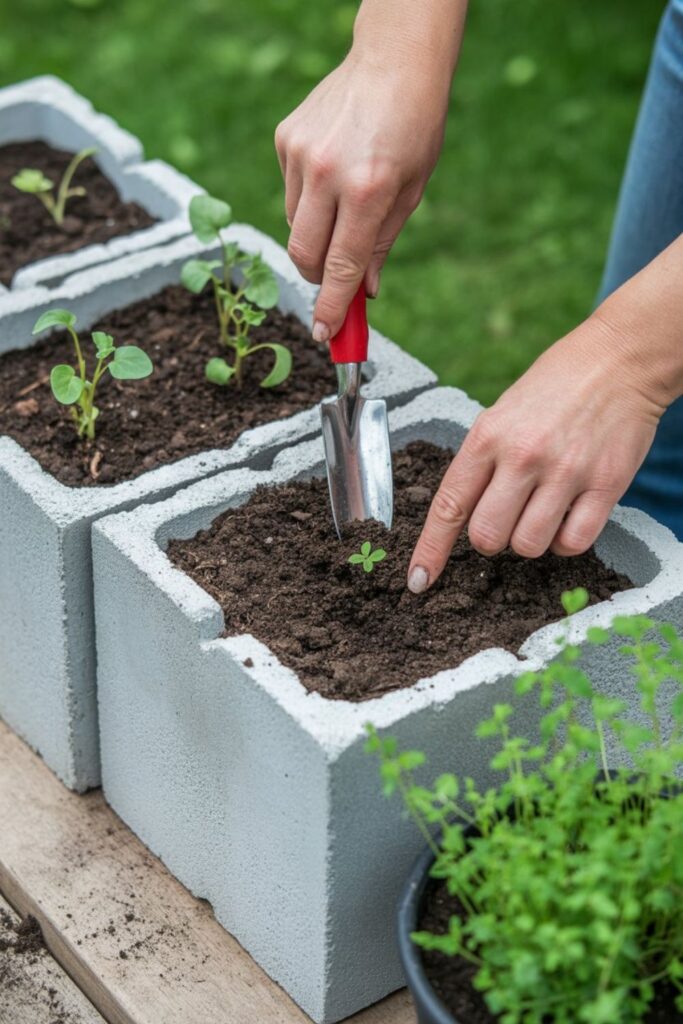
Start by filling bottom-row hollow cores with gravel if building on ground this improves drainage at the base layer. Then add your prepared soil mixture to block holes and the central bed area simultaneously. Work systematically to prevent soil bridging across gaps, which creates air pockets that settle later. Pour soil slowly, pausing to compact gently with your hands. Pack firmly enough to eliminate voids but not so tight that roots can’t penetrate easily.
As you add upper rows, fill each level’s planting pockets before stacking the next layer. This prevents settling that creates gaps between blocks after construction finishes. Moisten soil as you fill wet material packs more effectively and settle more uniformly than dry. Fill the central bed to within an inch of block tops. This lip contains water during irrigation and prevents soil from washing or blowing out. After complete filling, water deeply and let everything settle for 24-48 hours before planting. Top up any low spots that develop during this initial settling period.
Plant Selection and Placement Strategy
Choose plants matched to your available space and light conditions. Vegetables with compact growth habits bush tomatoes, peppers, lettuce, radishes, beans produce abundantly in confined raised bed volumes. Herbs represent ideal candidates for block planting pockets thanks to modest root systems. Plant sprawling herbs like thyme or oregano in outer holes where they cascade over edges. Upright varieties like basil or cilantro work anywhere.
Flowers and succulents transform utilitarian structures into ornamental showcases. Trailing flowers like petunias or sweet potato vine soften hard concrete edges with flowing growth. Succulents create living art requiring minimal maintenance; sempervivums, sedums, and echeverias produce colorful tapestries with water needed only every 2-3 weeks. Mix textures and colors throughout for visual interest that changes across seasons. Consider companion planting basil with tomatoes, marigolds with vegetables for pest deterrence, nasturtiums for attracting beneficial insects.
Design Variations and Creative Options
Vertical Garden Walls
Build vertical garden space by stacking concrete blocks horizontally with hollow cores facing outward. This orientation creates a grid of planting pockets perfect for succulents, compact herbs, or trailing flowers. A wall measuring 6 feet wide and 3 blocks high provides 18 planting opportunities in just 18 inches of depth. These living walls work brilliantly for small spaces, balconies, narrow side yards, or against blank fence sections that need visual interest.
Secure vertical structures by driving rebar through select block holes into the ground. Every third or fourth block should have this internal reinforcement on walls exceeding two blocks high. Paint alternating blocks in complementary colors for graphic punch, or leave natural gray for industrial-modern aesthetics. These stackable planters create privacy screens, divide outdoor spaces, or disguise unattractive views while growing edibles or ornamentals. The dual-function approach maximizes value from every square inch of property.
Integrated Seating and Multi-Purpose Structures
Combine growing space with functionality by building benches, tables, or borders with integrated planters. Create L-shaped seating by extending bed walls to create perpendicular sections, then bridge them with wooden planks or concrete pavers topped with cushions. Fill some hollow cores with soil and flowers while leaving others empty for tool storage. These multi-purpose structures serve both practical and aesthetic needs.
Build permanent outdoor work surfaces using cinder blocks as bases topped with weather-resistant materials. Counter-height structures (3-4 blocks high) provide comfortable standing workspace for potting, seed starting, or food preparation. Include lower shelves between ground level and work surface by positioning blocks strategically perfect for storing bags of soil, pots, or watering equipment. Add a small sink by cutting a hole in the work surface and connecting a garden hose. Suddenly you have a complete outdoor kitchen or potting station.
Customization and Aesthetic Enhancements
Painting and Finishing Techniques
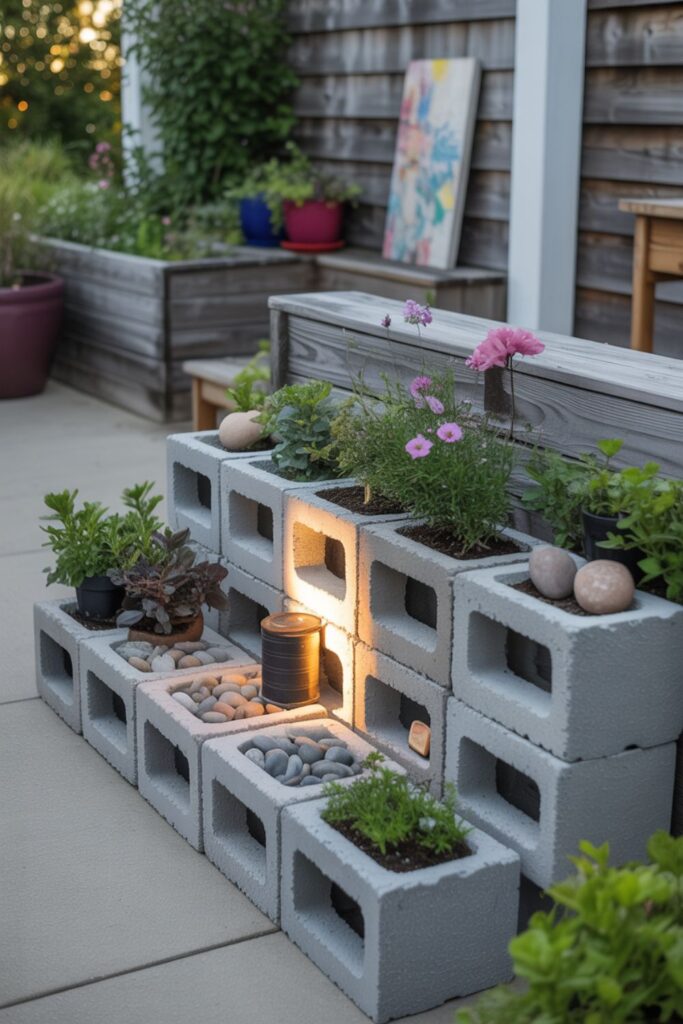
Transform plain gray concrete block landscaping with exterior masonry paint. Clean blocks thoroughly before painting pressure washing removes dust and debris that prevent proper adhesion. Apply masonry primer first, then two coats of exterior latex paint in your chosen colors. Bright hues create cheerful focal points. Earth tones help structures blend naturally with surrounding landscapes. Coordinate with nearby flowers, home exterior colors, or hardscape features for cohesive aesthetics.
Create patterns using painter’s tape stripes, chevrons, geometric designs, or color blocking add personality. Ombre effects graduating from dark at the base to light at the top make structures feel lighter and less imposing. Stencil plant names, decorative motifs, or inspiring quotes directly on blocks. Apply exterior sealing over finished paint to protect from weather, extend longevity, and ease future cleaning. Sealed surfaces resist staining from soil and water while maintaining vibrant colors for years despite constant sun exposure.
Adding Decorative Elements
Attach mosaic tiles to block faces using construction adhesive for Mediterranean flair. Create patterns, random designs, or mural-like images across entire structures. Cork trivets, metal wall art, or decorative brackets provide three-dimensional texture. These embellishments cost little but dramatically elevate industrial materials into intentional design statements that look custom-crafted rather than assembled from construction supplies.
Install solar lights in upper hollow cores to illuminate gardens after dark while showcasing your creative work. String café lights between taller sections or add landscape spotlights highlighting specimen plants. These lighting additions extend usability into evening hours while creating ambiance for outdoor entertaining. The combination of functional growing space, comfortable seating, and attractive lighting transforms basic cinder block structures into genuine outdoor living rooms that increase both property value and daily enjoyment.
Read More About: 24+ DIY Cinder Block Garden Ideas for Modern Outdoor Spaces
Maintenance Requirements and Care
Watering and Irrigation Management
Cinder block gardening structures dry faster than ground beds due to excellent drainage and exposure from multiple sides. Check soil moisture daily during hot weather by inserting your finger 2 inches deep in water when it feels dry at that depth. Deep, infrequent watering encourages roots to grow down into lower soil layers where moisture remains more consistent. Shallow, frequent sprinkling keeps roots near the surface where they’re vulnerable to heat stress and drought.
Install drip irrigation on timers for consistent moisture without daily attention. Run lines through central bed areas with emitters positioned near each plant. Set timers based on weather and season more frequently during summer heat, less during cool spring or fall periods. Soaker hoses offer budget-friendly alternatives delivering water directly to root zones. Mulch soil surfaces with straw, shredded bark, or compost to retain moisture, regulate temperature, and suppress weeds. This organic layer reduces watering frequency by 30-50% while improving soil structure as it decomposes.
Fertilizing and Soil Amendment
The confined soil volumes in raised bed systems deplete nutrients faster than expansive ground gardens. Feed regularly using liquid fertilizers every 2-3 weeks during active growth periods. Organic options like fish emulsion, seaweed extract, or compost tea provide balanced nutrition without chemical buildup or salt accumulation. Alternatively, incorporate slow-release organic granular fertilizers into soil at planting time, supplementing with additional applications at mid-season.
Top-dress beds annually with fresh compost, working it into the top 2-3 inches of soil. This practice replenishes organic matter, improves structure, feeds beneficial microorganisms, and adds nutrients naturally. Test soil pH every 2-3 years since irrigation water and fertilizers gradually alter acidity over time. Most vegetables and herbs prefer slightly acidic to neutral conditions (6.0-7.0 pH). Lime raises pH in acidic soil while sulfur lowers it in alkaline conditions. Apply amendments several months before planting when possible since they work slowly.
Seasonal Considerations and Long-Term Care
Winter Protection and Preparation
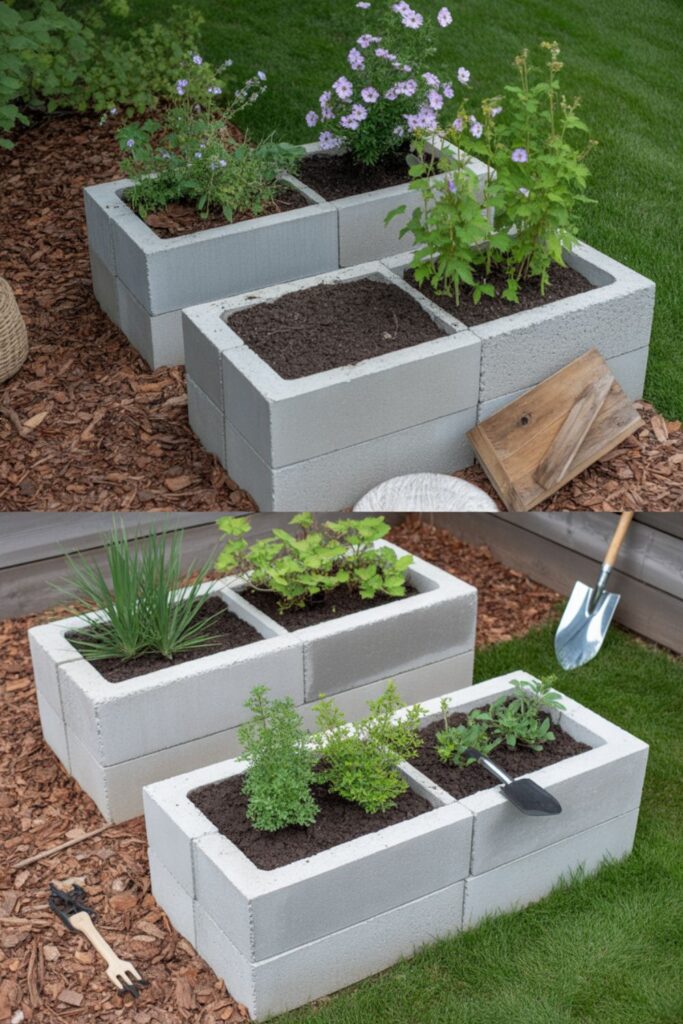
Remove spent annual crops after frost kills them. Pull dead plants completely, shake excess soil back into beds, and add clean plant material to compost piles. Diseased plants should go in trash rather than compost to prevent spreading pathogens. Clean out block planting pockets, refresh soil by mixing in compost, then replant with cool-season crops where climates permit. Lettuce, spinach, kale, and pansies tolerate significant cold, extending productive seasons well into winter in many regions.
The concrete blocks themselves resist frost resistance damage properly installed structures endure decades of freeze-thaw cycles without deterioration. Protect perennial plants by mulching heavily over block holes and bed surfaces. This insulation moderates temperature swings that stress roots. In extremely harsh climates experiencing prolonged deep freezes, consider wrapping entire structures with burlap or insulating fabric. Empty blocks completely in areas with severe winters if using them exclusively for annual displays, though this typically isn’t necessary for permanent raised beds.
Spring Renewal and Replanting
Begin spring preparation by removing winter mulch once temperatures consistently stay above freezing. Top up settled soil throughout beds and block holes some settling occurs naturally even in established gardens. Mix in fresh compost to replenish nutrients and organic matter depleted during the previous growing season. Prune back perennial herbs like rosemary, thyme, or oregano to encourage fresh, bushy growth.
Start seeds indoors 6-8 weeks before your last frost date for warm-season crops like tomatoes, peppers, and eggplants. Direct-sow cold-tolerant crops like lettuce, radishes, and peas as soon as soil can be worked. The elevated structure warms faster than ground gardens, allowing earlier planting to take advantage of this extended season. Refresh arrangement options by trying new plant combinations or swapping crop locations to practice rotation that reduces pest and disease pressure while balancing nutrient demands on your soil.
Frequently Asked Questions
How much weight can cinder blocks support in gardens?
Standard concrete blocks rated for structural use easily support the weight of soil, plants, and water in garden applications. A typical 8x8x16-inch block handles 1,700+ pounds of compression. Garden raised bed loads rarely exceed a few hundred pounds per block. Ensure adequate foundation preparation rather than worrying about block strength settling from poor bases causes problems, not block failure from weight.
Can I grow vegetables safely in cinder block gardens?
Yes, modern cinder blocks manufactured after 1980 are completely safe for growing edible crops. They contain standard concrete and aggregate without toxic additives. Concerns about fly ash in vintage blocks don’t apply to contemporary concrete block products. If using older blocks of unknown origin for edibles, line interiors with landscape fabric as a precautionary barrier, though this typically isn’t necessary.
Do cinder blocks make soil too alkaline for plants?
Concrete blocks can slightly raise soil pH initially as they leach small amounts of lime. This effect is minimal and temporary annual compost additions and organic matter decomposition naturally acidify soil over time. Test pH annually and adjust with sulfur if needed. Most garden plants tolerate the slight alkalinity anyway. Acid-loving crops like blueberries shouldn’t be grown in cinder block beds, but tomatoes, peppers, herbs, and flowers thrive without issues.
How long do cinder block gardens last?
Properly constructed permanent raised beds using quality concrete blocks last indefinitely decades at minimum with no maintenance beyond occasional cleaning. Unlike wood that rots, metal that rusts, or plastic that degrades, concrete withstands weather, moisture, and temperature extremes without deterioration. This longevity makes cinder block gardening genuinely sustainable despite industrial origins. Your initial investment serves multiple generations without replacement costs.
What’s the best way to arrange cinder blocks for small spaces?
Vertical stackable planters maximize production in limited areas. Build walls with blocks positioned horizontally, hollow cores facing outward for multiple planting pockets in minimal depth. Tiered pyramids provide growing space at multiple heights while consuming little ground area. Corner L-shaped configurations utilize awkward spaces efficiently. The modular garden system approach lets you create custom solutions fitting any odd-shaped or undersized area successfully.
Conclusion
Creating a garden with cinder blocks transforms how you grow plants elevating both the soil and your gardening experience. These versatile concrete blocks solve persistent challenges through superior drainage, extended seasons, modular flexibility, and permanent construction that outlasts every alternative. Whether building simple raised bed construction for vegetables, vertical walls for succulents, or integrated seating with planters, the fundamental advantages remain constant durability, affordability, and functionality working together to create genuinely sustainable gardens.
Start your cinder block gardening project today by assessing your space, defining your needs, and sketching initial designs. Calculate materials required, prepare your site properly, and dedicate one weekend to building the container garden alternative you’ve envisioned. Your investment in time and modest materials creates budget-friendly garden spaces that produce abundantly while looking intentional and attractive. The satisfaction of creating permanent, productive gardens with your own hands delivers value far beyond the money saved. You’re building a legacy that feeds, beautifies, and inspires for decades to come.