A Japanese Zen Garden To Creating Peaceful Meditation Spaces

You crave a peaceful sanctuary where the chaos of modern life fades into calming simplicity, yet your outdoor space remains a cluttered, purposeless area that adds stress rather than relieving it. The constant noise, visual distractions, and overwhelming demands of daily existence leave you mentally exhausted with nowhere to find genuine tranquility. Traditional gardens require endless maintenance that compounds your stress instead of alleviating it, and you lack confidence creating something as culturally significant as an authentic meditation space.
Learning how to make a Japanese zen garden provides the solution. These minimalist landscapes offer profound peace through carefully arranged rocks, meticulously raked gravel, and intentional simplicity that promotes meditation and mental clarity. This comprehensive guide reveals authentic zen garden design principles rooted in centuries of Japanese tradition, practical installation techniques requiring no special skills, and maintenance practices so simple they become meditative rituals themselves.
Understanding the Philosophy Behind Japanese Zen Gardens
Japanese zen garden design emerged from Zen Buddhist monasteries during the Muromachi period (1336-1573) as tools for meditation and spiritual contemplation. These karesansui garden landscapes literally “dry mountain water” use rocks, gravel, and minimal plantings to represent natural elements including mountains, islands, and flowing water without actual water features. The absence of living water symbolizes the impermanence of life while encouraging viewers to imagine movement and change through static elements.
Zen garden design principles emphasize asymmetry, simplicity, and naturalness reflecting core Buddhist concepts of finding beauty in imperfection and accepting the natural order. Every element carries symbolic meaning: large rocks represent mountains or islands, raked gravel patterns simulate ripples in water or ocean waves, and empty space symbolizes infinity and possibility. The act of creating and maintaining these gardens becomes as important as the finished result, with daily raking serving as moving meditation that clears mental clutter while bringing practitioners into present-moment awareness.
Research from the Journal of Environmental Psychology demonstrates that spending just 15 minutes in contemplative garden spaces reduces cortisol levels by up to 23% and significantly decreases anxiety compared to urban environments. This scientifically validated stress reduction explains why zen garden meditation practices continue gaining popularity worldwide among people seeking mental wellness without pharmaceutical intervention.
Essential Elements of Authentic Zen Gardens
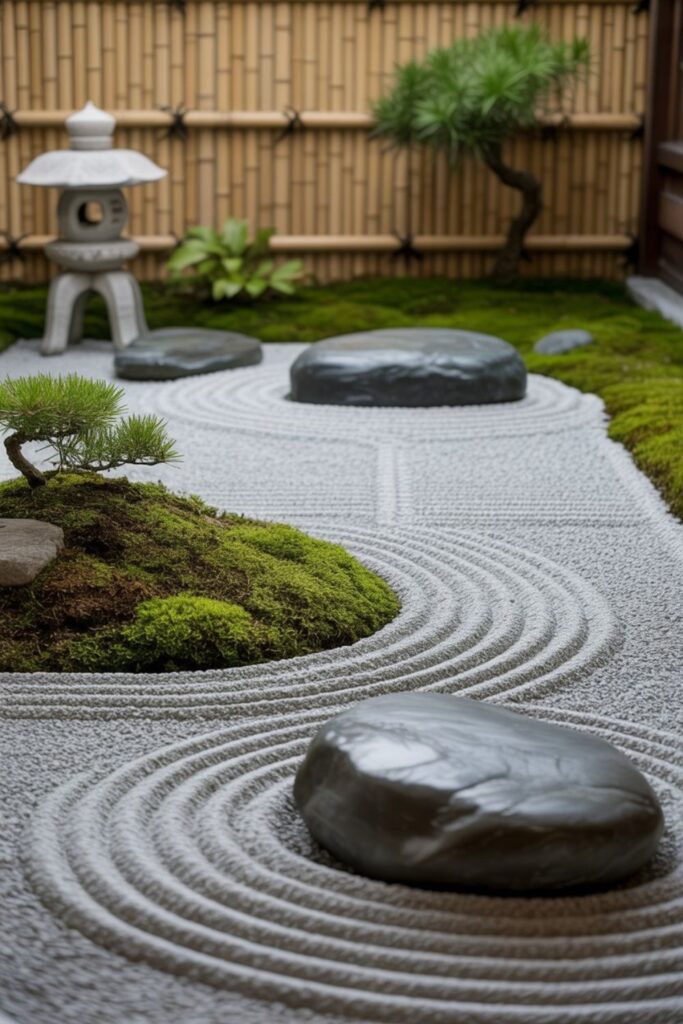
Traditional Japanese garden elements follow specific compositional rules refined over centuries of aesthetic development. Rocks form the structural foundation representing enduring natural features select weathered stones with interesting textures and shapes rather than smooth, uniform pieces. Arrange rocks in odd-numbered groupings (typically three, five, or seven) following triangular patterns that create balance and harmony through asymmetrical placement.
Raked gravel patterns surrounding rocks simulate water movement using various techniques representing different conditions. Straight parallel lines suggest calm, still water, concentric circles around stones indicate ripples from raindrops, and curved patterns evoke flowing streams or ocean currents. White or light-colored gravel reflects light creating bright, expansive feelings in confined spaces, while darker gravels suit shaded locations and larger gardens.
Moss grows naturally in damp, shaded areas providing the only “living” element in many traditional designs; its soft green contrasts beautifully against gray stones and pale gravel. Carefully pruned evergreen shrubs or small Japanese maples occasionally punctuate perimeters without dominating the composition. Bamboo fencing, stone lanterns, and simple wooden benches add functional elements while maintaining aesthetic purity. The key lies in restraint: every element must serve contemplative purposes rather than mere decoration, with abundant negative space allowing the mind to rest rather than process visual complexity.
Choosing the Perfect Location for Your Zen Garden
Successful zen garden meditation spaces require locations offering privacy, quietness, and protection from visual distractions. Survey your property identifying areas providing natural screening from neighbors, street traffic, and household activity. Corner locations work beautifully for small zen gardens since existing fences or walls provide two boundaries requiring less additional screening.
Flat terrain simplifies installation though gentle slopes add dimension and improve drainage naturally. Avoid low-lying areas where water collects creating muddy conditions incompatible with gravel surfaces and meditation practice. Most traditional karesansui garden designs prefer partial shade protecting gravel from excessive heat while preventing glare that disrupts contemplation. However, full sun works if you select heat-appropriate plants and provide occasional watering. Consider views from indoor spaces positioning your zen garden visible from windows or glass doors extends its calming influence throughout your home.
Accessibility matters for daily maintenance and regular use, so avoid locations requiring long walks through other areas. Morning sun exposure suits gardens used for sunrise meditation, while western orientations benefit afternoon and evening practitioners. The ideal location balances practical considerations with aesthetic appeal and functional meditation requirements creating spaces you’ll actually use rather than admire from a distance.
Planning Your Zen Garden Design and Layout
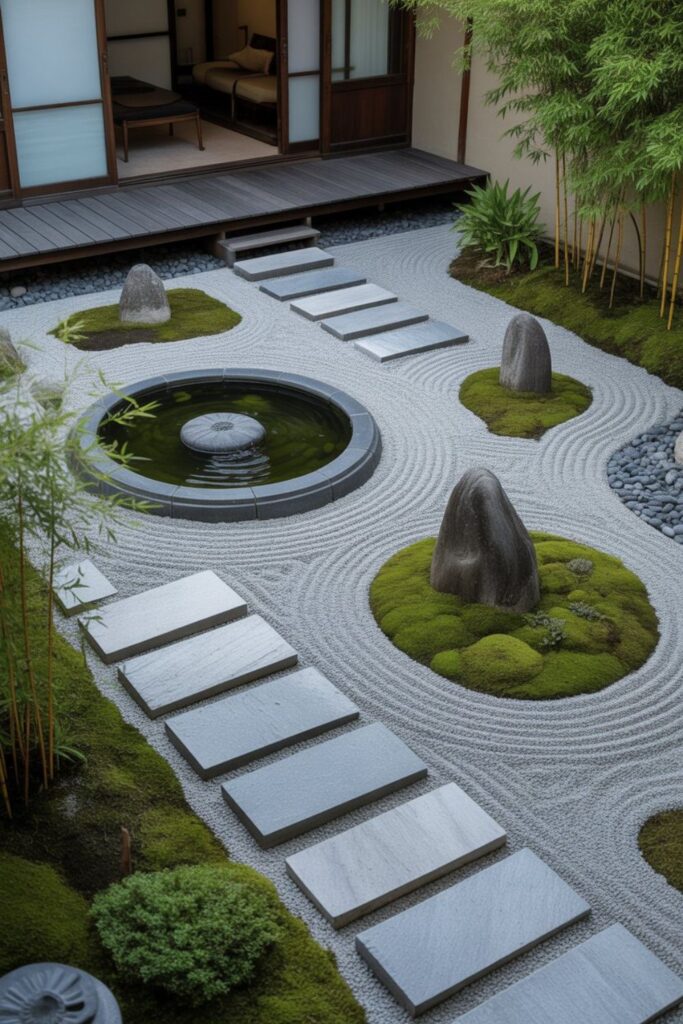
Begin planning by determining your available space: traditional monastery zen garden design principles scaled to massive courtyards, but contemporary adaptations thrive in areas as small as 6×8 feet. Sketch your proposed design on graph paper noting dimensions, existing features, and desired elements. Traditional gardens follow rectangular or square footprints with clearly defined borders, though organic shapes work for contemporary interpretations.
Apply the rule of thirds dividing your space into nine equal sections using imaginary grid lines. Position major rock groupings at intersecting points rather than centering them, creating dynamic tension fundamental to Japanese aesthetics. Plan stone placement establishing your composition’s “skeleton” before adding gravel and details. Designate approximately 70% of space for gravel allowing generous negative space that doesn’t overwhelm viewers with excessive elements. Include a viewing position either standing vantage point or seating area from which the entire composition appears balanced and complete. Consider whether you want a traditional enclosed design or more open layout integrating the surrounding landscape.
Decide on maintenance access ensuring you can rake the entire gravel surface without stepping on it and damaging patterns. Professional designers recommend creating three-dimensional models using cardboard boxes representing rocks, allowing you to experiment with arrangements before committing to permanent installation. This planning phase prevents costly mistakes while helping you internalize contemplative design principles that make authentic zen gardens transcend simple rock arrangements.
Read More About: Vibrant Flower Garden Design To Create Stunning Outdoor Spaces
Selecting and Arranging Rocks for Maximum Impact
Rock selection represents the most critical decision determining your garden’s authentic character and spiritual resonance. Visit stone yards examining hundreds of candidates seeking specimens with natural weathering, interesting textures, and symbolic meaning aligned with your contemplative intentions. Vertical rocks suggest mountains reaching skyward, horizontal stones evoke resting animals or low islands, and flat rocks create stable viewing platforms or stepping stones.
Japanese tradition classifies rocks into five categories: tall vertical (reaching heavenward), low vertical (supporting), arching (curved forms), reclining (horizontal), and flat (grounding). Authentic compositions include examples from multiple categories creating varied interest without monotony. Size matters significantly select at least one dominant “master stone” substantially larger than others establishing hierarchical relationships. Support stones positioned near the master create visual groups suggesting natural outcroppings rather than scattered, disconnected placements. Bury rocks one-third to one-half their height achieving stable placement that appears as though stones emerged naturally from the ground rather than being placed on top. Avoid perfect symmetry or evenly spaced arrangements that feel artificial and prevent contemplative engagement.
The classic three-rock arrangement positions the tallest stone off-center with two smaller supporting stones forming scalene triangles when viewed from the primary vantage point. Walk around your composition observing from multiple angles before cementing positions. Successful rock garden meditation spaces reveal new perspectives and interpretations depending on viewing position, encouraging prolonged contemplation that deepens with repeated visits.
Installing Your Zen Garden Foundation and Base
Proper foundation work ensures your Japanese zen garden remains beautiful and functional for decades with minimal intervention. Remove all existing vegetation, roots, and debris from your designated area excavating four to six inches deep. Level the bottom using a rake and compacting tool, checking grade with a carpenter’s level. Slight slopes toward perimeter edges improve drainage preventing water accumulation that disrupts gravel patterns.
Install landscape fabric covering the entire area blocking weed growth while allowing water penetration. Overlap seams by six inches preventing gaps where weeds might emerge. Cut X-shaped slits for rocks and plants rather than large holes compromising weed barrier effectiveness. Add a two-inch base layer of crushed rock or decomposed granite compacting it firmly creating a stable foundation supporting gravel surface. This base layer prevents the finished gravel from sinking unevenly and mixing with underlying soil. Set your selected rocks now before adding final gravel layer moving heavy stones after gravel installation disturbs carefully raked patterns.
Position rocks according to your design plan, adjusting placements until achieving perfect balance and harmony from all viewing angles. Many practitioners spend days or even weeks finalizing rock positions since these permanent elements define the entire composition. Photograph arrangements from multiple angles helping you evaluate whether adjustments improve or diminish overall impact. Trust your intuition during this process the correct arrangement feels inevitable once achieved, while problematic placements create subtle discomfort signaling need for revision.
Choosing and Installing Gravel for Traditional Patterns
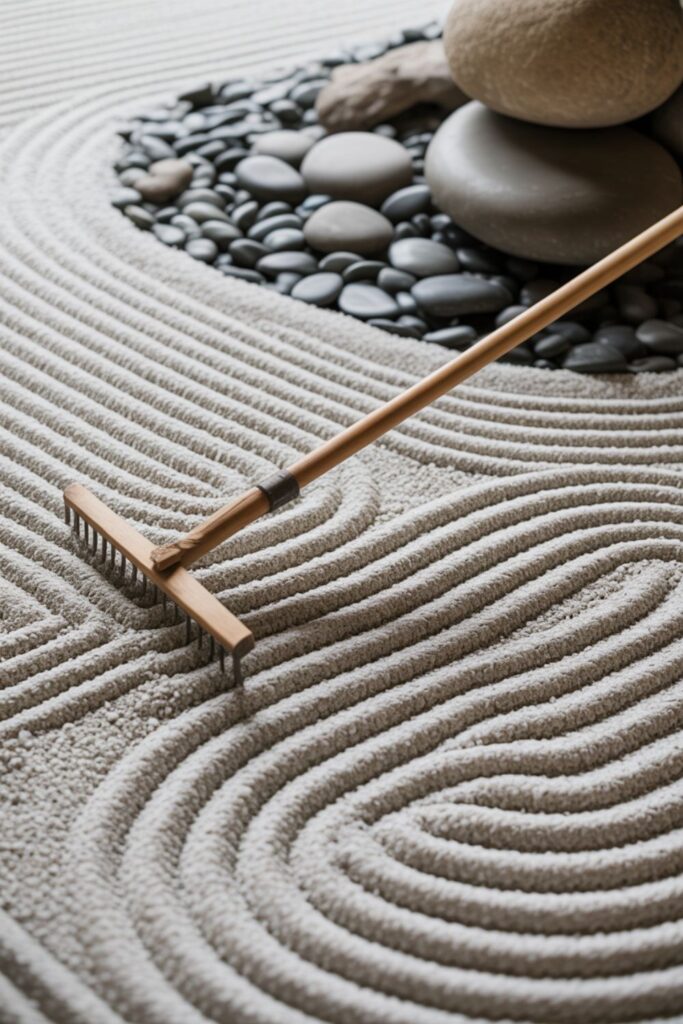
Gravel selection dramatically influences your zen garden’s appearance, maintenance requirements, and symbolic resonance. Traditional karesansui garden designs prefer crushed granite, decomposed granite, or fine white gravel creating smooth, rake-friendly surfaces. Particle size between one-eighth and one-quarter inch works best smaller gravels compact excessively, while larger stones resist raking and create rough textures.
White or cream-colored gravel maximizes light reflection creating bright, spacious feelings perfect for small gardens or shaded locations. Gray gravels suit contemporary aesthetics and hide staining from fallen leaves or debris better than light colors. Tan or beige gravels provide warmth coordinating beautifully with natural wood elements and earth-toned rocks. Calculate quantity by multiplying your garden’s square footage by 0.25 (for three-inch depth) yielding cubic feet needed; a 100-square-foot garden requires approximately 25 cubic feet or roughly one cubic yard of material. Spread gravel evenly across the prepared base achieving a uniform three-inch depth measured from fabric to surface.
Use a bow rake distributing material smoothly before introducing raked gravel patterns. Allow gravel to settle naturally for several days before attempting intricate raking fresh material lacks stability causing patterns to collapse immediately. Most practitioners wait one to two weeks permitting rain and gravity to compact the surface naturally. This patience pays dividends producing stable gravel beds that hold patterns beautifully rather than frustrating surfaces that defeat your best raking efforts.
Mastering the Art of Gravel Raking Techniques
Learning proper raking techniques transforms mechanical maintenance into spiritual practice that calms racing thoughts while producing beautiful patterns. Traditional bamboo rakes feature straight tines spaced approximately one inch apart creating uniform parallel lines, though modern metal landscape rakes work adequately for beginners. Stand at the garden’s edge reaching forward with the rake, never stepping onto the gravel surface itself.
Create basic parallel line patterns by dragging the rake straight across the gravel surface using steady, even pressure. Keep tines perpendicular to the ground preventing them from digging too deeply and disturbing the base layer beneath. Work systematically from one edge to the opposite maintaining consistent spacing between passes. Concentric circle patterns around rocks require rotating your body while maintaining a steady rake angle start close to the rock working outward in expanding rings. Wave patterns flowing throughout the garden demand broader sweeping motions creating gentle curves suggesting water movement.
Advanced practitioners develop signature styles incorporating multiple pattern types within single compositions, perhaps parallel lines in open areas with circular patterns surrounding rocks and flowing curves near edges. The meditative benefit comes from focused attention required maintaining pattern consistency while quieting mental chatter. Many practitioners rake daily discovering this repetitive action induces calm similar to walking meditation or breath work. Even “mistakes” creating irregular patterns offer opportunities practicing acceptance and non-attachment central to Zen philosophy. Tomorrow’s raking provides fresh opportunities for practice without yesterday’s imperfections carrying forward.
What Are the Traditional Symbols in Zen Gardens?
Traditional Japanese zen garden elements carry deep symbolic meaning derived from Buddhist philosophy and Japanese cultural aesthetics. Rocks represent mountains, islands, or animals depending on shape and placement vertical stones suggest sacred mountains where deities dwell, while horizontal groupings evoke sea turtles or cranes associated with longevity. The number of rocks holds significance with odd numbers preferred since even groupings feel static and complete, while odd arrangements create dynamic tension inviting continued contemplation.
Raked gravel patterns symbolize water in its various states, still ponds, flowing rivers, ocean waves, or rain ripples. Circular patterns around rocks indicate the spreading influence of enlightenment or the impermanence of all phenomena like ripples eventually fading. Straight lines represent stability and calm mind states achieved through meditation practice. Moss covering rocks or growing in shaded areas signifies the passage of time and nature’s quiet persistence regardless of human activity. Empty space proves as important as filled areas representing “ma” , the Japanese concept valuing pauses, intervals, and negative space where meaning emerges from absence rather than presence.
Stone lanterns symbolize enlightenment illuminating darkness, while bridges represent the journey from worldly existence toward spiritual awakening. Understanding these traditional meanings enriches your contemplative design practice though personal interpretations remain equally valid. Your garden should reflect your own spiritual journey rather than rigidly adhering to prescribed symbolism that holds no personal resonance.
How Do I Maintain a Zen Garden Throughout the Year?
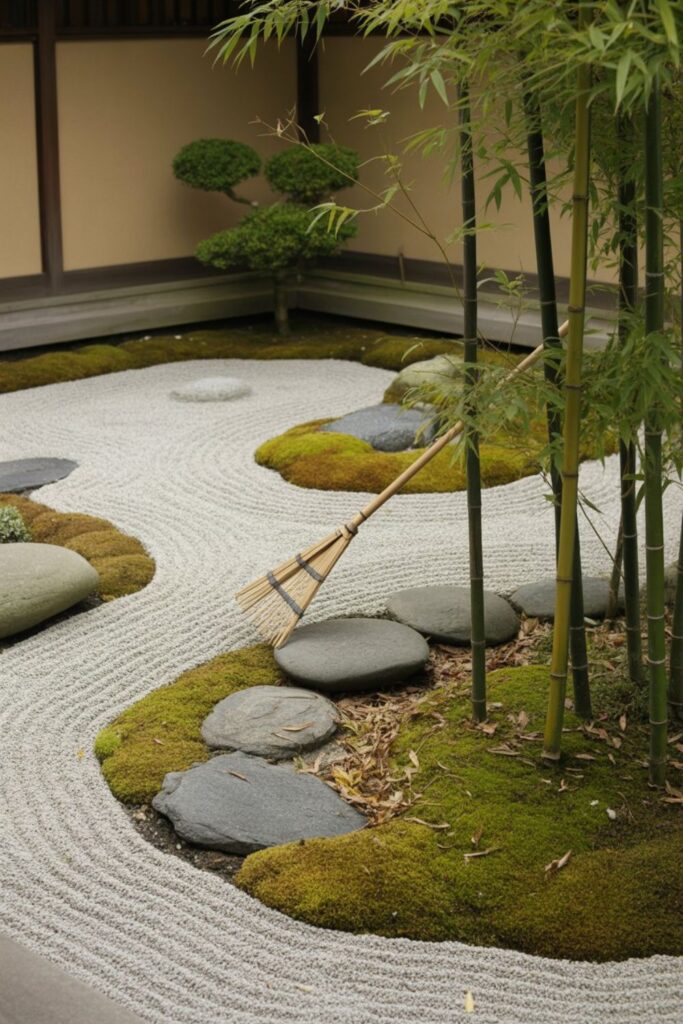
Zen garden meditation spaces require surprisingly minimal maintenance compared to traditional planted landscapes. Daily or weekly raking refreshes patterns while removing fallen leaves, twigs, and debris disrupting visual harmony. This practice takes just 10-20 minutes yet provides meditative benefits equal to sitting meditation for many practitioners. Use a leaf blower on low setting gently removing debris before raking, or hand-pick larger items to avoid disturbing gravel surfaces.
Replenish gravel every two to three years as material gradually compacts and disperses, adding one-inch top layers restoring original depth and fresh appearance. Pull weeds immediately when they appear before root systems establish prevention requires far less effort than removal once weeds mature. Inspect landscape fabric annually for tears or exposed areas allowing weed penetration, patching damage with additional fabric pieces. Trim moss carefully maintains desired coverage without allowing excessive spread that obscures rocks or invades gravel areas. Clean rocks occasionally using soft brushes and water removing algae, lichen, or mineral deposits that accumulate over time.
Most practitioners find maintenance becomes a rewarding ritual rather than tedious chore when approached with mindful awareness. Winter care in cold climates includes gently brushing snow from gravel without disturbing underlying material, while summer maintenance in hot regions may require occasional light watering, settling dust without creating mud. The simplicity of zen garden care contrasts sharply with high-maintenance traditional gardens requiring constant weeding, watering, deadheading, and seasonal plantings; this ease of maintenance contributes significantly to the stress reduction these spaces provide.
Adding Complementary Elements Without Overwhelming Simplicity
Carefully selected accessories enhance zen garden design principles without compromising essential simplicity. Stone lanterns (tōrō) traditionally positioned at garden edges or near water features symbolize enlightenment and provide subtle lighting for evening contemplation. Choose weathered granite or basalt lanterns rather than brightly colored ceramic versions that feel inauthentic. Tsukubai (stone water basins) originally used for ritual purification before tea ceremonies now serve as sculptural focal points even without functioning water elements.
Bamboo fencing creates privacy while maintaining natural aesthetics select aged, weathered bamboo over fresh yellow canes that appear artificially bright. Simple wooden benches positioned at optimal viewing angles invite extended meditation sessions, while flat stepping stones allow access without disturbing raked patterns. Small evergreen shrubs including Japanese black pine, juniper, or hinoki cypress positioned sparingly at perimeters provide living elements without dominating compositions. Single carefully pruned Japanese maple offers seasonal color interest with spring leaves, summer shade, and fall brilliance before winter reveals elegant branching structures.
Limit plantings to one or two specimens maximum, maintaining focus on rocks and gravel as primary elements. Avoid the temptation adding too many accessories every element competes for attention diminishing the negative space essential for contemplative experiences. When uncertain whether to include an element, leave it out. Authentic zen gardens achieve profound impact through restraint rather than abundance, with each carefully considered element contributing meaningfully rather than merely decorating empty spaces that require no decoration.
Creating Small Indoor Zen Gardens for Limited Spaces
Desktop Japanese zen garden installations bring contemplative benefits to apartments, offices, and homes lacking outdoor space. Purchase or build shallow wooden trays measuring 12×18 inches or larger with two-inch sides containing gravel and miniature rocks. Fill trays with fine white sand rather than gravel since a smaller scale demands finer materials maintaining proper proportions.
Select small rocks or polished stones from landscape suppliers, craft stores, or beach collecting pieces ranging from one to three inches create appropriate scale for tabletop designs. Arrange rocks following traditional principles using odd-numbered groupings and triangular compositions. Include a small rake sized appropriately for your tray many craft stores sell miniature bamboo rakes specifically designed for desktop gardens. Some practitioners create DIY rakes using wooden dowels and bamboo skewers achieving authentic appearance inexpensively. Position your indoor garden on stable surfaces where daily raking remains, convenient desk corners, side tables, or meditation room shelves work perfectly.
The act of raking miniature patterns provides identical meditative benefits as maintaining full-scale outdoor gardens, with the advantage of year-round accessibility regardless of weather. Many office workers rake their desktop gardens during stressful moments finding the brief practice resets mental states more effectively than coffee breaks. Indoor gardens also serve as excellent introductions to zen garden meditation practices before committing to expensive outdoor installations, allowing you to develop understanding and appreciation for these contemplative landscapes through hands-on experience requiring minimal investment.
Read More About: Small Garden With Rocks For Stunning Landscapes
What Is the Difference Between Zen Gardens and Regular Japanese Gardens?
Traditional Japanese zen garden designs represent one specific style within broader Japanese garden traditions. Zen gardens (karesansui) emphasize abstraction, minimalism, and dry landscape techniques using rocks and gravel symbolizing natural elements without actual water, ponds, or extensive plantings. These contemplative spaces designed for meditation prioritize simplicity and symbolic representation over literal recreation of nature.
In contrast, traditional Japanese stroll gardens (chisen kaiyushiki) feature actual ponds, streams, bridges, and diverse plantings creating miniature landscapes visitors explore following winding paths revealing carefully composed views at each turn. Tea gardens (roji) incorporate stone pathways, water basins, lanterns, and deliberate transitions preparing visitors mentally for tea ceremony through progressive movement from worldly concerns toward spiritual awareness. Courtyard gardens (tsuboniwa) maximize limited urban spaces using carefully selected plants, rocks, and often water features creating lush microclimates.
Each style reflects different aspects of Japanese culture and philosophy serving distinct purposes: zen gardens for meditation and contemplation, stroll gardens for aesthetic appreciation and physical movement, tea gardens for ceremonial preparation, and courtyard gardens for bringing nature into confined urban environments. Understanding these distinctions helps you determine which approach best suits your space, goals, and aesthetic preferences. Many contemporary designers blend elements from multiple traditions creating hybrid gardens reflecting personal interpretation rather than rigid adherence to historical precedents. Your garden should ultimately serve your needs and resonate with your spiritual practice regardless of strict categorical definitions.
Common Mistakes to Avoid When Building Your Zen Garden
Overcrowding represents the most frequent error undermining zen garden design principles. Beginners often fill every square inch with rocks, plants, or accessories eliminating the essential negative space that allows contemplative minds to rest. Remember that empty areas carry equal importance to filled spaces and resist the urge to add “just one more” element that tips the composition from serene to cluttered.
Using inappropriate materials including dyed gravels, glossy polished stones, or artificial decorations destroys authentic aesthetics while introducing garish colors incompatible with contemplative purposes. Stick with natural, weathered materials in earth tones rather than brightly colored products marketed as “zen garden” supplies. Poor drainage planning creates muddy conditions incompatible with gravel surfaces and meditation practice always instals proper base layers and fabric, preventing moisture problems. Centering major elements creates static, lifeless compositions lacking the dynamic tension fundamental to Japanese design use asymmetrical arrangements and odd-numbered groupings instead.
Neglecting scale produces gardens where rocks appear either too large and dominating or too small and insignificant select stone sizes appropriate to your overall garden dimensions. Skipping the planning phase leads to haphazard arrangements requiring expensive corrections once you recognize fundamental compositional flaws. Finally, approaching zen garden creation as purely decorative landscaping rather than spiritual practice misses the profound purpose these spaces serve. The process of designing, building, and maintaining your garden should cultivate mindfulness and peace rather than simply producing attractive outdoor features. When you honor the contemplative intentions underlying these traditions, your garden naturally evolves into an authentic meditation space transcending mere aesthetic achievement.
FAQs
How much does it cost to build a zen garden?
Most DIY Japanese zen garden projects cost $200-800 for small gardens (100-150 square feet) including gravel, rocks, fabric, and basic accessories. Gravel represents the largest expense at $30-80 per cubic yard, while feature rocks range from free (if you collect them yourself) to $50-200 each depending on size and type. Professional installations cost $1,500-8,000 depending on size, materials, and design complexity. Indoor desktop versions cost just $20-50 for trays, sand, and miniature rocks.
What type of gravel is best for zen gardens?
Crushed granite, decomposed granite, or fine white pea gravel works best for raked gravel patterns. Choose particle sizes between one-eighth and one-quarter inch smaller gravels compact excessively while larger stones resist raking. White or cream gravel creates a traditional bright appearance, while gray or tan suits contemporary designs. Avoid dyed gravels, large river rocks, or extremely fine sands that don’t hold patterns well.
How often should I rake my zen garden?
Traditional practitioners take daily moving meditation lasting 10-20 minutes. However, weekly raking suffices for casual users maintaining pattern integrity and removing debris. Some people rake only when patterns become degraded or before meditation sessions. The frequency matters less than approaching the practice mindfully rather than viewing it as a tedious chore.
Can I put plants in a zen garden?
Traditional karesansui garden designs use minimal or no plants, maintaining focus on rocks and gravel. However, small evergreen shrubs, carefully pruned Japanese maples, or moss add living elements without overwhelming simplicity. Limit plantings to one or two specimens positioned at perimeters rather than center stage. Many contemporary interpretations incorporate more plants while maintaining zen aesthetic principles.
Do zen gardens need full sun or shade?
Most zen garden meditation spaces prefer partial shade preventing gravel from becoming uncomfortably hot while reducing glare that disrupts contemplation. However, full sun works if you provide occasional watering for plants and avoid using your garden during peak afternoon heat. Full shade suits gardens featuring moss or ferns though gravel may accumulate moisture requiring additional drainage considerations.
Conclusion
Learning how to make a Japanese zen garden provides more than landscaping skills it opens pathways toward mindfulness, stress reduction, and spiritual growth rooted in centuries of contemplative tradition. The techniques covered here from stone placement and gravel selection to raking practices and symbolic meanings equip you with everything needed creating authentic meditation spaces regardless of experience level or available space.
Your zen garden journey begins with a single rake stroke across fresh gravel, transforming abstract concepts into tangible practices that calm racing thoughts and cultivate present-moment awareness. Start small if uncertainty holds you back, perhaps with a desktop version allowing you to experience these contemplative benefits before committing to outdoor installations. Remember that authenticity comes from sincere practice and personal connection rather than perfect technical execution of traditional rules. Your garden evolves alongside your spiritual journey, deepening in meaning and effectiveness as your meditation practice matures over months and years of daily engagement.