Front Yard Landscaping Ideas Florida: Design a Stunning Tropical Paradise

Your front yard landscaping ideas Florida success depends entirely on understanding the state’s unique climate challenges and opportunities. Most transplants from northern states quickly discover their traditional gardening knowledge doesn’t translate to Florida’s subtropical and tropical landscaping conditions. Between scorching heat, intense humidity, hurricane threats, and sandy soil that drains faster than you can water, creating beautiful landscapes requires completely different approaches than temperate regions.
The reality hits hard when expensive plants die within weeks or landscapes look bedraggled by summer’s end. Whether you’re in South Florida gardens territory, landscaping ideas Florida yards, or the panhandle, mastering region-specific strategies transforms your front yard into a thriving paradise that celebrates Florida’s natural beauty while withstanding the state’s demanding environmental conditions.
Understanding Florida’s Unique Growing Conditions
Florida encompasses three distinct USDA hardiness zones (8a through 11a) with dramatically different growing conditions. North Florida experiences occasional freezes requiring cold-hardy selections, while South Florida remains frost-free year-round, supporting truly tropical landscaping possibilities. Central Florida occupies the transitional zone where both temperate and tropical species can survive with proper microclimate awareness.
Soil composition across Florida tends toward sandy, fast-draining substrates lacking the organic matter and nutrients found in other regions. This characteristic demands different irrigation approaches and amendment strategies. Summer rainfall patterns deliver torrential afternoon storms followed by extended dry periods during winter months. Understanding these seasonal moisture variations proves critical for selecting appropriate native Florida plants and establishing irrigation schedules. The University of Florida IFAS Extension emphasizes that working with rather than against these conditions creates sustainable landscapes requiring far less intervention than fighting natural patterns.
Why Native Florida Plants Should Form Your Foundation
Native Florida plants evolved over millennia to thrive in the state’s challenging conditions without constant intervention. These species tolerate sandy soil, resist local pests and diseases, withstand humidity that promotes fungal issues, and survive drought periods without supplemental watering once established. Saw palmetto, coontie, Simpson’s stopper, and beautyberry provide structural backbone while supporting native wildlife that evolved alongside these plants.
The environmental benefits extend beyond reduced maintenance demands. Native Florida plants support pollinators, birds, and beneficial insects that struggle to utilize non-native ornamentals. Deep root systems improve soil stability during hurricanes while requiring less water than shallow-rooted exotics. The Florida-Friendly Landscaping program reports that landscapes incorporating 50% or more native species reduce water consumption by 30-50% while eliminating most pesticide requirements. These plants aren’t boring natives include spectacular bloomers, dramatic foliage plants, and architectural specimens that create distinctly Floridian aesthetics impossible to replicate elsewhere.
Best Palms for Florida Front Yards
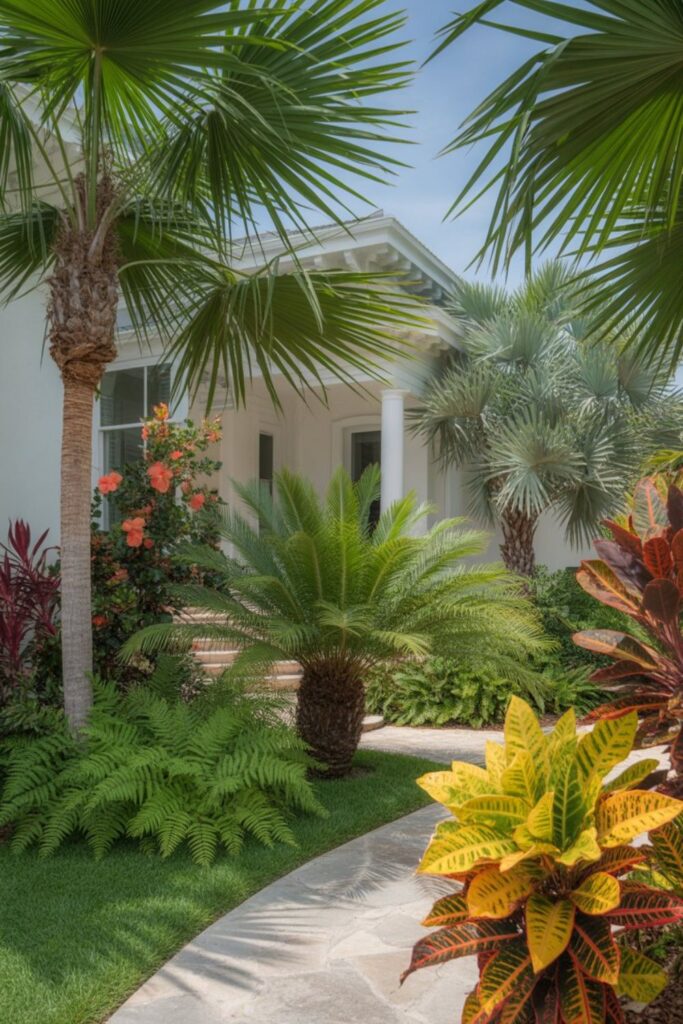
Palms define Florida landscapes more than any other plant group, offering instant tropical character and vertical drama. Sabal palm (Florida’s state tree) provides hurricane-resistant structure with native toughness and salt tolerance. These palms withstand winds that snap non-native species while requiring zero maintenance beyond occasional frond removal. Pindo palms offer cold hardiness for northern zones plus edible fruit attracting wildlife.
For smaller spaces, sago palms (technically cycads) create low-maintenance focal points under 8 feet tall. Foxtail palms deliver lush, full canopies in frost-free zones but demand protection in Central Florida yards during cold snaps. Queen palms provide classic feathery elegance though they suffer nutrient deficiencies in alkaline soil common to southern counties. Palms planted at proper depths in amended soil and mulched adequately establish faster and resist lethal yellowing disease better than stressed specimens. Space palms considering mature dimensions crowded specimens compete for resources and create awkward compositions as they grow.
Hurricane-Resistant Landscape Design Principles
Hurricane-resistant landscape planning protects both your property and neighbors’ during storm events. Select plants with flexible trunks and branches that bend rather than break in high winds. Native Florida plants like saw palmetto, wax myrtle, and cabbage palm evolved to withstand hurricanes and recover quickly from damage. Avoid brittle-wooded species like Laurel oak that become projectiles in storms.
Proper installation techniques matter enormously for wind resistance. Trees planted too deeply or with inadequate root systems topple easily. Staking should allow trunk movement that strengthens wood rather than rigid restraints that prevent natural taper development. Remove mulch volcanoes from tree bases and ensure roots spread laterally rather than circling. Hardscaping elements like pavers should be mortared or properly secured loose materials become dangerous projectiles in 100+ mph winds. The Florida Building Code landscaping guidelines recommend keeping large trees 15+ feet from structures to minimize damage risk during failures.
Read More About: 17+ Front Yard Landscaping Ideas Simple
Drought-Tolerant Gardens That Stay Beautiful
Drought-tolerant gardens align perfectly with Florida’s seasonal rainfall patterns and increasing water restrictions across the state. Succulents like agave, aloe, and various cacti thrive in full sun with sandy soil and minimal water. These architectural plants create modern, sculptural landscapes requiring virtually zero maintenance once established. Coontie palms provide lush foliage texture while surviving extended dry periods that would kill thirsty exotics.
Blanket flowers, gaillardia, and coreopsis deliver brilliant color through summer heat without daily watering. These native Florida plants bloom prolifically while attracting butterflies and beneficial insects. Silver buttonwood and sea grape tolerate both drought and coastal conditions, making them ideal for beachfront properties. Designing with drought-tolerant species doesn’t mean sacrificing beauty. Proper plant selection creates lush, vibrant landscapes that laugh at water restrictions while neighbors struggle to keep lawns alive during dry season. Group plants by water needs, placing thirstier specimens in smaller zones while expanding low-water areas throughout your yard.
Dealing With Florida’s Sandy Soil Challenges
Florida’s notorious sandy soil drains so rapidly that water and nutrients wash through before roots can absorb them. Amending soil with compost, aged manure, or quality topsoil improves water retention and provides the organic matter lacking in natural substrates. Work amendments 12-18 inches deep throughout planting beds rather than just in individual holes creating improved pockets surrounded by sand encourages root circling rather than outward expansion.
Mulch becomes absolutely critical in Florida landscapes for moisture retention and soil temperature moderation. Apply organic mulch like melaleuca, eucalyptus, or pine bark 3-4 inches deep, maintaining gaps around plant stems to prevent rot. As mulch decomposes, it gradually improves soil structure while feeding beneficial microorganisms. Refresh mulch annually or as needed Florida’s rapid decomposition rates due to heat and humidity consume organic materials faster than northern climates. The University of Florida research demonstrates that properly mulched beds retain moisture 40% longer than bare soil while reducing weed germination by 90%.
Salt-Tolerant Plants for Coastal Properties
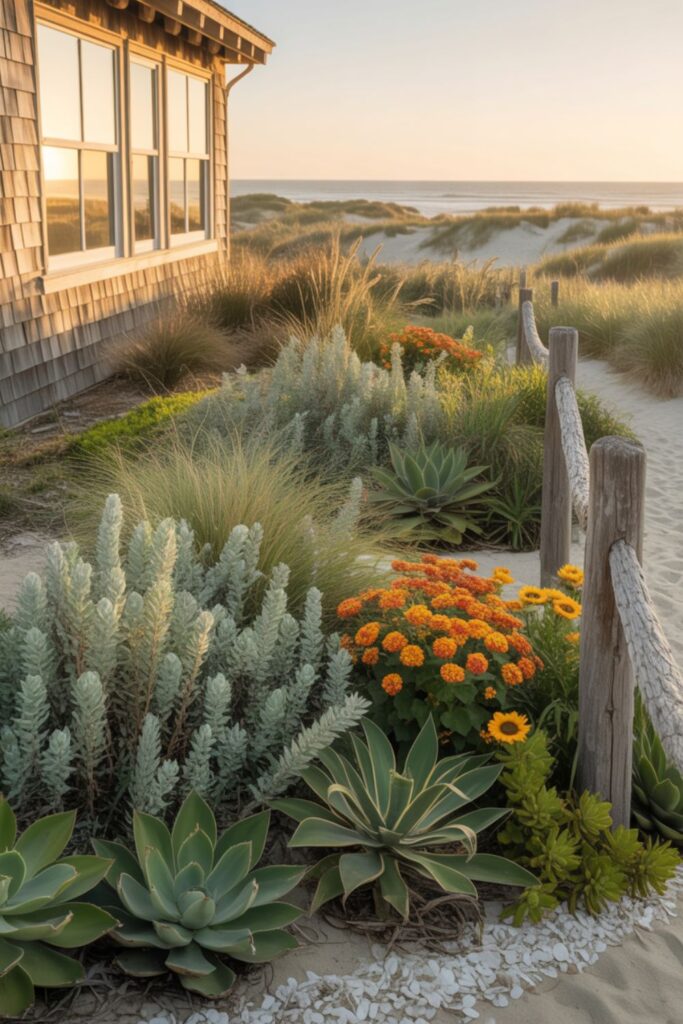
Coastal conditions introduce salt spray, brackish water tables, and constant winds that eliminate most traditional landscape plants. Salt-tolerant plants evolved to handle these challenges without the leaf burn, growth stunting, and death that affect intolerant species. Sea oats, railroad vine, and beach sunflower colonize dune areas while stabilizing soil against erosion. These tough groundcovers require zero care once established in beachfront locations.
Palms like coconut, silver saw palmetto, and pirates thrive in salty conditions that would kill most trees. Silver buttonwood, seagrape, and cocoplum provide screening and privacy while laughing at salt spray. For color, pentas, blanket flower, and dune sunflower deliver blooms despite harsh exposure. Understanding your property’s salt exposure level direct ocean spray versus inland properties with salty soil determines appropriate species selection. The Florida Sea Grant program maintains comprehensive lists of salt-tolerant plants rated by exposure tolerance, helping homeowners match plants to specific coastal conditions rather than losing specimens to environmental mismatch.
Creating Year-Round Color in Florida Landscapes
Year-round interest proves easier in Florida than cold-climate regions since frost rarely forces dormancy. Ixora, pentas, and firebush bloom continuously from spring through fall, delivering months of color from single plantings. These workhorses tolerate heat and humidity while attracting butterflies and hummingbirds. Rotate container plantings seasonally for entrance color that stays fresh winter pansies transition to summer begonias without gaps.
Foliage color often provides better value than flower-dependent schemes in Florida’s intense sun and humidity. Crotons offer outrageous leaf color combinations in tropical zones while ti plants provide burgundy, pink, and variegated options. Bromeliad foliage adds architectural interest plus surprising flower spikes lasting months. These tropical landscaping staples maintain interest regardless of blooming cycles. Strategic plant selection ensures something catches the eye every month: spring azaleas and bougainvillea, summer crape myrtles and hibiscus, fall poinciana seed pods, and winter camellia blooms create perpetual interest across Florida’s extended growing season.
Best Shrubs for Florida Foundation Plantings
Foundation plantings in Florida require species tolerant of reflected heat from walls, restricted root zones, and varying light conditions. Dwarf Walter’s viburnum provides evergreen structure under 6 feet with fragrant spring flowers and wildlife value. These tough native Florida plants handle shade to part sun while requiring minimal pruning. Indian hawthorn offers compact growth with spring blooms and tolerance for sun or shade.
Muhly grass creates dramatic foundation borders with airy texture and spectacular pink fall blooms. These ornamental grasses reach 3-4 feet, providing perfect height for under-window plantings without constant shearing. Fakahatchee grass delivers a similar impact in shadier locations. Avoid common mistakes like planting fast-growing species requiring constant pruning select varieties with mature sizes matching available space. Hurricane-resistant landscape approaches favor flexible-stemmed shrubs over rigid specimens that snap during storms. Space foundation plantings 3-4 feet from walls for air circulation and future growth rather than cramming plants against structures.
How to Design Low-Maintenance Florida Landscapes
Low-maintenance approaches in Florida start with eliminating or drastically reducing turf grass. St. Augustine and Bahia grasses demand regular mowing, edging, fertilizing, and pest management that consumes hours weekly. Replace lawn areas with native Florida plants, groundcovers, or mulched beds featuring drought-tolerant specimens requiring fraction of the attention. This strategy reduces water consumption, eliminates chemical inputs, and frees time for enjoyment rather than constant upkeep.
Automated irrigation systems programmed for Florida’s seasonal patterns ensure adequate moisture without daily attention. Zone systems deliver different amounts to sun versus shade areas and high-water versus drought-tolerant gardens. However, many Florida landscapes are over-irrigated and established native plantings often thrive on rainfall alone outside extreme droughts. The Florida-Friendly Landscaping program emphasizes that the most sustainable landscapes require progressively less intervention as plants mature and ecosystems stabilize. Design with this trajectory in mind rather than creating gardens dependent on constant inputs indefinitely.
Tropical Landscaping Themes and Styles
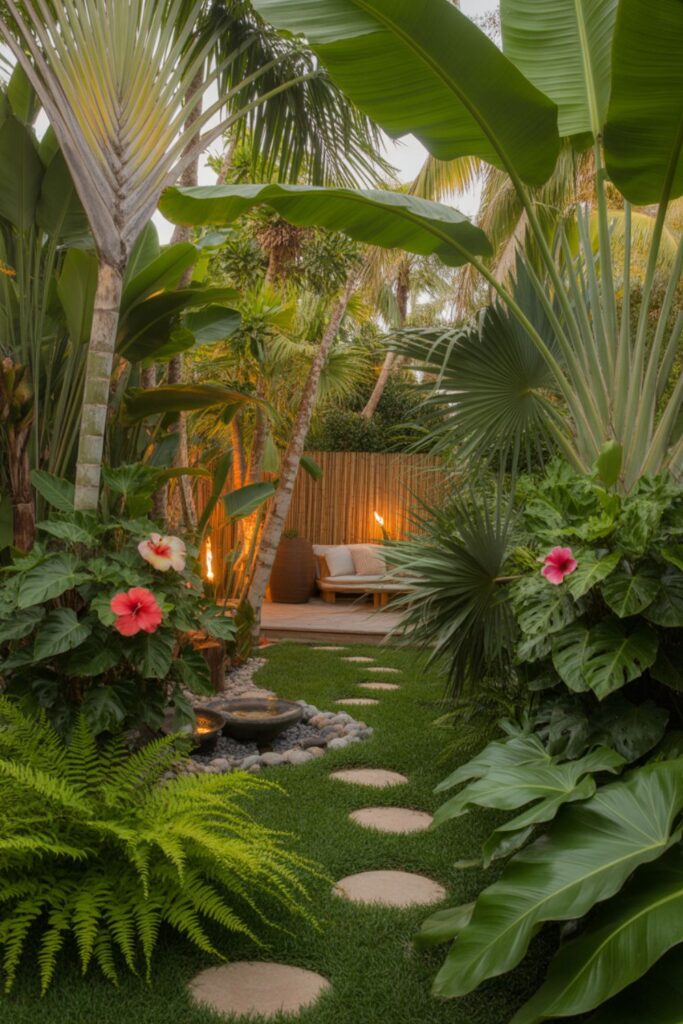
Tropical landscaping aesthetics range from formal resort-style to casual cottage gardens celebrating Florida’s laid-back lifestyle. Contemporary tropical designs feature bold foliage plants like bird of paradise, giant elephant ears, and architectural palms arranged in clean masses with minimal color accents. These sophisticated landscapes rely on texture and form rather than flower color, creating year-round impact with lower maintenance demands than bloom-dependent schemes.
Cottage tropical styles mix flowering shrubs, colorful foliage plants, and informal arrangements that feel lush and abundant. Hibiscus, ixora, crotons, and variegated gingers create exuberant combinations celebrating Florida’s capacity for lavish growth. Key West style incorporates painted fences, nautical elements, and pastel color schemes with relaxed plantings featuring fragrant gardenias, jasmine, and plumeria. Matching landscape style to architectural character creates cohesive presentations; Mediterranean homes benefit from formal symmetry while cottage-style houses suit casual, overflowing gardens. Regional landscape traditions also inform appropriate choices South Florida gardens embrace fully tropical palettes while panhandle yards incorporate more temperate elements.
Dealing With Florida’s Extreme Heat and Humidity
Florida’s summer heat index regularly exceeds 100°F with humidity approaching saturation conditions that stress plants and gardeners alike. Select species evolved for these extremes rather than forcing temperate-zone plants to survive hostile conditions. Native Florida plants and true tropicals handle heat and humidity that would kill roses, peonies, and other northern favorites. Position heat-sensitive plants on eastern exposures receiving morning sun but afternoon shade during peak intensity.
Mulch moderates soil temperatures that can exceed 140°F in direct sun, preventing root damage and moisture loss. Light-colored mulch reflects heat better than dark materials in intense sun. Adequate spacing between plants allows air circulation that reduces fungal disease pressure in humid conditions crowded plantings trap moisture and promote pathogens. Water during early morning hours so foliage dries before nightfall, reducing disease risk. Understanding that Florida landscapes battle conditions unknown in temperate zones prevents frustration when applying inappropriate strategies that work elsewhere but fail miserably in subtropical heat and humidity.
Best Groundcovers to Replace Grass
Grass alternatives reduce maintenance while creating interesting textures impossible with turf. Sunshine mimosa creates living carpet with delicate foliage and pink powder-puff flowers, spreading quickly in full sun. This native groundcover requires zero mowing and minimal water once established. Asiatic jasmine provides evergreen coverage in sun or shade, though it lacks the native wildlife benefits of indigenous alternatives.
Perennial peanut offers nitrogen-fixing properties that improve soil while creating dense coverage with cheerful yellow flowers. This legume thrives in sun with sandy soil, spreading underground rather than by seed. Beach sunflowers colonise quickly in coastal conditions, providing golden flowers attracting pollinators. For shade, ferns like sword fern and holly fern create lush, tropical textures requiring no mowing and tolerating dry soil under trees where grass struggles. Converting lawn areas to groundcover plantings eliminates 90% of turf maintenance while creating more interesting landscapes celebrating Florida’s native plant diversity.
Hardscaping Ideas for Florida Climate
Hardscaping provides permanent structure that withstands Florida’s challenging conditions better than high-maintenance plantings. Pavers, natural stone, and decorative concrete create patios, walkways, and entertainment areas that require no watering, mowing, or pest control. Permeable paving options allow water infiltration, reducing runoff during torrential rainfall events while meeting increasingly strict stormwater regulations.
Decorative rock and gravel work beautifully in drought-tolerant gardens, providing heat-reflective surfaces and desert-inspired aesthetics. Coral rock common to south Florida creates stunning walls and borders with regional authenticity. Pressure-treated or naturally rot-resistant wood like cypress builds hurricane-resistant structures when properly secured. Avoid treated lumber rated only for ground contact in non-Florida climates; the combination of heat, humidity, and wood-destroying organisms requires premium materials rated for severe exposure. Metal arbors, trellises, and decorative features withstand conditions that destroy lesser materials within years. Quality hardscaping represents significant upfront investment but eliminates ongoing maintenance costs while providing structure that mature plantings soften over time.
What About Irrigation Requirements
Irrigation needs vary dramatically across Florida based on rainfall patterns, soil types, and plant selections. Summer rainfall often provides adequate moisture in central and south Florida, while winter dry season requires supplemental watering. North Florida receives more consistent rainfall distribution but less total annual precipitation. Smart irrigation controllers with weather sensors prevent watering during rainfall events, dramatically reducing waste and utility costs.
Drip irrigation delivers water directly to root zones with minimal evaporation loss, ideal for Florida’s evaporation rates that can exceed 6 inches monthly during summer. Micro-spray emitters work well for larger shrubs and palms while conserving water compared to broadcast sprinklers. Zone systems allow different watering rates for sun versus shade and new plantings versus established landscapes. Most Florida counties restrict irrigation to specific days and times to check local ordinances before designing systems. The Florida-Friendly Landscaping approach emphasizes that landscapes properly designed with appropriate plant selection and mulch application require substantially less irrigation than conventional designs attempting to maintain temperate-zone aesthetics in subtropical conditions.
Attracting Wildlife With Native Plantings
Native Florida plants support specialized relationships with native wildlife that can’t utilize non-native ornamentals. Milkweed species feed monarch butterfly caterpillars exclusively; these plants prove essential for maintaining migrating populations. Firebush, coral honeysuckle, and native salvia provide nectar for hummingbirds and butterflies while supporting beneficial predatory insects that control pests naturally.
Coontie palm hosts atala butterfly larvae while saw palmetto berries feed numerous bird species. Native oaks support hundreds of caterpillar species that become protein sources for nesting birds. Creating wildlife habitat doesn’t mean messy landscapes thoughtfully designed native plantings offer beauty while supporting ecosystems. Eliminate pesticide use since beneficial insects prove as susceptible as pests. Provide water sources like birdbaths or small fountains critical during the dry season. Layer plantings vertically from groundcovers through shrubs to trees, creating the structural diversity that accommodates varied species. The National Wildlife Federation certifies Florida-Friendly yards meeting habitat criteria, providing recognition for conservation-minded landscaping approaches.
Managing Pests and Diseases in Florida Gardens
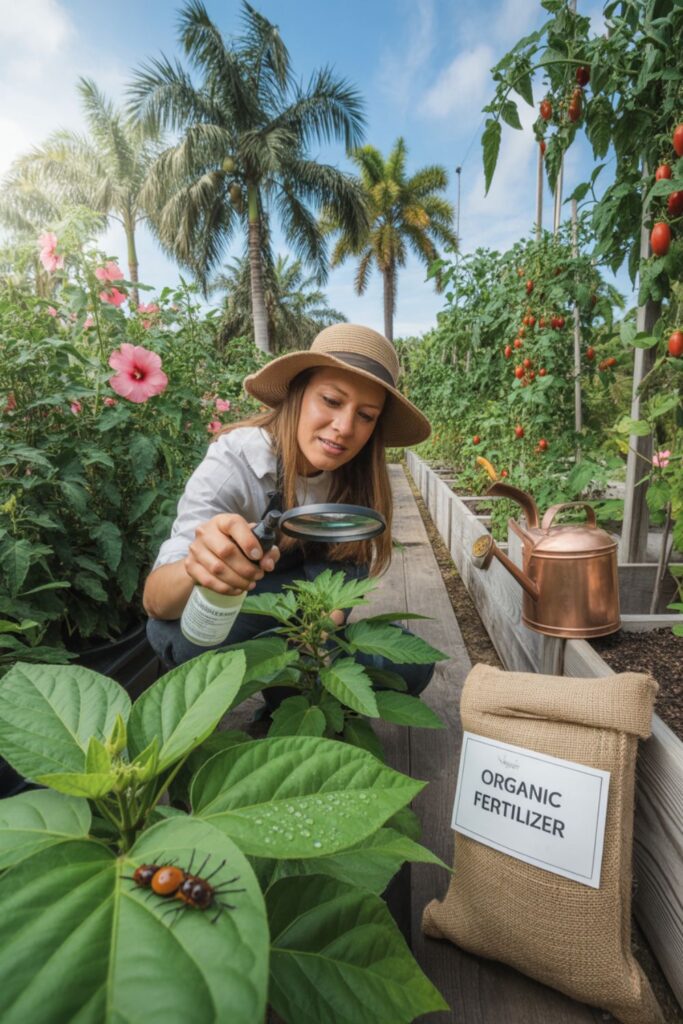
Florida’s year-round growing season and humidity create paradise for pests and diseases alongside desirable plants. Whiteflies, aphids, and scale insects reproduce continuously without winter die-off. Fungal diseases like powdery mildew and root rot thrive in humid conditions. Prevention through plant selection proves more effective than treatment after problems develop. Choose disease-resistant varieties and species naturally adapted to Florida conditions rather than fighting to keep susceptible plants alive.
Cultural practices reduce pest pressure without chemicals. Adequate plant spacing improves air circulation, reducing fungal disease development. Avoid overhead watering that leaves foliage wet overnight. Remove diseased material promptly before pathogens spread. Encourage beneficial insects by avoiding broad-spectrum pesticides, ladybugs, lacewings, and predatory wasps control aphids and caterpillars naturally. When intervention becomes necessary, start with least-toxic options like insecticidal soaps and horticultural oils before escalating to stronger materials. University of Florida IFAS Extension provides free pest identification services and treatment recommendations specific to Florida conditions rather than generic advice inappropriate for regional challenges.
Lighting Design for Florida Outdoor Spaces
Landscape lighting extends Florida’s desirable outdoor living season into evening hours while enhancing security and aesthetics. Uplighting palms creates dramatic silhouettes showcasing architectural trunks and fronds. These signature Florida trees become stunning focal points after dark when properly illuminated. Path lighting guides movement safely while defining landscape edges and walkways.
LED fixtures consume minimal electricity while lasting decades without bulb replacement critical in Florida’s heat that shortens traditional bulb lifespan. Solar-powered options eliminate wiring requirements for pathway and accent lighting in sunny locations. However, solar performance decreases in shady conditions under tree canopies. Low-voltage systems provide safety and flexibility for DIY installation without electrician licensing. Modern color-changing fixtures allow seasonal adjustments and holiday displays without fixture replacement. Quality marine-grade fixtures resist coastal corrosion better than standard landscape lighting. Proper lighting design highlights architectural features, specimen plants, and entertainment areas while avoiding over-lighting that creates harsh, commercial appearances rather than inviting residential ambiance.
Read More About: 20+ Front Yard Landscaping Ideas Curb Appeal
Common Mistakes Florida Landscapers Make
Transplants from other regions commonly attempt recreating landscapes from former homes using plants inappropriate for Florida conditions. Azaleas, boxwoods, and roses that thrived up north struggle with Florida’s heat, alkaline soil, and disease pressure. This mismatch creates constant battles requiring excessive inputs with disappointing results. The solution involves embracing Florida’s unique character through appropriate plant selection rather than fighting natural conditions.
Overwatering ranks among the most common errors Florida’s sandy soil drains rapidly, encouraging excessive irrigation that promotes root rot and fungal diseases. Many landscapes are watered daily when weekly sessions would prove adequate for established plantings. Planting too deeply kills countless trees and shrubs root flare should remain visible at soil surface. Inadequate mulch application allows weed germination and moisture loss, while excessive mulch volcanoes against stems promote rot. Understanding Florida-specific requirements rather than applying general landscaping principles prevents these costly mistakes that undermine landscape success despite considerable effort and expense.
Regional Differences: North, Central, and South Florida
North Florida encompasses zones 8a-9a with occasional freezes requiring cold-hardy plant selection. Native azaleas, camellias, and southern magnolias thrive here but suffer in south Florida’s heat. Deciduous trees like maples provide fall color impossible further south. Central Florida yards occupy transitional zones where both temperate and tropical species survive with microclimate awareness. Protecting tender tropicals during occasional freezes allows expanded plant palettes.
South Florida gardens exist in essentially frost-free zones 10a-11a supporting true tropical landscaping with bougainvillea, hibiscus, and coconut palms impossible further north. However, summer heat and humidity exceed even central Florida’s conditions, requiring heat-tolerant selections. Coastal areas across all regions share salt exposure challenges while interior locations avoid this complication. Understanding your specific region’s conditions and USDA zone prevents selecting plants marginally hardy in your location specimens stressed by environmental mismatch require constant intervention and often fail despite heroic efforts. Local university extension offices provide region-specific plant recommendations based on decades of performance trials in actual Florida conditions.
FAQ
What are the best plants for Florida front yards?
Native Florida plants like coontie, muhly grass, firebush, and Walter’s viburnum provide proven performance with minimal maintenance. Palms such as sabal palm and pindo palm add vertical drama and hurricane resistance. For color, pentas, blanket flower, and ixora bloom continuously through Florida’s extended growing season while tolerating heat and humidity that defeat many ornamentals.
How do I landscape a front yard in Florida on a budget?
Start with native Florida plants that establish quickly without expensive amendments and survive on rainfall after the first year. Use mulch liberally to suppress weeds and retain moisture. Divide and transplant existing perennials to fill spaces rather than purchasing new plants. Shop end-of-season sales at garden centers when prices drop 50-75% on healthy specimens that establish before next growing season.
What grass grows best in Florida front yards?
St. Augustine grass tolerates Florida’s conditions best with varieties like Floratam offering chinch bug resistance. Bahia grass requires less maintenance but provides a coarser texture. Zoysia grass tolerates both sun and moderate shade while requiring less mowing. However, reducing lawn area in favor of native plantings and drought-tolerant gardens significantly decreases maintenance demands while creating more interesting landscapes.
How often should I water my Florida landscape?
Established landscapes with appropriate plant selection often thrive on rainfall alone outside extended droughts. New plantings require daily watering for 2-3 weeks, then gradually reduce frequency while increasing duration. Most established landscapes need 1-2 inches weekly from combined irrigation and rainfall. Water early morning to reduce disease pressure, and adjust seasonally winter typically requires less irrigation than summer despite lower rainfall due to reduced evapotranspiration.
What are the most hurricane-resistant landscape plants?
Native Florida plants evolved to withstand hurricanes and recover quickly from damage. Sabal palms, saw palmetto, live oak, and native shrubs like wax myrtle offer superior wind resistance. Avoid brittle-wooded trees like Laurel oak and Bradford pear that break easily. Flexible-stemmed plants bend rather than snap during high winds, making them safer choices for hurricane-prone regions.
Can I grow a tropical garden in all of Florida?
True tropical landscaping thrives in frost-free zones 10a-11a covering south Florida. Central Florida supports many tropicals with cold protection during occasional freezes. North Florida requires cold-hardy selections though tropical aesthetics remain possible using plants like needle palm, hardy hibiscus, and windmill palm that tolerate brief freezes while providing tropical appearance.
Conclusion
Mastering front yard landscaping ideas Florida requires abandoning conventional approaches that work elsewhere but fail in the state’s unique conditions. Success comes from embracing rather than fighting Florida’s challenges: intense heat, unpredictable rainfall, sandy soil, and hurricane threats. When you select appropriate native Florida plants, design hurricane-resistant landscapes, and implement drought-tolerant strategies suited to regional conditions, your front yard transforms into a thriving showcase that celebrates the state’s natural beauty while requiring manageable maintenance inputs.The most sustainable Florida landscapes work with natural conditions rather than attempting to recreate gardens from different climates. Whether you’re creating tropical landscaping in south Florida, transitional gardens in central Florida yards, or cold-hardy designs in the panhandle, understanding regional differences and selecting appropriate plants ensures success. Your Florida front yard offers unique opportunities unavailable elsewhere year-round growing seasons, spectacular palms, and vibrant color impossible in colder climates. By applying these proven strategies and learning from regional expertise rather than generic advice, you create landscapes that thrive beautifully while supporting local ecosystems and requiring far less intervention than conventional approaches.