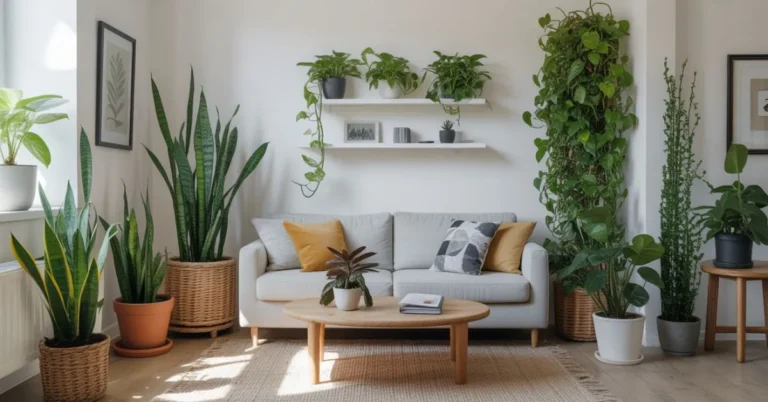
20+ Landscaping Ideas With Pots for Outdoor Spaces
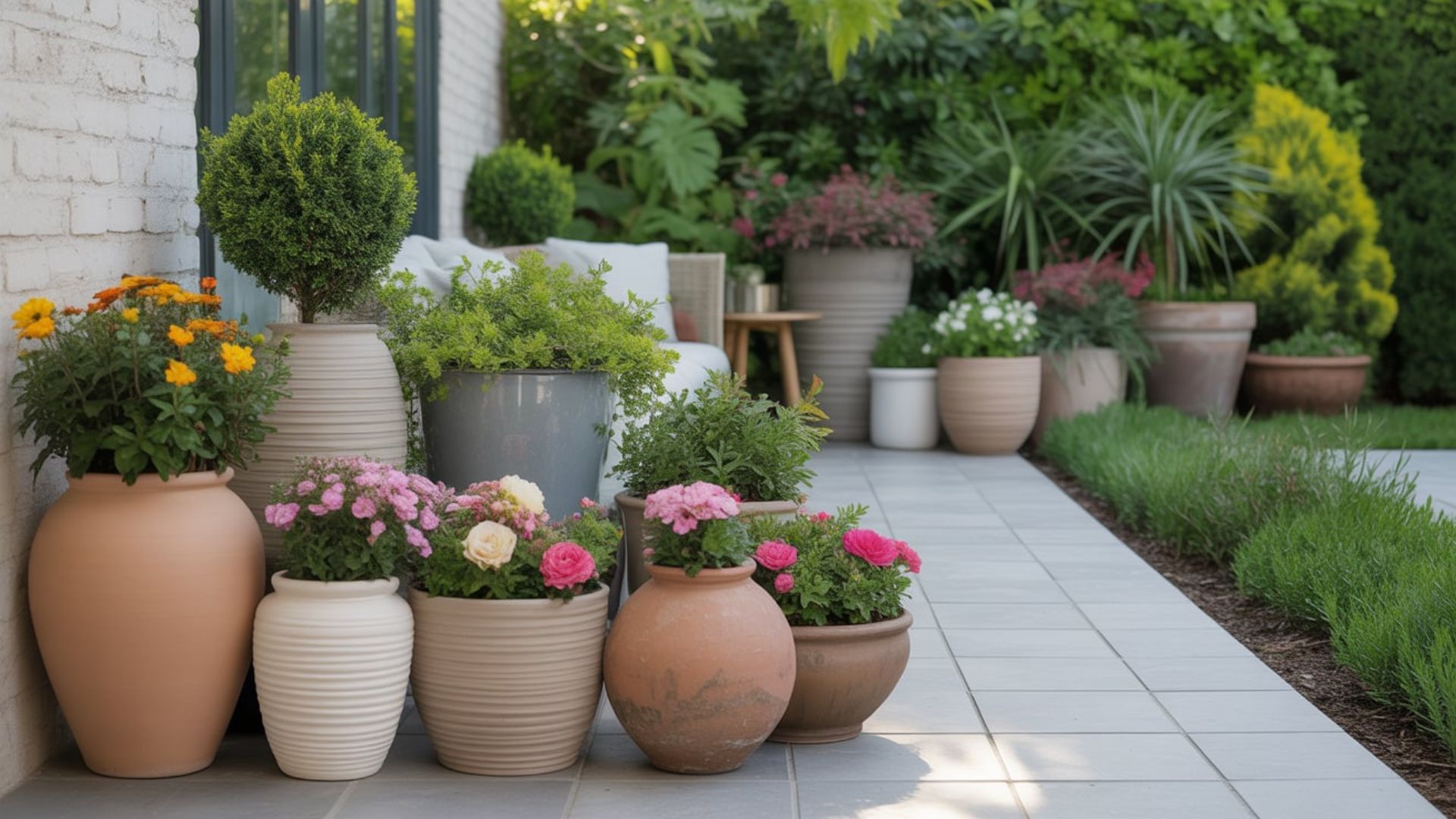
Your outdoor space feels disconnected and lacks the polish seen in magazine spreads. You’ve planted a few random pots over the years, but they sit scattered without purpose, with different sizes, clashing styles, and no cohesive vision tying them together. The result feels amateur rather than intentional, and guests barely notice your efforts despite the time and money invested in individual containers.
Walking through neighborhoods with stunning landscapes makes the frustration worse. You notice how professional designs use landscaping ideas with pots to create layers, define spaces, and add personality without permanent installations. Your hodgepodge collection can’t compete with their coordinated arrangements that transform porches, patios, and pool areas into magazine-worthy outdoor rooms. The gap between what you’ve achieved and what’s possible feels insurmountable without hiring expensive landscape designers.
The solution lies in strategic landscaping ideas with pots that apply professional design principles anyone can master regardless of experience level. Container gardens offer incredible flexibility, no digging, easy seasonal changes, and instant gratification that permanent landscaping can’t match. You don’t need rare plant knowledge or artistic genius to create stunning outdoor planters arrangements that rival professionally designed landscapes. Understanding proven placement strategies, proportion rules, and cohesive styling transforms random pots into intentional outdoor designs that elevate your entire property’s appearance while reflecting your personal style beautifully.
How to Create Stunning Container Groupings for Maximum Impact
Strategic pot arrangements deliver far greater visual impact than individual containers scattered randomly across landscapes. Your potted garden design success begins with understanding professional grouping principles that create cohesive, dynamic displays.
The rule of three governs most successful container groupings, utilizing odd numbers that feel more natural and visually interesting than even arrangements. Place three, five, or seven containers together rather than two or four, creating asymmetrical balance that draws eyes naturally through compositions. This ancient design principle appears throughout nature and appeals to human visual preferences subconsciously. Position containers at varying heights using plant stands, inverted pots as risers, or naturally tall planters to create dimensional layering rather than flat horizontal lines.
Height variation adds crucial depth to container groupings that single-level arrangements lack. Combine tall containers reaching 24-36 inches with medium planters around 12-18 inches and low bowls or wide pots under 12 inches. This vertical variation mimics natural landscape layers trees, shrubs, and groundcovers creating sophisticated compositions that feel complete. The tallest container should stand roughly 1.5 to 2 times taller than the shortest for pleasing proportions. Chicago Botanic Garden designers recommend placing taller containers toward the back or sides in viewable-from-one-side arrangements, or centering them in all-around viewable groupings.
Color coordination unifies disparate containers into cohesive collections that feel intentional rather than random. Choose containers in complementary colors: warm terracotta with cream, or cool grays with blues or stick with monochromatic schemes using various shades of single colors. Alternatively, select diverse container colors but repeat one accent color throughout plantings to tie everything together visually. Metallic finishes like brushed bronze or aged copper add sophistication while coordinating with multiple color schemes. Avoid buying random containers on impulse; instead, establish your color palette first and shop accordingly.
Material mixing adds textural interest when done thoughtfully. Combine ceramic glazed pots with natural terracotta, or pair modern fiberglass with rustic wood planters, but limit material types to two or three varieties within single groupings. Too many different materials create visual chaos rather than curated collections. Repeat each material type at least twice within arrangements so no single container appears out of place. This repetition creates rhythm and intentionality that elevates overall design sophistication.
Read More About: 30+ Small Garden With Rocks Ideas to Transform Compact Spaces
What Is the Thriller-Filler-Spiller Formula for Container Success
The thriller-filler-spiller method provides a foolproof planting strategy ensuring balanced, professional-looking landscaping ideas with pots that impresses from spring through fall. Your understanding of this three-component system transforms amateur attempts into designer-quality results consistently.
Thriller plants provide height and drama as vertical focal points commanding attention. These specimens typically grow upright, reaching 1.5 to 2 times the container height for proper proportions. Popular thrillers include ornamental grasses like purple fountain grass, tropical cannas with bold foliage, architectural cordylines, or flowering options like salvia and angelonia. Position thrillers centrally in containers viewed from all sides, or toward the back in arrangements placed against walls or fences. Choose thrillers based on sun exposure sun-loving options for bright locations, shade-tolerant selections for dimmer spots.
Filler plants create mass and substance around thrillers, filling middle spaces with color, texture, or foliage interest. These medium-height specimens typically reach 8-14 inches tall, providing bulk without competing with thriller prominence. Excellent fillers include petunias, zinnias, coleus, begonias, and geraniums depending on light conditions. Plant fillers in odd numbers three to five plants depending on container size spacing evenly around thrillers. Fillers should complement rather than match thriller colors exactly; contrast creates more interesting compositions than monochromatic schemes.
Spiller plants cascade gracefully over container edges, softening hard rims while adding movement and elegance. These trailing specimens prevent arrangements from appearing top-heavy or rigid. Popular spillers include sweet potato vine, trailing petunias, bacopa, lobelia, and ivy. Position spillers along container perimeters, planting three to five depending on pot circumference. Mix spiller varieties for added interest combine different colors or textures rather than using single spiller types. Spillers grow aggressively, so prune occasionally to prevent overwhelming thrillers and fillers.
Container size dictates plant quantities within thriller-filler-spiller arrangements. Small 10-12 inch pots accommodate one thriller, two fillers, and two spillers. Medium 14-18 inch containers handle one thriller, three to four fillers, and three spillers. Large 20+ inch planters support one or two thrillers, five to seven fillers, and four to six spillers. These guidelines prevent overcrowding that creates competition for resources while avoiding sparse appearances that look unfinished.
Creative Ways to Use Large Statement Pots as Focal Points
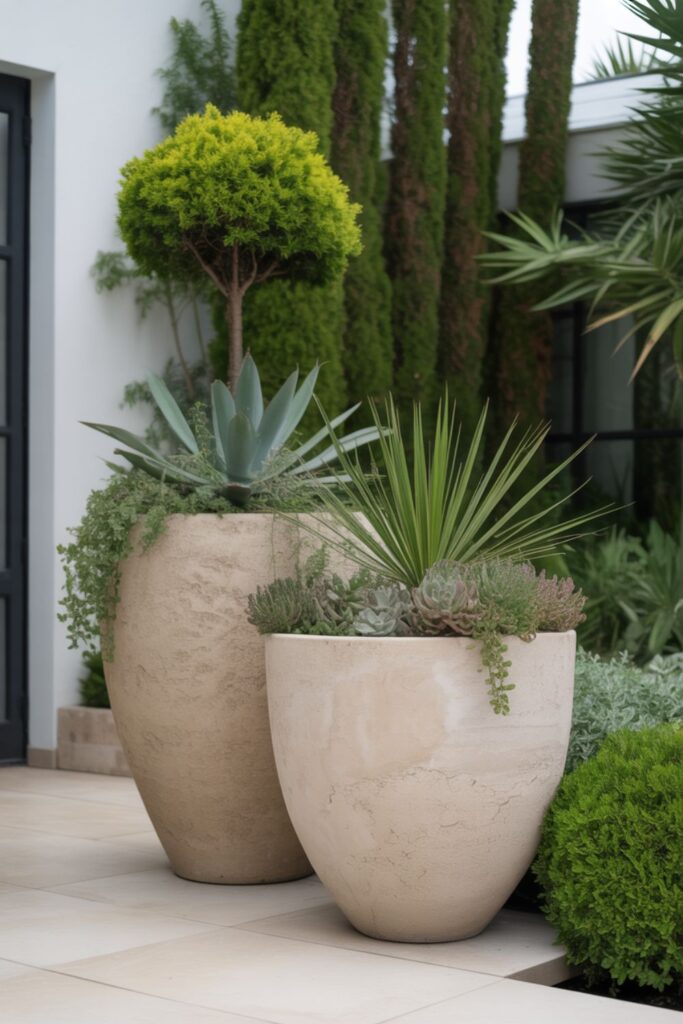
Oversized containers create immediate drama and anchor outdoor spaces with a commanding presence that smaller planters simply cannot achieve. These bold landscaping ideas with pots help define scale, establish structure, and bring instant focus to open areas. By incorporating large landscaping ideas with pots strategically, you can create strong visual hierarchy and highlight key areas of your landscape that deserve attention.
Entrance flanking is one of the most classic landscaping ideas with pots, using matching oversized containers to frame front doors, garden gates, or pathway entrances. This symmetrical approach adds a formal, welcoming feel that works beautifully with traditional architecture and looks equally striking in modern homes when paired with sleek container styles. For best results, choose pots at least 20–24 inches in both height and diameter to maintain proper scale. Plant identical specimens, such as boxwood spheres, topiary standards, or seasonal blooms—to reinforce symmetry. These timeless landscaping ideas with pots consistently boost curb appeal and are favored by real estate professionals.
Corner anchoring is another effective way to use landscaping ideas with pots to transform neglected or awkward spaces. Empty patio corners, poolside edges, and deck junctions benefit greatly from large statement containers that define boundaries and eliminate visual gaps. Bold architectural plants like agaves, yuccas, or tall ornamental grasses work especially well in these landscaping ideas with pots, providing structure throughout the year. Underplanting with seasonal flowers adds color while keeping the main focal plant dominant.
Pathway punctuation relies on rhythmic landscaping ideas with pots to guide movement and add interest along long walkways or driveways. Placing substantial containers every 10–15 feet creates a sense of flow and intention, especially in large outdoor spaces where continuous borders feel overwhelming. Repeating similar pots and plant selections ensures cohesion, while subtle variations maintain visual interest. These repeated landscaping ideas with pots make extended pathways feel curated rather than forgotten.
Standalone sculptures elevate landscaping ideas with pots into artistic statements by treating a single container as a focal point. Hand-painted ceramics, aged copper vessels, or artisan-crafted pots can stand alone as functional art. Pair these standout containers with a single specimen plant such as a Japanese maple, sculptural succulent, or statement rose to let both the pot and plant shine. This minimalist approach proves that with the right landscaping ideas with pots, less truly becomes more.
How to Design Vertical Container Gardens for Small Spaces
Vertical gardening maximizes limited square footage by using unused wall and vertical surfaces, allowing lush greenery without sacrificing valuable ground space. These vertical landscaping ideas with pots turn plain walls, fences, and railings into vibrant living displays, making them ideal landscaping ideas with pots for balconies, patios, and compact urban yards.
Tiered plant stands are flexible landscaping ideas with pots that instantly add height and dimension without requiring permanent installation. These freestanding structures feature staggered shelves that hold multiple containers in a small footprint. Available in metal, wood, or resin, tiered stands complement industrial, rustic, or modern landscaping ideas with pots. Arrange larger pots at the base and smaller containers toward the top for stability and visual balance. Enhance these landscaping ideas with pots by placing trailing plants on upper tiers and upright plants below to create depth and movement. Their portability makes them perfect for seasonal rearranging.
Wall-mounted pocket planters introduce creative landscaping ideas with pots by transforming flat surfaces into living green walls. These fabric or synthetic systems contain multiple planting pockets arranged in clean patterns or organic designs. Install them on fences, privacy screens, or exterior walls to elevate vertical landscaping ideas with pots. Because vertical plantings dry out faster, drip irrigation or self-watering systems are essential for success. Selecting compact plants with similar light and water needs keeps these landscaping ideas with pots cohesive and easy to maintain.
Stacked container towers are space-saving landscaping ideas with pots that build upward using progressively smaller pots arranged in pyramid-style structures. Start with a large base container with proper drainage, then offset smaller pots above it to create planting pockets along the sides. These layered landscaping ideas with pots allow you to grow strawberries, herbs, flowers, or succulents in one vertical feature. Proper drainage in the bottom container is crucial to avoid waterlogging. These eye-catching landscaping ideas with pots work well as patio focal points or garden accents.
Hanging basket displays are classic vertical landscaping ideas with pots that keep floors clear while adding greenery overhead. Secure hooks, wall brackets, or pergola beams support hanging containers at varying heights, creating a layered aerial garden effect. Mix basket sizes and alternate flowering plants with foliage for balanced landscaping ideas with pots that avoid visual clutter. Use pulley systems to lower baskets for watering and maintenance, ensuring these elevated landscaping ideas with pots remain practical as well as beautiful.
What Container Colors and Styles Work Best Together
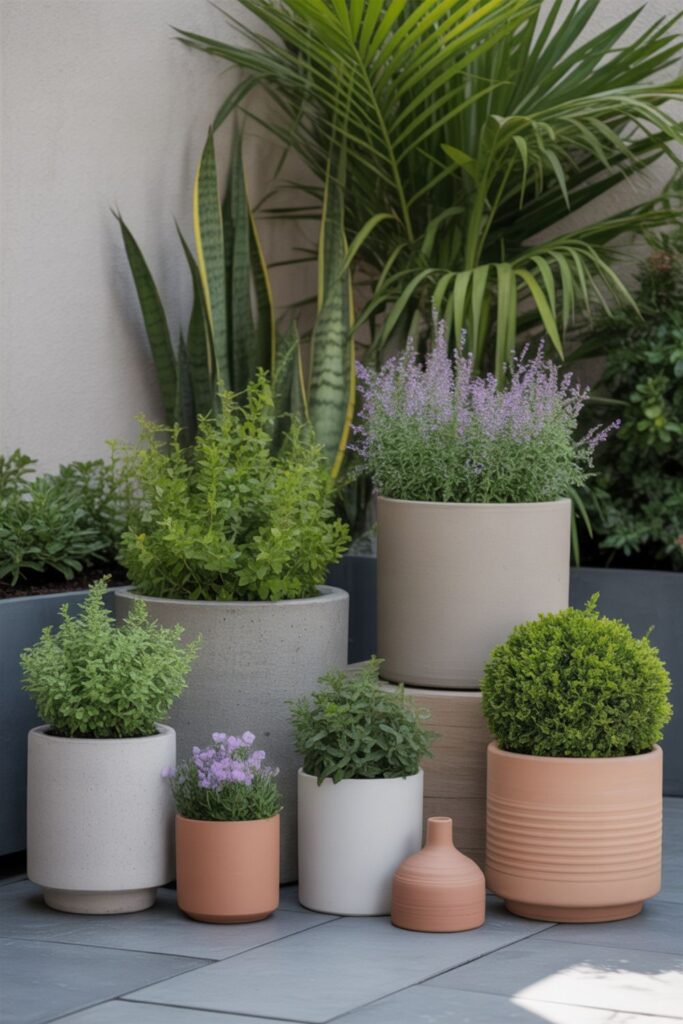
Cohesive container selection is essential for creating polished landscaping ideas with pots that feel intentional and professionally styled rather than randomly assembled. Thoughtful choices in color, material, and finish elevate landscaping ideas with pots, enhancing overall harmony and giving outdoor spaces a refined, designer-quality appearance.
Monochromatic container schemes are timeless landscaping ideas with pots, using a single color in varied shades and textures for effortless elegance. All-white pots in glossy ceramic, matte fiberglass, and textured concrete deliver clean sophistication that suits both contemporary and classic landscaping ideas with pots. Gray containers ranging from soft silver to deep charcoal provide neutral foundations, allowing plants to shine without visual competition. These restrained landscaping ideas with pots never clash with architecture or seasonal plant changes. Historic gardens like Monticello demonstrate the power of monochromatic landscaping ideas with pots through their consistent use of terracotta across expansive grounds.
Complementary color pairings introduce bold landscaping ideas with pots by combining hues opposite each other on the color wheel, such as blue with orange or purple with yellow. These vibrant landscaping ideas with pots create high-impact visuals when used thoughtfully. Pair cobalt blue glazed containers with natural terracotta, or balance purple ceramic pots with soft yellow resin planters. Limiting palettes to two main colors plus neutrals keeps these landscaping ideas with pots energetic without becoming overwhelming. This approach works especially well in modern gardens and expressive outdoor designs.
Metallic finishes add a touch of luxury to landscaping ideas with pots, offering reflective surfaces that coordinate easily with a wide range of colors. Copper, bronze, and gold-toned containers bring warmth to traditional and rustic landscaping ideas with pots, while silver, pewter, and chrome finishes suit minimalist and contemporary landscapes. Metallic pots pair beautifully with concrete, weathered wood, and terracotta, elevating landscaping ideas with pots without excessive cost. Regular cleaning helps maintain their polished appearance, as metallic surfaces show water spots more readily.
Natural material groupings focus on texture-driven landscaping ideas with pots, blending terracotta, stone, wood, and concrete for organic appeal. These grounded landscaping ideas with pots feel timeless and are ideal for cottage gardens, rustic yards, and nature-inspired landscapes. Varying sizes and shapes while maintaining material consistency creates curated arrangements that improve with age. As terracotta develops patina, wood weathers, and concrete gathers moss, these evolving landscaping ideas with pots gain character that synthetic containers simply can’t replicate.
Budget-Friendly Container Landscaping Solutions
Strategic landscaping ideas with pots deliver professional results without substantial investment when you embrace creative sourcing and DIY approaches. Your budget limitations become creative opportunities rather than obstacles preventing beautiful container gardens.
Repurposed containers from unexpected sources offer unique character impossible with standard nursery pots. Transform galvanized buckets, vintage crates, retired wheelbarrows, or ceramic colanders into distinctive planters after drilling drainage holes. Thrift stores, garage sales, and your own basement provide treasure troves of potential containers requiring minimal investment. Paint mismatched finds in coordinating colors creating cohesive collections from disparate pieces. These one-of-a-kind containers become conversation starters while demonstrating creativity and environmental consciousness.
Painted plastic pots mimic expensive materials at fraction of the cost. Purchase inexpensive plastic landscaping ideas with pots then transform them using spray paint formulated for plastics. Chalk paint creates matte finishes resembling aged terracotta or concrete, while metallic sprays deliver faux copper or bronze appearances. Light sanding before painting ensures better adhesion and longevity. This budget technique allows purchasing larger quantities of containers, filling spaces adequately without breaking budgets. Replace inexpensive painted pots every few seasons as finishes fade rather than investing heavily in single permanent containers.
Plant propagation from cuttings dramatically reduces costs filling multiple containers. Root cuttings from existing plants like coleus, pothos, sweet potato vine, and begonias in water or soil, creating dozens of new plants from single parent specimens. Share cuttings with neighbors and friends, exchanging plant varieties and expanding collections without purchases. This patient approach requires planning ahead to start propagating 6-8 weeks before planting season but saves hundreds compared to purchasing established plants. Many perennials divide easily, providing additional plants for container combinations.
Seasonal clearance shopping stretches budgets considerably when timing purchases strategically. Buy containers during end-of-season sales 70% off in late fall storing for spring installations. Purchase perennial plants marked down in fall, overwintering in garages or protected areas, then dividing in spring for multiple containers. Nurseries discount imperfect plants or overgrown specimens perfect for dividing and repotting. This opportunistic approach requires storage space and patience but allows creating impressive container gardens at drastically reduced costs compared to spring premium pricing.
How to Create Seasonal Container Displays Throughout the Year
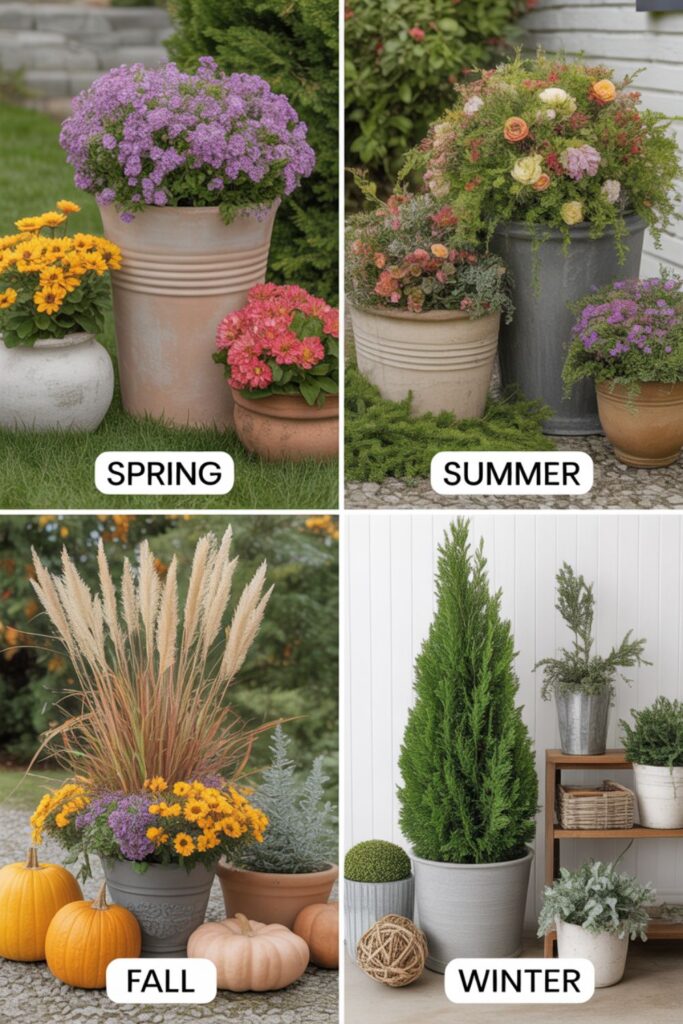
Year-round container interest requires strategic planning and seasonal rotations maintaining fresh, relevant appearances through changing conditions. Your landscaping ideas with pots becomes dynamic living art that evolves with seasons rather than static installations losing relevance after initial bloom periods.
Spring awakening celebrates renewal through pastel palettes and bulb-filled containers. Plant tulips, daffodils, hyacinths, and crocuses in fall for spring blooms, combining with cool-season annuals like pansies, violas, and primroses. Add trailing ivy or variegated vinca for foliage interest extending beyond bulb bloom periods. Light pinks, soft yellows, lavender, and white create optimistic displays signaling winter’s end. This season emphasizes delicate beauty and fresh beginnings through flower choices and color selections that feel hopeful and energizing.
Summer abundance showcases heat-tolerant annuals delivering continuous color through intense weather. Petunias, zinnias, marigolds, geraniums, and begonias thrive in summer heat while blooming prolifically. Incorporate tropical foliage like caladiums, elephant ears, or cannas for bold textures complementing floral displays. Vibrant color combinations hot pinks with oranges, or bold reds with yellows create energetic displays reflecting summer’s intensity. These high-maintenance containers require daily watering and regular deadheading but reward efforts with months of spectacular color.
Fall transitions introduce warm autumn tones through mums, ornamental kale, asters, and decorative grasses. Burgundy, rust, orange, and gold palettes complement changing foliage naturally. Add mini pumpkins, gourds, or corn stalks for harvest themes without appearing cliché when combined with sophisticated plant selections. Incorporate cool-season annuals like pansies surviving light frosts extending displays into early winter. This season balances abundance with impending dormancy, celebrating harvest while preparing for rest.
Winter interest challenges gardeners but remains achievable through evergreen branches, berries, and cold-hardy plants. Combine cut evergreen boughs pine, spruce, cedar with dogwood or winterberry stems in containers adding height and color. Plant cold-hardy pansies, ornamental kale, or hardy cyclamen providing living interest in mild climates. Add decorative elements like birch branches, pinecones, or seasonal ribbons without overwhelming natural beauty. These low-maintenance displays acknowledge winter’s austerity while maintaining container presence until spring renewal begins again.
What Plants Thrive Best in Container Landscaping
Successful outdoor planters depend on selecting appropriate plants matching container conditions and maintenance capabilities. Your plant choices determine whether containers thrive or struggle throughout growing seasons.
Container-specific varieties bred for pot cultivation deliver superior performance compared to garden-intended plants. Compact petunias, dwarf dahlias, patio tomatoes, and miniature roses stay proportional to containers without constant pruning. Seed companies increasingly offer “container” or “patio” series specifically developed for restricted root spaces and manageable sizes. These purpose-bred varieties typically bloom more prolifically and maintain attractive shapes without excessive maintenance. The All-America Selections organization tests and identifies superior container varieties annually, providing reliable recommendations for performance and appeal.
Drought-tolerant specimens reduce watering demands while surviving occasional neglect. Succulents, sedums, lavender, ornamental grasses, and Mediterranean herbs tolerate dry conditions between irrigations. These plants suit busy lifestyles, vacation schedules, and hot microclimates where containers dry rapidly. Combine drought-tolerant varieties with terracotta pots that breathe naturally, creating low-maintenance container gardens requiring attention only few times weekly rather than daily. This practical approach prevents guilt over brown, wilted displays resulting from missed waterings.
Shade-tolerant options solve challenging dim locations where sun-loving annuals fail. Begonias, impatiens, coleus, fuchsia, and ferns provide color and texture in partial to full shade conditions. Many shade plants feature interesting foliage rather than flowers, delivering season-long interest beyond brief bloom periods. Combine various leaf textures and colors creating dynamic displays without relying on flowers. Shade containers typically require less frequent watering since reduced sun exposure slows evaporation rates.
Edible container gardens combine productivity with aesthetics, growing herbs, vegetables, and fruits in decorative pots. Tomatoes, peppers, lettuce, and strawberries thrive in containers when provided adequate soil depth and nutrients. Herb combinations like basil, parsley, cilantro, and thyme offer culinary value alongside attractive appearances. Mixing edibles with ornamental flowers creates “foodscaping” blending beauty and function. Position edible containers conveniently near kitchens for easy harvesting while maintaining attractive displays visible from indoor spaces.
How to Arrange Pots on Patios and Decks for Maximum Appeal
Strategic container placement on hardscaped areas transforms functional outdoor rooms into inviting extensions of indoor living spaces. Your patio container ideas create defined zones, add privacy screening, and soften hard edges while maintaining adequate circulation and functionality.
Corner groupings anchor patio edges while keeping central areas open for furniture and traffic flow. Position substantial container collections in two or three corners rather than scattering individual pots around perimeters. These massed arrangements create visual weight and interest without cluttering usable space. Combine various heights and sizes within corner groupings, using largest containers against walls or railings with progressively smaller pots stepping forward. This layered approach adds depth while ensuring all plants receive adequate light rather than shading each other excessively.
Linear arrangements along railings or walls create green borders defining space boundaries without permanent plantings. Space containers consistently every 2-3 feet establishing rhythm and continuity. Use identical or complementary containers maintaining consistent themes rather than random assortments. This repetition creates polished, intentional appearances suggesting professional design. Alternate heights occasionally preventing monotonous straight lines place taller containers every third position creating gentle undulation. These organized arrangements work beautifully in contemporary and traditional settings depending on container styles and plant selections.
Conversation area softening positions containers flanking seating groups, creating intimate defined spaces within larger patios or decks. Place matching containers on either side of benches, beside conversation furniture groupings, or flanking dining tables. These strategic placements frame activities while adding greenery and privacy without walls. Choose fragrant plants like jasmine, gardenias, or herbs near seating areas, engaging multiple senses and enhancing relaxation. Avoid spiny or allergenic plants near high-traffic seating locations where guests might brush against foliage.
Traffic flow consideration ensures container placements enhance rather than impede movement through outdoor spaces. Maintain minimum 36-inch clearances along main pathways allowing comfortable passage without navigating obstacle courses. Position containers defining edges of circulation routes rather than obstructing centers. Create intentional pathways between container groupings, guiding movement naturally through spaces toward focal points or destination areas. Test furniture arrangements and container placements before planting, ensuring practical functionality alongside aesthetic appeal.
Creative Container Combinations for Different Landscape Styles
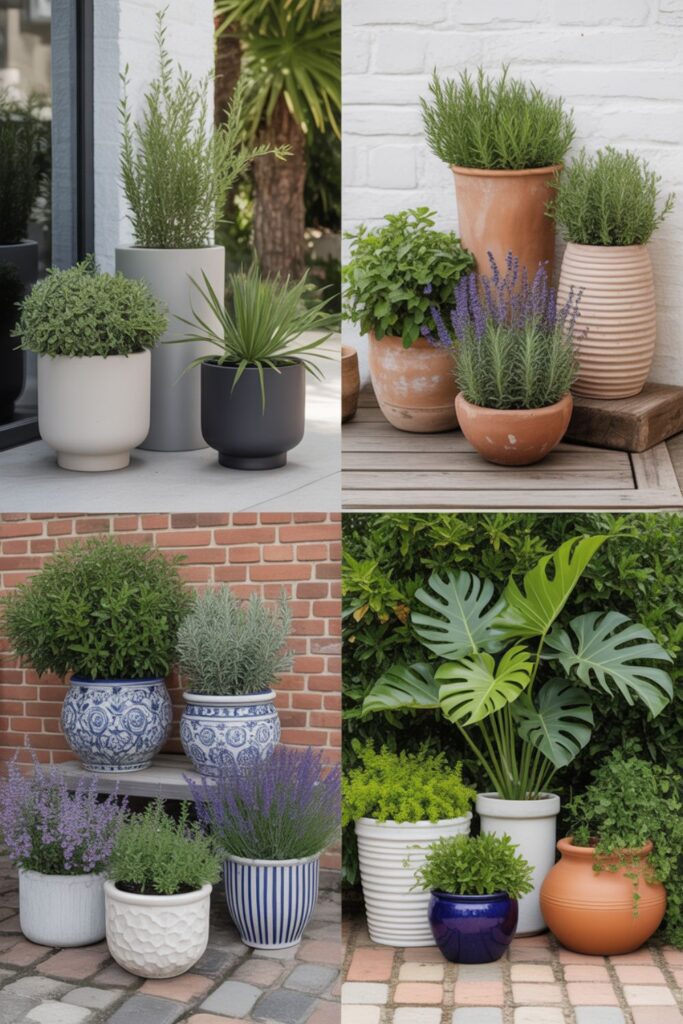
Cohesive landscaping ideas with pots reflect overall design aesthetics through coordinated container and plant selections. Your style-specific choices create harmonious outdoor environments where containers enhance rather than clash with existing landscape themes.
Modern minimalist landscapes emphasize clean lines, limited plant varieties, and sculptural containers in neutral colors. Choose geometric planters cubes, cylinders, rectangles in concrete, fiberglass, or powder-coated metal. Plant architectural specimens like snake plants, agaves, ornamental grasses, or single striking specimens per container. Monochromatic green palettes dominate with occasional white or black accents. Avoid fussy multi-plant combinations favoring bold single-statement plants creating zen-like simplicity. This approach suits contemporary architecture and individuals appreciating refined, uncluttered aesthetics.
Cottage garden abundance embraces profusion and romantic plantings in vintage-inspired containers. Use weathered terracotta, distressed wood crates, or painted ceramic pots showing patina and age. Mix annuals, perennials, herbs, and trailing plants creating overflowing displays without rigid structure. Pastel color palettes, soft pinks, lavenders, buttery yellows, and whites evoke English countryside charm. Combine climbing roses, delphiniums, lobelia, and trailing verbena for layered, informal beauty. This style requires regular maintenance but delivers unmatched charm and biodiversity.
Mediterranean gardens feature drought-tolerant plants in earthy containers evoking Italian and Greek coastal regions. Select terracotta pots in natural or aged finishes, grouping various sizes creating village-like displays. Plant lavender, rosemary, sage, olive trees, and succulents thriving with minimal water. Add trailing rosemary or oregano cascading over pot edges. Warm color palettes terracotta, sage green, dusty blue reflect sun-drenched landscapes. These water-wise gardens align with sustainable principles while delivering vacation ambiance year-round.
Tropical oases transport viewers to exotic destinations through lush, bold foliage in vibrant containers. Choose colorful glazed ceramics, painted planters, or modern bright fiberglass in hot pinks, oranges, and turquoise. Plant elephant ears, cannas, crotons, palms, and hibiscus creating jungle-like density. Vibrant flower colors punctuate green backdrops while oversized leaves add drama. This style works year-round in warm climates or as seasonal displays elsewhere, storing tender tropicals indoors during winter months.
How to Maintain Container Gardens for Long-Term Success
Ongoing maintenance keeps landscaping ideas with pots looking fresh and healthy throughout growing seasons. Your care routine determines whether plants thrive or merely survive in pot-bound environments requiring more attention than ground plantings.
Watering frequency increases dramatically in containers compared to ground gardens since limited soil volumes dry rapidly. Check containers daily during hot weather, watering when top inch of soil feels dry. Large pots may need daily watering while smaller containers often require twice-daily attention. Install drip irrigation or self-watering container systems for vacation periods or busy schedules. Water thoroughly until drainage appears from bottom holes, ensuring complete root zone hydration rather than superficial top-only watering. Morning irrigation reduces disease pressure by allowing foliage drying before nightfall.
Fertilizing supplements depleted nutrients since frequent watering leaches minerals from contained soil. Apply liquid fertilizer every 7-14 days during active growth, following label dilution rates. Slow-release granular fertilizers mixed into soil at planting reduce maintenance, feeding gradually over 3-6 months. Container plants require more nutrients than ground plants due to restricted root zones and frequent watering. Yellowing foliage and reduced flowering signal nutrient deficiencies demanding immediate feeding. The University of Maryland Extension recommends using fertilizers with equal nitrogen-phosphorus-potassium ratios for balanced container growth.
Deadheading removes spent flowers encouraging continued blooming rather than seed production. Pinch or cut faded flowers regularly daily for heavy bloomers like petunias maintaining tidy appearances while redirecting energy toward new buds. This simple task extends bloom periods weeks or months depending on plant varieties. Simultaneously remove yellowing leaves and dead foliage preventing disease issues and maintaining attractive displays. These grooming sessions take mere minutes but dramatically improve container appearances and plant performance.
Pruning controls size and shape in containers where plants cannot spread freely like ground plantings. Trim aggressive growers like sweet potato vine preventing them from overwhelming companions. Shape trailing plants encouraging fuller growth rather than sparse, leggy stems. Cut back herbs like basil regularly encouraging bushy growth while harvesting for culinary use. These strategic cuts maintain balanced compositions where no single plant dominates or disappears within mixed containers.
Read More About: 25+ Outside Plant Decor Ideas for a Stylish Space
FAQs
How many plants should I put in one container?
Plant quantities depend on container size and mature plant dimensions. 10-12 inch pots accommodate 3-5 plants while 18-20 inch containers handle 7-10 plants using thriller-filler-spiller formulas. Follow spacing recommendations on plant tags, remembering containers create intentionally crowded displays for immediate fullness unlike garden spacing. Avoid extreme overcrowding preventing adequate root development or sparse plantings appearing unfinished and taking months achieving fullness.
What type of soil works best for container landscaping?
Use commercial potting mix specifically formulated for containers rather than garden soil which compacts excessively in pots, restricting drainage and root growth. Quality potting mixes contain peat moss or coconut coir, perlite or vermiculite for aeration, and often slow-release fertilizer. Avoid topsoil or garden dirt in containers regardless of cost savings, as poor drainage causes root rot and plant failure regardless of other care quality.
Can containers stay outside during winter?
Frost-proof containers including fiberglass, resin, and certain ceramics survive freezing temperatures when emptied or planted with cold-hardy evergreens, while terracotta and thin ceramic pots crack during freeze-thaw cycles requiring storage. Elevate containers on pot feet preventing water accumulation underneath, and move tender plants indoors before first frost. In cold climates, either store empty containers or invest in guaranteed frost-proof materials designed for year-round outdoor exposure.
How do I prevent containers from blowing over in wind?
Add weight by placing bricks or large rocks at container bottoms before adding soil, group containers together creating stability through mass, and position tall planters against walls or structures rather than exposed locations. Choose wide, heavy containers over tall, narrow pots in windy areas, and ensure adequate soil weight never leave containers partially filled. Some gardeners drill holes through container bases, inserting rebar stakes anchoring deeply into ground for extra security.
What’s the best way to arrange different sized containers?
Place largest containers at back or center depending on viewing angles, medium sizes forward and to sides, with smallest pots at front edges creating tiered visual layers. Use odd numbers of containers three, five, or seven for more natural, dynamic compositions than even groupings. Vary heights by 6-12 inches between size categories ensure adequate differentiation without extreme disparities appearing disconnected rather than cohesively grouped.
Conclusion
Strategic landscaping ideas with pots transform outdoor spaces into polished, dynamic environments rivaling professionally designed landscapes without permanent installations or substantial investment. Your success depends on applying proven design principles including thriller-filler-spiller planting formulas, thoughtful container groupings in odd numbers, and cohesive color coordination that creates intentional rather than random appearances. Whether maximizing small balconies through vertical arrangements, creating grand entrance statements with oversized focal points, or designing seasonal displays maintaining year-round interest, container landscaping offers unmatched flexibility adapting to changing needs, styles, and preferences throughout years. The key lies in viewing containers as landscape architecture rather than afterthought accessories, giving them the strategic planning and artistic consideration they deserve.
Your outdoor spaces await transformation through thoughtful container design that reflects your personality while enhancing property value and daily enjoyment. Begin by assessing current container collections, identifying what works and what needs replacing or rearranging to create cohesive groupings. Invest in quality containers within chosen style and color palette, building collections gradually rather than purchasing randomly. Master seasonal rotations keeping displays fresh and relevant throughout the year, and commit to consistent maintenance ensuring plants thrive rather than merely survive in containerized environments. Take action today by selecting one area, perhaps your entrance, patio corner, or balcony and implementing the techniques shared here. Your professionally styled container garden awaits, requiring only your commitment to applying these proven principles that transform ordinary pot collections into extraordinary landscape features delivering impact far exceeding their modest footprints.