20+ Mediterranean Garden Ideas to Inspire Your Outdoors
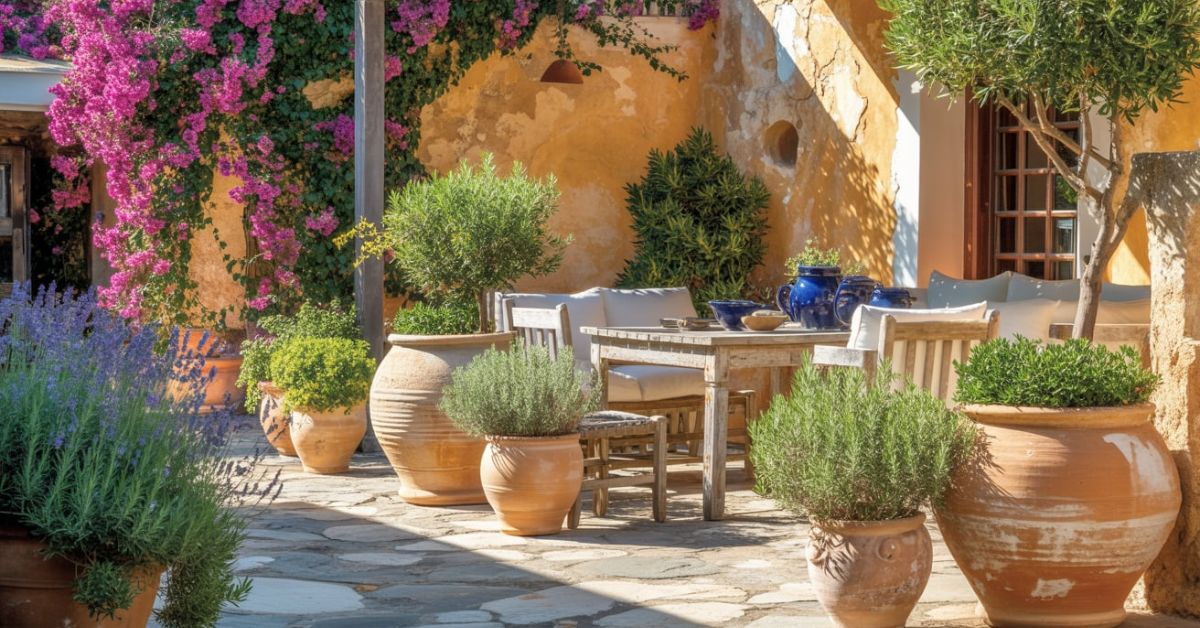
You’ve dreamed of sipping wine under a pergola draped in bougainvillea, surrounded by fragrant lavender and the silvery shimmer of olive leaves. Yet your garden looks nothing like the sun-soaked courtyards of Tuscany or the whitewashed terraces of Santorini. The problem is clear: most gardens feel generic, high-maintenance, and disconnected from the warm, relaxed aesthetic you crave.
This creates frustration every time you step outside, knowing your outdoor space could be a personal retreat but instead demands endless watering, weeding, and upkeep. Mediterranean garden ideas offer the perfect solution. By embracing drought-tolerant plants, natural stone, and strategic design principles inspired by Southern Europe and coastal California, you can create a stunning, low-maintenance garden that thrives in hot, dry conditions while delivering year-round beauty and functionality.
What Defines a Mediterranean Garden Style?
A Mediterranean garden captures the essence of regions surrounding the Mediterranean Sea think Italy, Greece, Spain, and Southern France. These gardens celebrate warm climates, minimal rainfall, and outdoor living. The style emphasizes drought-resistant plants, natural materials like stone and terracotta, and informal layouts that feel both timeless and effortless.
Key characteristics include gravel or stone pathways, terracotta pots overflowing with herbs, and shaded seating areas under pergolas or trees. Colors lean toward earth tones ochre, terracotta, sandy beige with pops of vibrant blues and purples from flowering plants. Unlike formal English gardens, Mediterranean landscaping embraces asymmetry and rustic charm. You’ll rarely see perfectly manicured hedges; instead, plants grow freely, creating texture and movement. This style works beautifully in USDA zones 8-11 but can be adapted to cooler climates with microclimates and protective measures.
Why Choose Mediterranean Garden Ideas for Your Home?
Mediterranean garden ideas deliver practical and aesthetic benefits that make them increasingly popular. First, they’re exceptionally water-wise. With droughts becoming more common across the US, especially in California, Arizona, and Texas, xeriscaping techniques reduce water consumption by up to 60% compared to traditional lawns. You’ll spend less time watering and more time enjoying your space.
Second, maintenance drops significantly. Native Mediterranean plants like rosemary, lavender, and olive trees thrive on neglect once established. They require minimal fertilization, pruning, or pest control. Third, these gardens extend your living space outdoors. Shaded patios, outdoor kitchens, and cozy fire pits encourage year-round use, adding functional square footage to your home. Finally, property value increases. Buyers love turnkey outdoor spaces that promise low upkeep and high visual appeal, making Mediterranean landscaping a smart investment.
How Do You Create Stunning Mediterranean Pathways and Hardscaping?
Pathways form the backbone of any Mediterranean garden design. Starting with gravel pathways, decomposed granite or pea gravel in warm tones creates an authentic, permeable surface that drains beautifully. Edge paths with rustic limestone or flagstone for definition. Avoid concrete; it feels too modern and urban.
Incorporate stone features throughout. Stacked stone walls, whether dry-stacked or mortared, add vertical interest and create terraced planting beds on slopes. Use natural stone pavers for patios irregular shapes in sandy or terracotta hues feel more organic than uniform rectangles. Mosaic tiles bring Mediterranean flair to small areas like fountain surrounds or step risers. Look for hand-painted ceramic tiles in blue, yellow, or green patterns reminiscent of Spanish or Moroccan designs. Consider adding a focal point like a stone fountain or a simple water basin. The sound of trickling water enhances the sensory experience while attracting birds and beneficial insects.
What Are the Best Plants for a Mediterranean Garden?
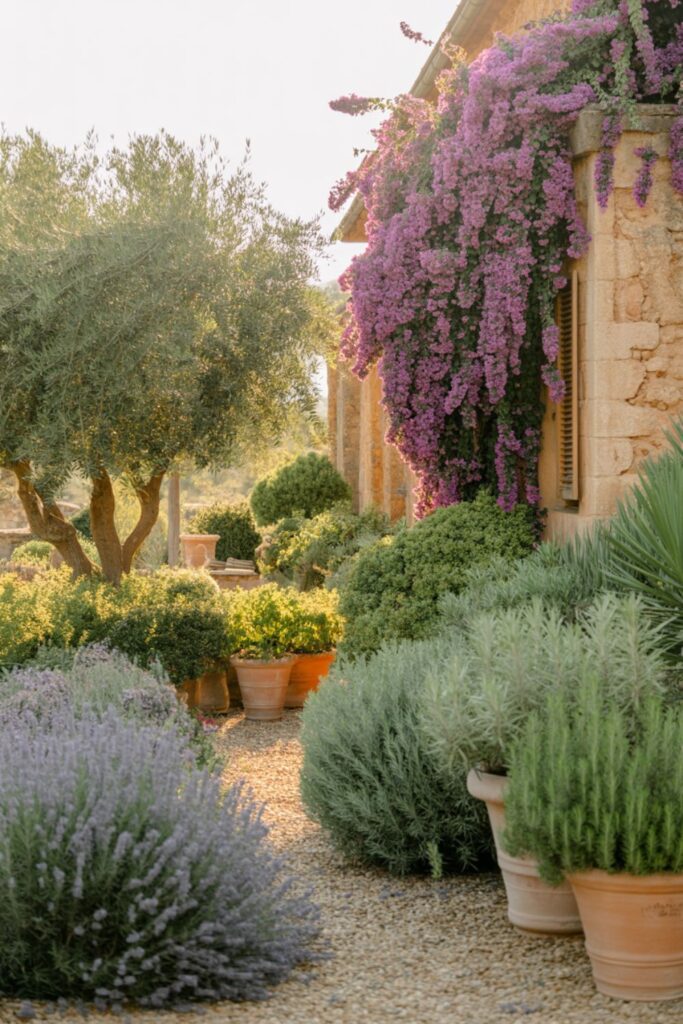
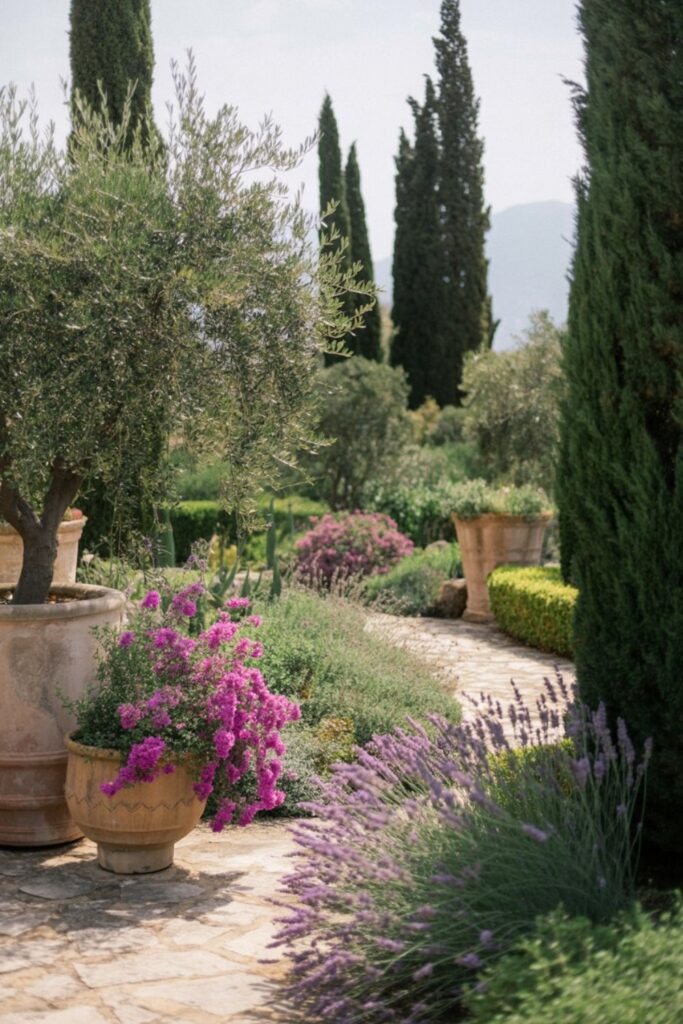
Plant selection makes or breaks your Mediterranean garden. Start with structural evergreens that provide year-round presence. Olive trees (Olea europaea) serve as iconic focal points, offering silvery foliage and sculptural form. In colder zones, try fruitless varieties or grow them in large containers you can protect in winter.
Lavender (Lavandula) is non-negotiable. Plant it along pathways where brushing against it releases its intoxicating fragrance. English lavender (L. angustifolia) handles cold better, while Spanish lavender (L. stoechas) thrives in heat. Pair it with rosemary (Rosmarinus officinalis), which doubles as a culinary herb and an attractive shrub. Other must-have drought-tolerant plants include santolina, rockrose (Cistus), and Jerusalem sage (Phlomis). For flowering impact, bougainvillea delivers explosive color in frost-free zones, while oleander provides evergreen structure with summer blooms. Ornamental grasses like Mexican feather grass (Nassella tenuissima) add movement and soften hard edges. Don’t overlook succulents agave, aloe, and sedum thrive in Mediterranean conditions and require almost no care.
How Can You Design Outdoor Living Spaces in Mediterranean Style?
Outdoor living spaces define the Mediterranean lifestyle. Create a shaded seating area using a wooden or metal pergola draped with climbing plants. Grapevines work beautifully if you have patience; wisteria or jasmine deliver faster coverage with fragrant blooms. Position comfortable furniture underneath think wrought iron or teak pieces with cushions in faded blues, creams, or terracotta.
Add an outdoor kitchen or dining area. A built-in pizza oven or simple grill station extends your entertaining options. Use a rustic wooden table surrounded by mismatched chairs for that casual Mediterranean vibe. For evenings, incorporate lighting strategically. String lights, lanterns, or candles in hurricane glasses create ambiance without overpowering the natural setting. A fire pit becomes a gathering spot when temperatures drop, surrounded by stone seating or movable chairs. Consider adding a daybed or hammock in a secluded corner for afternoon siestas. The goal is making your garden as livable as any indoor room.
Read More About: Creative Balcony Garden Ideas for Small Spaces
What Role Do Containers and Terracotta Play in Mediterranean Gardens?
Terracotta pots are synonymous with Mediterranean style. Their porous clay naturally regulates soil moisture and temperature, making them ideal for herbs and succulents. Group pots of varying sizes near entrances, along pathways, or on patios to create layered visual interest.
Fill containers with classic herb gardens basil, thyme, oregano, and sage. Not only do they look beautiful, but you’ll have fresh ingredients steps from your kitchen. Mix in scented geraniums or trailing plants like verbena for added texture. Paint some pots in vibrant blues or turquoise for a Greek island feel, or leave them naturally weathered for Tuscan authenticity. Large glazed ceramic containers work well as statement pieces, especially planted with citrus trees or agapanthus. Position containers to define spaces flank a doorway, mark pathway intersections, or create a container “garden room” on a balcony. Their portability lets you refresh your design seasonally or protect tender plants during cold snaps.
How Do You Incorporate Water Features Into Mediterranean Landscaping?
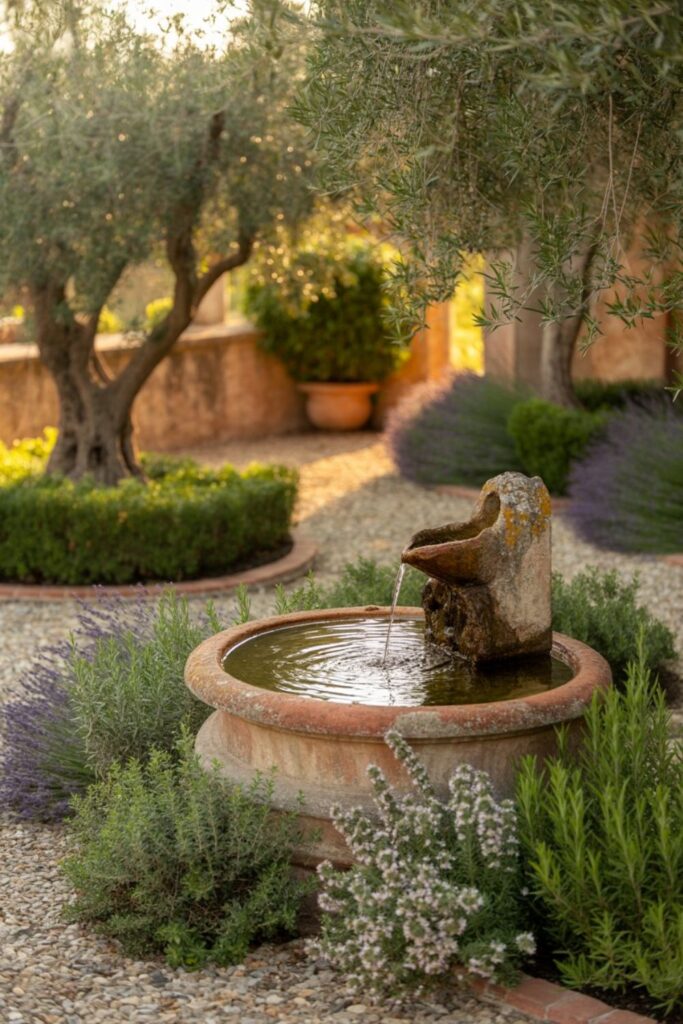
Water features add soul to Mediterranean gardens despite the region’s dry climate. Historically, Moorish and Roman gardens used water as both functional and aesthetic elements. A simple wall fountain with a spout feeding into a stone basin creates a soothing sound without wasting water through evaporation.
Consider a small reflecting pool surrounded by mosaic tiles and low plantings. Keep it shallow to minimize maintenance and water loss. If space allows, a traditional tiered fountain becomes a stunning centerpiece, but choose one with a recirculating pump to conserve water. Even a large ceramic bowl filled with water and floating flowers serves as a meditative focal point. Surround water features with plants that appreciate occasional splashes, ferns, papyrus, or iris. Add lighting beneath or nearby to make the feature visible during evening gatherings. The key is keeping water elements simple and proportional to your garden’s scale.
What Color Palettes Work Best for Mediterranean Garden Design?
Color choices dramatically impact your garden’s authenticity. The foundation should mirror sun-baked earth terracotta, sandy beige, warm grays, and dusty ochre. These neutral tones let plants and sky become your primary color sources.
Accent with the vibrant blues found in coastal villages. Paint shutters, doors, or furniture in cobalt or turquoise. These cool tones contrast beautifully with warm stone and create visual relief in hot climates. Purple and lavender shades come naturally from flowering plants like lavender, salvia, and allium. Add pops of bright pink or magenta through bougainvillea or geraniums, especially against white walls. White itself plays a crucial role; whitewashed walls reflect heat and create the iconic Mediterranean look. Use white sparingly in plantings (perhaps with white roses or daisies) to avoid washing out the palette. Terra cotta and burnt orange appear through pots, tile accents, and warm-season flowers like California poppies. Keeping the overall palette restrained three to four main colors plus green creates cohesion without chaos.
How Can You Create Shade and Cooling Effects Naturally?
Managing heat is essential in Mediterranean climate zones. Strategic tree placement provides natural cooling. Plant deciduous trees on the south and west sides of your home to shade walls during summer while allowing winter sun through bare branches. Suitable options include California sycamore, desert willow, or Texas ebony depending on your region.
Climbing vines on pergolas, arbors, or walls create living shade. Grapevines reduce temperatures underneath by up to 10°F while producing fruit. Passionflower vines grow quickly and attract pollinators with exotic blooms. For vertical surfaces, train fig ivy or creeping fig they cling without support structures and create a cool, lush backdrop. Ground covers also moderate soil temperature. Replace thirsty lawns with low-growing options like dymondia, creeping thyme, or woolly thyme. These stay green with minimal water while feeling pleasant underfoot. Strategically placed shade sails in neutral tones provide temporary relief over seating areas. Orient your garden design to capture prevailing breezes. Open sightlines and avoid dense plantings that block airflow.
What Maintenance Practices Keep Mediterranean Gardens Thriving?
Despite their low-maintenance reputation, Mediterranean gardens need some care to look their best. Mulching is critical to apply 2-3 inches of organic mulch or decorative gravel around plants to suppress weeds, retain moisture, and regulate soil temperature. Refresh annually as it decomposes.
Watering requires a different approach than traditional gardens. Establish deep, infrequent watering schedules that encourage roots to grow downward. Most established Mediterranean plants need watering only every 2-3 weeks in summer, less in cooler months. Install drip irrigation to deliver water directly to root zones efficiently. Pruning keeps plants healthy and attractive. Trim lavender and other woody herbs after flowering to prevent legginess. Remove dead or damaged growth from shrubs in late winter. Olive trees need minimal pruning, just remove crossing branches and maintain shape. Fertilize sparingly. Mediterranean natives evolved in poor soils and can be damaged by excess nutrients. A light application of compost in spring typically suffices. Monitor for pests, though properly sited plants resist most problems. Aphids on tender new growth can be hosed off, while established plants usually outgrow damage naturally.
How Do Mediterranean Gardens Support Pollinators and Wildlife?
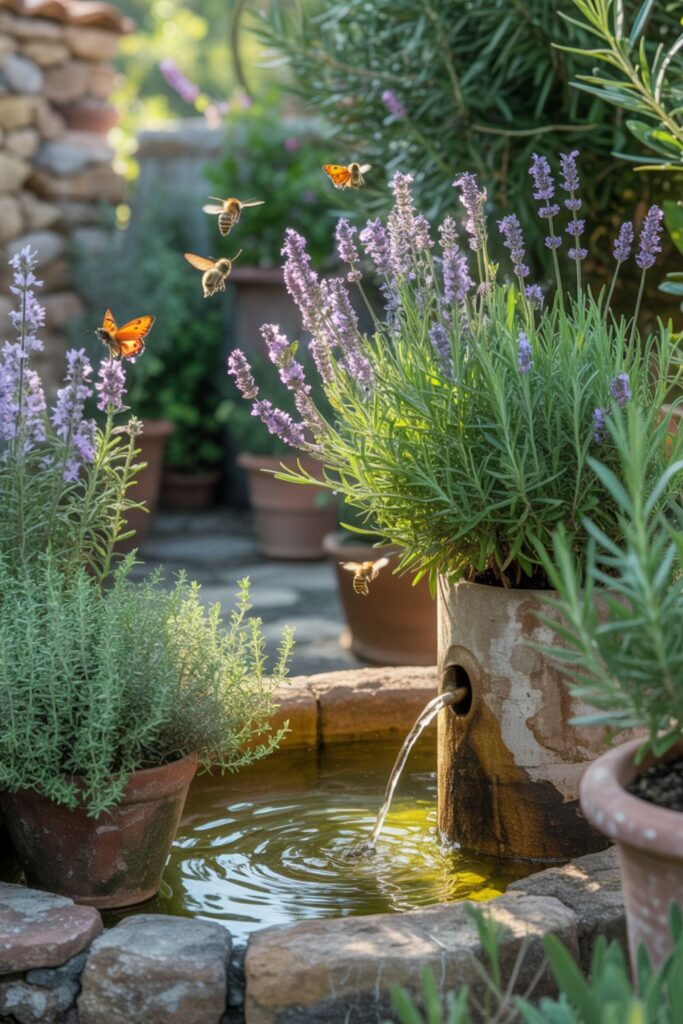
Well-designed Mediterranean gardens become havens for beneficial insects and wildlife. Lavender, rosemary, and sage provide nectar for bees, butterflies, and hummingbirds throughout the growing season. These plants contain high-quality pollen and bloom prolifically, supporting declining pollinator populations.
Native and Mediterranean plants often require less pesticide intervention, creating safer environments for beneficial insects. Ladybugs, lacewings, and parasitic wasps help control pest populations naturally. Add shallow water sources, a birdbath or fountain to attract birds. They’ll reward you by eating mosquitoes, aphids, and caterpillars. Create habitat diversity with layers of ground covers, perennials, shrubs, and trees to support different species. Leave some areas slightly wild with leaf litter and seed heads standing through winter. These provide shelter and food when resources are scarce. Consider installing a simple bee hotel or leaving hollow stems uncut for native solitary bees. Plant a variety of bloom times ensuring some flowers from early spring through late fall. This consistent food source sustains pollinators across their entire lifecycle.
Can You Adapt Mediterranean Garden Ideas to Cooler Climates?
Absolutely. While Mediterranean garden ideas originated in warm regions, you can adapt the aesthetic to USDA zones 5-7 with careful planning. Start by creating microclimates south-facing walls absorb and radiate heat, extending the growing season for tender plants. Use stone or brick extensively as these materials store warmth.
Choose cold-hardy substitutes for classic Mediterranean plants. Replace olive trees with Russian olive or autumn olive. Swap lavender cultivars for cold-tolerant varieties like Lavandula angustifolia ‘Munstead’ or ‘Hidcote’. Use hardy rosemary varieties or substitute with Russian sage (Perovskia) which offers similar silvery foliage and blue flowers. Incorporate evergreen structure with boxwood, yew, or holly clipped into informal shapes. Ornamental grasses like Karl Foerster feather reed grass provide vertical interest and movement year-round. Focus heavily on hardscaping stone walls, gravel paths, and terracotta pots work in any climate. Bring container plants indoors during winter or use them with cold-hardy selections like sedum or sempervivum. Design outdoor living spaces with heating elements, a fire pit, outdoor fireplace, or infrared heaters extend usability into cooler months. The key is capturing the Mediterranean spirit through materials, colors, and layout rather than relying solely on plant palette.
Read More About: Creative Balcony Garden Ideas for Small Spaces
What Are Common Mistakes to Avoid in Mediterranean Garden Design?
Even experienced gardeners make missteps when creating Mediterranean landscaping. The biggest mistake is overwatering. These plants evolved in dry conditions and often rot with excessive moisture. Install proper drainage and resist the urge to water on a daily schedule.
Another error is planting too densely. Mediterranean gardens need breathing room space plants to show off their natural form and allow air circulation. Crowded plants compete for resources and look messy rather than artfully arranged. Avoid overly formal layouts. Rigid symmetry contradicts the relaxed Mediterranean aesthetic. Instead, embrace asymmetry and natural curves. Don’t neglect hardscaping in favor of plants. Stone pathways, walls, and patios create the framework that makes plant selections shine. Skipping this step results in gardens that lack structure and authenticity. Using the wrong materials kills the vibe. Pressure-treated lumber, plastic edging, or bright concrete pavers look out of place. Stick with natural stone, terracotta, weathered wood, and aged metals. Finally, ignoring your site’s specific conditions leads to failure. Assess your sun exposure, soil type, and winter temperatures before selecting plants. A plant that thrives in coastal California may struggle in inland Arizona despite both being “Mediterranean climates.”
How Do You Incorporate Edible Elements Into Mediterranean Gardens?
Herb gardens are intrinsic to Mediterranean culture, and your garden should celebrate this culinary connection. Create a dedicated herb spiral or knot garden near your kitchen. Plant basil, oregano, thyme, sage, and marjoram within easy reach for cooking. These herbs also attract pollinators and smell wonderful when brushed against.
Integrate fruiting plants throughout your design. Citrus trees in containers or planted directly offer fragrant spring blooms and winter fruit. Meyer lemons, kumquats, and calamondin oranges work especially well. Fig trees provide lush foliage and delicious fruit while tolerating heat and drought. Train them as small trees or large shrubs depending on space. Grapevines serve dual purposes creating shade while producing table grapes or wine grapes. Plant along pergolas or fences where they can climb freely. Pomegranate bushes offer ornamental value with their glossy leaves and scarlet flowers, plus nutritious fruit in fall. Consider adding a small vegetable patch with Mediterranean favorites tomatoes, eggplant, peppers, and zucchini. Raised beds with stone or wood sides fit the aesthetic while improving drainage. Surround the vegetable area with companion plants like marigolds and nasturtiums that deter pests naturally.
What Budget-Friendly Tips Exist for Creating Mediterranean Gardens?
You don’t need thousands of dollars to achieve stunning Mediterranean garden ideas. Start small and expand over time. Focus first on creating one beautiful area, a seating nook or entrance then gradually extend the design outward.
Source materials creatively. Check Craigslist, Facebook Marketplace, or Habitat ReStore for used pavers, stone, and terracotta pots. Many people give away landscaping materials during renovations. Propagate plants from cuttings instead of buying mature specimens. Lavender, rosemary, and succulents root easily, letting you fill your garden for the cost of a few starter plants. Collect seeds from friends’ gardens or buy inexpensive seed packets for herbs and annuals. Choose younger, smaller plants which cost less and establish faster than larger ones. Build your own hardscaping. Laying a gravel path or stacking a low stone wall makes a great DIY weekend project with online tutorials. Repurpose items creatively old wooden crates become vertical planters, broken terracotta pots transform into mosaic stepping stones, and reclaimed barn wood builds rustic pergolas. Prioritize key elements that deliver maximum impact. A quality vintage olive jar as a focal point, one beautiful tree, or a simple water feature creates more atmosphere than dozens of generic plants.
How Do Seasons Affect Mediterranean Garden Planning and Care?
Understanding seasonal rhythms optimizes your Mediterranean garden’s performance. Spring brings explosive growth and blooming. This is your prime planting time; new additions establish roots before summer heat arrives. Prune spring-flowering shrubs immediately after blooming. Apply fresh mulch and begin regular watering as temperatures rise.
Summer demands heat management. Water deeply but infrequently, preferably in early morning to reduce evaporation. Deadhead blooms to encourage continued flowering. Harvest herbs regularly which promotes bushier growth. Provide shade for container plants during extreme heat waves. Fall offers a second planting window in mild climates. Cooler temperatures and occasional rain help plants establish. Collect seeds from annuals and divide perennials that have outgrown their space. Reduce watering frequency as temperatures drop. Winter is rest time for most Mediterranean plants. In mild climates, they remain attractive with minimal care. Protect tender plants during cold snaps with frost cloth or by moving containers to sheltered locations. Avoid pruning which can stimulate new growth vulnerable to frost damage. Use this dormant period for hardscaping projects and garden planning.
What Lighting Strategies Enhance Mediterranean Gardens at Night?
Thoughtful lighting transforms your Mediterranean garden into an enchanting evening retreat. Layer different light sources for functionality and ambiance. Install path lights along walkways for safety, but choose warm-toned, low-wattage options that gently illuminate rather than spotlight.
Uplighting creates drama. Position lights at the base of olive trees, palms, or architectural plants to cast interesting shadows against walls. Wash textured stone walls or stucco with soft light to highlight their character. String lights overhead evoke European café culture. Drape them across pergolas, between trees, or along fences. Choose Edison bulbs or globe styles in warm white rather than harsh bright white. Use lanterns strategically group Moroccan-style metal lanterns with candles on tables, or hang larger versions from tree branches. Solar-powered options reduce installation costs and energy consumption. Spotlights can highlight water features or sculptural elements, but use sparingly to avoid a harsh, commercial feel. Consider adding fire features which provide both light and warmth. Fire bowls, chimineas, or built-in fire pits create magnetic gathering spots. The key is subtle, layered lighting that enhances rather than overpowers the natural nighttime garden atmosphere.
Frequently Asked Questions
What plants are essential for an authentic Mediterranean garden?
Essential plants include lavender for fragrance and pollinator support, olive trees for structure and iconic appearance, and rosemary for both culinary and ornamental value. Add drought-tolerant options like cistus, santolina, and ornamental grasses. Incorporate climbing plants such as bougainvillea or jasmine for vertical interest, and use succulents like agave for textural contrast in the driest areas.
How much water does a Mediterranean garden actually need?
Once established, most Mediterranean gardens need 50-70% less water than traditional landscapes. During the first year, water new plants weekly to develop deep root systems. After establishment, water deeply every 2-3 weeks in summer, less frequently in cooler months. Drip irrigation systems maximize efficiency by delivering water directly to root zones, and mulching reduces evaporation significantly while keeping soil temperatures moderate.
Can I create a Mediterranean garden in a small urban space?
Absolutely Mediterranean design scales beautifully to small spaces. Focus on container gardening with terracotta pots filled with herbs, lavender, and small shrubs. Use vertical space with climbing plants on trellises or walls. Create a tiny gravel courtyard with a small fountain as a focal point. Even a balcony can capture Mediterranean style with the right color palette, furniture, and drought-tolerant plants in attractive containers.
What’s the best way to start a Mediterranean garden from scratch?
Begin with hardscaping install pathways, patios, and any structural elements first. Improve soil drainage if needed by adding sand or planting on mounds. Choose one or two focal point plants like an olive tree or large ceramic pot. Add structural evergreens next, then fill with flowering perennials and herbs. Start small with a cohesive area rather than spreading resources thin across your entire yard, then expand the design gradually.
How do Mediterranean gardens handle extreme summer heat?
Mediterranean landscaping actually thrives in heat when designed properly. Plant selection is crucial to choose heat-loving species adapted to dry conditions. Create shade through strategic tree placement, pergolas, and shade sails. Use light-colored hardscaping materials that reflect rather than absorb heat. Mulch heavily to insulate soil and reduce surface temperatures. Group plants with similar water needs together, and provide occasional deep watering during extended heat waves to prevent stress.
Are Mediterranean gardens expensive to maintain long-term?
No, they’re among the most cost-effective landscape styles. Water bills drop dramatically compared to thirsty lawns and traditional gardens. Plants require minimal fertilization since they evolved in nutrient-poor soils. Pest and disease problems occur less frequently with properly sited Mediterranean plants, reducing chemical costs. Initial investment in quality hardscaping and plants pays dividends through years of low-maintenance beauty that actually improves with age as plants mature and materials weather naturally.
Conclusion
Mediterranean garden ideas offer more than just visual appeal; they represent a sustainable, livable approach to outdoor spaces that honors both environmental responsibility and quality of life. By embracing drought-tolerant plants, natural materials, and thoughtful design principles inspired by coastal Europe, you create a garden that requires less water, less maintenance, and less stress while delivering more beauty, functionality, and enjoyment. The key lies in understanding core principles rather than rigidly copying specific elements. Whether you’re working with a sprawling suburban lot or a compact urban courtyard, the Mediterranean aesthetic adapts to your space, climate, and personal style.
Start with one area that speaks to you perhaps a fragrant herb garden near your kitchen or a shaded seating area under a simple pergola. Source materials creatively, choose plants suited to your specific conditions, and allow your garden to evolve naturally over seasons and years. The beauty of Mediterranean design lies in its relaxed, imperfect authenticity. Your garden should feel personal and lived-in, not like a museum exhibit. As you implement these ideas, you’ll discover that the Mediterranean approach isn’t just about creating a beautiful garden, it’s about cultivating a lifestyle that values simplicity, sustainability, and the profound pleasure of outdoor living. Transform your yard into the sun-drenched retreat you’ve always imagined, and enjoy the timeless elegance of Mediterranean style for years to come.