Mini Backyard Garden Ideas To Maximize Small Outdoor Spaces

You stare at your tiny backyard and feel defeated before you even start. The space seems impossibly small, maybe just a narrow strip along the fence, a cramped patio, or a postage-stamp lawn barely big enough for a chair. Traditional gardening advice assumes sprawling yards with dedicated vegetable beds, flower borders, and lawn areas that simply don’t exist in your reality.
This frustration intensifies when you see neighbors with generous properties growing abundant produce and beautiful flowers. You want fresh tomatoes, fragrant herbs, and a peaceful green retreat, but the limited square footage makes these dreams feel impossible. Rental restrictions, shaded areas, or awkward shapes compound the challenge, leaving you convinced that real gardening requires space you’ll never have.
The truth transforms everything: mini backyard gardens often outperform larger spaces through intensive planting, vertical growing, and strategic design. Small spaces force creative solutions that maximize every inch, eliminate wasted areas, and concentrate your efforts where they matter most. This guide reveals proven small backyard garden ideas that turn compact spaces into productive, beautiful retreats proving that square footage matters far less than smart planning and appropriate plant selection.
What Makes Small Space Gardening Different?
Mini backyard gardening requires fundamentally different approaches than traditional large-scale gardening. Understanding these distinctions ensures success in compact spaces.
Vertical thinking becomes essential when horizontal space disappears. Walls, fences, and trellises provide growing surfaces that traditional gardens ignore. Every vertical foot represents a potential planting area for climbing vegetables, hanging baskets, or wall-mounted containers. Intensive planting replaces traditional row spacing with closer arrangements that maximize yields per square foot. Square foot gardening and interplanting techniques create abundance in areas that conventional wisdom would leave half-empty.
Container flexibility allows you to overcome poor soil, create microclimates, and rearrange your garden seasonally. Pots concentrate root zones, making fertilizing and watering more efficient while providing complete control over soil quality. Multi-functional design ensures every element serves multiple purposes: a trellis provides privacy while supporting beans, a raised bed offers seating edges while growing vegetables, and ornamental plants like nasturtiums provide beauty plus edible flowers and pest control.
Season extension matters more in small spaces where every plant counts. Succession planting, quick-maturing varieties, and strategic timing keep the garden productive year-round rather than having empty periods. These small garden strategies compensate for limited space through intelligent intensification rather than simply scaling down traditional methods.
Vertical Garden Solutions for Tiny Backyards
Vertical gardening is one of the most effective ways to maximize growing space in mini backyard gardens. By using walls, fences, and vertical structures, you can transform unused surfaces into highly productive growing zones. This approach is especially valuable in mini backyard gardens, where every inch of space counts.
Trellis systems play a major role in mini backyard gardens because they support climbing vegetables like pole beans, cucumbers, peas, and indeterminate tomatoes. Installing sturdy trellises against sunny walls or fences whether using cattle panels, wooden lattice, or string systems helps increase yields while saving ground space. Vertical growing in mini backyard gardens improves air circulation, reduces disease, and makes harvesting easier. A simple 4×8-foot trellis provides 32 square feet of growing surface while occupying just 4 square feet on the ground, making it ideal for compact layouts. Climbing vegetables naturally produce more per square foot than bush varieties, which is why they’re perfect for mini backyard gardens.
Living walls and pocket planters are another smart solution for mini backyard gardens, allowing you to create vertical herb gardens or decorative plant displays. Fabric pocket systems hang easily from fences or walls, each pocket holding herbs, strawberries, lettuce, or trailing flowers. Pallet gardens are especially budget-friendly for mini backyard gardens, repurposing shipping pallets into multi-level planters by adding landscape fabric, soil, and herbs or succulents. Gutter gardens mounted horizontally grow shallow-rooted crops like spinach, lettuce, and herbs while taking up almost no space, an excellent match for mini backyard gardens.
Tower gardens further amplify the efficiency of mini backyard gardens, stacking multiple planting levels vertically to grow strawberries, herbs, and other small crops on patios or walkways. These simple vertical gardening methods can triple or even quadruple the effective planting area in mini backyard gardens without expanding their physical footprint.
Container Garden Layouts That Maximize Space
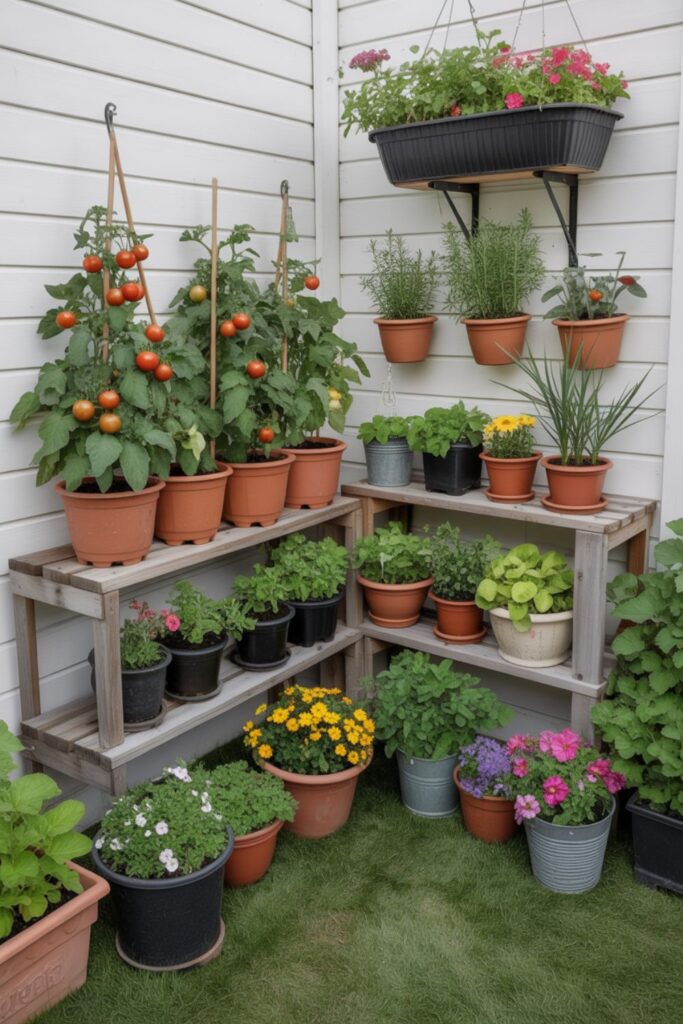
Container gardening offers unmatched flexibility in mini backyard gardens, allowing you to grow abundant harvests even in very limited space. With strategic placement and smart plant choices, containers can transform mini backyard gardens into productive, beautiful growing areas.
Corner clusters work especially well in mini backyard gardens by grouping containers of varying heights to create depth and visual appeal. Place tall containers with tomatoes or peppers at the back, medium pots with basil or lettuce in the center, and trailing plants like thyme or nasturtiums in the front. This layered arrangement maximizes tight corners that often go unused in mini backyard gardens while keeping every plant easy to reach. Tiered shelving further multiplies vertical growing levels, placing shade-tolerant herbs on lower shelves and sun-loving vegetables on the upper ones ideal for maximizing space in mini backyard gardens.
Self-watering containers are a game-changer for mini backyard gardens, reducing maintenance while improving plant health. Their built-in reservoirs provide consistent moisture, preventing stress from irregular watering and making them perfect for busy gardeners or hot climates where pots dry quickly. Fabric grow bags are another smart option for mini backyard gardens, offering excellent drainage and natural air-pruning of roots to prevent plants from becoming root-bound. They’re lightweight, fold flat for storage, and cost less than ceramic pots.
Hanging baskets make use of overhead space in mini backyard gardens, perfect for trailing cherry tomatoes, strawberries, or decorative flowers. They can be mounted on pergola beams, fence posts, or shepherd’s hooks to free up ground area. Rolling planters add even more flexibility to mini backyard gardens by allowing you to move heavy pots to follow the sun or shield tender plants during unexpected frost. Altogether, these space-efficient container solutions help mini backyard gardens stay productive, portable, and adaptable to changing conditions and evolving preferences.
Read More About: 27+ Best Simple Garden Plants for Busy People
Best Plants for Mini Backyard Gardens
Plant selection is key to success in mini backyard gardens, as the right varieties deliver maximum yields or visual impact from minimal square footage. Choosing compact, productive plants ensures every inch of a mini backyard garden contributes to both beauty and harvest.
Compact vegetable varieties bred for containers and small spaces thrive in mini backyard gardens. ‘Patio Princess’ tomatoes grow only 24 inches tall but produce abundant cherry tomatoes, while ‘Bush Pickle’ cucumbers remain compact instead of sprawling. ‘Tom Thumb’ lettuce matures in just 45 days, making it ideal for succession planting in mini backyard gardens. Quick-growing radishes can be harvested in 25 days, allowing multiple crops in a single season. Dwarf beans like ‘Bush Blue Lake’ need no staking and still provide heavy yields, making them perfect for small-space cultivation.
High-value crops maximize the productivity of mini backyard gardens by providing produce that is expensive or hard to find at grocery stores. Herbs such as basil, cilantro, dill, and mint cost $3–5 per bunch in stores but grow easily in pots, delivering continuous harvests for pennies. Fast-maturing salad greens like arugula, mesclun mixes, and spinach offer high returns per square foot. Cherry tomatoes can produce over 20 pounds per plant across a season, far exceeding their space footprint. Peppers, especially specialty or hot varieties, thrive in mini backyard gardens, yielding heavily from a single plant and fetching premium prices.
Edible ornamentals combine beauty and productivity in mini backyard gardens. Rainbow chard adds colorful stems along with nutritious greens, while purple basil and tri-color sage enhance visual appeal and flavor dishes. Nasturtiums cascade over pot edges, offering edible flowers and peppery leaves. By selecting plants that provide both aesthetics and productivity, every square foot of a mini backyard garden becomes purposeful and rewarding.
How to Design a Productive Mini Vegetable Garden
Vegetable garden design in small spaces requires strategic planning to maximize harvests without overwhelming limited areas, making mini backyard gardens highly productive despite their size. Smart layouts and intensive planting techniques allow even the tiniest gardens to yield impressive results.
Square foot gardening is ideal for mini backyard gardens, dividing beds into one-foot squares and planting the optimal number of crops in each. One square might hold one tomato, four lettuce, nine beets, or sixteen radishes. This method eliminates wasted aisle space while preventing overcrowding. Building 4×4-foot raised beds ensures every square is accessible without stepping on the soil, which is perfect for mini backyard gardens. Succession planting keeps beds productive year-round when lettuce finishes, plant beans or kale in the same square to maintain continuous harvests.
Companion planting further maximizes space in mini backyard gardens by pairing mutually beneficial plants. Basil under tomatoes improves flavor and repels pests, while radishes planted alongside carrots mature quickly and loosen the soil for slower-growing carrots. Nasturtiums attract aphids away from vegetables and improve soil health with their roots. Vertical layering makes full use of three-dimensional space in mini backyard gardens, combining ground crops like lettuce with trellised cucumbers or pole beans above. Interplanting fast and slow growers allows quick-maturing crops to be harvested before larger neighbors need the space.
A thoughtfully designed mini backyard garden produces continuously instead of all at once, providing steady harvests from spring through fall. By using intensive techniques like square foot gardening, companion planting, vertical layering, and succession planting, even the smallest mini backyard gardens can deliver impressive yields without compromising accessibility or aesthetics.
Creating Beautiful Flower Gardens in Small Yards
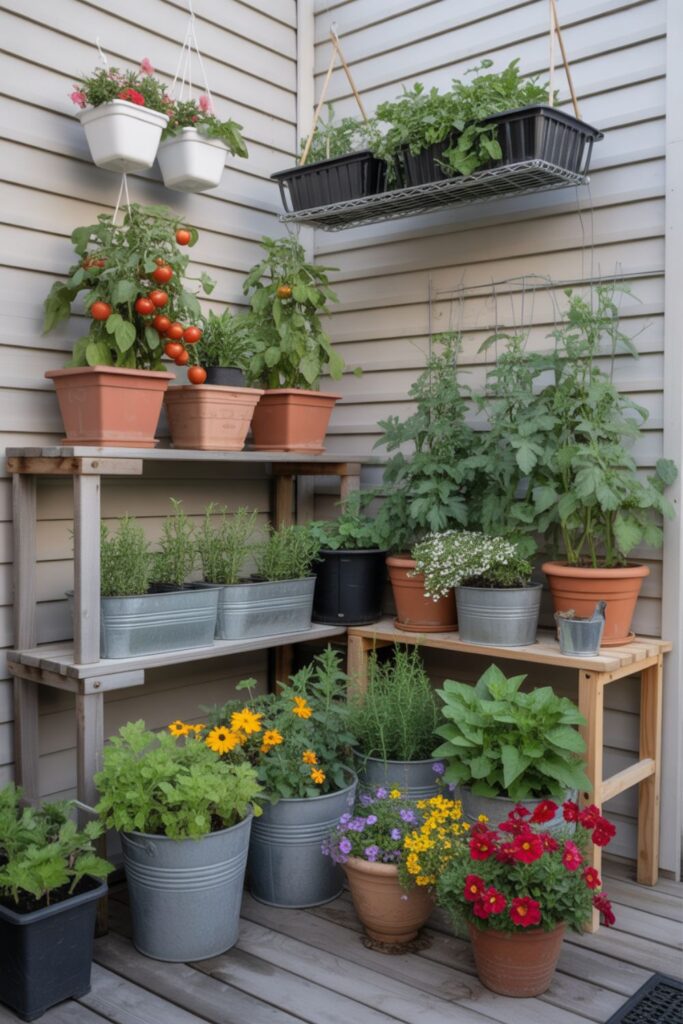
Compact flower gardens can transform even the tiniest spaces into vibrant, colorful retreats, proving that mini backyard gardens don’t have to sacrifice beauty for size. Thoughtful design and plant selection allow small areas to deliver maximum visual impact.
Cottage garden-style planting works beautifully in mini backyard gardens, packing diverse plants closely to create abundant blooms in minimal space. Layering heights tall delphiniums or foxgloves at the back, medium coneflowers and salvia in the middle, and low alyssum or dianthus at the front maximizes both color and coverage. Dense planting in mini backyard gardens also reduces weeds while providing continuous floral interest. Repeat bloomers like zinnias, marigolds, petunias, and coreopsis ensure long-lasting color throughout the season.
Color-blocked container arrangements are highly effective in mini backyard gardens, grouping pots by single colors for bold visual statements rather than mixing hues. A trio of white-flowered pots, for example, creates a stronger impact than a rainbow mix. Seasonal rotation keeps mini backyard gardens fresh, swapping spring pansies and tulips for summer petunias and geraniums, followed by fall mums and ornamental kale. Fragrant plants like lavender, stock, sweet alyssum, and jasmine enrich mini backyard gardens with sensory appeal, while pollinator magnets such as bee balm, butterfly bush, and echinacea attract beneficial insects and add movement.
These small flower garden strategies demonstrate that mini backyard gardens can rival much larger landscapes, using strategic plant selection, layering, and color concentration to create stunning, eye-catching displays in limited spaces.
Space-Saving Herb Garden Designs
Herb gardens are ideal for mini backyard gardens, providing fresh flavors and easy access in compact spaces. Thoughtful design ensures culinary herbs remain within reach while maximizing limited garden areas.
Kitchen container herb gardens work especially well in mini backyard gardens, positioning pots near the back door for convenient harvesting during cooking. Group basil, parsley, cilantro, thyme, and oregano in clusters of pots that receive at least six hours of sun. Most herbs thrive in 8–12 inch containers, while mint performs best in its own pot to prevent invasive spreading. Hanging herb gardens make excellent use of vertical space in mini backyard gardens, allowing trailing thyme, oregano, and mint to grow beautifully from pergola beams or wall-mounted brackets.
Spiral herb gardens offer a space-saving design for mini backyard gardens, creating microclimates in just 4–6 feet of diameter. Build a stone or brick spiral rising 2–3 feet at the center, providing varied sun exposures and drainage zones. Mediterranean herbs like rosemary, sage, and thyme flourish at the sunny, well-drained top, while parsley, chives, and cilantro thrive at the moister base. Vertical pallet herb gardens also work well in mini backyard gardens, leaning against walls with each slat holding different herbs at easy-picking height. Window box herb gardens are perfect for apartments or homes with limited ground space, keeping fresh herbs right outside the kitchen window.
These compact herb garden designs show that mini backyard gardens can deliver fresh, flavorful herbs without requiring extensive space or advanced gardening skills, proving small gardens can still be highly functional and productive.
Raised Bed Ideas for Compact Spaces
Raised beds are an excellent solution for mini backyard gardens, improving drainage, warming soil earlier in spring, and creating clearly defined growing areas in limited spaces. Strategic raised bed designs make small gardens more productive while fitting seamlessly into compact layouts.
Corner L-shaped raised beds maximize awkward corners in mini backyard gardens, providing easy access from two sides. Build arms 2–3 feet wide and 4–6 feet long along each fence line to create ample growing space while leaving room for central pathways or seating. Tiered raised beds add visual interest or step up slopes in mini backyard gardens, using 2–3 levels with 8–12 inch high beds. Shade-tolerant crops like lettuce can be planted on lower levels, while sun-loving vegetables such as tomatoes thrive on the top tiers.
Narrow raised beds are ideal for fence lines or tight spaces in mini backyard gardens, typically 18–24 inches wide and as long as the available space allows. This width ensures easy access to the center from either side, eliminating wasted pathway space. Keyhole gardens, a traditional African design, create circular beds with central compost columns and notched pathways, maximizing growing area while providing built-in composting—perfect for mini backyard gardens.
Elevated, waist-high raised beds are another smart option for mini backyard gardens, reducing bending for gardeners with mobility challenges while clearly defining growing areas. Build sturdy frames with legs raising beds to 30–36 inches for comfort and accessibility. Mobile raised beds on casters allow you to follow sun patterns or rearrange plants seasonally, making mini backyard gardens even more adaptable. These space-efficient raised bed designs make the most of contained soil volumes while fitting the constraints of compact backyards.
What Are the Best Small Fruit Trees and Berries?
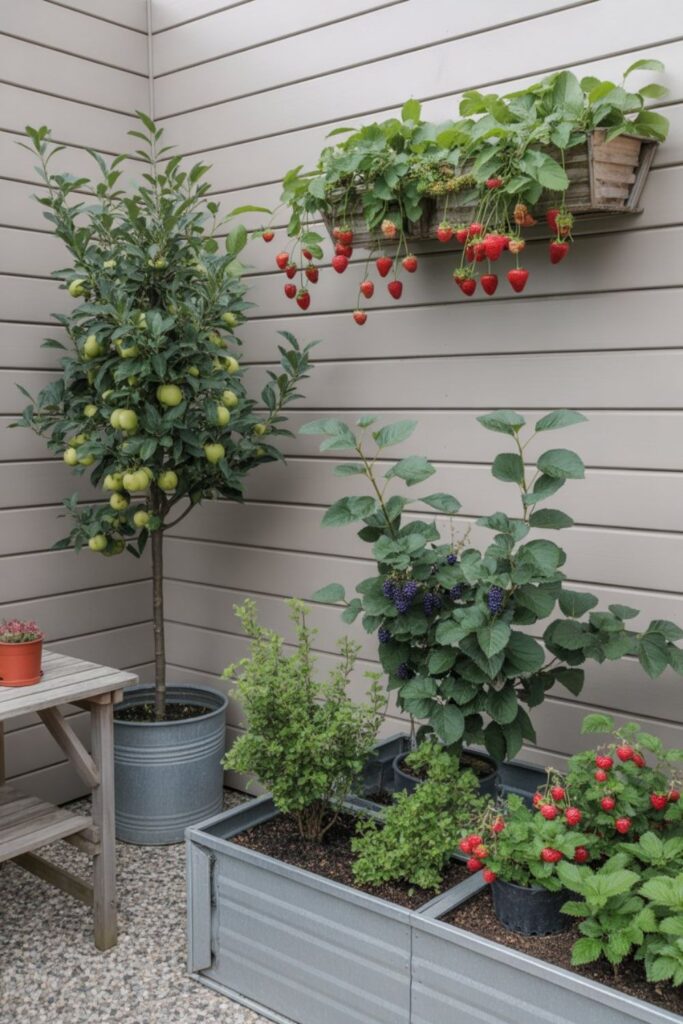
Fruit production in mini backyards focuses on compact varieties and vertical growing methods. These selections deliver harvests without overwhelming limited space.
Dwarf fruit trees stay under 8 feet tall, perfect for small yards or large containers. ‘Pixzee’ peaches grows just 5 feet tall while producing full-sized fruit. ‘North Star’ cherry trees reach 6-8 feet with abundant tart cherries. Dwarf apple trees on M27 rootstock stay under 6 feet, producing apples in 3-4 years. Columnar fruit trees grow vertically with minimal side branching. ‘Scarlet Sentinel’ apple grows 8 feet tall but only 2 feet wide, perfect for narrow spaces. Plant multiple varieties for pollination in the space one standard tree requires.
Vertical berry training transforms sprawling plants into space-efficient producers. Train blackberries and raspberries on vertical trellises, keeping canes contained rather than letting them spread. Espalier techniques train fruit trees against walls or fences in flat, two-dimensional forms that occupy minimal depth while producing heavily. Blueberries grow beautifully in containers, requiring acidic soil that’s easier to provide in pots than in-ground. Plant 2-3 varieties for better pollination and extended harvest. Strawberries thrive in vertical towers, hanging baskets, or tiered planters that maximize yields from minimal footprints. These compact fruit options prove that fresh homegrown fruit doesn’t require orchards, just smart variety selection and creative growing methods.
Low-Maintenance Mini Garden Solutions
Easy-care gardens reduce workload while maintaining beauty and productivity. These strategies suit busy gardeners with limited time for maintenance.
Perennial plantings eliminate annual replanting chores. Choose low-maintenance perennials like daylilies, hostas, sedum, coneflowers, and Russian sage that return reliably year after year with minimal care. Once established, they need only occasional watering, annual mulching, and division every 3-4 years. Self-seeding annuals like nasturtiums, cosmos, alyssum, and calendula drop seeds that germinate the following year, creating perpetual gardens without purchasing new plants.
Drip irrigation automates watering through timer-controlled systems that deliver moisture directly to root zones. Install inexpensive systems using half-inch tubing and emitters for under $50, then connect to timers that water automatically. This eliminates daily hand-watering while conserving water and preventing disease from wet foliage. Heavy mulching suppresses weeds, retains moisture, and moderates soil temperature. Apply 2-3 inches of wood chips, straw, or shredded leaves around plants, refreshing annually as mulch decomposes.
Container simplification reduces maintenance by limiting pot numbers and choosing appropriate sizes. Five well-chosen large containers require less frequent watering than twenty small pots. Native plants adapted to your region need minimal supplemental water, fertilizer, or pest control once established. These low-maintenance garden strategies deliver results without consuming entire weekends, proving that productive gardens and busy lifestyles can coexist successfully.
Creative Seating and Entertaining Areas
Multi-functional design in mini backyards combines growing spaces with comfortable areas for relaxation and entertaining. Smart planning creates both productive gardens and enjoyable outdoor rooms.
Built-in seating on raised bed edges eliminates furniture while defining planting areas. Cap 18-inch high bed walls with 2×12 lumber or smooth stone, creating comfortable perches that double as garden borders. Corner benches nestled into L-shaped beds or along fences provide seating surrounded by fragrant herbs or flowering plants. Add cushions for comfort and style.
Vertical privacy screens create intimate spaces using bamboo, climbing roses, or jasmine on trellises. These living walls define outdoor rooms while providing sensory interest. Bistro table gardens pair small tables with chairs in corners surrounded by container plantings perfect for morning coffee or evening wine among flowers and herbs. Fire pit seating transforms small patios into gathering spots, with heat-loving herbs like rosemary and lavender planted around perimeters.
Overhead structures like simple pergolas add vertical dimension while supporting climbing grapes, kiwi, or passionflower. String lights for evening ambiance. Foldable furniture stores easily when hosting larger groups, allowing your mini backyard to flex between gardening space and entertaining area. These small backyard design ideas prove that compact spaces can function beautifully for both growing and living, creating outdoor rooms that feel significantly larger than their actual square footage through thoughtful multi-purpose planning.
Dealing with Shade in Small Backyards
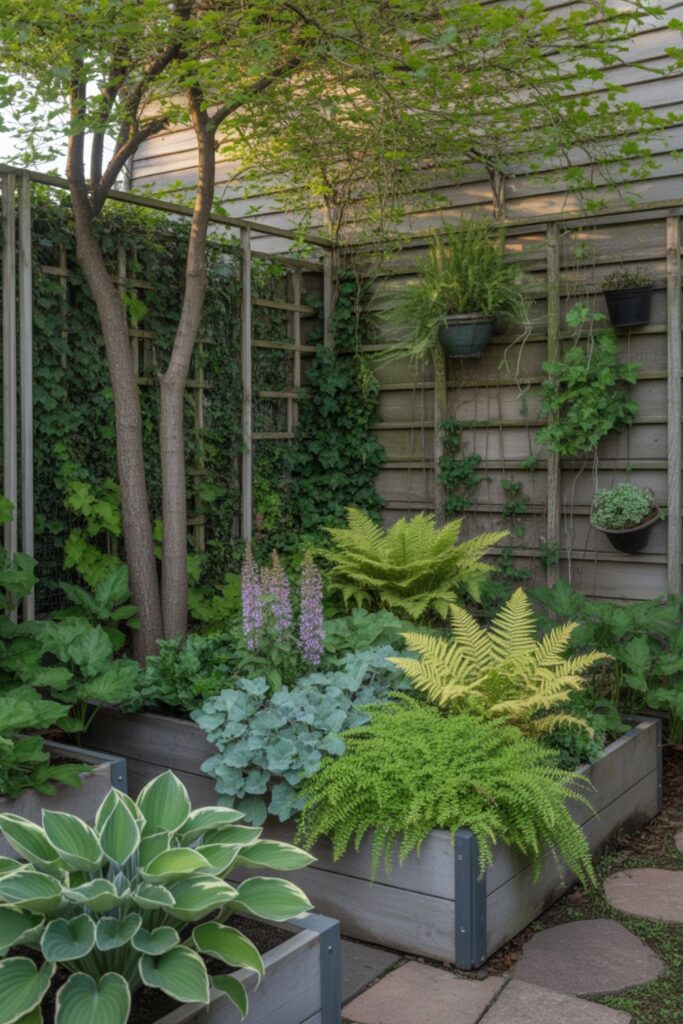
Shaded mini gardens require different plant selections but can still achieve beauty and productivity. These solutions maximize challenging low-light conditions.
Shade-tolerant vegetables include lettuce, spinach, arugula, kale, chard, and Asian greens. These leafy crops actually prefer partial shade in hot climates, producing tender growth rather than bolting in full sun. Herbs like parsley, cilantro, chervil, and mint tolerate 3-4 hours of sun while producing abundantly. Root vegetables including beets, carrots, and radishes grow in partial shade, though they mature slightly slower than in full sun.
Ornamental shade plants create lush gardens where sun-loving flowers fail. Hostas offer bold foliage in countless varieties. Ferns add feathery texture in deep shade. Astilbe, bleeding heart, and coral bells provide flowers without requiring full sun. Impatiens and begonias bloom prolifically in shade, creating color where most annuals struggle. Hydrangeas thrive in morning sun and afternoon shade, producing massive blooms.
Light-enhancing strategies maximize available illumination. Paint fences and walls white or light colors to reflect light into shaded beds. Use mirrors strategically to bounce light into dark corners. Prune overhanging branches to increase dappled light without removing entire trees. Choose variegated plants with white or yellow markings that brighten shaded areas. These shade garden solutions transform seemingly impossible conditions into productive, beautiful spaces by working with natural light patterns rather than fighting them.
Budget-Friendly Small Garden Ideas
Creating affordable mini gardens requires creativity rather than large budgets. These money-saving strategies deliver impressive results without breaking the bank.
Seed starting costs pennies per plant versus dollars for nursery transplants. Start tomatoes, peppers, herbs, and flowers indoors 6-8 weeks before planting season. Plant divisions from friends’ gardens provide free perennials, hostas, daylilies, liriope, and many herbs. Join local garden clubs or online swaps to exchange plants. Cuttings propagate herbs like basil, mint, rosemary, and lavender in water or potting soil, creating multiple plants from one purchase.
Recycled containers eliminate costs for expensive pots. Use 5-gallon buckets (free from restaurants), old wheelbarrows, wooden crates, or tin wash tubs with drainage holes added. Paint mismatched containers similar colors for cohesive appearance. Pallet projects create vertical gardens, compost bins, or potting benches from free pallets. DIY trellis systems using bamboo poles, string, or branches cost under $10 versus $50-100 for purchased versions.
Compost creation eliminates fertilizer costs while improving soil. Even tiny backyards accommodate small compost bins that transform kitchen scraps into nutrient-rich amendments. Rainwater collection using basic barrels reduces water bills while providing chlorine-free irrigation. Perennial investments pay dividends yearly spending $50 on perennial herbs and vegetables that return annually beats buying $50 worth of annuals every spring. These budget garden strategies prove that financial constraints don’t prevent beautiful, productive gardens when you prioritize smart spending and resourceful solutions.
Read More About: 23+ Zen Garden Landscaping Ideas
Common Small Garden Design Mistakes
Avoiding these frequent errors ensures your mini backyard garden achieves its full potential rather than disappointing through preventable problems.
Overcrowding represents the most common mistake: cramming too many plants into limited space creates competition, poor air circulation, and disease. Follow spacing guidelines even when plants look lonely initially. They’ll fill in quickly. Ignoring mature sizes leads to plants outgrowing their spaces within years. Research adult dimensions before planting, ensuring that cute 2-foot shrub won’t become a 10-foot monster blocking windows or pathways.
Poor container drainage kills more plants than any other factor. Ensure all pots have multiple drainage holes and never sit directly in water-filled saucers. Wrong plant placement puts sun-lovers in shade or shade plants in blazing sun, causing struggle and poor performance. Observe your space throughout the day before positioning plants. Neglecting vertical space wastes growing potential look up and utilize walls, fences, and overhead structures. Impulse purchases lead to collections of random plants without cohesive design or appropriate growing conditions. Plan before buying, selecting plants that suit your conditions and aesthetic vision.
Inadequate soil preparation handicaps plants from the start. Amend poor soil with compost, even in small beds and containers. Overly complicated designs create maintenance nightmares; simplicity succeeds in small spaces better than elaborate schemes. These small garden mistakes undermine even the best intentions, but awareness and planning prevent most problems before they start.
FAQs
How small is too small for a backyard garden?
No space is too small. Even a 4×4 foot area or a few containers create meaningful gardens. Balcony gardens in just 20 square feet produce substantial herbs and vegetables through vertical growing and intensive planting methods. Start with whatever space you have rather than waiting for ideal conditions.
What vegetables produce the most food in the smallest space?
Cherry tomatoes produce 20+ pounds per plant in just 2 square feet. Pole beans yield heavily on vertical trellises. Lettuce and radishes mature quickly, allowing multiple successions. Peppers (especially hot varieties) produce abundantly from single plants. Herbs provide continuous harvests from minimal space while commanding premium prices at stores.
How do I make my small backyard look bigger?
Use diagonal pathways rather than straight lines to create visual depth. Paint fences light colors to reflect light. Incorporate vertical elements like trellises and tall plants to draw the eye upward. Use repeating colors and plant groupings rather than scattered single specimens. Create focal points that guide attention strategically through the space.
Can I grow a garden if my yard is mostly concrete?
Absolutely. Container gardens thrive on concrete patios or decks. Use a mix of pot sizes, incorporate vertical elements, and ensure proper drainage. Concrete actually warms soil in containers, extending growing seasons. Consider raised beds if you can dedicate permanent space, or use fabric grow bags for flexible arrangements.
How many hours of sun do I need for a vegetable garden?
Most fruiting vegetables (tomatoes, peppers, cucumbers) need 6-8 hours of direct sun. Leafy greens and herbs tolerate 3-4 hours. If your space lacks full sun, focus on shade-tolerant vegetables like lettuce, spinach, kale, and Asian greens that actually prefer partial shade in hot climates.
Conclusion
Mini backyard gardens offer distinct advantages over sprawling landscapes through intensive design, focused effort, and creative problem-solving. Small spaces force efficiency that eliminates waste while maximizing every square inch through vertical growing, container flexibility, and strategic plant selection. The limitations that initially seem restrictive actually become assets, concentrating your time and resources where they deliver the greatest impact rather than spreading efforts thin across unnecessary areas.
Begin with a realistic assessment of your space, sunlight, and available time. Choose a few key plants rather than attempting everything at once, maybe three containers of herbs, a vertical trellis with beans, and lettuce in a small raised bed. Success with these initial plantings builds confidence and teaches you about your specific conditions before expanding further.. Your compact backyard garden can deliver fresh produce, beautiful flowers, and peaceful retreat regardless of limited square footage. Start this weekend with a single pot of herbs or a bag of lettuce seeds, proving to yourself that meaningful gardening requires passion and planning rather than acreage.