Modern Small Backyard Design For Compact Spaces

Small outdoor spaces shouldn’t limit your design dreams. Many homeowners struggle with cramped backyards that feel cluttered, uninviting, or simply wasted. They see their neighbors’ sprawling landscapes and assume beautiful outdoor living spaces require acres of land. This misconception keeps thousands of small yards underutilized and underwhelming. The frustration builds when you want to entertain guests, create a peaceful retreat, or add value to your home but don’t know where to start with your limited square footage.
Here’s the truth: modern small backyard design transforms compact areas into stunning, functional extensions of your home. Strategic planning, smart furniture choices, and contemporary design principles can make even a 500-square-foot yard feel spacious and luxurious. This comprehensive guide reveals professional techniques, budget-friendly ideas, and proven layouts that maximize every inch while delivering the sleek aesthetic you crave.
What Makes a Backyard Design Modern?
Modern small backyard design embraces minimalism, functionality, and clean lines that create visual calm. The aesthetic strips away unnecessary ornamentation in favor of purposeful elements that serve both form and function.
Contemporary outdoor spaces feature geometric shapes, monochromatic or limited color palettes, and an emphasis on quality materials over quantity. You’ll notice sustainable materials like composite decking, concrete pavers, and steel planters dominating the landscape. These choices aren’t just trendy, they require less maintenance and age beautifully. Hardscaping elements such as stone pathways, built-in seating, and decorative gravel replace high-maintenance lawns. The result feels intentional and sophisticated rather than cluttered or overgrown.
Read More About: Modern Patio Ideas For Stylish Outdoor
How Can You Make a Small Backyard Look Bigger?
Visual expansion tricks transform cramped modern small backyard design into seemingly larger areas. Strategic design choices manipulate perception and maximize usability without moving a single fence line.
Vertical gardens draw the eye upward, creating height illusion while adding greenery without consuming floor space. Install wall-mounted planters, trellises with climbing vines, or living walls filled with succulents. This technique works exceptionally well along property boundaries where horizontal space is precious. Mirrors positioned strategically on fences reflect light and vegetation, essentially doubling your visual square footage. Choose a diagonal paving pattern for pathways and patios the angled lines trick the brain into perceiving greater distance than straight patterns. Light colors for hardscaping and furniture reflect more light, making spaces feel airier. Whites, light grays, and sandy tones visually recede, while dark colors advance and shrink spaces.
What Are the Best Layout Strategies for Modern Small Backyards?
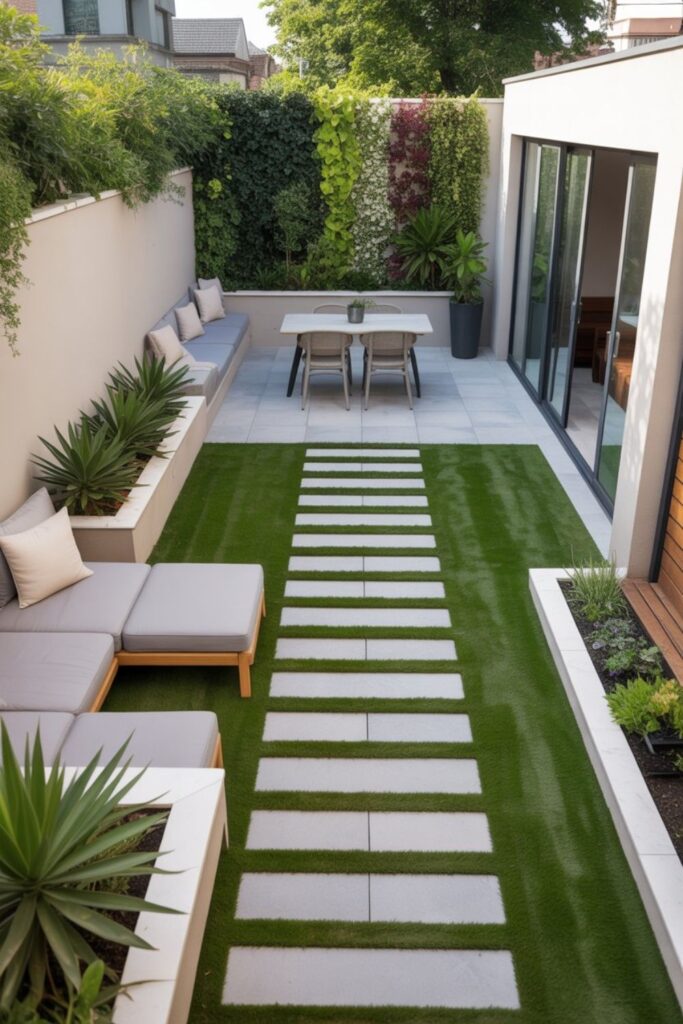
Zoning creates distinct functional areas within your modern small backyard design without physical barriers that fragment space. Define three to four zones maximum: dining, lounging, gardening, and perhaps a fire feature or water element.
Use subtle transitions like different flooring materials, level changes, or modular seating arrangements to separate zones visually. A raised deck for dining elevated six inches above a ground-level patio for lounging creates distinction without walls. L-shaped or U-shaped layouts maximize corner space often wasted in traditional designs. Position your primary seating area in the corner farthest from your home this creates depth and encourages movement through the entire yard. Float furniture away from fence lines when possible; leaving 12-18 inches behind seating makes spaces feel less confined. The negative space paradoxically makes your yard feel larger.
Which Furniture Works Best in Compact Modern Backyards?
Multi-functional furniture solves the space equation elegantly. Every piece should serve double duty or fold away when not needed.
Storage benches provide seating while hiding cushions, garden tools, or outdoor toys. Ottoman-style seating nests under tables or clusters for flexible arrangements. Built-in banquette seating along fence lines maximizes seating capacity without free-standing furniture blocking pathways. Choose furniture with exposed legs sightlines passing underneath create an airy feeling that ground-hugging pieces can’t match. Transparent materials like acrylic chairs or glass-topped tables maintain functionality while preserving visual space. Scale matters tremendously in modern small backyard design. Oversized sectionals overpower compact areas, while properly proportioned bistro sets or loveseats feel intentional rather than makeshift.
How Do You Incorporate Privacy Without Overwhelming Small Spaces?
Privacy solutions must balance seclusion with openness in contemporary garden design. Solid fencing creates claustrophobia, while strategic screening preserves airflow and light.
Horizontal slatted fences allow glimpses of sky and filtered light while obscuring direct sightlines from neighbors. Space slats 2-4 inches apart for optimal balance. Bamboo screens or metal panels with geometric cutouts serve as focal points while providing privacy. Living privacy comes from columnar trees like Sky Pencil Holly or Emerald Green Arborvitae planted in a row; their narrow footprint consumes minimal ground space while growing 8-12 feet tall. Espalier fruit trees trained flat against fences deliver privacy, visual interest, and edible harvests. For overhead privacy from second-story neighbors, install a pergola with retractable shade cloth or climbing vines that create a living ceiling without blocking all sunlight.
What Lighting Design Elevates Modern Small Backyards?
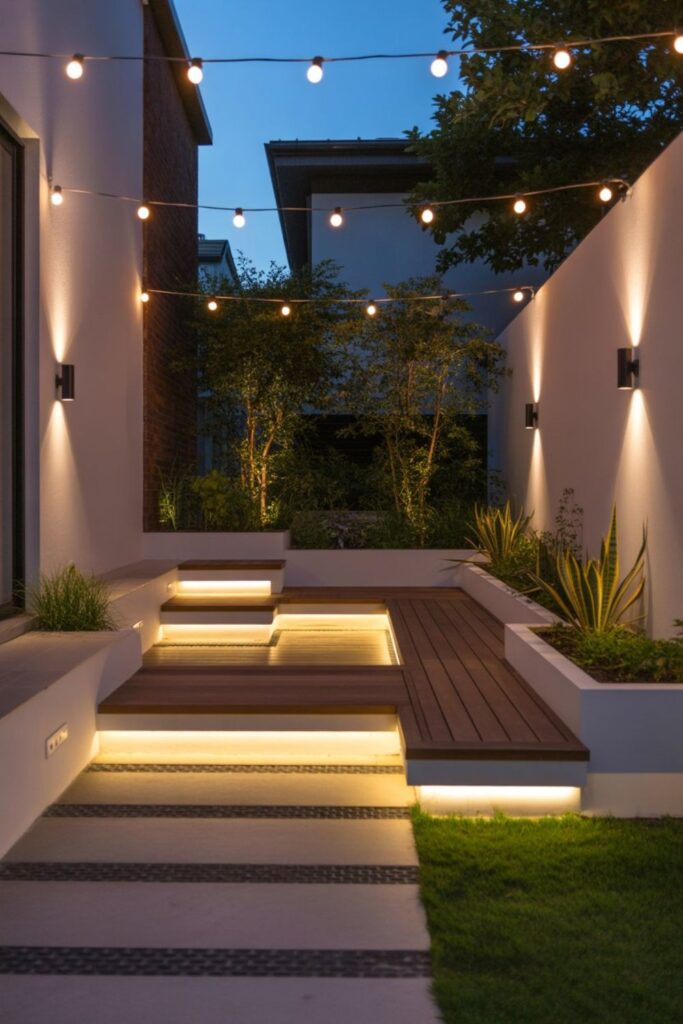
Layered lighting design extends usability into evening hours while adding dramatic ambiance. Three lighting types create professional results: task, ambient, and accent lighting.
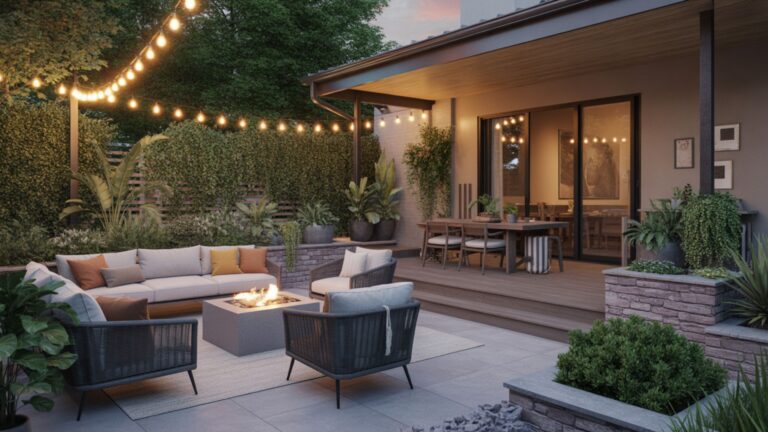
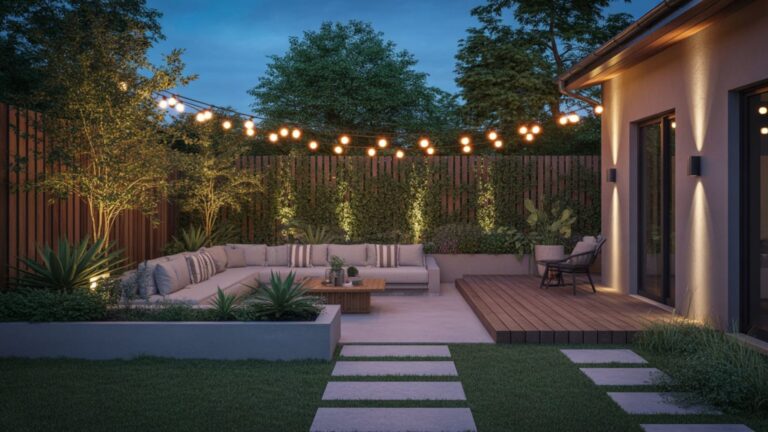
Task lighting illuminates functional zones like grills, dining tables, and pathways. Install LED strip lights under built-in benches or deck railings for safety without harsh spotlights. Ambient lighting sets the overall mood through string lights, lanterns, or wall-mounted sconces. Warm white (2700-3000K) creates inviting spaces, while cool white (4000K+) feels sterile and clinical. Accent lighting highlights architectural features, specimen plants, or water features. Uplight a dramatic tree trunk or backlight a fountain for nighttime drama. Solar path lights mark walkways economically, though hardwired LED systems offer superior brightness and reliability. Smart bulbs with dimming capabilities let you adjust intensity for dinner parties versus quiet evenings.
How Can Vertical Elements Maximize Planting Space?
Vertical gardens multiply your growing area exponentially in modern small backyard design settings where ground space is scarce. Think three-dimensionally rather than spreading plants horizontally.
Wall-mounted planters create living art installations while keeping floors clear. Modular systems with built-in irrigation simplify maintenance. Trellises support climbing vegetables like beans, peas, and cucumbers that produce heavy yields from minimal footprints. Morning glories, clematis, or jasmine add color and fragrance while softening hard fence lines. Tiered plant stands display multiple pots at varying heights, creating visual interest and accommodating diverse plant needs. Hanging baskets suspended from pergolas or tree branches add color at eye level without consuming valuable ground real estate. Window boxes aren’t just for front facades; mount them on shed walls or fence posts for herb gardens within arm’s reach of your outdoor kitchen.
What Hardscaping Materials Define Modern Small Backyard Aesthetics?
Sustainable materials and geometric precision characterize contemporary hardscaping choices. Material selection impacts both visual appeal and long-term maintenance.
Large-format pavers in concrete, porcelain, or natural stone create fewer grout lines, making spaces feel more expansive. Choose 24×24-inch or larger tiles rather than small mosaic patterns that busy small areas. Poured concrete with embedded aggregate, staining, or stamping delivers seamless modern surfaces at reasonable costs. Decomposed granite or pea gravel provides permeable surfaces for pathways and borders with excellent drainage. Steel edging creates crisp lines between materials while weathering to attractive rust patinas. Composite decking eliminates wood maintenance while offering consistent color and texture. Corten steel planters develop rich orange-brown patinas that complement neutral palettes beautifully.
How Do You Create Focal Points in Limited Space?
A single strong focal point anchors modern small backyard design designs more effectively than multiple competing elements. Choose one statement piece that draws attention and builds your design around it.
Water features like sleek fountains or reflecting pools add movement and sound masking for urban noise. Wall-mounted options conserve floor space while delivering the same sensory benefits. Fire features whether built-in fire pits, portable fire tables, or modern chimineas create gathering points and extend seasonal use. Sculptural elements like large pottery, contemporary art pieces, or specimen plants (think architectural agaves or Japanese maples) command attention without functional demands. An accent wall using contrasting materials like wood slats, stone veneer, or bold paint colors creates depth and interest. The 60-30-10 design rule applies: 60% neutral background, 30% secondary color/material, 10% accent focal point.
What Are the Best Plants for Modern Small Backyard Design?
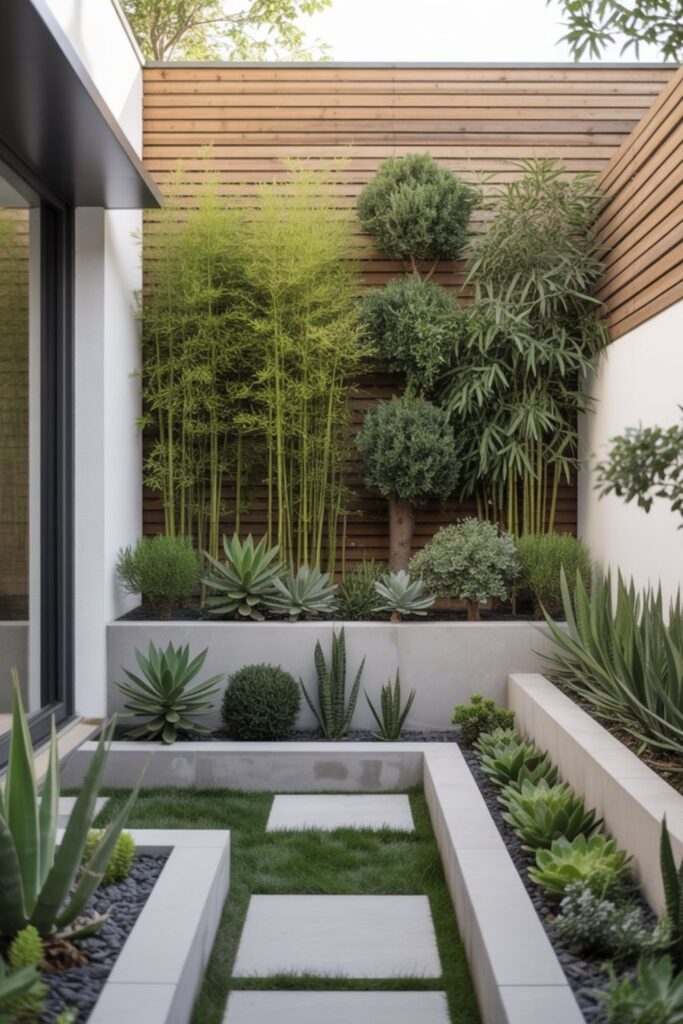
Architectural plants with strong forms and year-round interest suit contemporary garden design better than fussy perennials requiring constant deadheading. Select specimens that earn their space through multiple seasons of appeal.
Ornamental grasses like Karl Foerster feather reed grass or blue fescue provide vertical movement and texture with minimal care. Succulents and agaves deliver sculptural presence while thriving on neglect. Mass plantings of single species create bold statements: a drift of purple fountain grass or a bank of white hydrangeas reads cleaner than mixed cottage garden jumbles. Evergreens maintain structure year-round: boxwood spheres, dwarf conifers, or clipped yews anchor designs through winter. Limit your palette to 5-7 plant varieties repeated throughout the space for cohesion. Native plants adapted to your climate require less water, fertilizer, and pest management while supporting local ecosystems.
How Can You Incorporate Outdoor Dining in Small Modern Backyards?
Compact dining solutions transform modern small backyard design into entertaining venues without permanent space commitments. Flexibility is paramount when square footage is limited.
Wall-mounted drop-leaf tables fold down when not in use, freeing 15-20 square feet instantly. Bar-height tables with backless stools tuck completely underneath when meals end. Built-in L-shaped benches with a central table create cozy breakfast nooks using corner space efficiently. Consider expandable tables that accommodate 2-6 people depending on occasion. Position dining areas on hard surfaces rather than grass pavers, composite decking, or poured concrete clean easily and don’t compact like lawn. Overhead shade from pergolas, shade sails, or large umbrellas makes dining comfortable during peak sun. String lights or pendant fixtures hung above tables define the zone after dark.
What Storage Solutions Keep Modern Small Backyards Clutter-Free?
Hidden storage maintains the clean aesthetic modern small backyard design demands. Visible clutter destroys the spacious feeling you’ve worked to create.
Built-in bench seating with lift-up lids conceals cushions, garden tools, and pool supplies. Vertical storage cabinets mounted on fence posts or shed walls hold necessities without consuming floor space. Under-deck storage systems utilize wasted space beneath elevated decks for seasonal items. Decorative storage ottomans serve as extra seating, footrests, and toy storage. Hooks and pegboard systems on shed interiors maximize vertical organization for hand tools and hoses. Galvanized steel bins or rattan baskets coordinate with modern aesthetics while corralling smaller items. The goal is one-minute cleanup before guests arrive; everything has a designated hidden home.
Read More About: 30+ Open Patio Ideas For Creative Designs
How Do You Maintain Year-Round Interest in Small Modern Backyards?
Four-season design prevents your small yard makeover from becoming a three-season disappointment. Strategic planning ensures visual appeal regardless of calendar.
Evergreen structure plants form the backbone boxwood, holly, or dwarf conifers maintain presence when deciduous plants drop leaves. Winter interest comes from ornamental grasses left standing, berry-producing shrubs like winterberry holly, or plants with striking bark like red-twig dogwood. Spring bulbs planted in fall provide early color: alliums, tulips, and daffodils pop through before perennials wake. Summer demands heat-tolerant performers: Russian sage, coneflowers, and sedums bloom for months with deadheading. Fall brings ornamental grasses to peak beauty their seed heads and autumn colors steal the show. Hardscape elements remain constant, so invest in quality materials that look intentional year-round rather than relying solely on seasonal plants.
What Technology Enhances Modern Small Backyard Functionality?
Smart technology integration extends comfort and convenience to modern small backyard design without visible wires or equipment. Modern solutions deliver luxury without complexity.
Weatherproof speakers built into planters or disguised as rocks stream music throughout your space via Bluetooth. Smart irrigation controllers adjust watering based on weather forecasts, preventing overwatering while maintaining plant health. Outdoor-rated smart plugs control string lights, fountains, or heaters through voice commands or smartphone apps. WiFi-enabled security cameras provide peace of mind while monitoring pets or packages. Portable projectors and retractable screens transform backyard walls into outdoor theaters for movie nights. Infrared or propane patio heaters extend usability into cooler months smart models turn on remotely before you step outside. Solar panels integrated into modern small backyard design roofs generate electricity for lighting and accessories while providing shade.
How Much Does Modern Small Backyard Design Cost?
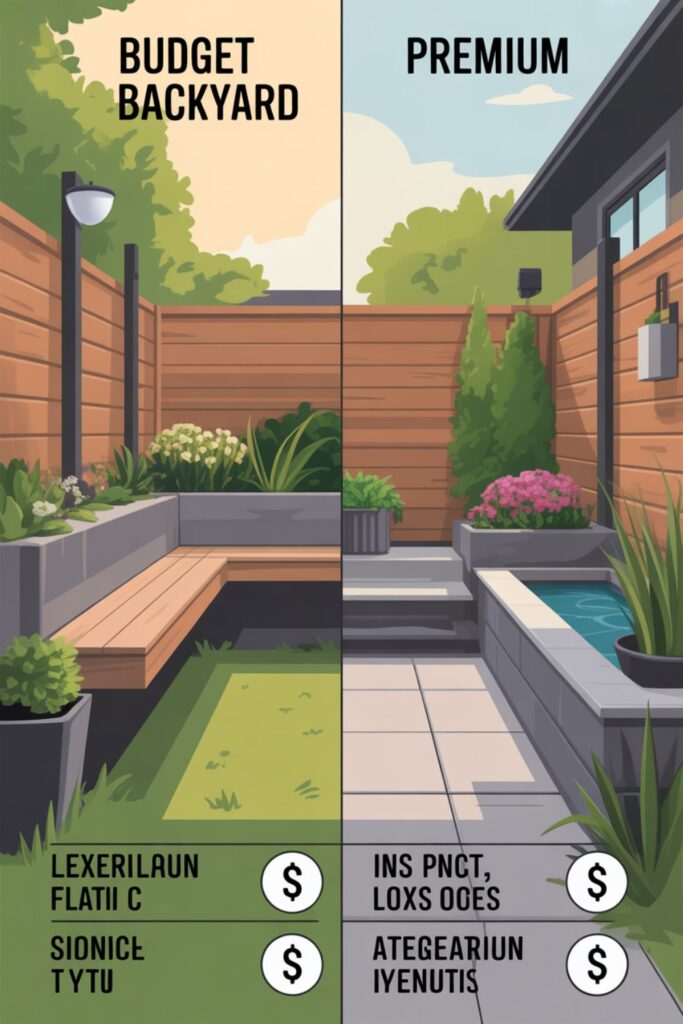
Budget-conscious space-saving landscaping delivers impressive results through strategic investment. Costs vary dramatically based on DIY versus professional installation and material choices.
Basic DIY modern small backyard design run $2,000-$5,000 for paint, gravel pathways, container gardens, and budget furniture. Mid-range renovations including composite decking, quality pavers, built-in seating, and professional design consultation cost $8,000-$15,000. High-end transformations with custom hardscaping, built-in fire features, irrigation systems, landscape lighting, and premium materials reach $20,000-$35,000. Prioritize hardscaping investments first quality decking and pavers last 20+ years, while furniture and plants can upgrade gradually. The 70-20-10 budget allocation works well: 70% hardscaping and structures, 20% plants and soil, 10% accessories and décor. Phased implementation spreads costs across multiple seasons while allowing you to refine your vision through use.
Can You DIY Modern Small Backyard Design Successfully?
Homeowners with moderate skills can tackle significant portions of modern small backyard design independently. Breaking projects into manageable phases prevents overwhelm and budget blow-outs.
Start with design planning using free online tools or grid paper to scale. Measure precisely and photograph your existing space from multiple angles. Demo work like removing old pavers, pulling weeds, or painting fences requires more sweat than skill. Installing paver patios over properly prepared bases is straightforward with patience and rental equipment. Building simple raised planters or storage benches needs basic carpentry skills and common tools. Hire professionals for complex tasks: major grading, electrical work, plumbing for water features, or structural pergolas. Their expertise prevents costly mistakes on critical components. YouTube tutorials and home improvement blogs provide step-by-step guidance for nearly every project. Local garden centers often offer free design consultations when you purchase materials. Phasing lets you DIY what you’re confident with while budgeting professional help for specialized work.
Frequently Asked Questions
How do I choose the right modern style for my small backyard?
Consider your home’s architecture: first contemporary homes suit minimalist designs with concrete and steel, while modern farmhouses blend clean lines with natural wood and stone. Review your lifestyle needs, climate requirements, and maintenance willingness. Browse design platforms like Pinterest and Houzz, saving images that resonate. Common threads in your favorites reveal your authentic style preferences beyond trends.
What’s the biggest mistake in modern small backyard design?
Overcrowding destroys the spacious feeling modern design creates. Homeowners cram too much furniture, too many plant varieties, or excessive décor into limited space. Negative space is a design element that resists filling every inch. Edit ruthlessly, keeping only pieces that serve clear purposes and removing anything that clutters sightlines or movement paths.
How can I make my small modern backyard kid-friendly?
Designate one zone for play with durable artificial turf or rubber mulch surfaces that withstand wear. Choose furniture with rounded edges and no glass tops. Install vertical storage for toys that disappear after playtime. Multi-functional elements like built-in sandboxes with covers that convert to benches maintain clean aesthetics while accommodating family needs.
Do modern small backyards require more maintenance than traditional designs?
Actually, less modern small backyard design prioritizes low-maintenance materials and plants. Composite decking never needs staining, while native plantings require minimal water and care. Automated irrigation and smart lighting reduce manual tasks. The simplified plant palette and hardscape focus means less weeding, mowing, and pruning compared to traditional landscape-heavy yards.
Can I incorporate curves into modern small backyard design?
Yes, though geometric forms dominate modern aesthetics, organic curves prevent sterility. Curved pathways create movement and intrigue, while rounded fire pits or circular pavers soften angular spaces. Balance is key pair curved elements with straight lines rather than mixing numerous competing shapes. One or two curved features complement rather than contradict contemporary style.
What privacy plants work in modern small backyard design?
Columnar evergreens like Sky Pencil Holly, Spartan Juniper, or Emerald Green Arborvitae provide narrow vertical screening. Bamboo species (clumping varieties to prevent invasive spread) grow quickly and fit modern aesthetics. Ornamental grasses planted en masse create living screens with movement. For immediate privacy, install slatted fence panels or metal screens while slower plants establish.
Conclusion
Modern small backyard design proves that square footage doesn’t dictate outdoor living quality. Strategic planning, intentional material choices, and smart space utilization transform even the most compact yards into stunning extensions of your home. The principles covered vertical expansion, multi-functional furniture, cohesive color palettes, and architectural plantings work regardless of your specific dimensions or budget. Your small outdoor space holds incredible potential waiting to be unlocked through contemporary design thinking.
Start with one zone or project rather than attempting complete transformation overnight. Perhaps install that vertical garden this weekend, then tackle hardscaping next month. Phased implementation allows you to refine your vision through actual use while spreading costs manageable. Professional designers can jumpstart your project with consultations ranging from $200-$800, potentially saving thousands in mistakes. Your modern small backyard journey begins with a single intentional choice. Which element will you transform first to create the stylish, functional retreat you deserve?