Affordable Outdoor Wall Fountains That Look Expensive

You’ve got the patio furniture. The planters look great. The lighting is finally sorted. But something still feels missing that layer of life, movement, and sound that transforms a good outdoor space into a truly memorable one. For millions of homeowners, that missing element is water. Specifically, the kind of water that moves, catches light, and fills the air with the kind of gentle sound that makes everything else feel quieter. Outdoor wall fountains deliver exactly that and they do it without demanding a pond, a pump room, or a landscape architect.
Whether you’re working with a sprawling garden wall or a compact urban courtyard, an outdoor wall fountain fits where freestanding water features simply can’t. This complete guide covers everything you need to know about outdoor wall fountains from styles and materials to installation, maintenance, and styling so you can choose, install, and enjoy yours with total confidence.
What Are Outdoor Wall Fountains and Why Are They So Popular?
Outdoor wall fountains are self-contained or plumbed water features mounted directly onto an exterior wall, fence, or purpose-built panel. Water flows from a spout, mask, or weir at the top of the feature, cascades down a decorative face or into a basin, and is recirculated by a submersible pump back to the starting point creating a continuous, closed loop of moving water that requires no mains drainage connection.
Their popularity stems from a combination of factors that no other garden water feature quite matches. Wall-mounted fountains take up zero ground space, making them ideal for small gardens, narrow side passages, terraces, and urban courtyards where a freestanding pond or fountain simply isn’t viable. They deliver the sensory benefits of moving water sound, movement, light reflection, humidity in a format that installs in hours rather than days.
According to the Garden & Outdoor Living Industry Association, wall fountains consistently rank among the top five most purchased garden water features in North America and the UK, with sales growing year-over-year as outdoor living investment continues to rise.
Read More About: 20+ Outdoor Kitchen Patio Design Trends Transforming Backyards in 2025
Types of Outdoor Wall Fountains
Understanding the main types of outdoor wall fountains before you buy saves considerable time, money, and frustration. Each style suits different spaces, aesthetics, and budgets and the distinctions between them are more significant than they might initially appear.
Self-contained outdoor wall fountains are the most accessible entry point. Everything the pump, reservoir, tubing, and decorative face comes as a single unit that mounts to the wall with basic fixings. They require only a nearby power outlet and a garden hose for the initial fill. Freestanding wall fountain panels take this one step further, incorporating both the decorative face and the reservoir into a single panel that leans against or mounts to a wall without requiring drilling into the wall surface itself making them ideal for renters or anyone reluctant to make permanent modifications.
Built-in or recessed outdoor wall fountains represent the premium end of the category. These are integrated directly into a garden wall or purpose-built structure, with the reservoir concealed below ground or within the wall cavity and the pump plumbing hidden entirely from view.
The result is a seamless, architectural water feature that looks as though it grew out of the wall but requires professional installation and more substantial investment. Between these two poles sits an enormous range of decorative wall fountain panels, spout and basin combinations, and cascade wall features that suit virtually every style and budget.
Best Materials for Outdoor Wall Fountains
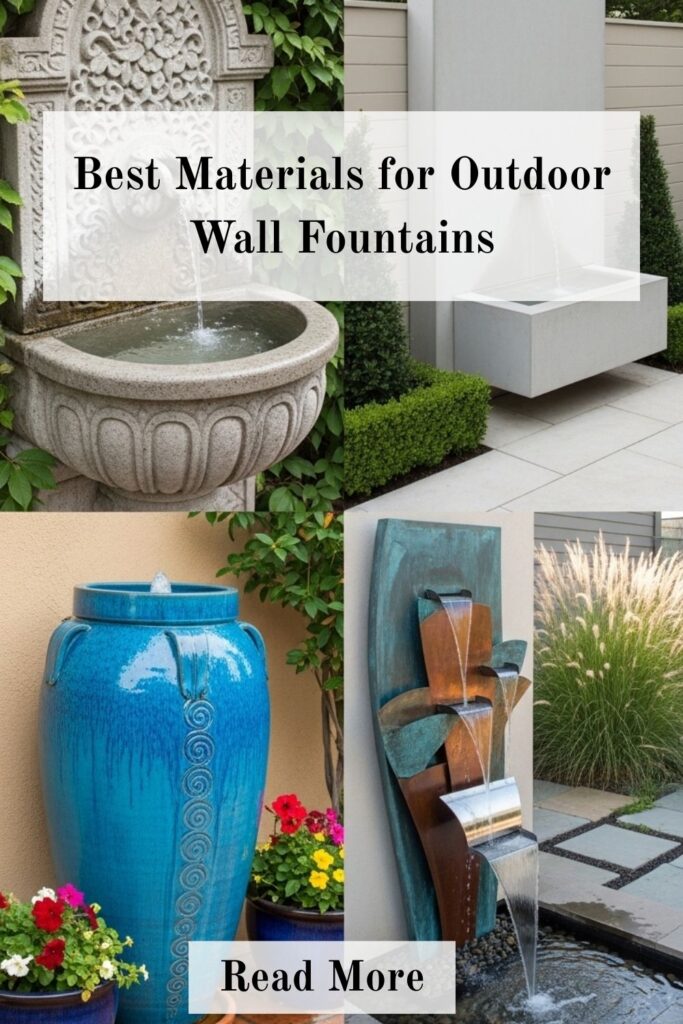
Material choice is the single most important decision you’ll make when selecting an outdoor wall fountain; it determines aesthetic, longevity, weight, maintenance requirements, and price. Each material has genuine strengths and real limitations worth understanding before you commit.
Cast stone outdoor wall fountains are the classic choice, offering extraordinary visual authenticity and the kind of aged, weathered character that develops beautifully over time. Cast stone, a mixture of Portland cement, aggregate, and pigment is heavier than most alternatives, requiring robust wall fixings or a reinforced mounting structure.
It’s frost-resistant when properly manufactured, but check the specification carefully: poorly made cast stone can crack through freeze-thaw cycles in colder climates. Brands like Campania International and Henri Studio are widely respected for cast stone fountain quality and longevity.
Resin and fiberglass outdoor wall fountains offer the aesthetic range of cast stone at a fraction of the weight and price. Modern resin fountains convincingly replicate the look of stone, slate, copper, and bronze while remaining lightweight enough for a single person to install without specialist equipment.
UV stabilizers incorporated into quality resin wall fountains prevent color fading and surface degradation over time though cheaper versions will chalk and fade within a few seasons. Fiberglass wall fountains are particularly popular for large-format features where the weight of natural materials would present structural challenges.
Slate and natural stone outdoor wall fountains deliver unmatched authenticity and tactile quality. Slate wall fountains where water sheets across a polished stone face before collecting in a trough below are among the most architecturally sophisticated outdoor wall fountain designs available.
Granite, limestone, and sandstone are all used in bespoke fountain commissions, each bringing distinct color, texture, and character. Natural stone is heavy, expensive, and requires professional installation for larger pieces but the result is a water feature of genuine permanence and beauty that no manufactured alternative quite replicates.
Stainless steel and metal outdoor wall fountains have surged in popularity alongside contemporary and industrial garden design aesthetics. Brushed stainless steel, corten weathering steel, powder-coated aluminum, and copper all offer sleek, architectural profiles that work beautifully against rendered walls, timber cladding, and modern masonry.
Copper wall fountains develop a verdigris patina over time that many gardeners find extraordinarily beautiful, a living finish that changes with age and exposure. Corten steel wall fountains follow the same principle, developing a rich rust-toned surface layer that stabilizes and protects the steel beneath.
Which Material Lasts Longest in an Outdoor Wall Fountain?
For pure longevity, natural stone and stainless steel outlast all other outdoor wall fountain materials when properly maintained. Grade 316 marine-grade stainless steel resists corrosion even in coastal environments where salt air accelerates degradation of lesser metals. Granite and slate are effectively indestructible in normal garden conditions, requiring only periodic cleaning to maintain their appearance.
For those who prefer the classic look of cast stone at a lower price point, high-density glass fiber reinforced concrete (GFRC) offers comparable durability at significantly reduced weight and cost.
How to Choose the Right Outdoor Wall Fountain for Your Space
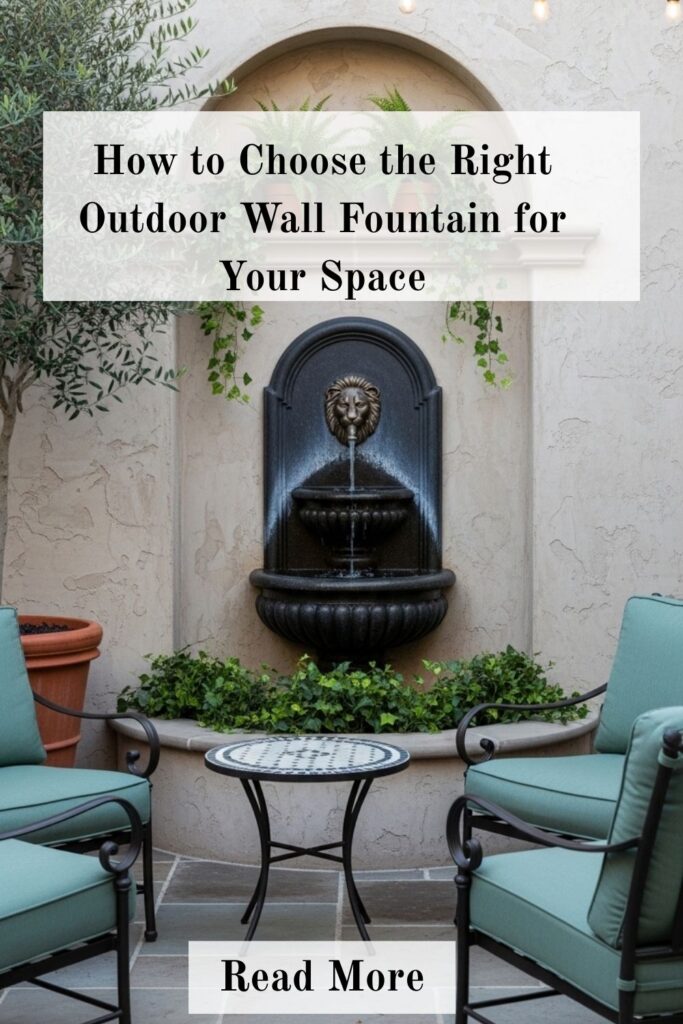
Choosing the right outdoor wall fountain requires honest assessment of four key variables: your wall, your space, your style, and your budget. Rushing this decision is the most common reason homeowners end up with a fountain that looks wrong, sounds wrong, or fails to perform as expected.
Start with the wall itself. Load-bearing capacity determines what size and weight of the fountain is safely mountable; a standard timber fence cannot support a 200-pound cast stone feature, while a solid brick or block wall can. Wall aspect matters enormously: a north-facing wall in a shaded courtyard suits a moss-covered cast stone fountain beautifully, while a sun-drenched south-facing wall might showcase a stainless steel sheet fountain to spectacular effect.
How to Install an Outdoor Wall Fountain
Installing an outdoor wall fountain ranges from a straightforward two-hour DIY project to a multi-day professional installation depending on the complexity of the feature and the condition of the mounting wall. For most self-contained wall fountain kits, the process follows a consistent sequence that any competent DIYer can manage confidently.
Begin by locating the power supply route before marking any mounting positions. The pump requires a weatherproof outdoor power outlet, ideally a GFCI-protected outdoor socket positioned within reach of the pump cable, which typically runs 6–10 feet. Never extend pump cables with standard indoor extension cords in an outdoor fountain application; use only outdoor-rated extension cables or have an electrician install a dedicated outlet at the appropriate position.
For masonry walls, use a hammer drill and masonry bit sized to match your wall anchor specification, insert stainless steel wall anchors, and mount the backing plate or hanging bracket before lifting the fountain face into position. For very heavy cast stone or natural stone fountains, enlist a second person for the mounting step; attempting this alone risks both injury and damage to the fountain.
Fill the reservoir to the marked minimum water level before switching on the pump, and adjust the flow control valve (present on most quality pumps) to achieve your preferred water sound and flow rate.
Do You Need a Plumber to Install an Outdoor Wall Fountain?
Most self-contained outdoor wall fountains require no plumber; they recirculate water through an internal pump and need only an outdoor power outlet to operate. A plumber becomes necessary only when connecting to a mains water supply for automatic top-up, installing a subsurface reservoir for a built-in feature, or integrating drainage for overflow management in a large installation. If you’re commissioning a built-in outdoor wall fountain as part of a broader landscaping project, incorporating plumbing from the outset is far more cost-effective than retrofitting it later.
Outdoor Wall Fountain Maintenance: Keeping It Beautiful Year-Round
Outdoor wall fountain maintenance is straightforward but non-negotiable, neglect it and even the most beautiful feature will develop algae, scale deposits, and pump failure within a season or two. A simple quarterly maintenance routine keeps your wall fountain performing and looking its best indefinitely.
Algae control is the most common maintenance challenge. Green algae builds up on fountain surfaces exposed to sunlight, particularly on cast stone and natural stone faces where the porous surface provides ideal attachment points. Fountain algaecide tablets or a small measure of white distilled vinegar added to the reservoir every two to four weeks effectively suppresses algae growth without harming surrounding plants. Avoid chlorine-based pool treatments in garden wall fountains; they can bleach stone surfaces and harm nearby planting if the water splashes or overflows.
Scale and mineral deposit removal is particularly important in hard water areas, where calcium carbonate deposits build up on pump impellers, tubing, and fountain faces over time. Soak affected components in a 50/50 white vinegar and water solution for several hours, then scrub with a soft brush. The pump filter present in most quality fountain pumps should be removed and cleaned monthly during the operating season, as debris accumulation is the primary cause of pump failure in outdoor wall fountains.
For winter maintenance in frost-prone climates, drain the reservoir completely, disconnect and store the pump indoors, and cover the fountain face with a breathable frost protection fleece to prevent freeze-thaw cracking.
Styling Your Outdoor Wall Fountain
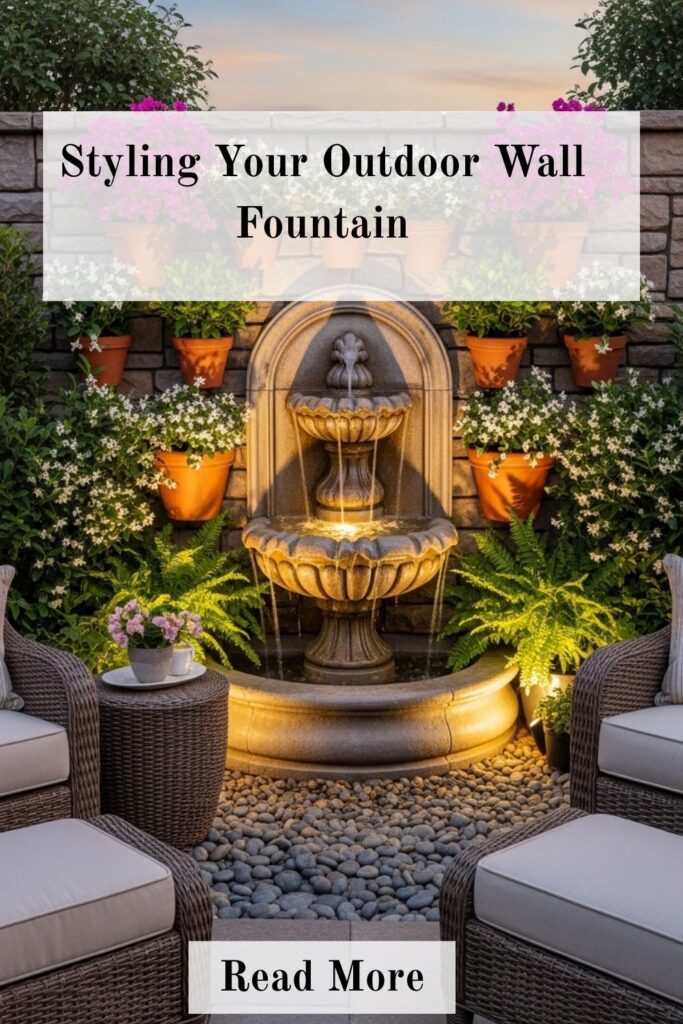
An outdoor wall fountain doesn’t exist in isolation; it’s part of a broader outdoor composition, and how you style the surrounding space determines whether it reads as a considered design feature or an afterthought. The most successful wall fountain styling treats the feature as a focal point and builds outward from it with complementary elements.
Planting around an outdoor wall fountain softens the transition between the hard water feature and the surrounding garden. Ferns, hostas, creeping Jenny, and mind-your-own-business all thrive in the humidity created by a nearby water feature, their lush foliage framing the fountain beautifully without obscuring it.
Moss planting in the crevices of a cast stone fountain accelerates the aged, naturalistic look that many gardeners find most appealing. For a more formal approach, clipped box topiary in matching pots flanking the fountain creates a symmetrical, structured composition that suits classical wall fountain styles perfectly.
Lighting your outdoor wall fountain after dark transforms it from a daytime feature into an evening focal point. Submersible LED lights placed in the basin illuminate the falling water from below, creating extraordinary light refraction effects. Uplights positioned at the base of the wall wash light across the fountain face, revealing texture and surface detail that daylight flattens.
What Plants Work Best Near an Outdoor Wall Fountain?
The best plants for positioning near an outdoor wall fountain are moisture-loving species that benefit from the increased ambient humidity without requiring waterlogged soil. Ferns, particularly lady fern, ostrich fern, and Japanese painted fern are exceptional companions for shaded wall fountains.
Ligularia, astilbe, rodgersia, and gunnera all thrive in the moist microclimate a fountain creates. For sun-exposed wall fountains, lush tropical-looking plants like canna lilies, elephant ears, and ornamental grasses create a dramatically lush backdrop that contrasts beautifully with the hard fountain surface.
Best Outdoor Wall Fountains by Style
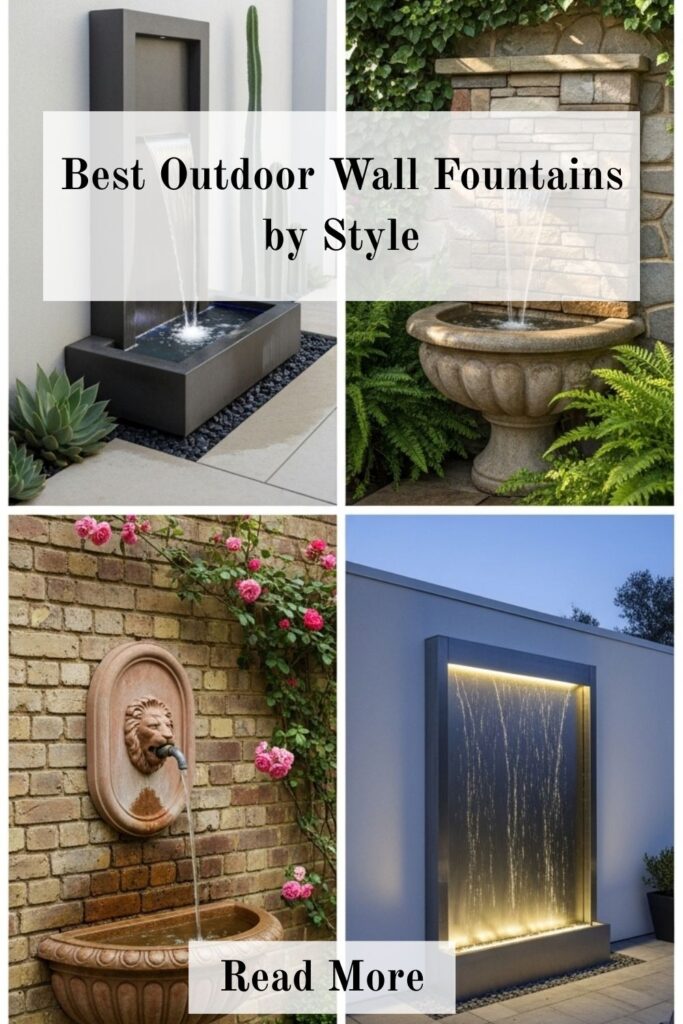
Matching your outdoor wall fountain to your garden’s existing aesthetic creates a far more compelling result than choosing a feature in isolation. Here’s how the most popular wall fountain styles align with different garden design approaches.
Classical and traditional gardens suit lion mask fountains, shell-form wall basins, cherub spout features, and tiered cascade fountains in cast stone or reconstituted limestone. These designs carry centuries of garden history and age magnificently; the patina they develop over years of weathering is precisely what makes them so visually compelling in mature garden settings. Pair them with clipped yew or box hedging, gravel paths, and terracotta pots for a cohesive traditional composition.
Contemporary and minimalist gardens suit frameless water blade features, stainless steel sheet fountains, geometric slot spillways, and corten steel cascade panels. Clean lines, simple geometry, and premium materials define this approach; the fountain becomes as much sculpture as water features. Pair with large-format porcelain paving, architectural planting, and concealed LED lighting for a composition that reads as genuinely designed rather than assembled.
Mediterranean and courtyard gardens suit terracotta wall pots with spouts, Moorish-style tile-faced fountains, stone trough basins, and antique-style iron spout features. The sound of water is central to Mediterranean garden design historically, it served as both a cooling mechanism and a symbol of abundance. Glazed ceramic tiles, rendered walls in warm ochre or terracotta, and fragrant planting like jasmine, lavender, and rosemary complete the sensory picture around a Mediterranean-style wall fountain.
Read More About: 20+ Best Gifts for Gardeners That They’ll Actually Use and Love
Outdoor Wall Fountains for Small Spaces
Small spaces benefit most from outdoor wall fountains but proportional discipline is essential. In a compact courtyard or narrow terrace, a wall-mounted water spout feeding into a slim trough basin delivers the full sensory experience of a larger feature without consuming the precious space that freestanding alternatives demand.
The key is choosing a feature whose basin projection is minimal ideally under 12 inches from the wall face and whose acoustic output is calibrated for close-proximity enjoyment rather than garden-scale projection.
Frequently Asked Questions
How much does an outdoor wall fountain cost?
Outdoor wall fountain prices range from around $80–$200 for basic resin self-contained units, $300–$800 for mid-range cast stone or quality resin features, $800–$3,000 for premium natural stone, slate, or metal designs, and $3,000–$15,000+ for fully custom built-in installations.
How often do you need to refill an outdoor wall fountain?
Outdoor wall fountains lose water primarily through evaporation, with loss rates varying significantly by climate, sun exposure, and fountain size. In warm, sunny conditions, a small to medium wall fountain may require topping up every three to seven days. In cooler or shaded settings, weekly or fortnightly top-ups are typically sufficient.
Can outdoor wall fountains be left on all night?
Yes most outdoor wall fountains are designed for continuous operation and can safely run overnight. Quality submersible pumps are rated for continuous duty and generate very little heat in normal operation.
Do outdoor wall fountains attract mosquitoes?
Moving water does not attract mosquitoes in fact, it actively deters them. Mosquitoes breed exclusively in still, stagnant water, and the constant circulation of an outdoor wall fountain prevents the standing water conditions they require for egg-laying. Conclusion
Outdoor wall fountains are among the most rewarding investments any homeowner can make in their outdoor space. They solve the space problem that prevents many gardeners from enjoying water features, deliver genuine sensory benefits that no other garden element quite replicates, and add a layer of architectural sophistication that elevates the entire outdoor composition. From a simple resin spout and basin on a garden fence to a fully custom slate cascade built into a rendered courtyard wall, there is an outdoor wall fountain for every space, every style, and every budget.
Choose your material with longevity in mind, size your feature to your wall and your space with care, and style the surrounding planting and lighting with the same attention you’d give any other focal point in your garden. Maintain it consistently through the seasons and it will reward you with years and decades, in the case of quality stone or metal of beauty, sound, and life. An outdoor wall fountain doesn’t just add a feature to your garden. It adds a presence that changes how the whole space feels, every single day you spend in it.