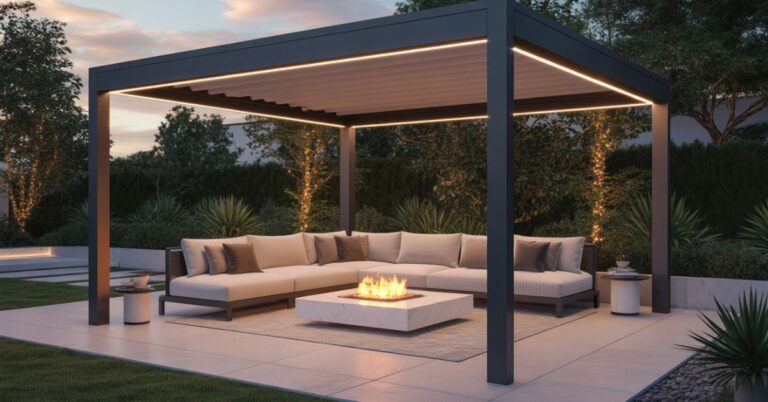
Patio Add On To House: Complete Guide For Perfect Outdoor

You’ve run out of room inside your home but aren’t ready for a full-scale renovation. Every family gathering feels cramped, and you dream about entertaining outdoors without hauling furniture across the yard. The problem intensifies when you see neighbors enjoying seamless indoor-outdoor living while your house feels disconnected from your backyard. This frustration leads to postponed gatherings, underutilized outdoor space, and missed opportunities to increase your home’s value and functionality.
The solution lies in a well-planned patio add on to house. This strategic home improvement creates additional living space, boosts property value by 8-15%, and transforms how you use your home year-round. Whether you’re considering a simple attached patio or an elaborate covered patio extension with outdoor kitchens and fireplaces, understanding the planning process, costs, and design options ensures your investment delivers maximum returns. This comprehensive guide walks you through every decision from initial concept to final inspection.
What Is a Patio Add On and How Does It Differ From Other Outdoor Structures?
A patio add on to house creates a permanent outdoor living area that physically connects to your home’s exterior wall. Unlike freestanding patios positioned elsewhere in your yard, attached additions integrate structurally with your house through shared walls, rooflines, or foundations.
The connection point distinguishes patio additions from detached structures. Your new space typically includes a door or wide opening from an existing room, creating seamless flow between indoor and outdoor areas. This integration requires coordination with your home’s existing structure, including matching roof pitches, tying into electrical systems, and ensuring proper drainage away from the foundation. Detached patios, gazebos, or pergolas stand independently and don’t require the same structural considerations. The patio add on to house functions as an extension of your interior square footage rather than a separate backyard feature, which impacts both construction complexity and property value calculations.
How Much Does a Patio Add On to House Cost?
Patio addition cost varies dramatically based on materials, size, roofing, and features. Understanding price ranges helps you budget realistically and prioritize elements that matter most.
Basic uncovered concrete patios run $8-$15 per square foot installed, meaning a 200-square-foot addition costs $1,600-$3,000. Mid-range options using stamped concrete, pavers, or basic composite decking with simple railings range $15-$30 per square foot ($3,000-$6,000 for 200 square feet). High-end patio add on to house with roofing, ceiling fans, lighting, and premium materials cost $35-$75 per square foot ($7,000-$15,000 for 200 square feet). Luxury builds incorporating outdoor kitchens, fireplaces, custom stonework, and elaborate roofing systems reach $75-$150+ per square foot. Regional labor costs significantly impact totals expect 30-50% higher prices in major metropolitan areas compared to rural locations. Additional expenses include permits ($200-$1,000), engineering reports if required ($500-$2,000), and landscaping restoration ($500-$3,000).
What Are the Main Types of Patio Add Ones for Houses?
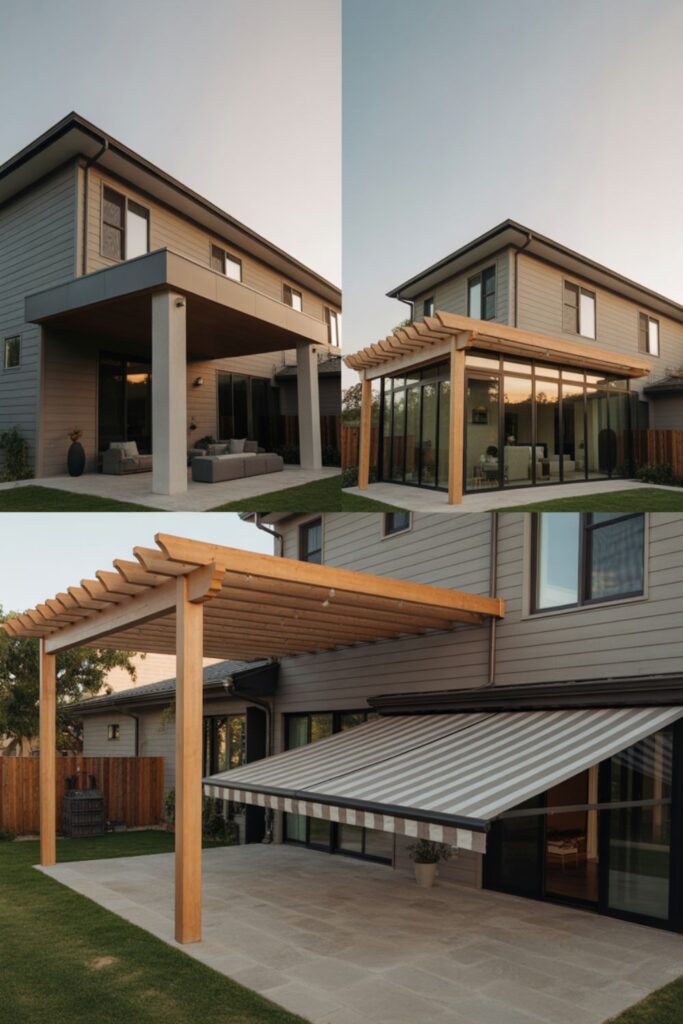
Four primary patio addition styles suit different needs, budgets, and home architectures. Choosing the right type sets the foundation for all subsequent decisions.
Uncovered concrete or paver patios provide the most economical option, creating simple outdoor floors attached to your home. These work well in mild climates or as starter projects you can enhance later. Covered patios with roof extensions tie into your existing roofline or create standalone roof structures supported by posts. The overhead protection enables year-round use regardless of weather. Three-season rooms enclose covered patios with screen panels or removable windows, offering insect protection and temperature control without full HVAC systems. Four-season sunrooms feature insulated walls, proper heating and cooling, and weatherproof construction that functions as true square footage additions to your home. Each type requires increasingly complex construction, permitting, and investment but delivers correspondingly greater functionality and property value.
Do You Need a Permit for a Patio Add On to House?
Building codes and patio building permit requirements vary by jurisdiction, but most attached patio projects require permits. Assuming you can skip this step leads to costly consequences.
Permits typically apply when your addition exceeds certain thresholds: attaching to your home’s structure, adding electrical or plumbing, installing a roof, or creating structures taller than a specific height (often 30 inches). Simple ground-level patios not attached to your house sometimes fall below permit thresholds, but connection points trigger requirements. The permit process involves submitting plans, paying fees ($200-$1,000+), and scheduling inspections at various construction phases. Inspectors verify proper foundation requirements, structural connections, electrical work, and code compliance. Working without permits creates problems when selling your home title companies may require expensive retroactive permits, removal of unpermitted work, or price reductions. Insurance claims for damage to unpermitted structures often get denied. Most contractors refuse to work without proper permits, protecting both parties legally.
How Do You Prepare Your House for a Patio Addition?
Structural integration determines whether your patio add on to house remains secure for decades or develops problems within years. Proper preparation prevents costly repairs and ensures safety.
Professional structural assessment examines your home’s foundation, exterior walls, and existing roofline to identify connection points and necessary reinforcements. Engineers may recommend retaining walls if your yard slopes, preventing soil erosion under your new patio. The attachment point where new construction meets existing walls requires careful flashing installation to prevent water infiltration; this detail causes most patio addition failures. Your contractor should remove siding at connection points, install proper ledger boards bolted to wall studs or concrete foundations, and apply multiple layers of weatherproofing before reinstalling siding. Underground utility location prevents accidentally cutting through electrical, gas, or water lines during excavation. Professional locator services mark these for free through 811 calls. Existing drainage patterns need evaluation; your addition shouldn’t create water pooling against your foundation or redirect runoff toward neighbors’ properties.
What Foundation and Structural Requirements Apply to Patio Add Ones?
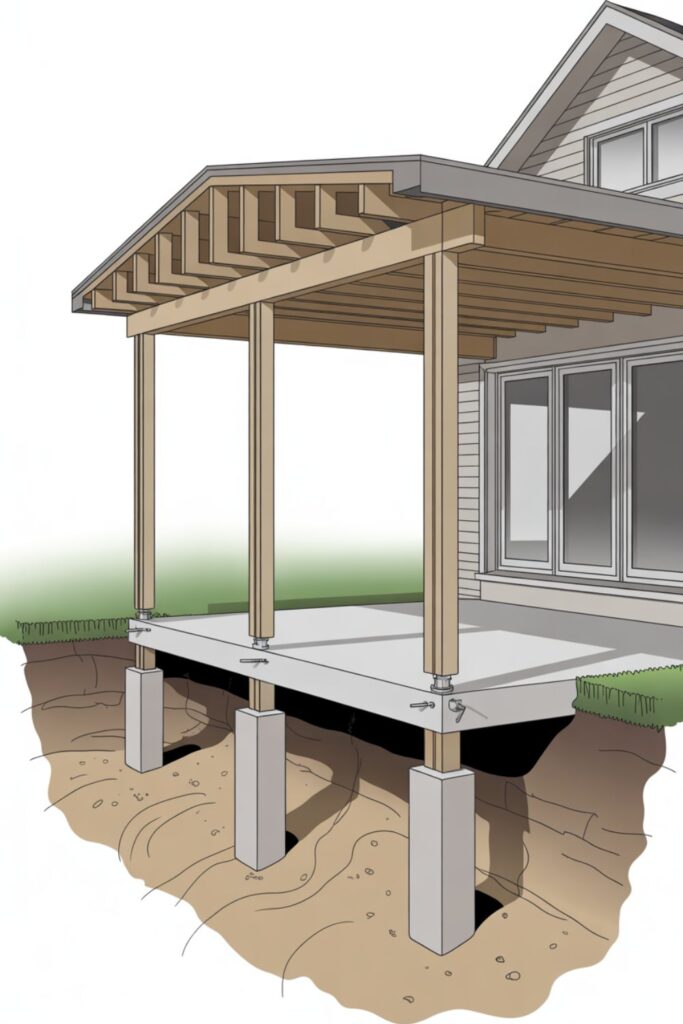
Foundation requirements vary based on your patio type, local climate, and soil conditions. Cutting corners here guarantees future problems regardless of how beautiful the finished surface looks.
Frost-depth footings prevent heaving in cold climates; concrete piers or foundation walls must extend below the frost line (12-48 inches deep depending on location) to remain stable through freeze-thaw cycles. Warm-climate regions may allow shallower footings but still require adequate depth for soil stability. Concrete slab foundations work well for ground-level patios, typically measuring 4-6 inches thick with wire mesh or rebar reinforcement. The slab should slope 1/4 inch per foot away from your house for proper drainage. Elevated decks require posts set in concrete footings spaced according to span tables based on beam and joist sizes. Attachment to your home’s band board or foundation requires lag bolts or anchor bolts sized to code specifications; undersized fasteners allow the structure to pull away from your house. Roofed additions need adequate support for snow loads (if applicable) and proper flashing where the new roof meets existing walls.
Should You Choose Concrete, Pavers, or Composite Decking for Your Patio Addition?
Material selection impacts appearance, maintenance, cost, and longevity. Each option excels in different scenarios rather than one being universally superior.
Concrete slabs provide the most economical foundation, costing $6-$12 per square foot for basic finishes. Stamped or stained concrete adds visual interest ($10-$18 per square foot) with patterns mimicking stone, brick, or tile. Concrete withstands heavy furniture and requires minimal maintenance but cracks over time and feels hard underfoot. Pavers create sophisticated appearances with natural stone, brick, or concrete units laid over sand or gravel bases. Costs range $12-$25 per square foot installed. Individual pavers allow easy repairs to replace damaged pieces without replacing entire sections. Permeable paver systems improve drainage, preventing water accumulation. Composite decking costs $15-$35 per square foot installed but eliminates staining, sealing, and rot concerns plaguing wood. The elevated structure improves drainage and allows underfloor storage or mechanical access. Wood decking ($12-$20 per square foot) offers natural beauty but demands regular maintenance including annual sealing and eventual board replacement.
How Do Covered vs Uncovered Patio Add Ons Compare?
Roofing decisions dramatically affect both patio addition cost and functionality. Understanding the tradeoffs helps you invest appropriately for your climate and usage patterns.
Uncovered patios cost 40-60% less than patio add on to house equivalents, making them attractive starter projects. You’ll enjoy sunshine and stargazing but face weather limitations rain cancels activities, summer sun becomes unbearable midday, and snow renders spaces unusable in winter. UV exposure also fades furniture and damages fabrics more quickly. Covered patio extensions with solid roofs shield against all weather, extending usable days per year significantly. Expect to add $12-$40 per square foot for roof construction including rafters, decking, shingles or metal roofing, and gutters. Roof styles include gable (pitched roof matching your home’s architecture), shed (single-slope), or hip (slopes on all sides). Partial coverage through pergolas or shade sails costs less ($5-$15 per square foot) while providing sun protection without completely blocking sky views or rainwater.
What Electrical and Lighting Options Should You Include?
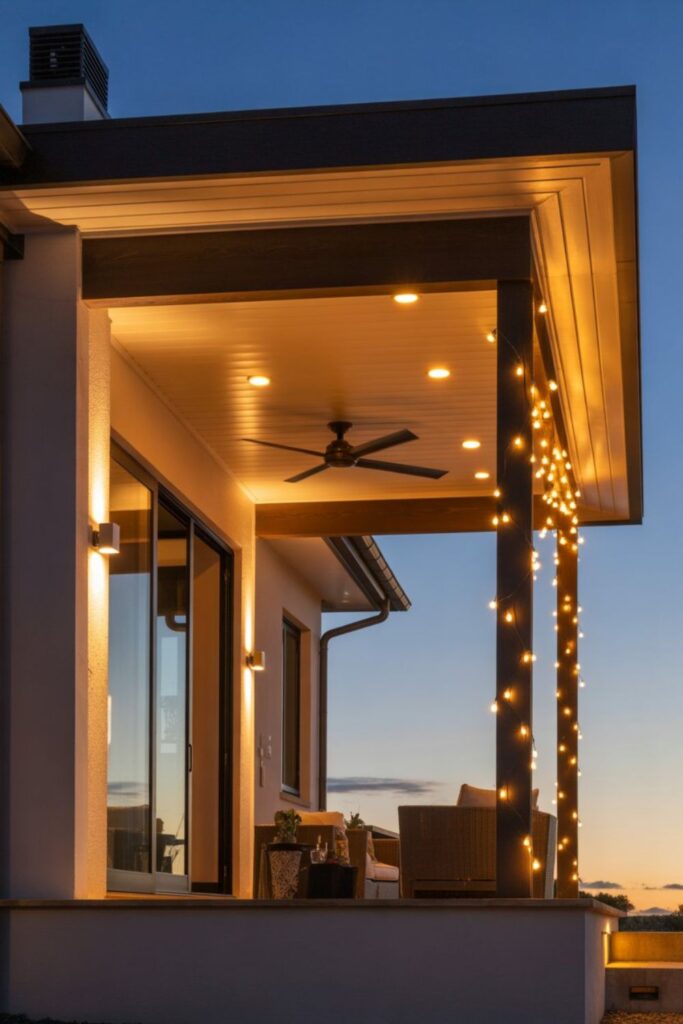
Proper lighting transforms your patio add on to house from a daytime-only space into a nighttime entertainment venue. Planning electrical infrastructure during construction prevents expensive retrofitting later.
Dedicated electrical circuits prevent overloading your home’s existing systems. Most building codes require GFCI (ground fault circuit interrupter) protection for all outdoor outlets. Install at least two weatherproof outlets along the perimeter, positioned where you’ll likely need them for music systems, charging stations, or decorative lighting. Overhead lighting from ceiling-mounted fixtures provides a primary illumination plan one fixture per 100 square feet minimum. Recessed canister lights, pendant fixtures, or ceiling fans with integrated lights serve this purpose. Perimeter lighting along edges and steps ensures safety while highlighting your patio add on to house. String lights or cafe lights create ambiance for entertaining, running along roof lines or between posts. Dimmer switches allow adjusting brightness for different activities and moods. Consider wiring for future additions like outdoor speakers, televisions, or heaters even if you’re not installing them immediately running conduit during construction costs pennies compared to post-completion installations.
Read More About: 30+ Open Patio Ideas For Creative Designs
How Does a Patio Addition Affect Home Value and ROI?
Strategic outdoor living addition investments recover substantial portions of their costs while improving your quality of life. Understanding property value impacts helps justify the expense.
Real estate studies show well-designed patio additions return 60-80% of their costs at resale, with covered patios performing better than uncovered versions. A $15,000 covered patio extension might add $9,000-$12,000 to your home’s appraised value. Geographic location affects returns significantly warm climates where outdoor spaces function year-round see higher ROI than northern regions with limited outdoor seasons. The quality of integration matters tremendously. Professionally installed additions that match your home’s architecture and use complementary materials add more value than obvious afterthought structures. Features like outdoor kitchens, fireplaces, and high-end finishes appeal to luxury buyers but may not return their full investment unless your neighborhood supports those price points. The lifestyle value of increased entertaining space, expanded living area, and improved home enjoyment often exceeds pure financial returns for long-term homeowners.
Can You Add an Outdoor Kitchen to Your Patio Addition?
Outdoor kitchen integration elevates your patio add on to house from simple seating area to full entertainment venue. Planning infrastructure during initial construction prevents doubling costs later.
Basic setups include a built-in grill and small counter space, adding $3,000-$8,000 to your project. Mid-range kitchens incorporate grills, refrigerators, storage cabinets, and generous countertops for $8,000-$20,000. Luxury installations with pizza ovens, warming drawers, ice makers, and bar seating exceed $20,000-$50,000. Utility requirements include natural gas or propane lines for grills, electrical outlets for refrigerators and lighting, and potentially water supply for sinks. Drainage connections for sinks require proper plumbing with appropriate venting. Choose weather-resistant materials, stainless steel appliances, marine-grade polymer cabinets, and granite or concrete countertops withstand outdoor elements better than indoor equivalents. Position cooking areas downwind from primary seating when possible, preventing smoke from overwhelming guests. Local codes may require minimum distances between grills and your home’s structure, typically 10-15 feet for safety.
What Drainage Considerations Are Critical for Patio Add Ons?
Proper drainage system design prevents the most common and expensive patio addition problems. Water management deserves as much attention as the visible finished surfaces.
Grade your patio surface to slope away from your house at minimum 1/4 inch per foot this seemingly small angle prevents water from pooling and seeping into your foundation. French drains along the outer edge collect and redirect water away from the structure. These perforated pipes buried in gravel trenches intercept runoff before it reaches unwanted areas. Gutters on roofed patio structures prevent water from cascading off roof edges and causing erosion or splashing. Extend downspouts at least 6-10 feet from your foundation through underground drainage pipes. Permeable materials like gravel borders or permeable pavers allow water absorption rather than forcing all runoff to flow elsewhere. Never grade your addition to direct water toward neighbors’ properties this creates disputes and potential liability. In areas with heavy rainfall or poor soil drainage, consider installing sump systems or dry wells to handle excess water volume.
How Long Does Patio Add On Construction Take?
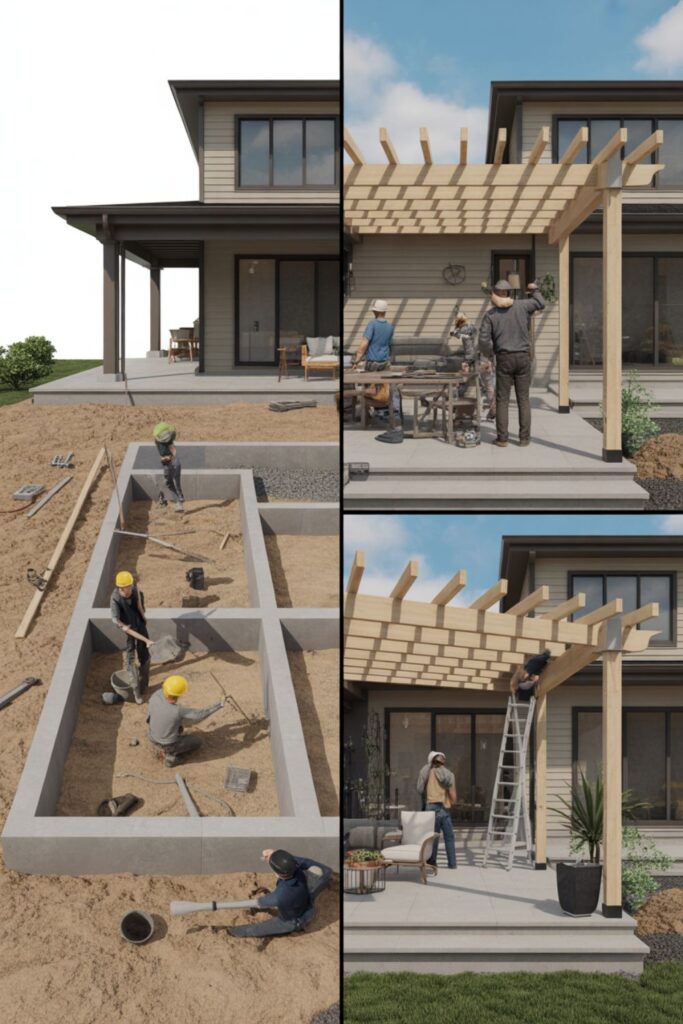
Timeline expectations help you plan around construction disruption and coordinate with contractors. Multiple factors influence home patio construction duration.
Simple uncovered concrete or paver patios take 1-3 weeks from excavation to completion. This includes site preparation, base material installation, forming and pouring or setting pavers, and curing time. Covered patio extensions require 4-8 weeks due to additional framing, roofing, electrical work, and finishing details. Complex projects with outdoor kitchens, extensive electrical and plumbing, custom features, and luxury finishes extend timelines to 8-12 weeks. Weather significantly impacts schedules, rain delays concrete pours and prevents work on multiple construction phases. Plan projects during your region’s dry season when possible. Permit processing adds 2-6 weeks before construction begins, depending on your municipality’s backlog and review complexity. Inspection scheduling can add several days between phases as you wait for inspector availability. Material availability affects timelines custom-ordered items like specialty pavers or unique fixtures may require 4-8 week lead times. Experienced contractors build buffer time into schedules, but expect delays on nearly every project.
Should You Hire Contractors or DIY Your Patio Addition?
Contractor selection balances budget concerns against quality, timeline, and risk factors. Honest assessment of your skills and available time guides this critical decision.
DIY saves 40-60% on labor costs, making it attractive for handy homeowners with construction experience. Simple ground-level paver or concrete patios fall within ambitious DIYers’ capabilities if they rent proper equipment and research techniques thoroughly. However, attached patio projects require skills most homeowners lack: properly flashing connections to existing structures, installing ledger boards to code specifications, and ensuring adequate structural support demand professional expertise. The risk of water damage from improper flashing or structural failure from inadequate footings far exceeds labor savings. Licensed contractors carry insurance protecting you from liability and provide warranties on their work. They navigate permitting processes efficiently, understand local building codes, and maintain relationships with inspectors. Get at least three detailed written bids comparing similar scope and materials. Verify licenses, insurance, and references before hiring. Consider a hybrid approach hire professionals for complex structural, electrical, and roofing work while handling simpler tasks like painting, landscaping, or furniture selection yourself.
What Mistakes Should You Avoid When Planning a Patio Add On?
Learning from others’ errors saves thousands in corrections and regrets. These common pitfalls catch even experienced homeowners.
Undersizing creates the most frequent regret patios feeling spacious on paper seem cramped once furniture fills them. Add 20-30% to your initially planned square footage. Ignoring sun patterns leads to unusable spaces that become ovens at peak hours. Observe your yard throughout the day before finalizing the location. Skimping on foundation and drainage to save money causes expensive problems within 2-5 years as structures settle, crack, or water damage occurs. Mismatching your home’s architectural style makes additions look like obvious afterthoughts, harming rather than helping property value. Neglecting permit requirements creates legal nightmares when selling or refinancing. Choosing materials based solely on initial cost without considering maintenance requirements leads to buyer’s remorse that cheap wood decking needs annual maintenance costing thousands over its lifetime. Failing to consider future needs means missing opportunities to run electrical conduit or plumbing rough-ins that become prohibitively expensive to add later.
How Do You Maintain Your Patio Addition Long-Term?
Preventive maintenance protects your investment and prevents minor issues from becoming major repairs. Different materials require specific care schedules.
Concrete patios need sealing every 2-3 years to prevent moisture absorption and staining. Power wash annually to remove mold, mildew, and dirt buildup. Address cracks immediately with concrete patching compounds before water infiltration causes expansion. Paver patios require occasional re-sanding of joints as weather and foot traffic displace material. Individual damaged pavers can be replaced without affecting surrounding areas. Composite decking demands minimal maintenance sweep regularly and wash with mild soap and water annually. Inspect fasteners yearly, tightening any loose screws. Wood decking requires annual inspection, cleaning, and resealing to prevent rot, splitting, and insect damage. Roofed structures need gutter cleaning quarterly to prevent water overflow damaging connections to your house. Inspect flashing annually, resealing any gaps before they allow water intrusion. Check structural posts for settling or movement, addressing issues immediately to prevent progressive damage. Weatherproof furniture and accessories during off-seasons to extend their lifespan.
Read More About: Modern Small Backyard Design For Compact Spaces
What Financing Options Exist for Patio Add On Projects?
Funding your backyard patio addition requires exploring multiple financing routes. Choosing the right option minimizes interest costs while preserving financial flexibility.
Home equity loans provide lump-sum amounts at fixed interest rates, typically 5-8% for creditworthy borrowers. You’ll repay over 5-15 years with predictable monthly payments. Home equity lines of credit (HELOCs) function like credit cards secured by your home equity, offering variable rates and draw periods where you access funds as needed. Personal loans through banks or credit unions require no home collateral but charge higher interest rates (7-15%) and offer shorter repayment terms (2-7 years). Credit cards work for smaller projects under $10,000 if you qualify for 0% introductory APR offers and can repay before promotional rates expire. Cash-out refinancing replaces your existing mortgage with a larger one, funding your patio addition with the difference. This makes sense only if current rates improve your overall mortgage terms. Some contractors offer financing arrangements, though rates often exceed other options and read terms carefully. Consider the project’s ROI when selecting financing investments likely to increase home value justify longer-term, lower-rate options.
Frequently Asked Questions
How far can a patio extend from a house without additional support?
Most cantilevered patio roofs safely extend 8-12 feet from house walls without intermediate posts, depending on engineering and snow load requirements. Longer spans require support posts or beams every 10-15 feet. Uncovered patios have no extension limits since they’re ground-supported, though very large expanses may need expansion joints preventing cracking.
Do patio additions count as living space square footage?
Uncovered and three-season patios don’t count toward official living space calculations for appraisals or property taxes. Fully enclosed, heated, and cooled four-season rooms meeting local building codes for living space do count. This distinction affects property value, insurance rates, and tax assessments significantly.
Can you build a patio addition on a sloped yard?
Yes, though costs increase 20-40% compared to level sites. Options include extensive excavation to create level areas, building elevated decks accommodating slopes, or creating terraced multi-level patios. Retaining walls becomes necessary for slopes exceeding 3:1 ratios, adding $3,000-$15,000+ to budgets depending on height and materials.
What’s the minimum size for a functional patio add on?
Budget 100-150 square feet minimum for basic furniture placement: a small dining table and four chairs require roughly 100 square feet with circulation space. Comfortable entertaining spaces start at 200-300 square feet, accommodating dining and lounging zones. Outdoor kitchens need an additional 80-120 square feet beyond seating areas.
How do HOA restrictions affect patio additions?
Homeowners associations often regulate exterior modifications including patio additions through architectural review processes. Common restrictions cover maximum sizes, allowable materials, height limits, and setback requirements from property lines. Submit detailed plans for approval before beginning work unapproved additions may require expensive removal or modifications.
Will a patio addition affect my home insurance rates?
Simple patios rarely impact premiums since they don’t increase your home’s replacement value significantly. Elaborate covered structures with electrical systems, outdoor kitchens, or fireplaces may slightly increase rates as they represent additional insured value and potential risk. Contact your insurer before beginning major projects to understand coverage implications and ensure adequate protection.
Conclusion
A well-planned patio add on to house transforms your property’s functionality, livability, and value simultaneously. The investment pays dividends through expanded entertaining capacity, increased daily enjoyment, and substantial returns when selling your home. Success requires careful attention to structural integration, proper permitting, appropriate material selection, and realistic budget planning. Whether you choose a simple concrete extension or an elaborate covered patio with full amenities, prioritizing quality construction over cosmetic details ensures decades of reliable use.
Start your project by clarifying your primary goals and establishing a realistic budget including 15-20% contingency for unexpected issues. Consult multiple contractors, verify their credentials thoroughly, and invest in professional design help if your project involves complex structural elements. The difference between a mediocre addition and an exceptional one often comes down to proper planning and refusing to compromise on critical elements like drainage, flashing, and foundations. Your outdoor living addition should enhance your home for years to come make decisions that prioritize long-term satisfaction over short-term savings.