20+ Small Asian Garden Ideas for Tranquil Spaces

You dream of creating a serene Asian-inspired garden but feel overwhelmed by the complexity and authenticity required. Traditional Asian gardens seem to demand extensive space, rare plants, expensive stone features, and deep cultural knowledge that feels inaccessible. Every reference shows sprawling temple grounds or elaborate estate gardens that bear no resemblance to your small backyard or balcony.
This disconnect intensifies when you attempt to mix elements from different Asian cultures without understanding their meanings. You risk creating confused aesthetics that combine Japanese lanterns with Chinese pagodas and Thai statues in ways that feel decorative but lack authentic spirit. The fear of cultural appropriation or creating tacky “oriental” stereotypes paralyzes your planning, leaving your space empty rather than risking offensive design.
The reality offers hope: small Asian garden ideas adapt beautifully to compact spaces through the same minimalist principles that define authentic Eastern design. Japanese, Chinese, and Thai gardens all emphasize restraint, natural materials, and spiritual symbolism over size. This guide reveals practical Asian-inspired garden designs that respect cultural traditions while working within your space limitations, helping you create contemplative retreats that honor Eastern aesthetics without requiring temple-sized properties or expert-level knowledge.
Understanding Different Asian Garden Styles
Asian garden design encompasses distinct traditions from Japan, China, and Southeast Asia, and incorporating these principles is essential when creating a small Asian garden that feels authentic rather than generic. Understanding the differences between these styles allows you to design a corner or patio space that truly reflects Eastern-inspired aesthetics.
Japanese gardens are ideal for a small Asian garden focused on minimalism, asymmetry, and contemplation. They often feature raked gravel to symbolize water, carefully placed rocks representing mountains, and pruned plants that embody human connection with nature. Popular Japanese styles for a small Asian garden include karesansui (dry landscape gardens), chaniwa (tea gardens), and tsukiyama (hill gardens). These compact gardens promote meditation through simplicity and symbolic elements. Key plants for a Japanese-inspired small Asian garden include moss, Japanese maple, black pine, and bamboo, with every element serving both visual and spiritual purposes.
Chinese gardens lend themselves beautifully to a small Asian garden that emphasizes harmony and balance. Even in smaller spaces, you can replicate the feel of idealized landscapes with rocks, water features, and miniature architectural elements like a small pavilion, moon gate, or zigzag bridge. Symbolic plants such as peonies, chrysanthemums, bamboo, and plum blossoms can thrive in a small Asian garden, representing longevity, perseverance, flexibility, and resilience. Contrasts of rough and smooth textures, light and shadow, and water and stone help maintain the traditional yin-yang balance in even a compact small Asian garden.
Thai gardens inspire a tropical approach to a small Asian garden, bringing vibrancy and fragrance to limited spaces. Incorporate miniature Buddha statues, lotus ponds, jasmine, orchids, plumeria, and small tropical palms to evoke the lush richness of Thai design. Small decorative elements like spirit houses, gold accents, or colorful tiles can be scaled down for a small Asian garden, creating an authentic and vibrant corner without overwhelming the area.
By understanding these distinct traditions, you can design a small Asian garden that reflects authentic cultural principles or thoughtfully blends elements, ensuring that your compact outdoor space feels intentional, harmonious, and full of Eastern-inspired beauty.
Read More About: Mini Backyard Garden Ideas To Maximize Small Outdoor Spaces
Essential Elements of Small Japanese Gardens
Japanese garden design translates beautifully to compact areas, making it ideal for a small Asian garden or a small Japanese garden. Its inherent minimalism and careful composition allow authentic aesthetics even in tight spaces.
Gravel or sand forms the foundation of karesansui gardens in a small Japanese garden. Use white or light gray pea gravel, carefully raked into patterns representing water ripples or ocean waves. This low-maintenance element requires only occasional raking, which itself becomes a meditative practice. Even a 4×6-foot gravel area creates significant impact in a small Asian garden.
Rocks and stones serve as focal points in a small Japanese garden, symbolizing mountains or islands. Select weathered stones with interesting shapes and arrange them in odd-numbered groups three, five, or seven. Partially burying rocks makes them appear naturally emerged rather than placed artificially.
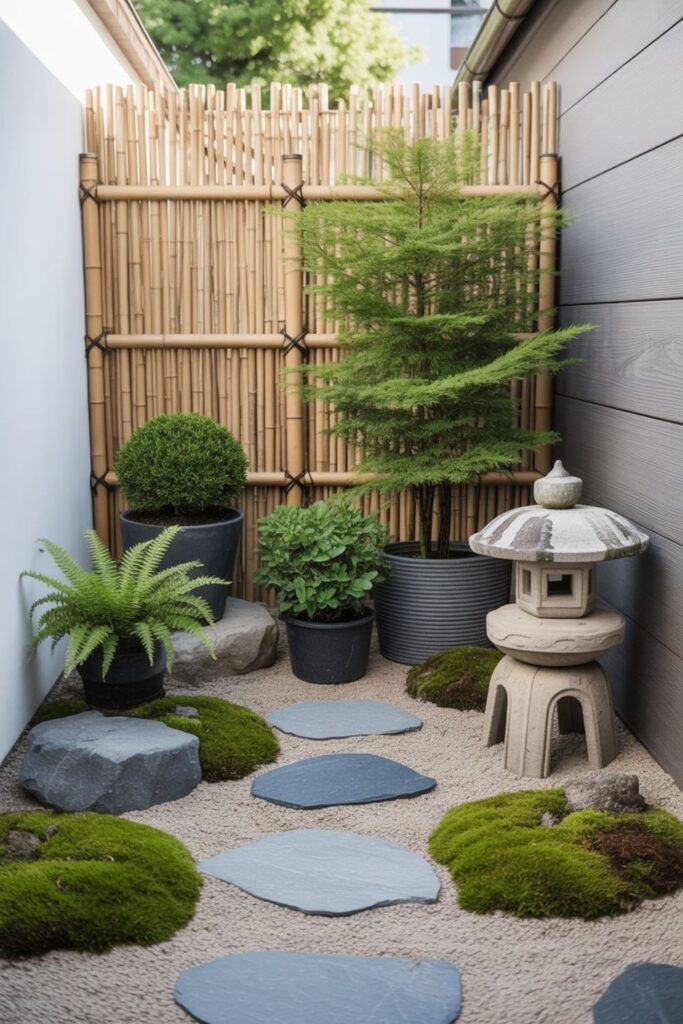
Bamboo fencing adds enclosure without solid barriers, a key feature in small Asian garden design. Kenniniji-gaki style uses horizontal poles lashed with black hemp rope, while Yotsume-gaki employs square lattice patterns. These screens filter light, frame views, and create intimate corners. Water features such as tsukubai (stone water basins) with bamboo spouts dripping into stone bowls enhance serenity, and the gentle sound of flowing water masks urban noise in a small Japanese garden.
Stepping stone paths (tobi-ishi) guide movement deliberately, forcing visitors to slow down and appreciate their surroundings. Space stones a comfortable stride apart in irregular patterns, which is ideal for a small Asian garden layout. Stone lanterns (ishidoro) provide traditional focal points: low Yukimi-gata lanterns near water and taller Tachi-gata lanterns along pathways.
Minimal plantings emphasize evergreens such as Japanese maple, black pine, azalea, and moss rather than colorful flowers. These essential elements allow a small Japanese garden to feel authentic, serene, and visually impactful even in areas as small as 6×8 feet through restraint, careful composition, and intentional simplicity.
Best Plants for Small Asian Gardens
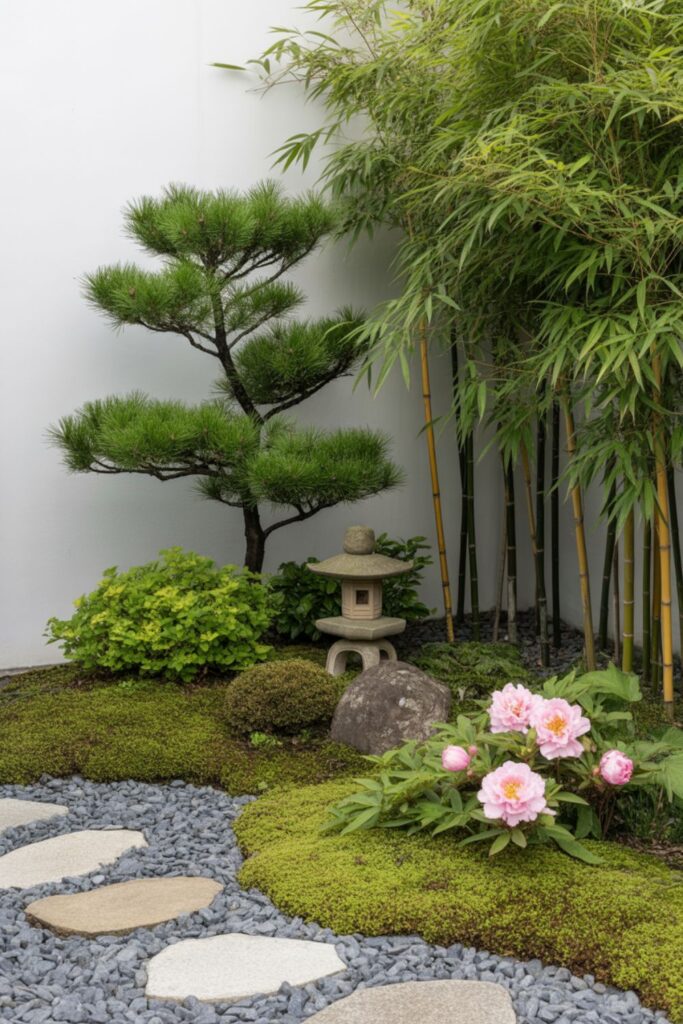
Plant selection is key to creating an authentic small Asian garden, as the right species carry cultural significance while thriving in compact spaces. Thoughtful choices ensure your garden reflects tradition without overwhelming a limited area.
Japanese garden plants emphasize structure, form, and evergreen foliage perfect for a small Asian garden. Japanese maple (Acer palmatum) provides graceful branching with leaves ranging from green to deep burgundy, turning brilliant crimson in autumn. Dwarf varieties like ‘Crimson Queen’ or ‘Shaina’ remain under 6 feet, ideal for compact corners. Black pine (Pinus thunbergii) offers a sculptural form that improves with age and careful pruning. Bamboo adds natural screening and chooses clumping varieties such as Fargesia that don’t spread invasively. Moss species carpet shaded areas with a soft green texture, while azaleas provide controlled bursts of spring color without overwhelming the design. Japanese forest grass (Hakonechloa) cascades elegantly, adding golden or variegated foliage to any small Asian garden.
Chinese garden plants bring symbolic meaning and timeless beauty to a small Asian garden. Bamboo represents flexibility and resilience, while plum blossoms (Prunus mume) symbolize perseverance, blooming in late winter. Peonies signify honor and wealth with impressive spring flowers, and chrysanthemums convey longevity, often associated with autumn. The Chinese fringe flower (Loropetalum) adds dramatic purple foliage with pink blooms. Weeping willow evokes classic Chinese landscapes, but for smaller areas, dwarf weeping cherry or corkscrew willow are ideal substitutes.
Thai garden plants introduce tropical abundance to a small Asian garden, creating lush, fragrant corners. Jasmine provides an intoxicating scent on climbing vines, while plumeria (frangipani) produces fragrant white, pink, or yellow blooms perfect for indoor overwintering in colder climates. Container orchids add exotic appeal, and tropical palms such as lady palm or bamboo palm provide vertical structure and lush backdrop. Ginger species contribute architectural foliage and vibrant flowers, enhancing the layered, sensory experience of a small Asian garden.
Selecting the right plants ensures that a small Asian garden remains culturally authentic, visually striking, and fully adapted to your available space and climate conditions.
Creating Zen Gardens in Small Spaces
Plant selection is key to creating an authentic small Asian garden, as the right species carry cultural significance while thriving in compact spaces. Thoughtful choices ensure your garden reflects tradition without overwhelming a limited area.
Japanese garden plants emphasize structure, form, and evergreen foliage perfect for a small Asian garden. Japanese maple (Acer palmatum) provides graceful branching with leaves ranging from green to deep burgundy, turning brilliant crimson in autumn. Dwarf varieties like ‘Crimson Queen’ or ‘Shaina’ remain under 6 feet, ideal for compact corners. Black pine (Pinus thunbergii) offers a sculptural form that improves with age and careful pruning. Bamboo adds natural screening and chooses clumping varieties such as Fargesia that don’t spread invasively. Moss species carpet shaded areas with a soft green texture, while azaleas provide controlled bursts of spring color without overwhelming the design. Japanese forest grass (Hakonechloa) cascades elegantly, adding golden or variegated foliage to any small Asian garden.
Chinese garden plants bring symbolic meaning and timeless beauty to a small Asian garden. Bamboo represents flexibility and resilience, while plum blossoms (Prunus mume) symbolize perseverance, blooming in late winter. Peonies signify honor and wealth with impressive spring flowers, and chrysanthemums convey longevity, often associated with autumn. The Chinese fringe flower (Loropetalum) adds dramatic purple foliage with pink blooms. Weeping willow evokes classic Chinese landscapes, but for smaller areas, dwarf weeping cherry or corkscrew willow are ideal substitutes.
Thai garden plants introduce tropical abundance to a small Asian garden, creating lush, fragrant corners. Jasmine provides an intoxicating scent on climbing vines, while plumeria (frangipani) produces fragrant white, pink, or yellow blooms perfect for indoor overwintering in colder climates. Container orchids add exotic appeal, and tropical palms such as lady palm or bamboo palm provide vertical structure and lush backdrop. Ginger species contribute architectural foliage and vibrant flowers, enhancing the layered, sensory experience of a small Asian garden.
Selecting the right plants ensures that a small Asian garden remains culturally authentic, visually striking, and fully adapted to your available space and climate conditions.
Water Features for Asian-Inspired Gardens
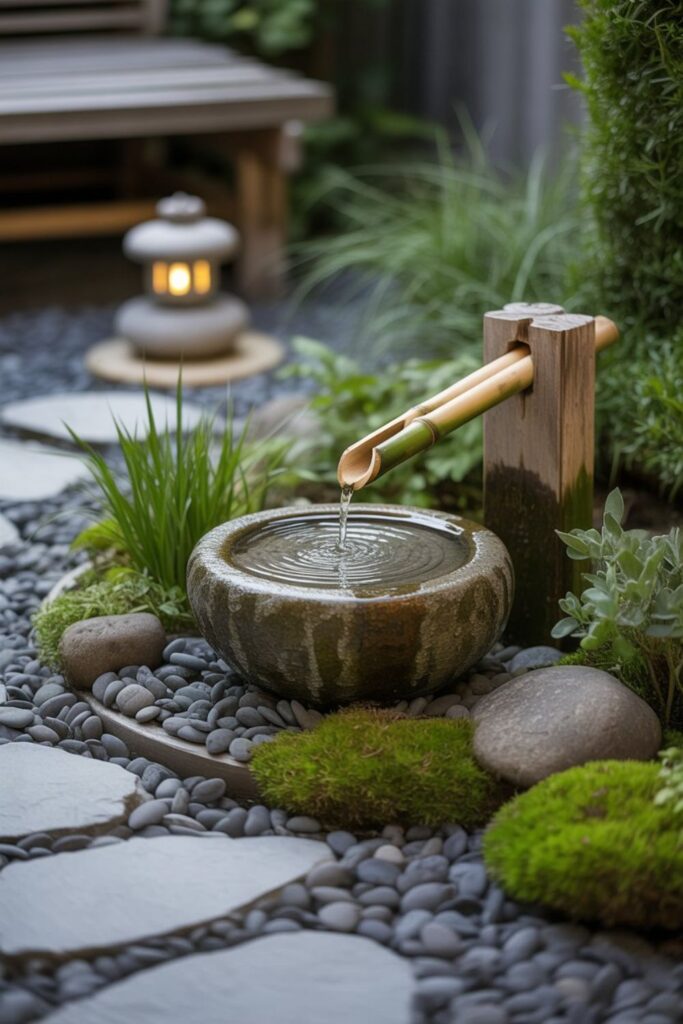
Water elements hold spiritual significance across Asian cultures. These features introduce movement, sound, and reflection while fitting small spaces.
Tsukubai (stone water basins) represent traditional Japanese tea garden elements. Water drips slowly from bamboo pipes into low stone basins, requiring visitors to bow, promoting humility. Modern versions use small recirculating pumps hidden in underground reservoirs. Surround the basin with river rocks and minimal plantings like ferns and moss. These features occupy just 2-3 square feet while creating powerful focal points. Shishi-odoshi (bamboo deer scarers) feature bamboo tubes that fill with water, tip to empty, then strike rocks with hollow “tok” sounds. This rhythmic percussion provides meditative focal points perfect for corner installations.
Small koi ponds work in spaces as compact as 4×6 feet using preformed liners or flexible pond liner. Keep designs simple with natural stone edging rather than elaborate waterfalls. Stock with 2-4 koi or goldfish. Add dwarf water lily, water lettuce, or lotus (in warmer climates) for authentic Asian aesthetics. Edge with moisture-loving plants like Japanese iris, dwarf papyrus, or sweet flag. Container water gardens suit balconies and patios. Use large glazed ceramic bowls (24+ inches) fitted with small pumps. Float water lettuce or miniature lotus, plant dwarf papyrus in center pots, and add a few goldfish.
Bamboo water spouts create simple fountains where water flows from bamboo sections into stone basins or gravel beds. These minimalist features provide soothing sounds without elaborate construction. Rain chains (kusari doi) replace downspouts, guiding rainwater along decorative chains into basins. This transforms rainfall into intentional design elements. All Asian water features should appear natural rather than artificial, blending seamlessly with surroundings through organic materials and restrained design.
Small Chinese Garden Design Principles
Chinese garden design creates miniature idealized landscapes through specific principles that scale beautifully to compact spaces. Understanding these concepts ensures authenticity.
Borrowed scenery (jie jing) incorporates distant views as part of garden composition. Frame views of trees, mountains, or sky through moon gates or windows in walls. Even small gardens feel expansive when connected visually to surrounding landscapes. Concealment and revelation guides visitors through sequential discoveries rather than revealing everything at once. Create pathways that turn corners, use screening plants strategically, and position focal points to surprise viewers as they move through space.
Yin and yang balance contrasts opposite rough and smooth textures, light and shadow, vertical and horizontal elements, water and stone. A smooth limestone rock balances rough bamboo bark. Bright flowering peonies contrast dark evergreen camellias. These contrasts create visual harmony and philosophical depth. Four seasons’ representation ensures year-round interest through careful plant selection. Include plum blossoms for late winter, peonies for spring, lotus for summer, and chrysanthemums for autumn.
Miniaturization represents Chinese garden mastery creating landscapes suggesting vast mountains and rivers within tiny spaces. Use penjing (Chinese bonsai) to represent ancient trees. Position rocks to suggest towering cliffs. A small pond becomes a vast lake through careful design and viewing angles. Architectural elements like moon gates (circular doorways), zigzag bridges, and pavilions add cultural authenticity. Even small gardens accommodate miniature versions; a 4-foot moon gate arbor creates an authentic atmosphere without requiring elaborate construction. These Chinese garden principles transform modest spaces into complex landscapes rich with symbolism and beauty.
Thai and Southeast Asian Garden Elements
Thai garden design embraces tropical abundance, vibrant colors, and Buddhist symbolism. These elements create distinctive Southeast Asian atmospheres.
Buddha statues serve as spiritual focal points. Position them respectfully never on the ground, always elevated on pedestals or shelves. Choose serene seated or standing poses rather than reclining figures for small gardens. Surround with offerings like incense holders and small plants. Stone or resin statues weather better outdoors than concrete. Spirit houses (san phra phum) provide shelter for protective spirits in Thai tradition. These miniature temple-like structures sit on posts, decorated with flowers, incense, and offerings. Modern versions range from simple wooden designs to elaborate replicas of Thai temples.
Colorful tile work distinguishes Thai gardens from minimalist Japanese aesthetics. Use glazed ceramic tiles in blues, greens, and golds on water feature surrounds, planters, or pathway accents. Mosaic patterns incorporate broken tiles in vibrant designs. Gold accents appear on statue bases, pot rims, or decorative elements signifying spiritual wealth. Tropical plantings create lush backdrops. Banana plants, elephant ear, canna lilies, and bird of paradise provide bold foliage. Jasmine and plumeria offer intoxicating fragrances. Orchids in hanging baskets add exotic blooms.
Lotus ponds hold sacred significance in Buddhist tradition. Grow lotus in large containers (30+ gallon capacity) filled with aquatic soil. Pink or white blooms emerge on tall stems above circular leaves. Sala (open pavilions) provide shaded seating areas in larger Thai gardens, though small spaces accommodate simple covered benches with carved details. Incense and fragrance play important roles in plant jasmine, gardenias, and night-blooming jasmine near seating areas. These Thai garden elements create distinctly Southeast Asian aesthetics that differ dramatically from East Asian minimalism through abundant color, tropical plants, and spiritual decorations.
Bamboo in Small Asian Gardens
Bamboo appears consistently across Asian garden traditions, representing flexibility, resilience, and strength. Strategic use adds authenticity to compact spaces.
Clumping bamboo varieties stay contained without invasive spreading that plagues running types. Fargesia robusta grows 12-15 feet tall with graceful arching culms, creating natural screens. Fargesia rufa stays shorter at 6-8 feet, perfect for smaller gardens. Bambusa multiplex ‘Alphonse Karr’ offers golden culms with green stripes and reaches 15-20 feet in warm climates. These varieties don’t require root barriers, making them practical for small yards where containment matters.
Container bamboo provides ultimate control while adding vertical interest to patios and balconies. Use large pots (20+ gallons) with drainage holes, filled with rich potting soil. Water regularly since containers dry quickly. Black bamboo (Phyllostachys nigra) in pots creates dramatic focal points with culms that darken from green to ebony over time. Bamboo screens create privacy and define spaces. Plant in narrow beds along fence lines, spacing clumps 3-4 feet apart for solid screens. Alternatively, use bamboo fencing materials like split bamboo rolls or whole culm panels.
Bamboo accents incorporate the plant without dedicating major space. Use bamboo water spouts where water flows from hollowed bamboo sections. Create bamboo trellises lashing poles together for climbing vines. Install bamboo edging along pathways using sections buried partially upright. Bamboo sound features (furin) hang bamboo wind chimes that create gentle clacking sounds. These bamboo applications honor Asian traditions while respecting space limitations through strategic placement and variety selection that prevents the aggressive spreading many gardeners fear.
Rock and Stone Placement Techniques
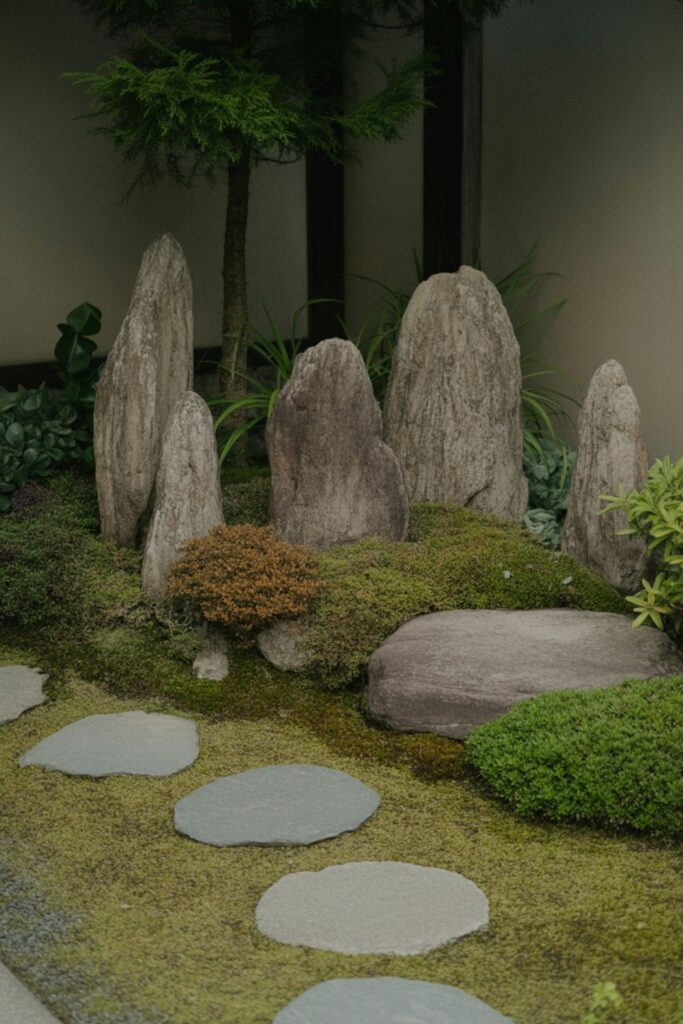
Stone arrangements form the structural foundation of Asian gardens, particularly Japanese designs. These placement principles create visual harmony and symbolic meaning.
Ishigumi (Japanese rock setting) follows specific rules. Arrange rocks in odd-numbered groups (3, 5, or 7) to create triangular compositions. The largest “parent” stone anchors the arrangement, with smaller “child” stones supporting the composition. Choose one rock as the “guardian” standing upright, representing strength, with horizontal stones suggesting stability and water. Partial burial makes rocks appear naturally emerging from earth rather than placed on surfaces. Bury 30-40% of each rock’s mass to achieve natural appearance.
Viewing angles matter critically. Position stones to look balanced from primary viewpoints meditation benches, pathways, or windows. Walk around arrangements during placement, adjusting until they feel harmonious from all angles. Weathered stones carry more authenticity than freshly quarried rock. Visit landscape supply yards to select pieces personally, looking for interesting textures, colors, and natural patinas developed over decades. Moss-covered stones enhance aged appearance; some Zen masters spend years selecting perfect stones for specific locations.
Chinese scholar stones (gongshi) feature dramatic shapes with holes, peaks, and interesting textures. Traditionally from Lake Tai, modern versions use local limestone or other porous rocks. Display individual specimens on carved wooden stands as sculpture. Stepping stones (tobi-ishi) follow irregular patterns rather than straight lines, forcing deliberate movement. Space them one stride apart (14-16 inches center to center) with varied sizes. Stone pathways use flat flagstones set in gravel or moss, creating natural-looking routes. These stone placement techniques require patience and artistic vision but reward you with timeless compositions that improve garden authenticity dramatically.
Read More About: Best Small Corner Garden Ideas for Beautiful Spaces
Creating Asian-Inspired Seating Areas
Seating spaces transform Asian gardens from visual displays into functional retreats. These designs integrate comfortable areas while maintaining cultural aesthetics.
Tea garden benches provide simple wooden seating near stone lanterns or water features. Build low benches (12-15 inches high) from weathered wood or bamboo, keeping designs minimal without backs or arms. Position them to face key garden views or focal points. Add flat stone surfaces nearby for tea ceremonies or contemplative moments. Covered pavilions (azumaya in Japanese, ting in Chinese) offer shade while framing garden views. Small versions built with 6×6 foot footprints accommodate two people comfortably. Use simple post-and-beam construction with open sides, perhaps adding lattice panels for partial enclosure.
Moon-viewing platforms (tsukimi-dai) provide elevated decks for contemplating seasonal changes. Build simple raised platforms (18-24 inches high) with 4×6 or 6×6 foot surfaces using weather-resistant wood. Keep railings minimal or absent for unobstructed views. Stone seating uses large flat boulders as natural benches. Position them near water features or along pathways, choosing stones with comfortable sitting surfaces. Add thin cushions for comfort during extended sessions.
Thai sala-style benches feature ornate carved details and bright colors. Build simple bench frames, then add decorative elements like carved panels, painted designs in reds and golds, or tile accents. Floor seating areas work beautifully in very small spaces. Create platforms covered with outdoor cushions or traditional zabuton (Japanese floor cushions), surrounded by potted bamboo and low plantings. These Asian seating designs ensure your garden serves contemplation and relaxation rather than existing purely as visual display.
Lighting Small Asian Gardens
Garden lighting extends enjoyment into evening hours while creating dramatic nighttime displays. Asian-inspired lighting respects cultural aesthetics through restraint and natural effects.
Stone lanterns (ishidoro) provide traditional lighting. Modern versions accommodate LED bulbs while maintaining authentic appearance. Position yukimi-gata (snow-viewing lanterns) near water features where they cast reflections on pond surfaces. Install tachi-gata (pedestal lanterns) along pathways at 10-15 foot intervals. Use warm white LEDs (2700-3000K) rather than cool white for natural glow. Keep illumination soft subtle pools of light rather than bright flooding.
Uplighting positioned at tree bases illuminates branching structures from below, creating dramatic shadows on walls or casting dappled light through foliage. Place lights at the base of Japanese maples, bamboo, or pines to highlight textures and forms. Moonlighting installed high in trees mimics natural moonlight filtering through branches, casting moving shadows as breezes shift foliage. This technique creates mysterious, romantic atmospheres perfect for Asian garden moods.
Paper lanterns (chochin in Japanese) provide soft ambient lighting for entertaining. String weather-resistant versions overhead or placed on tables. Choose white or neutral colors rather than bright reds or patterns. Underwater lighting in ponds illuminates koi fish and aquatic plants while creating glowing water effects. Install submersible LEDs with warm white bulbs beneath water lilies or near pond edges. Pathway lighting uses low-profile fixtures along stepping stone routes, keeping lights below knee height to prevent glare. Candlelight provides the most authentic Asian garden illumination. Place pillar candles in glass hurricanes along pathways or near seating areas for special occasions. These Asian lighting techniques create multiple moods while respecting the contemplative character that defines authentic Eastern garden design.
Budget-Friendly Small Asian Garden Projects
Creating affordable Asian gardens requires creativity and resourcefulness. These strategies deliver authentic aesthetics without expensive investments.
DIY water features cost under $100 using simple materials. Drill holes in flat stones to create tsukubai-style basins with bamboo spouts. Use inexpensive submersible pumps ($20-40) and hide reservoirs beneath river rocks. Make bamboo fountains using natural poles from online suppliers three 6-foot poles cost $15-30. Homemade stone lanterns combine concrete or hypertufa (mixed Portland cement, peat moss, and perlite) molded in cardboard forms. These replicate expensive stone lanterns for $20-30 in materials versus $200-500 for commercial versions.
Salvaged materials provide free or cheap hardscaping. Collect interesting rocks from construction sites (with permission) or natural areas. Broken concrete becomes stepping stones when attractively arranged. Old granite countertops transform into water basin platforms or seating surfaces. Propagation multiplies plants inexpensively. Take cuttings from friends’ bamboo, sedums, or Japanese anemones. Divide existing perennials to expand plantings. Grow bamboo from culm cuttings rather than buying established plants.
Phased construction spreads costs over time. Start with basic gravel and three stones this year, adding a water feature next year and plantings the following season. Simplified designs honor Asian minimalism while reducing expenses. Authentic Zen gardens require fewer elements than elaborate Chinese gardens. Focus on 3-5 key features rather than attempting everything at once. DIY bamboo fencing using natural poles and black rope costs $50-100 versus $300-500 for commercial panels. These budget Asian garden ideas prove that authentic Eastern aesthetics depend more on understanding design principles than expensive materials or professional installation.
Common Mistakes in Asian Garden Design
Avoiding these errors ensures your Asian-inspired garden achieves authentic aesthetics rather than creating confused or stereotypical results.
Mixing incompatible styles creates cultural confusion. Don’t combine Japanese stone lanterns with Chinese pagodas and Thai Buddha statues randomly. Choose one primary tradition and learn its principles, or blend elements very thoughtfully with understanding of what each represents. Over-decoration contradicts Asian minimalism. Western gardeners often add too many lanterns, statues, or decorative elements, creating busy spaces that prevent contemplation. Remember that negative space holds equal importance to physical features.
Wrong plants undermine authenticity. Don’t plant tropical palms and hibiscus in Japanese gardens designed for temperate species. Research plants appropriate to your chosen tradition. Symmetrical layouts feel Western rather than Asian. Nature produces asymmetry three rocks rather than four, pathways that curve rather than run straight. Bright colors (except in Thai gardens) contradict restrained Asian palettes. Avoid painted red fences, bright blue pots, or neon plant combinations. Stick to natural materials in earth tones, weathered wood, and stone.
Artificial materials like concrete Buddha statues, plastic bamboo fencing, or colored gravel destroy authentic character. Invest in natural materials even if it means starting smaller. Poor rock placement makes arrangements look artificial, setting rocks on surfaces rather than partially burying them, using shiny new stone rather than weathered specimens, or arranging in even-numbered groups. Neglecting symbolism treats Asian elements as mere decoration. Research meanings behind plants and features before incorporating them. These Asian garden mistakes prevent your space from achieving the contemplative, harmonious character that defines authentic Eastern design traditions.
FAQs
What’s the easiest Asian garden style for beginners?
Japanese Zen gardens (karesansui) work best for beginners due to minimal maintenance and plant requirements. A simple design with raked gravel, three rocks, and optional bamboo or pine creates authentic aesthetics without complicated care. These gardens embrace simplicity, making mistakes less obvious while teaching fundamental Asian design principles.
Can I create an Asian garden in a cold climate?
Absolutely. Japanese gardens originate in temperate climates similar to much of North America. Use hardy plants like mugo pine, Japanese maple (most varieties survive Zone 5), bamboo (Fargesia species tolerate -20°F), hostas, and ferns. Thai tropical elements require indoor overwintering, but East Asian traditions adapt perfectly to cold regions.
How much does a small Asian garden cost to create?
Basic Zen gardens (gravel, rocks, minimal plants) cost $300-800 for 100 square feet when DIY. More elaborate designs with water features, multiple plant species, and stone lanterns run $1,500-3,000. Professional installation adds $2,000-5,000 depending on complexity. Phased construction spreads costs over multiple years.
What’s the most important element in Asian garden design?
Restraint matters most. Asian gardens succeed through what they exclude rather than include. Embrace negative space, limit your palette, resist adding unnecessary elements, and allow simplicity to create calm. This philosophical approach distinguishes authentic Asian gardens from Western gardens with Asian decorations.
Are Buddha statues appropriate for non-Buddhist gardeners?
This depends on personal beliefs and intentions. Treat Buddha statues respectfully, elevate them, don’t place them near ground or where they are walked over, and understand their spiritual significance rather than using them purely as decoration. Some prefer avoiding religious symbols altogether, instead focusing on design principles, plants, and natural elements that carry less religious weight.
Conclusion
Small Asian gardens demonstrate that authentic Eastern design principles adapt beautifully to compact spaces through the same restraint and minimalism that define these traditions. Whether drawing from Japanese Zen aesthetics, Chinese landscape philosophy, or Thai tropical abundance, successful Asian gardens prioritize quality over quantity, meaning over decoration, and contemplation over spectacle. These approaches actually work better in small spaces than Western gardens that emphasize abundance and variety.
Begin by choosing one primary tradition rather than mixing multiple Asian styles randomly. Study its fundamental principles, understanding the symbolism behind plants, rocks, and water features specific to that culture. Start with a few key elements, perhaps three rocks, raked gravel, and a single Japanese maple, or a small pond with lotus and a Buddha statue. Let these initial elements establish your garden’s character before adding more. Resisting Western impulses to fill every inch of negative space provides visual rest and mental calm essential to Asian garden philosophy.
Your garden will evolve naturally as you deepen your understanding and refine your initial design. That perfect stone discovered on a hike finds its place beside the existing arrangement. The bamboo planted this year creates screening that allows removing an ugly fence next season. Most importantly, engage with your garden through maintenance that becomes meditation raking gravel patterns, pruning plants thoughtfully, or simply sitting quietly observing seasonal changes. Asian garden success measures not in complexity or expense, but in how effectively your space promotes tranquility and connection with nature. Start this weekend by clearing a small area and placing three weathered stones thoughtfully, beginning your journey toward creating an authentic Eastern-inspired sanctuary that honors cultural traditions while fitting your modern compact reality.