Best Small Corner Garden Ideas for Beautiful Spaces

Corners sit empty in nearly every yard and home. These awkward angles trap leaves, collect cobwebs, or simply remain bare because they feel impossible to design. Traditional gardening layouts ignore corners, focusing on straight borders and rectangular beds that leave these odd spaces looking neglected and wasted.
The frustration compounds when you’re working with limited space overall. Every unused corner represents missed potential square footage that could support plants, create beauty, or solve functional problems. Meanwhile, you struggle to find planting areas elsewhere in your cramped yard or apartment, completely overlooking the possibilities right in front of you.
The solution lies in corner garden design that embraces these unique spaces rather than fighting their geometry. Corners offer distinct advantages including defined boundaries, natural enclosure, and opportunities for creative focal points that flat walls and open areas can’t provide. This guide reveals the best small corner garden ideas for both indoor and outdoor spaces, showing you how to transform neglected angles into stunning features that maximize every inch of your home and property.
What Makes Corner Spaces Ideal for Gardens?
Corner gardens possess unique characteristics that make them surprisingly valuable for planting, and exploring small corner garden ideas can help you transform overlooked spaces into beautiful, functional areas. Understanding these advantages allows you to design with intention rather than treating corners as afterthoughts.
Natural enclosure creates intimate spaces without additional structures, which is why many small corner garden ideas focus on using existing walls or fences. When two walls meet at right angles, they automatically define boundaries, providing a backdrop and shelter that open areas lack. This enclosure traps warmth, forming microclimates several degrees warmer than the rest of your yard perfect for tender plants or extending the growing season. Vertical surfaces on two sides also double the potential for climbing plants, wall-mounted containers, or trellised vegetables, a common strategy in clever small corner garden ideas.
Corners naturally draw attention, making them ideal spaces to apply standout small corner garden ideas that create visual focal points. The eye gravitates toward these defined areas, making them perfect for specimen plants, water features, sculptures, or cozy seating that turns a forgotten spot into a welcoming garden destination. Wind protection is another major benefit outdoor corners shield plants from harsh gusts, allowing you to grow varieties that might struggle in exposed locations. Many small corner garden ideas take advantage of this shelter to grow delicate ornamentals.
Space efficiency is one of the biggest strengths of small corner garden ideas. A simple 3×3-foot corner provides nine square feet of planting potential that would otherwise remain empty. With thoughtful planning, these angles can become productive mini-gardens rather than wasted space.
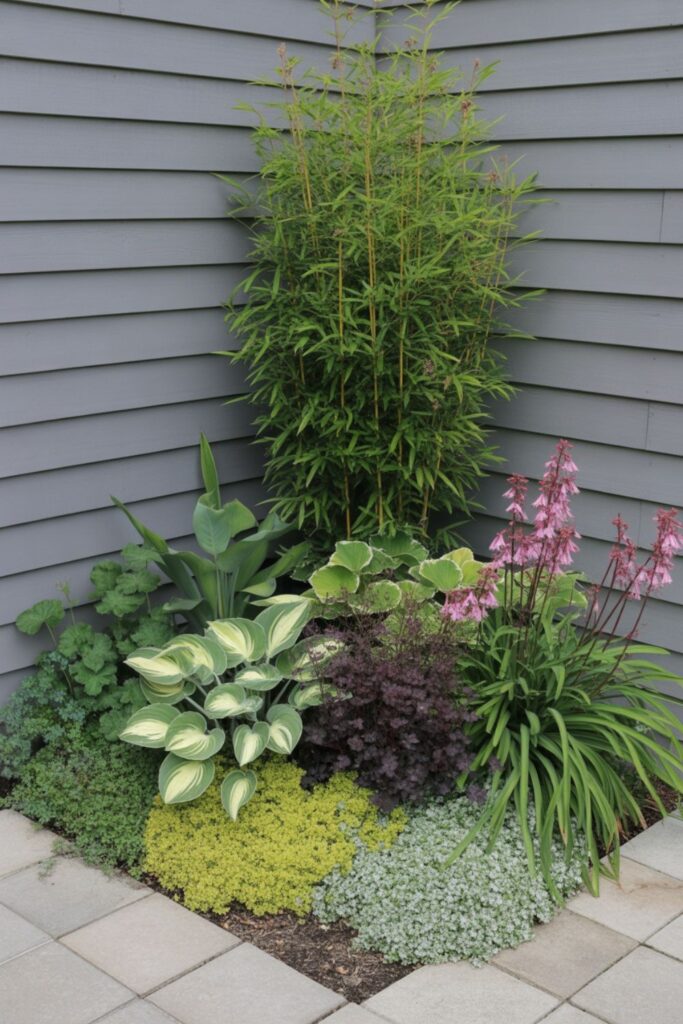
Layered planting is another technique often highlighted in small corner garden ideas, because it works beautifully in tight, triangular spaces. You can arrange plants by height without blocking views, placing tall specimens at the back point, medium-height plants along the walls, and low groundcovers at the front. This three-dimensional approach adds depth, texture, and visual interest while maximizing plant diversity.
Best Plants for Small Corner Gardens
Plant selection determines corner garden success, and choosing the right varieties is essential when exploring small corner garden ideas that thrive in defined, angular spaces. These plants provide structure, color, and texture while fitting perfectly into layouts where two walls or fences meet.
Vertical accent plants are a staple in many small corner garden ideas because they anchor the design and emphasize height at the intersection point. Bamboo varieties like ‘Gracilis’ create elegant, contained screens that reach 6–8 feet ideal for adding vertical presence without overwhelming the space. Ornamental grasses such as maiden grass (Miscanthus) or fountain grass (Pennisetum) offer graceful movement and seasonal interest. Columnar evergreens like ‘Sky Pencil’ holly and ‘Degroot’s Spire’ arborvitae provide upright structure with minimal width, making them perfect for tight corners. Upright junipers also enhance small corner garden ideas with their year-round form and silvery-blue or deep green foliage.
Corner-filling perennials play a major role in effective small corner garden ideas, as they spread naturally along walls while softening hard edges. Hostas deliver bold texture in shaded corners, with options ranging from tiny 6-inch mounds to impressive 4-foot giants. Coral bells (Heuchera) contribute colorful foliage in striking tones like purple, lime, and coral. Ferns add lush, feathery texture, with autumn fern emerging coppery before turning green. In sunnier corners, daylilies shine with prolific blooms and arching foliage that adds movement another favorite in many small corner garden ideas.
Trailing plants round out small corner garden ideas by softening the front edges where corners open into the yard. Creeping thyme spills over borders with fragrant foliage and summer flowers. Sedum varieties offer succulent texture and cascading shapes. Sweet alyssum self-seeds generously, forming fragrant white or purple carpets year after year. Vinca minor supplies an evergreen groundcover that brightens spring with small blooms.
Together, these thoughtfully selected plants allow small corner garden ideas to flourish through layered compositions that maximize visual impact while fitting the precise constraints of angular spaces.
Read More About: 23+ Zen Garden Landscaping Ideas
Outdoor Corner Garden Design Ideas
Outdoor corner gardens transform forgotten yard spaces into functional features, and many of the best small corner garden ideas focus on turning these awkward areas into beautiful, practical solutions. These designs address common challenges while enhancing both aesthetics and usability.
Vertical herb corners are among the most popular small corner garden ideas, placing culinary herbs close to kitchen doors for convenient access. Install tiered shelving or stacked planters against both walls and fill them with basil, rosemary, thyme, oregano, and parsley. Add a small bench or stool beneath for potting tasks. This setup concentrates herbs in one efficient location while making smart use of vertical space an essential principle in most small corner garden ideas.
Shade garden corners also inspire great small corner garden ideas, especially in areas beneath trees or between structures. Hostas, ferns, astilbe, and bleeding hearts create lush, layered retreats. A small birdbath or gazing ball works as a focal point, complemented by shade-loving groundcovers that soften the edges and unify the look.
Cottage garden corners offer charming, flower-filled small corner garden ideas that maximize color and texture. Place tall delphiniums or foxgloves at the back corner, add coneflowers and salvia along the walls, and let catmint or geraniums spill forward. This dense planting style reduces weeding while delivering continuous, cottage-style blooms.
Sensory corners are another creative branch of small corner garden ideas, appealing to multiple senses through thoughtful plant selection. Pair fragrant lavender and roses with rustling ornamental grasses, textured lamb’s ear, and herbs that invite touch and scent. A small fountain adds soothing sound, completing the sensory experience.
For nature lovers, wildlife corners provide some of the most rewarding small corner garden ideas. Native plants such as butterfly bush, echinacea, bee balm, and black-eyed Susans offer nectar for pollinators, while shrubs provide shelter. Adding a small water feature supplies drinking and bathing opportunities for birds.
These outdoor corner garden designs show how thoughtful small corner garden ideas can transform awkward, overlooked spaces into valuable, inspiring assets through smart planning and plant selection.
Indoor Corner Garden Solutions
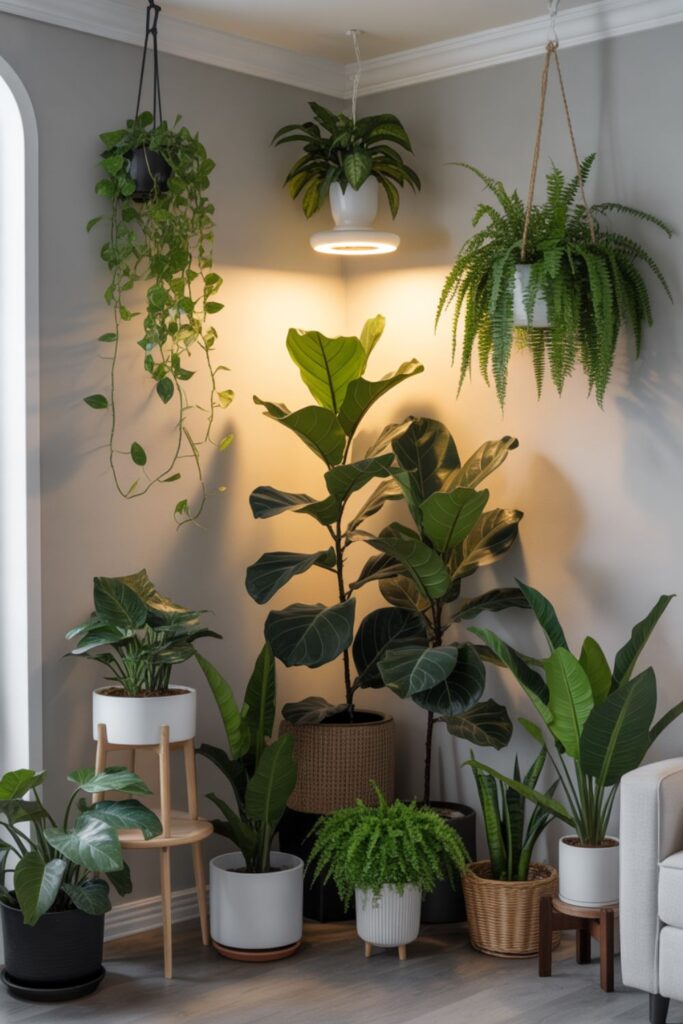
Indoor corner gardens bring life to neglected interior spaces while improving air quality and ambiance, and many creative small corner garden ideas work beautifully in homes, apartments, and offices.
Floor plant displays are classic small corner garden ideas, transforming empty interior corners into lush green focal points. Large plants like fiddle leaf fig, monstera, or dracaena anchor the space, while medium plants such as pothos or peace lily fill the front. Using plant stands of varying heights adds dimension without overwhelming the corner. Place the tallest plant at the back point to form a triangular composition that draws the eye upward, a signature strategy in many small corner garden ideas. If natural light is limited, add discreet grow lights on timers to keep plants thriving.
Hanging plant corners represent another set of space-saving small corner garden ideas, especially useful for small rooms. Install ceiling hooks or wall brackets at staggered heights, then hang pothos, spider plants, string of pearls, or Boston ferns in decorative macramé holders. This creates a living curtain of foliage that softens sharp angles while using zero floor space. Water carefully to prevent drips or choose self-watering hanging planters for added convenience.
Vertical plant walls offer some of the most dramatic indoor small corner garden ideas. Attach modular pocket planters, mounted pots, or custom vertical frames to both walls, filling them with ferns, philodendrons, succulents, or air plants depending on available light. These living installations make stunning statements in living rooms, offices, and entryways.
Corner shelving units designed specifically for plants are another smart approach used in small corner garden ideas, holding collections of small to medium specimens at various heights. With thoughtful arrangement, these shelves can resemble miniature botanical displays within just a few square feet.
These indoor designs prove that small corner garden ideas are not limited to outdoor spaces; interior corners offer perfect opportunities for bringing nature indoors with style and intention.
Small Corner Vegetable Garden Layouts
Vegetable production thrives in corner spaces through vertical growing and intensive planting, and many of the best small corner garden ideas show how compact layouts can deliver impressive harvests. These designs maximize every inch while turning awkward corners into productive food-growing zones.
Trellis triangle systems are classic small corner garden ideas, using both corner walls to support climbing vegetables. Install sturdy trellises on each wall where they meet to form a V-shape. Grow pole beans, cucumbers, peas, or indeterminate tomatoes up both sides, while planting lettuce, radishes, or herbs at the base to benefit from shade and moisture retention. This three-dimensional method common in high-yield small corner garden ideas produces multiple crops from a 3×3-foot footprint, with vertical harvests far surpassing traditional row gardens.
Tiered raised bed corners are another powerful approach found in many small corner garden ideas, creating multiple planting levels within tight spaces. Build a corner raised bed 2–3 feet on each side, then add a second smaller tier at 18 inches and a third at 12 inches for a stepped pyramid effect. Plant tomatoes or peppers on the top tier for maximum sun, herbs and leafy greens on the mid-levels, and strawberries or trailing herbs on the bottom tier. This layered design improves drainage, warms soil early in spring, and reduces compaction key advantages highlighted in successful small corner garden ideas.
Container corner clusters offer the ultimate flexibility and are among the easiest small corner garden ideas to set up. Group 5–7 containers of varying sizes in the corner, placing the largest pots at the back. Grow cherry tomatoes in 5-gallon buckets, peppers and herbs in 3-gallon containers, and lettuce or radishes in smaller pots. This arrangement allows you to follow the sun, swap out crops as needed, and adjust spacing as plants mature. Add a compact trellis behind the cluster to support vertical growers.
These corner vegetable gardens prove that with smart planning and the right small corner garden ideas, you can achieve significant food production without needing traditional long garden beds just strategic space use and crop selection.
How to Create Privacy with Corner Plantings
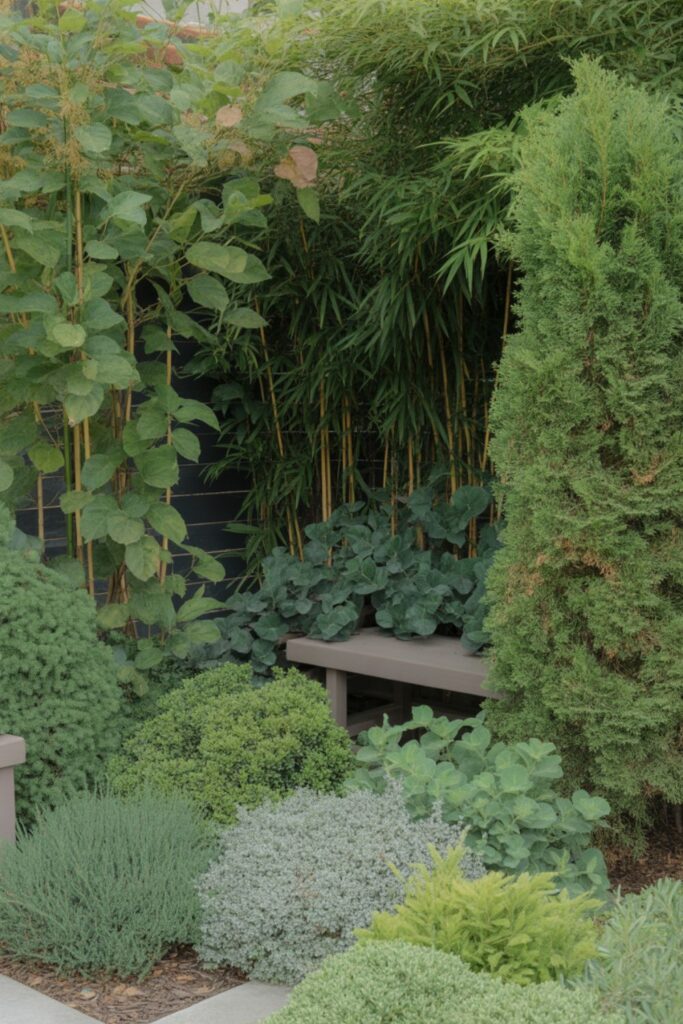
Privacy corners use strategic plantings to screen views, create enclosure, and define outdoor rooms. These solutions work faster and more naturally than fences alone.
Evergreen screen corners provide year-round privacy using arborvitae, boxwood, or yew hedges that form dense barriers. Plant them 2-3 feet from corner walls, spacing according to mature width to allow full development without crowding. Choose narrow columnar varieties for tighter spaces ‘Emerald Green’ arborvitae grows 12-15 feet tall but only 3-4 feet wide. Underplant with shade-tolerant groundcovers like pachysandra or vinca to complete the screen.
Layered privacy plantings combine multiple plant types for textured, interesting screens. Start with a tall ornamental grass or small tree like a Japanese maple at the corner point. Add medium shrubs like viburnum or rhododendron along the walls. Plant perennials including coneflowers, daylilies, or hostas at the front edge. This creates visual depth while blocking views more effectively than single-species plantings. Flowering privacy corners use lilac, mock orange, or rose of Sharon that grow 8-12 feet tall while providing seasonal blooms.
Bamboo corner screens establish quickly, growing 3-6 feet annually to create immediate privacy. Choose clumping varieties like Fargesia rufa rather than running types that spread invasively. Their dense culms and rustling leaves create both visual and auditory privacy. Living wall trellises support climbing roses, clematis, jasmine, or passionflower on sturdy frames, creating vertical screens covered in blooms. These privacy corner gardens transform exposed spaces into secluded sanctuaries through living barriers that improve with age.
Corner Seating Garden Designs
Seating corners combine comfortable furniture with surrounding plantings, creating intimate outdoor rooms. These designs maximize small yards by integrating multiple functions.
Built-in corner benches nestle against walls or fences, surrounded by fragrant plants. Build an L-shaped bench along both walls, leaving the corner open or filling it with a small side table for drinks. Plant lavender, rosemary, and Russian sage nearby for fragrance, with climbing roses trained on the walls above. Add cushions and pillows for comfort, creating a cozy reading nook or morning coffee spot.
Bistro corner cafes feature small round tables with two chairs, surrounded by container gardens. This setup works beautifully on patios or courtyards, transforming empty corners into dining spots. Arrange pots of herbs, flowering annuals, and trailing plants around the perimeter. Add string lights overhead for evening ambiance. Swing seat corners suspend hanging bench swings from sturdy pergola frames built into the corner. Surround with fragrant climbers like jasmine or honeysuckle that drape overhead, creating a private retreat.
Fire pit corners extend the outdoor season while providing gathering spots. Position a small fire pit or chiminea in the corner, with heat-resistant lavender, sedum, or ornamental grasses planted beyond the heat zone. Add weatherproof seating around the fire for evening conversations. Meditation corners feature simple benches or cushions on pavers, surrounded by calming plants like ferns, Japanese maple, and hostas. Add a small water feature for soothing sounds. These corner seating gardens prove that small spaces can accommodate both lush plantings and comfortable areas for relaxation and entertaining.
Water Features for Corner Gardens
Water elements transform corners into sensory focal points through sound, movement, and reflection. These features work in spaces from tiny balconies to larger yards.
Wall-mounted fountains attach to corner walls, occupying minimal floor space while providing maximum impact. Choose cascading styles where water flows over textured surfaces into small catch basins. The sound masks traffic noise while attracting birds. Position spotlights at the base for nighttime drama. Surround with moisture-loving plants like ferns, hostas, and Japanese iris that thrive in the humid microclimate.
Corner rill systems create contemporary water channels along both walls, meeting at the corner point. Water flows from a source at the back corner along shallow channels before draining into hidden reservoirs. This minimalist approach suits modern landscapes beautifully. Plant ornamental grasses or bamboo alongside for contrast. Bubbling rock fountains use drilled boulders or stacked stone from which water bubbles and trickles over the surface. Place the feature stone at the corner point, surrounded by river rocks and water-loving plants. This naturalistic style fits cottage and woodland garden themes.
Container water gardens work perfectly on patios or balconies. Use glazed ceramic bowls or half whiskey barrels fitted with small recirculating pumps. Float water lettuce or dwarf water lilies on the surface, with dwarf papyrus or dwarf cattails potted in the center. Add a few goldfish for mosquito control. Japanese tsukubai (stone water basins) create authentic zen aesthetics in corners, with water dripping from bamboo spouts into stone basins surrounded by carefully raked gravel and minimal plantings. These corner water features add sensory dimensions that elevate simple plantings into memorable garden experiences.
Lighting Ideas for Corner Gardens
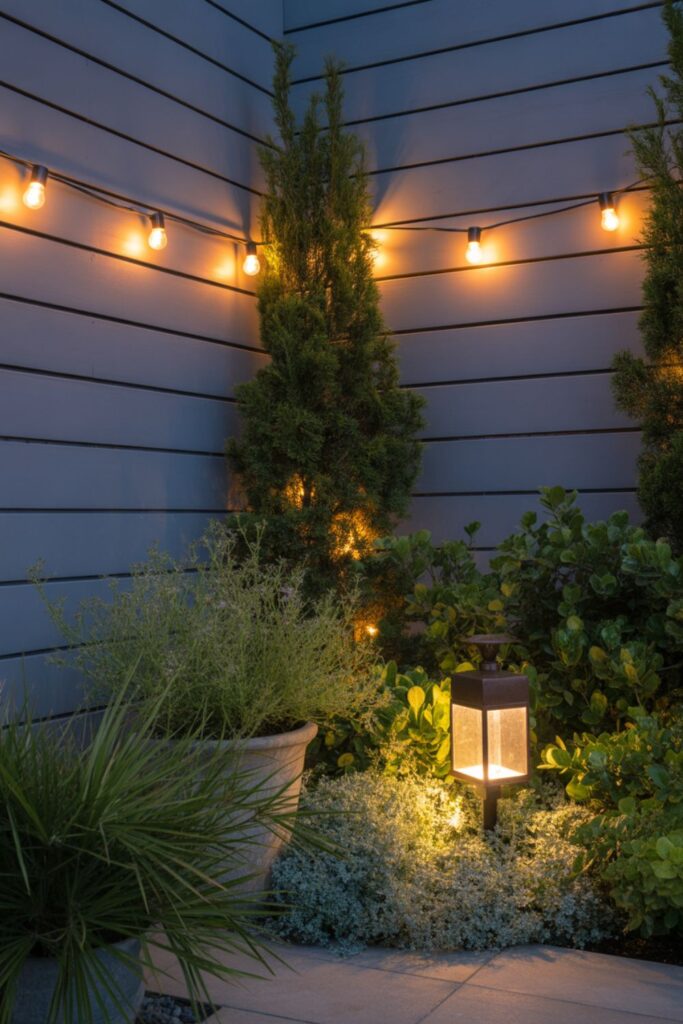
Garden lighting extends corner enjoyment into evening hours while creating dramatic nighttime displays. Strategic illumination transforms these spaces after dark.
Uplighting placed at ground level illuminates tall corner plants from below, creating dramatic shadows on walls and ceilings. Position lights at the base of Japanese maples, bamboo, or ornamental grasses to highlight branching structures and foliage textures. Use warm white LEDs (2700-3000K) for natural appearance rather than cool white or colored bulbs. Wall washing involves placing lights at the base of walls to cast even illumination upward, making light-colored walls glow softly while highlighting climbing plants.
String lights draped overhead create magical ambiance in seating corners. Hang them in zigzag patterns between walls or suspend them from small posts or shepherd’s hooks placed at the corner point. Choose warm white bulbs on brown or black cords that disappear during daylight. Lantern collections using solar or battery-powered LED candles provide portable accent lighting. Cluster 3-5 lanterns of varying sizes on the ground or on plant stands within the corner display.
Pathway lighting guides movement toward corner features. Install low-voltage fixtures every 6-8 feet along paths leading to the corner, keeping lights below knee height to minimize glare. Spotlights hidden in foliage highlight focal point plants, water features, or garden art. Adjust beam angles to prevent light pollution while creating desired effects. Moon lighting installed high in trees mimics natural moonlight, casting dappled shadows throughout the corner. These corner garden lighting techniques create multiple moods from romantic to dramatic while improving safety and extending usability well into evening hours.
Low-Maintenance Corner Garden Options
Easy-care corner gardens deliver beauty without demanding weekend maintenance. These designs suit busy gardeners or those new to planting.
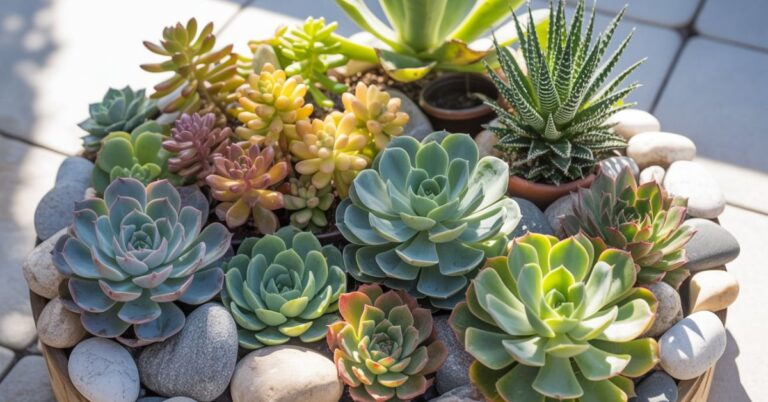
Succulent corners thrive with minimal water and attention. Group sedum, sempervivum (hen and chicks), echeveria, and agave in well-draining soil or containers. These plants store water in fleshy leaves, surviving weeks without irrigation. Their architectural forms and varied colors create interest year-round. Add decorative rocks or gravel mulch to complete the desert aesthetic. Evergreen corners use boxwood, holly, yew, or juniper that maintain appearance with just annual pruning. These woody plants require no deadheading, minimal watering once established, and provide structure through all seasons.
Native plant corners adapted to your region need little supplemental care once established. Research local native species suited to your corner’s light and moisture conditions. In the Northeast, try black-eyed Susans, coneflowers, and switchgrass. In the Southwest, use penstemon, desert marigold, and agastache. Perennial corners eliminate annual replanting. Choose tough varieties like daylilies, hostas, sedum, coreopsis, and Russian sage that return reliably each year with minimal intervention.
Mulched corners reduce weeding dramatically. After planting, apply 2-3 inches of shredded bark, wood chips, or pine straw around plants, extending to the corner edges. Refresh mulch annually as it decomposes. Drip irrigation on timers automates watering completely. Install quarter-inch tubing with emitters at each plant, controlled by battery-operated timers. These low-maintenance corner solutions provide beautiful results without consuming precious free time perfect for gardeners who want gardens that practically tend themselves.
Corner Gardens for Different Light Conditions
Light assessment determines which plants will thrive in your corner. These strategies address full sun, partial shade, and deep shade conditions.
Full sun corners (6+ hours direct sun) support the widest plant variety. Grow flowering perennials like coneflowers, black-eyed Susans, salvia, and coreopsis that bloom prolifically in bright light. Add roses, lavender, and butterfly bush for fragrance. Include ornamental grasses for movement and texture. These heat-loving plants tolerate reflected light from walls while delivering continuous summer color. Ensure adequate moisture since corner walls can create hot, dry conditions.
Partial shade corners (3-6 hours sun) work beautifully for many popular plants. Hostas thrive in morning sun with afternoon shade. Astilbe produces feathery plumes in these conditions. Japanese painted fern adds colorful foliage. Hydrangeas bloom reliably in partial shade while growing into substantial specimens. Hellebores provide late winter flowers before deciduous trees leaf out. These dappled light corners often prove easier than full sun since they require less frequent watering while supporting diverse plantings.
Deep shade corners (under 3 hours sun) challenge gardeners but still support attractive plantings. Ferns including autumn fern, lady fern, and Japanese painted fern create lush displays. Hostas in their hundreds of varieties dominate shade gardening. Bleeding hearts produces dangling heart-shaped flowers in spring. Foamflower (Tiarella) spreads as groundcover with fragrant spring blooms. Coral bells provide colorful foliage even without much light. Embrace the limited palette by focusing on foliage texture and color rather than flowers. These shade corner solutions transform the darkest spaces into attractive features through appropriate plant selection.
Read More About: Mini Backyard Garden Ideas To Maximize Small Outdoor Spaces
Seasonal Corner Garden Ideas
Year-round interest keeps corner gardens attractive through all seasons. These strategies ensure your corner never looks bare or boring.
Spring awakening corners feature early bloomers that announce winter’s end. Plant spring bulbs like daffodils, tulips, crocuses, and hyacinths in layers during fall. Add hellebores that bloom in late winter through early spring. Include bleeding hearts and Virginia bluebells for mid-spring color. Flowering shrubs like forsythia, spirea, or azaleas explode with blooms. This progression provides months of spring interest.
Summer profusion corners emphasize heat-tolerant bloomers. Coneflowers, black-eyed Susans, zinnias, marigolds, and salvia flower continuously through summer heat. Add ornamental grasses that develop interesting seed heads. Include butterfly bush and bee balm that attract pollinators while providing color. Container annuals like petunias, geraniums, and coleus deliver nonstop performance with regular deadheading and feeding.
Autumn glory corners celebrate fall foliage and late blooms. Japanese maples provide brilliant red, orange, or golden leaves. Asters and sedum ‘Autumn Joy’ bloom into October. Ornamental grasses like maiden grass turn copper tones while their plumes catch low autumn light. Plant fall mums and ornamental kale for color through the first frost. Winter structure corners rely on evergreens, interesting bark, and persistent seed heads. Hollies, boxwood, and junipers provide year-round green. Red twig dogwood offers colorful stems. Leave ornamental grass plumes and coneflower seed heads standing to create winter silhouettes dusted with snow. These seasonal corner transitions ensure your garden remains attractive twelve months a year.
FAQs
What’s the ideal size for a small corner garden?
Most effective small corner gardens range from 2×2 feet to 5×5 feet per wall, creating 4-25 square feet of planting area. This size provides enough space for layered plantings without overwhelming the corner or requiring excessive maintenance. Even 1×1 foot corners accommodate single specimen plants with impact.
How do I deal with corner drainage problems?
Corners often collect water from both walls. Improve drainage by incorporating 2-3 inches of gravel beneath soil, grading the corner slightly away from foundations, or using raised beds. Choose moisture-tolerant plants like ferns, iris, astilbe, or ligularia if drainage improvements prove difficult.
Can I create a corner garden on a covered porch?
Absolutely. Covered corners work beautifully with shade-tolerant houseplants like pothos, snake plant, peace lily, and ZZ plant. Use attractive containers since soil quality doesn’t matter. Rotate plants outdoors occasionally for rejuvenation, or supplement with grow lights if completely enclosed.
What plants work in narrow corners between buildings?
Narrow spaces (12-18 inches wide) suit columnar plants like ‘Sky Pencil’ holly, ‘Degroot’s Spire’ cedar, or slender bamboo. Add shade-tolerant groundcovers like pachysandra or vinca minor at the base. These confined areas often have reduced light, so choose accordingly.
How do I prevent corner gardens from looking bare in winter?
Include evergreens like boxwood, holly, or dwarf conifers for year-round structure. Leave ornamental grass plumes and perennial seed heads standing rather than cutting them back. Add winter interest containers with branches, pinecones, or evergreen boughs for seasonal decoration.
Conclusion
Corner gardens represent some of the most underutilized spaces in homes and yards, and many great small corner garden ideas show how these angular areas often seen as awkward or hard to design actually hold tremendous potential. Their natural enclosure, defined boundaries, and built-in focal points offer advantages that open spaces simply can’t match. By understanding corner-specific challenges such as limited light, uneven drainage, or tight dimensions and applying the right small corner garden ideas you can transform neglected angles into stunning features that maximize every available inch.
Begin by assessing your corner’s unique conditions: sunlight, moisture, size, and existing structures. From there, choose small corner garden ideas that match your goals, whether you want privacy, a cozy seating nook, a productive vegetable spot, or a simple decorative display. Always select plants suited to those conditions instead of forcing varieties that won’t thrive. Start with a simple layout perhaps 3–5 well-chosen plants arranged in layers then expand as you gain confidence and learn how your corner performs throughout the seasons. Many successful small corner garden ideas evolve gradually rather than being completed all at once.
Remember that corners change over time as plants mature and your preferences shift. A small Japanese maple planted today becomes a breathtaking focal point in a few years. The open soil beneath can later be filled with groundcovers, ferns, or spring bulbs. The best small corner garden ideas grow through patient observation and thoughtful additions rather than rushed, one-day installations.
Start this weekend by clearing debris from one neglected corner, enriching the soil, and adding a single specimen plant. This simple step sets in motion the transformation inspired by effective small corner garden ideas turning wasted space into valuable garden real estate that delivers beauty, function, and even harvests for years to come.