Stunning Garden Features That Transform Any Outdoor Space

Your garden looks fine. Maybe even nice. But “fine” and “nice” don’t stop neighbors in their tracks or make guests ask, “Who designed this?” That’s the gap between an ordinary yard and one filled with stunning garden features and it’s a gap most homeowners don’t know how to close. The frustration is real: you invest time, money, and weekends into your outdoor space, yet something always feels missing. The good news? You don’t need a landscape architect on speed dial or an unlimited budget.
You need the right features, placed with purpose. This guide walks you through the most impactful stunning garden features available today from water elements and lighting to raised beds and sculptural focal points so you can build an outdoor space that genuinely turns heads and feeds your soul.
What Makes a Garden Feature Truly Stunning?
A stunning garden feature does more than look beautiful; it creates an experience. The best outdoor elements combine visual impact with function, drawing the eye while serving a practical purpose. Think of a garden water feature that cools the air on a hot afternoon, or a pergola that frames a seating area while providing shade. When form meets function, the result feels intentional rather than decorative.
Design experts at the Royal Horticultural Society (RHS) consistently point to focal points, layering, and sensory engagement as the three pillars of a memorable garden. A well-chosen garden focal point anchors the entire landscape design, giving every other element something to relate to. Without it, even the most expensive plants and hardscaping can feel scattered and unresolved.
Read More About: Are Coffee Grounds for Houseplants? A Complete Guide
Water Features: The Heartbeat of a Beautiful Garden
Few stunning garden features carry the emotional weight of moving water. The sound alone whether it’s a gentle trickle or a dramatic cascade triggers an almost immediate sense of calm. Garden water features like ornamental fountains, koi ponds, rain curtains, and pondless waterfalls are among the most searched outdoor additions for good reason: they deliver on every level, from aesthetics to mental wellness.
According to a 2022 study published in Urban Forestry & Urban Greening, natural water sounds in outdoor environments significantly reduce cortisol levels and improve overall mood. That’s not just a design win that’s a health win. Whether you install a freestanding garden fountain on a patio or create a naturalistic pond at the garden’s edge, water transforms the entire atmosphere of your outdoor space. Pair it with aquatic plants like water lilies or lotus for added texture and biodiversity.
What Type of Water Feature Works Best for Small Gardens?
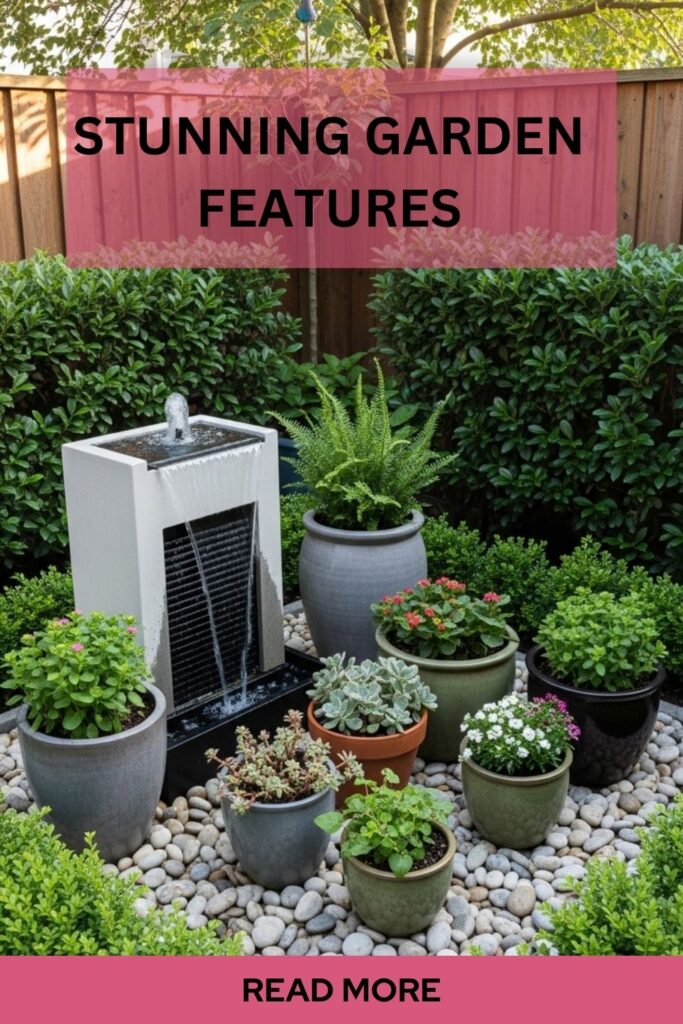
Small gardens benefit most from wall-mounted water features or self-contained tabletop fountains. These compact options deliver the same sensory reward without overwhelming limited square footage. A slate wall fountain or a tiered ceramic pour can become a stunning centerpiece on even the smallest patio or courtyard, requiring minimal maintenance and no complex plumbing.
Garden Lighting: Drama After Dark
Outdoor garden lighting is one of the most underestimated stunning garden features in residential landscaping. Most homeowners light their gardens for safety. Smart homeowners light them for theater. Architectural uplighting, pathway lanterns, string lights, and moonlighting techniques where lights are placed high in trees to mimic natural moonlight can completely reimagine your garden after sunset.
The Landscape Lighting Association notes that well-designed garden illumination can increase perceived property value by up to 20%. Beyond aesthetics, layered lighting extends the usability of your outdoor space well into the evening. Use warm-toned LED garden lights to highlight specimen trees, stunning garden features, or textured walls. Solar-powered options have improved dramatically in recent years, making sustainable outdoor lighting design both affordable and effective.
How Do You Layer Garden Lighting for Maximum Impact?
Layering outdoor garden lighting means combining three types: ambient (general illumination), task (functional areas like pathways), and accent (highlighting specific features). Start with low-voltage path lights to define movement through the garden, then add spotlights for garden focal points, and finish with string lights or lanterns to create warmth in seating areas. This three-layer approach ensures your garden looks intentional and welcoming at any hour.
Raised Garden Beds: Beauty Meets Productivity
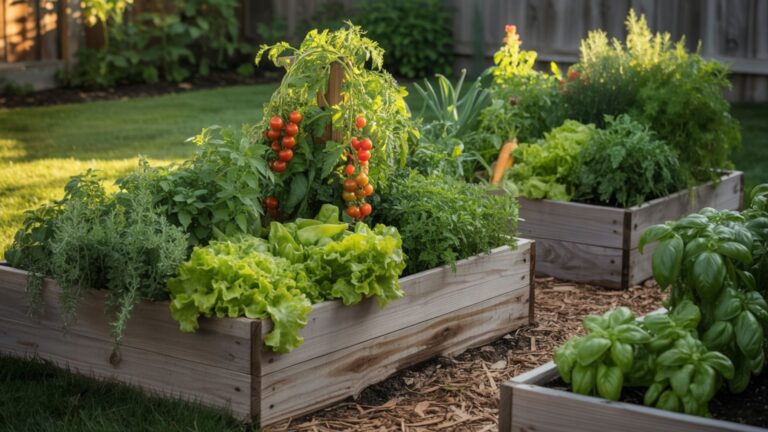
Raised garden beds have graduated from purely practical tools to genuine stunning garden features in their own right. Modern elevated planter designs in cedar wood, corten steel, gabion stone, and recycled composite materials add serious architectural interest to any garden layout. They’re no longer just for vegetable growers, they’re design statements.
Landscape designers increasingly use tiered raised beds to create visual depth on flat plots, essentially sculpting topography where none exists. Pair raised vegetable beds with pollinator-friendly border planting lavender, echinacea, salvia and you get a feature that’s as beautiful as it is productive. The RHS recommends a minimum depth of 30cm for most vegetables and 45cm for root crops, so build with intention from the start.
Are Raised Garden Beds Worth the Investment?
Raised garden beds offer exceptional return on investment. They improve soil drainage, warm up faster in spring, reduce weed pressure, and make gardening accessible for people with mobility challenges. From a design perspective, they add structure and symmetry to garden layouts that can otherwise feel chaotic. Built from quality materials, a well-constructed raised bed can last 20+ years with minimal upkeep making it one of the smartest outdoor garden investments you can make.
Pergolas and Garden Structures: Architecture for the Outdoors
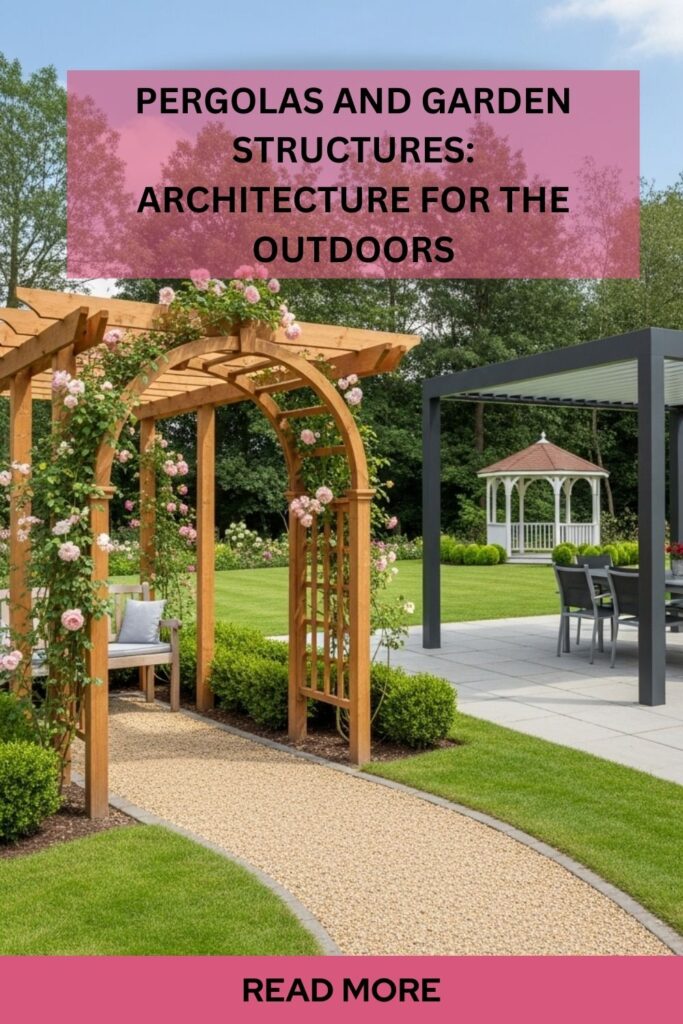
A garden pergola is more than a shade structure; it’s a room without walls. Among all stunning garden features, pergolas, arbors, gazebos, and garden pavilions do the most to extend the feeling of your home into the outdoors. They create defined spaces, support climbing plants, and provide the kind of architectural gravitas that instantly elevates a garden’s design.
Wisteria-draped pergolas, rose-covered arches, and vine-wrapped arbors are perennial favorites because they merge living and built elements seamlessly. Materials matter enormously here: hardwood pergolas age beautifully and carry a warmth that aluminum never quite replicates, while powder-coated steel structures offer sleek, modern lines with exceptional durability. According to Houzz’s 2023 Landscaping Trends Report, outdoor structures like pergolas ranked among the top five most requested garden additions by homeowners undertaking renovation projects.
What Plants Grow Best on a Garden Pergola?
The best climbing plants for garden pergolas include wisteria, clematis, climbing roses, jasmine, and Virginia creeper. Each offers a different aesthetic from the cascading purple blooms of wisteria to the delicate starbursts of clematis. Choose based on your climate, sun exposure, and desired maintenance level. Fast-growing annual climbers like black-eyed Susan vine work well if you want quick coverage while slower perennials establish themselves.
Sculpture and Focal Points: The Art of the Outdoors

Garden sculpture and statement focal points are the punctuation marks of great landscape design. Without them, even a beautifully planted garden can read as a run-on sentence technically correct but exhausting to navigate. A single well-placed garden sculpture, stone urn, topiary, or obelisk gives the eye somewhere to land and the mind somewhere to rest.
Contemporary garden art has expanded well beyond the classic stone cherub. Abstract metal sculptures, kinetic wind art, driftwood installations, and ceramic totems are all gaining traction in modern stunning garden features. The key is scale and placement: a sculpture that’s too small disappears; one that’s poorly placed disrupts flow rather than creating it. Position your garden focal point at the end of a sightline, the terminus of a path, the center of a formal bed, or the backdrop of a seating area for maximum visual impact.
Garden Pathways: The Journey Matters
Garden pathways are simultaneously functional and deeply aesthetic, one of the most versatile stunning garden features available to any homeowner. The path through your garden isn’t just about getting from A to B. It’s about how you feel along the way. Flagstone paths, gravel walkways, brick herringbone designs, stepping stone trails, and timber boardwalks each create a completely different mood and movement experience.
A curved pathway suggests exploration and mystery; a straight one commands authority and formality. Materials like reclaimed brick, natural slate, decomposed granite, and moss-filled stepping stones add texture underfoot and visual interest from above. Edging your garden path with low border plants thyme, chamomile, alyssum softens the transition between hardscape and planting, making the whole composition feel cohesive and alive.
Fire Features: Warmth, Drama, and Year-Round Use
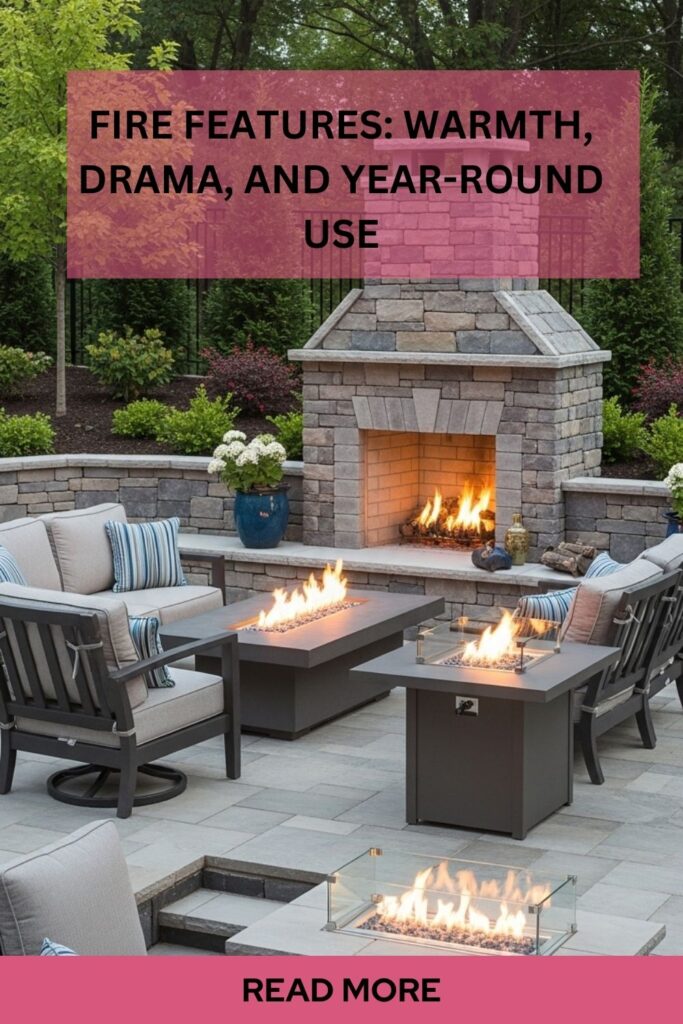
Outdoor fire features extend the garden season in style. Fire pits, chimineas, bioethanol fireplaces, and built-in outdoor fireplaces have become among the most sought-after stunning garden features for homeowners who want to use their outdoor spaces year-round. There’s something primal about gathering around a flame; it transforms a garden into a destination regardless of the season.
Built-in fire pit seating areas using natural stone, concrete, or weathered steel combine the fire feature with the surrounding hardscape into one unified design moment. For smaller spaces, a tabletop bioethanol burner delivers flame and atmosphere without permanent installation. Always check local regulations before installing permanent outdoor fire features, particularly in urban or suburban settings where restrictions may apply.
Read More About: 20+ Front Yard Fence Ideas That Boost Curb Appeal Instantly
Frequently Asked Questions
What are the most popular stunning garden features for small spaces?
Small gardens benefit most from vertical garden walls, compact water features, raised beds, and clever lighting design. These elements add visual richness and depth without consuming precious square footage. A wall-mounted fountain or a slim pergola arch over a doorway can dramatically elevate even the tiniest courtyard or townhouse garden.
How much does it cost to add stunning garden features?
Costs vary widely depending on materials, complexity, and whether you hire professionals. A DIY garden water feature can cost as little as $150–$500, while a custom-built pergola or stone fire pit can run $3,000–$15,000+. The smartest approach is to prioritize one or two high-impact garden features and invest in quality rather than spreading a limited budget across too many elements.
Do garden features add value to a home?
Yes, significantly. Well-designed outdoor garden features like pergolas, lighting, water features, and raised beds consistently increase perceived property value and buyer appeal. Real estate professionals estimate that a thoughtfully landscaped garden can boost a home’s resale value by 5–15%, with outdoor living structures and professional landscape lighting among the highest-return additions.
What garden features require the least maintenance?
Gravel pathways, drought-tolerant planting schemes, solar garden lighting, and self-contained water features are among the lowest-maintenance stunning garden features. Choosing native plants for border planting and permeable hardscaping for paths further reduces the ongoing effort required to keep your garden looking its best.
Conclusion
Stunning garden features turn ordinary outdoor spaces into extraordinary ones. From the soothing presence of a garden water feature to the architectural drama of a pergola or the warm glow of layered garden lighting, every element you add with intention brings you closer to the outdoor space you’ve always imagined. The best gardens are built incrementally one thoughtful feature at a time so start with what excites you most and build outward from there.
Great garden design rewards patience and vision. Choose features that align with your lifestyle, your climate, and your space. Invest in quality materials that age well and serve multiple purposes. Whether you’re redesigning a sprawling backyard or transforming a compact urban terrace, the right stunning garden features make every moment spent outdoors feel like exactly where you’re supposed to be.