30+ Stunning Hippie Garden Ideas to Transform Your Outdoor Space
Your yard feels too manicured and formal with its perfectly edged beds and symmetrical layouts that scream subdivision conformity. You crave something different, a space reflecting peace, creativity, and connection to nature without the rigid rules conventional landscaping demands.
stunning hippie garden ideas embrace imperfection, celebrate color and texture explosions, and prioritize personal expression over neighborhood approval, creating outdoor sanctuaries where freedom, sustainability, and beauty converge in wonderfully unexpected ways that feel authentically yours.
What Defines a True Bohemian Garden Aesthetic
Bohemian garden design rejects formality in favor of relaxed, organic arrangements that feel discovered rather than imposed. These spaces layer diverse elements without worrying about matching vintage finds mixed with handmade art, wildflower meadows blend into vegetable patches, and seating areas pop up wherever shade and beauty converge naturally. The aesthetic prioritizes authenticity over perfection, embracing the weathered patina on old tools, the random self-seeding of favorite plants, and the delightful chaos that occurs when gardens evolve based on what thrives rather than what designers dictate.
Free-spirit landscaping celebrates individuality through personal touches impossible to replicate. Your collection of painted rocks, handmade wind chimes from driftwood, or vintage bottles hanging from tree branches tells your story in ways catalog purchases never achieve. This deeply personal approach transforms gardens from status symbols into soul expressions, creating outdoor rooms that genuinely nurture rather than merely impressing neighbors with expensive hardscaping and imported specimen plants.
Vibrant Color Palettes Inspired by Nature and Tie-Dye
Colorful garden design channels the psychedelic palettes hippie culture made famous electric purples, hot pinks, sunny yellows, and vibrant oranges that pulse with energy and joy. Plant combinations that traditional landscapers avoid become signature moves in bohemian spaces where clashing colors create intentional visual excitement. Pair magenta cosmos with orange zinnias and purple salvia for combinations that vibrate with intensity, or mass plant single bold colors in drifts that make unmissable statements.
Tie-dye colors translate beautifully into garden beds through strategic plant placement that mimics the swirled, bleeding effect of fabric dyeing. Create circular beds planted in concentric rings of color purple salvia in the center surrounded by blue lobelia, then pink petunias, yellow marigolds, and orange nasturtiums radiating outward. This rainbow effect captures hippie aesthetic perfectly while delivering months of continuous bloom that keeps spaces feeling alive and celebratory.
Rainbow Perennial Borders
Design permanent rainbow borders using perennials that bloom at staggered times, ensuring color persists from spring through fall. Start with red tulips and purple crocus in early spring, transitioning to yellow daylilies and orange poppies by summer, then magenta bee balm and blue Russian sage in late summer. This succession planting maintains the rainbow theme across seasons while reducing replanting work compared to annual-only schemes.
Embrace variegated foliage plants that display multiple colors naturally coleus varieties showing pink, yellow, and burgundy in single leaves, or rainbow chard with stems in red, orange, yellow, and white. These naturally multicolored plants reinforce the bohemian color-everywhere philosophy while providing structure that persists even when flowers fade between bloom cycles.
Wildflower Meadows That Celebrate Natural Beauty
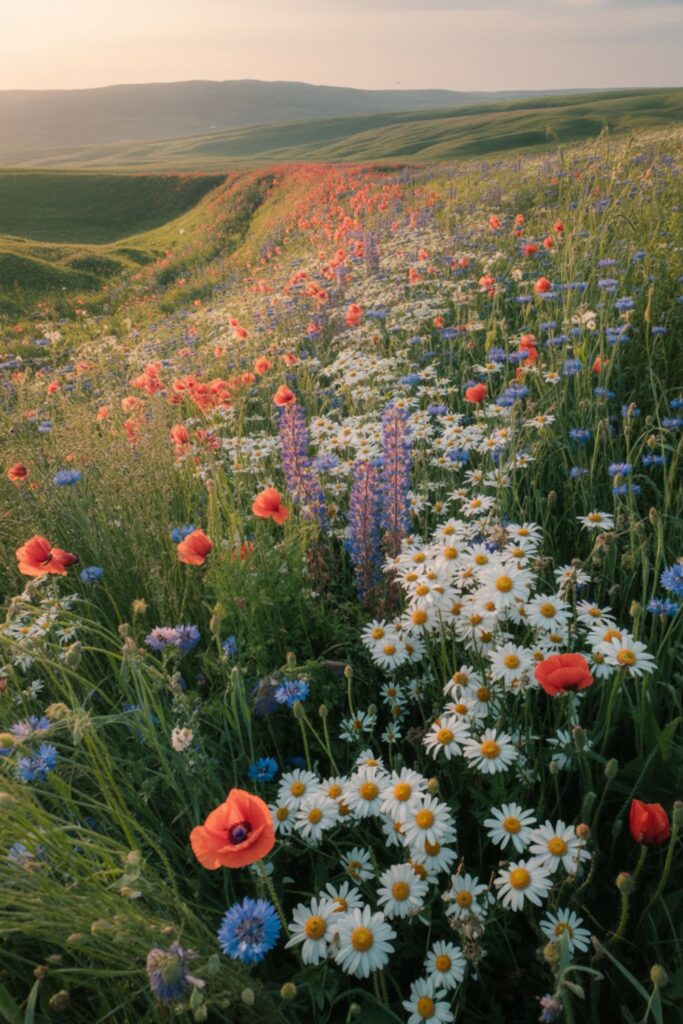
Wildflower meadows embody hippie gardening philosophy by replacing high-maintenance lawns with low-input, wildlife-supporting landscapes that change constantly as different species bloom and fade. Native wildflower mixes adapted to your region establish easily, requiring no fertilizer, minimal watering, and just one or two annual mowings. The relaxed, naturalistic beauty feels effortlessly bohemian while supporting pollinators far better than sterile grass monocultures that dominate suburban landscapes.
Establish meadows by removing existing grass, loosening soil, broadcasting wildflower seed in fall or early spring, then waiting patiently as nature works. First-year meadows look sparse and weedy, but second and third years deliver the romantic, flower-filled landscapes worth waiting for. Meandering paths mowed through tall meadow grass create accessible walking routes while preserving most area for wildflowers and wildlife, blending function with the untamed aesthetic that defines natural gardening approaches.
Selecting Native Wildflower Species
Choose regionally native species rather than generic wildflower mixes containing plants adapted to different climates. Eastern US meadows thrive with black-eyed Susans, purple coneflowers, and butterfly weed. Western regions succeed with California poppies, lupines, and penstemons. Native plants establish more reliably while supporting local insects and birds that evolved alongside these specific species, creating functional ecosystems rather than purely decorative plantings.
Include native grasses in wildflower mixes for structural support that prevents tall flowers from flopping while adding movement and texture. Little bluestem, sideoats grama, and switchgrass provide airy backdrops that make flower colors pop while their seed heads offer winter interest and bird food long after blooms fade. This grass-flower combination mimics natural prairie ecosystems while looking intentionally wild rather than accidentally neglected.
Upcycled and Recycled Garden Art Features
Recycled materials become the heart of Hippie Garden Ideas, where creativity replaces conventional purchases and individuality shines. With Hippie Garden Ideas, old bathtubs overflowing with herbs, vintage ladders transformed into vertical planters, and worn boots planted with succulents all become expressive garden art. These upcycled touches embody the essence of Hippie Garden Ideas, telling stories of resourcefulness, environmental mindfulness, and a free-spirited approach to design. Each repurposed piece adds whimsy and personality, creating visual surprises that make gardens memorable, soulful, and unmistakably unique.
Painted vintage finds take on new life within stunning hippie garden ideas, especially when refreshed with bright, unexpected colors that amplify their bohemian charm. Turquoise wheelbarrows, magenta watering cans, and lime-green metal chairs become vibrant focal points perfect examples of playful, expressive stunning hippie garden ideas in action. Embracing peeling paint and rust as design details rather than flaws adds authenticity that pristine items can’t match. This weathered look is central to stunning hippie garden ideas, connecting your outdoor space to time, nature, and the easygoing spirit of bohemian living.
Creating Bottle Trees and Glass Art
Bottle tree dead branches studded with colored glass bottles originated in Southern folk tradition but fit perfectly into hippie garden aesthetics with their handmade charm and colorful sparkle. Insert wine, beer, or decorative bottles over branch ends so sunlight shines through colored glass, casting rainbow shadows while creating tinkling wind chimes. Position bottle trees as garden focal points or use smaller versions as whimsical accents throughout planting beds.
Hang vintage glass bottles, mason jars, or colored glass pieces from tree branches using wire or twine for suspended art installations that catch light beautifully. Fill clear vessels with tiny succulents, air plants, or simply colored water that glows when backlit by sun. These DIY projects cost almost nothing while delivering magical effects that expensive garden art can’t replicate, embodying the hippie philosophy of creating beauty from castoffs rather than consuming endlessly.
Peace Gardens and Meditation Spaces
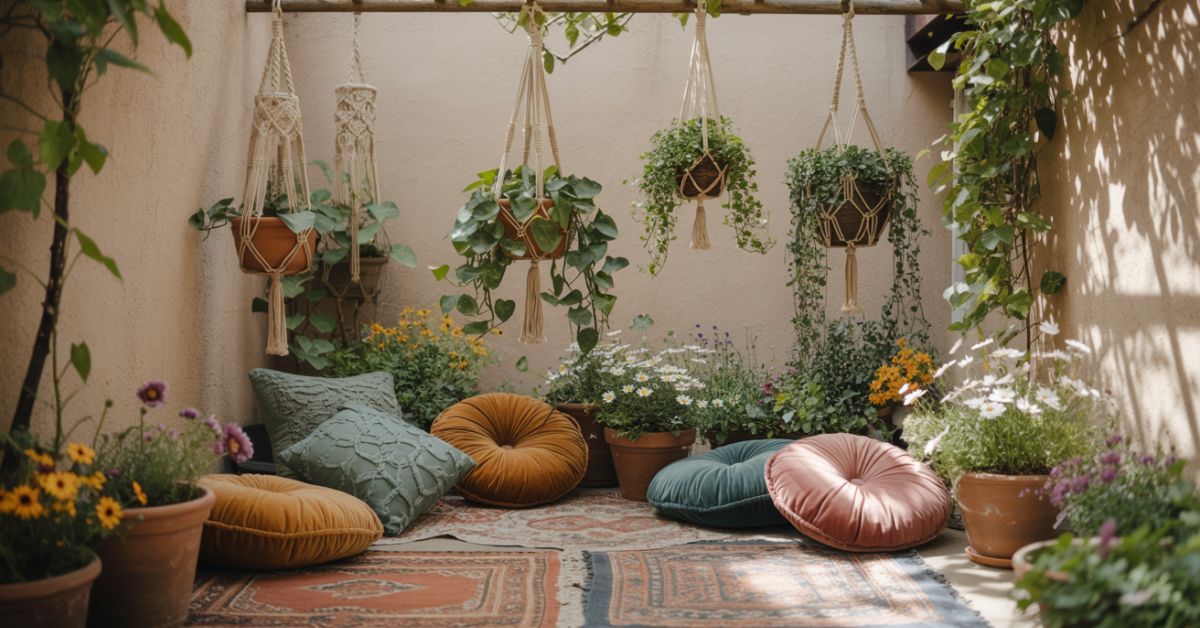
Meditation spaces provide essential calm within colorful bohemian gardens, offering retreats where contemplation and connection with nature happen naturally. Create circular seating areas using stones, logs, or cushions arranged in conversation groupings that invite lingering. Position these peaceful zones in quieter garden corners away from high-traffic areas, perhaps beneath established trees where dappled shade and rustling leaves enhance the meditative atmosphere without additional effort.
Install peace symbols and spiritual art that reinforces your garden’s higher purpose beyond mere decoration. Paint rocks with peace signs, mandalas, or uplifting messages, then nestle them among plantings. Hanging prayer flags between trees or fence posts, their fluttering movement and fading colors over time embody impermanence while adding vertical color and spiritual symbolism. These elements create sacred spaces that nurture souls alongside bodies, fulfilling gardening’s deepest purposes.
Water Features for Sound and Tranquility
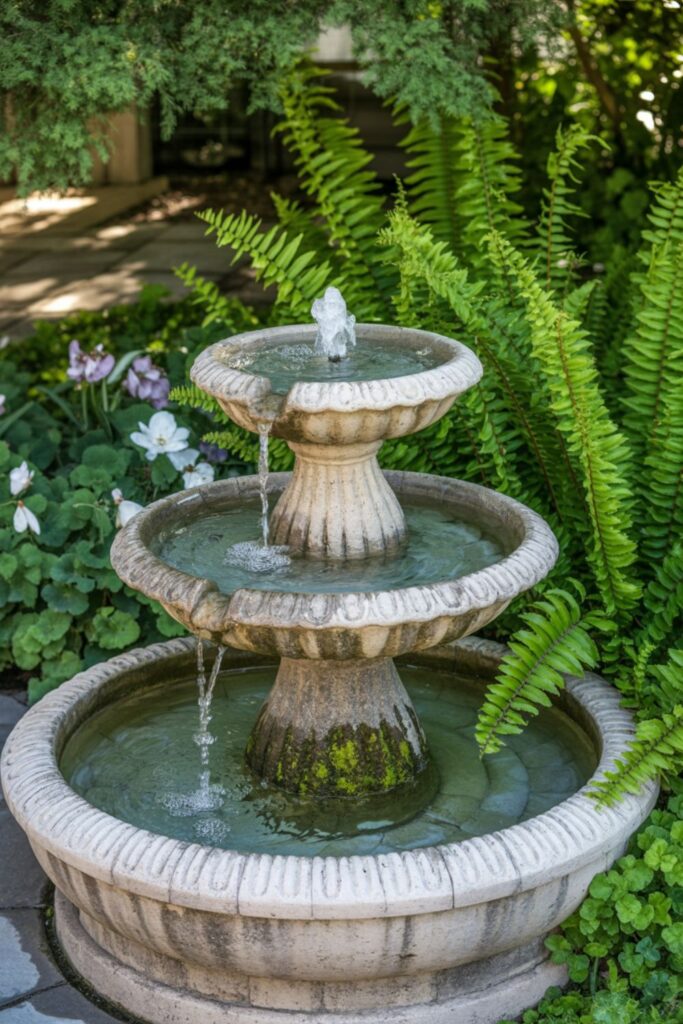
Small fountains or bubbling urns introduce water sounds that enhance meditation while masking traffic noise and neighborhood distractions. Self-contained fountain systems require no plumbing, making them perfect for renters or those wanting flexible placements. Surround water features with moisture-loving plants like ferns and hostas while adding flat stones for sitting near the water’s edge during contemplation or morning coffee rituals.
Create simple water bowls from large ceramic vessels filled with water, floating flowers, and smooth river stones. These still-water features attract birds and butterflies while providing reflective surfaces that double sky and foliage visually. Change flowers weekly using blooms from your garden single dahlia heads, rose blossoms, or nasturtium flowers floating in water create ephemeral beauty celebrating the present moment rather than permanent installations requiring constant maintenance.
Natural and Organic Gardening Practices
Organic gardening aligns perfectly with hippie philosophy emphasizing harmony with nature rather than domination through chemicals. Build healthy soil using compost made from kitchen scraps and yard waste, closing nutrient loops while eliminating synthetic fertilizer needs. Mulch heavily with shredded leaves, straw, or wood chips to suppress weeds, conserve moisture, and feed soil organisms that create the living ecosystem healthy plants require.
Embrace companion planting where diverse species support each other. Tomatoes benefit from basil companions that repel pests, while beans fix nitrogen that feeds neighboring corn. These polyculture approaches mimic natural ecosystems while reducing pest problems through diversity that confuses insects seeking specific host plants. The resulting mixed plantings look beautifully chaotic and productive, embodying the abundance mentality central to bohemian garden philosophy.
Read More About: 21+ Genius Corner Garden Ideas For Dead Spaces
Chemical-Free Pest Management
Attract beneficial insects through diverse plantings that provide habitat and food sources for predators controlling garden pests naturally. Native wildflowers, herbs like dill and fennel, and flowering cover crops bring ladybugs, lacewings, and predatory wasps that devour aphids, caterpillars, and other plant-damaging insects. This biological control eliminates pesticide needs while creating gardens alive with beneficial insect activity that becomes endlessly fascinating to observe.
Accept some pest damage as part of natural balance rather than striving for perfect, unblemished plants. A few chewed leaves or occasional aphid colonies don’t destroy gardens; they feed the larger ecosystem supporting birds, frogs, and beneficial insects. This tolerance for imperfection reduces work while supporting biodiversity that makes spaces genuinely sustainable rather than artificially maintained through constant human intervention.
Eclectic Seating Areas Using Mismatched Furniture
Eclectic furniture arrangements are a core part of Hippie Garden Ideas, embracing mismatched pieces that come together through color, creativity, and a carefree bohemian aesthetic instead of coordinated sets. With Hippie Garden Ideas, vintage metal chairs painted in bright hues can surround salvaged doors propped on tree stumps to form unique dining tables, while floor cushions scattered across outdoor rugs create laid-back lounge zones. This collected-over-time look is essential to Hippie Garden Ideas, offering authenticity and personality that store-bought outdoor furniture sets simply can’t match.
Layering textiles is another hallmark of Hippie Garden Ideas, using outdoor rugs, throw pillows, and blankets in bold patterns and rich textures to make exterior spaces feel as comfortable as indoor rooms. With Hippie Garden Ideas, mixing patterns fearlessly—paisley cushions beside striped throws and floral rugs, creates visual abundance and expressive charm. Choose weatherproof fabrics or bring textiles inside when it rains, embracing the natural fading and wear that add even more character. This lived-in patina perfectly complements the relaxed, artistic spirit behind all Hippie Garden Ideas.
Creating Hanging Chair Retreats
Install macramé hanging chairs or hammocks in shaded spots for ultimate bohemian relaxation zones. These suspended seating options suit meditation, reading, or afternoon naps while adding vertical interest and movement that makes gardens feel dynamic. Hang chairs from sturdy tree branches or install freestanding frames that don’t require trees, positioning them near fragrant plantings like jasmine or roses that enhance the sensory experience.
String twinkling lights or paper lanterns above seating areas to extend usability into evening hours when families actually gather outdoors. These soft lighting sources create magical ambiance without harsh illumination that destroys nighttime intimacy. Battery-operated options eliminate extension cord hazards while solar versions charge during the day and activate automatically at dusk, providing effortless evening beauty.
Herb Spirals and Mandala Gardens
Herb spirals pack diverse growing conditions into compact footprints while creating sculptural garden structures that look intentional and beautiful. These coiled raised beds spiral upward from ground level to 3-4 feet high, establishing microclimates from wet/cool bases perfect for mint to dry/hot peaks ideal for Mediterranean rosemary and thyme. The spiral form holds spiritual significance in many traditions while solving practical problems about fitting numerous herbs into limited spaces.
Mandala gardens arrange plants in circular patterns radiating from central points, creating meditative designs visible from above that ground viewers into sacred geometry’s harmonious proportions. Divide circles into wedge-shaped sections, planting each wedge with different colors or plant types that create the overall pattern. These geometric designs satisfy the hippie fascination with spiritual symbolism while organizing plants in visually striking ways that elevate vegetable and herb gardens beyond purely utilitarian spaces.
Planting by Moon Phases
Many bohemian gardeners plant according to lunar cycles, sowing seeds during waxing moons (increasing light) for above-ground crops and during waning moons (decreasing light) for root vegetables. While scientific evidence remains mixed, the practice connects gardeners to natural rhythms and celestial patterns that industrial agriculture ignores. Even if effects prove placebo, the intentional practice of observing moon phases deepens engagement with seasonal cycles and natural world connections.
Companion plants using traditional knowledge passed through generations rather than depending solely on chemical inputs. Native American “three sisters” gardens interplant corn, beans, and squash corn provides poles for climbing beans, beans fix nitrogen feeding corn, and squash’s broad leaves shade soil suppressing weeds while conserving moisture. These time-tested combinations produce abundant harvests while teaching interdependence lessons that resonate with hippie community values.
Vintage Camper and Bus Garden Decorations
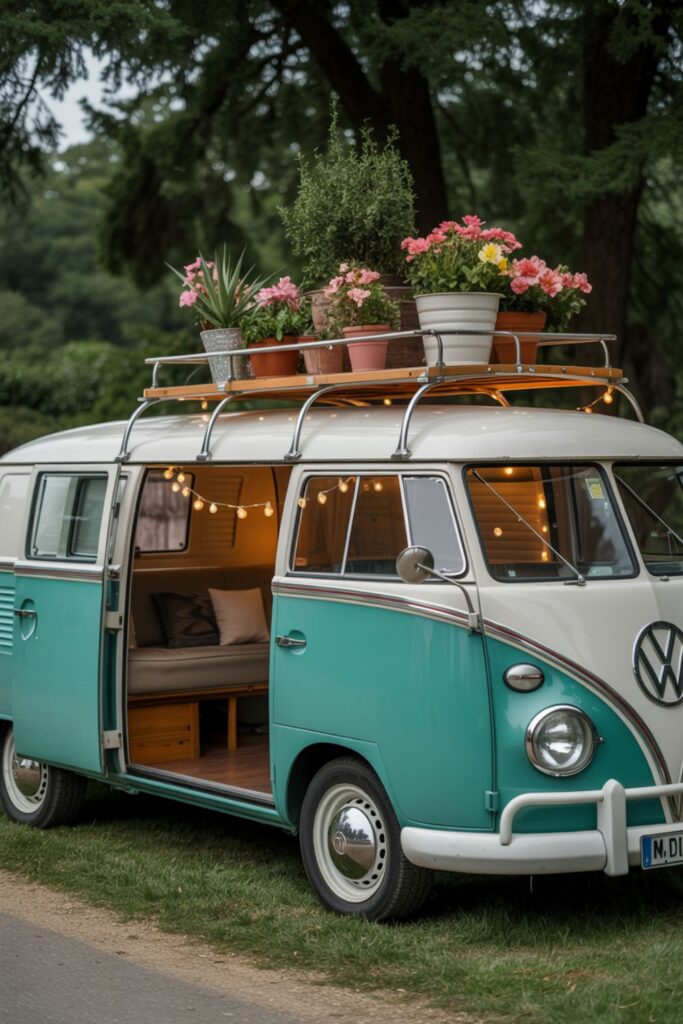
Park vintage VW buses, Airstream trailers, or retro campers in garden spaces as ultimate bohemian focal points channeling the freedom and wanderlust hippie culture celebrated. These vehicles become she-sheds, reading nooks, or simply whimsical sculptures covered in climbing roses and morning glories. Paint them in bright colors or psychedelic patterns, add curtains in vintage fabrics, and surround them with lush plantings that make them feel discovered rather than plunked down.
Convert vintage trucks or cars into planter beds by filling truck beds with soil and planting them heavily with flowers, vegetables, or succulents. These mobile gardens celebrate the repurposing ethic while creating conversation pieces impossible to ignore. Position vehicles strategically as garden room dividers or endpoint focal points that draw visitors through landscape spaces while providing visual anchors that organize otherwise loose, naturalistic plantings.
Fire Pits Surrounded by Gathering Circles
Fire circles provide natural gathering spots for storytelling, music, and connection that define hippie community values. Build permanent fire pits using stacked stone in circular forms, or use portable metal fire bowls that move as needed. Surround fires with log seating, large floor cushions, or built-in stone benches arranged in circles that encourage eye contact and conversation rather than the formal rows theater-style seating creates.
Plant fire-side areas with heat-tolerant, aromatic species that release scent when warmed by flames lavender, rosemary, and sage intensify fragrance in evening heat while their Mediterranean heritage means they handle the temperature and dryness fire areas generate. Keep plantings low and set back from fire rings for safety while using them to define the gathering space boundaries without creating visual barriers between seated people.
Folk Music and Outdoor Entertainment Areas
Create stages or performance spaces for music jam sessions and artistic expression that fulfill the hippie ideal of community creativity. Simple platforms built from reclaimed wood provide raised areas for performers, or designate flat lawn sections as informal gathering grounds. String lights overhead to illuminate evening performances while surrounding areas with abundant seating options at various heights and distances so audiences can choose their preferred engagement level.
Install outdoor speakers or create acoustic shells using curved walls or dense plantings that reflect sound naturally. These enhancements improve sound quality for performances while demonstrating the same attention to function that formal gardens apply to irrigation and drainage. Position performance areas away from property lines to minimize neighbor complaints while maintaining the community-focused, shared experience central to bohemian lifestyle ideals.
Painted Rock Gardens and Stone Art
Transform ordinary river rocks into colorful garden art through painting projects that invite creativity and personal expression. Paint rocks with mandalas, peace symbols, flowers, or uplifting words, then display them along pathways, nestle them into planting beds, or stack them as small cairns throughout garden spaces. These handmade touches add color and personality while providing winter interest when plants die back and gardens need visual elements to maintain appeal.
Create rock gardens featuring painted stones arranged by color or theme, perhaps a rainbow gradient climbing a slope, or a peace garden where every rock bears harmony-themed imagery. These collections grow over time as you add pieces, embodying the gradual evolution and continuous creation process that defines bohemian spaces rather than the single-installation mentality formal landscapes often follow.
Mosaic Stepping Stones and Pathways
Design mosaic stepping stones using broken tile, colored glass, or pottery shards pressed into concrete for permanent garden art that’s both functional and beautiful. Create these DIY projects using simple molds pie tins, cake pans, or purpose-built forms filled with concrete embedded with decorative elements before it sets. The resulting stones last decades while adding color and pattern to pathways that would otherwise be plain concrete or gravel.
Arrange mosaic stones in meandering paths that encourage slow wandering rather than direct routes from point A to B. This circuitous approach makes even small gardens feel larger while inviting visitors to notice details they’d miss when hurrying. Space stones irregularly rather than evenly, requiring mindful foot placement that naturally slows pace and increases present-moment awareness gardens should cultivate.
How Do You Start a Bohemian Garden on a Budget?
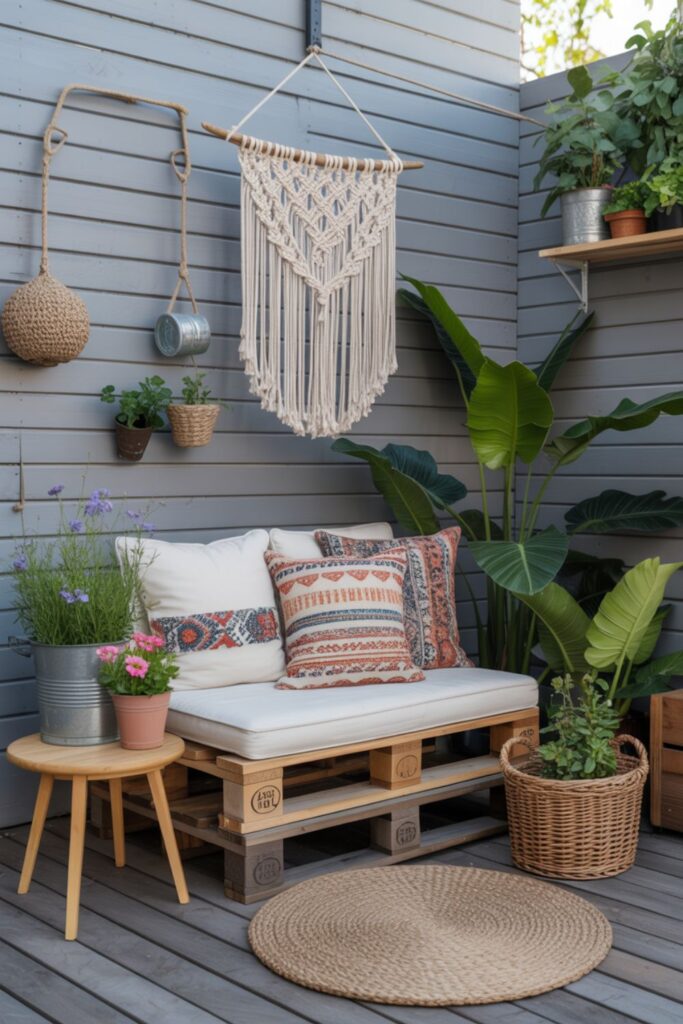
Begin with seed-starting and plant swaps rather than purchasing mature plants from nurseries. Seeds cost pennies per plant while community plant swaps provide free diversity as gardeners trade divisions and extras. Grow easy-from-seed flowers like sunflowers, cosmos, zinnias, and marigolds that deliver color for almost nothing. Divide perennials from friends’ gardens, hostas, daylilies, and irises multiply freely and divide easily, providing instant plantings at zero cost beyond labor.
Scour thrift stores, estate sales, and curbside free piles for vintage items to repurpose as planters and garden art. Old colanders, boots, teapots, and watering cans become whimsical containers for pennies. Focus initial spending on essential infrastructure like quality soil amendments and basic tools, letting decorative elements accumulate gradually as you find budget-friendly treasures. This slow-build approach feels more authentic than instant installations while keeping costs manageable.
What Plants Best Represent Hippie Garden Aesthetics?
Sunflowers embody the flower child aesthetic perfectly with their cheerful faces following the sun and their association with 1960s counterculture imagery. Plant both giant varieties reaching 10+ feet and smaller types for cutting, creating sunflower forests that deliver seeds for birds and humans while making unmissable visual statements. Cosmos, with their delicate, daisy-like blooms on wispy foliage, add the carefree, meadow-flower quality bohemian gardens celebrate while self-seeding prolifically so they return without replanting.
Psychedelic plants with unusual forms or intense colors amplify hippie aesthetics black hollyhocks, purple passion flower vines, rainbow chard, and ‘Pineapple Sage’ with red blooms all bring the unexpected boldness bohemian plantings favor. Fragrant herbs like patchouli, lavender, and sage connect to hippie culture through aromatherapy traditions while serving practical purposes in cooking and crafts.
Read More About: 23+ Gorgeous Flower Pot Ideas to Elevate Your Container Garden Style
Can You Have a Hippie Garden in Small Urban Spaces?
Absolutely vertical gardening maximizes limited square footage while the bohemian aesthetic actually suits small spaces better than formal designs requiring extensive square footage. Cover walls and fences with trellises supporting climbing plants, use tiered plant stands and hanging baskets to garden upward, and employ intensive succession planting in raised beds or containers. The layered, abundant look hippie gardens favor works beautifully in compact areas where every inch matters.
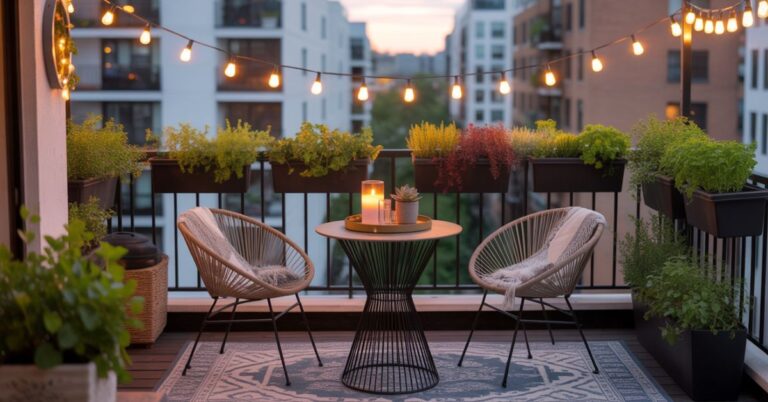
Container gardens using upcycled planters in bright colors deliver bohemian style on balconies and patios without requiring ground beds. Group containers at varying heights, mix in vintage furniture pieces as plant stands, and hang wind chimes, prayer flags, and bottle art from railings or overhead beams. Small spaces can pack tremendous personality and visual interest when approached with the fearless color and creative repurposing that defines hippie garden style.
How Do You Maintain the Free-Spirit Look Without Chaos?
Establish intentional boundaries that define where wild, naturalistic plantings belong versus areas needing control. Mow clear paths through wildflower meadows, edge vegetable beds crisply even when planting them intensively, or define seating areas with distinct hardscaping. These structural elements provide visual organization that prevents spaces from reading as neglected rather than intentionally relaxed.
Deadhead flowering plants regularly and remove completely spent specimens to maintain the abundant, healthy appearance that differs from actual neglect. Weed high-visibility areas like pathways and seating zones while allowing some self-seeding in planting beds where volunteer plants add to the naturalistic effect. This selective maintenance preserves the carefree aesthetic while ensuring spaces remain genuinely attractive rather than crossed into true chaos that feels uncomfortable rather than liberating.
Frequently Asked Questions
What colors define hippie garden style?
Vibrant, saturated colors dominate electric purples, hot pinks, sunny yellows, bright oranges, and deep magentas that pulse with energy. Rainbow combinations where all colors appear together create quintessential hippie aesthetics, though you can also use single bold colors massed dramatically. Jewel tones work beautifully alongside these bright emerald greens, sapphire blues, and ruby reds. Avoid pastels and neutral palettes that feel too subdued for the exuberant energy bohemian gardens celebrate.
Do hippie gardens require specific plants or can any plants work?
Any plants work when styled appropriately through container choice, artistic elements, and relaxed, abundant planting schemes. That said, certain plants enhance hippie aesthetics naturally: sunflowers, cosmos, wildflowers, rainbow chard, purple passion flower, and herbs all reinforce the style. Focus more on how you arrange plants than specific varieties: informal groupings, allowed self-seeding, and mixed plantings without rigid organization all read as bohemian regardless of plant selection.
How do you incorporate sustainability into bohemian gardens?
Practice organic gardening without synthetic chemicals, compost kitchen and yard waste, collect rainwater in decorative barrels, and use recycled materials for art and structures rather than purchasing new. Choose native plants adapted to local conditions that need minimal water and no pesticides. Save seeds from favorite plants for next year’s garden rather than buying them commercially. These sustainable practices align perfectly with hippie values emphasizing environmental consciousness and living lightly on the earth.
Can formal gardens transition to bohemian style gradually?
Yes start by introducing colorful containers, painted art elements, and vintage finds among existing formal plantings. Let some plants self-seed rather than deadheading everything obsessively. Replace sections of lawn with wildflower meadows or mixed cottage-garden beds. Add meandering pathways through formerly straight-lined spaces. This gradual transition allows experimentation without total yard overhauls while discovering which bohemian elements resonate most with your personal style and property’s conditions.
What budget should you expect for creating a hippie garden?
Hippie gardens actually cost less than formal landscapes since they emphasize creativity over expensive purchases. Budget $200-500 for initial soil amendments, seeds, and basic plants, then accumulate art and decorative elements gradually through thrift shopping, roadside finds, and DIY projects. Major costs involve essential infrastructure like compost bins, rain barrels, or permanent structures, but even these often use repurposed materials. The beauty lies in resourcefulness rather than spending, making bohemian gardens accessible regardless of budget.
Conclusion
stunning hippie garden ideas create outdoor spaces celebrating freedom, creativity, and deep connection with natural cycles rather than imposing human control over every element. The approaches outlined here from wildflower meadows and rainbow color schemes to upcycled planters and meditation spaces provide frameworks for expressing personal style while honoring the environmental consciousness and community values central to bohemian philosophy. These gardens reject perfectionism in favor of authentic expression, transforming yards into sanctuaries that nurture souls alongside plants while demonstrating that beauty emerges from acceptance and celebration of natural processes.
Start your bohemian transformation by identifying which elements resonate most strongly with your personal vision, then implement changes gradually as inspiration and resources allow. Remember that free-spirit landscaping evolves continuously rather than completing in single installations your garden should grow and change as you do, accumulating meaningful objects and natural elements that tell your story over time. Your commitment to creating outdoor space reflecting genuine values rather than neighborhood expectations will deliver returns in peace, joy, and authentic self-expression that conventional landscaping can never match, proving gardens serve deepest purposes when they nurture human spirits alongside plant life.