Best Terrace Landscape Ideas for Stunning Multi-Level Spaces

You stand in your sloped backyard feeling overwhelmed by the uneven terrain. That steep hill is impossible to mow, erodes constantly during rain, and offers no usable outdoor space. Meanwhile, you’ve seen stunning multi-level landscapes with terraced gardens, stone walls, and distinct outdoor rooms carved into hillsides but the complexity and cost of creating something similar feels insurmountable.
Here’s what makes sloped properties particularly frustrating: you’re paying for land you can’t actually use. Steep grades prevent furniture placement, limit landscaping options, and create dangerous conditions during wet weather. Meanwhile, that same slope represents wasted potential hillside properties that often offer better views, drainage, and privacy than flat lots. You’re essentially sitting on valuable real estate that remains inaccessible and unattractive because transforming slopes into functional spaces seems impossibly complicated.
The reality that changes everything: terrace landscape ideas have evolved beyond expensive stone walls requiring massive budgets. Modern techniques using modular systems, engineered blocks, and strategic grading create beautiful multi-level landscapes at manageable costs. Smart terraced designs solve erosion problems, create usable outdoor rooms, and dramatically increase property values often by 15-25% according to landscape architects while transforming your biggest landscape liability into its most distinctive asset.
What Is Terrace Landscaping and Why Does It Matter?
Terrace landscaping transforms sloped properties into a series of level platforms separated by retaining structures, creating usable outdoor spaces from otherwise unusable terrain. This ancient technique used for centuries in agricultural terracing worldwide applies equally well to residential landscapes, solving practical problems while creating visually stunning multi-level gardens.
The primary benefit of terraced landscapes is creating functional space. A 30-degree slope offers virtually no usable area for patios, play spaces, or gardens. Terracing that same slope creates multiple level platforms, each serving distinct purposes: dining terraces, planting beds, lounging areas, or pathways effectively multiplying your property’s functional square footage.
Erosion control represents another critical advantage. Slopes steeper than 15 degrees erode rapidly during rainfall, washing soil, mulch, and plants downhill while creating muddy runoff problems. Terrace walls interrupt this flow, capturing water and allowing infiltration rather than destructive runoff. Well-designed terraced landscapes can reduce erosion by 80-95%, protecting your investment while preventing downstream problems.
Aesthetic impact proves equally important. Multi-level landscapes create visual interest impossible on flat properties. Elevation changes provide varied perspectives, dramatic focal points, and opportunities for diverse plantings. The dimensional quality of terraced spaces photographs beautifully and creates memorable outdoor environments that distinguish your property from surrounding homes.
Understanding Slope Challenges
Slope percentages determine appropriate terracing strategies. Gentle slopes (5-10%) often need minimal intervention; simple contouring and strategic planting may suffice. Moderate slopes (10-25%) benefit from terracing but allow some flexibility in approach. Steep slopes (25%+) absolutely require substantial retaining structures for safety and usability. A 25% slope rises 25 feet over 100 horizontal feet roughly a 14-degree angle that feels significantly steep when walking.
Soil stability affects terrace landscape design dramatically. Clay soils hold together better than sandy soils, supporting taller walls with less reinforcement. Rocky soils create excavation challenges but provide excellent drainage. Conduct soil tests determining composition, drainage characteristics, and bearing capacity before planning major terracing projects. Geotechnical engineers should evaluate steep slopes or questionable soil conditions, ensuring designs remain stable and safe.
Drainage patterns require careful analysis on sloped properties. Water naturally flows downhill, concentrating in low areas and potentially undermining retaining structures. Terrace landscapes must incorporate drainage systems, French drains, weep holes, gravel backfill directing water safely away from structures and preventing hydrostatic pressure buildup that causes wall failures.
How Do You Plan Multi-Level Terrace Landscapes?
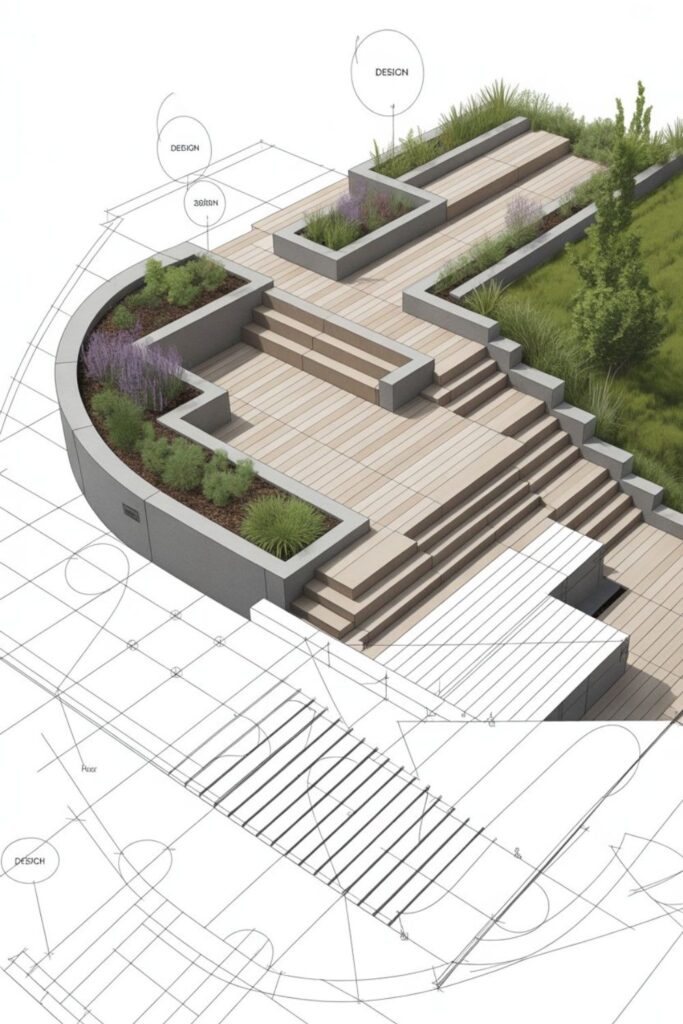
Strategic planning separates successful terrace landscapes from expensive failures. Comprehensive site analysis and thoughtful design ensure structures remain stable, spaces function properly, and aesthetics meet expectations.
Begin with topographic surveying, measuring existing slope angles and elevation changes. Professional surveys cost $300-800 but provide accurate data essential for proper design. DIY methods using string levels and measuring tapes work for simple projects but risk errors in complex terrain. Document existing features trees, utilities, drainage patterns, and soil conditions informing design decisions.
Functional zoning determines how to divide slopes into useful spaces. Position most-used areas dining patios, outdoor kitchens, play spaces closest to home access for convenience. Place less-frequented areas vegetable gardens, meditation spots, storage farther from houses. Consider sun exposure when assigning functions sunny upper terraces suit dining and entertaining, while shaded lower levels work for woodland gardens or cool lounging spaces.
Retaining wall heights should stay under 4 feet when possible, avoiding complex engineering and permit requirements most jurisdictions impose on taller structures. Multiple shorter walls work better than single tall barriers, creating more dimensional interest while reducing structural demands and costs. Space walls 6-10 feet apart vertically, providing adequate planting and circulation space between levels.
Circulation paths connecting terrace levels deserve careful attention. Steps should follow building codes typically 6-8 inch rise with 10-12 inch tread depth minimum for safe, comfortable transitions. Plan for 3-4 foot wide paths accommodating two people passing comfortably. Switchback paths reduce slope gradients, making transitions easier while adding visual interest through direction changes. Include landings every 10-12 steps on long runs, providing rest spots and preventing monotonous stair climbs.
Budget Allocation Strategy
Terrace landscape costs escalate quickly without disciplined planning. Allocate approximately 40% of budgets to structural elements retaining walls, drainage systems, and grading work. Hardscaping including paths, steps, and patios consumes another 30%. Planting and soil amendments take 20%, with the remaining 10% covering lighting, irrigation, and finishing details.
Phased implementation spreads costs over multiple years while allowing design adjustments based on actual usage patterns. Phase 1 typically addresses critical needs erosion control, primary access, and most-used spaces. Phase 2 adds secondary terraces and enhanced features. Phase 3 completes finishing touches and refinements. This approach prevents overwhelming budgets while ensuring essential elements receive adequate funding.
Professional consultation proves worthwhile even for DIY projects. Landscape architects charge $1,000-5,000 for terrace landscape designs but prevent expensive mistakes through proper engineering, drainage planning, and material selection. Consider hiring professionals for design while handling implementation yourself, balancing expertise with budget constraints.
Read More About: 27+ Small Home Garden Design Inspiration
What Materials Work Best for Terrace Retaining Walls?
Material selection dramatically impacts terrace landscape aesthetics, costs, longevity, and construction complexity. Understanding options ensures choices align with budgets, style preferences, and structural requirements.
Modular concrete blocks dominate modern terracing for good reason. These interlocking units install without mortar, making them DIY-friendly while delivering professional results. Manufacturers like Versa-Lok, Keystone, and Allan Block offer systems in stone-realistic finishes virtually indistinguishable from natural materials. Blocks cost $8-15 per square foot of wall face, substantially less than natural stone while offering superior structural performance through engineered interlocking designs. Most blocks incorporate setback features creating slight backward lean that enhances stability.
Natural stone delivers unmatched beauty and character for terrace walls. Fieldstone, limestone, sandstone, and granite each offer distinct appearances. Dry-stacked stone walls using carefully selected flat stones require significant skill but create timeless appearances. Mortared stone walls provide maximum stability for taller structures but demand professional masonry expertise. Natural stone costs $25-45 per square foot installed, with material quality and wall height affecting pricing. Well-built stone walls last centuries with minimal maintenance.
Timber retaining walls offer rustic appeal and budget-friendly pricing. Pressure-treated landscape timbers cost $10-20 per square foot installed, making them accessible options for simple terracing projects. However, wood deteriorates over 15-25 years depending on climate and wood quality, requiring eventual replacement. Use timbers rated for ground contact and install proper drainage preventing premature rot. Timber works well for shorter walls (under 3 feet) in informal landscape styles.
Poured concrete walls provide maximum strength for challenging sites but require professional installation. Formed concrete costs $40-75 per square foot installed depending on height, reinforcement needs, and finish quality. Stamped or stained concrete mimics stone appearances while offering concrete’s structural advantages. These walls excel for tall applications (over 6 feet) or areas with unstable soils requiring substantial engineering.
Engineered Solutions for Steep Slopes
Geogrid reinforcement extends retaining wall capabilities dramatically. These synthetic mesh materials buried in soil behind walls create massive reinforced zones preventing failure. Geogrid allows shorter block walls to retain much greater soil masses than unreinforced construction permits. Professional installation costs $15-30 per square foot but enables terracing on sites otherwise requiring concrete walls costing double or triple that amount.
Gabion walls use wire mesh cages filled with rocks creating substantial barriers appropriate for steep terrace landscapes. These structures offer excellent drainage, flexibility accommodating ground movement, and distinctive industrial-rustic aesthetics. Gabion systems cost $20-40 per square foot installed. DIY installation is feasible using pre-fabricated cages, though substantial rock volume requirements make material handling challenging.
Cellular confinement systems like Geoweb stabilize steep slopes using three-dimensional honeycomb structures filled with gravel or soil. These systems prevent erosion while maintaining permeability, making them excellent for driveways, paths, or planted slopes within terraced landscapes. Costs run $3-8 per square foot, substantially less than solid retaining walls for appropriate applications.
How Do You Create Functional Spaces on Terraced Levels?
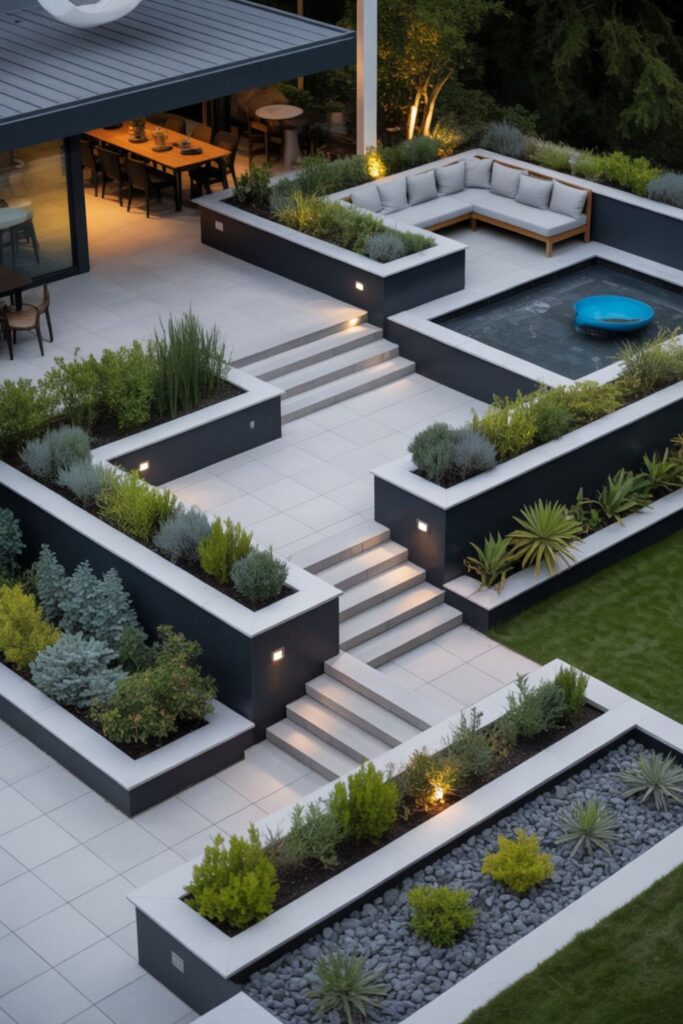
Transforming structural terrace landscapes into livable outdoor rooms requires thoughtful space planning and appropriate amenities. Each level should serve clear purposes while contributing to the overall landscape composition.
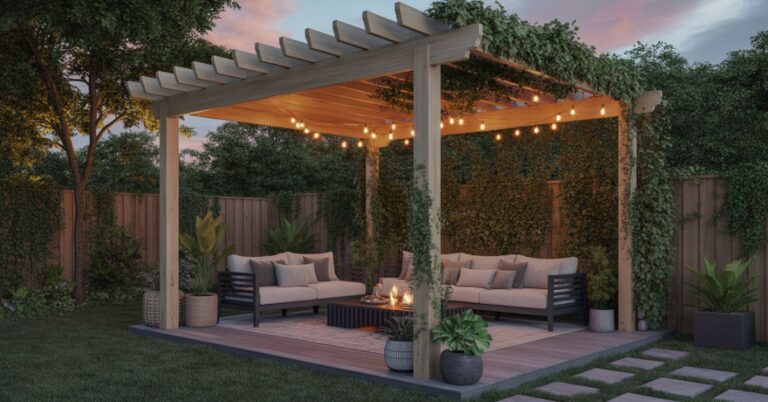
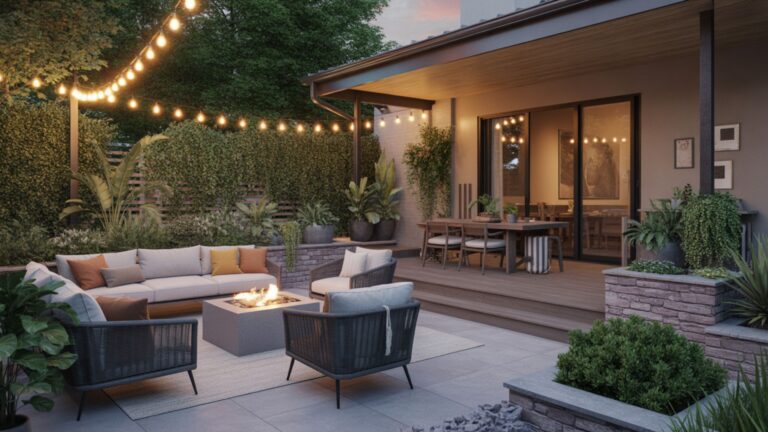
Upper terrace areas closest to homes typically function as primary outdoor living spaces. Position dining patios, outdoor kitchens, and main entertaining areas here for convenient access from interior spaces. These elevated positions often capture better views while feeling more connected to homes. Include overhead structures, pergolas or shade sails providing comfort during hot weather. Built-in seating along retaining wall edges maximizes space efficiency while creating intimate conversation areas.
Mid-level terraces excel as garden spaces, play areas, or secondary lounging zones. Create planting beds showcasing flowers, vegetables, or ornamental displays taking advantage of the excellent drainage and varied sun exposures terraced slopes provide. Consider fire pit areas or water features as focal points drawing people through landscapes and encouraging exploration of different levels. These intermediate zones transition between active upper areas and quieter lower spaces.
Lower terrace levels often suit more private or contemplative purposes. Create meditation gardens, woodland plantings, or naturalized areas requiring less maintenance than formal upper terraces. Position utility functions composting, storage sheds, or vegetable production on lower levels where they remain functional but unobtrusive. Take advantage of natural shade and moisture accumulation in low areas by planting species thriving in these conditions.
Transitions between levels deserve as much attention as the terraces themselves. Staircases become design features through material choices, lighting, and plantings softening their edges. Include generous landings providing rest spots while creating opportunities for container plantings or small seating areas. Consider alternative connections like ramps for accessibility or gentle switchback paths offering easier grades than straight stairs.
Maximizing Small Terrace Platforms
Compact terrace levels in steep landscapes may offer limited square footage, requiring creative solutions maximizing functionality. Built-in benches provide seating without consuming floor space that freestanding furniture would require. Vertical elements, trellises, living walls, or tall plantings add visual interest without horizontal sprawl. Multi-functional features like storage benches, fold-down tables, or convertible spaces adapt to changing needs.
Visual connectivity between levels prevents disjointed feelings in multi-terrace landscapes. Repeat materials, colors, or plant palettes throughout levels creating cohesive designs. Align features paths, walls, or plantings on different levels establishing visual relationships that unify compositions. Strategic sightlines allow views between levels, creating depth and suggesting spatial continuity even when physical access requires circuitous routes.
What Planting Strategies Work Best in Terrace Landscapes?
Planting design for terraced landscapes considers unique conditions; each level presents varying moisture, sun exposure, soil depth, and microclimates while creating cohesive compositions tying multiple levels together.
Upper terrace plantings often face harsh conditions: maximum sun exposure, rapid drainage, and wind exposure. Select drought-tolerant, sun-loving plants thriving in these conditions. Mediterranean plants including lavender, rosemary, and sage excel on upper terraces. Ornamental grasses, sedums, and yarrow tolerate heat and dry soil while adding texture and movement. These hardy selections minimize maintenance on harder-to-access upper levels.
Mid-level plantings typically enjoy moderate conditions suitable for the widest plant variety. Create showpiece gardens here with colorful perennials, roses, or specimen shrubs taking advantage of good drainage and varied exposures. Flowering plants attract pollinators, adding life and movement to terrace landscapes. Include edibles tomatoes, peppers, or herbs in sunny mid-level terraces for productive kitchen gardens with convenient access.
Lower terrace plantings benefit from accumulated moisture and often increased shade from upper level plantings or surrounding structures. Shade-tolerant perennials including hostas, ferns, and astilbes thrive here. Woodland wildflowers create naturalized appearances in lower zones. Moisture-loving plants like ligularia or cardinal flower succeed in areas where upper terraces would be too dry.
Retaining wall plantings soften hardscaping and integrate structures into landscapes. Plant trailing species along terrace edges creeping thyme, sedum, or sweet alyssum cascading over wall faces. Position taller plants behind shorter walls creating layered effects. Use wall pockets or crevices as planting opportunities, tucking alpines or succulents into mortared stone joints or between dry-stacked rocks.
Erosion Control Through Planting
Groundcover plants stabilize soil on slopes between terrace walls, preventing erosion while reducing maintenance versus turf grass. Low-growing spreaders including creeping juniper, cotoneaster, or periwinkle cover slopes quickly, requiring minimal care once established. Deep-rooted plants bind soil effectively to switch grass, little bluestem, or native prairie species develop extensive root systems anchoring slopes while adding beauty.
Slope stabilization techniques combine plants with erosion control materials during establishment. Biodegradable erosion blankets protect bare soil during plant establishment, degrading naturally as roots develop. Coconut fiber logs staked horizontally across slopes slow water flow and trap sediment. Live stakes dormant willow or dogwood cuttings planted directly into slopes root and sprout, creating living erosion control.
Native plant selections excel on sloped terrace landscapes because they’ve adapted to local conditions, requiring less water, fertilizer, and maintenance than exotic species. Native roots typically grow deeper than non-natives, providing superior erosion control. Regional native plant societies and extension services provide plant recommendations specific to your area and conditions.
How Do You Light Terrace Landscapes Effectively?
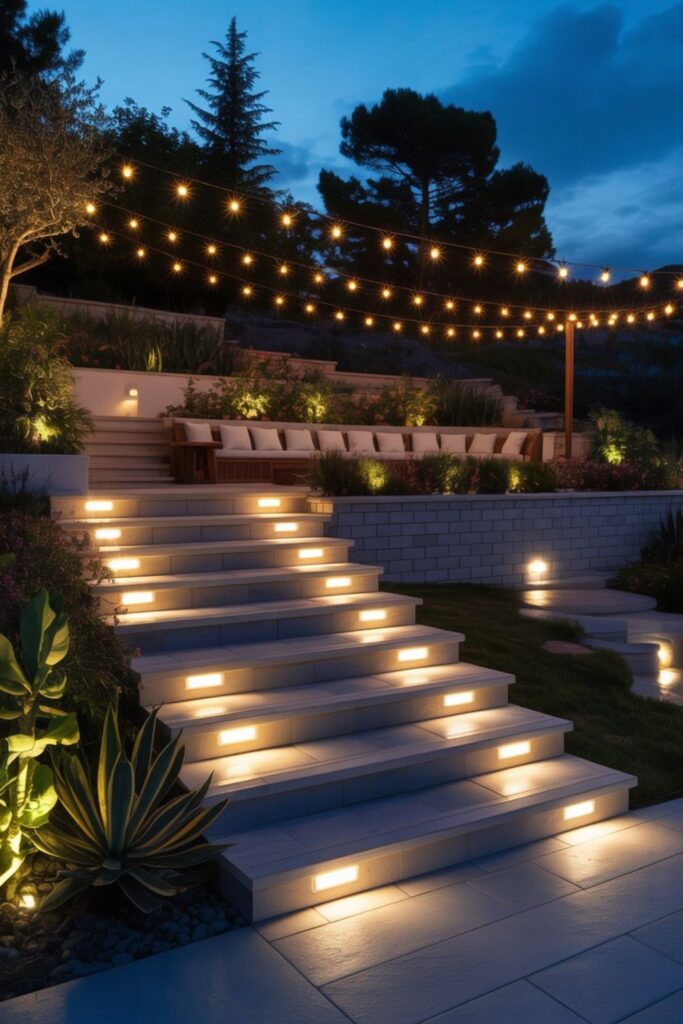
Landscape lighting extends terrace landscape usability after dark while highlighting multi-level designs’ dimensional beauty. Proper illumination enhances safety on steps and slopes while creating dramatic nighttime ambiance.
Path and step lighting proves essential for safe navigation between terrace levels. Install low-voltage LED fixtures every 6-8 feet along pathways, positioning lights slightly off path edges rather than centering them for more natural appearances. Illuminate steps with lights mounted in risers or on adjacent walls, ensuring clear visibility of each tread. These safety-focused fixtures should provide functional illumination without harsh glare or excessive brightness.
Wall lighting emphasizes terrace structures’ dimensional qualities. Downlighting from wall caps creates subtle illumination highlighting materials and casting shadows that emphasize textures. Uplighting wall faces from below produces dramatic effects especially effective with natural stone. Install lights in or near walls during construction retrofitting proves far more difficult and expensive than including lighting infrastructure initially.
Accent lighting highlights specimen plants, water features, or architectural elements creating focal points throughout multi-level landscapes. Uplighting trees emphasizes height and form while casting interesting shadows. Spotlights direct attention to sculptures, fountains, or distinctive plantings. Use accent lighting judiciously over-lighting creates confused compositions rather than highlighting special features.
Ambient lighting establishes overall mood through string lights, lanterns, or distributed low-level fixtures. Overhead string lights on upper terrace patios create festive entertaining atmospheres. Bollard-style path lights provide gentle ambient illumination defining circulation routes. This softer lighting balances task-specific illumination, preventing harsh, spotlight-only appearances.
Smart Lighting Systems
LED technology transformed landscape lighting through energy efficiency, longevity, and color options. Quality LED fixtures last 50,000+ hours potentially 20+ years in typical residential applications versus 1,000-2,000 hours for traditional bulbs. Initial costs run higher but lifetime savings in energy and replacement costs provide rapid payback. LEDs generate minimal heat, making them safe near plants and wooden structures.
Low-voltage systems (12-volt) offer safer, easier installation than line-voltage alternatives, making them ideal for DIY terrace landscape lighting projects. Plug-and-play connectors require no electrical expertise, while low voltage eliminates shock risks. Transformers step down household current to safe levels, typically powering 200-300 watts of lighting adequate for most residential terrace landscapes. Position transformers near houses in weatherproof locations with convenient electrical access.
Smart controls add convenience and efficiency through timers, photocells, and smartphone connectivity. Program lighting scenes for different occasions full illumination for entertaining, subtle accent lighting for quiet evenings. Motion sensors activate lighting when needed, providing security and convenience while conserving energy. These systems integrate easily with existing smart home technology, offering voice control and remote management.
Read More About: 27+ Inspiring Terrace Garden Ideas for Your Rooftop Oasis
What Drainage Solutions Prevent Terrace Landscape Problems?
Proper drainage determines whether terrace landscapes remain stable and functional or experience catastrophic failures. Water management must be addressed during construction retrofitting drainage after problems develop costs far more than doing it right initially.
French drains behind retaining walls collect water and direct it away from structures, preventing hydrostatic pressure buildup that causes wall failures. Install perforated drain pipes in gravel-filled trenches directly behind walls, sloping pipes toward safe drainage points. Wrap pipes in landscape fabric preventing soil infiltration that clogs perforations. Outlet pipes must discharge water completely away from terraced areas into storm sewers, dry wells, or natural drainage swales.
Weep holes in solid retaining walls allow water passage through structures, preventing pressure accumulation. Space weep holes every 3-5 feet horizontally in wall lowest courses, angling them slightly downward for drainage. Place gravel pockets behind weep holes preventing soil washout while allowing water flow. Weep holes prove critical in mortared stone or concrete walls lacking natural permeability that modular block systems provide through open joints.
Surface drainage directs runoff away from terrace edges and structures. Grade terrace platforms with gentle slopes (2% minimum) directing water toward drainage points rather than over retaining walls. Install catch basins, channel drains, or simple swales collecting concentrated flows. Never allow water to sheet over wall edges; the erosive force undermines soil supporting walls while creating muddy messes on lower levels.
Gravel backfill behind retaining walls creates drainage layers allowing water movement toward French drains. Use 3/4-inch crushed stone extending 12-18 inches behind walls from base to within 6 inches of top. Cap gravel with landscape fabric, then add topsoil for planting. This drainage layer dramatically reduces water pressure against walls while improving overall stability.
Managing Runoff Volume
Rain gardens positioned on lower terrace levels capture and infiltrate runoff from upper areas, preventing erosion while creating attractive planting opportunities. These shallow depressions planted with water-tolerant native species absorb stormwater that would otherwise flow off properties. Rain gardens reduce runoff volume by 30-50%, protecting downstream areas while filtering pollutants.
Dry creek beds provide visual interest while functioning as drainage channels during rainfall. Use river rock and boulders creating naturalistic stream appearances in swales directing water through terrace landscapes. These features remain attractive during dry periods while handling substantial water volumes during storms. Plant moisture-tolerant species along dry creek edges enhancing natural appearances.
Permeable surfaces on terrace platforms allow infiltration rather than forcing all water toward drainage systems. Use permeable pavers, gravel, or decomposed granite for paths and less-used spaces. These materials reduce runoff volume by 50-70% compared to solid concrete or asphalt while providing functional surfaces for circulation and activities.
How Do You Build Retaining Walls for Terrace Landscapes?
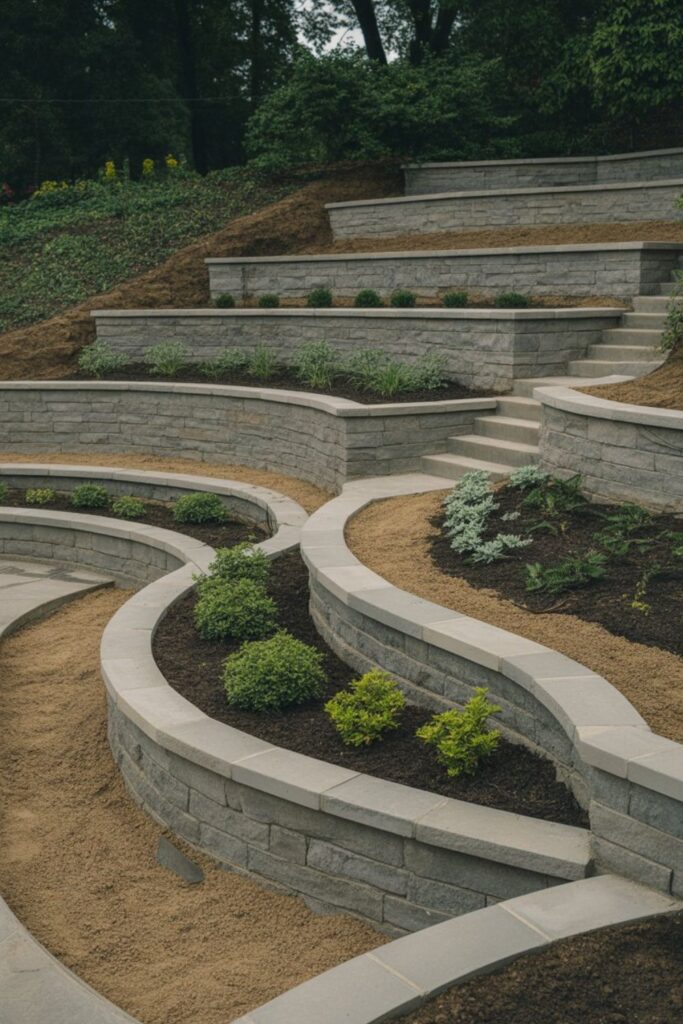
Understanding retaining wall construction basics helps even those hiring professionals make informed decisions about designs, materials, and contractors. DIYers can tackle modest walls (under 3 feet) with proper techniques and materials.
Site preparation determines long-term success. Excavate beyond wall locations, removing unstable topsoil and organic material reaching stable subsoil. Create level base trenches 6-8 inches deep, extending trenches 6-12 inches beyond wall faces. The trench width should equal wall thickness plus drainage space behind walls typically 24-36 inches total. Compact trench bottoms thoroughly using plate compactors or hand tampers.
Base courses establish foundations for wall structures. Pour 4-6 inches of crushed stone base in trenches, compacting thoroughly in 2-inch lifts. Larger walls (over 3 feet) may require concrete footings and consult local building codes and manufacturers’ recommendations. Ensure base courses are perfectly level using string levels and long straightedges checking multiple points. Base imperfections compound through upper courses, causing significant problems.
Wall assembly varies by material but follows similar principles. Modular blocks should be installed following manufacturers’ specific instructions regarding setback, pinning, and drainage. Check level constantly every block, every course using 4-foot levels. Step-back walls into slopes following grade changes rather than creating vertical cuts requiring more blocks and material. Include drainage measures French drains, weep holes, gravel backfill during construction, not after completion.
Backfilling requires careful execution preventing damage to completed walls. Place 3/4-inch crushed stone directly behind walls in 12-18 inch layers, creating drainage zones. Cap drainage stone with landscape fabric preventing soil infiltration. Add topsoil in 6-8 inch lifts, compacting each layer before adding the next. Avoid heavy compaction directly against walls; excessive force can shift blocks or crack concrete.
When to Hire Professionals
Tall walls (over 4 feet), engineered walls requiring geogrid reinforcement, or walls in questionable soil conditions demand professional expertise. Structural failures endanger property and people while creating expensive liability issues. Licensed contractors carry insurance protecting you from these risks while ensuring code-compliant construction.
Complex sites with utilities, poor drainage, or difficult access justify professional involvement even for shorter walls. Contractors possess equipment excavators, compactors, material handlers making difficult jobs manageable. Their experience prevents expensive mistakes that DIYers often make through unfamiliarity with critical details.
Permits and inspections required for many terrace landscape projects often stipulate licensed contractor involvement. Building departments may refuse permits for homeowner-built retaining walls over certain heights. Professional contractors understand local requirements, handle permitting processes, and ensure inspections pass, avoiding stop-work orders or forced removal of non-compliant construction.
What Are Common Terrace Landscape Design Mistakes?
Learning from typical errors prevents expensive problems and ensures your terrace landscape succeeds functionally and aesthetically.
Inadequate drainage causes 80% of retaining wall failures. Skipping French drains, weep holes, or gravel backfill saves money initially but guarantees problems as water pressure accumulates behind walls. Never compromise drainage; it represents the single most critical factor determining long-term success. Proper drainage costs 15-20% of total retaining wall budgets but prevents 100% of moisture-related failures.
Insufficient base preparation dooms walls regardless of quality materials or careful assembly. Soft, organic soil, inadequate compaction, or improperly sized base materials create unstable foundations. Walls settle unevenly, lean, or collapse as foundations fail. Invest time and effort in proper excavation and base construction these hidden elements determine whether walls last decades or fail within years.
Wrong wall heights create problems when single tall walls replace multiple shorter terraces. Walls over 4 feet trigger engineering requirements, permit complications, and dramatically increased costs. Multiple 3-foot walls achieve the same elevation change at fraction of the cost while creating more interesting multi-level landscapes. Shorter walls also offer more planting opportunities between levels, better erosion control, and easier construction.
Poor plant selection for retaining wall areas causes maintenance headaches or structural damage. Large trees planted too close to walls develop root systems undermining structures. Plants requiring frequent watering in poorly drained areas behind walls create perpetual moisture issues. Select appropriately sized plants with non-invasive root systems suited to drainage conditions specific to terrace landscapes.
Design Proportion Errors
Oversized hardscaping consumes budgets while creating stark, harsh landscapes. Massive concrete walls dominate properties rather than integrating naturally into terrain. Balance hardscaping with planted areas typically 40% hardscape, 60% planting yields attractive proportions in terrace landscapes. Use materials and finishes harmonizing with surrounding architecture and natural features rather than contrasting jarringly.
Inconsistent materials between terrace levels create disjointed appearances. Mixing multiple stone types, block styles, or paving materials within single projects feels chaotic unless expertly executed. Establish material palettes before construction, limiting selections to 2-3 complementary options throughout projects. Repeat materials between levels matching wall blocks and paver colors, coordinating step materials with terrace paving creating visual unity.
Ignoring scale leads to features inappropriate for property sizes. Grand stone staircases overwhelm modest yards. Tiny paths feel inadequate in expansive landscapes. Match feature scale to overall property size and the specific terrace dimensions where they’re located. When uncertain, slightly oversize circulation elements paths, steps, landings for comfort and safety while slightly undersize decorative features preventing overwhelming small spaces.
FAQs
How much does terrace landscaping cost?
Simple terracing with modular block walls (under 3 feet) costs $25-45 per square foot of wall face, including materials and installation. Natural stone terraces run $50-100 per square foot. Complex projects with multiple tall walls, extensive drainage, and professional engineering cost $75-150 per square foot. A typical terraced landscape with 100 linear feet of 3-foot walls, drainage, steps, and basic planting costs $8,000-15,000. Steep slopes or difficult site access increase costs 20-40%.
Do I need permits for retaining walls?
Requirements vary by jurisdiction but most areas require permits for walls over 3-4 feet tall. Some municipalities require permits for any retaining structure regardless of height. Walls near property lines often face additional restrictions. Check local building departments before starting projects unpermitted work may require removal or expensive retrofitting to meet code. Permit processes ensure proper engineering, construction techniques, and inspections protecting your investment and safety.
How steep a slope can be terraced?
Virtually any slope can be terraced with appropriate engineering and investment. Slopes under 15% may need minimal terracing, while 15-30% slopes benefit dramatically from terracing creating usable spaces. Slopes over 30% (roughly 17 degrees) absolutely require terracing for stability and usability. Extremely steep slopes (over 50%) demand professional engineering, specialized techniques like soil nailing or tiebacks, and substantial budgets approaching $100-200+ per square foot.
What plants work best between terrace levels?
Select plants based on specific conditions each location presents. Upper terraces suit drought-tolerant, sun-loving species lavender, ornamental grasses, sedum, and sage. Mid-level areas with moderate conditions accommodate most perennials, shrubs, and vegetables. Lower terraces with more shade and moisture support hostas, ferns, astilbes, and woodland plants. Choose plants with root systems appropriate for slope stabilization deep-rooted native species excel at preventing erosion between terrace walls.
How do you maintain terraced landscapes?
Terrace landscapes require seasonal maintenance but less than un-terraced slopes. Inspect retaining walls annually for shifting, cracking, or drainage problems, addressing issues immediately before they worsen. Clean drainage outlets ensure free water flow. Mulch planted areas reducing erosion and weed growth. Prune plants maintaining appropriate sizes for locations. Power wash walls every 2-3 years removing algae or efflorescence. Well-built terraces require minimal structural maintenance for 25-50+ years.
Can you create terraces on small properties?
Absolutely terrace landscapes work at any scale. Even modest 10-15 foot elevation changes benefit from terracing creating 2-3 usable levels. Small terraces might accommodate compact seating areas, vertical gardens, or intimate meditation spaces rather than full dining patios. The principles remain identical regardless of scale, proper drainage, appropriate materials, and thoughtful design create successful small terraced landscapes just as they do larger projects.
Conclusion
Terrace landscape ideas transform challenging sloped properties into distinctive outdoor spaces offering functionality, beauty, and value impossible on flat lots. These multi-dimensional designs solve practical problems such as erosion control, usable space creation, drainage management while delivering aesthetic impact that elevates entire properties. The dimensional quality, varied perspectives, and distinct outdoor rooms that terracing provides create memorable landscapes distinguishing your property for decades.
Begin your terrace landscape transformation with comprehensive planning addressing structural requirements, drainage systems, and functional space allocation. Prioritize proper construction techniques over rushed timelines well-built terraces last generations while shortcuts lead to expensive failures. Start with critical elements including erosion control and primary access, then expand with additional features as budgets allow. Your terraced landscape will evolve continuously, maturing into the multi-level outdoor sanctuary that turns your property’s biggest challenge into its most compelling feature.