21+ Back Porch Ideas For Wondrous Outdoor Space

Your back porch sits there, a forgotten transition space between house and yard that should be so much more. Every time you step through that back door, you see wasted potential: worn flooring, mismatched furniture, or perhaps just bare boards waiting for a purpose. The space exists, but it doesn’t invite you to stay, relax, or enjoy the outdoors the way you know it could.
This disconnect between potential and reality frustrates homeowners everywhere. Maybe you’ve accumulated a few random pieces over the years that never quite came together, or perhaps the porch remains completely bare because you don’t know where to start. You scroll through beautiful back porch images online, but translating those professional designs to your specific space, budget, and style feels impossible.
Here’s the transformation: stunning back porch ideas don’t require unlimited budgets or design degrees; they follow accessible principles that anyone can implement. By understanding your porch’s unique characteristics, defining its purpose, and selecting appropriate furniture, materials, and decor, you can create back porch ideas that becomes your favorite room in the house. This comprehensive guide delivers actionable porch ideas covering layouts, styles, furnishings, and decorative touches that transform neglected back porches into inviting outdoor destinations you’ll use daily and treasure for years.
Understanding Your Back Porch Type and Potential
Back porches come in various configurations requiring different design approaches. Covered porches with solid roofs offer year-round protection allowing upholstered furniture and delicate decor that wouldn’t survive exposure. Screened porches add insect protection creating three-season rooms particularly valuable where mosquitoes plague unscreened spaces. Open porches without roofs need weather-resistant everything but connect more directly with outdoor environments.
Assess your porch dimensions precisely, small 8×10 spaces require different strategies than generous 12×20 areas. Note structural features like ceiling height, existing lighting, electrical outlets, and architectural details informing design decisions. Observe sun exposure throughout the day; afternoon sun beating down creates different needs than shaded morning light. Views capitalize on attractive sightlines toward gardens or landscapes while screening less desirable views of neighboring properties or utility areas. Evaluate floor condition determining whether existing surfaces need repair, replacement, or simply cleaning and refinishing. Check structural integrity addressing any sagging, rot, or damage before cosmetic improvements. Understanding your specific porch type and condition before planning prevents costly mistakes and ensures appropriate feature selection matching actual capabilities and limitations.
Read More About: Small Backyard Ideas for Smart Outdoor Living
Small Back Porch Ideas That Maximize Space
Small back porch ideas succeed through strategic furniture selection and vertical thinking maximizing limited square footage. Choose scaled-down furniture proportional to available space: loveseat instead of full sofa, bistro table instead of large dining set. Built-in seating along porch perimeters eliminates bulky freestanding pieces while providing storage underneath hinged seats for cushions and outdoor essentials.
Folding or nesting furniture collapses when unused, preserving open floor space for movement. Multi-functional pieces like ottomans serving as seating, footrests, and tables prevent clutter in small porches. Hang plants from ceiling hooks or wall-mounted brackets utilizing vertical space without consuming precious floor area. Install narrow console tables or shelves along walls providing surface space without protruding into walkways. Choose furniture with exposed legs showing floor beneath pieces creating perceived spaciousness versus solid-base furniture. Light color palettes in flooring, walls, and furnishings reflect light generating airy openness.
Incorporate one focal point perhaps a striking hanging chair or beautiful planter rather than multiple competing elements fragmenting limited space. Mirrors mounted on exterior walls reflect space effectively doubling visual dimensions. Remove unnecessary items keeping only pieces actively enhancing function or aesthetics. Thoughtful design makes small back porches feel 30-40% larger through strategic visual manipulation without changing actual dimensions.
Farmhouse Back Porch Ideas
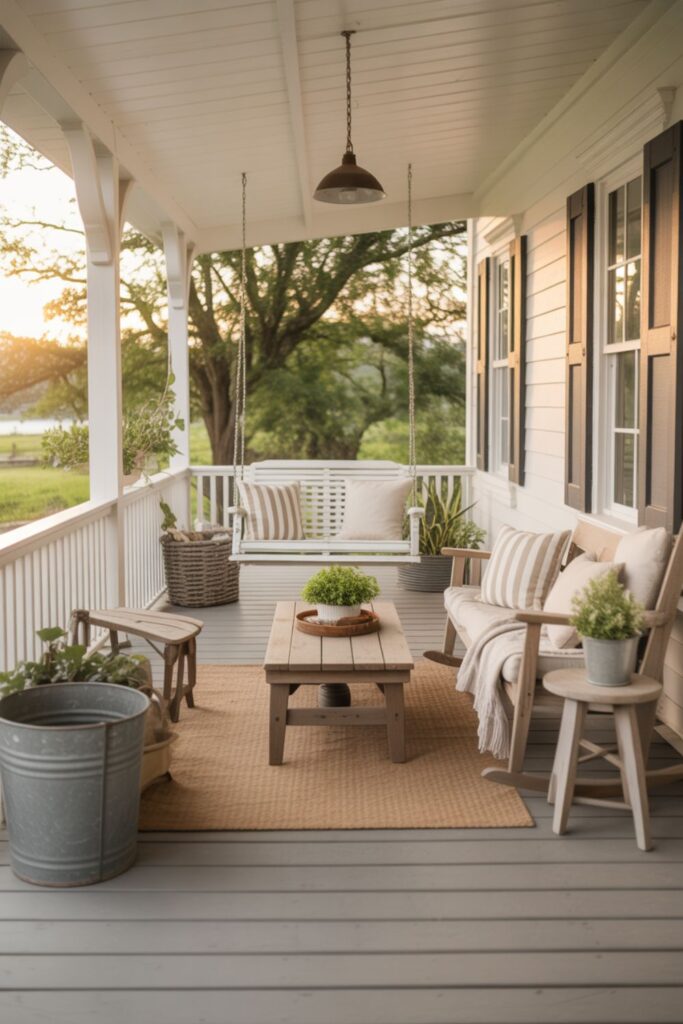
Farmhouse back porch designs embrace rustic charm through vintage elements, natural materials, and collected-over-time aesthetics. Weathered wood furniture rocking chairs, Adirondack chairs, or simple benches establish authentic foundations. Galvanized metal accents appear through planters, watering cans, or vintage buckets adding industrial farmhouse character.
Neutral color palettes in whites, creams, grays, and natural wood tones create classic farmhouse backdrops allowing pops of color through textiles and plantings. Vintage finds like antique signs, old tools, or salvaged architectural elements inject personality and history. Shiplap or beadboard ceiling treatments reinforce farmhouse aesthetics while covering less attractive existing surfaces. Porch swings epitomize farmhouse style hang from sturdy beams adding nostalgic charm and comfortable seating. Layer textiles through striped or checked cushions, vintage quilts, and simple curtains in natural fabrics. Incorporate plenty of greenery through container gardens, hanging baskets, and potted herbs bringing life and freshness.
Mason jar lighting either as candle holders or fitted with light cords delivers budget-friendly ambiance. Painted wood floors in soft gray, white, or sage green complement farmhouse palettes. Add simple wood tables using reclaimed materials or new lumber stained to look aged. Farmhouse porch designs appeal broadly across demographics offering timeless comfort that never feels dated or overly trendy.
Modern Back Porch Ideas
Modern back porch ideas embrace clean lines, minimal ornamentation, and intentional material selections creating sophisticated contemporary spaces. Furniture featuring powder-coated metal or aluminum frames with geometric forms maintains modern aesthetics while providing weather resistance. Cushions in solid colors or simple geometric patterns avoid busy traditional prints.
Color palettes stay restrained with grays, blacks, whites, and singular accent colors building visual harmony. Modern porches incorporate sleek lighting recessed fixtures, linear LED strips, or minimalist pendant designs illuminating without decorative excess. Built-in features like benches or planters reduce visual clutter from freestanding pieces creating cohesive architectural appearance. Choose large-format tiles or concrete flooring versus busy patterns or traditional wood boards. Horizontal slat railings or cable systems maintain clean contemporary lines if new railings are needed. Plantings embrace architectural forms ornamental grasses, sculptural succulents, or specimen plants in simple modern containers. Technology integration feels seamless through hidden speakers, flush-mounted outlets, and concealed wiring.
Negative space remains an important design element; resist temptation to fill every corner allowing breathing room that defines modern sensibility. Glass or acrylic furniture pieces, coffee tables, side tables maintain functionality while appearing nearly invisible. Modern porch aesthetics have grown 40% in popularity since 2020 with homeowners prioritizing clean, low-maintenance designs.
Cozy Back Porch Ideas for Relaxation
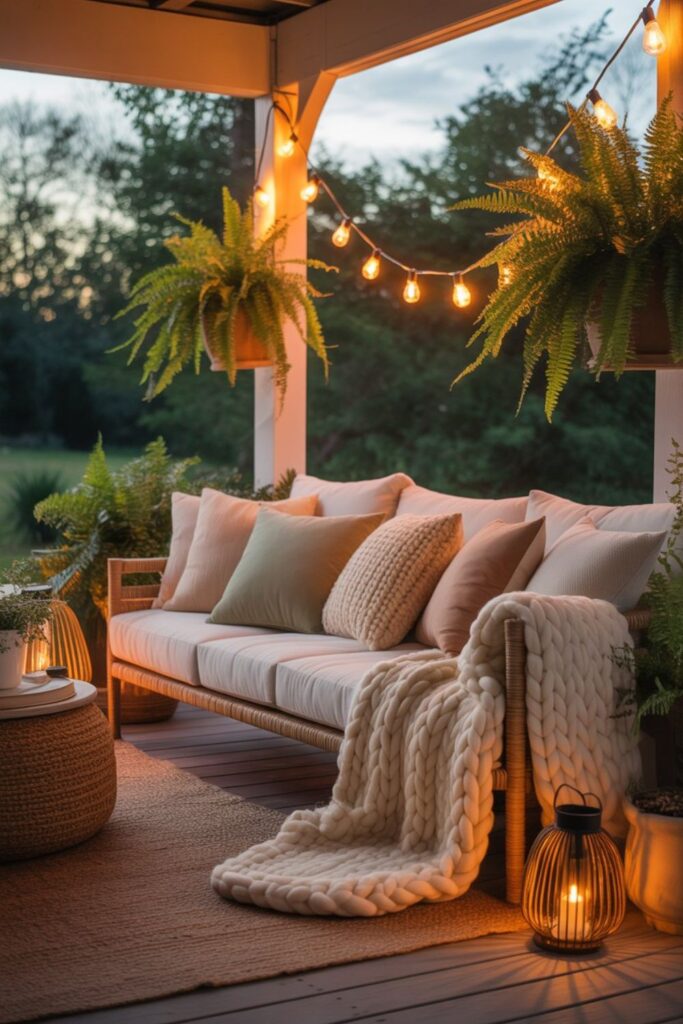
Creating cozy back porches focused on relaxation transforms spaces into personal sanctuaries offering daily respite. Comfortable seating with deep cushions sectionals, daybeds, or oversized chairs encourages extended lounging. Layer textiles through multiple throw pillows in varying sizes, soft blankets, and outdoor rugs adding warmth and tactile comfort.
Install ceiling fans or portable fans circulating air during warm weather making spaces more comfortable without air conditioning. Incorporate soft lighting through string lights, lanterns, or table lamps (weatherproof versions) creating gentle illumination perfect for evening relaxation. Add side tables within arm’s reach of all seating providing landing spots for beverages, books, and devices. Privacy elements like curtains, screens, or strategic plantings create intimate enclosed feelings where you comfortably unwind. Hanging chairs or porch swings introduce gentle motion proven to reduce stress and promote relaxation. Include sensory elements wind chimes, water features, or fragrant plants engaging multiple senses. Create reading nooks with comfortable chairs, good lighting, and small bookshelves or magazine racks.
Limit technology or designate cozy porches as device-free zones encouraging genuine relaxation and mental restoration. Warm color palettes in earth tones, soft blues, or gentle greens promote calm versus energizing bright colors. Dedicated relaxation spaces improve stress management and mental health with regular users reporting 30-40% better stress control.
Budget-Friendly Back Porch Ideas
Beautiful back porch ideas emerge from modest budgets through creative sourcing and DIY approaches. Paint existing floors, ceilings, or walls using porch-rated paint in fresh colors transforming tired surfaces for $75-150 total. Thrift stores, estate sales, and online marketplaces yield quality furniture at 50-90% below retail; refurbish through paint or new cushions.
Build simple furniture from lumber or pallets following online tutorials creating custom pieces for a fraction of retail costs. String lights deliver maximum ambiance per dollar. $20-40 purchases create a magical atmosphere rivaling expensive fixtures. DIY cushions from indoor fabric remnants or clearance outdoor fabric with foam inserts cut from affordable rolls save substantially versus retail cushions. Repurpose indoor items for porch use, old curtains become outdoor panels, vintage crates transform into side tables, unused rugs move outside. Paint concrete or wood floors in patterns of diamonds, stripes, or faux rugs creating custom looks for under $100. Create planters from unexpected containers galvanized buckets, wooden boxes, old toolboxes, painting or leaving nature based on preferences.
Shop end-of-season sales scoring 50-75% discounts on furniture, decor, and accessories for following seasons. Focus spending on one anchor piece perhaps comfortable seating or quality outdoor rug then surround with budget finds. Thoughtful budget porch transformations averaging $300-800 deliver results rivaling professionally designed spaces costing 3-5 times more.
Screened Back Porch Ideas
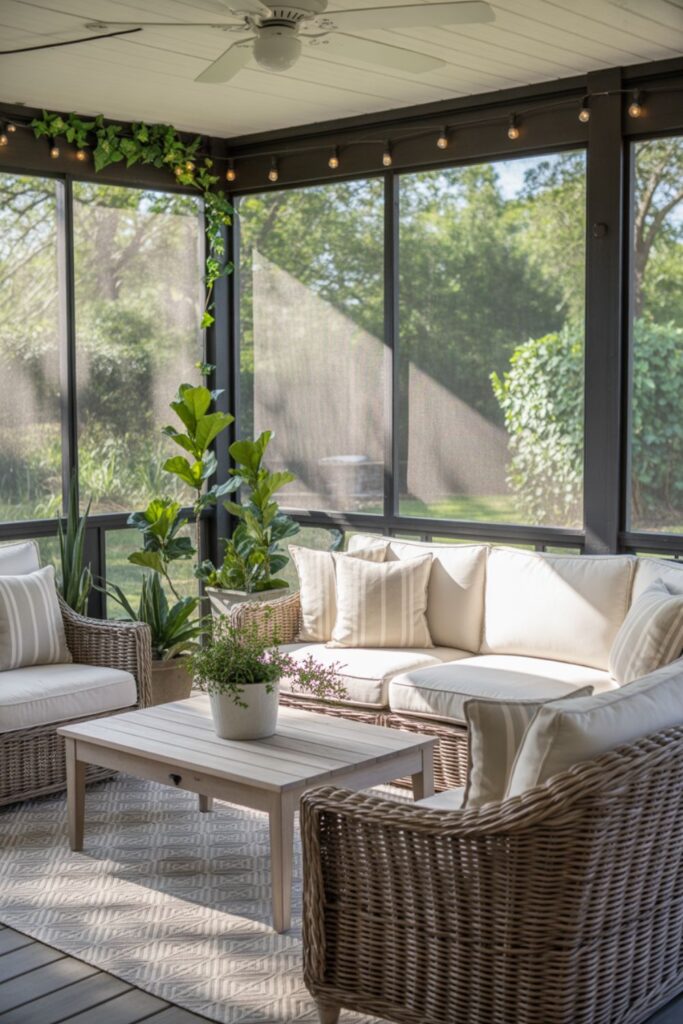
Screened back porches offer insect-free outdoor enjoyment creating three-season rooms extending living space substantially. Furnish with comfortable outdoor furniture or even indoor pieces since screening provides weather protection; upholstered sofas and chairs become viable options. Install ceiling fans improving air circulation during humid weather making spaces comfortable without air conditioning.
Add lighting layers overhead fixtures for general illumination, table lamps for tasks, and accent lights for ambiance creating flexible atmospheres. Screened porches accommodate entertainment features like televisions, sound systems, or gaming areas protected from weather. Include dining areas with tables seating regular households plus guests; screened protection allows evening meals without insect harassment. Incorporate heating elements space heaters, fire tables, or infrared heaters extending usability into cooler months. Install retractable screens or windows converting screened porches into enclosed sunrooms during winter in temperate climates. Add privacy curtains on the interior side controlling visibility while maintaining airflow and insect protection.
Consider flooring carefully indoor-style rugs work in screened spaces though outdoor rugs handle tracked-in moisture better. Create zones within larger screened porches lounging areas, dining spaces, and activity zones maximizing functionality. Maintain screens annually checking for tears, replacing damaged sections, and cleaning thoroughly. Screened porch additions recoup 65-85% of costs at resale while dramatically improving daily living quality for current homeowners.
Back Porch Dining Ideas
Back porch dining spaces extend kitchens outdoors creating casual everyday eating areas and entertaining venues. Size tables accommodating regular households plus 2-4 guests preventing cramped conditions; extendable designs provide flexibility for larger gatherings. Position tables considering kitchen access close enough for convenient serving but not blocking main traffic flow.
Install adequate overhead lighting pendant fixtures, chandeliers, or adjustable spotlights ensuring visibility without glare during evening meals. Add side stations or bar carts providing serving surfaces and storage for dinnerware, utensils, and entertaining supplies. Outdoor dining on porches benefits from ceiling fans keeping air moving during warm-weather meals. Include comfortable seating cushioned chairs or benches encouraging lingering over meals rather than quick eating. Create ambiance through table settings, centerpieces from yard clippings or seasonal elements, and candles or lanterns. Consider weather protection; covered porches allow dining regardless of light rain extending usability significantly. Storage solutions built-in cabinets, hutches, or deck boxes keep porch dining essentials accessible without trips inside.
Easy-clean surfaces in tables and flooring simplify post-meal cleanup encouraging more frequent porch use. Add heating elements extending the dining season into cooler months that would otherwise force eating inside. Families with dedicated outdoor dining spaces eat together 40% more frequently versus those dining only indoors, improving family connection and satisfaction.
Back Porch Swing and Seating Ideas
Porch swings epitomize comfortable back porch living delivering gentle motion proven to reduce stress and promote relaxation. Traditional wood swings painted in classic white or natural stain complement any porch style. Wicker or rattan swings deliver resort-style aesthetics with weather-resistant synthetic versions eliminating maintenance concerns.
Daybed swings with mattress-style cushions create luxurious lounging spots perfect for afternoon naps or evening stargazing. Install swings from sturdy ceiling joists using appropriate hardware rated for dynamic loads; improper installation creates safety hazards. Position swings allowing adequate clearance 36 inches minimum for comfortable movement without striking railings or walls. Add multiple seating options beyond swings rocking chairs, stationary seating, ottomans accommodating various preferences and guest counts. Built-in bench seating along porch perimeters maximizes capacity while providing storage underneath. Hanging chairs or egg chairs introduce modern alternatives to traditional swings with sculptural presence. Layer cushions and pillows make all seating inviting; uncomfortable furniture remains unused regardless of aesthetics.
Consider traffic flow ensuring seating placement doesn’t obstruct primary walkways through porches. Group seating in conversation-promoting arrangements where occupants easily interact. Porch swings consistently rank as the most beloved porch feature with 85% of owners reporting daily use during appropriate seasons.
Back Porch Lighting Ideas
Strategic porch lighting extends usability well past sunset while creating an atmosphere impossible during daylight. Install overhead fixtures flush-mount or semi-flush ceiling lights providing general illumination for safe navigation and activities. String lights deliver warm romantic glow strung along ceiling perimeters, wrapped around posts, or hung in swags creating magical ambiance at minimal cost.
Lanterns battery-operated, solar, or candle-filled add portable accent lighting repositioning as needed. Wall sconces flanking doors or positioned along porch walls provide architectural lighting adding style while illuminating entry areas. Table and floor lamps (weatherproof outdoor versions) create a living-room atmosphere enabling reading and tasks. Install dimmer switches on all possible circuits allowing intensity adjustment for different activities and atmospheres. Solar lights eliminate electrical costs and wiring complexity though typically provide gentler illumination than hardwired alternatives. Incorporate accent lighting highlighting architectural details, plantings, or artwork creating visual interest after dark. Consider smart lighting systems with color-changing capabilities and scheduling features allowing automation and customization.
Add motion-sensor lights near doors or steps providing automatic illumination when approaching porches at night. Layered porch lighting combining ambient, task, and accent sources creates most functional and aesthetically pleasing results with homeowners reporting 60% more evening porch use versus single-source lighting.
Back Porch Decor and Styling Ideas
Personal touches through decor transform functional back porches into stylish outdoor rooms reflecting your taste. Outdoor rugs define seating or dining areas adding color, pattern, and underfoot comfort softening hard surfaces. Throw pillows in weather-resistant fabrics or regular pillows stored nightly inject pattern, color, and comfort at $10-30 each.
Wall art designed for outdoor use metal signs, weatherproof prints, or decorative mirrors adds personality to vertical surfaces. Planters in varying sizes, heights, and materials create visual interest while bringing life and color through flowers, herbs, or foliage plants. Decorative objects, lanterns, vases, sculptures, or collected items personalize spaces making them feel curated rather than generic. Seasonal decor keeps porches feeling fresh spring flowers, summer nautical themes, fall pumpkins, winter evergreens without requiring complete redesigns. Textiles beyond cushions, outdoor curtains, table runners, or throws add softness and layers. Create vignettes on side tables or shelves grouping objects in odd numbers (3s or 5s) at varying heights. Install hooks for hanging plants, wind chimes, or decorative elements utilizing vertical space.
Paint existing concrete planters, furniture, or accessories in fresh colors updating appearances without replacement costs. Balance decoration with function; beautiful spaces that don’t work practically won’t get used. Well-decorated porches increase perceived home value 10-15% beyond functional equivalent spaces demonstrating styling’s measurable impact.
What Furniture Works Best for Back Porches?
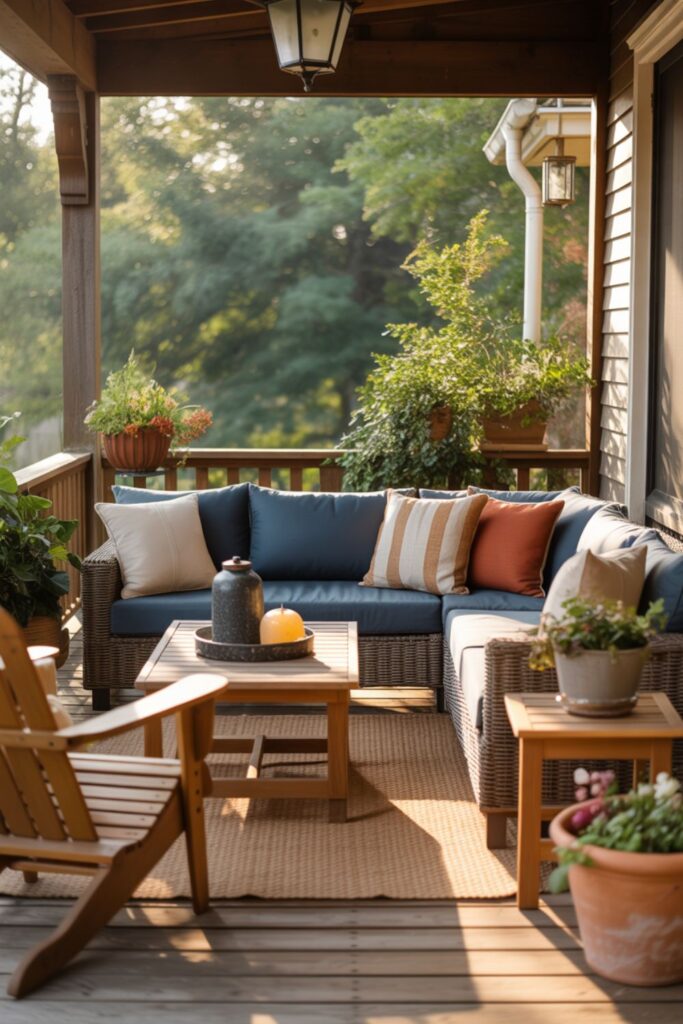
Back porch furniture selection depends on coverage, climate, and intended use balancing durability with comfort. Covered porches accommodate broader choices including upholstered pieces, indoor-outdoor furniture, or even repurposed indoor items. Open porches need all-weather materials aluminum, synthetic wicker, teak, or powder-coated steel resisting sun, rain, and temperature fluctuations.
Cushion quality dramatically affects comfort; seek quick-dry foam cores and solution-dyed acrylic fabrics resisting fade and mildew. Test furniture when possible ensuring adequate comfort; attractive pieces that hurt to sit on remain unused. Scale furniture to porch dimensions oversized pieces overwhelm small spaces while undersized furniture appears lost in generous porches. Consider storage implications: stackable chairs, folding tables, or built-in options simplify seasonal transitions versus year-round exposure. Multi-functional pieces maximize utility in space-constrained porches, ottomans serving as seating and tables, benches with storage underneath. Modular furniture adapts as needs change, rearranging for different scenarios.
Match furniture style to home architecture and personal taste; cohesive aesthetics feel more intentional than random assemblages. Quality construction with stainless hardware, reinforced joints, and appropriate finishes justifies higher initial costs through extended longevity. Well-selected quality porch furniture lasts 10-15 years with basic maintenance making thoughtful investment worthwhile versus frequent cheap replacements.
How Do I Make My Back Porch More Private?
Creating back porch privacy transforms exposed spaces into intimate retreats where you comfortably spend extended time. Outdoor curtains hung from ceiling-mounted tracks or cable wires provide adjustable privacy open for views and breeze, closed for seclusion. Lattice panels topped with climbing vines establish relatively quick screening with vertical interest and natural aesthetics.
Tall potted plants, bamboo, ornamental grasses, or evergreen shrubs create mobile privacy screens repositioning seasonally or as layouts change. Privacy screens in various materials bamboo, wood slats, metal panels mount to porch columns or railings adding height and style. Roll-up bamboo or reed shades installed on exterior porch edges providing flexible coverage. Strategic furniture placement high-backed seating facing away from sight lines reduces exposure feeling even without physical barriers. Plant climbing vines on existing porch railings or columns creating living screens that mature over seasons.
Install exterior plantation shutters on sides controlling visibility, light, and airflow. Consider interior solutions: sheer curtains inside windows maintaining views out while obscuring views in. Layer multiple approaches combining plants, screens, and curtains for comprehensive privacy. Privacy enhancements rank among top porch improvement priorities with 70% of homeowners reporting significantly increased usage following privacy additions.
Read More About: Creative Outdoor Ideas Backyard for a Stunning Outdoor Space
What’s the Best Way to Decorate for Seasons?
Seasonal back porch decorating keeps spaces feeling fresh and relevant throughout the year without requiring complete redesigns. Spring introduces pastel cushions, flowering bulbs in containers, lightweight throws, and nature-inspired decor like bird’s nests or floral wreaths. Summer embraces vibrant colors, tropical plants, patriotic themes, and maximum outdoor living with all furniture deployed.
Fall transitions through warm tones of rust, gold, burgundy in textiles plus pumpkins, mums, cornstalks, and harvest-themed accessories. Winter doesn’t mean abandoning porches; evergreen wreaths, cold-hardy plants like hellebores, cozy blankets, and battery-operated candles in lanterns maintain presence. Store seasonal items in labeled bins facilitating easy transitions and protecting investments. Rotate rather than replace store off-season cushions while displaying current ones extending all items’ usable life. Focus seasonal changes on easily swapped elements: pillows, throws, planters, wreaths versus major furniture or structural changes. Create neutral base layers of furniture, rugs, permanent plantings that work year-round then add seasonal accents.
Incorporate natural seasonal elements from yards, branches, flowers, foliage providing free decoration reflecting actual seasons. Plan transitions timing purchases around clearance sales scoring next season’s decor at 50-75% discounts. Seasonal decorating increases porch enjoyment and usage by maintaining visual interest and weather-appropriate comfort throughout the year.
Frequently Asked Questions
How much does it cost to renovate a back porch?
Back porch renovation costs vary dramatically based on scope and condition. Basic updates with new paint, furniture, and lighting run $500-2,000 for DIY execution. Moderate renovations including flooring replacement, new furniture, and accessories cost $2,000-5,000. Comprehensive rebuilds addressing structural issues, adding screening, or expanding footprints reach $5,000-15,000+. Professional versus DIY installation roughly doubles costs making skill assessment important when budgeting.
Can I enclose my back porch?
Most back porches can be enclosed though requirements vary by location and structure. Check local building codes and permit requirements; enclosures often require permits and inspections. Assess existing structure ensuring adequate foundation, framing, and roofing supporting enclosure additions. Screening provides insect protection maintaining openness while glass windows create true sunrooms. Professional assessment determines structural capabilities and code compliance preventing costly mistakes. Typical screening enclosures cost $5,000-15,000 while full glass conversions reach $15,000-35,000 depending on size and features.
What’s the difference between a porch and a patio?
Porches attach directly to houses, typically elevated with floors at house entry level, and usually feature roofs providing overhead coverage. Patios sit at ground level, may be attached or detached, and typically lack overhead coverage unless structures are added. Porches often include railings and stairs accessing yards while patios transition directly to surrounding landscapes. Building codes and zoning treat them differently affecting permit requirements. Both serve outdoor living functions though porches generally offer better weather protection and year-round usability.
Conclusion
Transforming back porches from neglected transition spaces into beloved outdoor rooms requires thoughtful planning, appropriate furniture selection, and personal styling creating environments genuinely enhancing your lifestyle. Whether pursuing cozy reading retreats, entertaining venues, outdoor dining rooms, or multi-purpose family spaces, success comes from understanding your porch’s specific characteristics and designing intentionally for actual rather than idealized use.
Your back porch transformation begins with honest assessment of existing conditions, clear priority definition, and commitment to creating something special. The most successful porches evolve gradually through experimentation and refinement rather than demanding instant perfection. Start today by thoroughly cleaning your existing porch, measuring accurately, and implementing one improvement that excites you most perhaps: comfortable seating, attractive lighting, or personal decor. Transform that underutilized back porch into the outdoor sanctuary you’ve envisioned, creating a space you’ll treasure and use daily for years to come.