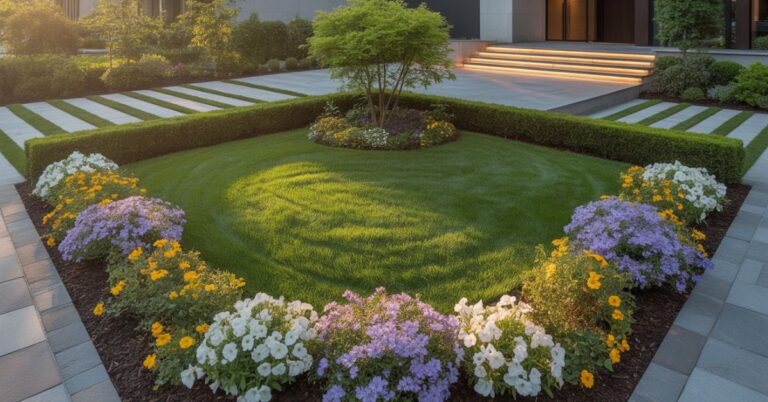
Best Backyard Arch Garden Ideas to Create Focal Points

Your backyard feels disconnected and lacks that magical element that makes you pause and smile. You walk through your space without anticipation or wonder, missing opportunities to create memorable transitions between garden zones. The problem intensifies when you see stunning gardens in magazines featuring elegant archways draped in flowers while your yard remains flat and uninspiring. Backyard arch garden ideas solve this challenge by adding vertical drama, defining spaces, and creating irresistible focal points that invite exploration. Garden arches transform ordinary pathways into enchanting journeys, frame beautiful views, and provide essential support for climbing plants that soften hardscapes with living beauty. This comprehensive guide reveals how to select, position, and decorate Backyard arch garden ideas that elevate your outdoor space from basic to breathtaking, regardless of your budget or experience level.
Why Garden Arches Transform Outdoor Spaces
Garden arches deliver multiple functional and aesthetic benefits that few other structures match. These vertical elements create instant architecture in flat landscapes, drawing eyes upward and adding dimension that ground-level plantings alone never achieve.
An outdoor archway establishes clear transitions between distinct garden rooms. Position an arch at the entrance to your vegetable garden, and suddenly that utilitarian space gains ceremonial importance. Place another where the lawn meets the patio, and you create definition that makes both areas feel more intentional. According to landscape architects at the American Society of Landscape Architects, structured vertical elements like arches increase property values by creating perceived order and sophistication.
Climbing plant supports serve practical purposes beyond decoration. Roses, clematis, wisteria, and jasmine need sturdy structures to reach their full potential. An arbor provides exactly what vigorous climbers require while transforming them into living sculptures that change with seasons. The University of Illinois Extension notes that vertical gardening through structures maximizes growing space in small yards, letting you cultivate more plants without expanding footprints.
Arches frame views like living picture frames. Position one to highlight a fountain, sculpture, or particularly beautiful tree, and you direct attention exactly where you want it. They create anticipation when visitors see an arch, they naturally want to walk through and discover what lies beyond. This psychological effect transforms simple garden strolls into adventures.
Read More About: Stunning Garden Decoration Ideas Outdoor for a Paradise-Like Space
Choosing the Right Materials for Your Garden Arch
Material selection dramatically impacts your arch’s longevity, maintenance requirements, and aesthetic contribution. Each option offers distinct advantages that suit different Backyard arch garden ideas and budgets.
Wooden arbors deliver classic appeal that blends naturally with plant materials. Cedar and redwood contain natural oils that resist rot without chemical treatment, lasting 15-20 years with minimal care. Pressure-treated pine costs less but requires annual sealing to prevent deterioration. Wooden structures accept paint or stain easily, letting you match existing landscape elements or create contrast. They work beautifully in cottage gardens, rustic settings, and traditional landscapes. Expect to pay $200-800 for quality wooden arches depending on size and detailing.
Metal garden arches offer superior strength and longevity with contemporary or industrial aesthetics. Wrought iron creates intricate Victorian-style scrollwork that suits formal gardens and romantic settings. Powder-coated steel resists rust while maintaining sleek profiles perfect for modern landscapes. Galvanized metal develops attractive patina as it ages, working well in farmhouse or eclectic gardens. Metal structures support heavier vines like mature wisteria without sagging. Prices range from $150 for basic designs to $2,000+ for custom ironwork.
Composite materials combine durability with low maintenance. Vinyl-clad steel arches never need painting and resist weather damage indefinitely. Fiberglass structures withstand harsh climates without warping or fading. These materials suit homeowners who want beautiful results without ongoing maintenance commitments. They typically cost $300-1,200 depending on quality and size.
Stone or brick arches create permanent, substantial statements suitable for estate-scale properties. These require professional masonry skills and significant investment ($3,000-10,000+) but become timeless features that outlast generations. They work magnificently in Mediterranean gardens, formal estates, and properties with existing stone elements.
What Are the Best Climbing Plants for Garden Arches?
Selecting appropriate climbing plants ensures your backyard arch garden ideas achieve full potential without creating maintenance nightmares. Match plant vigor to arch strength and your available care time.
Climbing roses reign as classic arch plants for excellent reasons. Varieties like ‘New Dawn,’ ‘Zéphirine Drouhin,’ and ‘Eden’ produce abundant fragrant blooms repeatedly throughout growing seasons. They require annual pruning to control growth and encourage flowering. Train canes horizontally along arch sides for maximum bloom production vertical growth produces foliage while horizontal canes generate flower buds. Roses need full sun (6+ hours daily) and well-drained soil. Expect mature coverage in 2-3 years.
Clematis offers incredible variety in colors, bloom times, and mature sizes. Early-flowering varieties like ‘Montana’ create massive displays in spring, while large-flowered hybrids (‘Jackmanii,’ ‘Henryi’) bloom summer through fall. Clematis prefers cool roots with shaded bases and sunny tops plant low-growing perennials around the base or mulch heavily. These moderate growers reach 8-20 feet depending on variety and need minimal pruning. They combine beautifully with roses on shared structures.
Wisteria creates spectacular cascading flower clusters in spring but demands strong structures and aggressive pruning. Chinese and Japanese varieties grow extremely vigorously (up to 30 feet), potentially overwhelming weak arches. American wisteria (W. frutescens) offers more restrained growth with similar beauty. Wisteria takes 5-7 years to begin flowering but lives for decades once established. Only install on metal or substantial wooden structures, and commit to twice-yearly pruning.
Honeysuckle attracts hummingbirds with tubular flowers and intoxicating fragrance. Native varieties like coral honeysuckle (Lonicera sempervirens) behave politely while invasive Japanese honeysuckle should be avoided. These fast growers provide quick coverage, reaching mature size in 1-2 seasons. They tolerate partial shade better than most flowering vines. Prune after flowering to control spread and encourage bushier growth.
Annual vines deliver instant gratification for renters or those wanting seasonal change. Morning glories, hyacinth beans, and black-eyed Susan vines grow from seed to full coverage in single seasons, then die with frost. Plant new varieties each year to experiment with colors and textures. These work perfectly on temporary arches or while waiting for perennial vines to mature.
Strategic Placement Ideas for Maximum Impact
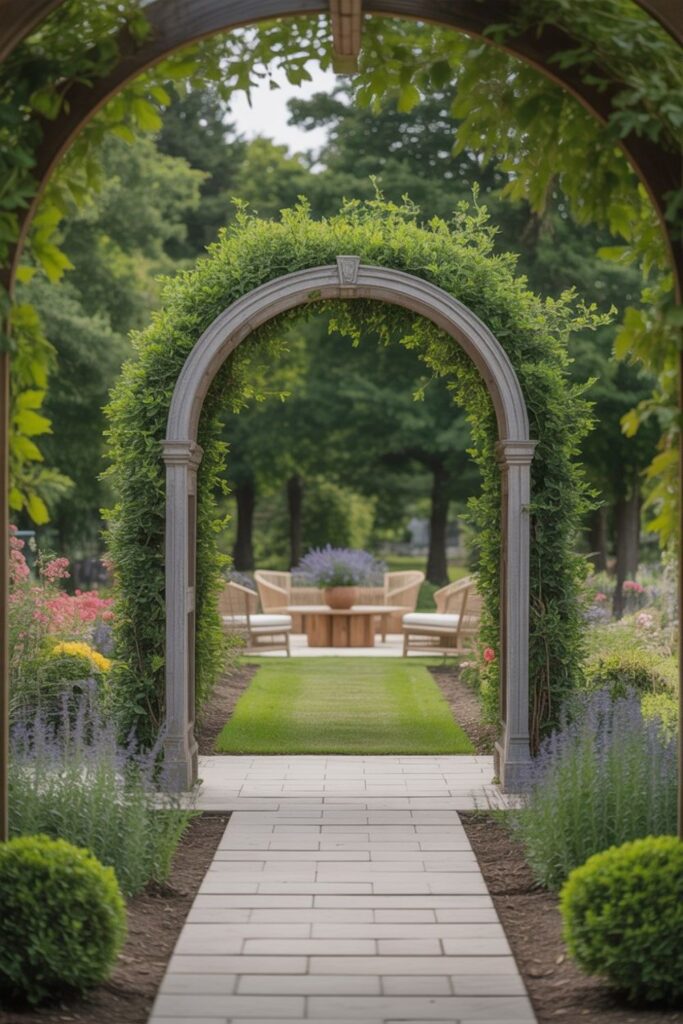
Thoughtful positioning transforms functional garden arch designs into powerful landscape statements. Consider sight lines, traffic patterns, and practical functions before installing.
Pathway markers guide visitors through garden spaces while creating rhythm and anticipation. Place arches at pathway beginnings to signal transitions, or position them at intervals along longer walks to break monotony. Space multiple arches 8-12 feet apart to create tunnel effects without crowding. Ensure pathways under arches measure at least 4 feet wide for comfortable passage, and allow 7-8 feet clearance height for tall guests and mature plant growth.
Entrance enhancement makes arrivals memorable. Position an entrance arch at your garden gate where it frames the first view visitors see. This creates immediate impact and sets expectations for beauty beyond. Side plantings complement arches install matching containers, flanking shrubs, or perennial borders that draw eyes toward the arch and reinforce its importance as a threshold.
Focal point frames direct attention to garden stars. Place an arch to frame views of fountains, sculptures, seating areas, or particularly beautiful specimen plants. Stand at your main viewing positions (patio, kitchen window, front door) and identify what you want to emphasize, then position arches to create those frames. This technique works brilliantly in small gardens where carefully directed sight lines create perceived spaciousness.
Outdoor ceremony sites benefit tremendously from wedding arch installations. Position arches to frame couples against attractive backgrounds garden beds, water features, or distant views. Ensure level ground for stability and guest safety. Temporary arches work for single events, while permanent structures become multipurpose garden features that justify investment.
Privacy screens emerge when you position arches side-by-side or in L-configurations, then grow dense vines over them. This creates living walls that block unwanted views while maintaining garden aesthetics. Plant evergreen climbers like English ivy (non-invasive varieties) or Carolina jessamine for year-round screening.
DIY Garden Arch Projects for Budget-Conscious Gardeners
Building your own arch saves considerable money while creating custom sizes and styles unavailable in retail options. These backyard arch garden ideas suit various skill levels and budgets.
PVC pipe arches cost under $50 and require only basic tools. Purchase 1-inch diameter PVC pipe from hardware stores, cut to desired lengths, and connect with elbow joints. Secure bases in ground using rebar driven through pipes or concrete-filled pots. Paint with specialty plastic paint to prevent UV degradation. These lightweight structures suit annual vines perfectly but won’t support heavy perennial climbers. Build in 30 minutes with no special skills required.
Cattle panel arches deliver surprising elegance from agricultural materials. Purchase 16-foot livestock panels (about $25 each), bend into arch shapes, and secure ends in ground or to posts. The grid pattern provides excellent climbing support. Spray paint black for contemporary looks or leave natural for farmhouse aesthetics. These sturdy structures support even vigorous climbers and last 10+ years. Cut panels to custom widths using bolt cutters.
Branch and twig arches create rustic charm from free materials. Collect flexible branches like willow, birch, or grapevine in 8-10 foot lengths. Push thick ends into ground on both sides of pathways, bend tops together, and lash with wire or twine. Weave thinner branches horizontally to create lattice. These natural structures suit cottage gardens and woodland settings beautifully. Rebuild every 2-3 years as materials decompose.
Rebar and wire mesh combinations produce industrial-chic arbor ideas. Drive rebar stakes deep into ground, bend tops together, and secure with wire. Wrap structures with wire mesh or welded wire fencing to create climbing surfaces. Total cost runs $30-60. These minimalist designs suit modern gardens and provide excellent support for lightweight vines. Paint with rust-preventive spray for longevity.
Repurposed door arches transform salvaged doors into unique garden features. Mount old doors vertically in pairs, creating an open archway between them. Add decorative headers across tops. These work beautifully as entrance arches leading to vegetable gardens or secret garden rooms. Paint vibrant colors or distress finishes for shabby-chic appeal. Find doors at architectural salvage shops for $20-100 each.
How Do I Maintain and Train Plants on Garden Arches?
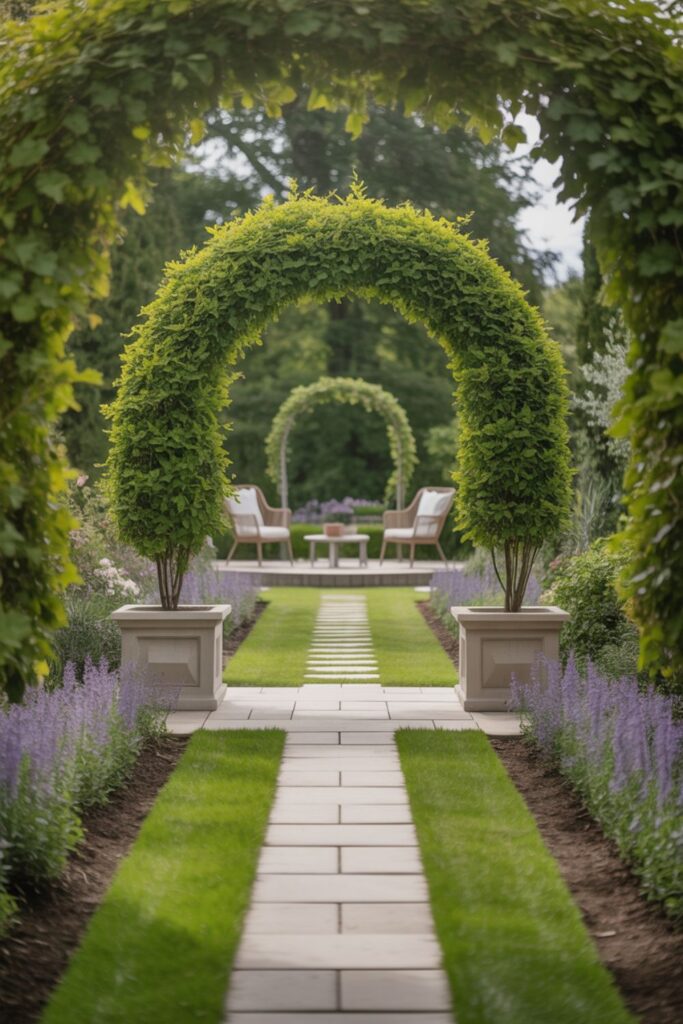
Proper training and maintenance keep your arch looking intentional rather than overgrown. Regular attention produces professional results that enhance rather than obscure your structure.
Initial training establishes good habits. As vines grow, gently guide stems toward arch sides and loosely tie with soft plant ties or twine. Never use wire that cuts into growing stems. Train stems horizontally along arch sides before allowing vertical growth over tops this encourages more flowering and even coverage. Check ties monthly, loosening as stems thicken to prevent girdling.
Pruning schedules depend on plant types. Spring-flowering climbers like wisteria and clematis montana bloom on old wood, so prune immediately after flowering ends. Summer-flowering varieties like many climbing roses bloom on new growth, so prune in late winter before spring growth begins. Remove dead, diseased, or crossing branches whenever noticed. Shorten side shoots to 2-3 buds to encourage bushier growth and more flowers.
Structural inspection prevents disasters. Annually check arch stability, tightening loose bolts and replacing deteriorated sections. Examine where heavy vines attach mature wisteria especially can torque structures as it grows. Add supplemental support stakes if structures show stress. Treat wooden arches with preservatives every 2-3 years to extend life.
Seasonal care keeps plants thriving. Apply 2-3 inches of mulch around bases to retain moisture and suppress weeds. Fertilize climbing roses and clematis in early spring and midsummer with balanced formulas. Provide supplemental water during droughts established vines tolerate dry conditions better than new plantings but still appreciate consistent moisture. Remove spent flowers (deadhead) on repeat-blooming varieties to encourage additional flushes.
Renovation pruning rejuvenates overgrown specimens. If vines become tangled masses with bare bases, cut entire plants back to 12-18 inches above ground in late winter. They’ll regrow vigorously, giving you an opportunity to train properly from the start. Most climbers tolerate this drastic treatment well, though you’ll sacrifice one season’s flowers.
Read More About: Best Outdoor Patio Designs for a Perfect Backyard Retreat
Incorporating Lighting into Garden Arch Designs
Strategic illumination extends your arch’s impact into evening hours while creating magical ambiance. Garden focal points become even more dramatic when properly lit.
Uplighting positioned at arch bases casts dramatic shadows and highlights structural details. Use LED spotlights with narrow beams (15-30 degrees) placed 2-3 feet from the arch and angled upward. This technique showcases beautiful ironwork or interesting plant textures. Choose warm white (2700K) for inviting glows rather than harsh daylight tones. Solar spotlights work for occasional use, but plug-in or low-voltage systems provide brighter, more reliable illumination.
String lights wrapped around arch frames create fairytale atmospheres. LED versions use minimal electricity and last for years. Space lights evenly, securing with zip ties or clips designed for outdoor use. Wrap both the arch structure and major vine stems for integrated looks. For special occasions, add battery-powered fairy lights that you remove afterward to prevent weather damage.
Lanterns hung from arch tops provide portable ambient lighting. Choose weather-resistant versions or bring indoors during storms. LED candles eliminate fire risks while creating flickering warmth. Position lanterns slightly off-center rather than dead-middle for more dynamic, less static appearances. Group odd numbers (1 or 3) for balanced asymmetry that feels natural.
Path lighting near arches ensures safe navigation while highlighting their presence. Place low-voltage path lights 3-4 feet in front of and behind arches to illuminate approaches. This prevents guests from walking into structures in darkness while creating welcoming glows that invite passage. Solar path lights work adequately for this purpose if positioned in sunny locations during daytime.
Moon lighting mounted in trees above arches mimics natural moonlight filtering through branches. This subtle approach creates a sophisticated ambiance without obvious light sources. Professional landscape lighting designers favor this technique for elegant gardens. Install fixtures 15-20 feet high and aim downward with wide flood beams.
Creating Themed Arch Gardens
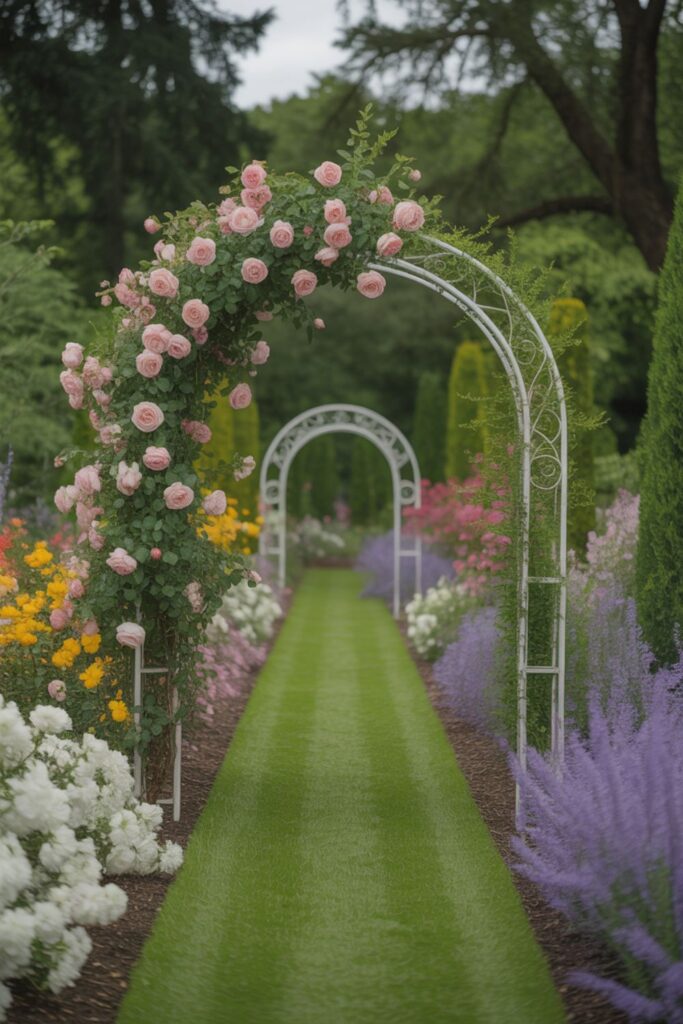
Cohesive themes transform random backyard arch garden ideas into purposeful designs that tell visual stories. Match arch styles, plants, and accessories to your chosen aesthetic.
Cottage garden arches embrace abundance and romantic disorder. Choose wooden or rustic metal structures painted in soft pastels or classic white. Plant profuse mixtures combine climbing roses with clematis, let honeysuckle intertwine, and encourage self-seeding annuals at bases. Add vintage watering cans, antique tools, and mismatched containers nearby. Position arches at seemingly random angles rather than strict alignments for casual charm.
Mediterranean garden style features substantial arches in stone, stucco, or aged metal with Moorish or Spanish influences. Plant fragrant climbers like jasmine, lavender-colored wisteria, and grape vines. Flank arches with terracotta pots filled with citrus trees, rosemary, and lavender. Add gravel pathways, iron lanterns, and weathered stone accents. Use warm earth tones terracotta, ochre, and burnt sienna.
Modern minimalist approaches employ clean-lined metal or composite arches in black, white, or natural metal finishes. Select single climbing varieties for controlled, architectural looks perhaps a single white climbing rose or monochromatic clematis. Surround with clipped hedges, geometric planters, and uncluttered hardscapes. Position arches with precision alignment to pathways and other structures. Avoid ornamental details or multiple plant species.
Tropical paradise themes use arbor ideas featuring bamboo or painted wood arches supporting vigorous vines. Choose bold-leafed climbers like man de villa, passionflower, or bougainvillea in hot climates. Add oversized tropical foliage plants (elephant ears, cannas, bananas) surrounding bases. Incorporate bright colors hot pink, orange, electric purple in painted surfaces and flower selections. Position near water features for enhanced humidity effects.
Woodland garden arches blend naturally into informal landscapes. Build from branches, logs, or weathered wood that looks reclaimed. Plant shade-tolerant climbers like climbing hydrangea, hardy kiwi, or native climbing vines. Surround with ferns, host as, and woodland wildflowers. Let moss colonize structures naturally. Position arches to frame views of mature trees or natural rock formations.
What Size Garden Arch Should I Choose?
Proper sizing ensures your Backyard arch garden ideas functions well while maintaining visual proportion to surroundings. Too small appears insignificant, while oversized overwhelms spaces and creates awkward passages.
Standard residential arches measure 6-8 feet tall by 4-5 feet wide, accommodating most adults comfortably even when mature plants reduce openings. These proportions work well for typical garden pathways and side yards. Allow 12-18 inches on each side for plant growth a 5-foot-wide arch provides about 2 feet of clear passage when covered.
Grand entrance arches serving as primary garden entries warrant larger scales. Consider 8-10 feet tall by 5-7 feet wide for impressive impact. These substantial structures command attention and signal important transitions. They suit larger properties and formal gardens but overwhelm compact urban yards.
Intimate arches measuring 5-6 feet tall by 3-4 feet wide create cozy passages in small gardens or define intimate spaces. These work beautifully in courtyard gardens, leading to hidden benches, or marking entrances to tiny vegetable plots. Keep plant choices moderate in these situations vigorous climbers will quickly overwhelm small structures.
Clearance considerations prevent frustrating encounters. Subtract 12-18 inches from arch dimensions to determine actual passage size when mature vines are present. If your arch sits over a primary pathway used for moving equipment like lawn mowers or wheelbarrows, ensure adequate width for these items plus 6 inches clearance on each side.
Vertical proportions affect aesthetics significantly. Arches appear most balanced when height exceeds width by roughly 1.5-2 times. An arch that’s 6 feet wide should stand 9-12 feet tall for harmonious proportions. Extremely wide, low arches read as tunnels rather than arches and lose their elegant qualities.
Combining Multiple Arches for Dramatic Effects
Strategic use of multiple Backyard arch garden ideas creates rhythm, depth, and architectural interest that single arches never achieve. These advanced techniques suit larger properties with room for elaborate installations.
Pergola alternatives emerge when you position arches in series along pathways, creating covered walks without complete overhead enclosure. Space arches 6-10 feet apart, decreasing intervals toward the end to create a forced perspective that makes paths seem longer. Plant identical climbers on each arch for rhythmic repetition, or vary plants for constantly changing displays. This technique transforms long, boring walks into journeys of discovery.
Gateway sequences use progressively larger arches to build anticipation. Begin with a modest arch at a pathway entrance, position a medium arch midway, and culminate with an impressive structure at the destination. This creates visual movement that pulls visitors forward. It works brilliantly when leading to special features like ponds, seating areas, or specimen plants.
Intersecting arches form tunnels or room-like spaces where two arbors meet at right angles. Plant one with flowering vines and the other with evergreen climbers for year-round interest. This creates genuine garden rooms with defined ceilings and walls. Add seating inside these spaces for intimate retreats.
Matching pairs flanking important features (fountains, benches, gates) create formal symmetry that emphasizes balance and importance. Ensure arches match exactly in size, style, and plant materials. Position them equidistant from the central feature. This classical approach suits formal gardens, estate properties, and traditional landscapes.
Varied heights add dimension when grouping multiple arches. Position the tallest arch as your focal point with smaller versions on either side. This creates visual hierarchy that guides eyes to the most important element. It prevents monotonous appearances that identical structures sometimes generate.
Seasonal Care and Protection for Garden Arches
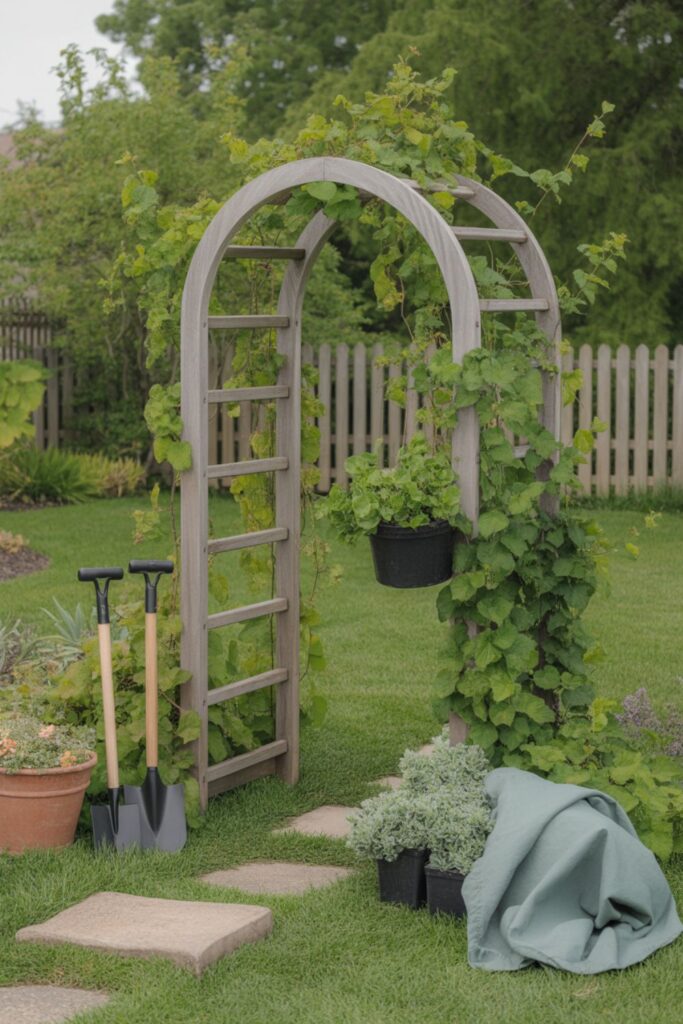
Proper seasonal maintenance extends arch life while keeping plants healthy and attractive. Different seasons demand specific attention to preserve your investment.
Spring preparation begins when new growth emerges. Remove winter mulch from plant bases once frost danger passes. Apply balanced fertilizer (10-10-10) around perennial climbers to fuel vigorous growth. Check arch structures for winter damage, tighten loose connections and replace deteriorated components before heavy growth begins. Begin training new shoots as they appear, guiding them toward desired locations while stems remain flexible.
Summer monitoring focuses on water and pest management. Established vines tolerate moderate drought but perform better with consistent moisture during active growth and flowering. Water deeply once weekly rather than frequent shallow applications. Watch for common pests like aphids on roses or Japanese beetles on various plants. Address problems promptly with appropriate controls strong water sprays dislodge aphids, while handpicking removes beetles. Deadhead spent flowers on repeat bloomers to encourage additional flushes.
Fall cleanup prepares plants and structures for dormancy. Remove dead foliage and diseased plant material to prevent overwintering pests and diseases. Apply fresh mulch (2-3 inches) around plant bases after ground freezes to prevent frost heaving. For tender climbers in cold zones, remove from arches and lay on ground, covering with mulch or burlap. Inspect structures one final time, making any necessary repairs before winter weather arrives.
Winter protection varies by climate. In harsh zones, wrap wooden arches with burlap or apply additional weatherproofing sealant before snow falls. Remove heavy snow accumulation from structures to prevent collapse. Consider installing burlap windbreaks around tender evergreen climbers. Monitor for rodent damage rabbits and deer may chew bark when other food sources become scarce. Apply repellents or physical barriers as needed.
FAQs
How deep should I set garden arch posts for stability?
Set arch posts at least 18-24 inches deep in well-draining soil for structures under 8 feet tall, increasing to 30-36 inches for larger or heavier arches. In sandy or loose soils, dig post holes wider at bottom than top to create bell shapes that resist lifting. Pour 4-6 inches of gravel in hole bottoms for drainage before setting posts, then backfill with concrete for permanent installations or tightly packed soil and gravel for removable structures. Plumb posts perfectly vertical using levels before materials set.
Can I move a garden arch once it’s planted with vines?
Moving established planted arches risks severe root and stem damage that often kills climbers. For temporary installations, plant arches in large containers (20+ gallon) rather than ground, allowing relocation without disturbing roots. If you must move a ground-planted arch, do so during dormancy (late fall or early spring) and expect to lose most current-season growth. Prune vines back severely, dig wide root zones, and transport carefully. Success rates remain low even with ideal timing and technique.
What’s the difference between an arbor and an arch?
Arbors typically feature flat tops with slatted or open roof structures providing partial shade, often including side benches or seats within. Garden arches display curved tops without overhead covering, functioning primarily as decorative passages. Arbors create destination spaces for sitting and relaxing, while arches mark transitions between spaces. In practical terms, many people use these terms interchangeably, and hybrid designs combining elements of both exist throughout the market.
How do I prevent arch collapse from heavy vines?
Choose structures rated for your intended plants wisteria and mature climbing roses require heavy-duty metal or substantial wood construction with posts at least 4×4 inches. Anchor posts in concrete rather than just tamped soil. Add cross-bracing and diagonal supports to frames. Train vines horizontally along sides rather than allowing all weight to accumulate at tops. Prune aggressively to control total plant mass. For existing sagging arches, add supplemental posts alongside originals and cable-brace the structure before attempting vine removal or repair.
Can I install a garden arch on a slope?
Sloped installations work with proper planning. Position arches across slopes (perpendicular to grade) rather than running up/downhill to maintain level tops. Dig post holes at different depths so tops align horizontally using string lines and levels. Build steps if grade exceeds 6 inches across the arch width to provide level passage underneath. For severe slopes, consider terracing the area or choosing alternative locations with gentler grades. Never compromise structural stability trying to install level arches on uneven ground without proper foundation work.
Conclusion
Backyard arch garden ideas transform flat landscapes into dimensional spaces filled with vertical drama and romantic charm. Thoughtful material selection ensures structures suit your climate, budget, and aesthetic preferences, while strategic placement creates powerful focal points that organize garden layouts and guide movement. Proper plant selection matched to arch strength and your maintenance capabilities produces living sculptures that improve with time rather than overwhelming structures or demanding excessive care. Multiple arches arranged thoughtfully create rhythm and architectural interest that elevates gardens from ordinary to extraordinary.
Your outdoor space deserves vertical elements that draw eyes upward and create transitions between garden rooms. Start with a single entrance arch positioned where it makes the strongest impact, perhaps framing your favorite view or marking your garden entrance. Select appropriate climbing plants that suit your growing conditions and commit to proper training and pruning. As experience grows, add additional arches to create sequences, frame multiple views, or define distinct outdoor rooms.
These timeless structures become more valuable with each passing season as plants mature and your garden develops character that only time can create. Take action by measuring potential arch locations this week, researching materials that fit your budget, and planning which climbing plants will transform your chosen structure into a living masterpiece.