Backyard Patio Designs Ideas for Better Outdoor Living

Your back is a boring concrete slab or a patch of grass that nobody uses. Meanwhile, your neighbors host memorable gatherings in beautifully designed backyard patio designs ideas that feel like vacation destinations. You’re stuck inside while they’re enjoying sunset dinners and weekend brunches in spaces that actually work.
Here’s the frustrating part: creating an inviting outdoor living space isn’t about spending a fortune or hiring expensive designers. Most homeowners simply don’t know where to start. They pick random patio furniture, throw down some pavers, and wonder why their space feels disconnected and uncomfortable.
The solution? Strategic patio design that considers your lifestyle, climate, and budget from day one. This comprehensive guide walks you through proven patio ideas, essential patio materials, layout strategies, and design principles that transform ordinary backyards into functional, beautiful extensions of your home. Whether you’re working with a sprawling backyard patio or a compact urban space, you’ll discover actionable insights that deliver results.
What Makes Outdoor Patio Designs Successful?
Successful backyard patio designs ideas balance three critical elements: functionality, aesthetics, and longevity. Your patio needs to serve your actual lifestyle, not just look pretty in photos. Families with young children require different patio layouts than couples who love entertaining or retirees seeking peaceful reading nooks.
The foundation starts with understanding traffic flow and purpose. High-quality backyard patio designs ideas define distinct zones for dining, lounging, cooking, and circulation. A well-planned patio layout guides guests naturally through the space without creating awkward bottlenecks or dead zones. Consider how people will move from your home’s interior to the outdoor living space, where they’ll gather most frequently, and which areas need privacy or shade.
Material selection dramatically impacts both appearance and maintenance requirements. Stone patios offer timeless elegance and durability but come with higher upfront costs. Concrete patios provide budget-friendly versatility with modern stamping and staining options. Pavers deliver the sweet spot for many homeowners attractive, repairable, and moderately priced. Your climate matters tremendously here. Freeze-thaw cycles destroy certain materials, while intense sun fades others. Choose patio materials rated for your specific weather conditions to avoid costly replacements.
Integration with existing architecture creates visual harmony. Your backyard patio designs ideas should complement your home’s style, not fight against it. Contemporary homes pair beautifully with sleek concrete patios and minimalist patio furniture. Traditional architecture calls for classic stone patio elements and ornate details. Color palettes, textures, and proportions all need careful coordination. The best backyard patio designs ideas feel like natural extensions rather than disconnected afterthoughts.
Read More About: 21+ Back Porch Ideas For Wondrous Outdoor Space
How Do You Choose the Right Patio Layout for Your Space?
Your patio layout determines everything else that follows. Start by measuring your available space accurately and marking permanent obstacles like trees, utility boxes, or drainage features. Most functional backyard patio designs ideas require at least 12×12 feet for basic seating, but comfortable dining and entertaining spaces typically need 16×20 feet or larger.
Consider sun exposure throughout the day and across seasons. Morning sun makes breakfast spots delightful but afternoon western exposure creates unbearable heat. Map sunlight patterns before finalizing your patio layout. This knowledge guides decisions about shade structures, pergolas, or strategic tree placement. South-facing backyard patio designs ideas in hot climates demand substantial overhead coverage, while northern exposures might need heat sources like fire pits to extend usability.
Elevation changes present both challenges and opportunities. Sloped yards require proper drainage solutions and potentially terraced patio designs. Multi-level outdoor living spaces create visual interest and defined zones without walls. Step-down conversation areas or raised dining platforms add architectural dimension. However, accessibility matters consider mobility needs for family members or guests who struggle with stairs.
Small patio design demands creative thinking about dual-purpose features. Built-in seating arrangements with hidden storage maximize square footage. Vertical gardens replace sprawling patio landscaping that consumes precious floor space. Corner patio layouts utilize otherwise awkward areas efficiently. Folding or stackable patio furniture adapts to different occasions. The key is making every element earn its place through multiple functions.
What Are the Best Patio Materials for Different Climates?
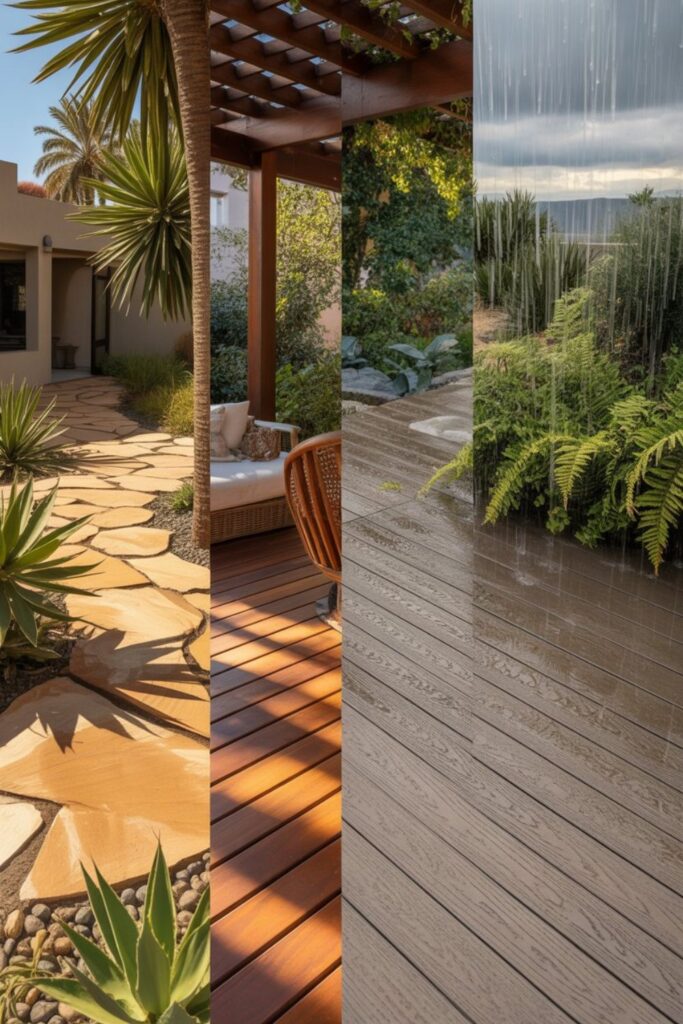
Patio materials must withstand your local weather while maintaining appearance and safety. Concrete patios dominate in moderate climates thanks to affordability and customization. Stamped concrete mimics expensive stone or pavers at a fraction of the cost. Stained finishes create unique colors impossible with natural materials. However, concrete cracks in freeze-thaw regions unless properly reinforced with fiber mesh and control joints. Hot climates see concrete absorb and radiate heat, making barefoot walking uncomfortable.
Stone patios deliver unmatched natural beauty and extreme durability. Flagstone, bluestone, and limestone offer distinct regional aesthetics that age gracefully. Irregular flagstone creates rustic charm while cut stone achieves formal elegance. These patio materials handle temperature extremes well and provide slip-resistant surfaces when textured. The investment pays off through decades of low-maintenance performance. Installation requires professional expertise to ensure proper base preparation and leveling.
Pavers provide the most versatile middle ground for backyard patio designs . Concrete pavers cost less than natural stone but offer similar visual appeal through diverse colors, shapes, and patterns. Clay brick pavers bring warmth and traditional character. Individual units allow easy repairs just replacing damaged pieces rather than demolishing entire sections. Permeable pavers address drainage concerns while looking attractive. Proper base preparation with compacted gravel and sand prevents settling and weed growth.
Decking materials expand your options beyond traditional hardscaping. Composite decking resists rot, insects, and fading while requiring minimal maintenance. Natural wood decking offers warmth and beauty but demands regular sealing and staining. Tropical hardwoods like ipe provide incredible durability at premium prices. Decking works particularly well for elevated patio designs or when covering existing concrete. Consider that decking feels warmer underfoot than stone or concrete in cooler climates but can become slippery when wet.
How Can You Create Functional Zones in Your Patio Design?
Strategic zoning transforms outdoor patio designs from single-purpose slabs into versatile outdoor living spaces. Define separate areas for distinct activities without physical walls. Visual boundaries through patio furniture arrangement, level changes, or patio materials create clear purposes while maintaining open flow.
Dining zones form the heart of most backyard patios. Allocate space for your table size plus 36 inches on all sides for chair movement and serving access. Position dining areas near kitchen access points for convenient food transport. Overhead shade structures or umbrellas protect diners from sun and light rain. Patio lighting focused on dining tables enables evening meals without harsh spotlights that ruin ambiance.
Conversation areas need comfortable seating arrangements that encourage face-to-face interaction. Arrange sofas and chairs in U-shapes or facing configurations rather than straight lines. Keeping conversation groups to 8-10 feet across larger spaces makes hearing difficult. Fire pits create natural gathering points that draw people together. Layer soft textiles like outdoor rugs and cushions to enhance comfort and define the zone visually.
Cooking zones elevate outdoor patio designs into true living extensions. Outdoor kitchens range from simple built-in grills to complete cooking stations with refrigerators, sinks, and storage. Position cooking areas downwind from primary seating to keep smoke away from guests. Allow adequate prep space on both sides of cooking surfaces. Heat-resistant patio materials near grills prevent damage. Consider utility access early running gas, water, and electrical lines costs significantly less during initial construction.
Transition zones connect different areas smoothly while providing circulation space. Pathways should measure at least 36 inches wide, with 48 inches preferred for comfortable two-person walking. Use contrasting pavers or stone to define walkways visually. Strategic patio landscaping along transition zones adds privacy and softens hardscaping. Planters, low walls, or decorative screens separate zones without blocking sight lines completely.
What Covered Patio Options Extend Usability?
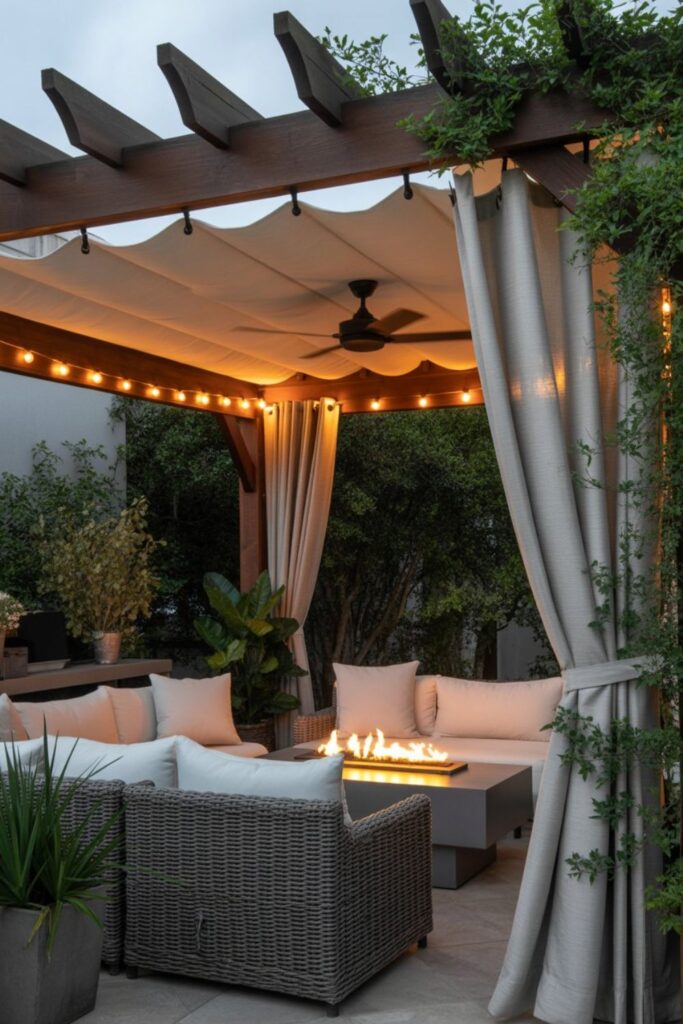
Covered patio structures dramatically increase how often you actually use your outdoor living space. Protection from sun, rain, and debris makes backyard patio designs functional across seasons rather than just perfect weather days. Different coverage options suit various budgets, architectural styles, and functional needs.
Pergolas offer semi-coverage that filters sunlight while maintaining an open-air atmosphere. These classic structures use spaced beams that create beautiful shadow patterns and support climbing plants for additional shade. Modern pergolas incorporate adjustable louvers that provide full coverage when closed and ventilation when open. This versatility makes pergolas ideal for regions with variable weather. Installation costs moderate while adding significant architectural interest to patio designs.
Solid roof extensions create fully covered patio spaces that function like outdoor rooms. Extending your existing roofline maintains architectural continuity and provides complete weather protection. These permanent structures require proper engineering for load-bearing and drainage. Gabled or sloped roofs shed rain effectively while flat roofs need careful waterproofing. Solid covers enable ceiling fans, permanent patio lighting, and even heating elements for year-round use. Budget for higher upfront investment but lower long-term maintenance.
Retractable awnings deliver flexibility for outdoor patio designs that need both sun and shade options. Modern motorized systems extend with remote controls and retract to expose open sky. Fabric awnings cost less than permanent structures but require replacement every 5-10 years depending on quality and sun exposure. Fixed awnings provide permanent shade at lower cost than full roof extensions. Consider wind ratings carefully inadequate bracing leads to expensive damage during storms.
Shade sails bring contemporary style to budget-friendly patio coverage. These tensioned fabric canopies create dramatic angles and visual interest while providing excellent sun protection. Multiple sails layered at different heights add dimension to small patio design without overwhelming compact spaces. Installation requires solid anchor points and proper tensioning to prevent sagging. Choose UV-rated marine-grade fabrics for longevity. Remove sails during winter in harsh climates to prevent damage from snow loads.
How Do You Select Patio Furniture That Lasts?
Patio furniture selection makes or breaks your outdoor living space experience. Beyond aesthetics, outdoor furniture endures weather extremes, UV exposure, and moisture that destroy indoor pieces quickly. Smart choices balance comfort, durability, and maintenance requirements.
Material selection drives longevity and upkeep needs. Aluminum frames resist rust and handle all climates excellently while remaining lightweight. Wrought iron provides traditional elegance and extreme durability but requires rust prevention in humid areas. Synthetic wicker (resin) mimics natural fibers without rot or fading issues. Teak and other tropical hardwoods weather beautifully but demand higher budgets. Powder-coated steel offers strength at moderate cost but watch for coating chips that expose metal to corrosion.
Cushion fabrics deserve careful consideration since cheap textiles fail quickly outdoors. Solution-dyed acrylic fabrics (like Sunbrella) resist fading and mildew far better than standard fabrics. Water-resistant doesn’t equal waterproof plan storage for cushions during extended wet periods or invest in quick-dry foam cores. Zippered covers allow machine washing which extends life significantly. Neutral cushion colors adapt to changing décor themes while bold patterns date faster.
Scale patio furniture appropriately to your patio layout. Oversized pieces overwhelm backyard patio designs while undersized furniture looks lost on expansive backyard patio designs. Test before buying sit in chairs, check table heights, and visualize arrangements. Modular seating arrangements provide flexibility for different occasions. Stackable or folding options suit spaces needing occasional clearing. Built-in seating maximizes usable area in tight spaces while eliminating furniture storage concerns.
Quality construction details separate temporary purchases from long-term investments. Check joinery methods: welded frames outlast bolted ones. Examine finish quality for uniformity and thickness. Test weight capacity ratings realistically. Read warranty terms carefully since good manufacturers back products for years. Calculate cost-per-year rather than just upfront price. Budget-friendly patio furniture that fails in two seasons costs more than quality pieces lasting decades.
What Lighting Strategies Enhance Nighttime Patio Use?
Patio lighting extends functionality into evening hours while creating ambiance impossible during daytime. Layered lighting approaches combine task, ambient, and accent lighting for versatile backyard patio designs . Different occasions demand different moods bright task lighting for dining versus soft ambient glow for conversation.
Overhead patio lighting provides general illumination for activities requiring visibility. Install ceiling fans with integrated lights under covered patios for dual functionality. String lights (café lights) deliver a soft overhead glow that feels festive yet refined. Modern LED string lights last years longer than traditional bulbs while using minimal energy. Mount string lights on pergolas, between posts, or overhead cables using proper outdoor-rated hardware. Space fixtures to prevent dark spots while avoiding excessive brightness.
Task lighting focuses on specific activity zones within your patio layout. Directional lights above outdoor kitchen prep areas, grills, and dining tables ensure safe food handling and eating. Wall sconces flanking doorways guide entry points. Step lights illuminate elevation changes to prevent tripping hazards. Keep task lighting fixtures directed downward to minimize glare and light pollution. Dimmer controls allow intensity adjustment based on needs.
Accent lighting adds drama and visual interest to patio landscaping and architectural features. Uplighting highlights specimen trees, interesting plant textures, or structural elements like columns. Path lights define walkways while creating subtle ambiance. Well lights installed in pavers or stone provide soft ground-level illumination. Color-changing LED options enable mood customization for special occasions. Avoid over-lighting strategic highlights and create more impact than flooding everything uniformly.
Smart lighting controls simplify outdoor living space management. Timer systems ensure lights activate at dusk automatically. Motion sensors provide security lighting without constant energy use. Smartphone-controlled systems adjust scenes remotely and integrate with home automation. Solar-powered lights eliminate wiring costs for path and accent lighting but verify brightness specifications many solar fixtures provide insufficient illumination. Low-voltage LED systems offer excellent efficiency and safety compared to standard 120-volt fixtures.
How Does Landscaping Integrate with Patio Design?
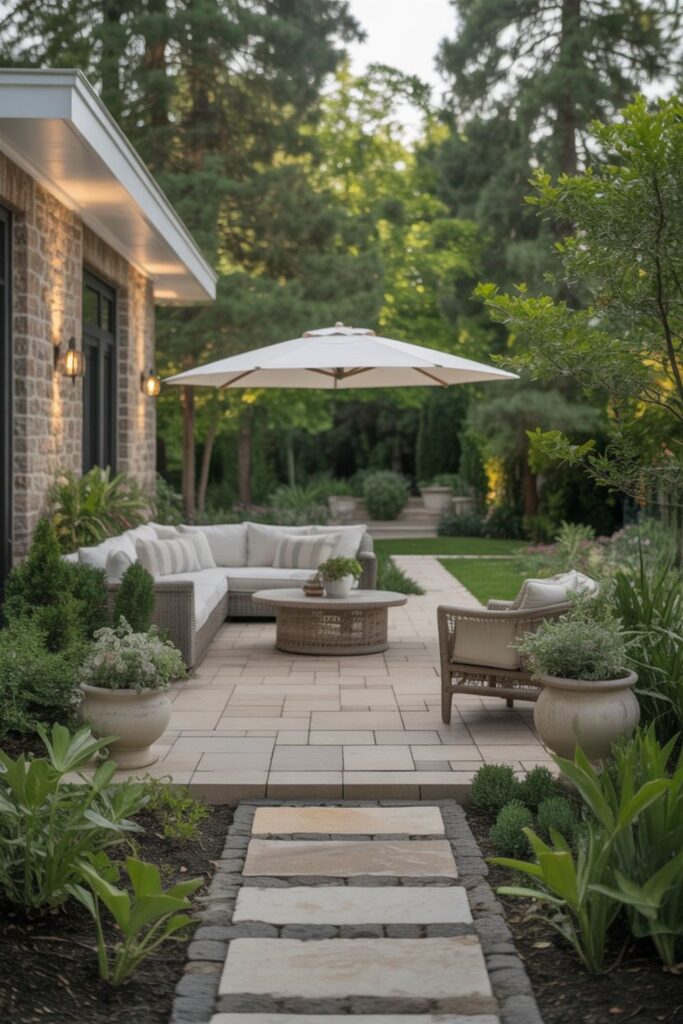
Patio landscaping softens hardscaping while providing privacy, shade, and seasonal interest. Thoughtful plant selection and placement transforms stark concrete patios or stone surfaces into lush outdoor living spaces. Balance easy maintenance with visual impact through strategic choices.
Container gardens deliver maximum flexibility for backyard patio designs and renters unable to modify properties permanently. Large planters with statement plants create focal points and define zone boundaries. Group containers in odd numbers (3, 5, 7) at varying heights for visual interest. Choose lightweight pots with drainage holes and saucers to protect patio materials from water stains. Seasonal rotation displays fresh spring bulbs transition to summer annuals and fall mums. Self-watering containers reduce maintenance for busy homeowners.
Border plantings frame outdoor patio designs while transitioning between hardscaping and lawn areas. Perennial gardens require higher upfront effort but return yearly without replanting. Select plants suited to your sun exposure shade-loving hostas and ferns or sun-seeking lavender and ornamental grasses. Layer heights with low groundcovers in front, medium perennials mid-border, and tall grasses or shrubs backing. Leave planting beds slightly below paver or stone levels to prevent soil spillage onto surfaces.
Trees provide invaluable shade for outdoor living spaces while increasing property values. Deciduous trees allow winter sun penetration while blocking summer heat. Strategic placement shades fire pits and seating areas during hottest hours. However, consider mature sizes carefully, roots damage patio materials while branches drop debris requiring constant cleaning. Container-grown smaller trees suit small patio design without overwhelming proportions. Ornamental varieties like Japanese maples add sculptural beauty year-round.
Vertical gardens maximize green space in compact outdoor patio designs. Wall-mounted planters, trellises with climbing vines, or living walls transform vertical surfaces into gardens. Jasmine, clematis, and climbing roses add fragrance and flowers to pergolas and fences. Vertical vegetable gardens produce fresh herbs and vegetables within steps of outdoor kitchens. Ensure proper irrigation reaches vertical plantings since gravity pulls water downward quickly.
What Are Budget-Friendly Patio Design Ideas?
Budget-friendly patio projects deliver impressive results without financial strain through smart material choices and phased construction. DIY approaches reduce labor costs substantially when matched to appropriate skill levels. Prioritizing must-have features over nice-to-have luxuries keeps projects affordable.
Gravel patios cost significantly less than pavers or stone while providing attractive, permeable surfaces. Crushed stone compacts firmly for stable walking surfaces. Pea gravel offers a softer texture and pleasing appearance. Edge gravel patios with landscape timbers, pavers, or stone borders to prevent spreading. Lay landscape fabric underneath to suppress weeds while allowing drainage. Gravel works particularly well for casual, cottage-style outdoor patio designs though high heels and gravel don’t mix well.
Concrete staining transforms boring gray concrete patios into attractive focal points. Acid stains create variegated, natural-looking colors that penetrate concrete surfaces permanently. Water-based stains offer broader color options with easier application. Stenciled patterns mimic expensive stone or tile at DIY-friendly costs. Properly sealed stained concrete resists fading and staining while requiring minimal maintenance. Rent equipment rather than buying for one-time projects.
Repurposed patio furniture and décor add character while respecting tight budgets. Restore vintage pieces with fresh paint and new cushions. Create unique seating from pallets, concrete blocks, or reclaimed wood. Thrift stores and estate sales yield quality pieces at fractions of retail prices. Mix styles intentionally for eclectic charm rather than apologizing for mismatched sets. DIY patio lighting from mason jars, vintage bottles, or handmade fixtures personalizes spaces.
Phased construction spreads costs across multiple years while letting you enjoy partial completion immediately. Start with essential patio layout and basic surfaces. Add covered patio structures in the second year. Incorporate outdoor kitchen components and upgraded patio furniture as budgets allow. This approach prevents project abandonment while enabling design refinement based on actual usage patterns. Finish utilities and infrastructure first to avoid disturbing completed sections later.
How Do You Maintain Different Patio Materials?
Proper maintenance preserves patio materials appearance and structural integrity for decades. Different surfaces require specific care routines that prevent premature deterioration. Establish seasonal maintenance schedules that address particular material vulnerabilities.
Concrete patio maintenance focuses on sealing and crack prevention. Seal concrete every 2-3 years using appropriate sealers for your climate and concrete finish. Pressure wash before resealing to remove dirt and failed sealer residue. Address cracks promptly with flexible concrete fillers to prevent moisture infiltration and expansion. Avoid deicing salts in freeze-thaw climates since they cause scaling and spalling. Regular sweeping prevents abrasive dirt accumulation that wears surfaces.
Stone patio care varies by stone type but generally requires less maintenance than concrete. Seal porous stones like limestone and sandstone annually while dense granite needs sealing every 3-5 years. Clean with pH-neutral stone cleaners rather than acidic or alkaline products that etch surfaces. Remove organic stains from leaves promptly to prevent permanent discoloration. Re-sand joints between irregular flagstones as needed to prevent shifting. Power washing safely cleans without damaging stone when using appropriate pressure settings.
Paver maintenance emphasizes joint sand replenishment and weed control. Polymeric sand between pavers hardens when wet, preventing weed growth and insect excavation. Reapply joint sand every few years as it washes away. Seal pavers to resist stains and enhance colors though unsealed pavers remain permeable for better drainage. Pressure wash carefully to avoid dislodging sand. Replace individual damaged pavers easily by removing adjacent sand, lifting pieces, and installing replacements.
Decking demands the most intensive maintenance among patio materials. Wood decking requires annual cleaning, inspection, and resealing or staining. Replace damaged boards promptly to prevent rot spread. Composite decking needs less maintenance but still requires regular cleaning to prevent mildew in humid climates. Trim vegetation away from decking to improve air circulation. Check fasteners and support structures annually for rust or deterioration.
What Drainage Considerations Prevent Patio Problems?
Proper drainage separates functional outdoor patio designs from money pits requiring constant repairs. Water management prevents structural damage, material deterioration, and unusable wet surfaces. Address drainage during initial planning rather than as expensive afterthoughts.
Grade patio layouts with minimum 2% slope (1/4 inch per foot) away from house foundations. This gentle pitch sheds rainwater effectively without creating awkward walking surfaces. Test grading before installing final patio materials using string levels or laser levels. Improper grading causes pooling, staining, and structural issues as water infiltrates bases and foundations. Steeper slopes work for some designs but may require steps or terracing.
Subsurface drainage systems handle groundwater and prevent base erosion under pavers or stone. Install gravel drainage layers 4-6 inches deep beneath patio materials to create permeable foundations. Perforated drain pipes alongside patio edges collect and redirect water to appropriate discharge points. French drains address persistent wet areas that simple grading can’t solve. Proper compaction of gravel layers prevents settling that creates low spots where water accumulates.
Permeable patio materials allow rainwater infiltration rather than runoff, reducing drainage infrastructure needs. Permeable pavers with wide joints filled with gravel or grass enable water penetration. Previous concrete formulations include void spaces that permit drainage. These eco-friendly options recharge groundwater, reduce erosion, and meet stormwater management requirements in many jurisdictions. However, permeable surfaces require more maintenance to prevent clogging.
Gutter and downspout management protects outdoor patio designs from roof runoff damage. Extend downspouts away from patio areas or direct them to rain gardens and drainage swales. Splash blocks disperse concentrated flow that erodes patio materials. Consider rainwater collection systems that capture runoff for landscape irrigation while protecting patios. Regular gutter cleaning prevents overflow that saturates patio areas.
How Can Fire Features Enhance Patio Ambiance?
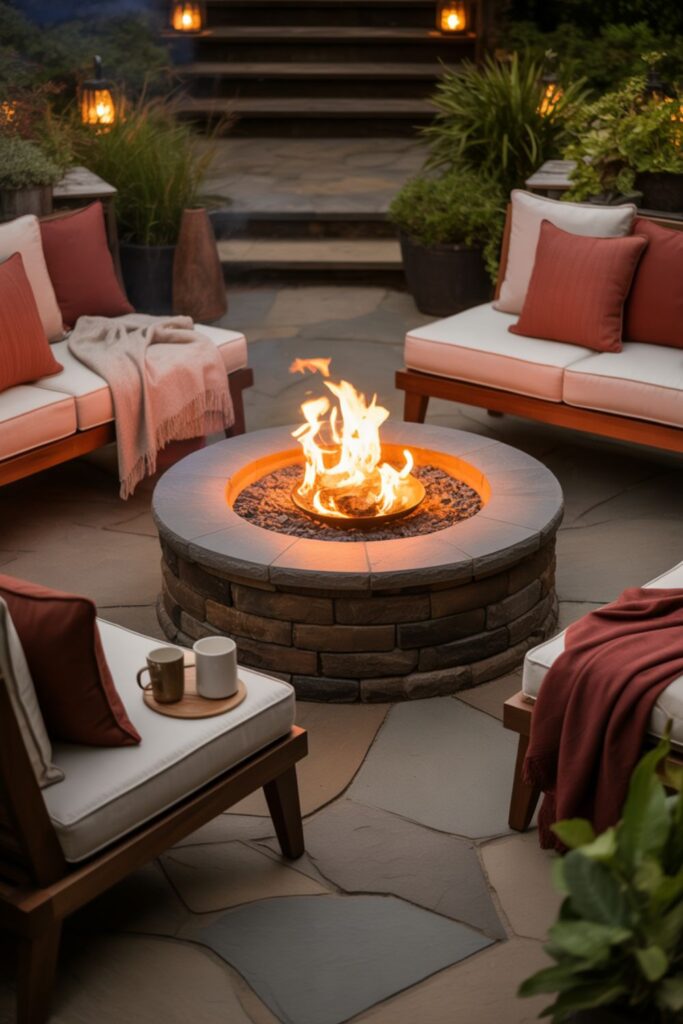
Fire pits and fireplaces transform outdoor living spaces into year-round destinations while creating irresistible gathering points. Fire features provide warmth, light, and hypnotic focal points that draw people together naturally. Different designs suit various patio layouts, budgets, and aesthetic preferences.
Wood-burning fire pits deliver authentic crackling ambiance and nostalgic appeal. Portable metal fire bowls offer flexibility for occasional use and easy storage. Built-in stone or brick fire pits become permanent patio centerpieces that increase property values. Position wood-burning features at least 10 feet from structures and overhead combustibles. Check local regulations since many municipalities restrict or ban wood burning due to air quality concerns. Stock seasoned firewood and provide safe storage away from flames.
Gas fire pits eliminate smoke, sparks, and cleanup hassles while providing instant ignition convenience. Natural gas or propane fuel options suit different property configurations. Modern gas burners with lava rock or fire glass create attractive flames without ash or embers. Built-in gas features require professional installation for safe fuel line routing. Portable propane fire pits balance convenience with flexibility. Gas options cost more upfront but reduce ongoing fuel expenses compared to wood.
Outdoor fireplaces create dramatic vertical features in outdoor patio designs. Stone or stucco fireplaces add architectural presence while providing significant warmth. Position fireplaces to protect seating areas from prevailing winds. Chimineas offer fireplace-style containment in portable, affordable formats. Modern linear fireplaces suit contemporary patio designs with sleek horizontal flames. All fireplace designs require proper ventilation and clearance specifications per manufacturer guidelines and local codes.
Fire feature accessories maximize safety and functionality. Spark screens contain embers from wood-burning fire pits while allowing heat and light transmission. Heat-resistant patio materials surround fire features to prevent damage and meet code requirements. Permanent seating circles optimize fire enjoyment distances typically 3-4 feet from fire edges. Stock fireproof storage for fire tools, covers, and fire extinguishers. Consider wind patterns that blow smoke toward main seating areas and position features accordingly.
Read More About: 25+ Best Backyard Layout Ideas for Splendid Outdoor Space
What Smart Technology Upgrades Modern Patios?
Smart technology integration elevates outdoor patio designs into sophisticated outdoor living spaces offering convenience, efficiency, and enhanced experiences. Modern outdoor products increasingly feature connectivity and automation capabilities that simplify patio enjoyment.
Automated weather sensors protect expensive patio furniture and electronics from sudden storms. Rain sensors trigger motorized retractable awnings automatically before precipitation damages cushions. Wind sensors retract awnings and umbrellas when gusts reach dangerous thresholds. Temperature sensors activate outdoor heaters when evening temperatures drop. These systems prevent damage while eliminating constant monitoring.
Integrated audio systems create entertainment zones without visible wires and speakers. Weather-resistant outdoor speakers install discreetly around patio layouts delivering room-filling sound. Bluetooth and WiFi connectivity streams music from smartphones and tablets. Multi-zone audio systems allow different music selections in various patio areas simultaneously. Voice control through smart home systems enables hands-free operation while cooking or entertaining.
Smart patio lighting systems offer unprecedented control and customization. Color-changing LED fixtures create different moods for various occasions with smartphone controls. Scheduled lighting programs activate automatically at sunset. Motion-activated security lighting deters intruders while conserving energy. Integrate patio lighting with whole-home automation systems for seamless indoor-outdoor transitions. Pre-programmed scenes optimize lighting for dining, entertaining, or relaxation instantly.
Automated irrigation systems maintain patio landscaping health without manual watering efforts. Smart controllers adjust watering schedules based on weather data and soil moisture sensors. Drip irrigation delivers water directly to plant roots with minimal waste. Smartphone apps enable remote monitoring and adjustments from anywhere. These systems pay for themselves through water conservation while ensuring lush, healthy plantings.
Outdoor heaters with smart controls extend patio season into cooler months comfortably. Infrared heaters provide instant warmth without preheating delays. WiFi-connected units allow remote activation before heading outside. Temperature sensors maintain consistent comfort levels automatically. Propane tank monitors alert when fuel runs low preventing interruptions during gatherings.
Frequently Asked Questions
How much does it cost to build an outdoor patio?
Basic patio designs using gravel or poured concrete cost $5-15 per square foot installed, while mid-range paver or stamped concrete patios run $15-30 per square foot. High-end stone patios with pergolas and outdoor kitchens exceed $50 per square foot. A typical 300 square foot backyard patio averages $3,000-$9,000 depending on materials and features selected.
What is the best low-maintenance patio material?
Concrete patios with sealed surfaces require minimal maintenance, occasional pressure washing and resealing every 2-3 years. Composite decking also ranks low-maintenance, needing only periodic cleaning without staining or sealing. Porcelain tile patios resist staining and fading exceptionally well while requiring simple sweeping and occasional mopping. Avoid natural wood decking and unsealed natural stone for lowest maintenance demands.
How do I make a small patio look bigger?
Small patio design appears larger through diagonal paver or tile patterns that create visual movement, light-colored patio materials that reflect rather than absorb light, and minimal patio furniture in appropriate scales. Incorporate mirrors on fences, use vertical gardens instead of sprawling planters, and extend patio materials slightly into adjacent lawn areas. Eliminate visual barriers between patio and surrounding spaces to borrow perceived square footage.
Do I need a permit to build a patio?
Requirements vary by municipality, but ground-level patios under 200 square feet often don’t require permits. Elevated decking, covered patio structures, and projects involving electrical or plumbing work typically need permits. Outdoor kitchens with gas lines definitely require inspection and approval. Contact your local building department before starting to avoid expensive compliance issues and potential demolition orders.
What’s the difference between a patio and a deck?
Patios are ground-level outdoor living spaces built on compacted soil or gravel bases using concrete, pavers, or stone. Decks are elevated wooden or composite structures built on posts and beams, raised above ground level. Patios generally cost less and integrate better with patio landscaping, while decks work better for sloped lots and second-story access points.
Conclusion
Outdoor patio designs represent significant investments that pay dividends through enhanced property values, expanded living space, and countless memorable moments with family and friends. Strategic planning around your specific lifestyle needs, climate conditions, and budget constraints ensures your backyard patio delivers satisfaction for decades. Quality patio materials, thoughtful patio layouts, and proper installation create foundations that endure while requiring minimal maintenance.
The most successful outdoor living spaces evolve from careful consideration of how you’ll actually use the area rather than chasing temporary design trends. Whether you’re drawn to intimate small patio designs with cozy fire pits or expansive covered patios featuring complete outdoor kitchens, focus on elements that genuinely enhance your daily life. Start with essential infrastructure and high-quality patio materials, then gradually layer in patio furniture, patio lighting, and patio landscaping that reflect your personal style. Your perfect outdoor sanctuary awaits to transform that underwhelming backyard into the destination space you’ve always imagined.