Creative Balcony Garden Ideas for Small Spaces

Your balcony sits empty most days. You stare at bare concrete and wonder why you never use that outdoor space that came with your apartment. The dream of sipping morning coffee surrounded by greenery feels impossible when you barely have room for a chair. Urban living pushes nature further away each day, leaving you disconnected from the therapeutic benefits plants provide.
Small spaces actually hold enormous potential for Balcony Garden Ideas that rival any backyard. Balcony garden designs are essential for urban living, providing not only aesthetic beauty but also numerous benefits for residents and the environment. These balcony garden ideas work within real constraints, limited square footage, weight restrictions, and challenging conditions. You deserve an outdoor sanctuary that improves your quality of life without requiring professional landscaping skills or massive budgets.
Why Balcony Gardens Matter For Urban Wellness
Urban gardening delivers measurable health benefits beyond aesthetics. Vertical gardens can dramatically transform a bland space into a vibrant green backdrop, contribute to better air quality, and can reduce the overall temperature of your balcony, making your outdoor space more comfortable. Plants filter pollutants, produce oxygen, and create microclimates that make hot summer days more bearable.
The psychological impact runs deeper than physical comfort. These miniature green spaces serve as havens for relaxation and meditation. Five minutes surrounded by living plants measurably reduces cortisol levels and blood pressure. They act as natural sound barriers, creating a serene ambiance that blocks traffic noise and neighbor conversations. Your balcony garden becomes the escape valve modern life desperately needs.
Assessing Your Balcony’s Growing Conditions
Success starts with understanding your specific environment. Analyze the sun exposure, but also the direction of the wind to know which varieties to grow. Spend a day tracking sunlight patterns across your balcony surface. Full sun means six or more hours of direct sunlight, while part sun is half that.
Unlike shaded balconies, sunny balconies have the fierce rays of the sun falling on them all day through and even for the better part of the year. These spaces open opportunities for vegetables, herbs, and sun-loving flowers. North-facing balconies capture only two hours light a day, getting most from mid-March through the end of June, when the sun moves north in the sky and days get longer. Understanding these patterns prevents wasted money on plants doomed to fail.
Wind courses around buildings, knocks over containers, and rips at a plant’s tender leaves. High-rise balconies face particularly fierce gusts that dry soil rapidly and damage delicate foliage. If wind is a problem on your balcony, consider using balcony privacy screens as windbreaks to protect more fragile plants.
Vertical Garden Solutions For Maximum Impact
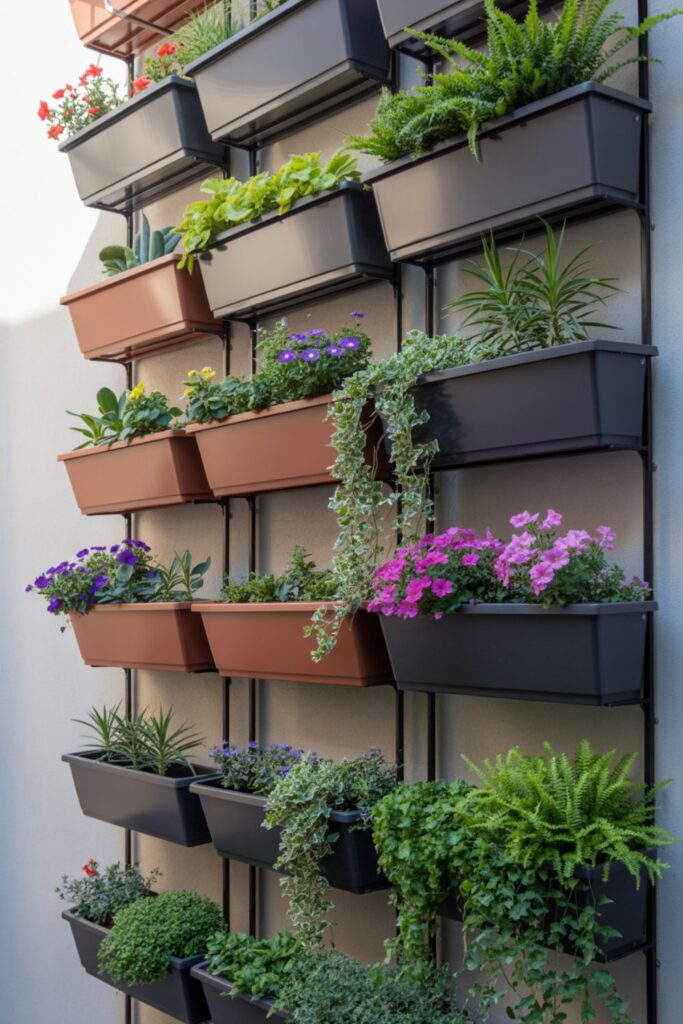
Vertical gardening revolutionizes small-space growing. Vertical planters that attach to walls or railings are popular choices, with trellises perfect for climbing plants like ivy or jasmine, which can transform a dull wall into a vibrant green tapestry. Walls and overhead space often stay empty on balconies, with gardeners prioritizing easy-to-fill floor space, but this misses out on several levels of greenery.
Vertical hanging gardens offer a space-efficient solution to bring lush greenery into an urban household by utilizing railings, walls and other vertical surfaces to maximize what limited space is available. The transformation happens quickly. Once you use your vertical space, you double or triple your growing area without blocking usable floor areas.
Arrange a pallet board and hang several pots on it and place it on your balcony, where it will receive some sun. It’s easy and creates plenty of vertical space. Fabric or felt pocket gardens are affordable, space-saving options, with wall-mounted pockets holding soil and plants, allowing you to grow a variety of compact plants vertically. These systems install in hours and cost minimal amounts compared to floor planters.
Container Selection That Prevents Disasters
Weight becomes critical when gardening above ground level. Always know how much weight your balcony can take, and choose lighter plastic or resin containers over heavy ones. Plastic and fiberglass plant containers are ideal for balcony gardens because they’re lighter in weight than terracotta or ceramic pots and come in a vast array of styles and sizes.
If you have a windy balcony, choose a solid container like terra cotta or stoneware instead of plastic. These materials are heavier and can be managed very well on stormy days. Balance weight concerns against stability needs based on your specific conditions. Fabric grow bags are another lightweight container option, with the added advantage of being easy to store after the growing season is over.
Proper drainage prevents root rot and plant death. Every container needs holes allowing excess water to escape. Make sure they have drainage holes and fill them with quality potting soil. Standing water kills more container plants than any other factor, making drainage non-negotiable for success.
Best Plants For Sunny Balconies
Sunny balconies support an incredible variety of plants, making them perfect for Balcony Garden Ideas that burst with color and life. Plant pansies, petunias, geraniums, hollyhocks, daisies, daffodils, lilies, cosmos, and verbena to transform east or south-facing spaces into vibrant balcony gardens. Among the best Balcony Garden Ideas is adding potted lavender — these perennials bloom beautifully, fill the air with a soothing Mediterranean scent, and thrive in sunny spots.
If your balcony gets full sun, Balcony Garden Ideas featuring plants with silver foliage like lavender and artemisia work wonderfully, as they reflect sunlight and prevent leaf scorch during hot afternoons. The exotic blooms and bold colors of hibiscus also make excellent Balcony Garden Ideas, provided you have enough space for larger-growing varieties.
For a practical twist, Balcony Garden Ideas can include compact varieties of tomatoes, peppers, lettuce, and herbs like basil and mint, all of which thrive in containers. These edible Balcony Garden Ideas turn your space into a productive mini garden, letting you enjoy fresh herbs like basil, mint, and cilantro right at your fingertips, perfect for cooking while enhancing your outdoor space with refreshing natural aromas.
Read More About: 25+ Cozy Outdoor Living Space Ideas for a Relaxing Backyard
Shade-Loving Options For North-Facing Spaces
Limited sunlight doesn’t mean limited options, there are plenty of Balcony Garden Ideas perfect for shady or north-facing spaces. Some of the best plants for apartment Balcony Garden Ideas with limited light include Hostas, Elephant Ear, Coral Bells, Persian Shield, Coleus, Kale, Ferns, and Rex Begonia. Coral Bells, in particular, are excellent for Balcony Garden Ideas because they have shallow roots, moderate water needs, and a carefree nature that thrives in containers.
Heucheras are another favorite for shaded Balcony Garden Ideas, these beautiful foliage plants grow well without direct sunlight and offer many textures and leaf colors to add visual interest without needing flowers. Torenia, also known as the wishbone flower, is a wonderful addition to shady Balcony Garden Ideas, bringing cheerful shades of purple, pink, white, or two-tone blooms that last from spring to fall.
For north-facing or low-light areas, consider Balcony Garden Ideas that include herbs for shade such as mint, parsley, and chives, which thrive with minimal direct sunlight. To make the most of a shaded balcony garden, add mirrors or paint the walls a light color to reflect light and brighten the space. These creative Balcony Garden Ideas ensure that even the shadiest balcony can feel lush, lively, and full of charm.
Herb Gardens Within Arm’s Reach
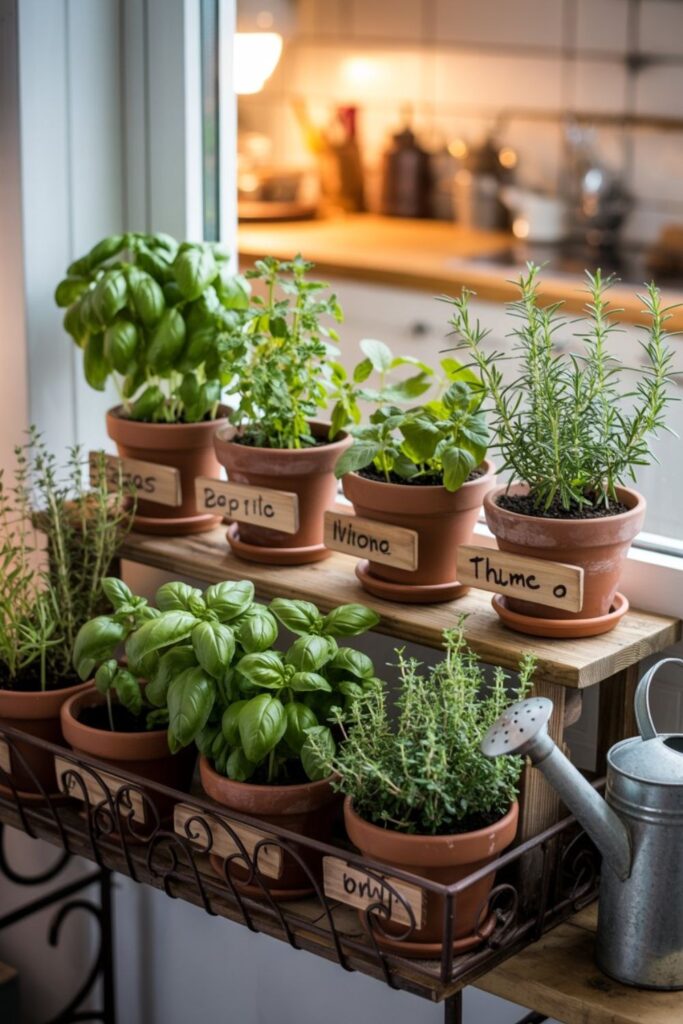
Herb gardens deliver enormous returns on small investments. Most herbs will flourish on a sunny balcony or terrace and require very little care. Not only can you enjoy fresh, aromatic pickings, but most herbs remain relatively small, so are well-suited to containers.
For sunny balconies, try growing thyme, sage, rosemary and chives. These Mediterranean favorites tolerate dry conditions between waterings. Basil thrives in sunny spots, while mint and cilantro prefer partial shade. Understanding individual preferences prevents disappointing results.
Container gardens filled with more than a dozen favorite herbs work beautifully without taking up too much prime real estate. Group herbs by watering needs rather than aesthetics. Rosemary and thyme tolerate drought while basil demands consistent moisture. Segregating by requirements simplifies care routines dramatically.
Hanging Baskets And Railing Planters
Hanging baskets are one of the most creative Balcony Garden Ideas for maximizing vertical space. They brilliantly exploit unused overhead areas and serve as real space savers, perfect for growing herbs, houseplants, or trailing vegetables. Among the most charming Balcony Garden Ideas is planting strawberries in hanging baskets, they not only look delightful but also provide fresh, homegrown fruit right outside your door.
For colorful Balcony Garden Ideas, consider low-growing blue, purple, or white lobelia cascading from containers and baskets. The trailing habit of lobelia adds vertical interest while occupying minimal floor space, making it one of the best plants for hanging baskets and window boxes in compact balcony gardens.
Hanging baskets elevate flowers and foliage to eye level, instantly brightening up balcony walls and railings. These versatile Balcony Garden Ideas work beautifully in small spaces, allowing you to refresh your display seasonally, swap summer blooms for winter pansies without changing your setup. With hanging baskets, your Balcony Garden Ideas can evolve year-round while staying lush and vibrant.
Creating Privacy With Strategic Planting
When exploring Balcony Garden Ideas, windbreaks play a vital role in protecting delicate foliage from harsh gusts. Adding trellises, lattice panels, or vertical screens not only shields your plants but also enhances the structure and privacy of your outdoor space.
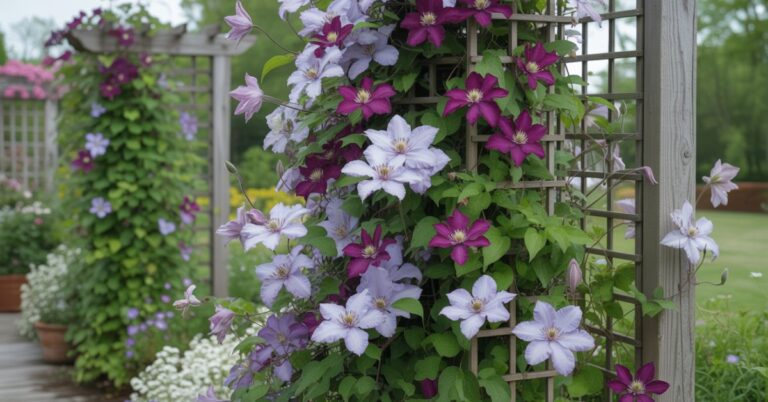
Clematis is a stunning choice for Balcony Garden Ideas involving vertical growth. These woody, herbaceous vines produce long-blooming, ray-like flowers in both single and double forms, gracefully draping over trellises or fences. Available in many vibrant colors, Clematis makes the most of vertical space and provides a natural screen that enhances the charm and privacy of your balcony garden.
Other climbing Balcony Garden Ideas include roses, Desdemona, and Salvia ‘Cherry Lips,’ which thrive beautifully in pots when supported properly. Mounting a trellis on your wall allows you to grow and display these climbers with ease. It’s one of the most elegant Balcony Garden Ideas for adding greenery, fragrance, and color while giving your balcony a lush, layered appeal.
Watering Systems That Save Time
Container gardening demands consistent moisture. A balcony’s exposures to strong sun and wind demand that its plants be continually watered. Rainfall, which nurtures plants in the ground, evaporates quickly on the small soil surface of containers.
Opt for drip irrigation systems to ensure consistent watering without daily hand-watering sessions. Water conservation is key, so consider using self-watering planters or installing a drip irrigation system. These automated solutions prevent vacation stress and inconsistent care.
The fastest way to water is to use an easily-coiled nylon hose attached to a kitchen faucet. Remember containers or pots made of terra cotta, coco fiber, or other porous materials dry out fast, while those made of plaster, metal or other less permeable materials dry out more slowly. Match container materials to your watering habits and schedule.
Tiered Planters And Multi-Level Displays
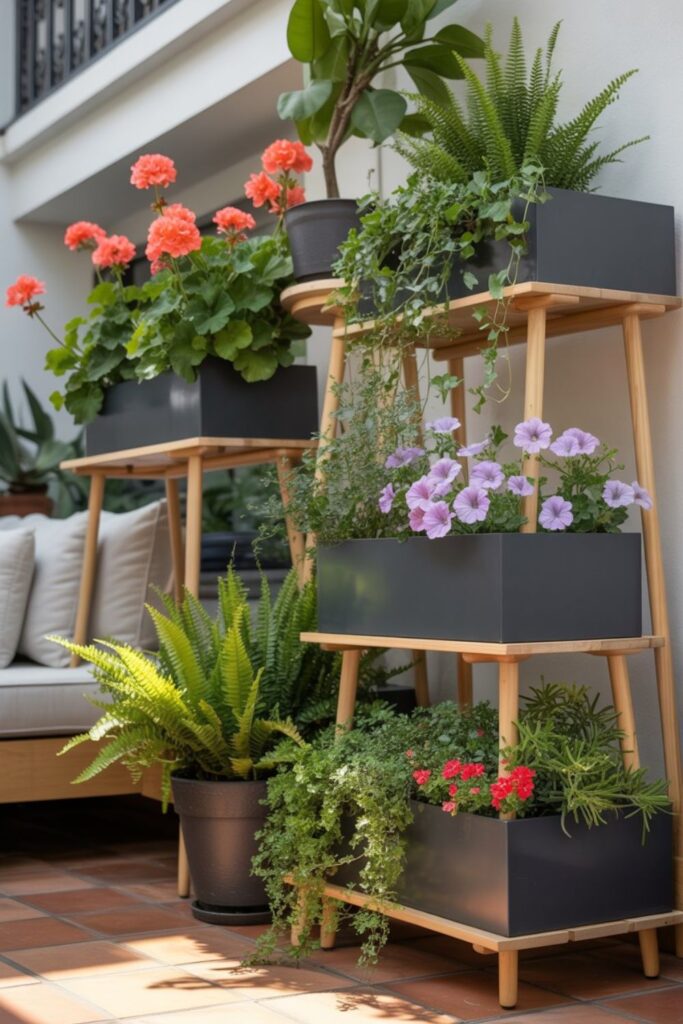
Tiered planters maximize vertical real estate elegantly. Tiered planters are space-saving solutions that allow you to use vertical space for your garden rather than taking up precious space on your balcony floor. Wood pallets turned on end, old book shelves, or tiered planters are all practical solutions for gardening up rather than out.
This DIY stacked planter can spruce up any boring place of your garden. It requires only 5 terracotta pots of different sizes, a few of your favorite plants, a center rod, and potting soil. The project takes minimal time and creates dramatic vertical impact. Planters hanging on wooden brackets mounted on walls are smart ideas for balcony gardens to create more vertical space.
Use pedestals to mix up the heights of containers, maximize space and create a more appealing vignette. Varied heights add visual interest while ensuring all plants receive adequate light. Use ladder plant stands to take your balcony vertical garden ideas to the next level decorative plant ladders include five pots mounted on different levels.
Edible Balcony Gardens That Feed You
Growing food transforms balconies into productive homesteads. The grow-your-own movement continues to flourish, with balcony garden ideas often featuring mini vegetable patches. Imagine enjoying fresh, homegrown ingredients for your next meal picked minutes before cooking.
Tomato varieties are seemingly endless, with determinate or bush tomatoes better for small spaces because they self-prune at the top. Indeterminate varieties vine endlessly, overwhelming tight quarters. Grow tomatoes, peppers, basil with yellow and orange wooden crates to give it a vibrant finish.
To have strawberries to pick for as long as possible, grow three hanging baskets each planted with varieties that ripen at different times throughout the summer. This succession planting extends harvest windows significantly. You can actually grow quite a lot of varieties in containers in terms of trees and specimen trees; it’s just a case of a little bit more management.
Styling Your Balcony Garden Aesthetically
Design choices transform functional spaces into beautiful retreats. Create a sleek design with monochromatic color using a black and white combination to bring elegance and cleanliness at the same time. A mix of small trees, shrubs, foliage plants, and colorful annuals will add interest and diversity to your balcony garden.
Use a striped rug with white flowers and pots for a sophisticated design. Textiles soften hard surfaces while defining zones. Cover your brick wall with bamboo rolls along with some greenery, stool, and woven reed furniture to provide different textures and create a private cabana feel.
To give an authentic garden feel, you can use garden rocks, stepping stones, and a water fountain to provide a visual appeal and soothing balcony space. Water features mask city noise with gentle sounds. Think of your balcony garden as an extension of your indoor living space. If you choose plant colors and textures that echo the interior design, even the smallest balcony will look more expansive and welcoming.
Low-Maintenance Plant Selections
Busy lifestyles call for Balcony Garden Ideas that feature resilient, low-maintenance plants. Succulents are among the best choices for modern Balcony Garden Ideas, thriving with little care and tolerating direct sunlight with ease. These drought-tolerant plants don’t require strict watering schedules or frequent fertilizing, making them ideal for anyone seeking effortless greenery.
Marigolds are another favorite for Balcony Garden Ideas, especially in warm climates. They’re low-maintenance, naturally pest-repellent, and add cheerful color that brightens your space while requiring minimal attention. Lavender also fits perfectly into easy-care Balcony Garden Ideas, offering soothing fragrance, minimal watering needs, and only occasional pruning to stay in shape.
For more enduring Balcony Garden Ideas, consider vigorous perennials like lady’s mantle, crocosmia, muehlenbeckia, lamium, adenophora, catmint, and erigeron. These perennials return year after year, reducing replanting work. Creeping Jenny is another excellent choice — hardy, fast-spreading, and perfect for container gardening when you want a lush ground-cover effect on your balcony garden.
Seasonal Planting Strategies
Seasonal changes keep balcony gardens dynamic. Our changing seasons need to be factored in to provide plants with utmost care so they look bright, colorful and productive no matter what time of the year. Cool-season crops like lettuce and pansies thrive during spring and fall when summer annuals struggle.
Lobelia blooms best before nighttime temperatures get too warm if the plant stops flowering, trim it back and it’ll rebound when cool weather returns. Understanding these cycles prevents frustration when plants decline naturally. Look up your state-specific growing schedule so you’ll know when to plant what.
Native plants can handle the coldest winters but a pot is not equivalent to being in the ground, where roots are more insulated from freezing. Some materials do not tolerate freezing, excluding many options including terracotta, pottery, and even some forms of plastic. Choose frost-proof containers for year-round displays.
Attracting Pollinators To Urban Heights
Pollinator-friendly gardens support vital ecosystems. There’s a growing focus on attracting pollinators like bees, butterflies, and hummingbirds to our balconies. Planting bee balm, lavender, echinacea, and herbs like rosemary and thyme creates a haven for these vital creatures.
Hummingbirds and butterflies adore fuchsias; these stunning annuals in shades of pink, red, or purple are best displayed in hanging baskets and window boxes. The nectar-rich blooms attract wildlife even to high-rise locations. Vertical gardens increase biodiversity by providing habitats for insects and birds.
These beautiful blooms not only benefit the environment but also add a delightful fragrance to your balcony. The sensory experience improves dramatically when pollinators visit. Your urban garden becomes a conservation effort connecting city dwellers to natural cycles.
Budget-Friendly DIY Projects
DIY Balcony Garden Ideas are perfect for adding personality to your space while keeping costs low. Using recycled materials for garden pathways or planters not only saves money but also enhances sustainability and charm. One of the best budget-friendly Balcony Garden Ideas is using wooden pallets they create a rustic vibe while giving new life to materials that might otherwise go to waste.
Transform an unused corner into a stylish green retreat with creative Balcony Garden Ideas using black nursery pots, mason jars, and painted wooden pallets. Add a few decorative plants for the balcony to bring color and freshness. Thrift stores and garage sales are treasure troves for planters, repurpose old watering cans, boots, or even paint pots into striking garden containers to give your balcony garden unique character.
For hands-on Balcony Garden Ideas, dismantle pallet boards, nail the planks onto the wall, and attach your pots for a charming vertical garden. You can also build a simple hanging frame for herb pots to make the most of sunny balcony spots. These DIY Balcony Garden Ideas cost little but deliver big on creativity, sustainability, and visual impact.
Furniture That Doubles As Planter Storage
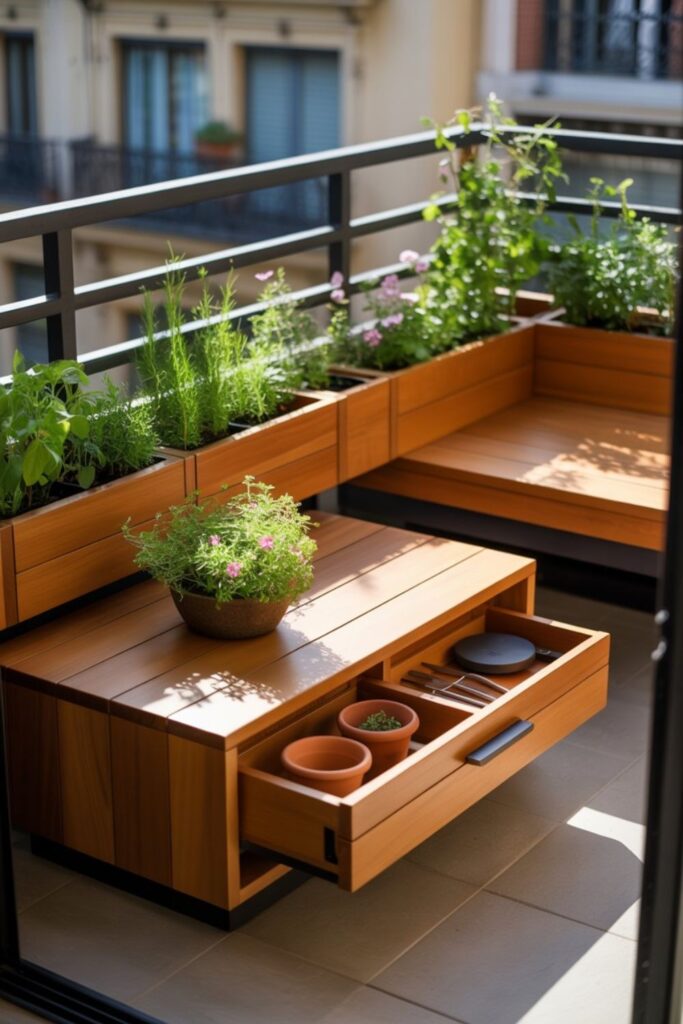
Space-efficient furniture maximizes functionality. Compact, functional, and stylish sets are specifically designed to fit smaller spaces, making them ideal for balconies with foldable features, giving you flexibility and ease of storage. Opt for furniture with built-in storage to eliminate clutter.
Use a storage unit to increase storage space and declutter your small balcony vertical garden, place plants on the top layer and store gardening supplies and pots in the remaining space. Every piece should serve multiple purposes. Put a corner shelf that also serves as a plant stand to maximize the space on your balcony. This vertical garden idea is perfect for patios with limited space.
Folding bistro sets disappear when entertaining requires more floor space. You leave gaps for other balcony elements like bistro sets or potting tables, preventing overcrowding. Balance gardening ambitions against livability needs; your balcony should remain usable, not become an impassable jungle.
Micro Park Balcony Concept
Create neighborhood park atmospheres. Amongst the desert of hustle and bustle of urban everyday life, micro park balconies are the oasis to look for this vibrant and inviting space with creepers, flowers, and plants gives the feel of your neighbourhood park. With meticulous attention to detail and creative utilization of space-saving solutions, micro park garden designs are sure to light up your balcony.
Layer plants at multiple heights creating depth and complexity. Stacking pots and growing trees is a great idea to add vertical garden balcony elements to this décor. Dense planting mimics natural landscapes better than sparse arrangements. Create a retreat and a serene balcony space with some ivy tree growing along the stone wall.
The goal transforms sterile urban spaces into therapeutic retreats. Balcony gardens have so much capability and you can truly create whatever space you want. People often underestimate possibilities, viewing balconies as constraints rather than opportunities.
Proper Soil And Fertilization
Container success depends on proper media. Consider buying compost that is specifically formulated to be lightweight for balcony applications. Commercial specialized soil mixes are often designed to offset the differences between dirt in a pot versus soil in the ground.
Use a high-quality potting mix suited for the types of plants you are growing. Garden soil compacts in containers, suffocating roots and preventing drainage. Fertilizing your plants will help them thrive. A balanced liquid fertilizer applied every few weeks should suffice.
To maximize biodiversity, different native plants thrive in different soil conditions, so tailor each pot’s soil to better match the habitat needs of the plants you selected. Succulents need sandy, fast-draining mixes while ferns prefer moisture-retentive formulations. Matching media to plant requirements dramatically improves outcomes.
Read More About: 24+ Stunning Garden Walkway Ideas For Your Outdoor Space
Common Mistakes That Kill Balcony Gardens
Overwatering causes more deaths than drought. Water your plants regularly but be careful not to overwater. Check soil moisture before watering soggy conditions and rot roots rapidly. If a plant’s soil feels wet to the touch, hold off watering for now.
People often think it’s a good idea to start with lots of little plants on a balcony garden, but this creates so much more work for yourself. Begin with manageable quantities mastering care requirements before expanding. Select just a few plants, particularly those that require little care, and expand your selection later when you see what plants thrive on your balcony.
Keep an eye out for pests and treat your plants promptly if you notice any issues. Early intervention prevents infestations from spreading throughout your collection. City soot will find its way to your balcony garden, coating a plant’s leaves regular washing maintains photosynthesis efficiency.
Frequently Asked Questions
How much weight can my balcony support for a garden?
Check your building specifications or consult property management before adding significant weight. Compost and heavy concrete or terracotta pots can be surprisingly heavy, so always know how much weight your balcony can take. Lightweight containers and specialized potting mixes reduce loads substantially.
What plants grow best in full shade on balconies?
Best plants for apartment balconies that remain shady include Hostas, Elephant Ear, Coral bells, Persian shield, Coleus, Kale, Ferns, and Rex begonia. These foliage plants thrive with minimal direct sunlight while adding color and texture to dim spaces.
How often should I water balcony container plants?
A balcony’s exposures to strong sun and wind demand that plants be continually watered, as rainfall evaporates quickly on the small soil surface of containers. Check moisture daily during hot weather, adjusting frequency based on container materials and plant needs.
Can I grow vegetables on a small balcony?
Absolutely. Compact varieties of tomatoes, peppers, lettuce, and even herbs like basil and mint thrive in containers. Focus on determinate tomato varieties and utilize vertical growing methods to maximize production in limited space.
What are the best containers for windy balconies?
If you have a windy balcony, choose solid containers like terra cotta or stoneware instead of plastic. These materials are heavier and can be managed very well on stormy days. Lower, wider pots resist tipping better than tall, narrow designs.
How do I create privacy with balcony plants?
Climbing plants like vining vegetables, clematis, and morning glories add cascading effects, softening vertical walls and creating private retreats. Install trellises or use tall planters with screening plants to block sightlines while maintaining airflow.
Conclusion
Balcony garden ideas turn overlooked urban spaces into thriving green retreats. The transformation requires thoughtful planning rather than expensive investments. Thanks to a little creativity and innovation, balcony gardens can hold more plant life than you may expect. Understanding your specific conditions sunlight exposure, wind patterns, and weight limitations guides plant selections toward guaranteed success. Start small with manageable collections, expanding as confidence grows. From deciding what to grow to choosing imaginative containers, the entire process can be an adventure. Vertical gardening solutions maximize every square inch without sacrificing functionality. Your balcony deserves better than sitting empty when simple changes create outdoor sanctuaries. These practical balcony garden ideas work within real constraints, delivering measurable improvements to urban quality of life while reconnecting city dwellers with the natural world they desperately need.