23+ Big Patio Decorating Ideas for Stylish Outdoor Living

You’ve got the space most homeowners dream about a big patio stretching across your backyard with seemingly endless possibilities. Yet somehow it feels empty, disconnected, or just plain overwhelming to decorate. That massive blank canvas intimidates rather than inspires. You’ve tried a dining table here, a couple chairs there, but the space still feels like a parking lot with furniture randomly placed. Here’s the reality: large patio design requires completely different strategies than small space decorating. The challenge isn’t maximizing every inch; it’s creating intimacy within vastness, establishing distinct zones without cluttering, and making the space feel intentional rather than scattered.
The right big patio decorating ideas transform sprawling concrete or stone into a cohesive outdoor entertaining space that feels both expansive and inviting. Your oversized patio deserves a design approach that celebrates its scale while creating warm, welcoming areas where people naturally gather.
Why Large Patios Need Different Decorating Strategies
Spacious patio ideas flip traditional decorating logic. Small spaces focus on maximizing function per square foot. Large spaces need division, intimacy, and purpose definition to avoid feeling like abandoned warehouse floors.
The psychology of space matters enormously. Humans feel uncomfortable in vast, undefined areas we gravitate toward boundaries and cozy corners. Your big patio needs these intimate zones carved from the larger expanse. Think about hotel lobbies or upscale restaurants. They use furniture groupings, area rugs, and lighting to create rooms within rooms. Apply identical principles outdoors.
Scale becomes critical with large patio design. Furniture that looks substantial in showrooms disappears on oversized patios. You need bigger pieces, bolder colors, and more dramatic elements to hold their own against expansive backdrops. That cute bistro set drowns in 800 square feet of space.
Traffic flow requires careful planning when you’ve got room to roam. People shouldn’t cross through conversation areas to reach dining zones. Pathways should feel obvious without physical barriers. Poor traffic patterns make spaces frustrating despite abundant square footage.
According to landscape architects, patios exceeding 400 square feet benefit significantly from professional space planning. The investment in design consultation typically saves money by preventing furniture arrangement mistakes and ensuring cohesive aesthetics from the start.
Read More About: 25+ Black Patio Floor Ideas for Elegant Outdoor Spaces
How Do You Create Distinct Zones on Large Patios?
Patio zoning divides massive spaces into purposeful areas. Each zone serves specific functions while contributing to overall flow and aesthetics.
Start by identifying your activities. Most outdoor entertaining spaces need dining, lounging, and cooking areas at minimum. You might add reading nooks, game zones, fire pit areas, or bar spaces depending on lifestyle and available square footage. List your priorities before arranging anything.
Conversation areas anchor social spaces. Position seating in squares or circles facing inward. This arrangement naturally encourages interaction. U-shaped sectionals work beautifully, as do grouped sofas and chairs around coffee tables. Keep seating 8-10 feet apart for comfortable conversation without shouting.
Dining zones need logical kitchen connections. Position tables near back doors to simplify food transport. Allow 36 inches of clearance on all sides for chair movement. Tables seating 8-10 require roughly 12×14 feet including clearance. Expandable tables adapt to varying guest counts.
Cooking areas benefit from kitchen proximity but should sit upwind from seating to keep smoke away from guests. Allow 5 feet of clearance around grills for safety. Outdoor kitchens with sinks, refrigeration, and storage need 10-15 feet of dedicated space minimum.
Transition zones between areas prevent abrupt changes. Overlap edges slightly dining area rugs might extend partway into lounging zones, or shared lighting spans multiple areas. This creates flow rather than rigid compartmentalization.
What Furniture Pieces Work Best at Large Scale?
Oversized patio decor requires substantial furniture that matches space proportions. Undersized pieces look lost and fail to establish presence.
Sectional sofas measuring 10-15 feet work brilliantly in spacious patio ideas. L-shaped configurations define corners while U-shaped arrangements create contained conversation pits. Deep seats (32+ inches) look more substantial than standard depths. Quality outdoor sectionals cost $2,000-8,000 but provide seating for 6-10 people comfortably.
Large dining tables anchor eating areas. Rectangular tables seating 10-12 measure roughly 42×96 inches. Round tables 72 inches in diameter seat 8-10 and encourage conversation. Teak, aluminum, and all-weather wicker construction withstands elements while looking substantial. Expect to invest $1,200-5,000 for quality large-format tables.
Daybeds and chaise lounges create relaxation zones. Oversized models measuring 6-8 feet long accommodate actual napping. Position them in quiet corners away from main traffic. Add side tables within arm’s reach for drinks and books. Premium outdoor daybeds cost $800-3,000.
Bar-height tables with stools establish casual gathering spots. Counter-height surfaces (36-42 inches) work for appetizers and drinks without formal dining commitment. These transition areas fill awkward spaces between major zones. Budget $400-1,500 for quality bar sets.
Benches provide flexible seating that moves easily. Place them along patio perimeters, flanking fire pits, or as extra dining seating. Built-in benches with hidden storage maximize function. Freestanding teak or composite benches cost $200-800 depending on length.
Swinging chairs or egg chairs add whimsy and comfort. Suspended from pergola beams or freestanding frames, they create destination spots within larger spaces. These work especially well in reading nooks or meditation corners. Expect to pay $300-1,200 for quality hanging seating.
How Can Area Rugs Define Spaces Outdoors?
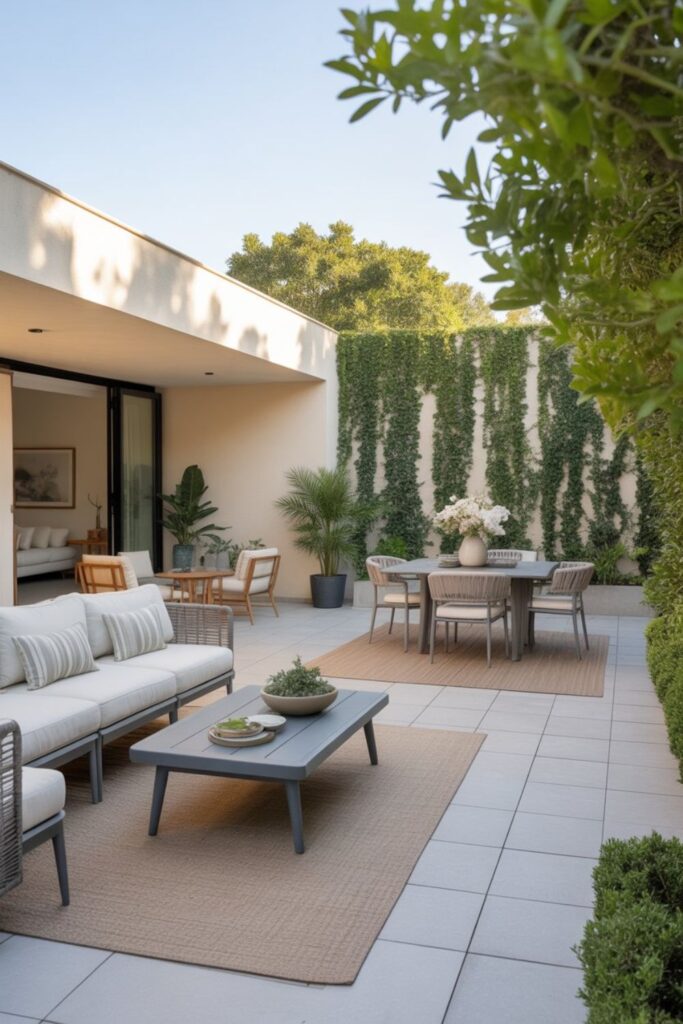
Area rugs function as outdoor room dividers. They visually separate zones while adding color, pattern, and softness underfoot.
Size matters enormously. Outdoor rugs should extend 18-24 inches beyond furniture perimeters. A conversation grouping with 10-foot sectional needs roughly 12×15-foot rug minimum. Undersized rugs look like bath mats scattered randomly. Most big patio decorating ideas require multiple rugs one per zone.
Polypropylene rugs resist moisture, mildew, and fading better than natural fibers. They handle rain exposure and dry quickly. Brands like Ruggable offer machine-washable options perfect for high-traffic outdoor entertaining spaces. Quality outdoor rugs cost $200-2,000 depending on size.
Pattern selection impacts space perception. Large-scale patterns suit expansive areas they hold their own without looking busy. Small patterns disappear on big patios. Geometric designs create modern vibes while traditional motifs suit classic settings. Solid colors work universally but provide less visual interest.
Layering rugs adds depth and defines sub-zones within larger areas. Place smaller accent rugs atop larger neutral bases. This technique works brilliantly in eclectic designs where mixing patterns and textures creates personality. Ensure top rugs are substantially smaller to avoid awkward proportions.
Secure rugs properly to prevent bunching and tripping hazards. Double-sided outdoor tape, rug pads, or furniture weight keeps them positioned. Wind becomes problematic with large unsecured rugs they flip and fold during storms.
Color coordination ties disparate zones together. Choose rug colors that echo cushion fabrics, planter selections, or architectural details. This creates cohesive flow across large patio design despite multiple distinct areas.
What Statement Pieces Create Focal Points?
Statement pieces anchor spaces and provide visual destinations. They give eyes somewhere to land in vast expanses.
Large-scale art transforms blank walls into galleries. Metal sculptures, ceramic murals, or weatherproof canvas prints sized 4-6 feet make bold impressions. Position them where sightlines naturally fall facing dining areas or visible from primary seating. Outdoor art costs $200-5,000 depending on artist and materials.
Water features add movement and sound. Tiered fountains, pondless waterfalls, or wall-mounted cascades create sensory focal points. The sound masks traffic noise while attracting birds and beneficial insects. Professional installations run $2,000-10,000, while DIY fountain kits cost $300-2,000.
Fire pits or fireplaces become natural gathering magnets. Built-in stone fire pits measuring 4-6 feet in diameter accommodate 10-15 people around perimeters. Linear gas fire features spanning 6-10 feet create modern drama. These installations cost $3,000-15,000 depending on materials and fuel source.
Oversized planters establish vertical interest. Containers measuring 24-36 inches in diameter planted with small trees or dramatic grasses create instant impact. Cluster odd numbers three or five large pots for greatest effect. Fiberglass planters offer size without backbreaking weight. Budget $200-800 per large planter.
Pergolas and shade structures define zones overhead while providing architectural interest. Freestanding pergolas measuring 12×16 feet or larger create outdoor rooms within open patios. They support lighting, climbing vines, and hanging elements. Professional installations cost $5,000-15,000 for quality structures.
Outdoor chandeliers bring unexpected elegance. Weather-resistant fixtures measuring 36-48 inches in diameter make stunning statements suspended over dining tables or conversation areas. They establish a luxury resort ambiance. Quality outdoor chandeliers cost $400-2,500.
How Do You Handle Lighting Across Expansive Spaces?
Lighting layers create functionality and ambiance across spacious patio ideas. Multiple light sources at varying heights prevent dark dead zones.
Ambient lighting establishes overall illumination. String lights draped overhead provide warm, general coverage. For big patios, use multiple strands in grid patterns or parallel lines. Commercial-grade string lights with 18-24 inch bulb spacing work better than residential versions with tighter spacing. Plan for $200-800 in quality string lighting.
Task lighting serves functional areas. Mount fixtures above outdoor kitchens, bars, and dining tables. Adjustable spotlights let you direct light where needed. Under-counter LED strips illuminate prep surfaces. Task lighting costs $150-600 per zone depending on fixture quality.
Accent lighting highlights features. Uplight trees, architectural elements, or art with directional spotlights. These create depth and drama after dark. Solar spotlights work for occasional accents while low-voltage LED systems provide reliable brightness. Budget $50-200 per accent light.
Path lighting ensures safe navigation between zones. Place fixtures every 6-8 feet along walkways. Solar stake lights work adequately for decorative purposes but LED path lights provide superior visibility and reliability. Complete path lighting systems cost $300-1,200 installed.
Fire creates living light. Fire pits, fire tables, or tiki torches add flickering warmth. The dancing flames provide hypnotic focal points that electric lights can’t replicate. Propane tiki torches cost $30-100 each, while permanent fire features represent larger investments.
Dimmers offer flexibility. Adjustable lighting transitions from bright task illumination during meals to subtle ambiance during conversation. Smart lighting systems controlled via phone apps let you save preset scenes for different occasions. Expect to pay $200-1,000 for smart outdoor lighting controllers.
What Colors and Patterns Work in Large Outdoor Spaces?
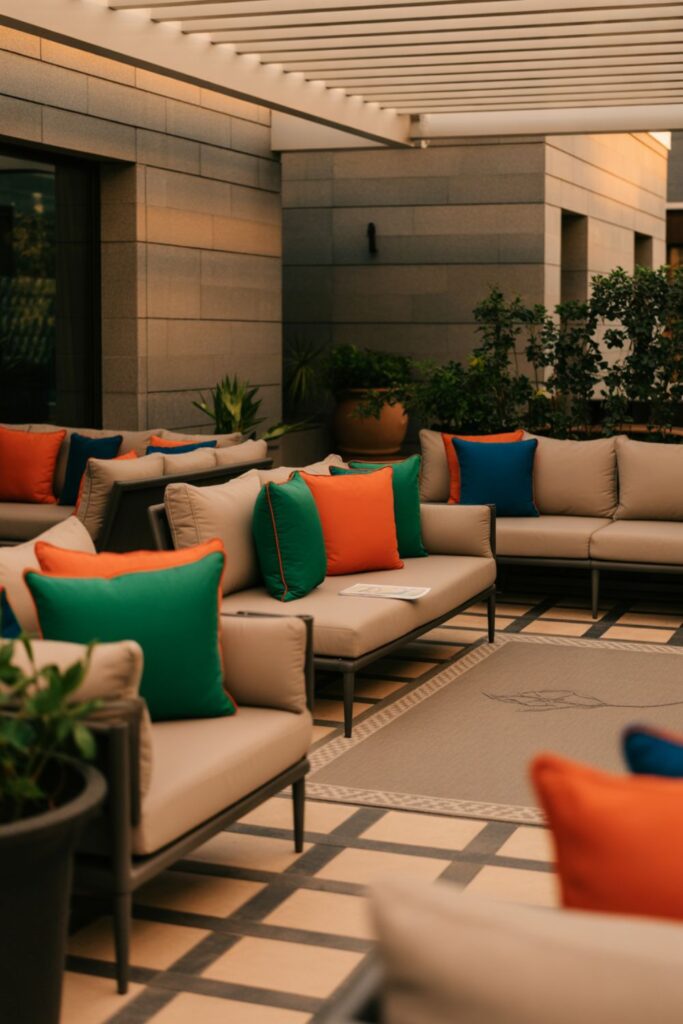
Cohesive design across expansive areas requires intentional color strategies. Random color choices create visual chaos in large spaces.
Start with a foundation palette of 2-3 main colors. Draw inspiration from your home’s exterior, existing hardscaping, or surrounding landscape. Navy, gray, and white create classic elegance. Terracotta, cream, and sage deliver earthy warmth. Teal, coral, and sand evoke coastal vibes.
Add 1-2 accent colors for personality. These appear in smaller doses, throw pillows, planters, or accessories. Accent colors can be bolder than main palette choices. Bright yellow or vibrant orange enliven neutral foundations without overwhelming.
Distribute colors evenly across zones. If dining area cushions are navy, include navy elements in conversation and lounging areas too. This color repetition creates unity across large patio designs despite physical distance between zones.
Patterns add visual interest without color chaos. Vary pattern scales large geometrics on sectionals, medium florals on dining chairs, small textures in accent pillows. Mixing patterns succeeds when they share common colors. Stick to 2-3 patterns maximum to avoid busy, cluttered aesthetics.
Neutral backgrounds let accessories shine. Gray, beige, or taupe furniture provides flexibility for seasonal decorating changes. Swap pillow covers, rugs, and accessories to refresh looks without replacing major pieces. This approach proves economical long-term.
Consider sun exposure when selecting colors. Bright sunlight fades fabrics quickly. Solution-dyed acrylic textiles resist fading far better than regular outdoor fabrics. Darker colors show fading less than pastels. Quality fade-resistant fabrics cost more upfront but maintain appearance for years.
How Do You Create Privacy Without Feeling Enclosed?
Privacy screening on big patios requires balance. You want seclusion without creating fortress vibes that negate the openness you’re celebrating.
Strategic plantings block sightlines partially. Arrange large containers with bamboo, ornamental grasses, or evergreen shrubs at patio edges. Space them to interrupt views without solid barriers. This approach maintains airiness while providing screening. Budget $200-500 per large planted container.
Pergolas with climbing vines create living privacy ceilings and walls. Train wisteria, jasmine, or climbing roses over overhead beams and side columns. The green coverage develops gradually, softening transitions between seasons. Established pergolas cost $3,000-8,000, while vines cost $20-60 per plant.
Outdoor curtains offer adjustable privacy. Mount weather-resistant panels on cable systems along patio perimeters. Draw them closed for privacy or wind protection, tie them back when open views are desired. This flexibility suits outdoor entertaining spaces where privacy needs fluctuate. Expect to spend $100-300 per panel.
Partial walls or half-height fences define boundaries without full enclosure. Built-in planters doubling as seating walls measure 18-24 inches tall enough to establish edges without blocking views. Stone or stucco construction costs $30-80 per linear foot professionally installed.
Vertical gardens on trellises or wall-mounted systems create green screens. Modular pocket planters, living wall panels, or simple wire grids supporting vining plants all work effectively. These maximize privacy per square foot occupied. Complete systems cost $200-2,000 depending on coverage area.
Consider sight line angles carefully. You don’t need solid barriers, just strategic blocking of direct views from neighboring properties. Position privacy elements where they’re needed most, typically along shared property lines or facing nearby houses.
What Mistakes Ruin Large Patio Designs?
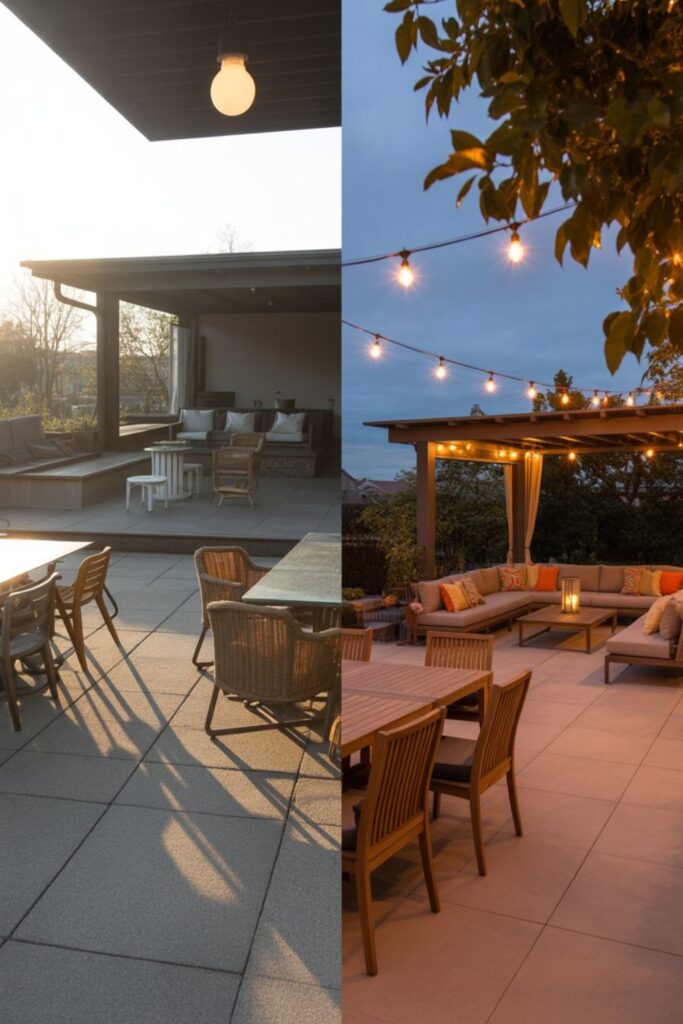
Learning from common errors saves frustration and money when tackling big patio decorating ideas.
Pushing furniture against walls wastes central space. This works in small rooms but creates awkward bowling alleys on large patios. Float furniture groupings toward the center, creating intimate zones with space behind for circulation. Leave 3-4 feet minimum between furniture backs and walls.
Using only small-scale furniture makes spaces feel empty. Delicate bistro sets and dainty side tables disappear on expansive patios. Choose substantial pieces sized appropriately. One quality sectional beats three small love seats for visual impact and comfort.
Inadequate lighting creates dark, unusable spaces after sunset. Don’t rely on a single overhead fixture or string lights alone. Layer multiple light sources at varying heights. Budget for proper illumination during initial decorating to avoid costly retrofits.
Ignoring wind exposure leads to constant frustration. Large open patios often experience significant wind. Secure lightweight items, choose heavier furniture, and install windbreaks where needed. Nothing ruins gatherings faster than napkins and cushions constantly blowing away.
Lack of shade makes patios unusable during prime daylight hours. Large patio design need substantial shade solutions, pergolas, shade sails, or large umbrellas. Plan for 70-80% coverage in hot climates. Shade structures represent major investments but make spaces functional.
Poor zoning creates confusion. Without clear purpose for different areas, patios feel aimless despite abundant space. Designate specific functions before placing furniture. This creates intentional flow rather than random furniture scattering.
Monochromatic schemes feel flat across large expanses. While color cohesion matters, everything becomes monotonous. Vary shades within your palette light gray sofas, medium gray rugs, dark gray planters. Add texture and pattern for dimension.
Read More About: 30+ Small Backyard Patio Pergola Ideas
How Can Outdoor Kitchens Anchor Large Patios?
Outdoor kitchens transform big patios into full-function entertainment venues. They justify expansive square footage by enabling complete outdoor living.
Basic outdoor kitchen setups include built-in grills, prep counters, and storage. A linear arrangement spanning 8-10 feet provides substantial cooking capacity without overwhelming space. Stainless steel components resist weather while looking professional. Entry-level built-in kitchens cost $5,000-12,000 installed.
Mid-range kitchens add refrigeration, sinks, and side burners. Running water requires plumbing extensions from house systems. Outdoor-rated refrigerators maintain cold temperatures in temperature extremes. These features elevate functionality dramatically. Expect investments of $12,000-25,000.
Luxury outdoor kitchens rival indoor counterparts with pizza ovens, warming drawers, ice makers, and bar equipment. Custom stone or stucco surrounds create architectural statements. Professional design ensures efficient work triangles and adequate storage. High-end installations run $25,000-75,000+.
Positioning matters enormously. Place kitchens where smoke blows away from primary seating. Maintain proximity to indoor kitchens for convenience. Create countertop space on both sides of grills for food staging. Allow 5 feet of clearance behind cooks for safe movement.
Bar seating adjacent to kitchens encourages interaction. Counter-height seating lets guests chat with cooks without crowding work zones. Plan for 24 inches of counter space per bar stool. Three stools require roughly 6 feet of counter length.
Cover outdoor kitchens with permanent roofs or pergolas. This protects equipment from weather and lets you cook during light rain. Solid roofing works better than open-beam pergolas for full weather protection. Factor roof structures into initial budgets.
What Seasonal Decorating Strategies Keep Spaces Fresh?
Rotating seasonal elements maintains interest across spacious patio ideas without constant overhauls.
Spring welcomes pastels and fresh flowers. Swap cushion covers to soft greens, yellows, and pinks. Plant containers with annuals like petunias, pansies, and snapdragons. Add lightweight throws despite warming temperatures and evening surprise. Hang cheerful wreaths on nearby doors.
Summer embraces bold, vibrant colors. Switch to bright blues, corals, and citrus tones. Add nautical elements like rope accents and striped fabrics. Install temporary shade sails in high-traffic zones. Place citronella candles and torches for mosquito control and ambiance.
Fall introduces warm, cozy elements. Transition to rust, orange, burgundy, and brown tones. Add textured throws and extra pillows as temperatures drop. Incorporate pumpkins, mums, and ornamental grasses. Light fire pits regularly as evenings cool.
Winter doesn’t mean abandoning outdoor spaces. Use evergreen arrangements, pine cones, and twinkle lights. Add weatherproof blankets and heated elements where appropriate. In mild climates, outdoor spaces remain primary entertaining venues year-round with proper heating.
Holiday decorating extends celebrations outside. String lights, wreaths, and seasonal planters welcome guests before they enter homes. Weatherproof decorations withstand elements. Create cohesive indoor-outdoor themes for special occasions.
Store off-season items properly to maximize longevity. Cushions and delicate decor belong in dry storage when not used. Designate storage areas built-in cabinets, deck boxes, or garage space for seasonal rotation. Label containers clearly for easy identification.
How Do You Incorporate Play Areas Into Adult Spaces?
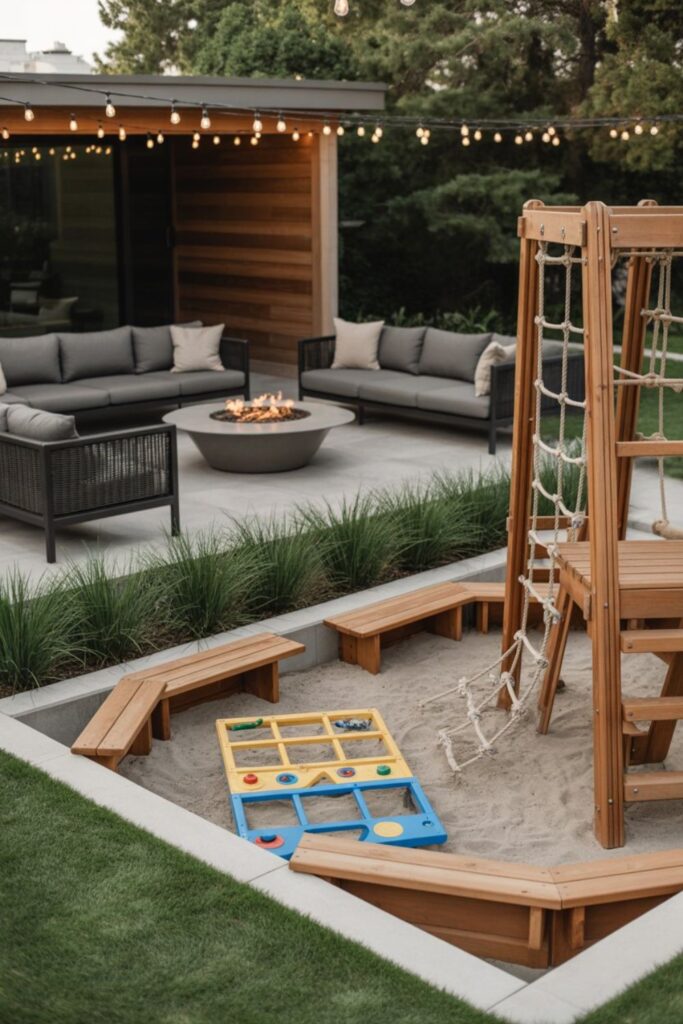
Multi-generational patio design accommodates both adults and children without sacrificing style or function.
Designate play zones at patio edges rather than centers. This keeps activity contained while adults supervise from comfortable seating. Rubber mulch, artificial turf, or foam tiles create safe play surfaces that differ from main patio materials. Expect to invest $3-8 per square foot for play surfacing.
Built-in seating with toy storage serves dual purposes. Bench seating with lift-top compartments hides games, toys, and sports equipment. This maintains clean aesthetics when the company visits. DIY storage benches cost $200-500 in materials while custom built-ins run $800-2,500.
Lawns adjacent to patios provide natural play areas. Leave substantial grass sections for running games, sports, and free play. Raised patios with steps leading to lawns create clear transitions between adult entertaining and children’s play zones.
Incorporate elements appealing to all ages. Fire pits attract everyone kids love s’mores while adults enjoy wine and conversation. Outdoor games like cornhole, bocce, or giant Jenga engage multiple generations. Quality game sets cost $100-400.
Create homework or craft zones with weather-resistant tables and storage. Older children appreciate dedicated spaces for outdoor activities. Stain-resistant surfaces and easy-clean materials simplify maintenance. Simple craft tables cost $150-400.
Plan for flexibility as children age. Portable play equipment moves as needs change. Avoid permanent installations tied to specific age ranges. Today’s toddler play structure becomes tomorrow’s wasted space.
Frequently Asked Questions
How much furniture do you need for a large patio?
As a general rule, allocate 25-30 square feet per person for outdoor entertaining spaces. A 600-square-foot patio comfortably accommodates seating for 20-24 people across multiple seating areas. Include dining for 8-12, lounge seating for 6-10, and additional flexible seating. Quality furniture for large patios costs $5,000-20,000 depending on materials and quantity.
What’s the best way to divide a big patio visually?
Use area rugs, furniture arrangements, overhead structures like pergolas, changes in flooring materials, and oversized planters to create distinct zones. Position rugs under each furniture grouping. Install pergolas over dining or lounging areas. Place large containers as soft barriers between spaces. These elements define zones without physical walls.
How do you make a large patio feel cozy?
Create conversation areas with furniture arranged in intimate groupings facing inward. Use multiple smaller seating zones rather than one massive arrangement. Add soft elements like cushions, throws, and outdoor rugs. Install layered lighting at human scale rather than only overhead fixtures. Incorporate fire features that draw people close.
Should outdoor furniture match across different patio zones?
Furniture doesn’t need to match exactly but should follow a cohesive design theme. Choose pieces that share similar style, all modern or all traditional and coordinate colors within your established palette. Mixing metal dining chairs with wicker lounge seating works when colors and overall aesthetics align.
How many lighting fixtures does a big patio need?
Plan for 4-6 light sources per zone minimum. A patio with three distinct areas needs 12-18 fixtures including string lights, task lighting, path lights, and accent lights. Budget $1,500-5,000 for comprehensive lighting systems across large patio design projects. This seems expensive but properly lit spaces get used far more than dark ones.
What plants work best in large patio planters?
Oversized planters need substantial plants to maintain proper proportions. Small trees like Japanese maples, palms, or citrus work beautifully. Ornamental grasses including maiden grass or fountain grass provide height and movement. Columnar evergreens like arborvitae create vertical interest. For pots 24+ inches in diameter, budget $100-400 per planted container.
Conclusion
Your big patio isn’t a problem to solve, it’s an opportunity to create something extraordinary. The spacious patio ideas you implement today determine whether that massive space becomes your family’s favorite gathering place or an expensive concrete wasteland. The secret lies in thoughtful zoning, appropriate scale, and cohesive aesthetics that celebrate openness while creating intimacy. Don’t let the square footage intimidate you. Break it into manageable sections, tackle one zone at a time, and trust that large patio design succeeds through intentional planning rather than filling every inch with stuff. Your expansive outdoor entertaining space can rival the comfort and style of your best indoor rooms when you apply proper decorating principles.
Start with your highest priority zone usually dining or primary seating. Perfect that area completely before moving to the next. This approach prevents the overwhelming scatter that plagues many big patio decorating ideas. Layer elements gradually, allowing each addition to prove its worth before adding more. Remember that negative space matters as much as furnished areas. That openness you worried about? It’s actually your greatest asset when balanced with well-defined gathering zones. Your friends will gather, your family will linger, and you’ll wonder why you didn’t tackle this project sooner.