20+ Driveway Landscaping Ideas for Stunning Curb Appeal
Your driveway serves purely functional purposes while neighbors showcase welcoming entries that immediately elevate their entire property’s appearance. You’ve invested in home improvements yet that plain concrete or asphalt strip still undermines your curb appeal efforts. The frustration builds as you realize this prominent feature the first thing visitors see does nothing to enhance your home’s value or beauty.
Strategic driveway landscaping ideas transform utilitarian passages into designed elements that frame your home beautifully. Thoughtful plantings, defined borders, and intentional hardscaping create cohesive transitions between street and structure that boost property value while requiring manageable maintenance. Whether you’re working with a long driveway stretching toward the street, compact suburban entry, or elegant circular driveway, the right combination of driveway plants, edging materials, and design principles turns overlooked spaces into standout features. This comprehensive guide reveals how to select appropriate plantings that won’t damage pavement, create defined borders that enhance rather than compete, and implement solutions addressing drainage, spacing, and seasonal interest while establishing that polished first impression your home deserves.
Why Does Driveway Landscaping Matter?
Driveway landscaping ideas deliver tangible benefits that go far beyond simple aesthetics. Understanding the value of driveway landscaping ideas helps justify the investment and prioritize key design choices for long-term impact.
Curb appeal improvements from thoughtful driveway landscaping ideas directly influence property value. Real estate professionals consistently report that well-planned driveway landscaping ideas can boost home values by 5–15% while reducing time on the market. First impressions form within seconds of arrival, and your driveway serves as the main visual focal point during that crucial moment. Smart driveway landscaping ideas also define property boundaries clearly, eliminating the vague transition between public street and private property.
Strategic plantings — a core part of effective driveway landscaping ideas, provide erosion control along sloped driveways, preventing washout and sediment buildup. Ground cover and border plants reduce maintenance by suppressing weeds that often invade driveway edges. Carefully selected driveway landscaping ideas that include appropriate plants can soften harsh paved areas, creating a warm, welcoming feel instead of a sterile entryway.
Mature greenery incorporated into driveway landscaping ideas offers privacy screening from street traffic while reducing noise. Well-designed borders guide guests naturally toward the entrance while discouraging shortcuts across lawns. Adding seasonal interest through flowers, shrubs, and foliage ensures that your driveway landscaping ideas maintain year-round visual appeal — not just during peak growing months.
What Are the Best Plants for Driveway Borders?
Border plants must tolerate challenging conditions while maintaining appearance through seasons. Strategic selections balance beauty with durability.
Evergreen shrubs like boxwood, holly, and yew provide year-round structure and color requiring minimal maintenance beyond annual pruning. Dwarf varieties prevent overgrowth blocking sightlines or encroaching on pavement. Ornamental grasses including fountain grass, blue fescue, and feather reed grass offer movement, texture, and drought tolerance while handling road salt better than many alternatives. Drought-tolerant plants like lavender, Russian sage, and sedum thrive in the hot, dry conditions driveway edges often experience.
Low-growing junipers create spreading evergreen coverage suppressing weeds while tolerating poor soil. Perennials such as daylilies, coneflowers, and black-eyed Susans deliver seasonal blooms requiring less water than annuals. Flowering shrubs like spirea, potentilla, and weigela provide colorful displays without constant deadheading. Traffic tolerance plants along high-use areas need resilience against occasional vehicle contact or pedestrian shortcuts. Avoid plants with aggressive root systems that heave pavement or crack concrete keep trees with invasive roots like willows far from paved surfaces.
How Do You Create Effective Driveway Edging?
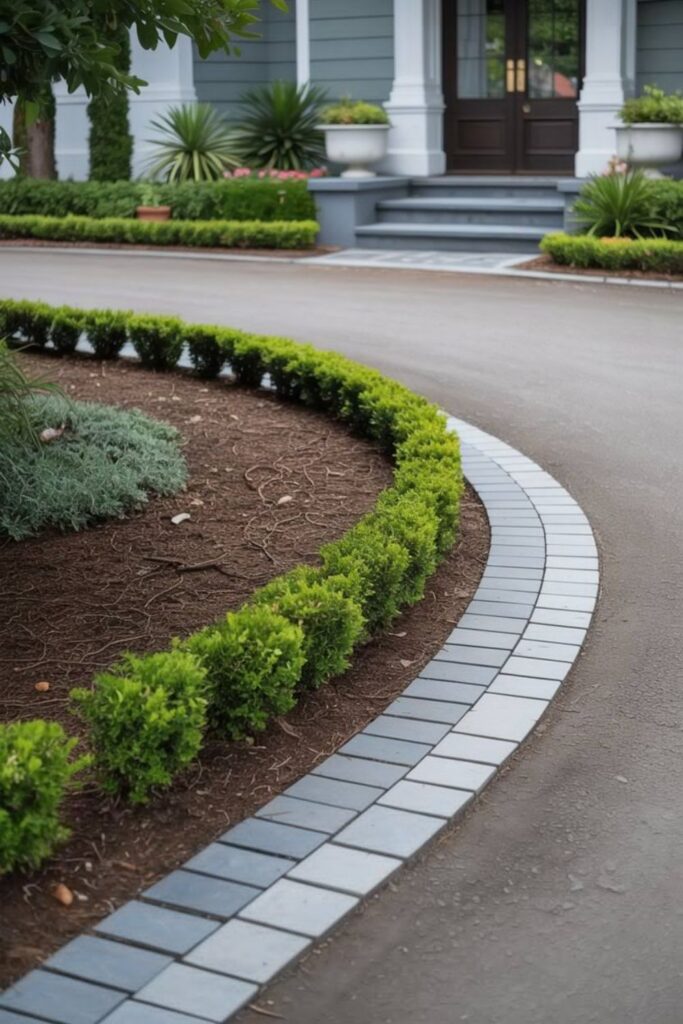
Driveway edging defines boundaries while containing plantings and preventing material migration. Material selection impacts aesthetics, durability, and maintenance.
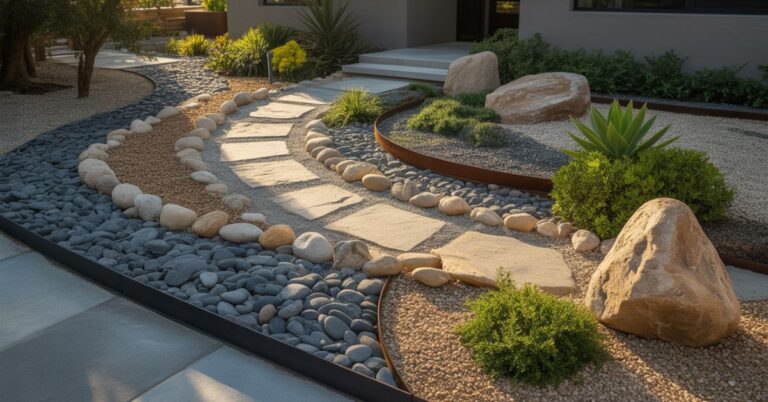
Metal edging in steel or aluminum provides clean, contemporary lines nearly invisible when installed flush with ground level, excellent for modern homes or where edging shouldn’t compete visually. Stone or brick borders create substantial, traditional boundaries complementing classic architecture; mortared installations offer permanence while dry-stack allows flexibility. Concrete curbing poured in place or using pre-formed sections delivers durability and custom shapes following any driveway curve. Plastic or rubber edging offers budget-friendly flexibility bending around curves easily though less substantial than metal or masonry.
Wood timbers or railroad ties suit rustic or cottage styles but require replacement every 7-10 years as they rot. Planted edges using dense ground cover like creeping thyme or mondo grass create living borders requiring no structural materials and works best with defined grade changes preventing lawn creep. Belgian block or cobblestone creates upscale, Old World charm especially effective along circular driveway designs. Consider installation depth edging should extend 4-6 inches below surface preventing shifting from frost heave or root pressure.
What Design Principles Guide Successful Layouts?
Understanding fundamental design concepts prevents common mistakes. Principles applicable to front yard landscaping apply specifically to driveway situations.
Repetition creates cohesion with repeated plant varieties, colors, or materials at intervals along your driveway rather than using everything once. This rhythm guides the eye naturally toward your home. Balance asymmetrical and symmetrical elements appropriately; formal homes suit matched plantings flanking entries while informal styles embrace varied groupings. Scale matters enormously; tree selection must account for mature sizes ensuring specimens don’t overwhelm narrow driveways or interfere with overhead utilities. Layer plantings by height creating depth taller shrubs or small trees in back, medium perennials or grasses mid-level, low ground cover in front.
Consider sightlines from inside vehicles, plantings at driveway entrance areas shouldn’t block visibility when pulling onto streets creating dangerous blind spots. Create transition zones where driveway meets street and where it reaches your home these critical junctions deserve special attention through specimen plants or decorative elements. Incorporate curves in bed edges rather than straight lines parallel to pavement gentle curves feel more natural and visually interesting. Mass plantings of single species create greater impact than scattered individual specimens.
How Do You Handle Long Driveway Landscaping?
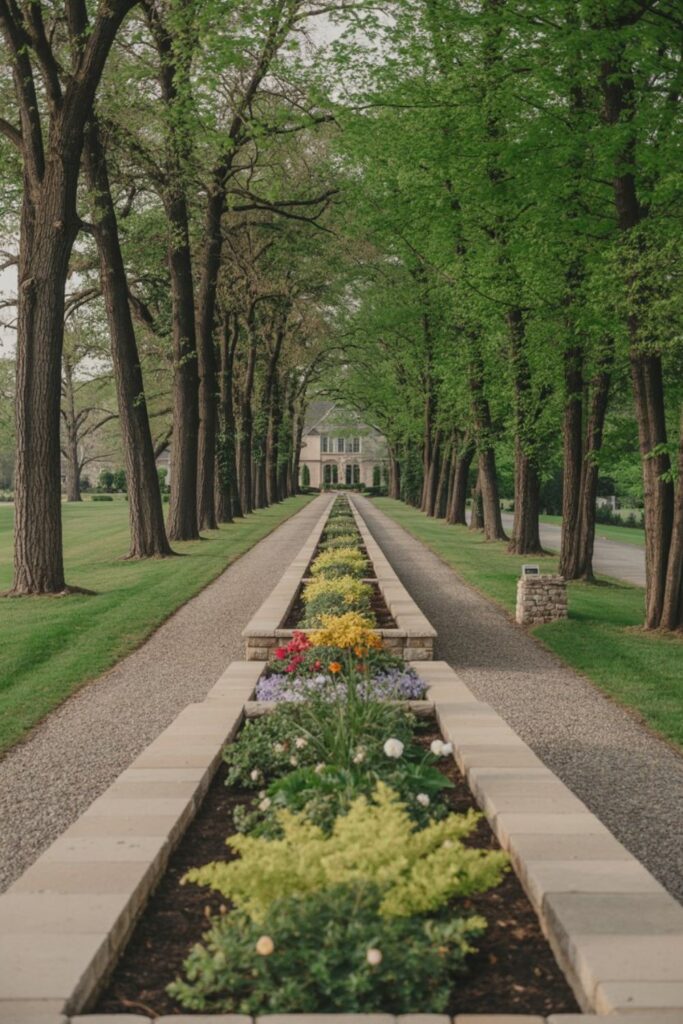
Long driveway ideas require strategies preventing monotony while managing costs across extended distances. Thoughtful approaches create interest throughout the journey.
Anchor both ends with substantial plantings, impressive entrance displays and attractive arrival areas at your home with simpler treatments between. This bookend strategy delivers impact where it matters most without budget-breaking plant quantities. Create rhythm through repeated groupings at intervals rather than continuous borders clusters of three to five identical plants spaced along the length provide cohesion without overwhelming. Incorporate specimen trees strategically placed to frame views and provide shade without interfering with snow removal or maintenance access.
Alternate sides placing plantings on left for one section, right for the next preventing tunnel-like feelings from continuous parallel borders. Use flowering trees like crabapples, redbuds, or ornamental cherries spaced 30-40 feet apart creating seasonal focal points. Ornamental grasses work exceptionally well for long driveways offering low maintenance, movement, and four-season interest. Consider sight line management: tall plantings at curves hide what’s ahead creating pleasant reveals rather than exposing the entire length immediately. Mulched beds with strategic plantings cost less than continuous planting while still defining edges and suppressing weeds.
What Solutions Work for Circular Driveway Designs?
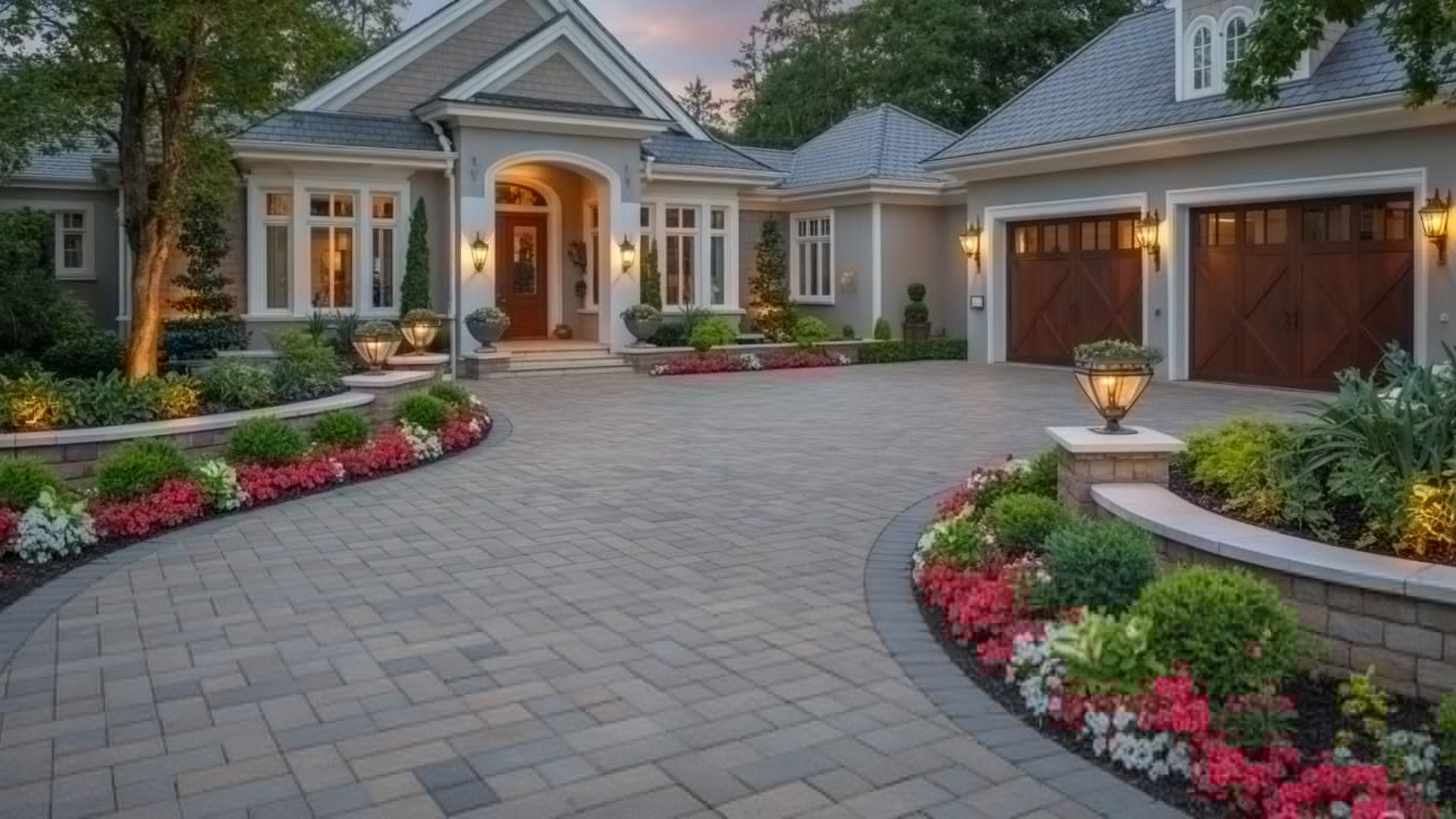
Circular driveway landscaping presents unique opportunities and challenges. Center island plantings anchor designs while perimeter borders frame the feature.
Island plantings serve as focal points visible from multiple angles select specimens maintaining attractive appearance from all sides rather than traditional “front and back” orientations. Evergreen options like dwarf conifers, hollies, or boxwood provide year-round structure. Flowering trees such as Japanese maples, crabapples, or magnolias deliver seasonal drama. Consider mature sizes carefully, islands often appear larger during installation than they actually are once plants grow. Avoid anything exceeding 15-20 feet at maturity in typical residential circles.
Multi-season interest matters tremendously since these plantings receive constant attention combining spring bulbs, summer perennials, fall color, and winter structure. Perimeter borders can be more substantial since they’re viewed primarily from one direction. Maintain clear sightlines for vehicles navigating the circle, tall plantings that block views create dangerous situations. Consistent edging around both inner and outer circles creates a polished definition. Lighting becomes especially important highlighting the island feature at night uplighting specimen trees creates dramatic effects.
Read More About: 23+Patio Decorating Ideas Apartments for styling outdoor
How Do You Select Appropriate Trees?
Tree selection dramatically impacts long-term success and safety. Poor choices cause expensive problems while appropriate specimens enhance for decades.
Consider mature size obsessively that cute 5-foot nursery specimen reaches 40-60 feet creating massive problems if planted too close to pavement or utilities. Research specific cultivar heights since significant variation exists within species. Root behavior matters equally to avoid silver maples, willows, poplars, and other aggressive rooters that heave pavement and infiltrate pipes. Better choices include serviceberry, hornbeam, ginkgo, and ornamental pears with less invasive roots. Evaluate form carefully narrow upright varieties like columnar maples suit tight spaces while spreading forms need adequate width.
Deciduous versus evergreen decisions depend on goals: deciduous provide shade and seasonal change while evergreens offer year-round screening and structure. Consider drop habits fruiting trees create maintenance issues and sidewalk hazards while others drop minimal debris. Salt tolerance matters for driveway locations where deicing materials apply honey locust and pin oak handle salt better than sugar maples or dogwoods. Growth rate affects timeline fast-growing trees deliver quicker impact but often have weaker wood and shorter lifespans while slow-growers take patience but last longer.
What Ground Cover Options Prevent Weeds?
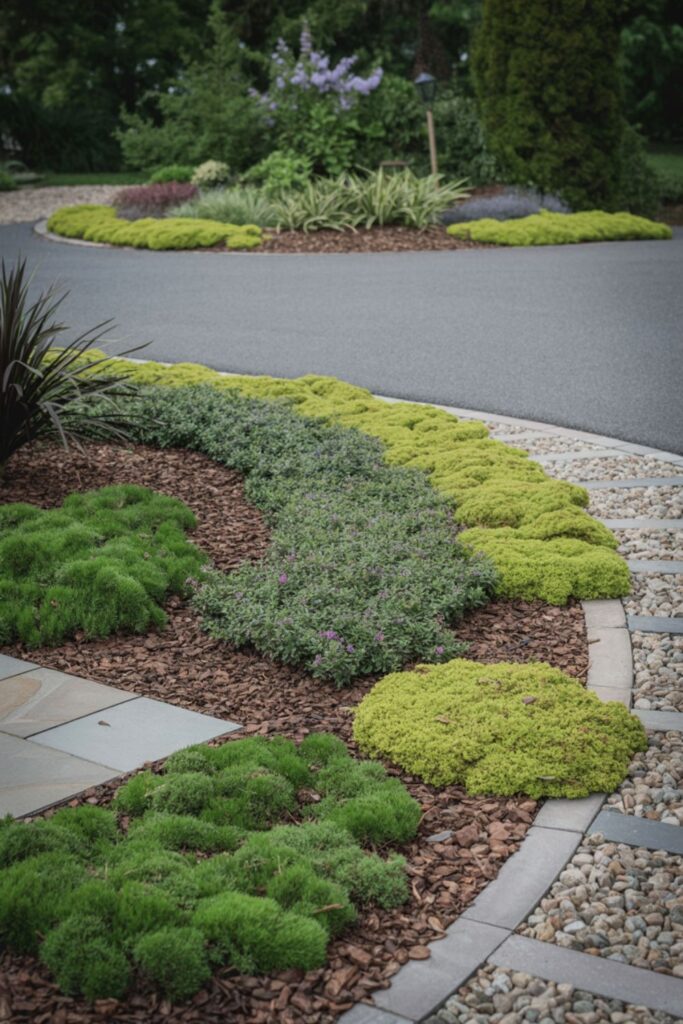
Ground cover plants suppress weeds while reducing bare soil erosion. Low-growing spreaders require less maintenance than repeatedly mulching bare ground.
Creeping thyme handles light foot traffic tolerance while releasing pleasant fragrance when brushed, excellent for driveway edges where people occasionally walk. Periwinkle (vinca) spreads aggressively in shade creating dense mats that nothing penetrates perfectly for problem slopes. Pachysandra thrives in shade offering glossy evergreen foliage requiring virtually zero maintenance once established. Creeping juniper varieties spread horizontally providing evergreen coverage in full sun with excellent drought tolerance. Sedum species like ‘Angelina’ or ‘Dragon’s Blood’ deliver succulent foliage and colorful blooms in harsh conditions.
Sweet woodruff carpets shaded areas with delicate leaves and spring flowers while tolerating dry shade few plants accept. Ajuga forms evergreen rosettes with blue, pink, or white flower spikes handling sun or shade. Mondo grass creates grass like texture without mowing in dense clumps that expand slowly. Creeping phlox delivers spring color explosions cascading over edges or slopes. Avoid ivy which becomes invasive and damages structures tempting but problematic long-term. Plant ground cover densely initially for faster coverage inadequate spacing allows weeds to establish before the canopy closes.
How Do You Address Drainage Issues?
Drainage solutions prevent water damage to driveways and landscaping. Proper water management protects investments while supporting healthy plantings.
Evaluate current water flow during heavy rain identifying where water collects, runs across pavement, or erodes soil. Address grading first surfaces should slope away from structures at minimum 2% grade (1/4 inch per foot). Swales or shallow vegetated channels direct water along driveway edges preventing pavement flow. French drains using perforated pipe in gravel-filled trenches intercept subsurface water preventing saturation. Dry creek beds combine drainage function with decorative appeal using river rock and boulders in naturalistic arrangements. Rain gardens positioned where runoff naturally flows utilize water-loving plants filtering and absorbing excess moisture.
Permeable pavers in border areas allow water infiltration rather than runoff. Catch basins collect surface water directing it to storm drains or designated discharge areas. Channel drains installed along driveway edges intercept sheet flow before it crosses pavement. Proper mulching helps by increasing soil infiltration and reducing runoff velocity. Avoid plantings in areas with standing water unless specifically selecting water-tolerant species most driveway plants prefer well-drained conditions.
What Seasonal Maintenance Do Driveways Need?
Regular maintenance requirements preserve beauty and prevent small issues becoming expensive problems. Seasonal routines keep driveway landscaping looking intentional.
Spring tasks include edging beds, redefining crisp lines, removing winter debris, cutting back perennial growth, and applying fresh mulch maintaining 2-3 inch depths. Divide overcrowded perennials and prune shrubs according to bloom timing. Assess winter damage replacing any plants that didn’t survive cold. Apply pre-emergent weed control in early spring before soil temperatures warm. Check edging integrity resetting any shifted sections. Summer focuses on watering during dry spells; new plantings need consistent moisture while established specimens tolerate some drought.
Deadhead spent blooms encouraging continued flowering. Monitor for pest and disease issues addressing problems early. Trim back overgrown plants encroaching on pavement. Spot-treat weeds promptly before they seed. Fall brings leaf removal, preventing smothering of low plantings and slippery pavement hazards. Cut back perennials after frost or leave ornamental grasses standing for winter interest. Plant spring bulbs for next year’s color. Apply winter fertilizer to trees and shrubs. Extend bed edges if settling has occurred. Winter requires minimal intervention but monitor snow piles avoiding burying plants or mounding excessive salt-laden snow on plantings.
How Do You Landscape Steep Driveway Slopes?
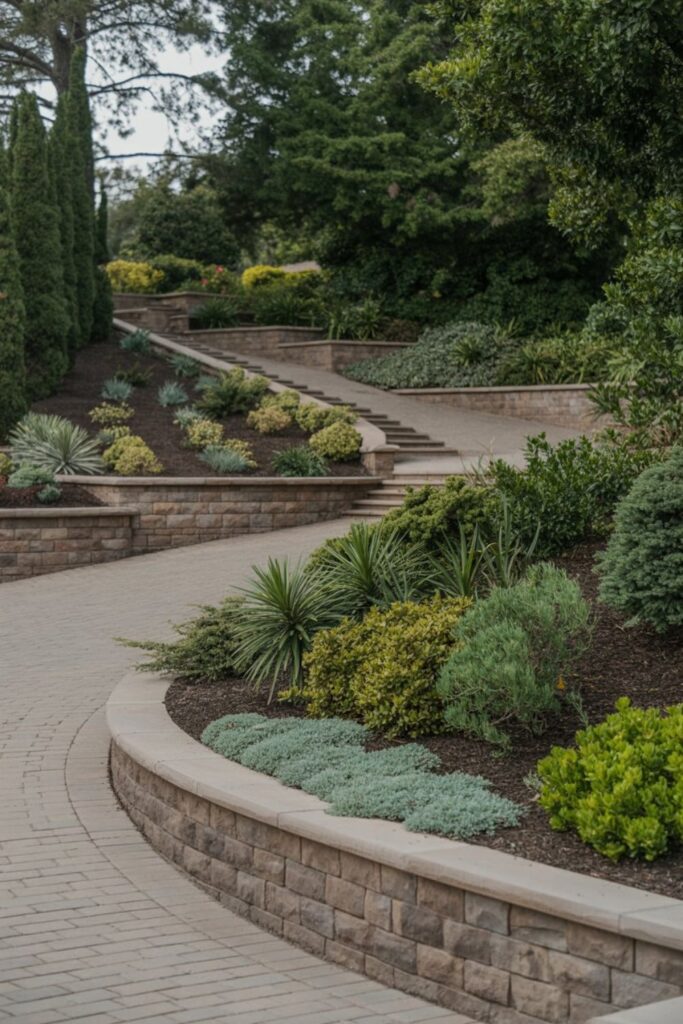
Sloped driveways present erosion control challenges requiring specialized approaches. Strategic solutions stabilize soil while creating terraced interest.
Ground cover plants with extensive root systems hold soil effectively, crown vetch, daylilies, or ornamental grasses grab slopes while looking attractive. Terracing using retaining walls creates level planting areas on severe grades. Short walls in series look more natural than single tall walls. Incorporate boulders partially buried into slopes providing visual interest and physical barriers slowing water flow. Plant shrubs and perennials in staggered patterns rather than rows offsets create better erosion control and more naturalistic appearance. Erosion control fabric or jute netting stabilizes slopes during plant establishment preventing washout.
Avoid heavy mulch on steep grades where it slides downhill and use shredded bark that knits together better than chunks. Create shallow swales angled across slopes directing water sideways rather than allowing straight downhill flow gaining erosive velocity. Deep-rooted perennials like coneflowers and black-eyed Susans stabilize better than shallow-rooted annuals. Consider native plants adapted to your region’s rainfall patterns and these established root systems faster. Install plants in staggered holes creating small terraces rather than following slopes exactly. Water slowly and frequently during establishment allows absorption rather than runoff.
What Lighting Enhances Driveway Landscaping?
Strategic lighting extends viewing pleasure while improving safety. Illumination showcases plantings and invested effort creating.
Path lights along driveway edges define boundaries while guiding safe navigation after dark solar options simplify installation eliminating wiring. Uplighting positioned at specimen tree bases creates dramatic shadows and highlights interesting bark or structure. Spotlights focused on feature plantings at driveway entrance areas emphasize arrivals. Downlighting from trees or structures mimics moonlight while providing ambient illumination. Bollard lights offer modern clean lines in contemporary designs.
Well lights recessed into ground level shine upward without visible fixtures excellent for minimalist aesthetics. Landscape lighting should use warm color temperatures (2700-3000K) that complement plantings rather than harsh cool whites appearing institutional. LED technology offers energy efficiency and decades of service without bulb replacement. Low-voltage systems provide safety and easier DIY installation than line voltage options. Create layers using multiple light types at varied heights building dimensions.
How Do You Incorporate Hardscape Elements?
Hardscaping complements plantings adding structure and functionality. Strategic integration creates cohesive designs rather than disconnected elements.
Decorative boulders positioned at driveway entrance areas or curves make strong statements requiring zero maintenance select sizes proportional to space avoiding overwhelm. Retaining walls address grade changes while providing level planting terraces natural stone, concrete block, or timber suit different styles. Decorative pavers or stone insets in driveway surface add visual interest breaking monotonous expanses Belgian block, brick, or contrasting concrete create patterns.
Columns or pillars flanking entrances establish grand impressions framing views toward homes match materials to home’s exterior. Garden walls along driveway sides define boundaries elegantly while potentially incorporating built-in lighting or mailbox integration. Stone veneer applied to concrete or block edging upgrades basic borders into upscale statements. Pergolas or arbors over driveway entrances create architectural moments signaling arrival supports plantings like wisteria or climbing roses. Decorative gates where driveways meet streets provide security and elegance though check HOA restrictions. Dry stacked stone walls offer informal rustic charm without mortar commitment.
Read More About: Patio Decorating Ideas for a Cozy, Inviting Outdoor Space
Budget-Friendly Options Deliver Impact?
Limited budgets shouldn’t prevent attractive driveway landscaping. Strategic approaches deliver impressive results without financial strain.
Focus investment on highly visible areas like driveway entrance zones and views from your home’s main windows acceptable simplicity between these anchors. Start small expanding annually as budgets allow rather than attempting complete installations immediately. Grow plants from seed or cuttings where possible many perennials and ornamental grasses propagate easily. Purchase small specimens over large ones they establish better and cost substantially less despite slower initial impact. Shop end-of-season nursery sales when retailers clear inventory at 50-75% discounts. Join plant swaps through garden clubs exchanging divisions with other gardeners at zero cost. Use free mulch from municipal programs many communities offer composted materials to residents.
DIY installation rather than hiring contractors driveway edging and planting require basic skills and sweat equity not expensive expertise. Prioritize perennials over annuals eliminating annual replacement costs initial investment pays dividends for years. Choose native plants requiring less water, fertilizer, and pest control than exotic introductions. Repurpose materials like fieldstone collected from your property or broken concrete as edging. Propagate successful plants dividing them as they mature rather than purchasing additional specimens. Focus on structure through evergreens requiring single purchase versus flowers needing repeated seasonal plantings.
FAQs
What are the best low-maintenance plants for driveways?
Evergreen shrubs like boxwood and holly, ornamental grasses including fountain grass and blue fescue, and drought-tolerant plants such as sedum and Russian sage require minimal care once established. Native species adapted to your region typically need less intervention than exotic varieties. Ground cover like creeping thyme or pachysandra suppresses weeds while requiring infrequent maintenance.
How far should trees be planted from driveways?
Plant trees at least half their mature spread distance from pavement edges; a tree spreading 30 feet needs a minimum 15-foot setback. This prevents root systems from heaving pavement while allowing adequate growing space. Consider overhead clearances for utility lines requiring 25-40 foot spacing under power lines. Select trees with non-invasive roots near paved surfaces.
What type of edging works best for driveways?
Metal edging offers clean contemporary lines and durability, stone or brick creates traditional substantial borders, while plastic provides budget-friendly flexibility. The best driveway edging matches your home’s architecture and existing hardscaping materials while fitting your budget. Install 4-6 inches deep preventing frost heave and maintaining position through seasons.
How do I prevent driveway plants from damaging pavement?
Select species with non-invasive root systems avoiding aggressive spreaders like willows, silver maples, or bamboo. Maintain proper spacing requirements keeping plants at least 3-4 feet from pavement edges. Install quality edging preventing root encroachment. Choose shallow-rooted perennials and ground cover rather than deep-rooted trees near paved surfaces.
What plants add year-round interest to driveways?
Combine evergreen shrubs for winter structure, spring-blooming bulbs and flowering trees, summer perennials like coneflowers, fall color from deciduous shrubs, and ornamental grasses providing movement and texture through all seasons. This layered approach ensures your driveway landscaping maintains visual appeal regardless of season rather than looking barren during winter months.
Conclusion
Strategic driveway landscaping elevates your home’s entire presentation transforming utilitarian passages into designed features that enhance curb appeal and property value. Success emerges from understanding fundamental principles including appropriate plant selection, proper spacing requirements, effective drainage solutions, and coordination between plantings and hardscaping elements. Whether addressing long driveway ideas requiring rhythm and focal points or circular driveway designs demanding specimens beautiful from all angles, thoughtful planning prevents expensive mistakes while creating lasting beauty.
The most effective approaches layer evergreen shrubs providing year-round structure with seasonal color from perennials and flowering plants, ornamental grasses adding movement and texture, and strategic ground cover suppressing weeds while stabilizing soil. Proper driveway edging defines boundaries cleanly while appropriate tree selection considers mature sizes and root behavior preventing future pavement damage. Your driveway represents the primary approach to your home deserving the same design attention as front yard landscaping or garden beds. The investment in creating polished, welcoming driveway plantings pays immediate returns through enhanced daily enjoyment while protecting long-term financial interests through maintained property values and that critical positive first impression.