Fabulous Fall Centerpiece Stunning Table Décor Ideas

Your dining table looks bare. Guests arrive for Thanksgiving dinner in three days, and the empty space between place settings screams “unfinished.” You’ve spent hours perfecting the menu, but the table itself lacks the warm, festive atmosphere that makes autumn gatherings feel special.
Scrolling through Pinterest overwhelms you with elaborate arrangements featuring exotic flowers, expensive vases, and complicated techniques that seem beyond your skill level. You worry that anything you create will look amateur compared to the magazine-worthy spreads filling your social media feed. Time ticks away while indecision paralyzes your decorating efforts.
The solution starts with understanding that a fabulous fall centerpiece relies on accessible materials and proven design principles rather than professional florist skills. This guide reveals how to create stunning autumn table decor using grocery store flowers, backyard findings, and items already in your home. You’ll learn foolproof formulas for arranging elements that deliver visual impact without blocking conversation or overwhelming your table, plus budget-friendly alternatives to expensive seasonal stems.
What Makes a Fall Centerpiece Fabulous Instead of Ordinary?
A fabulous fall centerpiece captures autumn’s essence through strategic use of color scheme, texture, and scale that feels intentional rather than random. The best arrangements tell a cohesive story whether rustic harvest, elegant sophistication, or cozy farmhouse through carefully selected elements that complement each other and your table setting.
Successful autumn table decor balances visual interest with practical function. Centerpieces should enhance conversation rather than obstruct it, staying below 12-14 inches tall or using narrow vertical elements that don’t block sightlines across the table. This height restriction ensures guests see each other comfortably, preventing the frustration of leaning around massive arrangements to engage with dinner companions.
Understanding the Psychology of Fall Table Décor
Seasonal table arrangements trigger emotional responses tied to memory and tradition. Warm color schemes featuring orange, burgundy, and gold activate feelings of comfort and abundance associated with harvest celebrations. Natural materials like wood, burlap, and dried elements create tactile richness that makes spaces feel inviting and grounded in nature’s cycles.
The most effective thanksgiving centerpiece designs incorporate multiple sensory elements beyond just visual appeal. Cinnamon sticks, eucalyptus branches, or fresh herbs add subtle fragrance that enhances the dining experience. Varied textures, smooth pumpkins beside rough bark, glossy berries near matte foliage create tactile interest that makes arrangements feel layered and complex even when using simple components.
How Do You Choose the Right Size Centerpiece for Your Table?
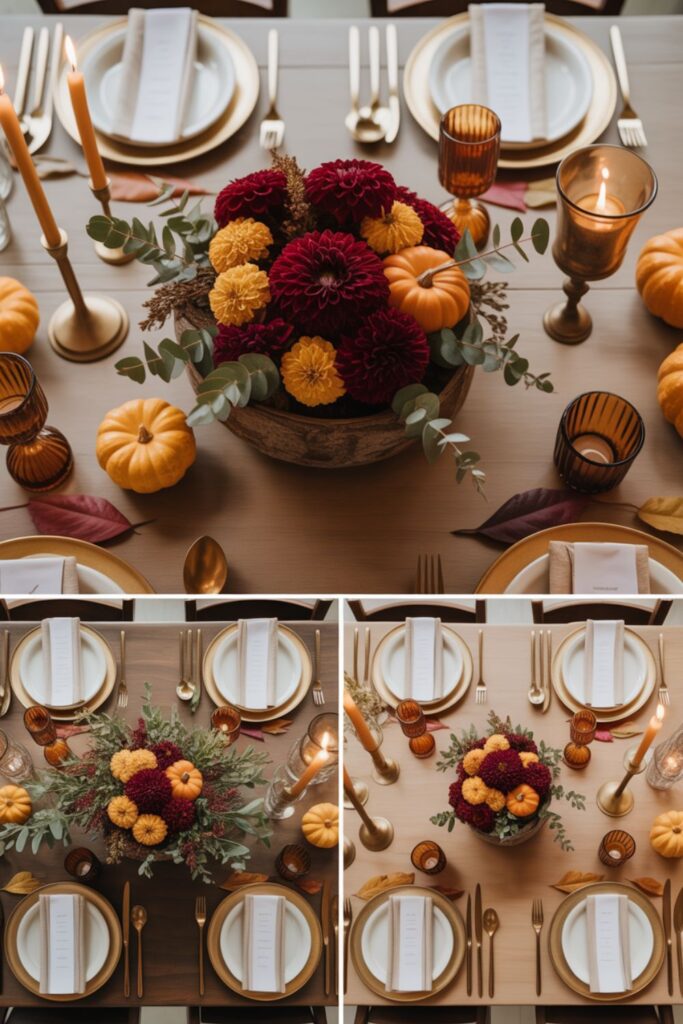
Scale proportion determines whether your arrangement enhances or overwhelms the table. A centerpiece should occupy no more than one-third of the table dimensions, leaving adequate space for place settings, serving dishes, and elbow room. For a standard 6-foot rectangular table, aim for arrangements 18-24 inches long, with smaller or larger tables requiring proportional adjustments.
Round tables present different challenges than rectangular ones. Circular arrangements work best for round tables, with diameter roughly one-third the table’s diameter. For a 48-inch round table, a centerpiece 14-16 inches across maintains proper visual balance without crowding diners or leaving awkward gaps between the arrangement and place settings.
Adapting Designs for Different Table Shapes
Long rectangular tables benefit from either one substantial centerpiece at the center or a series of smaller repeated arrangements running the table’s length. The multiple-arrangement approach, called a “tablescape,” uses 3-5 identical or coordinating elements spaced evenly down the table. This technique works beautifully for Thanksgiving tables seating 10-12 people where a single centerpiece would need to be enormous to fill the space proportionally.
Narrow console tables and buffets require linear arrangements rather than circular designs. Create shallow, elongated rustic table decor that runs parallel to the table edge, maximizing visual impact within limited depth. Use long, low containers like wooden troughs or rectangular vessels that complement the table’s proportions rather than fighting against them.
Accounting for Overhead Lighting and Chandeliers
Consider vertical space constraints imposed by lighting fixtures. Centerpieces placed directly beneath chandeliers or pendant lights need additional height clearance beyond the standard 12-14 inch guideline. Maintain at least 30-36 inches between the tallest centerpiece element and the bottom of light fixtures to prevent cramped visual relationships that make spaces feel cluttered.
Read More About: Front of House Shrubs Transform Your Curb Appeal
What Are the Essential Elements of Every Fabulous Fall Centerpiece?
Professional-looking DIY fall centerpieces combine three core components: a focal point element, supporting layers, and finishing details. This formula works regardless of style preference from elaborate floral arrangements to simple natural displays providing structure that eliminates guesswork while allowing creative expression.
The focal point serves as your arrangement’s anchor, typically the largest, most dramatic, or most colorful element that immediately draws the eye. In harvest decorations, this might be an oversized heirloom pumpkin, a dramatic candelabra, or a lush floral cluster. Position this element slightly off-center for more dynamic, natural-looking compositions compared to rigidly centered placements.
Building Supporting Layers for Depth
Supporting elements create the arrangement’s body, filling space around the focal point element with complementary items at varied heights. These might include medium-sized pumpkins, pillar candles, fruit clusters, or flower groupings that echo colors from the focal point. Use odd numbers (3, 5, 7) of supporting elements for more pleasing visual rhythm than even-numbered groupings.
Texture layers add complexity that separates amateur arrangements from sophisticated designs. Combine smooth with rough, matte with shiny, and solid with transparent. Place glossy pomegranates near textured pinecones, or position smooth ceramic vessels beside rough burlap ribbon. These contrasts create visual interest that makes simple arrangements feel intentional and well-designed.
Adding Finishing Details That Complete the Look
Finishing touches include small elements that fill gaps and add polish scattered leaves, berries, nuts, or moss that bridge spaces between larger components. These details create visual flow connecting individual elements into cohesive holes. Tuck small items around bases of candles or nestle them between pumpkins to eliminate empty spots that make arrangements look sparse.
Natural materials like twigs, seed pods, and dried grasses add organic texture while extending arrangement height without blocking views. Insert tall, narrow elements like wheat stalks or branches into arrangements to draw the eye upward without creating visual barriers across the table. These vertical accents add drama and dimension without sacrificing the conversational openness that makes centerpieces functional.
What Color Schemes Create the Most Stunning Fall Centerpieces?
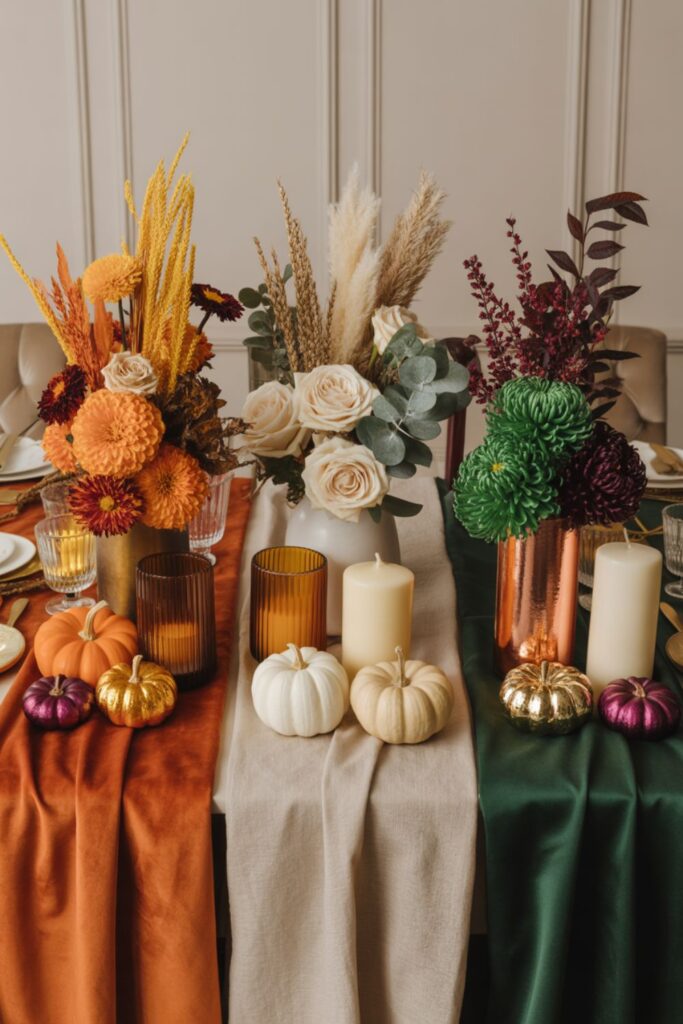
Color scheme selection transforms random objects into cohesive autumn table decor. Fall offers diverse palettes beyond expected orange-and-brown combinations, allowing you to match centerpieces to existing décor, dinnerware, and personal style preferences while maintaining seasonal appropriateness.
The classic harvest palette combines warm oranges, deep reds, golden yellows, and chocolate browns that echo autumn foliage. This traditional color scheme feels immediately seasonal and pairs naturally with most dining room décor. Use various shades within this range from pale peach to burnt orange, soft gold to deep amber to create depth and prevent flat, one-dimensional arrangements.
Exploring Sophisticated Neutral Palettes
Neutral elegant autumn displays featuring cream, white, beige, and natural wood tones deliver refined sophistication perfect for formal dining rooms. White pumpkins, cream-colored candles, bleached wheat stalks, and pale dried hydrangeas create monochromatic elegance that feels fresh and modern. Add metallic accents in gold, copper, or bronze to prevent neutral arrangements from feeling washed out or sterile.
This restrained approach works beautifully when your dinnerware or table linens already feature bold colors or patterns. Neutral centerpieces allow those elements to shine rather than competing for attention. The subtlety also transitions seamlessly from early fall through Thanksgiving into winter holidays with minimal adjustment.
Creating Drama with Jewel-Toned Arrangements
Rich jewel tones, deep plum, emerald green, sapphire blue, and ruby red create luxurious fabulous fall centerpiece options that feel opulent and unexpected. Burgundy dahlias, deep purple asters, navy blue accents, and rich green foliage combine for sophisticated arrangements that work particularly well in formal dining spaces. These saturated colors read as autumnal without being predictable.
Balance intensity by incorporating neutral elements that prevent jewel-toned arrangements from overwhelming tables. Pair deep colors with natural wood containers, cream candles, or soft gray-green eucalyptus. This moderation allows rich colors to make statements without dominating the entire visual field.
Incorporating Metallics for Glamorous Shine
Metallic accents elevate simple arrangements into special-occasion centerpieces. Gold spray-painted pumpkins, copper candleholders, silver mercury glass vessels, or rose gold flatware create glamorous touches that catch candlelight beautifully. Use metallics as accents rather than dominant elements, one metallic pumpkin among natural ones, or gold-rimmed candles beside plain pillars.
Mix metal finishes carefully to avoid visual confusion. Stick with one dominant metal (gold, silver, or copper) and limit secondary metals to small accent pieces. This discipline maintains cohesion while adding the reflective shimmer that makes thanksgiving centerpiece arrangements feel festive and celebratory.
How Do You Create Budget-Friendly Fall Centerpieces That Look Expensive?
Stunning DIY fall centerpieces don’t require florist budgets. Strategic shopping, creative repurposing, and focusing investment on key elements produces impressive results at a fraction of professional arrangement costs. Smart planning transforms dollar-store finds and backyard findings into centerpieces guests assume cost hundreds.
Shop grocery store floral departments rather than specialty florists for massive savings. Mums, sunflowers, and mixed bouquets cost 60-80% less at supermarkets while offering similar quality. Purchase flowers 2-3 days before your event, allowing time for blooms to fully open. Strip lower leaves, cut stems at angles, and immediately place in fresh water to maximize longevity.
Foraging Natural Elements from Your Yard
Natural materials collected from your property cost nothing while adding authentic seasonal character. Colorful fallen leaves, interesting branches, pinecones, acorns, seed pods, and berries provide abundant free materials. Preserve leaves by pressing them between heavy books for 1-2 weeks, or coat them with clear acrylic spray to maintain color and prevent brittleness.
Walk wooded areas or parks (where collecting is permitted) to gather moss, interesting bark pieces, or unusual twigs. These foraged elements add organic texture that money can’t buy; they look collected and curated rather than generic and store-bought. Combine them with a few purchased flowers or pumpkins for arrangements that feel expensively custom-designed.
Repurposing Household Items as Containers
Rustic table decor containers hide in your kitchen cabinets. Wooden cutting boards serve as bases for arrangements, vintage pitchers become flower vessels, and glass food storage containers turn into candle holders when filled with cranberries or dried beans. Mason jars wrapped in burlap ribbon or twine create charming farmhouse-style vases at zero cost.
Scout thrift stores for mismatched brass candlesticks, vintage trays, wooden bowls, or ceramic vessels that gain new life as centerpiece components. Patina and wear add character that brand-new items lack. Spray paint dated pieces in metallic gold or copper to update their appearance while maintaining interesting shapes and textures.
Stretching Flowers with Strategic Placement
Make expensive flowers go further by combining them with abundant filler materials. One $15 bouquet of premium roses or dahlias provides sufficient focal point elements when surrounded by inexpensive greenery, branches, or non-floral items like pumpkins and candles. This approach concentrates investment on showstopping blooms while using affordable materials for mass and volume.
Choose flowers with multiple blooms per stem like spray roses, asters, or hypericum berries. These varieties offer more visual impact per dollar than single-bloom stems. Cut multi-bloom stems apart to spread flowers throughout arrangements, making six stems look like twelve or fifteen individual placements.
What Are the Best Containers for Fall Centerpiece Arrangements?
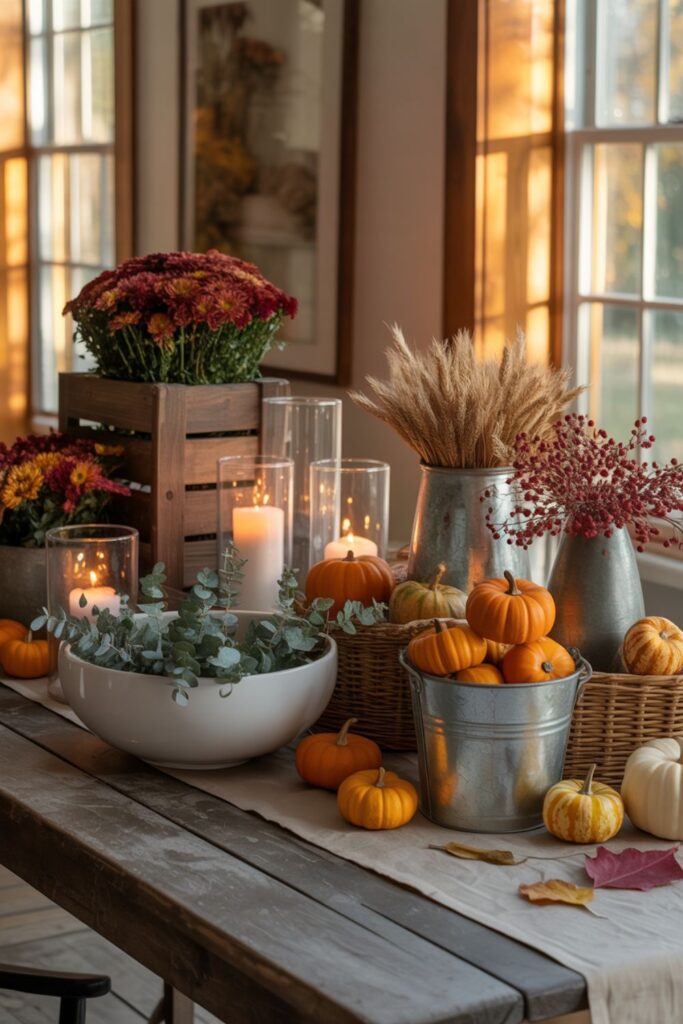
Container selection influences both aesthetic and practical aspects of your fabulous fall centerpiece. The right vessel complements your style, provides adequate water capacity for fresh elements, and achieves appropriate scale proportion relative to your arrangement size and table dimensions.
Low, wide vessels work beautifully for sprawling arrangements incorporating pumpkins, candles, and scattered elements. Rectangular wooden troughs, shallow ceramic bowls, or wide wicker baskets create farmhouse-style bases perfect for rustic table decor. Their low profile maintains proper height restrictions while providing substantial surface area for layered compositions.
Exploring Vertical Container Options
Tall vessels like urns, trumpet vases, or vintage pitchers suit arrangements dominated by fresh flowers or tall branches. These containers add necessary height for dramatic seasonal table arrangements while providing deep water reservoirs that keep fresh elements hydrated. Balance tall containers by adding low elements around bases scattered votives, small pumpkins, or loose foliage that visually anchor arrangements to table surfaces.
Cylinder vases offer versatile middle ground between low bowls and tall urns. Their straight sides showcase submerged elements like cranberries, wheat stalks, or citrus slices that add interest beyond just flowers. Stack multiple cylinder vases at varying heights for modern, architectural elegant autumn displays that feel sophisticated and gallery-worthy.
Using Non-Traditional Vessels Creatively
Think beyond standard vases for memorable centerpieces. Hollowed pumpkins and gourds become temporary containers perfect for thanksgiving centerpiece arrangements. Cut tops off medium or large pumpkins, scoop out seeds and pulp, line interiors with plastic to prevent leaking, and fill with water and flowers. These living vessels last 1-2 weeks before pumpkin deterioration affects the arrangement.
Vintage finds like enamelware, wooden crates, metal toolboxes, or ceramic crocks add personality that manufactured vases lack. Their irregular shapes and aged patinas contribute character that elevates simple arrangements into distinctive statements. Ensure non-traditional containers either hold water safely or incorporate hidden vessels inside that provide proper hydration for fresh materials.
Considering Material and Finish Impact
Container materials dramatically affect overall style. Clear glass creates modern, clean aesthetics while showcasing submerged decorative elements. Ceramic and pottery feel traditional and warm, especially in earth tones or reactive glazes. Metal vessels brass, copper, or galvanized steel add industrial edge or vintage charm depending on finish and form.
Match container finish to your overall color scheme and style direction. Matte finishes feel casual and approachable, while glossy glazes add formality. Distressed or aged finishes support rustic table decor themes, whereas pristine surfaces suit elegant autumn displays. This attention to material relationships creates visual cohesion that makes arrangements feel professionally designed.
How Do You Incorporate Candles Safely into Fall Centerpieces?
Candles add romantic ambiance and warm illumination that transforms autumn table decor from daytime arrangements into evening focal points. Strategic placement and proper candle safety precautions ensure beautiful effects without fire hazards or wax damage to linens and furniture.
Choose unscented or lightly scented candles for dining table centerpieces. Strong fragrances compete with food aromas and can trigger headaches or allergies in sensitive guests. If you prefer scented options, limit them to subtle autumn scents like vanilla, cinnamon, or apple that complement rather than overpower meal fragrances.
Selecting Appropriate Candle Heights and Styles
Pillar candles in varying heights create dramatic visual interest when clustered in groups of three or five. Use the tallest pillars (8-10 inches) sparingly, positioning them where they won’t block sightlines across narrow tables. Combine tall pillars with shorter ones (4-6 inches) and votives to create layered lighting effects that illuminate without obstructing.
Taper candles in candlesticks add elegant height when placed strategically. Position them at table ends or corners where they provide light without interfering with cross-table conversation. Choose candlesticks in heights that elevate tapers above the 14-inch sightline threshold, making flames visible but not view-blocking. This placement delivers ambiance while respecting functional table requirements.
Creating Safe Arrangements with Open Flames
Maintain minimum 3-inch clearance between candle flames and any flammable materials including dried leaves, paper elements, fabric ribbons, or dried flowers. Fresh, moisture-rich elements like pumpkins and fresh flowers pose less risk but still require reasonable separation. Never leave burning candles unattended, and extinguish them before flames burn below 2 inches from decorative elements.
Use flameless LED candles for completely worry-free alternatives. Modern LED candles feature realistic flicker effects and warm amber lights that mimic real flames convincingly. They work particularly well in arrangements incorporating highly flammable dried materials or when young children attend gatherings. Remote-controlled LED candles allow you to adjust timing and brightness without disturbing finished arrangements.
Protecting Surfaces from Wax Drips
Place candles on protective plates, trays, or coasters that catch wax drips before they damage tables or linens. Small glass plates beneath pillar candles become virtually invisible while providing essential protection. For taper candles, ensure candlesticks include drip catchers or add small glass bobeches that catch melting wax before it runs down stems.
Freeze pillar candles for 24 hours before use to slow burn rates and minimize dripping. This simple trick extends burn time while reducing wax mess. Trim candle wicks to 1/4 inch before lighting longer wicks produce larger flames that generate more heat, accelerating wax melting and increasing drip potential.
What Fresh Flowers Work Best in Fall Centerpiece Designs?
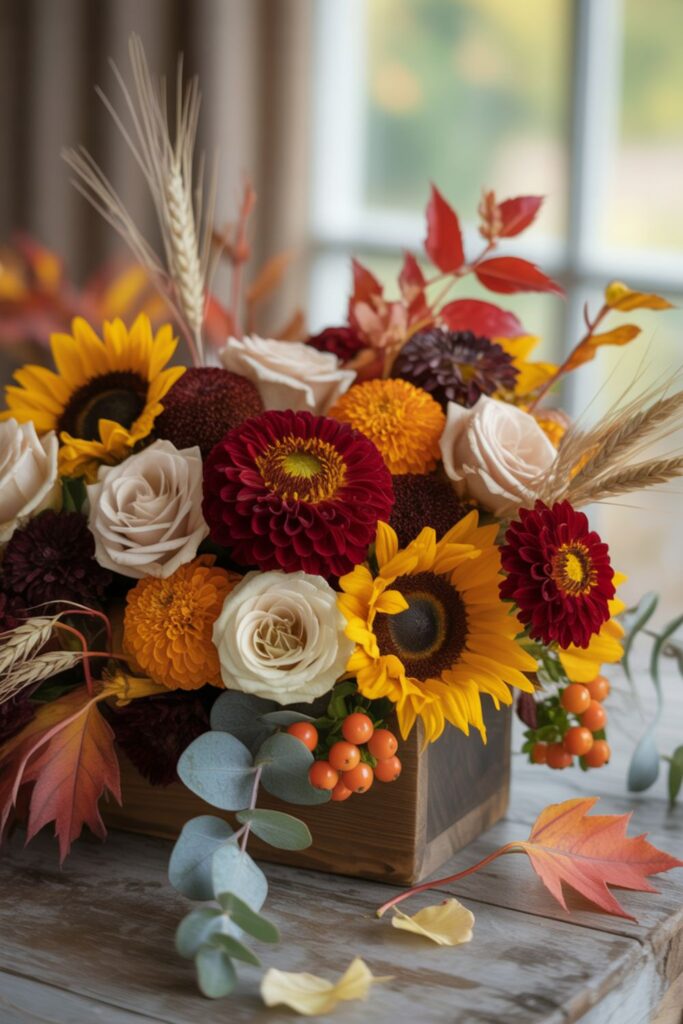
Fresh flowers elevate DIY fall centerpieces from simple to spectacular. Choosing blooms that peak in autumn ensures optimal quality, availability, and pricing while delivering colors and forms that harmonize naturally with seasonal table arrangements.
Chrysanthemums dominate fall flower selections with good reason. Available in burgundy, rust, bronze, gold, and cream, mums offer an incredible color range that spans both traditional and modern color schemes. Their dense, rounded blooms provide substantial visual impact, and they last 7-10 days in arrangements with proper care. Choose button mums for delicate accents or large football mums for bold statements.
Selecting Seasonal Blooms for Maximum Impact
Dahlias deliver drama with dinner-plate-sized blooms in jewel tones perfect for elegant autumn displays. These spectacular flowers last 5-7 days when cut, making them worthwhile splurges for special occasions. Their layered petals create texture and movement that simpler flowers lack. Pair burgundy or coral dahlias with neutral elements to prevent overwhelming arrangements.
Sunflowers provide cheerful golden yellow that captures autumn sunshine. Their bold faces work beautifully in rustic table decor paired with wheat, burlap, and wooden elements. Choose varieties with dark centers and multi-toned petals (yellows with rusty edges) for more sophisticated looks than single-tone bright yellow. Cut sunflowers last 6-8 days, offering excellent value for centerpiece use.
Incorporating Year-Round Flowers with Fall Appeal
Roses remain available year-round but feel especially appropriate in autumn shades. Deep red, burnt orange, peachy coral, and burgundy roses integrate seamlessly into thanksgiving centerpiece designs. Garden roses with ruffled, old-fashioned forms add romantic softness compared to standard hybrid tea roses. Their long vase life (10-14 days) makes them practical choices for arrangements created several days before events.
Carnations deserve reconsideration despite their reputation as budget flowers. Modern spray carnations in deep burgundy, rust, or green add sophisticated texture without carnation’s typical “grocery store flower” associations. Their exceptional longevity (14+ days) and low cost make them smart choices for arrangements needing to last through extended holiday periods.
Adding Textural Interest with Unique Blooms
Celosia’s brain-like or feathery blooms add unusual texture in vibrant reds, oranges, and burgundies. These long-lasting flowers (7-10 days) create focal points that spark conversation. Their unconventional forms pair well with traditional elements, preventing arrangements from feeling too expected or conventional.
Hypericum berries, available in red, burgundy, green, and cream, add pops of color through their clustered berry formations. These filler elements stretch more expensive flowers while contributing substantial visual interest. Their berries last 10-14 days, often outlasting accompanying flowers and allowing you to remove spent blooms while maintaining greenery and berries.
How Do You Create Fabulous Fall Centerpieces for Different Occasions?
Seasonal table arrangements should reflect event formality, guest count, and celebration type. Tailoring designs to specific occasions ensures centerpieces enhance rather than clash with event tone and practical requirements.
Casual family dinners call for relaxed, approachable harvest decorations emphasizing natural materials over formal flowers. Cluster small pumpkins down the table’s center, intersperse pillar candles in varying heights, and scatter colorful leaves or acorns between elements. This unfussy approach creates warmth without formality, perfect for weeknight dinners or casual weekend gatherings.
Designing Centerpieces for Formal Thanksgiving Dinners
Thanksgiving centerpiece designs for formal dinners require more structured compositions with refined color palettes. Use symmetrical arrangements featuring quality fresh flowers in jewel tones or sophisticated neutrals. Incorporate metallic accents through candleholders, chargers, or spray-painted elements that add polish. Keep arrangements low (10-12 inches maximum) to facilitate conversation across tables filled with multiple guests.
Create abundance through layered elements rather than single arrangements. Surround a central floral arrangement with clusters of fruits, nuts in small bowls, and scattered votives that extend visual interest along the table’s length. This approach fills large tables proportionally while maintaining elegant restraint that supports rather than dominates the dining experience.
Crafting Centerpieces for Outdoor Fall Gatherings
Outdoor autumn celebrations need wind-stable arrangements and elements that withstand temperature variations. Use heavy containers weighted with sand or stones to prevent toppling. Choose hardy flowers like mums and sunflowers over delicate varieties that wilt in bright sun. Incorporate substantial natural materials like large pumpkins, heavy branches, or stone elements that won’t blow away.
Skip candles for daytime outdoor events, relying instead on colorful flowers and foliage for visual impact. If your event extends into evening, use LED candles that won’t extinguish in the breeze or glass hurricane lanterns that protect flames. Position arrangements where they enhance ambiance without crowding buffet tables or interfering with food service.
Creating Centerpieces for Halloween-Themed Tables
Halloween centerpieces balance festive fun with table functionality. Use black and orange color schemes sparingly to avoid overwhelming tables. Instead, opt for sophisticated approaches like all-white pumpkins with black candles, or natural elements with just touches of black ribbon or dark purple flowers. This restraint creates seasonal appropriateness without cartoonish excess.
Incorporate themed elements subtly small decorative ravens perched among branches, miniature skulls tucked into arrangements, or black feathers mixed with foliage. These touches acknowledge the holiday while maintaining design sophistication. Avoid large, space-consuming decorations that limit table functionality or make dining awkward.
Read More About: Cute Fall Plant Pot Ideas Creative Container Displays for Autumn Charm
What Are Common Mistakes to Avoid When Creating Fall Centerpieces?
Even experienced decorators make errors that undermine fabulous fall centerpiece potential. Understanding these pitfalls before you start saves time, money, and frustration while ensuring arrangements enhance rather than detract from your table settings.
Creating arrangements too tall for comfortable conversation frustrates guests forced to crane around massive displays. Remember the 12-14 inch maximum height restriction guideline, or use exclusively narrow vertical elements that don’t block horizontal sightlines. Test arrangements by sitting at your table to verify you see clearly across to opposite seats before finalizing designs.
Overcrowding Tables with Too Many Elements
Less often creates more impact than cramming every available surface with decorative items. Overcrowded tables feel cluttered and chaotic rather than elegantly abundant. Leave breathing room around centerpieces at least 12 inches between arrangements and place settings. This negative space allows individual elements to register visually rather than blending into undifferentiated visual noise.
Similarly, resist adding every fall element you own into single arrangements. Choose 3-5 component types (flowers, pumpkins, candles, foliage, and one accent element) rather than including a dozen different items. This discipline creates cohesion and allows each element to contribute distinctly to overall composition.
Ignoring Table Setting and Room Décor
Centerpieces exist within broader contexts that include dinnerware, linens, walls, and furniture. Arrangements that clash with existing elements create visual discord. Consider your dinnerware colors if plates feature blue patterns, orange-dominant centerpieces may clash. Choose complementary or neutral centerpiece colors that harmonize with fixed elements you cannot change.
Account for room style when selecting centerpiece aesthetics. Ultra-rustic harvest decorations featuring burlap and weathered wood feel out of place in formal dining rooms with silk wallpaper and crystal chandeliers. Conversely, sleek modern arrangements look awkward in farmhouse-style spaces. Match centerpiece style to room character for visual coherence.
Neglecting Practical Maintenance Needs
Arrangements incorporating fresh flowers require water access and routine maintenance. Ensure containers hold adequate water and can be refilled without dismantling entire arrangements. Plan for daily water checks and removal of spent blooms if your schedule doesn’t allow this maintenance, choose designs emphasizing permanent elements like pumpkins, candles, and dried materials.
Strongly scented flowers, excessive candle fragrance, or allergen-rich plants like ragweed and goldenrod cause problems for sensitive guests. Choose hypoallergenic options and skip or minimize fragrances in dining table arrangements where they compete with food aromas. This consideration ensures your beautiful centerpiece doesn’t inadvertently make guests uncomfortable.
FAQs
How far in advance can I create my fall centerpiece?
Arrangements using only permanent elements like pumpkins, candles, dried flowers, and branches can be created 1-2 weeks ahead without quality loss. If incorporating fresh flowers, assemble arrangements 1-2 days before your event for optimal freshness. Create the permanent framework early, then add fresh flowers the day before your gathering to combine convenience with peak bloom appearance.
What’s the best height for a dining table centerpiece?
Dining centerpieces should stay below 12-14 inches tall to allow comfortable conversation across the table, or use exclusively tall, narrow elements like taper candles or thin branches that don’t block horizontal sightlines. For buffet tables or sideboards where conversation isn’t a factor, taller arrangements work beautifully. Always test by sitting at your table to verify visibility across to opposite seats.
How do I keep fresh flowers alive longer in centerpieces?
Cut stems at 45-degree angles and immediately place in fresh water with flower food. Change water every 2 days, re-cutting stems each time. Remove spent blooms and foliage below waterlines to prevent bacterial growth. Keep arrangements away from direct sunlight, heating vents, and fruit bowls (fruit releases ethylene gas that accelerates flower aging). These practices extend vase life by 3-5 days.
Can I use artificial flowers in fall centerpieces?
High-quality artificial flowers work beautifully in DIY fall centerpieces, especially when mixed with real elements like pumpkins, branches, or candles. Choose silk flowers over obvious plastic varieties, and select realistic colors rather than overly bright artificial shades. Mix artificial with real foliage or branches for authentic texture. Quality artificial flowers provide reusable investments that work year after year.
What fall centerpiece style works best for long rectangular tables?
Long tables benefit from either one substantial centerpiece at the center or multiple smaller coordinating arrangements spaced along the table’s length. The multiple-arrangement approach prevents the stretched, unbalanced look that single centerpieces create on tables seating 10+ guests. Use identical or very similar arrangements in groups of 3-5, spacing them evenly for continuous visual interest.
How do I incorporate pumpkins without making centerpieces look childish?
Choose sophisticated pumpkin varieties white, blue-gray, or heirloom colors rather than bright orange. Use various sizes together for visual interest, combining large with small rather than all identical. Mix pumpkins with elegant elements like metallic candleholders, quality fresh flowers, or refined vessels. Keep the color scheme sophisticated with jewel tones, neutrals, or metallics rather than cartoonish bright oranges and greens.
Conclusion
A fabulous fall centerpiece transforms ordinary dining into memorable occasions through strategic combinations of color scheme, texture layers, and appropriately scaled elements. Success comes from respecting table dimensions and height restrictions while incorporating natural materials, fresh flowers, and seasonal accents that capture autumn’s rich abundance. Whether you prefer rustic table decor with foraged elements or elegant autumn displays featuring premium flowers and metallic accents, the principles remain constant balance, proportion, and cohesion.
The most impressive thanksgiving centerpiece designs start with clear vision about style and focal point elements, then build layers using supporting components and finishing details that create depth. Avoid common mistakes like blocking sightlines, overcrowding surfaces, or ignoring candle safety requirements. With basic design principles and strategic material selection, you can create seasonal table arrangements that rival professional designs while reflecting your personal style and the warm, welcoming spirit that makes autumn gatherings truly special.