21+ Fairy Garden Ideas for Stunning Mini Gardens

Your backyard feels ordinary. The empty corner on your patio mocks you. That broken terracotta pot sits unused in the shed. What if I told you these spaces could transform into magical miniature worlds that spark joy every time you glance their way?
Fairy garden ideas bring whimsical charm to any outdoor or indoor space through carefully arranged miniature plants, tiny accessories, and creative containers. These enchanting displays combine the satisfaction of gardening with the playful art of creating tiny fantasy worlds. Whether you’re working with a sprawling backyard or a cramped apartment balcony, fairy gardens adapt beautifully to your available space while delivering maximum visual impact.
The best part? Creating a fairy garden doesn’t require expensive supplies or expert gardening skills. With basic materials and a dash of imagination, you can build an enchanting miniature landscape this weekend.
What Makes Fairy Gardens So Popular
Fairy gardens emerged in the late 1800s but exploded in popularity after miniature landscapes appeared at the 1893 Chicago World’s Fair. Today, these tiny gardens captivate gardeners of all ages because they blend creativity with horticulture in manageable, low-maintenance displays.
The appeal runs deeper than aesthetics. Parents use fairy garden ideas to introduce children to plant care through imaginative play. Adults find them therapeutic, a focused creative outlet that produces tangible results. Apartment dwellers appreciate how these miniature gardens satisfy their growing instincts despite limited square footage.
These tiny landscapes work anywhere. Place them on patios, tuck them into flower beds, display them on windowsills, or nestle them beneath outdoor trees. The flexibility makes fairy gardens accessible regardless of your living situation or gardening experience.
Choosing the Perfect Container for Your Fairy Garden
Your container sets the stage for everything that follows. The right vessel provides proper drainage, adequate growing space, and visual appeal that enhances your miniature world.
Terra cotta pots remain the classic choice. Their porous nature prevents root rot, they’re widely available, and their earthy tone complements plants beautifully. Standard flower pots work perfectly, but consider broken pot fairy gardens where you stack pottery shards to create multi-level terraces with built-in visual interest.
Think beyond traditional planters. Galvanized washtubs offer rustic charm and generous planting space. Vintage teacups create delicate displays for desks or windowsills. Wooden crates, old wheelbarrows, dresser drawers, and baby bathtubs all make excellent containers. The only requirement is drainage holes in the bottom without them, excess water accumulates and kills your plants.
Use planters that hold several plants comfortably, keeping accessories and figurines to the same size scale to maintain visual harmony. A shallow container measuring 12-18 inches across provides ample room for 3-5 plants plus decorative elements without overwhelming your space.
For indoor fairy gardens, select containers between 6-10 inches that fit comfortably on shelves or tables. Outdoor versions can stretch larger, particularly if you’re building directly in garden beds or using substantial planters like wine barrels.
Best Plants for Fairy Gardens

Plant selection makes or breaks your fairy garden. You need species that stay small, grow slowly, and tolerate the confined conditions of shallow containers.
Succulents dominate fairy garden plant lists for good reason. They require minimal water, tolerate neglect, thrive in small containers, and come in remarkable variety. Jade plants develop woody stems that mimic miniature trees. Hens and chicks create perfect ground cover while spreading slowly through baby offsets. Burro’s tail, Crassula gollum jade, kalanchoe, panda plants, and peanut cactus all work well in succulent fairy gardens.
For outdoor fairy gardens in full sun, try miniature daisies, petunias, marigolds, and alyssum. These flowering plants add pops of color without overwhelming tiny spaces. Boxwood stays small when trimmed regularly, creating perfect hedges for miniature landscapes.
Moss serves as versatile ground cover that resembles grass at fairy scale. Live moss needs consistent moisture, but sheet moss (dried and preserved) works beautifully for low-maintenance gardens. Both options create lush green carpets that tie your design together.
For non-succulent options, consider white alyssum, purple lobelia, rosemary, thyme, dahlberg daisy, and calibrachoa. These plants produce tiny flowers and compact foliage that maintain appropriate scale.
Herbs bring dual functionality to fairy gardens. Thyme creeps along the ground with delicate leaves. Sage provides silvery foliage. Miniature rosemary resembles tiny evergreen trees when pruned correctly.
Match plants to your container location. Full sun plants need six hours of direct sunlight daily. Partial shade plants tolerate 3-6 hours. Indoor fairy gardens require plants that thrive in filtered light succulents, miniature ferns, terrarium plants, and miniature ivy all work well.
Remember that small containers dry out quickly. Check soil moisture every few days and water when the top inch feels dry. Succulents need less frequent watering than flowering plants or herbs.
Read More About: DIY Backyard Wedding on a Budget complete guide
Creative Fairy Garden Themes and Styles
Themes transform random arrangements into cohesive miniature worlds with personality and narrative flow.
A beach fairy garden brings coastal vibes anywhere. Fill your container with sand instead of soil, add blue glass pieces to simulate water, include seashells as decorative accents, and choose drought-tolerant plants like succulents. Miniature beach chairs, tiny umbrellas, and mermaid figurines complete the seaside story.
Woodland fairy gardens feel enchanted and mysterious. Use bark chips as ground cover, add moss for forest floor texture, include miniature mushrooms and toadstools, and select small ferns or ivy. Tiny log cabin houses, tree stump tables, and forest animal figurines enhance the natural setting.
A farm fairy garden appeals to children and adults who love rustic charm. Include miniature red barns, tiny tractors, small animal figures, and fence sections. Plant herbs that fairies might grow thyme, sage, basil in organized rows like a real vegetable garden.
Seasonal fairy gardens change throughout the year. Spring versions feature tulips, daffodils, and pastel colors. Summer gardens showcase bright blooms and lush greenery. Fall displays incorporate miniature pumpkins, autumn-colored plants, and harvest themes. Christmas fairy gardens use popsicle stick fences, birdhouse poles, arched gates, and seasonal plants.
Vertical fairy gardens maximize limited space. Attach small pots to garden walls, use tiered planters, or create multi-level designs with stacked containers. This approach works brilliantly for apartment balconies where floor space is precious.
Teacup fairy gardens suit tiny spaces perfectly. These ultra-miniature displays fit on desks or windowsills while delivering full fairy garden charm in just 4-6 inches of space.
Essential Fairy Garden Accessories and Decorations
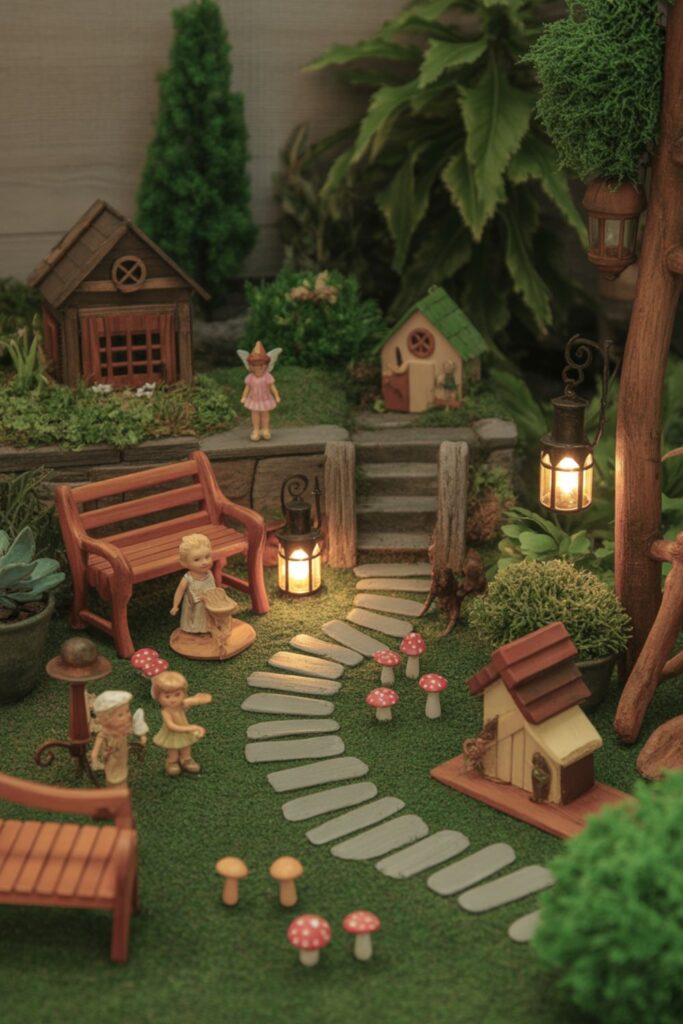
Accessories transform plant containers into magical worlds. The right decorative elements tell stories and create visual focal points.
Miniature houses anchor most fairy garden ideas. Choose cottages that match your theme rustic wood cabins for woodland gardens, colorful painted houses for whimsical designs, beach huts for coastal themes. Ensure your house proportions match plant scale.
Pathways add realism and guide the eye through your design. Create trails using small pebbles, flat stones arranged as stepping stones, sand for beach themes, or bark chips for forest floors. You can use small pebbles or twigs to create pathways or borders within the garden.
Furniture makes scenes feel lived-in and inviting. Miniature benches, tables, chairs, swings, and ladders add charm. Craft stores sell resin furniture designed specifically for fairy gardens, or make your own using popsicle sticks and twine.
Garden tools at miniature scale reinforce the gardening theme. Tiny shovels, rakes, watering cans, and wheelbarrows suggest that fairies actively tend their space. These small details reward close inspection.
Fences and gates define spaces within your fairy garden. Use miniature picket fences, stone walls, or twig fencing. Archways and gates create entrances that frame views and add vertical interest.
Water features introduce movement and sparkle. Blue glass beads simulate ponds or streams. Tiny fountains (non-functioning) suggest flowing water. Small mirrors create reflective pools.
Lighting extends enjoyment into evening hours. Battery-powered LED fairy lights tucked among plants create magical glows after dark. Solar-powered miniature lanterns add ambiance without wiring.
Where do you find these accessories affordably? Dollar stores, thrift shops, garage sales, and pet store fish tank decorations offer budget-friendly options. Craft stores carry dedicated fairy garden supplies but at higher prices. Online marketplaces provide endless variety.
Don’t overlook natural materials from your own backyard. Flat stones become patios. Twigs transform into fences or furniture. Acorn caps serve as bowls. Pine cones add woodland texture. Dried flowers create miniature bouquets.
Step-by-Step Guide to Building Your Fairy Garden
Ready to create your own magical space? Follow this straightforward process for guaranteed success.
Step 1: Select and prepare your container. Ensure drainage holes exist in the bottom. If they don’t, drill several quarter-inch holes. Add a layer of small stones or broken pottery shards to the bottom this prevents soil from blocking drainage while allowing excess water to escape.
Step 2: Add soil. Fill your container with potting soil, leaving space at the top for accessories. For succulents, use cactus potting mix that drains quickly. For other plants, standard potting soil works fine. Don’t use garden soil, it’s too heavy and compacts in containers.
Step 3: Plan your layout. Before planting anything, arrange your plants (still in their nursery pots) and accessories on top of the soil. Move elements around until you’re happy with the design. Place taller plants toward the back, shorter ones in front. Leave space for pathways and decorative elements.
Step 4: Plant your selections. Remove plants from nursery containers and gently loosen root balls. Dig holes slightly larger than the root systems, place plants, and firm soil around them. Water lightly to settle everything.
Step 5: Add hardscaping. Create pathways using stones, pebbles, or moss. Position your fairy house, furniture, and other solid accessories. Press them gently into the soil so they don’t topple over.
Step 6: Place finishing touches. Add your fairy figurines, animals, garden tools, and decorative elements. Tuck moss around the base of plants for a finished look. Scatter small pebbles or sand as needed.
Step 7: Water appropriately. Give your new fairy garden a thorough but gentle watering. The soil should be moist but not soggy. Going forward, water when the top inch of soil feels dry.
Your garden needs time to settle and grow. Plants may look sparse initially but will fill in over coming weeks. Don’t be afraid to adjust elements as your miniature landscape matures.
Budget-Friendly Fairy Garden Ideas
Creating enchanting fairy gardens doesn’t require draining your bank account. Smart shoppers build magical displays for under $20.
Start with containers you already own. That chipped flower pot? Perfect. The old colander gathering dust? Drill drainage holes and use it. Broken pottery becomes multi-level terraced gardens that look intentionally artistic.
Dollar Tree sells fairy garden kits with figurines, seasonal plants, and pebble paths for just a few dollars. While quality varies, these budget options work beautifully, especially for kids’ projects or temporary seasonal displays.
Propagate plants instead of buying them. Succulents grow readily from leaf cuttings ask friends for clippings or take cuttings from plants you already own. Wait a few days for cut ends to callous over, then stick them directly into your fairy garden soil. Within weeks, new plants emerge.
Buy one pot containing multiple succulent varieties from nurseries or big box stores, then divide it into individual plants. One $10 mixed container often provides 6-8 plants for your fairy garden.
Make your own accessories using household items. Popsicle sticks become fences, bridges, or furniture. Wine corks transform into stools or tables. Champagne bottle tops serve as tables or birdbaths. Rocks from your yard create pathways or walls. Dried flowers and seed pods add natural decorative touches.
Visit dollar stores, thrift shops, and garage sales for miniature treasures. Old jewelry, game pieces, dollhouse items, and aquarium decorations all work in fairy gardens at a fraction of craft store prices.
Indoor vs Outdoor Fairy Gardens
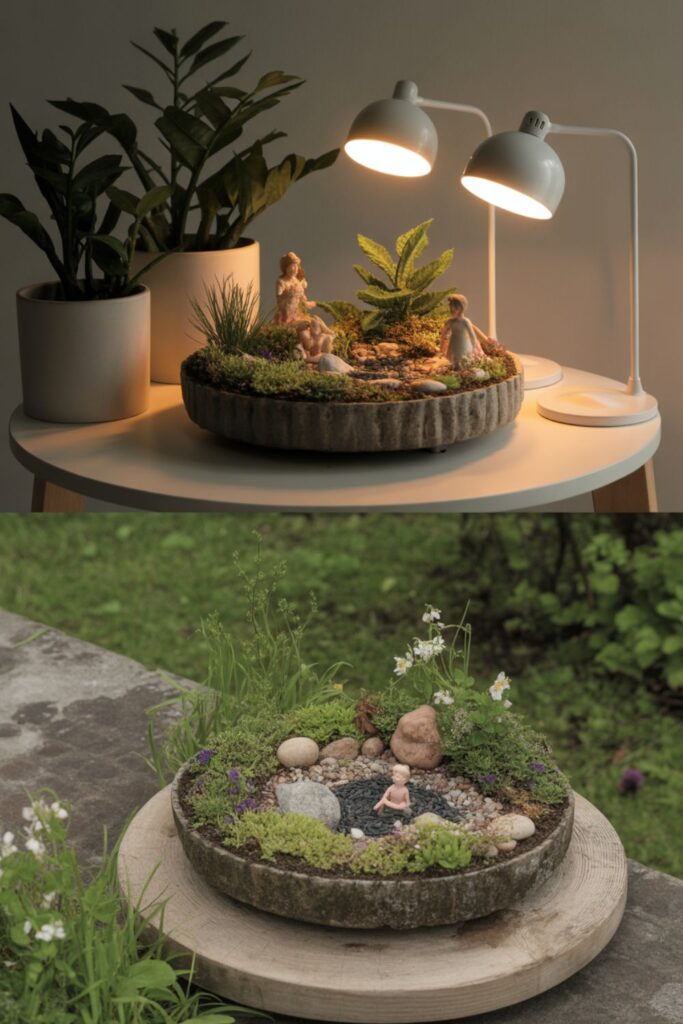
Location determines which plants and accessories work best for your miniature landscape.
Outdoor fairy gardens tolerate weather extremes and accommodate larger displays. They handle full sun plants, flowering varieties, and natural elements like wind and rain. However, they require more maintenance, regular watering, seasonal plant changes, and protection from harsh weather.
Place outdoor gardens on patios, porches, in garden beds, or nestled beneath trees. Full sun locations need plants that tolerate direct sunlight and heat. Shaded spots require shade-loving varieties like ferns, hostas, and impatiens.
Weather affects accessories too. Resin and metal items withstand outdoor conditions better than paper, cardboard, or untreated wood. Choose weatherproof paints and sealants for hand-painted elements. Bring delicate pieces indoors during harsh weather.
Indoor fairy gardens offer year-round enjoyment regardless of climate. They require less maintenance since they’re protected from weather, pests, and extreme temperatures. However, they need plants that tolerate lower light levels and indoor conditions.
Indoor fairy gardens should include plants that thrive indoors with low-growing, small-leaf varieties that are easy to manage. Succulents, miniature ferns, terrarium plants, and small ivy all work well indoors.
Place indoor gardens near windows that provide bright, indirect light. Avoid direct sun that might scorch delicate plants or fade accessories. South-facing windows work best in winter, while east or west windows prevent summer overheating.
Indoor gardens require less frequent watering since evaporation occurs more slowly. Check soil moisture weekly rather than every few days. Ensure containers have saucers to protect furniture from water damage.
Maintaining Your Fairy Garden Throughout the Seasons
Fairy gardens need regular care to stay healthy and attractive. Follow these maintenance guidelines for long-term success.
Watering remains your primary task. Small containers dry out quickly, especially outdoors in summer. Check soil moisture every 2-3 days for flowering plants, every 5-7 days for succulents. Water when the top inch feels dry, applying enough that it drains from the bottom.
Pruning keeps plants appropriately sized for miniature landscapes. Trim overgrown stems and remove dead flowers regularly. Pinch back aggressive growers to maintain scale. Don’t hesitate to remove plants that outgrow their space; part of fairy garden maintenance involves editing.
Fertilizing promotes healthy growth without encouraging excessive size. Use diluted liquid fertilizer monthly during the growing season (spring through fall). Skip fertilizer in winter when plants rest.
Pest control matters less in container gardens than traditional beds, but problems occasionally arise. Remove affected leaves promptly. For severe infestations, use organic insecticidal soap rather than harsh chemicals that might damage delicate miniature accessories.
Seasonal updates keep displays fresh and interesting. Swap out summer annuals for fall mums. Add miniature pumpkins in autumn. Include tiny evergreen sprigs for winter. Plant spring bulbs for early color. These changes maintain visual interest throughout the year.
Accessory maintenance preserves your decorative elements. Dust miniature houses and furniture periodically. Touch up paint on weathered pieces. Replace broken or faded items. Clean glass or mirror elements to maintain sparkle.
Replanting becomes necessary as plants mature. Succulents produce offsets that crowd containers. Aggressive growers overtake neighbors. When this happens, remove plants, refresh the soil, trim roots, and replant with better spacing. Think of this as an opportunity to redesign and refresh your miniature world.
Read More About: Cottage Garden Design To Create Your Dream Garden
Fairy Garden Ideas for Kids
Children love fairy gardens because these tiny worlds engage imagination while teaching responsibility and plant care.
Keep kids’ fairy gardens simple and sturdy. Choose unbreakable containers like plastic pots or galvanized tubs. Select resilient plants that tolerate inconsistent watering succulents work brilliantly for young gardeners. Use resin accessories rather than delicate ceramic pieces.
Fill shallow planters with soil, add moss and small flowering plants, create pathways with pebbles or twigs, and enhance the magical feel with miniature fairy figurines. Let children arrange accessories according to their own vision rather than adult aesthetic standards.
Host fairy garden birthday parties where each child creates their own miniature landscape to take home. Provide pre-selected plants, containers, soil, and an assortment of accessories. This activity keeps kids engaged for hours while producing memorable party favors.
Use fairy gardens as educational tools. Teach children about plant life cycles, photosynthesis, and ecosystem concepts through hands-on experience. Measure plant growth weekly. Observe pollinators visiting flowers. Document changes through drawings or photographs.
Encourage storytelling through garden design. Ask children to name their fairies, describe where they live, explain what they do all day. This narrative approach deepens engagement and sparks creative thinking.
Make garden building a family project. Parents and children working together create stronger bonding experiences than individual efforts. Share tasks based on ability adults handle sharp tools and heavy containers while kids plant and decorate.
Unique and Creative Fairy Garden Container Ideas
Move beyond standard flower pots to create truly distinctive miniature landscapes.
Broken pot fairy gardens turn accidents into art. When terra cotta pots crack or shatter, stack the pieces to create multi-level terraces with natural cascading effect. This design adds a dramatic dimension while recycling damaged containers.
Mason jar fairy gardens bring whimsy to tiny spaces. These glass containers work beautifully indoors on desks or windowsills. Layer soil, add miniature plants, and attach small accessories to create self-contained miniature worlds.
Wheelbarrow fairy gardens suit large outdoor displays. These mobile gardens move easily to follow the sun or avoid weather. Their rustic charm fits cottage and farmhouse aesthetics perfectly.
Wagon and cart fairy gardens appeal to children while providing substantial planting space. Old Radio Flyer wagons or decorative garden carts become mobile miniature landscapes.
Teacup and saucer fairy gardens maximize tiny spaces. Use antique shop teacups, dried or silk plants instead of fresh material, and styrofoam or dry floral foam instead of soil for maintenance-free displays.
Vertical wall fairy gardens solve space constraints creatively. Mount small pots to walls or fences, creating living art that doesn’t consume floor space. This approach works brilliantly for urban balconies and patios.
Terrarium fairy gardens enclose miniature worlds in glass. These self-contained ecosystems require minimal maintenance while creating striking visual displays. Choose closed terrariums for humidity-loving plants or open designs for succulents.
Tree stump fairy gardens integrate seamlessly into natural landscapes. Hollow stumps provide ready-made planters with built-in rustic charm. Fill the cavity with soil and plant directly for gardens that look like they’ve always belonged there.
Advanced Fairy Garden Techniques
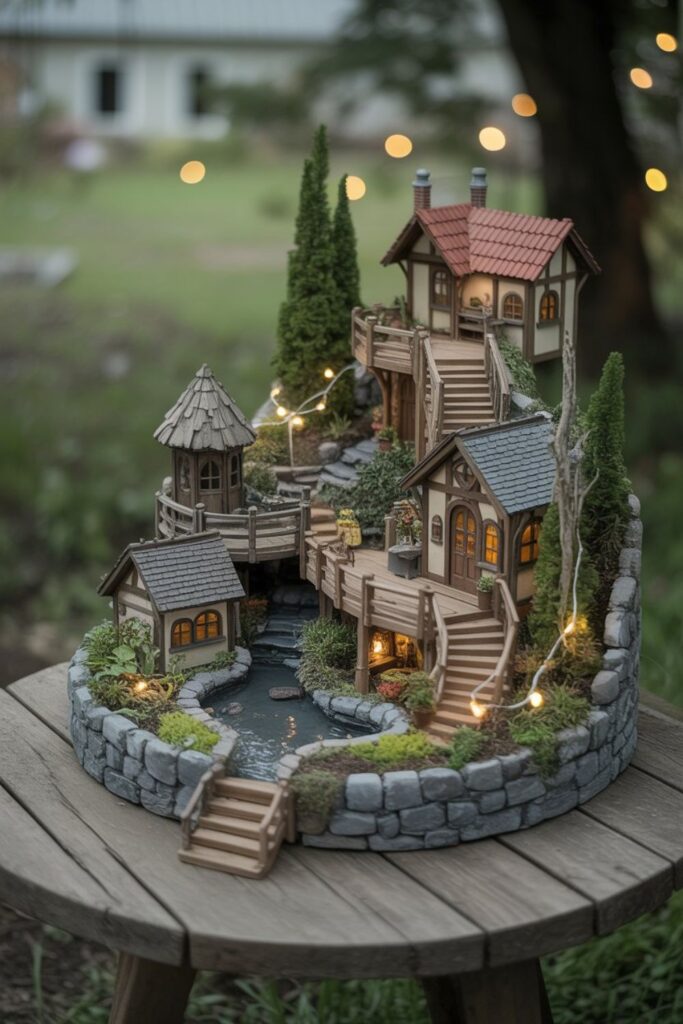
Ready to elevate your skills? These advanced approaches create more sophisticated miniature landscapes.
Forced perspective makes small gardens appear larger. Place bigger plants and accessories at the back, progressively smaller elements toward the front. This optical illusion creates impressive depth in shallow containers.
Themed narratives tell complete stories rather than presenting random pretty elements. Design a fairy tea party with miniature table settings, cups, and cakes. Create a fairy farm with tiny vegetable rows, barn, and farm animals. Build a fairy castle with towers, moat, and knights. Strong narratives make gardens more memorable and engaging.
Seasonal rotation systems keep one container interesting year-round. Design modular accessories that swap easily exchange summer beach elements for fall harvest themes, then switch to winter holiday décor. Plant seasonal annuals in small pots that nestle into the main container, allowing quick seasonal updates without disturbing permanent plantings.
Water feature integration adds movement and sound to outdoor gardens. Small recirculating pumps create flowing water effects. Position plants and accessories around these focal points for maximum impact.
Lighting design transforms fairy gardens after dark. Layer different lighting types uplights to illuminate houses from below, string lights to create starry skies, spotlights to highlight focal points. Solar-powered options eliminate electrical complications.
Miniature topiary brings formal garden techniques to a tiny scale. Train small-leaved plants like rosemary or miniature boxwood into geometric shapes using regular pruning. These living sculptures add sophistication to miniature landscapes.
Mixed media integration combines living and non-living elements creatively. Incorporate painted backgrounds, mirrors to suggest depth, or preserved moss that never requires watering. These techniques expand design possibilities beyond traditional container gardening.
Common Fairy Garden Mistakes and How to Avoid Them
Learn from these frequent problems before they affect your miniature landscape.
Overcrowding kills fairy gardens faster than any other mistake. Plants need space to grow and air to circulate. Leave breathing room between elements. You can always add more later, but removing established plants damages roots and disrupts design.
Poor drainage leads to root rot and plant death. Every container needs holes in the bottom and a drainage layer beneath the soil. If you’re using a container without drainage, drill holes before planting or use it strictly for displays with artificial plants.
Wrong plant selection frustrates beginners who choose species that grow too large or require conditions the container can’t provide. Research mature plant sizes before purchasing. Match plant requirements to your garden’s light, water, and space conditions.
Ignoring scale creates jarring visual discord. A fairy figurine should look right next to the house, not like a giant invading a village. All accessories should relate proportionally to each other and to plants.
Inconsistent watering stresses plants and leads to failure. Small containers dry out quickly but also become waterlogged easily. Check moisture levels regularly rather than watering on a rigid schedule.
Using garden soil in containers creates problems. Garden soil compacts in pots, suffocating roots and preventing drainage. Always use commercial potting mix formulated for container use.
Forgetting maintenance allows gardens to become overgrown and unkempt. Schedule regular pruning, cleaning, and refreshing sessions. Even low-maintenance designs need occasional attention.
FAQs
How much do fairy gardens cost to create?
Basic fairy gardens cost between $20-50, depending on container size, accessories, and plants selected. Budget-conscious gardeners can create beautiful displays for under $20 using repurposed containers, propagated plants, and handmade accessories.
Can fairy gardens survive winter outdoors?
Cold-hardy plants like sempervivum, certain sedums, and miniature evergreens tolerate freezing temperatures in outdoor fairy gardens. Bring tender succulents and tropical plants indoors before the first frost. Protect delicate accessories from harsh weather by storing them until spring.
How often should I water my fairy garden?
Watering frequency depends on plant types, container size, and location. Outdoor gardens in summer may need daily watering. Succulent gardens require water every 5-7 days. Always check soil moisture rather than following rigid schedules when the top inch feels dry.
What plants stay small in fairy gardens?
Succulents like jade, hens and chicks, and various sedums remain compact. Herbs including thyme and miniature rosemary work well. Moss, miniature ferns, and dwarf varieties of larger plants maintain appropriate scale. Choose alpine plants and those naturally suited to rocky, shallow soil conditions.
Where should I place my fairy garden?
Match location to plant requirements. Full-sun plants need 6+ hours of direct sunlight, so place gardens in bright outdoor spots or south-facing windows. Shade-loving plants prefer protected areas or east-facing indoor locations. Consider accessibility for maintenance and viewing pleasure.
Can I make a fairy garden without plants?
Yes. Create maintenance-free fairy gardens using preserved moss, artificial plants, and decorative elements. These displays work beautifully indoors where live plants struggle with low light. They’re also ideal for children’s rooms or offices where watering access is limited.
Conclusion
Fairy garden ideas transform ordinary spaces into enchanting miniature worlds that delight gardeners of all skill levels. These tiny landscapes combine creative expression with practical horticulture, producing displays that evolve and improve over time. Whether you’re working with a windowsill teacup or an outdoor wagon, the principles remain consistent with appropriate containers, properly scaled plants, cohesive accessories, and regular maintenance.
Start your fairy garden journey this weekend. Gather a container, select a few small plants, add simple accessories, and watch your miniature world come to life. The magic isn’t in expensive supplies or expert skills, it’s in the joy of creating something whimsical that brings daily smiles.