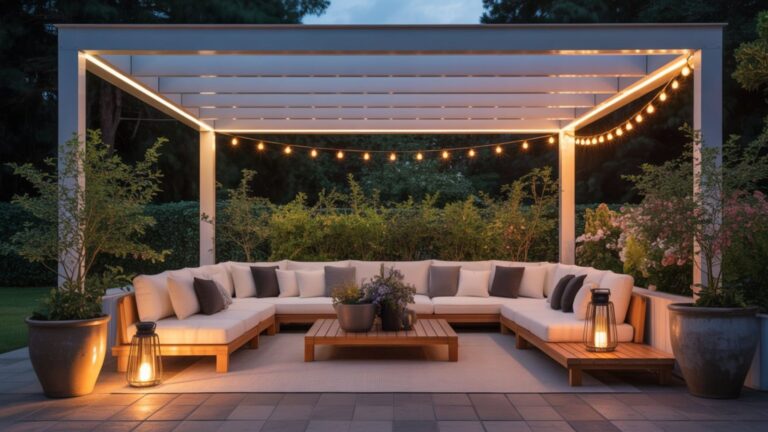
25+ Family Patio Ideas for Multi-Generational Spaces

Your patio sits empty most days while the kids play in the yard and adults hover by the back door. The disconnect frustrates everyone; kids want supervision and snacks, adults crave comfortable seating and conversation, and nobody wants to haul everything back and forth constantly. A truly functional family patio bridges these gaps seamlessly. It’s not just an adult entertaining space that occasionally tolerates children or a play area that makes grown-ups uncomfortable. Smart family patio ideas create zones where toddlers explore safely, older kids engage in activities, teens hang with friends, and parents actually relax while keeping eyes on everyone.
The challenge lies in designing spaces that serve wildly different needs without looking like daycare centers. You want style and function, durability and beauty, supervision and independence all in one cohesive outdoor room. When done right, your patio becomes family headquarters where everyone gravitates naturally throughout the day.
Why Family Patios Need Different Design Priorities
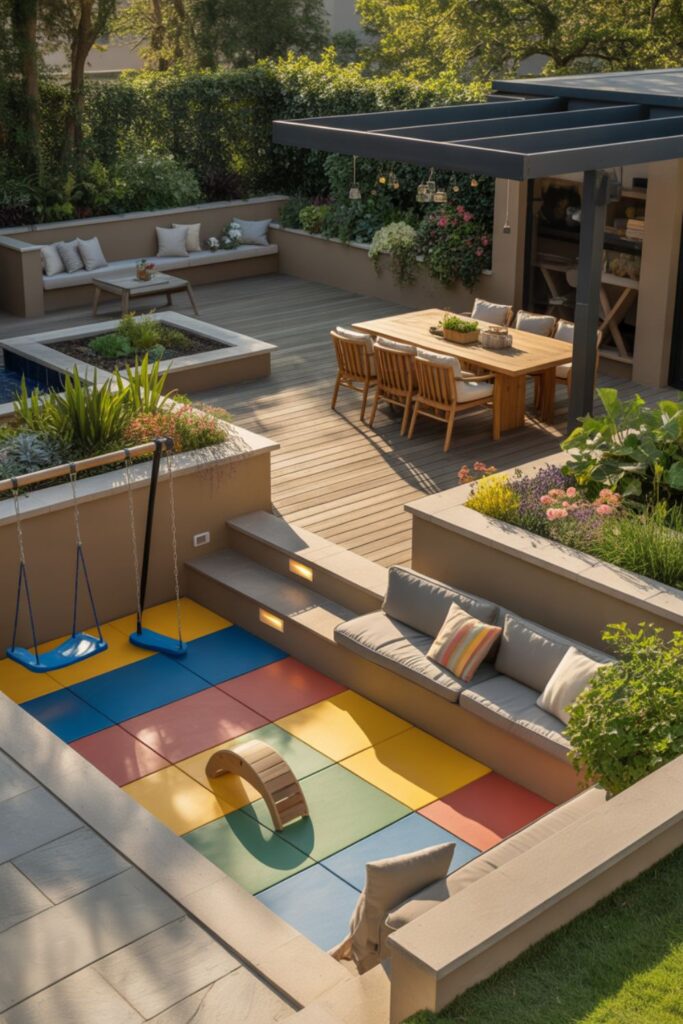
Kid-friendly design flips traditional priorities, and the best family patio ideas prioritize safety, durability, and functionality over aesthetics alone. Beauty matters, but it must never compromise practicality when children are involved.
Supervision is critical in successful family patio ideas. Adults need clear sightlines to monitor play areas while preparing meals, working remotely, or relaxing. Position seating where caregivers naturally see kids without constant strain this simple factor often determines whether families actually use the patio or avoid it.
Durability is a non-negotiable feature in top family patio ideas. That elegant glass coffee table or delicate planter? Not suitable for children. Durable outdoor furniture that withstands roughhousing, spills, weather extremes, and everyday chaos is essential. Materials should perform under real-world conditions, not just look beautiful in magazines.
Easy maintenance is another hallmark of thoughtful family patio ideas. Families rarely have time for constant cleaning and repairs. Surfaces that are easy to clean, washable cushions, and low-maintenance landscaping let parents enjoy the space rather than constantly maintaining it. Every design choice in a family patio idea should pass the “does this create more work?” test.
Flexibility matters as children grow, a key principle in family patio ideas. Today’s toddler play zone becomes tomorrow’s teen hangout. Smart family patio ideas adapt to changing needs without full renovations. Modular furniture, adjustable features, and neutral foundations accommodate evolving requirements over the years.
Outdoor play benefits all ages. According to child development experts, well-designed patios encourage physical activity, creativity, and family bonding. The best family patio ideas extend living space while promoting healthy outdoor time for every generation.
How Can Furniture Choices Improve Safety and Durability?
Multi-generational planning is central to family patio ideas. Each age group requires appropriate elements within a cohesive design.
Create distinct but connected zones. Toddlers need play areas close to adult seating for supervision, ideally near patio edges to contain messes. Elementary-aged children benefit from activity stations slightly farther away but still visible. Teen zones require privacy and “cool” appeal, comfortable seating, device-friendly areas, and shaded corners. Shared features like fire pits engage all ages, making them excellent for family patio ideas.
Flexible seating supports various group sizes. Modular sectionals, benches, and ottomans can serve as kid-height tables, footrests, or adult seating during gatherings. Built-in elements like low walls function as climbing structures for toddlers, balance beams for elementary-aged children, and perimeter seating for adults, another smart feature of modern family patio ideas.
Shared central spaces encourage intergenerational interaction. Large dining tables for meals, homework, crafts, or conversation act as natural gathering points. Portable elements adapt as children’s interests evolve, ensuring the patio remains functional for years. Forward-thinking design planning five to ten years ahead is critical in lasting family patio ideas.
Read More About: 15+ Modern Rustic Patio Ideas That Balance Nature Design
What Activity Stations Keep Kids Engaged Outdoors?
Activity stations turn ordinary patios into engaging destinations, a cornerstone of thoughtful family patio ideas. Purposeful play elements keep children entertained outdoors longer and make life easier for parents.
Art stations spark creativity in a mess-controlled environment. Install child-height tables with built-in storage for supplies. Choose surfaces that are easy to clean, such as solid plastic, sealed wood, or laminate. Chalkboard-painted fence sections or freestanding boards expand creative possibilities. Outdoor art easels with paper rolls offer limitless canvases. Establishing basic art stations typically costs $100–400 in top family patio ideas.
Water play areas captivate kids for hours. Simple water tables ($40–150) entertain toddlers endlessly. For older children, install outdoor sinks at kid height with spray nozzles. Sand-and-water combination areas encourage construction play. Positioning these zones over permeable surfaces to prevent water accumulation is an essential tip in practical family patio ideas.
Garden beds combine education and engagement. Build raised beds 12–18 inches tall for easy child access. Allow kids to choose and tend vegetables or flowers, fostering responsibility and investment in the space. Raised bed construction costs $100–300 depending on size and materials. Including garden beds is a common feature in successful family patio ideas.
Outdoor games provide active entertainment for all ages. Permanent installations like basketball hoops, tetherball poles, or horseshoe pits offer ready-to-play fun, while portable games such as cornhole, ladder golf, or giant yard games store easily. Quality outdoor games range from $100–400 per set in well-planned family patio ideas.
Music walls stimulate auditory exploration. Mount pots, pans, metal bowls, or purpose-built outdoor instruments on fences. Children can create rhythms and sounds safely without disturbing neighbors. Musical elements cost $50–300 depending on sophistication, making them a playful addition to family patio ideas.
Reading nooks encourages quiet downtime. Design shaded alcoves with comfortable cushions, small bookshelves, and perhaps hammocks or hanging chairs. Weather-resistant book bins protect materials while creating cozy corners for children. Setup costs range from $200–800, adding thoughtful balance to family patio ideas.
Rotating stations prevent boredom in dynamic family patio ideas. Store some activities and swap them monthly, keeping children engaged with fresh experiences while retaining familiar favorites. This simple strategy ensures that patios remain versatile and stimulating for the whole family.
How Do You Create Effective Supervision Zones?
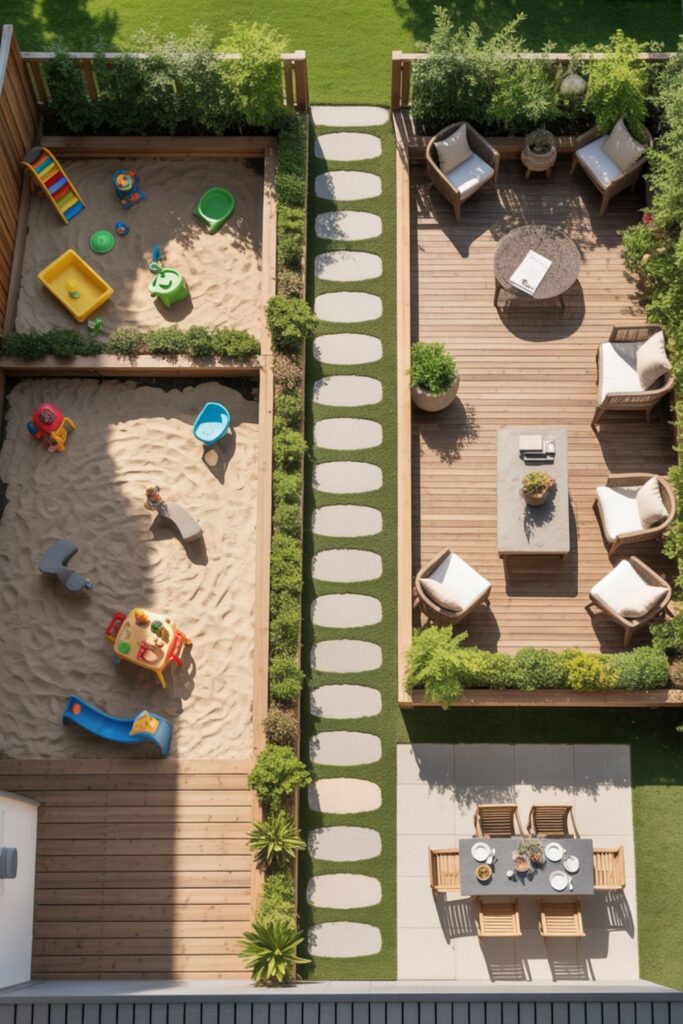
Clear supervision zones are critical in successful family patio ideas, allowing adults to monitor children while maintaining their own comfort. Poor sightlines often lead to constant anxiety or abandoned outdoor spaces, undermining the purpose of a family patio.
Position primary adult seating with unobstructed views of all play areas. Avoid arranging sofas or chairs facing away from kid zones. U-shaped or L-shaped sectionals oriented outward work perfectly adults can converse comfortably while keeping children in peripheral sight. This seating arrangement is far superior to circles of chairs that require neck twisting, a common oversight in less-considered family patio ideas.
Eliminate blind spots and hidden corners where mischief can occur. If fences, walls, or structures block visibility, add convex security mirrors designed for outdoor use ($30–100) or reposition elements to restore sightlines. Thoughtful design ensures safety without compromising aesthetics in family patio ideas.
Multi-level patios provide elevated viewpoints for supervision. Raised seating areas or decks give parents literal high ground to survey the yard. Just two or three steps up can dramatically improve visibility without extensive construction. Raised decks typically cost $25–45 per square foot installed and are a smart inclusion in family patio ideas.
Open sightlines don’t mean sacrificing privacy. Use low barriers (18–30 inches) such as half-height planters, low walls, or decorative fencing to define play zones. These elements maintain visual access while psychologically containing the space, a hallmark of clever family patio ideas.
Baby gates are essential for stairs or elevated areas. Install them at deck edges, step transitions, or poolside zones. Modern aluminum gates blend with the patio aesthetic better than traditional white plastic options. Self-closing, self-latching models ($50–150 each) ensure safety and convenience in family patio ideas.
For larger yards, intercoms or baby monitor systems provide extra peace of mind. Weatherproof cameras or audio monitors allow parents to supervise distant play areas from indoors. Basic outdoor camera systems cost $100–400 and are often included in forward-thinking family patio ideas.
Establish clear boundaries children understand. Mark play zone edges with colorful pavers, painted lines, or small fencing. Visual reminders help young children identify safe areas, and as they grow, boundaries can expand naturally. Defining these spaces is a subtle but essential strategy in effective family patio ideas.
What Storage Solutions Control Outdoor Toy Chaos?
Toy organization is essential in well-planned family patio ideas, preventing patios from turning into obstacle courses. Strategic storage keeps the space functional, safe, and visually appealing for both children and adults.
Integrated storage solutions conceal clutter effectively in family patio ideas. Built-in benches with storage, deck boxes doubling as barriers, or cabinets incorporated into outdoor kitchens allow toys to disappear when not in use. Hidden storage maintains adult aesthetics while serving kid-friendly purposes.
Categorizing toys by type streamlines cleanup in top family patio ideas. Designate separate containers for sports equipment, water toys, art supplies, and ride-on vehicles. Label boxes with pictures for younger children, encouraging them to participate in organization because they know exactly where items belong.
Weatherproof containers protect toys from the elements, a critical feature in practical family patio ideas. Resin deck boxes, sealed wooden chests, and metal storage bins keep contents dry, while ventilated designs prevent mildew in humid climates. Quality storage boxes typically cost $75–400 depending on size.
Mobile storage carts add versatility to family patio ideas. Rolling utility carts can carry art supplies, snacks, or sports gear to different activity zones and then return to storage. Industrial wire carts ($40–150) hold up well outdoors and provide easy access.
Vertical organization using pegboards or wall-mounted systems maximizes space in family patio ideas. Install inside storage sheds, on garage walls near patio doors, or on fence sections. Hooks hold items like jump ropes, pool noodles, or balls, keeping floors clear. Pegboard systems cost $50–200 depending on size.
Toy rotation reduces clutter while keeping children engaged. Only current favorites remain outdoors, with seasonal or less-loved toys stored elsewhere. Rotating toys quarterly renews interest and extends toy lifespan, an important strategy in thoughtful family patio ideas.
End-of-day cleanup routines reinforce order. Make tidying part of a daily rhythm before meals or bath time. When cleanup takes five minutes instead of thirty, children are more cooperative. Reward systems or music can make tidying enjoyable, enhancing any family patio idea.
How Much Shade Coverage Do Family Patios Need?
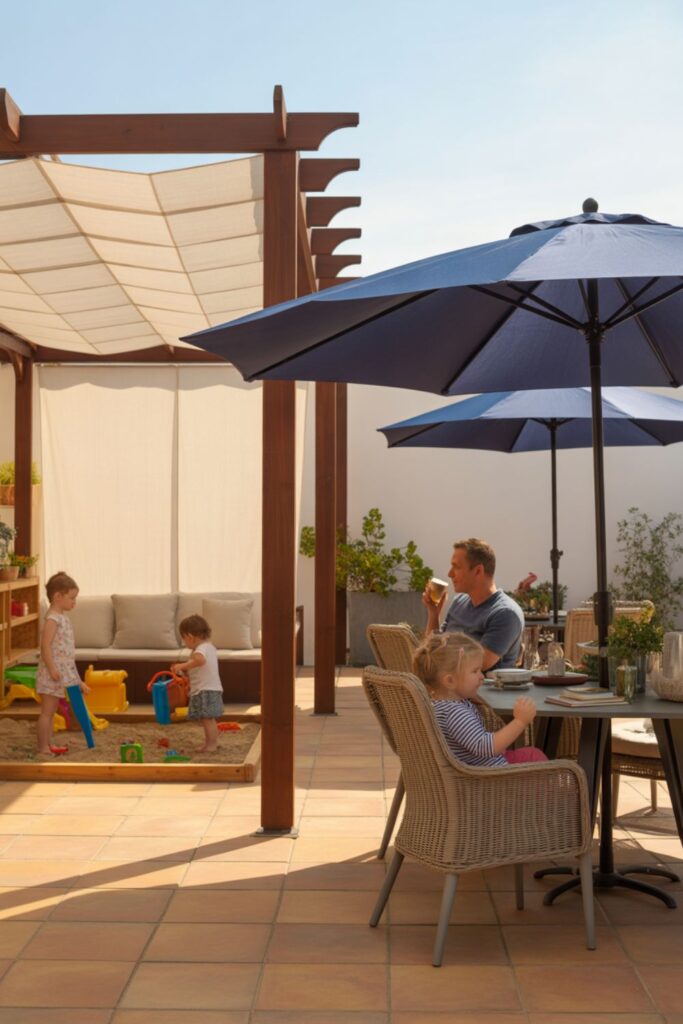
Adequate shade protects skin, prevents overheating, and extends usable hours a must for children in any family patio idea.
Aim for 70–80% shade coverage in hot climates. Children’s skin burns faster and overheating occurs more quickly, so multiple shade sources work better than a single structure. Pergolas over seating, umbrellas above play areas, and shade sails over dining zones provide layered protection.
Pergolas offer architectural shade and can support climbing vines for extra coverage. Standard 12×16-foot pergolas accommodate dining for 8–10 or lounge seating for 6–8. Retractable canopies add flexibility. Installation costs range $3,000–10,000.
Shade sails provide versatile, contemporary coverage. Triangular or rectangular sails stretch between posts or walls, blocking 90–95% of UV rays. Multiple sails can layer over large areas, ideal for play zones where permanent structures aren’t desired. Professional installation costs $800–3,000 per sail.
Large patio umbrellas offer movable shade. Cantilever umbrellas (10–13 feet) cover tables or play areas without center poles and tilt to follow the sun. Quality options cost $300–1,200.
Attached patio covers deliver maximum protection. Solid-roof structures with built-in fans and lighting create year-round outdoor rooms. Costs range $8,000–25,000 depending on size and features.
Natural shade from trees adds living, free coverage. Fast-growing species like maples, oaks, or sycamores take years to mature but provide cooling and beauty once established. Consider tree placement carefully in your family patio ideas to maximize shade.
Sunscreen stations near play areas encourage healthy habits. Waterproof dispensers filled with SPF 50 make reapplication easy. This low-cost addition ($20–60) is a smart feature in well-planned family patio ideas.
What About Incorporating Pool and Water Safety?
Pools require additional safe patio design considerations. Safety regulations exist for reasons drowning remains a leading cause of accidental death in young children.
Pool fencing is non-negotiable. Most jurisdictions require 4-5 foot barriers surrounding pools with self-closing, self-latching gates. Mesh removable fencing provides temporary solutions for families with young children that removes once kids mature. Permanent fencing costs $15-40 per linear foot while removable mesh fencing runs $10-20 per foot.
Alarms provide backup protection. Pool alarms sound when water is disturbed, gate alarms alert when access points open, and perimeter alarms detect movement near water. Layer multiple alarm types for comprehensive protection. Quality alarm systems cost $100-500.
Slip-resistant surfaces around pools prevent falls. Textured concrete, non-slip pavers, or rubberized pool deck surfaces provide traction. Avoid smooth stone or tile that becomes dangerously slippery when wet. Resurface existing slippery decks with non-slip coatings costing $2-5 per square foot.
Pool covers add safety layers. Automatic safety covers support weight if someone walks on them accidentally. Solar covers reduce heating costs while preventing unsupervised access. Manual safety covers cost $1,200-3,000 while automatic versions run $8,000-15,000.
Life-saving equipment must be immediately accessible. Mount life rings, reaching poles, and first aid kits within 10 feet of pool edges. Everyone should know their locations. Post CPR instructions and emergency numbers visibly. Basic pool safety equipment costs $100-300.
Establish and enforce strict pool rules. No running, no diving in shallow areas, no swimming alone, and adult supervision always. Consistent enforcement prevents accidents far better than equipment alone.
How Can Lighting Improve Safety and Extend Usage?
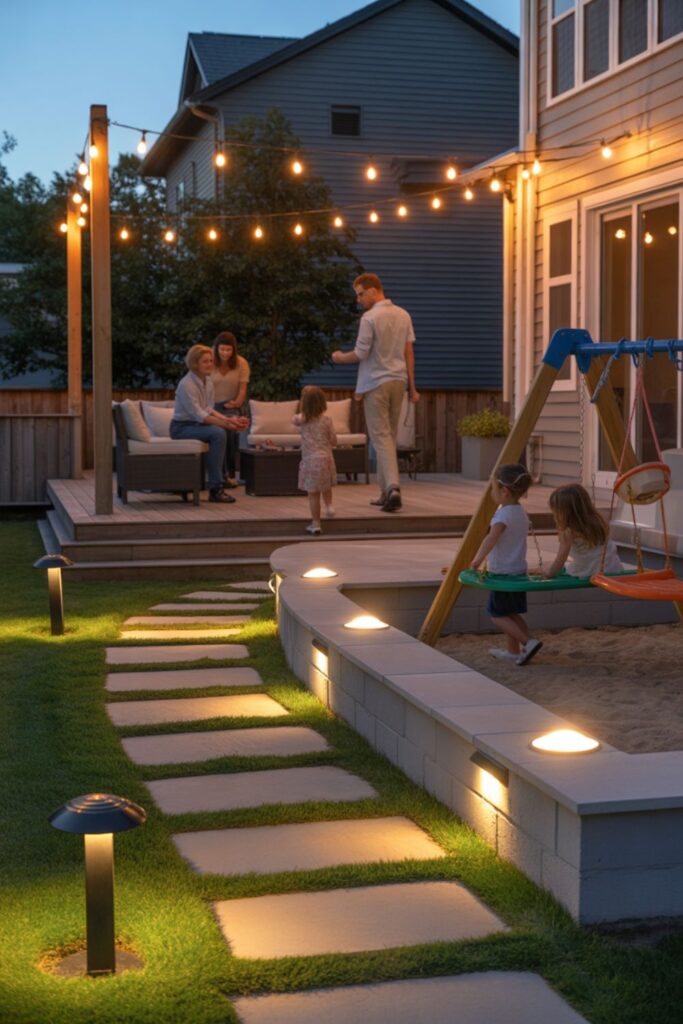
Proper lighting enables supervision after dark while preventing trips and falls. Family patios need more comprehensive lighting than adult-only spaces.
Path lighting prevents stumbles on steps and transitions. Install LED fixtures every 4-6 feet along walkways, stairs, and level changes. Low-profile lights minimize tripping hazards themselves. Solar path lights work adequately while hardwired LED systems provide superior brightness. Complete path lighting costs $300-1,200.
Overhead ambient lighting illuminates activities. String lights, pendant fixtures, or flush-mount ceiling lights (on covered patios) create general visibility. Dimmable systems adjust from bright task lighting during dinner to subtle ambiance later. Quality overhead lighting costs $200-800 depending on coverage area.
Spotlights highlight play zones and hazards. Direct adjustable lights toward play structures, pools, or activity areas. This ensures parents see what children are doing rather than just silhouettes. LED spotlights cost $30-150 each.
Motion-activated lights provide automatic illumination. Position sensors near doorways, play areas, and pathways. Lights activate when movement occurs, ensuring children never navigate dark areas. Motion sensor lights cost $25-100 per fixture.
Colored LED lights create fun atmospheres for parties or movie nights. Smart bulbs controlled via phones change colors for different occasions: blue for pool parties, warm white for dinners, multicolor for celebrations. This flexibility appeals to all ages. Smart outdoor lighting systems cost $200-1,000.
Avoid creating dark corners or shadows where children disappear from view. Layer light sources to minimize shadowy areas. Test lighting after dark from typical adult seating positions to verify you can actually see all zones clearly.
What Budget-Friendly Family Patio Ideas Deliver Maximum Impact?
Thoughtful family patio ideas don’t require massive budgets. Strategic investments deliver disproportionate value.
DIY pallet furniture costs almost nothing but serves families well. Sand pallets smooth, seal them against weather, and add cushions. Pallet sectionals, coffee tables, and benches handle abuse without financial worry. Total cost for four-seat sectional runs under $200 including cushions.
Painted concrete floors transform plain slabs into colorful spaces. Concrete stencils create patterns, borders, or even game boards. Hopscotch, four square, or oversized checkerboards painted directly on patios provide built-in entertainment. Materials cost under $100 for average-sized patios.
Rope swings hanging from pergola beams or sturdy tree branches delight all ages. Quality marine-grade rope costs $20-40 while wooden seats run another $15-30. This simple addition gets used constantly and costs under $100.
Repurposed items as planters add character affordably. Galvanized tubs, wooden crates, or ceramic pots from thrift stores cost $5-30 each. Cluster them for impact while keeping individual investments minimal. Paint them coordinating colors for cohesive looks.
Outdoor movie screens transform patios into theaters. Hang white sheets, paint walls white, or purchase inflatable screens ($50-300). Combine with affordable projectors ($100-400) for instant entertainment that appeals across generations. Total investment under $500 creates family traditions.
String lights remain the most impactful lighting investment. A few strands of Edison bulbs ($30-80 per strand) completely transform ambiance. Hang them over seating areas for immediate warmth and visual appeal. This delivers a restaurant-quality atmosphere for under $200.
Multipurpose elements maximize budgets. Storage benches provide seating and organization. Planters double as barriers. Tables serve dining, crafts, and games. When pieces serve three purposes, you need one-third as many pieces.
Read More About: 23+ Big Patio Decorating Ideas for Stylish Outdoor Living
Frequently Asked Questions
What’s the safest patio flooring for toddlers?
Rubber safety tiles or poured rubber surfacing provide the best fall protection for young children, offering 6-12 inches of impact absorption. Artificial turf ranks second, providing soft landing surfaces while eliminating mud and grass stains. Both options cost $3-15 per square foot but significantly reduce injury risks compared to hard surfaces.
How do you child-proof an existing patio?
Add rounded edges to furniture using foam corner guards ($10-30), install pool fencing if water features exist ($15-40 per linear foot), secure heavy furniture to prevent tipping, replace glass tables with wood or plastic alternatives, and ensure all slip-resistant flooring is truly textured. Address sharp corners, entrapment gaps, and climbing hazards systematically.
What furniture materials work best for families with young children?
Durable outdoor furniture in resin, sealed aluminum, or composite materials withstands the most abuse. Choose washable cushions with solution-dyed acrylic covers. Avoid wicker (breaks easily), glass (shatters), and untreated wood (splinters). Prioritize easy-clean surfaces over aesthetics you’ll thank yourself after the first juice spill.
How much does a family-friendly patio cost to build?
Basic family patio ideas including slip-resistant flooring, durable furniture, shade coverage, and play elements cost $5,000-15,000 for 300-400 square feet. Mid-range projects with built-in features, quality materials, and comprehensive amenities run $15,000-35,000. Luxury family patios with pools, outdoor kitchens, and custom play structures exceed $50,000.
What shade solutions work best for families?
Combine multiple shade sources for optimal coverage. Pergolas over primary seating ($3,000-10,000), cantilever umbrellas over play areas ($300-1,200 each), and shade sails over dining zones ($800-3,000) provide layered protection. Aim for 70-80% shade coverage in hot climates to protect children’s sensitive skin.
How do you organize outdoor toys effectively?
Use multiple storage solutions categorized by toy type. Install built-in storage benches ($500-2,500), weatherproof deck boxes ($75-400), and wall-mounted pegboards ($50-200). Implement toy rotation systems, keeping only current favorites outside. Establish end-of-day cleanup routines to maintain organization without constant battle.
Conclusion
Your family patio should evolve with your household, serving as the backdrop for countless memories from first steps to graduation parties. The family patio ideas you implement today determine whether your outdoor space becomes a true extension of your home or remains an underutilized afterthought. Success lies in balancing safety with beauty, durability with style, and multiple age groups’ needs within cohesive design. Don’t let perfection paralysis stop you from starting. Begin with essentials: safe surfaces, durable furniture, adequate shade, and good sightlines. Layer improvements gradually as budget allows and needs to be clarified. The patio that grows with your family will always outperform the one planned for some theoretical perfect future.
Remember that multi-generational outdoor space design isn’t about creating Instagram-perfect showplaces. It’s about building functional spaces where life actually happens in a messy, chaotic, beautiful life. Those juice-stained cushions and well-worn play areas tell your family’s story far better than pristine spaces nobody uses. Embrace the wear, plan for the chaos, and design spaces tough enough to handle whatever your family throws at them. Years from now, you won’t remember whether cushions matched perfectly. You’ll remember summer evenings together, winter fire pit gatherings, and countless ordinary moments made special because everyone could be outside together comfortably.