25+ Creative Garden Cinder Block Ideas

You stare at your bare backyard wondering how to create something beautiful without breaking the bank. Traditional garden cinder block ideas offer the perfect solution: they’re affordable, durable, and incredibly versatile for transforming bland outdoor spaces into stunning functional areas. Yet most homeowners overlook these humble concrete blocks, missing out on dozens of creative possibilities that professional landscapers charge thousands to install.
Cinder blocks (technically concrete blocks) cost just $1–3 each at hardware stores, making them one of the most budget-friendly materials for DIY garden projects. Whether you’re building raised bed ideas, creating vertical garden displays, or designing unique outdoor decor, these stackable blocks deliver professional results without professional prices. This guide reveals 25+ proven garden cinder block ideas that work for small patios, sprawling yards, and everything between.
Read More About: 15+ Cinder Block Garden Planters Ideas for a Stunning Yard
Why Use Cinder Blocks for Garden Projects?
garden cinder block ideas transform ordinary yards into extraordinary spaces because they combine affordability with remarkable versatility. Home improvement experts recognize these concrete blocks as the ultimate repurposed materials for outdoor construction.
The financial advantage speaks volumes. Traditional wooden raised beds cost $200–500 for materials alone, while cinder block planters achieve the same result for under $50. You skip the expensive lumber, complicated tools, and carpentry skills entirely. Professional landscapers charge $30–75 per square foot for custom installations DIY garden projects using blocks reduce that cost by 80–90%.
Modular design makes these blocks brilliantly adaptable. Stack them vertically for privacy screens, arrange them horizontally for seating areas, or flip them sideways to create instant raised bed ideas. The hollow cores become natural planters when oriented upward, eliminating the need for separate pots. You reconfigure layouts seasonally without permanent commitments or demolition.
Durability outlasts virtually every alternative material. Wood rots within 5–10 years depending on climate and treatment. Plastic warps under UV exposure. Metal corrodes. Concrete block garden structures withstand decades of weather extremes, supporting hundreds of pounds while maintaining structural integrity. The thermal mass regulates soil temperature, protecting plant roots from sudden temperature swings that damage delicate species.
Environmental benefits align with sustainable gardening principles. Manufacturers produce blocks from recycled concrete aggregate, reducing landfill waste. The porous surface allows water penetration, supporting healthy soil ecosystems. Unlike treated lumber leaching chemicals into edible crops, concrete remains inert and food-safe for vegetable gardens.
Planning Your Cinder Block Garden Project
Strategic planning transforms random blocks into cohesive outdoor decor that enhances property value. Smart gardeners assess three critical factors before purchasing materials.
Space analysis determines block quantities and configuration options. Measure your available area accounting for walkways, sun exposure patterns, and access to water sources. Vertical garden designs work brilliantly for compact urban spaces, while sprawling suburban yards accommodate elaborate raised bed ideas. Sketch your layout on graph paper using one square per block to visualize the final structure.
Foundation preparation ensures long-term stability. Level ground prevents tipping and structural stress. Remove 2–3 inches of topsoil, compact the base, and add a gravel layer for drainage holes effectiveness. Install landscape fabric beneath blocks to suppress weeds while allowing water flow. Professionals recommend this preparation step even for temporary installations, as settling causes misalignment over time.
Block selection matters more than most beginners realize. Standard 8×8×16-inch blocks suit most projects, but half-blocks simplify corner work and decorative patterns. Inspect each block for cracks or chips that compromise strength. Lighter-weight alternatives exist for rooftop gardens or elevated decks where weight restrictions apply. Purchase 10–15% extra blocks to accommodate design changes and inevitable breakage during installation.
How to Build a Raised Garden Bed with Cinder Blocks
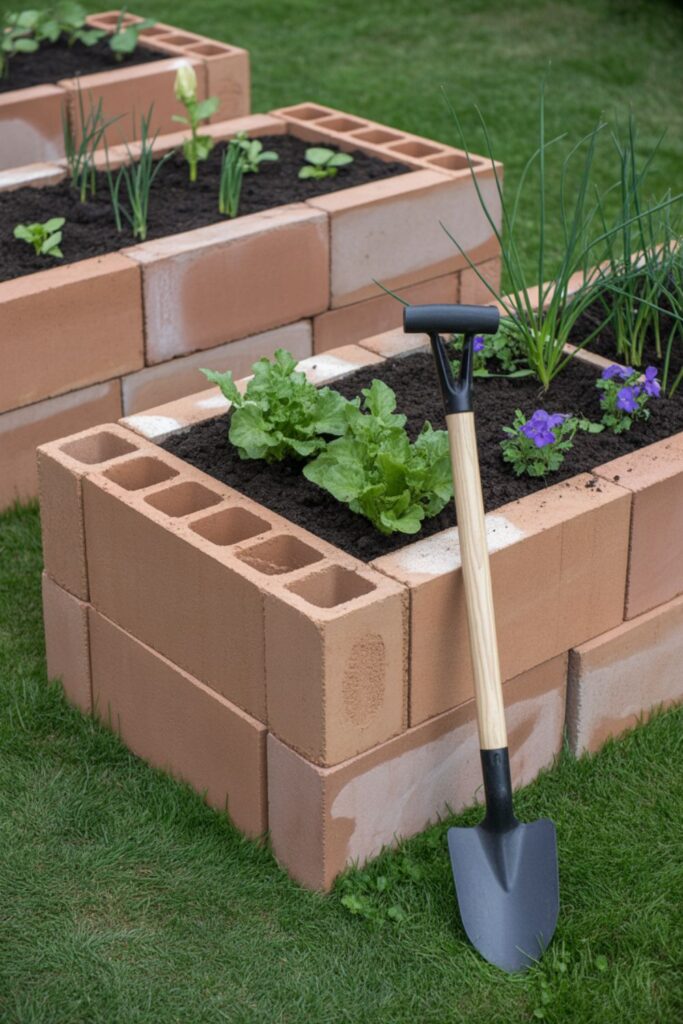
Raised bed ideas using cinder blocks deliver professional results in under two hours. This straightforward construction method requires zero masonry experience.
Start by marking your bed perimeter with stakes and string. Popular dimensions include 4×8 feet (using 12 blocks per layer) or 3×6 feet (using 9 blocks). Remove grass and debris within the marked area, then level the ground using a rake and hand tamper. Spread a 2-inch gravel base and compact thoroughly this step prevents settling that creates gaps between blocks.
Position your first layer with hollow cores facing upward for maximum planting space. Align blocks carefully using a carpenter’s level, adjusting the gravel base as needed. Each concrete block garden requires perfectly level foundation rows to maintain stability. Create corners by overlapping block ends in an alternating pattern that distributes weight evenly.
Stack additional layers for desired height, typically 2–3 blocks tall (16–24 inches). Offset each layer by half a block length the classic running bond pattern used in professional masonry. Fill hollow cores with quality potting soil as you build, adding weight that stabilizes the structure. Leave the bottom open for natural drainage, or install hardware cloth to deter burrowing pests.
Fill the interior bed with a soil mixture appropriate for your crops. Vegetable gardens thrive in equal parts compost, peat moss, and vermiculite. Native soil works for ornamental beds when amended with organic matter. The modular design allows you to expand your bed annually by adding more blocks horizontally or vertically without dismantling existing sections.
Creative Vertical Garden Ideas Using Cinder Blocks
Vertical garden systems maximize growing space while creating stunning living walls. Cinder block planters stacked vertically transform bare fences and walls into productive growing areas.
Herb spirals showcase blocks’ dimensional possibilities. Arrange blocks in a circular pattern, stacking them progressively higher toward the center. This creates microclimates Mediterranean herbs like rosemary and thyme prefer the warm, dry summit while moisture-loving basil thrives at the cooler base. The spiral design provides 12–15 square feet of growing area within a 4-foot diameter footprint, perfect for compact patios.
Strawberry towers deliver impressive harvests from minimal square footage. Stack 4–6 blocks vertically with hollow cores facing outward. Fill each cavity with potting mix and plant one strawberry per opening. This configuration produces 20–30 plants in just 2 square feet, with fruit hanging away from soil to prevent rot. The elevated design also deters slugs and makes harvesting easier on your back.
Living privacy screens combine function with beauty. Build a staggered wall pattern by alternating block orientation some with holes facing forward, others sideways. Plant trailing species like sweet potato vine or nasturtiums in forward-facing cavities. The varied depths create visual interest while establishing green barriers that block unsightly views or define outdoor rooms.
Succulent displays exploit blocks’ drainage advantages. The porous concrete wicks excess moisture away from drought-adapted plants that rot in traditional pots. Arrange blocks in geometric patterns, fill cavities with cactus soil, and plant colorful echeveria, sedum, or sempervivum varieties. This affordable landscaping technique creates architectural interest requiring minimal water and maintenance.
What Plants Grow Best in Cinder Block Gardens?
Plant selection determines your concrete block garden success. The alkaline concrete affects soil chemistry, favoring specific species over others.
Alkaline-tolerant vegetables include tomatoes, peppers, beans, and squash all popular edibles that thrive in pH 7.0–7.5. Leafy greens like lettuce and spinach adapt well when soil is amended with sulfur or peat moss to lower pH slightly. Root vegetables such as carrots and radishes appreciate the loose, well-drained environment that blocks facilitate. Avoid acid-loving crops like blueberries unless you line cavities with plastic to prevent concrete contact.
Herbs flourish in block cavities’ confined spaces and excellent drainage. Mediterranean varieties including oregano, thyme, rosemary, and sage naturally prefer alkaline conditions matching concrete’s chemistry. Basil and cilantro require more frequent watering but produce abundantly when positioned in shadier cavities. Mint’s aggressive spreading becomes an asset rather than liability when contained within individual block chambers.
Ornamental flowers create spectacular displays throughout growing seasons. Marigolds, petunias, and geraniums tolerate alkaline soil while providing continuous blooms. Perennials like daylilies, coneflowers, and black-eyed Susans establish permanent plantings requiring minimal annual effort. Drought-tolerant species such as portulaca and ice plant survive neglect while cascading beautifully over block edges.
Succulents and cacti represent ideal cinder block planter residents. Their shallow root systems fit perfectly in standard 8-inch cavities. The concrete’s alkalinity mirrors their native desert soils. Varieties like hen-and-chicks, jade plants, and aloe propagate readily, allowing you to fill additional blocks from existing plants without purchasing more specimens.
How Do You Prepare Cinder Blocks for Planting?
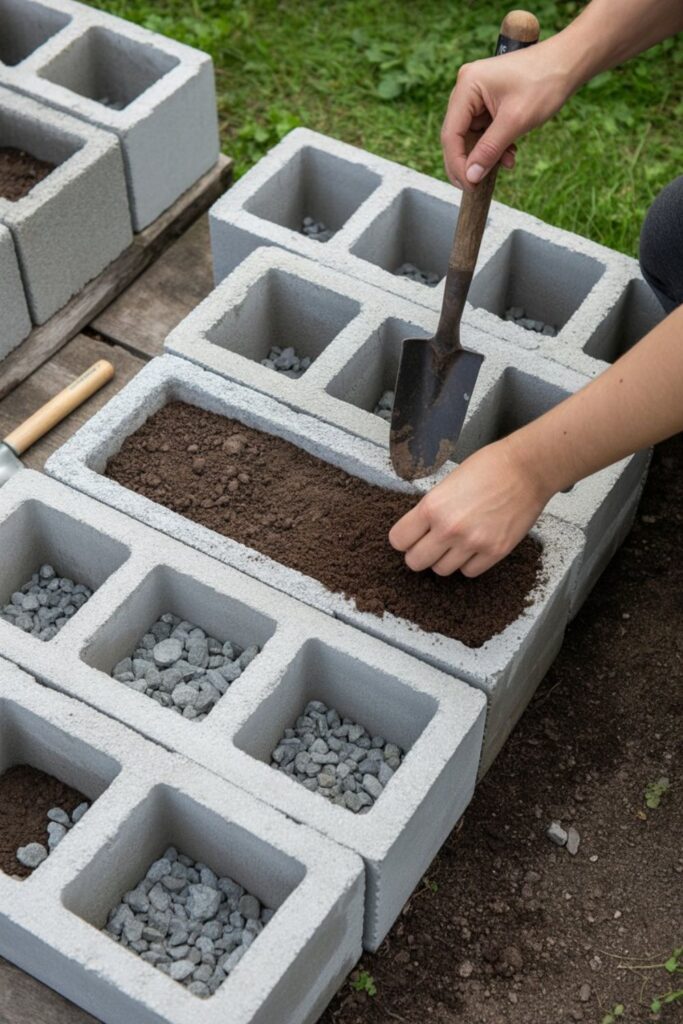
Proper preparation ensures healthy plant growth and prevents common problems that frustrate beginners. Fresh concrete blocks leach alkaline compounds that harm sensitive species.
Weathering neutralizes excessive alkalinity naturally. Leave new blocks exposed to rain and sun for 4–6 weeks before planting. This leaching period reduces pH from 9–10 down to more plant-friendly 7.5–8.0 levels. Accelerate the process by hosing blocks down daily for two weeks, allowing lime compounds to wash away gradually.
Sealing prevents moisture wicking in climates with extreme temperature swings. Brush interior cavity surfaces with concrete sealer or exterior latex paint, creating a barrier that maintains soil moisture. This proves especially valuable for water-intensive crops or regions experiencing drought conditions. Unsealed blocks work perfectly fine in moderate climates with consistent rainfall.
Drainage holes modification improves water management for moisture-sensitive plants. The standard block cavities drain adequately for most species, but succulents and cacti benefit from enhanced drainage. Drill 1/4-inch holes through the bottom of each cavity using a masonry bit. This simple modification prevents waterlogging that causes root rot in desert-adapted specimens.
Landscape fabric lining retains soil while allowing drainage. Cut fabric pieces slightly larger than cavity openings, press into place, and trim excess. This prevents soil from washing through when watering heavily. Alternative options include coffee filters, newspaper layers, or coconut coir mats all biodegradable materials that eventually integrate into the soil ecosystem.
Cinder Block Garden Bench and Seating Ideas
Functional seating emerges from the same blocks building your garden beds. These DIY garden projects create comfortable rest areas using simple construction techniques.
Basic benches require just 4–6 blocks and dimensional lumber. Place two blocks 4–5 feet apart to form supports. Stack additional blocks for height (typically 16–18 inches matches standard chair height). Lay 2×10 or 2×12 boards across the blocks no fasteners needed since gravity holds everything secure. Sand the wood smooth and apply outdoor stain or sealant for weather protection.
Built-in planters transform benches into living furniture. Use the hollow block cores as integrated planters by filling them with soil and trailing plants. Fragrant herbs like lavender or chamomile release scent when brushed against while sitting. This modular design combines seating, storage, and garden space within one footprint.
L-shaped configurations define outdoor rooms effectively. Arrange blocks to form right angles, creating corner seating that encourages conversation. Add weather-resistant cushions for comfort during extended outdoor entertainment. The block’s thermal mass stays cool on hot days, naturally temperature-regulating your seating area.
Fire pit surrounds using blocks provide safe, attractive gathering spaces. Build a circular or square wall 2–3 blocks high around a metal fire pit insert. Top with flagstone or concrete pavers creating a heat-resistant cap suitable for placing drinks or plates. This becomes the perfect spot for cool evenings spent roasting marshmallows or enjoying wine with friends.
Can You Use Cinder Blocks for Edible Gardens?
Food safety concerns prompt questions about growing vegetables in concrete block garden structures. Scientific evidence supports their use when properly managed.
Concrete composition includes cement, sand, aggregate, and sometimes fly ash none of which are toxic. Unlike pressure-treated lumber containing arsenic or copper compounds, standard blocks remain chemically inert after curing. The Portland Cement Association confirms that cured concrete does not leach harmful substances into surrounding soil or plants.
Alkalinity represents the primary consideration rather than toxicity. Fresh concrete raises soil pH to levels unsuitable for acid-loving crops. The weathering process described earlier neutralizes this issue within weeks. Soil testing ($10–15 at garden centers) confirms pH levels before planting sensitive vegetables. Most common garden vegetables tolerate pH 6.5–7.5 comfortably.
Lead contamination worries stem from confusion with older cinderblocks (ash-based products discontinued decades ago). Modern “cinder blocks” are actually concrete blocks containing zero coal ash or industrial byproducts. If using reclaimed blocks from demolished buildings, test for lead paint contamination on exterior surfaces. New blocks from retailers eliminate this concern entirely.
Organic certification standards vary by certifying agency. USDA organic rules focus on soil amendments and pest management rather than container materials. Many certified organic farms use concrete blocks successfully. Contact your certifier if planning to sell produce commercially, but home gardeners face no restrictions on block usage for edible crops.
How to Create a Cinder Block Outdoor Kitchen
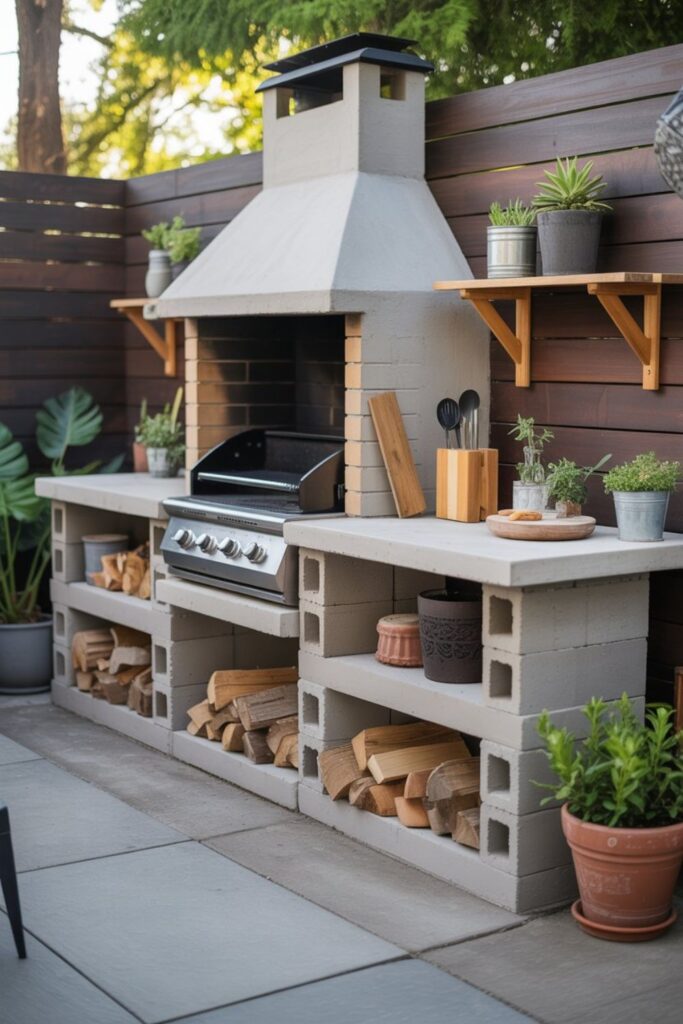
Outdoor decor reaches new heights with functional cinder block kitchen installations. These structures withstand weather while providing permanent cooking facilities.
Grill stations anchor outdoor cooking areas. Build a U-shaped counter using blocks stacked 3–4 high with concrete pavers or tiles topping the structure. Leave an open space sized to accommodate your specific grill model. The block walls provide wind protection and create storage cavities for grilling tools, propane tanks, or charcoal. Add a concrete countertop overhang for food prep space adjacent to the cooking surface.
Pizza ovens constructed from blocks deliver authentic wood-fired results. Create a raised platform base, then build oven walls using firebricks inside a block shell. The block exterior provides insulation while remaining cool enough to touch during operation. Leave an arched opening for pizza insertion and install a chimney for smoke ventilation. These ovens reach 700–800°F, producing restaurant-quality pizzas in 90 seconds.
Bar counters extend outdoor entertainment options significantly. Build an L-shaped or straight counter 42 inches high (standard bar height). Cap with weather-resistant countertop material like concrete, granite, or sealed wood. The hollow block cores store glassware, bottles, and bar tools conveniently. Add bar stools and string lights to create an inviting gathering space rivaling commercial establishments.
Sink stations complete full outdoor kitchens when plumbing access exists. Build a watertight concrete or stainless steel basin into your block countertop. Connect to exterior water lines and drainage. The block structure conceals plumbing while providing sturdy support for heavy sinks filled with dishes or ice-filled beverages.
Painting and Decorating Cinder Blocks
Aesthetic customization transforms industrial blocks into designer outdoor decor elements. Creative finishing techniques align structures with your landscape style.
Concrete paint specifically formulated for masonry provides durable color lasting 3–5 years. Clean blocks thoroughly with TSP (trisodium phosphate) cleaner, allow it to dry completely, then apply concrete primer. Use exterior masonry paint in colors complementing your home’s exterior. Bold colors like turquoise or coral create modern tropical vibes, while earth tones blend naturally with garden surroundings.
Staining offers translucent color that preserves concrete’s natural texture. Acid-based stains chemically react with concrete minerals, creating variegated, permanent color impossible to replicate with paint. Water-based concrete stains provide more color options with easier application. Both methods require sealing afterward to protect the finish from moisture and UV damage.
Mosaic tiles convert plain blocks into artistic focal points. Apply thin-set mortar to block surfaces and press broken tile pieces, glass, or pottery into patterns. This technique works exceptionally well for vertical garden structures where decorative faces remain visible. Grout the finished mosaic and seal with penetrating sealer to weatherproof your artwork.
Stenciling adds patterns without requiring artistic skills. Purchase or create stencils in geometric, floral, or custom designs. Secure stencils with painter’s tape and apply contrasting paint colors using foam brushes or spray paint. Mandala patterns create bohemian aesthetics, while geometric designs suit modern minimalist gardens.
Are Cinder Blocks Safe for Garden Use?
Safety questions arise when considering repurposed materials for growing spaces. Evidence-based information helps gardeners make informed decisions.
Structural stability depends on proper installation techniques. Blocks stacked without mortar rely on gravity and friction for stability. Two-block-high structures (16 inches) remain stable indefinitely when properly leveled. Structures exceeding three blocks high benefit from construction adhesive between layers or rebar driven through aligned cavities. Always position on level, compacted surfaces to prevent settling and tipping.
Child and pet safety requires attention during installation. Unsecured tall structures pose tipping hazards if children climb or pets burrow underneath. Mortar or adhesive eliminates this risk entirely. Round exposed edges using concrete grinders to prevent scrapes during active play. The blocks’ weight (30–40 pounds each) prevents them from becoming projectiles during normal garden activities.
Chemical safety information from manufacturers confirms low-risk profiles. Major producers including Cemex and Quikrete publish safety data sheets documenting concrete composition. These show zero volatile organic compounds (VOCs), heavy metals, or hazardous materials in standard concrete blocks. The primary health concern involves concrete dust during cutting and always wear dust masks when modifying blocks.
Weather resistance ensures decades of safe use. Concrete withstands freeze-thaw cycles better than wood or plastic alternatives. The material won’t splinter, crack from UV exposure, or leach chemicals as temperatures fluctuate. Properly constructed concrete block garden features require virtually no maintenance beyond occasional cleaning.
Cost Comparison: Cinder Blocks vs Other Garden Materials
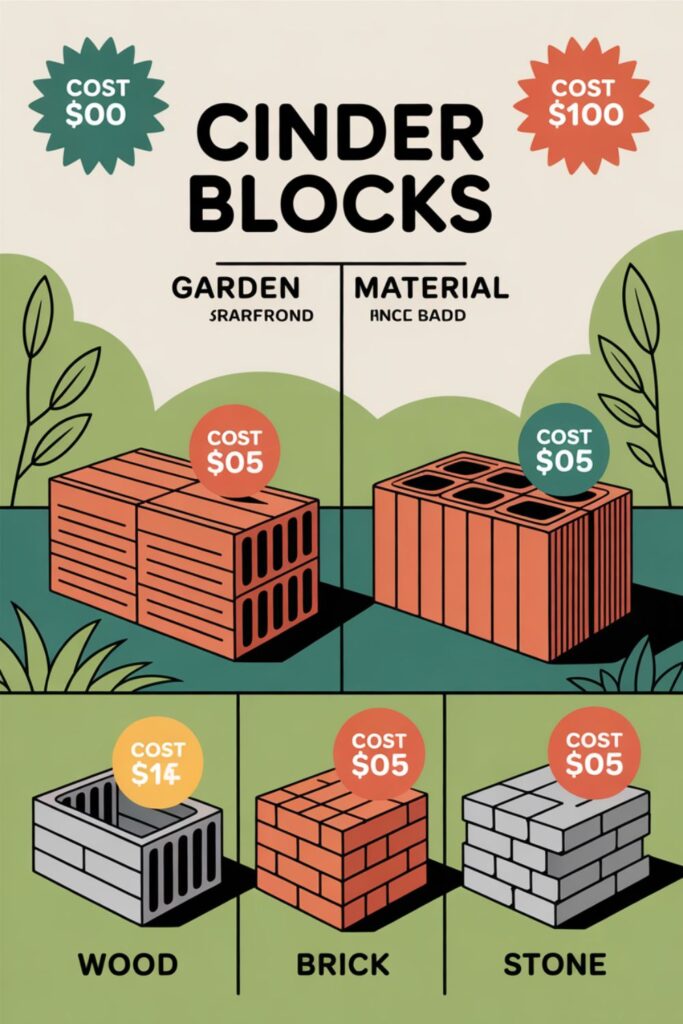
Budget analysis reveals why affordable landscaping professionals recommend blocks over alternatives. Real-world pricing demonstrates substantial savings.
Standard concrete blocks cost $1.50–3.00 each at major retailers. Building a 4×8 raised bed requires approximately 12 blocks ($18–36 total). Equivalent wooden raised bed kits cost $150–300, while cedar versions reach $400+. Composite materials marketed as maintenance-free alternatives command $250–500 for similar dimensions. The math clearly favors blocks for budget-conscious gardeners.
Long-term value calculation includes replacement costs. Untreated pine beds last 3–5 years before rot necessitates rebuilding. Cedar extends lifespan to 10–15 years with proper maintenance. Composite materials claim 20–25 year lifespans. Concrete blocks functionally last forever the initial investment remains the only investment. Amortized over 20 years, blocks cost pennies annually versus hundreds for wood alternatives.
Labor investment varies significantly between materials. Wooden beds require cutting, drilling, and fastening tasks demanding tools and skills many homeowners lack. Blocks simply stack without tools, fasteners, or carpentry knowledge. Most DIY garden projects using blocks complete in 2–3 hours versus full weekends for comparable wooden structures.
Aesthetic flexibility adds value beyond initial costs. Painted or stained blocks achieve any look from rustic farmhouse to sleek contemporary. Reconfigure layouts seasonally without demolition or waste. Add or remove sections as garden needs evolve. This adaptability prevents the costly mistakes permanent installations create when tastes or requirements change.
Cinder Block Fountain and Water Feature Ideas
Water elements introduce tranquil sounds and visual interest. Cinder block construction simplifies fountain building for non-professional installers.
Tiered fountains create elegant cascading effects using progressively smaller block levels. Stack 3–4 blocks for the base tier, cap with concrete pavers, then center 2–3 blocks for the middle tier. Top with a single block or decorative pot. Drill through centers to accommodate fountain pump tubing. The water recirculates from a hidden reservoir basin, pumping up through the tiers and spilling down block faces.
Wall-mounted spouts add sophistication to vertical surfaces. Attach a single block to fence or wall studs, drill through for plumbing, and install a decorative spout face. Water streams into a ground-level basin containing the pump and reservoir. This design works brilliantly in narrow side yards where floor space limits traditional fountain installation.
Pondless waterfalls minimize maintenance while maximizing sound effects. Build a raised spillway using stacked blocks, line with pond liner, and conceal the reservoir basin below decorative river rocks. Water cascades over block edges into the rock bed, then recirculates unseen. This sustainable gardening approach eliminates standing water that breeds mosquitoes while using less water than traditional ponds.
Bubbling urns combine blocks with ceramic or concrete vessels. Stack 2–3 blocks to desired height, hollow out top block cavity to accommodate urn, and run pump tubing up through block centers. Water bubbles from the urn rim, trickling down the sides onto surrounding rocks. This simple yet elegant design suits formal garden styles beautifully.
What Are Common Mistakes When Building with Cinder Blocks?
Learning from others’ errors saves time, money, and frustration. These frequent mistakes compromise concrete block garden projects unnecessarily.
Skipping ground preparation tops the mistake list. Blocks placed directly on grass or uneven soil settle unevenly, creating gaps and instability. Always remove vegetation, level thoroughly, and establish a compacted gravel base. This 30-minute investment prevents hours of corrective work later when structures tilt or separate.
Ignoring drainage needs causes plant health problems and structural issues. Blocks sitting in standing water wick moisture upward, potentially damaging plantings and accelerating concrete deterioration. Grade surrounding areas to direct water away from structures. Install French drains if building in low-lying areas prone to pooling.
Overloading hollow cores with wet soil stresses blocks beyond design limits. Each standard block cavity holds approximately 0.5 cubic feet of material. Wet soil weighs roughly 75 pounds per cubic foot. Four soil-filled blocks exceed 150 pounds within structural limits. However, adding full blocks on top of soil-filled bases creates compression issues. Partially fill lower courses or use lighter potting mixes instead of native soil.
Mixing block types creates aesthetic and structural inconsistencies. Standard blocks measure 8×8×16 inches, but decorative blocks, cap blocks, and half-blocks have different dimensions. Mixing types without planning produces misaligned courses and awkward gaps. Purchase all materials from one manufacturer to ensure dimensional compatibility.
Read More About: Cinder Block Flower Garden Ideas for a Colorful Outdoor Space
How to Winterize Your Cinder Block Garden
Cold climate gardeners protect investments through proper seasonal preparation. Concrete blocks withstand freezing temperatures, but plantings require attention.
Drainage becomes critical before freeze-thaw cycles begin. Empty all cinder block planters of annual plants and excess soil that might trap moisture. Water expanding during freezing can crack blocks, though this rarely occurs in properly maintained structures. Tip vertical stacks slightly forward to encourage water drainage from cavities.
Perennial protection preserves plants returning next spring. For hardy perennials overwintering in block cavities, add 2–3 inches of mulch over root zones. This insulates roots from temperature extremes while allowing necessary dormancy. Burlap wrapped around exposed block edges provides additional wind protection for borderline-hardy species.
Cover application shields structures from deicing salt and harsh weather. Heavy-duty tarps secured over raised bed ideas prevent snow accumulation weight while blocking salt spray from nearby sidewalks or driveways. Remove covers periodically during winter thaws to prevent mold growth in trapped moisture.
Indoor moving applies to containers small enough to transport. Individual blocks planted with tender perennials or tropical specimens move into unheated garages or basements. The concrete moderates temperature swings, protecting plants from both hard freezes and premature spring warming that damages emerging growth.
FAQs
How many cinder blocks do I need for a 4×8 raised bed?
A 4×8-foot raised bed requires 12 blocks for a single-layer perimeter (two 8-foot sides with 5 blocks each, two 4-foot ends with 1 block each). Most gardeners stack 2-3 layers for adequate depth, totaling 24-36 blocks. Purchase 2-3 extra blocks to account for breakage or design adjustments during installation.
Can cinder blocks leach chemicals into soil?
Modern concrete blocks contain cement, sand, and aggregate materials that remain chemically inert after curing. They do not leach toxic substances into soil or plants. Fresh blocks may initially raise soil pH due to lime content, but weathering for 4-6 weeks neutralizes this effect. Avoid vintage cinderblocks (ash-based products discontinued decades ago) if sourcing reclaimed materials.
What’s the difference between cinder blocks and concrete blocks?
True cinder blocks contained coal ash and were discontinued in the 1950s-60s. Today’s “cinder blocks” are actually concrete blocks made from Portland cement and aggregate. The terms are used interchangeably in modern contexts, though technically all current products are concrete blocks. Both work equally well for garden projects.
How long do cinder block gardens last?
Properly installed concrete block gardens last indefinitely, often 50+ years with zero maintenance. The concrete withstands freeze-thaw cycles, UV exposure, and moisture without deteriorating. This dramatically outlasts wooden beds (5-15 years) or plastic alternatives (10-20 years). The only maintenance involves refreshing soil and replanting seasonally.
Do I need to seal cinder blocks before planting?
Sealing is optional depending on climate and plant choices. Unsealed blocks work perfectly in moderate climates with regular rainfall. Seal interior cavities in extremely dry regions to prevent moisture wicking, or when growing water-intensive plants like tomatoes. Use concrete sealer or exterior latex paint, allowing 24-48 hours drying time before adding soil.
What size cinder blocks work best for gardens?
Standard 8×8×16-inch blocks suit most garden applications, offering ideal cavity size for plantings while maintaining structural stability. Half-blocks (8×8×8-inch) simplify corner construction and decorative patterns. Larger 12-inch blocks provide more planting volume but weigh 50+ pounds, making them difficult to maneuver. Stick with standard sizes unless specific design requirements dictate otherwise.
Conclusion
Garden cinder block ideas transform ordinary outdoor spaces into extraordinary living areas through simple, affordable construction methods. These versatile concrete blocks build everything from productive raised beds and vertical gardens to elegant seating areas and water features all without requiring professional skills or expensive materials. The modular design allows you to start small and expand gradually as confidence and ambition grow.
Smart gardeners recognize that sustainable gardening doesn’t demand massive budgets or complicated techniques. Cinder blocks deliver professional results at a fraction of traditional costs while outlasting virtually every alternative material. Whether you’re creating your first raised bed, designing an elaborate outdoor kitchen, or simply adding architectural interest with cinder block planters, these projects provide lasting value and satisfaction. Start planning your transformation today. Your dream garden awaits, one block at a time.