21+ Genius Corner Garden Ideas For Dead Spaces
That awkward corner where your fence meets the house sits empty except for weeds and discarded garden tools. You walk past it daily knowing it could look better, but corner landscaping feels tricky with its tight angles and odd dimensions. The truth is, corners offer unique opportunities.
The open garden beds can’t match natural boundaries that frame focal point plantings, vertical space perfect for climbing vines, and built-in shelter that creates microclimates for tender plants. These genius corner garden ideas turn problematic dead zones into your landscape’s most interesting features.
Why Garden Corners Deserve Special Attention
Garden corners naturally draw the eye as boundaries where two planes intersect, making them perfect locations for statement plantings that anchor your entire landscape design. Unlike center-yard beds that compete for attention, corner planting automatically creates visual endpoints that feel intentional and complete. These spaces frame views from multiple angles simultaneously, meaning your design efforts deliver impact from several vantage points rather than just one approach.
Awkward spaces in corners often result from neglect rather than true difficulty. Most corners offer excellent growing conditions; fence walls provide wind protection and reflect heat that extends growing seasons, while the convergence of structures creates natural supports for vertical elements. Smart gardeners recognize these advantages and exploit them, transforming overlooked corners into outdoor corner designs that become conversation pieces and genuinely improve how entire yards function and flow.
Vertical Corner Gardens That Maximize Space
Vertical gardens solve the fundamental challenge: corners present limited ground space combined with substantial wall area begging for visual interest. Installing trellises, lattice panels, or wire grids against both corner walls creates three-dimensional growing space that supports climbing plants while keeping valuable ground area open for lower plantings. This layered approach delivers dramatically more plant diversity and visual complexity than flat beds ever achieve.
Train clematis, climbing roses, or jasmine up corner structures for living walls that bloom at different seasons. Clematis varieties flower from early spring through fall depending on cultivar, while climbing roses provide summer fragrance and repeat blooms. Jasmine adds an evening scent that transforms corners into sensory destinations. Mix these flowering climbers with evergreen vines like Carolina jessamine or climbing hydrangea for year-round coverage that maintains privacy and visual interest even during winter months.
Living Wall Systems for Modern Corners
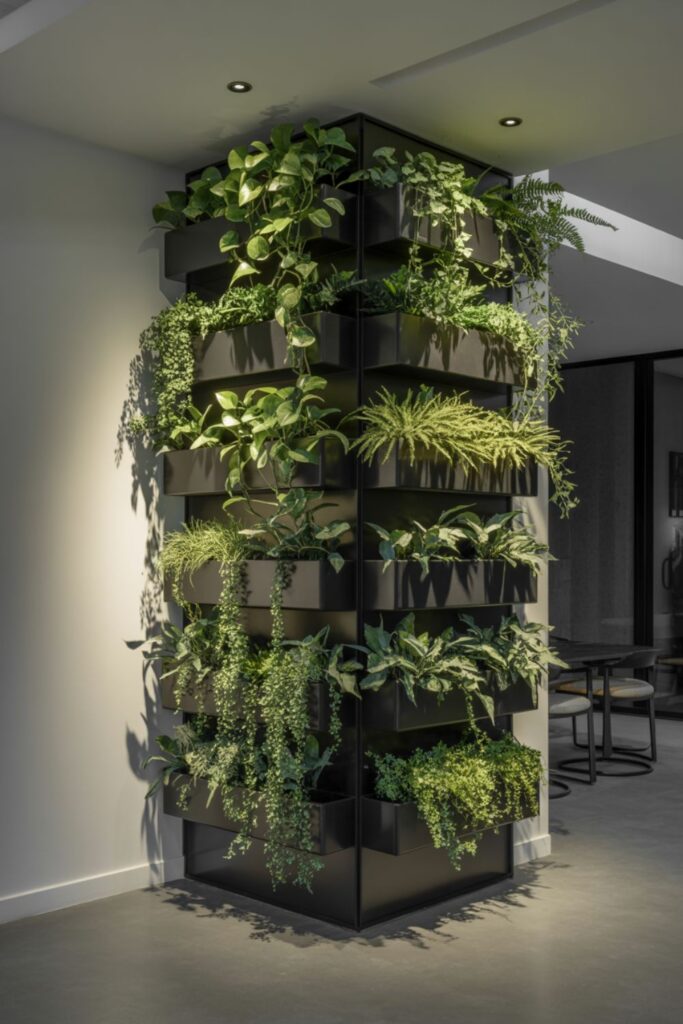
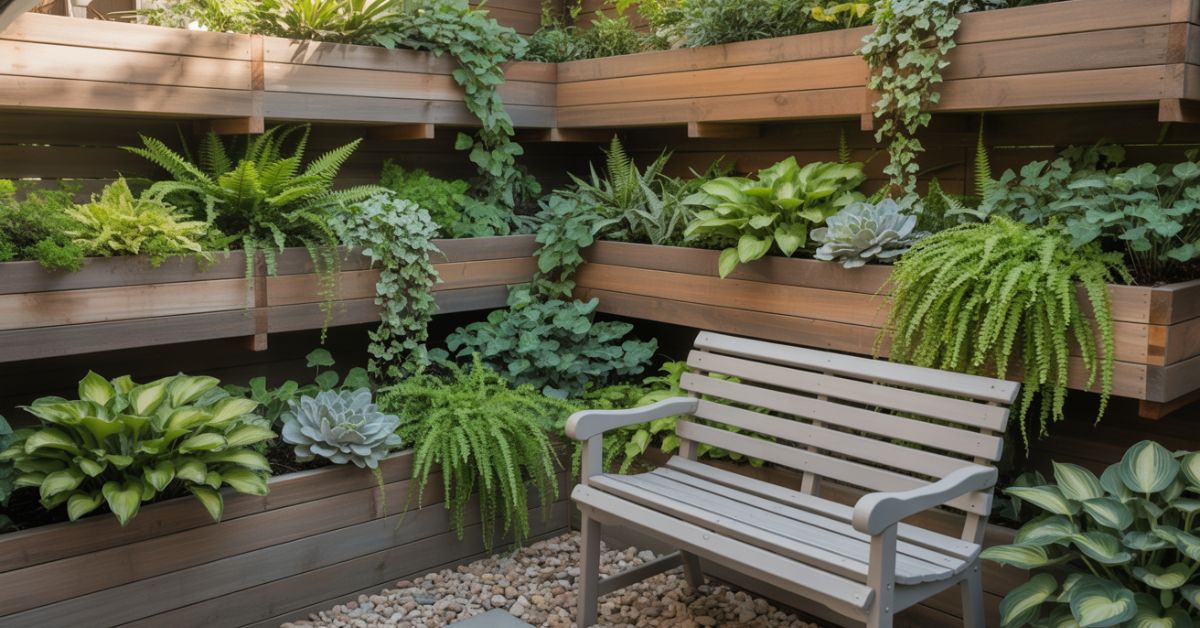
Modular living wall systems turn bare corner walls into vertical gardens packed with herbs, succulents, or flowering annuals. These pocket planters mount directly to fences or walls, creating geometric patterns that feel contemporary and intentional. Fill pockets with trailing plants that soften hard edges, strings of pearls, creeping jenny, or trailing petunias cascade downward while upright herbs like rosemary and thyme provide structural contrast.
Living walls work brilliantly in shaded corners where traditional gardens struggle. Ferns, hostas, and shade-tolerant succulents thrive in vertical pocket systems that improve air circulation around foliage, reducing the mildew problems that plague ground-level shade plantings. Water these systems with drip irrigation on timers to maintain consistent moisture without daily hand-watering, making vertical corners surprisingly low-maintenance once established.
Read More About: 31+ Best Fast Growing Trees for Privacy
Corner Water Features That Create Focal Points
Small fountains or bubbling urns transform corners into tranquil focal point destinations that draw visitors through gardens rather than past them. The sound of moving water masks traffic noise and creates auditory interest that flat plantings can’t provide. Position water features slightly off-center within corners rather than directly in the angle; this asymmetrical placement feels more natural while still anchoring the space effectively.
Self-contained fountain systems require no plumbing since they recirculate water from hidden reservoirs. Surround fountain bases with moisture-loving plants like cardinal flower, Japanese iris, or marsh marigold that thrive in the elevated humidity water features create. Add river rocks or pebbles around the fountain perimeter to create transitional zones between water and plantings, improving both aesthetics and function by preventing soil splash that clouds water.
Corner Pond Installations
Larger corners accommodate small ponds (4-6 feet diameter) that support aquatic plants and attract wildlife. Preformed pond liners simplify installation: dig a hole matching liner depth, set the liner, backfill edges, and fill with water. Stock ponds with water lilies, lotus, or floating water lettuce while edging with moisture-loving perennials. The corner location provides natural shelter that helps ponds maintain stable temperatures while fence walls create attractive backdrops that make water features feel integrated rather than afterthoughts.
Corner ponds work especially well in shaded locations where traditional flower beds disappoint. Shade-tolerant aquatic plants like pickerel rush, sweet flag, and certain water lily varieties flourish without full sun, turning problem corners into unique garden rooms. Add a simple bench beside the pond to create meditation spaces that capitalize on water’s calming presence.
Raised Corner Beds With Architectural Interest
Raised corner beds solve drainage problems while adding dimension that makes gardens feel more developed and intentional. Build beds using stacked stone, timber, or composite materials that complement your home’s exterior. Triangular or L-shaped raised beds fit corner angles perfectly, creating clean lines that define spaces clearly while providing excellent soil depth for root vegetables, perennials, or shrub plantings.
Height variations within corner beds create layered plantings that prevent the flat, monotonous look single-level gardens often produce. Build beds in tiers: a lower 12-inch bed along one fence transitions to an 18-24 inch bed in the corner itself, then steps back down along the perpendicular fence. This terraced approach provides planting niches at multiple levels while improving visibility so back-row plants don’t disappear behind front specimens.
Keyhole Garden Designs for Corners
Keyhole gardens adapt traditional circular designs to corner spaces by cutting the circle in half and positioning the straight edge against fence lines. The signature keyhole, a notched path extending to the garden center, allows easy access for planting, harvesting, and composting without stepping on growing areas. Central compost baskets feed surrounding plants while the raised bed structure and efficient layout maximize production in minimal space.
Fill keyhole corners with compact vegetables like lettuce, radishes, carrots, and herbs that produce heavily in small areas. The accessible design suits older gardeners or those with mobility limitations since all planting areas stay within arm’s reach from the keyhole path. Surround keyholes with low hedges of boxwood or lavender to define boundaries while adding evergreen structure that keeps corners attractive beyond growing seasons.
Corner Seating Areas That Invite Gathering
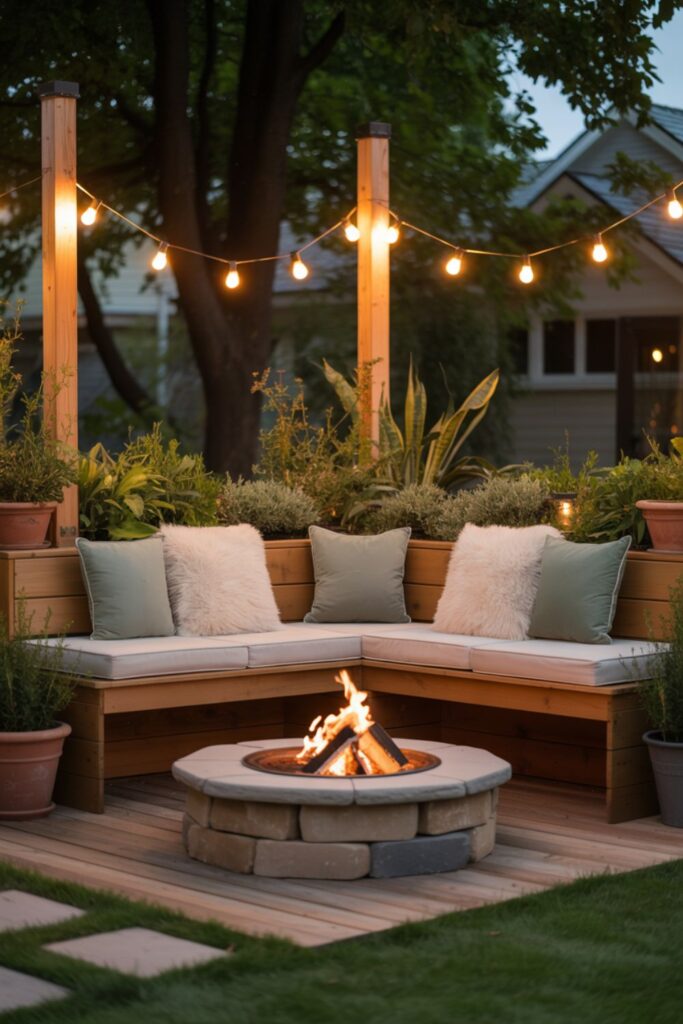
Garden structures like built-in corner benches transform utilitarian spaces into destination seating areas that encourage outdoor time. L-shaped benches fit naturally into corner angles, providing comfortable seating for 4-6 people while defining space boundaries. Add cushions in weather-resistant fabrics and position small side tables nearby for drinks and reading materials, creating genuinely functional outdoor rooms rather than purely decorative gardens.
Surround seating corners with fragrant plants that enhance relaxation lavender, Russian sage, and gardenias release scent when brushed or warmed by sun. Install overhead structures like pergolas or shade sails above corner seating to provide sun protection that extends usability into hot afternoons. Train wisteria, grapevines, or climbing roses over pergola beams for living ceilings that provide dappled shade while adding vertical beauty.
Fire Pit Corners for Year-Round Use
Small fire pits (24-30 inches diameter) anchor corners as evening gathering spots that extend outdoor season into cool months. Use fire-resistant materials like flagstone or pavers for bases, maintaining proper clearances from fence walls and overhead structures. Surround fire pits with curved seating built-in stone benches or moveable chairs arranged in conversational groupings that take advantage of corner shelter from winds.
Plant heat-tolerant species around fire pit corners lavender, yarrow, and ornamental grasses handle reflected heat better than tender perennials. Keep plantings low (under 18 inches) within 5 feet of fire features to maintain safety clearances while preserving open views. The combination of fire, comfortable seating, and thoughtful plantings creates corners that become family favorites for evening relaxation and entertaining.
Container Gardens Tailored to Corner Spaces
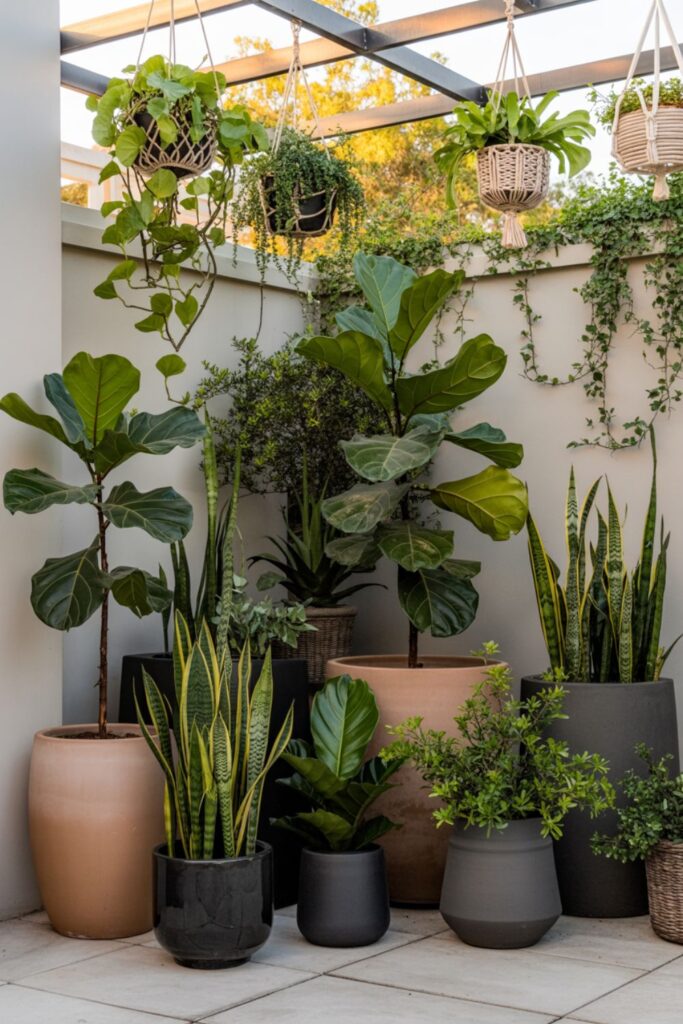
Small garden spaces benefit enormously from container groupings that provide flexibility impossible with in-ground plantings. Arrange containers in graduated heights tall urns in the corner itself flanked by medium pots along each wall, with lowest containers defining the outer curve. This arrangement creates depth and dimension while allowing seasonal plant swaps that keep corners fresh year-round.
Choose containers in coordinating colors and materials rather than identical pots for visual interest without chaos. Terracotta, glazed ceramic, and natural stone containers mix beautifully when unified by color palette blues and grays for cool schemes, or terracotta and bronze tones for warmer looks. Vary container shapes too cylindrical pots next to rectangular planters beside rounded bowls creates rhythm that feels curated rather than haphazard.
Tiered Corner Plant Stands
Plant stands designed for corners utilize vertical space efficiently while displaying collections beautifully. Three-tier corner stands hold 6-9 pots in less than 4 square feet, perfect for herb gardens, succulent collections, or seasonal color rotations. Metal stands suit modern aesthetics while wooden versions feel cottage-style and traditional. Position stands where they receive appropriate light for your plant selections, full sun corners for herbs and sun-lovers, or shaded spots for ferns and shade perennials.
Rotate plants on tiered stands seasonally to showcase whatever looks best, spring bulbs give way to summer annuals, then fall mums and ornamental peppers, followed by winter evergreens and berry-laden branches. This rotation strategy means corner displays never look tired or past-peak since you’re constantly refreshing with seasonally appropriate specimens.
Corner Trellises With Climbing Plant Combinations
Freestanding corner trellises create instant architectural interest without permanent installation commitments. These structures anchor planting schemes while supporting annual vines that change yearly based on your preferences. Morning glories, black-eyed Susan vine, and hyacinth bean provide fast-growing coverage with prolific blooms, while perennial climbers like clematis and climbing hydrangea offer permanent solutions that improve annually.
Combine multiple vine varieties on single trellises for extended bloom periods and color variety. Pair early-blooming clematis with late-summer passion flower so your corner maintains interest from April through October. Mix flowering vines with ornamental varieties like golden hops or variegated kiwi that offer colorful foliage even when blooms fade. This succession planting approach ensures corners never look bare or unfinished regardless of season.
Edible Corner Trellises
Vertical vegetable growing maximizes food production in corner locations traditionally wasted. Train pole beans, cucumbers, peas, and indeterminate tomatoes up sturdy trellises to free ground space for lettuce, herbs, or root vegetables planted at the trellis base. This intercropping delivers multiple harvests from single corners while the vertical elements provide spatial design interest that purely ornamental gardens don’t always achieve.
Espalier fruit trees against corner walls for long-term edible landscaping that combines beauty with function. Apple, pear, and fig trees train easily into flat fans or candelabra shapes that fit narrow corners perfectly. These living sculptures produce fruit while adding formal elegance and winter branch interest. Underplant espaliered trees with culinary herbs like thyme, oregano, and sage that tolerate root competition while providing additional harvests.
Shade Corner Solutions That Actually Thrive
Shaded corners challenge gardeners since most flowering plants demand sun, but shade-loving species create lush, peaceful retreats in these difficult spots. Hostas lead shade gardens with varieties ranging from miniature 6-inch specimens to giant 4-foot clumps, offering foliage colors from blue-green to chartreuse and variegated combinations. Mass hostas in corners for bold statements, surrounding them with delicate ferns that provide textural contrast against hosta’s substantial leaves.
Astilbe adds vertical color to shaded corners with feathery plumes in pink, white, red, or purple that bloom from late spring through summer depending on variety. These moisture-loving perennials pair beautifully with bleeding hearts, brunnera, and coral bells to create layered plantings with overlapping bloom times. Add shade-tolerant bulbs like caladiums for tropical effects or wood hyacinths for early spring interest before perennials fill in.
Creating Woodland Corner Gardens
Transform shaded corners into woodland vignettes using native shade plants that evoke forest floors. Trillium, Solomon’s seal, native ginger, and mayapple create naturalistic plantings that feel discovered rather than designed. Add fallen logs or moss-covered stones as hardscape elements that reinforce the woodland theme while providing habitat for beneficial insects and amphibians.
Woodland corners require less maintenance than sun gardens once established native plants adapted to forest conditions tolerate neglect and compete well against weeds. Mulch heavily with shredded leaves or pine needles to suppress weeds while maintaining the natural aesthetic. These low-maintenance corners suit busy gardeners or those wanting beautiful spaces without constant intervention.
Corner Herb Spirals for Kitchen Gardens
Herb spirals pack diverse growing conditions into compact footprints perfect for corner locations. These coiled raised beds spiral upward from ground level to 3-4 feet high, creating microclimates that suit different herb requirements Mediterranean herbs like rosemary and lavender thrive in the dry, sunny spiral top while moisture-loving mint and parsley flourish in the cooler, moister base. Build spirals using stacked stone, urbanite (recycled concrete), or bricks arranged in tightening circles.
Position herb spirals in sunny corners near kitchen doors for convenient harvesting during meal preparation. The vertical structure provides visual interest from multiple angles while the spiral form feels organic and intentional rather than rigid. Plant perennial herbs like sage, oregano, and thyme in upper tiers where they’ll return yearly, using annual spaces near the base for basil, cilantro, and dill that need replanting each season.
Corner Pollinator Gardens That Support Wildlife
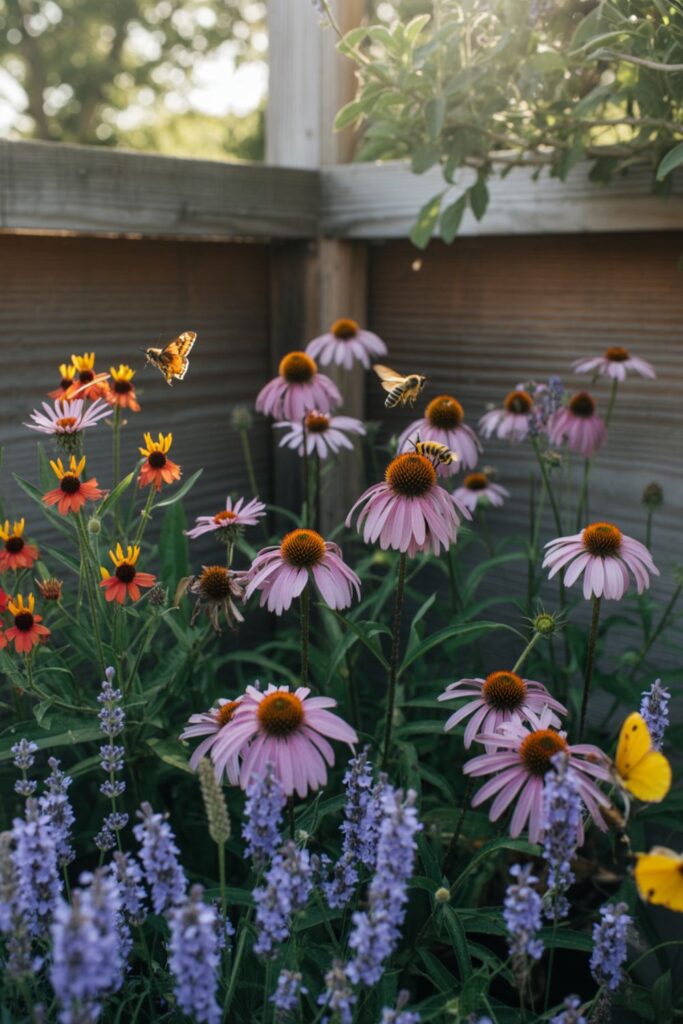
Dedicate corners to pollinator plantings that support bees, butterflies, and hummingbirds while creating constantly changing displays as different species bloom. Choose native plants adapted to your region coneflowers, black-eyed Susans, milkweed, and bee balm in eastern regions, or California poppies, penstemon, and lupines in western areas. Native species support far more insect diversity than exotic ornamentals, making corner pollinator gardens genuinely beneficial to local ecosystems.
Layer pollinator corners by bloom time so flowers appear March through October spring bulbs and early perennials transition to summer bloomers, then fall asters and sedum extend the season. Include host plants that butterfly larvae require milkweed for monarchs, parsley for swallowtails, and native grasses for skippers. These complete ecosystems transform corners into wildlife observation stations where you’ll discover new species regularly.
Adding Water Sources for Pollinators
Small birdbaths or shallow dishes filled with pebbles and water provide essential hydration for pollinators visiting corner gardens. Position water sources in partial shade to slow evaporation while keeping them visible from windows where you can observe visitors. Change water every 2-3 days to prevent mosquito breeding while maintaining fresh supplies for butterflies and bees that need water for temperature regulation and nest building.
What Plants Work Best in Corner Gardens?
Corner plant selection depends on light conditions and design goals, but certain species consistently deliver excellent results. For sun: climbing roses, clematis, Russian sage, daylilies, and ornamental grasses create triangular beds with height, color, and texture. Shade corners thrive with hostas, ferns, astilbe, and coral bells that tolerate low light while providing substantial visual impact. Choose plants with extended interest variegated foliage, interesting bark, or seed heads that remain attractive beyond bloom periods.
Evergreen shrubs like boxwood, holly, or dwarf conifers provide year-round structure that keeps corners attractive during winter when perennials die back. Mix evergreens with deciduous flowering shrubs like hydrangeas or butterfly bush for seasonal color changes within permanent frameworks. This combination ensures corners never look empty or neglected regardless of season.
How Do You Make Small Corners Look Bigger?
Create depth illusions by positioning largest plants and darkest colors in corners themselves, graduating to smaller plants and lighter colors as you move outward. This forced perspective tricks eyes into perceiving more distance than actually exists. Mirrors mounted on corner walls amplify this effect, positioning mirrors to reflect attractive plantings or garden features, visually doubling space while adding unexpected light to shaded areas.
Diagonal pathways leading into corners create movement and suggest space continues beyond visible boundaries. Use curved bed edges rather than straight lines; curves feel more spacious and natural while softening the angular geometry corners naturally possess. Avoid cluttering small corners with too many elements and edit ruthlessly, keeping only features and plants that truly earn their space through beauty or function.
Read More About: 25+ Beautiful Fall Planter Ideas for a Stunning Autumn Outdoor Space
Can You Grow Vegetables in Garden Corners?
Absolutely corners often provide ideal vegetable growing conditions with shelter from winds and reflected heat from adjacent walls. Vertical crops like pole beans, peas, and indeterminate tomatoes maximize production in limited space, while compact varieties of squash, cucumbers, and melons train easily up trellises to free ground space. Succession plant fast-growing crops like lettuce, radishes, and baby carrots every 2-3 weeks for continuous harvests from spring through fall.
Corner vegetable gardens benefit from intensive planting methods like square-foot gardening that maximize yields per square foot. Amend soil heavily with compost to support dense plantings, and incorporate slow-release organic fertilizers that feed plants throughout growing seasons. The natural boundary corners make crop rotation and pest management easier compared to open garden beds where problems spread more readily.
What’s the Best Way to Light Corner Gardens?
Corner features deserve lighting that extends their beauty into evening hours. Up-lights positioned at ground level illuminate vertical elements like trellises, arbors, or tall plants from below, creating dramatic shadows and emphasizing height. Spot-lights highlight specific focal point features like sculptures, water features, or specimen plants, drawing attention to corners after dark. String lights or lanterns add ambient illumination that makes corners feel cozy and inviting for evening relaxation.
Solar path lights along borders define corner boundaries while providing subtle illumination that makes navigation safe without overwhelming planted areas. Choose warm white LEDs (2700-3000K) that complement plant colors better than cool blue-white bulbs that wash out foliage and flowers. Layer different lighting types ambient, task, and accent to create depth and dimension that makes corner gardens feel professionally designed.
Frequently Asked Questions
How do you landscape an awkward corner in your yard?
Start by defining the corner’s purpose seating area, garden bed, or focal point feature. Install edging to create clear boundaries, then add vertical elements like trellises or tall plants that draw eyes upward. Layer plantings by height with tallest specimens in back corners, graduating forward to lowest plants at outer edges. This approach transforms awkward angles into intentional design features that anchor surrounding landscapes.
What should I put in the corner of my garden?
Corner content depends on garden style and functional needs. Decorative options include water features, sculptures, or specimen plants like Japanese maples. Functional choices include compost bins disguised with lattice and climbing vines, storage sheds screened by shrubs, or vegetable gardens maximizing sun exposure. Consider sight lines from main viewing areas position attractive features where they’ll be seen, practical elements where screening makes them invisible.
How wide should a corner garden bed be?
Maintain 3-4 foot depths for corner beds to ensure easy access to all plants without stepping into growing areas. Deeper beds (5-6 feet) work if you include stepping stones or access paths that allow maintenance without soil compaction. Remember beds appear larger in corners than open areas due to the confined space a 4-foot corner bed feels more substantial than the same size bed in a yard’s center.
Can I use pots instead of planting directly in corner ground?
Container gardens offer excellent corner solutions with complete flexibility for seasonal changes and plant experimentation. Arrange pots in graduated heights and cluster odd numbers (3, 5, 7) for visual balance. Containers work especially well in difficult corners with poor soil, limited space for digging, or where you’re renting and can’t make permanent landscape changes. Mix container sizes and styles within a unified color palette for cohesive looks.
How do you maintain plants in hard-to-reach corners?
Choose low-maintenance, drought-tolerant plants that don’t require constant deadheading or pruning for difficult corners. Install drip irrigation or soaker hoses on timers to automate watering. Position steppers or small pavers to provide access without compacting soil. Mulch heavily to suppress weeds that would otherwise require regular removal from tight spaces. Select disease-resistant varieties that won’t need spraying or treatment throughout growing seasons.
Conclusion
Genius corner garden ideas transform neglected awkward spaces into landscape highlights that anchor entire yards while maximizing every square foot of growing area. The strategies outlined here from vertical gardens and water features to raised corner beds and pollinator plantings prove corners offer unique advantages rather than limitations when approached with creativity and purpose. Smart corner landscaping exploits natural boundaries and shelter while creating focal point destinations that draw attention and encourage exploration throughout outdoor spaces.
Start your corner transformation by honestly assessing existing conditions including sun exposure, soil quality, and access limitations, then select approaches that work with rather than against these realities. Remember that the most successful outdoor corner designs balance aesthetics with function, creating spaces that look beautiful while serving practical purposes like vegetable production, wildlife support, or comfortable seating. Your investment in corner planning and implementation delivers disproportionate returns since these formerly wasted spaces become conversation pieces and genuinely improve how you experience and use your entire property throughout every season.