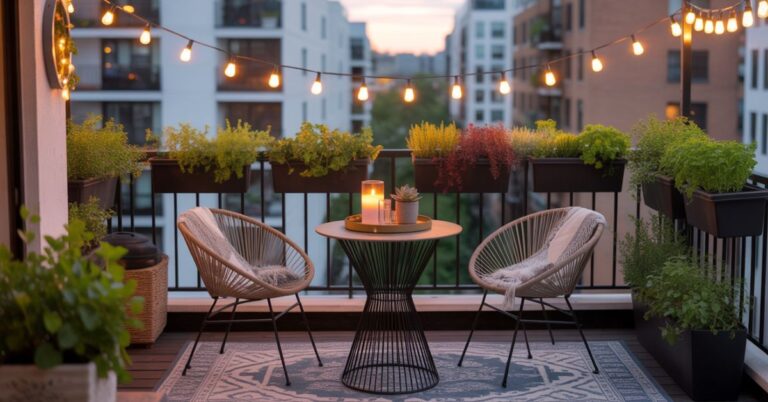
Best Home Garden Design Ideas for a Stunning Outdoor Space

Your backyard feels like wasted potential. Every time you look outside, you see an unorganized patch of grass with random plants that never quite come together. You want a space where you can relax, entertain guests, or grow fresh vegetables, but you don’t know where to start. The confusion about home garden design keeps you stuck in analysis paralysis while your outdoor area remains underwhelming.
This frustration compounds when you see neighbors with stunning garden layouts that seem effortlessly beautiful. You wonder if creating a cohesive outdoor space requires hiring an expensive landscape design professional or if there’s a way to do it yourself without breaking the bank or making costly mistakes.
Here’s the good news: designing your home garden design don’t require a degree in horticulture or a massive budget. With the right approach to planning, understanding your space’s unique conditions, and applying proven design principles, you can transform any yard into a functional and aesthetically pleasing retreat. This comprehensive guide walks you through every step of the home garden design process, from initial assessment to final planting, so you can create the outdoor oasis you’ve been dreaming about.
Read More About: Top Cool Garden Ideas to Upgrade Your Yard
Understanding Your Garden Space and Conditions
Before you plant a single seed or move any soil, you need to understand what you’re working with. Your backyard garden has unique characteristics that will determine which plants thrive and which design elements work best.
Start by observing how sunlight moves across your yard throughout the day. Spend a weekend noting which areas receive full sun (6+ hours), partial shade (3-6 hours), or full shade (less than 3 hours). This information directly impacts your plant selection and where you position garden beds. A vegetable garden needs full sun, while a shade garden under trees requires completely different plants. Take photos at different times to document the light patterns, as they change seasonally when trees leaf out or lose foliage.
Next, assess your soil quality and drainage. Dig a hole about 12 inches deep in several locations and examine the soil texture. Sandy soil drains quickly but needs frequent watering, while clay soil holds moisture but can become waterlogged. Pour water into the test holes and time how long it takes to drain water should disappear within 24 hours for healthy drainage. Poor drainage causes root rot and limits your planting options, but you can address this through raised garden beds or by amending the soil with organic matter. Understanding your climate zone also guides plant selection, as you’ll want species that can survive your area’s temperature extremes and frost dates.
Creating a Functional Garden Layout That Works
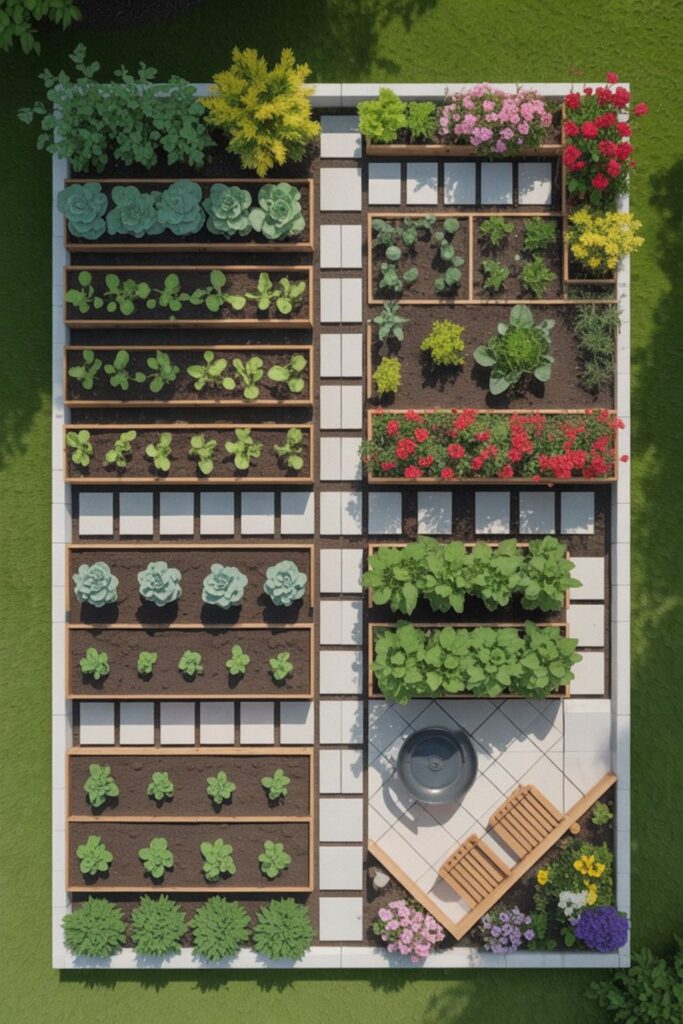
A well-planned garden layout balances beauty with practicality. Your outdoor space planning should reflect how you actually want to use the area, not just how it looks in a magazine photo.
Divide your yard into functional zones based on activities. You might designate separate areas for dining, lounging, playing, and gardening. This zoning approach creates purpose for each section while maintaining visual flow throughout the space. For example, place your vegetable garden beds close to the kitchen for convenient harvesting, while positioning a seating area where it catches evening sun or offers shade during hot afternoons. Consider traffic patterns and create clear garden pathways that connect these zones logically. People naturally take the shortest route, so work with those instincts rather than against them.
Scale matters tremendously in home garden design. A common mistake is making garden beds too small or pathways too narrow. Garden beds should be at least 3-4 feet wide for visual impact and practical planting, while main pathways need 4-5 feet of width for comfortable passage. Sketch your garden layout on graph paper or use free online tools to visualize proportions before committing to permanent structures. Include measurements for patios, pergolas, and other hardscaping elements to ensure they’re appropriately sized for your space. A tiny patio in a large yard looks lost, while oversized features overwhelm small backyards.
What Are the Essential Elements of Garden Structure?
Every successful home garden design incorporates structural elements that provide year-round interest and define the space’s character. These components form the backbone of your landscape design.
Hardscaping includes all non-living features like patios, garden pathways, retaining walls, fences, and water features. These permanent elements should be installed first since they’re difficult to change later. Natural stone, brick, gravel, and wood create different aesthetic effects and choose materials that complement your home’s architecture and your regional style. A modern home pairs well with clean-lined concrete pavers and steel planters, while a cottage-style house suits irregular flagstone and rustic wooden fences. Hardscaping also solves practical problems like erosion control, defining boundaries, and creating level areas on slopes.
Vertical structures add dimension and functionality to flat spaces. Pergolas, arbors, trellises, and fences create privacy, support climbing plants, and establish focal points that draw the eye upward. A pergola over a seating area provides partial shade and architectural interest, while a trellis covered in flowering vines softens a blank wall. These vertical elements are especially valuable in small yards where ground space is limited but you can expand upward. They also create the “outdoor room” feeling that makes gardens more inviting by defining boundaries without closing off the space entirely.
Selecting Plants for Visual Appeal and Practicality
Plant selection makes or breaks your home garden design. The right plants provide color, texture, and fragrance while requiring maintenance levels that fit your lifestyle.
Layer plants by height to create depth and visual interest. Place tall specimens like ornamental grasses, shrubs, or small trees in the back of garden beds (or center of island beds), medium-height perennials in the middle, and low-growing groundcovers or annuals along the front edge. This layering technique ensures every plant remains visible and the garden looks full rather than flat. Include a mix of evergreen and deciduous plants so your garden has structure in winter when flowering plants die back. Evergreens like boxwood, holly, and juniper provide year-round green backbones.
Choose a color scheme to create cohesion throughout your outdoor space. Monochromatic gardens using variations of one color feel sophisticated and calming, while complementary color combinations (opposites on the color wheel like purple and yellow) create vibrant energy. Analogous colors that sit next to each other on the wheel like blues, purples, and pinks offer harmony with subtle variety. Don’t forget foliage color, which lasts far longer than flowers. Silver, chartreuse, burgundy, and variegated leaves add season-long interest. Repeat key plants throughout the garden to establish rhythm and unity rather than using every species just once.
How Do You Design Garden Beds for Maximum Impact?
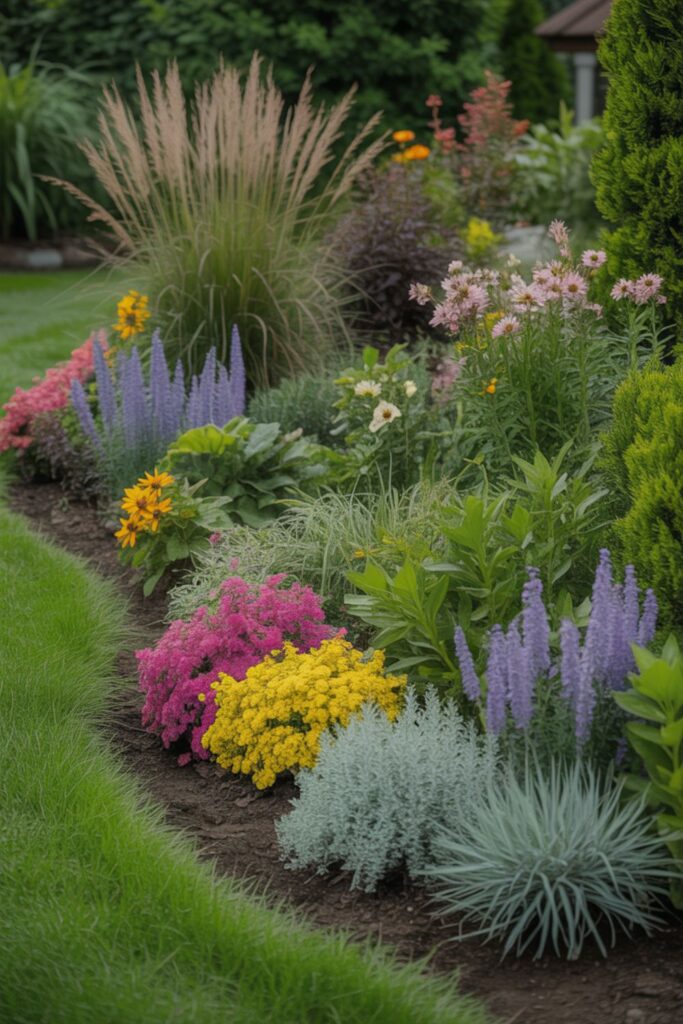
Garden beds serve as the primary planting areas in most home garden designs, and their shape, size, and placement dramatically affect the overall look.
Curved garden beds create a naturalistic, flowing feel that’s more forgiving of imperfect lines and softens geometric hardscaping. Straight-edged beds with right angles produce a formal, orderly appearance that complements contemporary architecture. Island beds that stand freely in lawn areas work well for creating focal points or dividing large spaces, while border beds against fences, walls, or property lines maximize planting areas in small yards. The bed edges themselves use metal, plastic, stone, or brick edging to create clean separation between beds and lawn, which reduces maintenance by preventing grass from creeping into planting areas.
Planting zones within beds should group plants with similar water, sunlight, and soil needs. Mediterranean herbs that prefer dry conditions shouldn’t share space with moisture-loving ferns. This zoning approach simplifies maintenance since you can water different areas according to plant requirements rather than treating the entire garden uniformly. Raised garden beds solve multiple problems simultaneously; they improve drainage, warm up earlier in spring, reduce bending for easier access, and allow you to control soil quality completely. Build them 18-24 inches high using rot-resistant wood, stone, or composite materials, then fill with quality soil amended with compost.
Incorporating Pathways and Circulation Patterns
Garden pathways do more than connect point A to point B; they guide visitors through the space, create rhythm, and establish the garden’s style through material choices.
Primary pathways should accommodate two people walking side by side comfortably, requiring 4-5 feet of width. Secondary paths that lead to less-trafficked areas can narrow to 2-3 feet. Straight paths feel formal and speed movement, while curved garden pathways slow visitors down and create anticipation about what’s around the bend. Use primary path materials that match your home’s style brick for traditional homes, decomposed granite for casual landscapes, bluestone for upscale contemporary designs. Stepping stones through lawn or groundcover create informal secondary paths with minimal expense.
Path materials affect maintenance requirements significantly. Gravel paths drain well and cost less but need periodic replenishment and edge restraint to prevent spreading. Mulch paths decompose and need replacement every few years but feel soft underfoot and suit woodland gardens perfectly. Solid pavers, flagstone, or concrete require the highest initial investment but last decades with virtually no maintenance beyond occasional cleaning. Whatever material you choose, ensure the path surface sits slightly above surrounding soil level to prevent water pooling and mud accumulation during rain.
What About Adding Water Features and Focal Points?
Focal points give the eye somewhere to rest and create memorable moments in your home garden design. These features anchor the space and express your personal style.
Water features add sensory richness through sound, movement, and reflections. A simple container fountain works in small spaces and on budgets, requiring just a glazed pot, small pump, and electrical outlet. Larger ponds support aquatic plants and fish, creating entire ecosystems, but demand more maintenance and careful planning for drainage and lining. Pondless waterfalls offer the sight and sound of moving water without standing water that collects debris or poses safety concerns for young children. Position water features where you’ll enjoy them most near seating areas where you can hear the water’s calming effect or visible from inside the house to extend your view.
Other focal point options include sculptures, ornamental containers, specimen plants, or architectural elements like obelisks and gazing balls. Choose pieces that reflect your personality rather than generic garden center statuary. An interesting birdbath, vintage farm equipment, or colorful ceramic pots can serve as conversation starters. Place focal points at path intersections, the end of sight lines, or where they create surprise as you round a corner. One substantial focal point per garden area works better than multiple competing elements that create visual clutter.
Designing for Year-Round Interest and Seasonal Changes
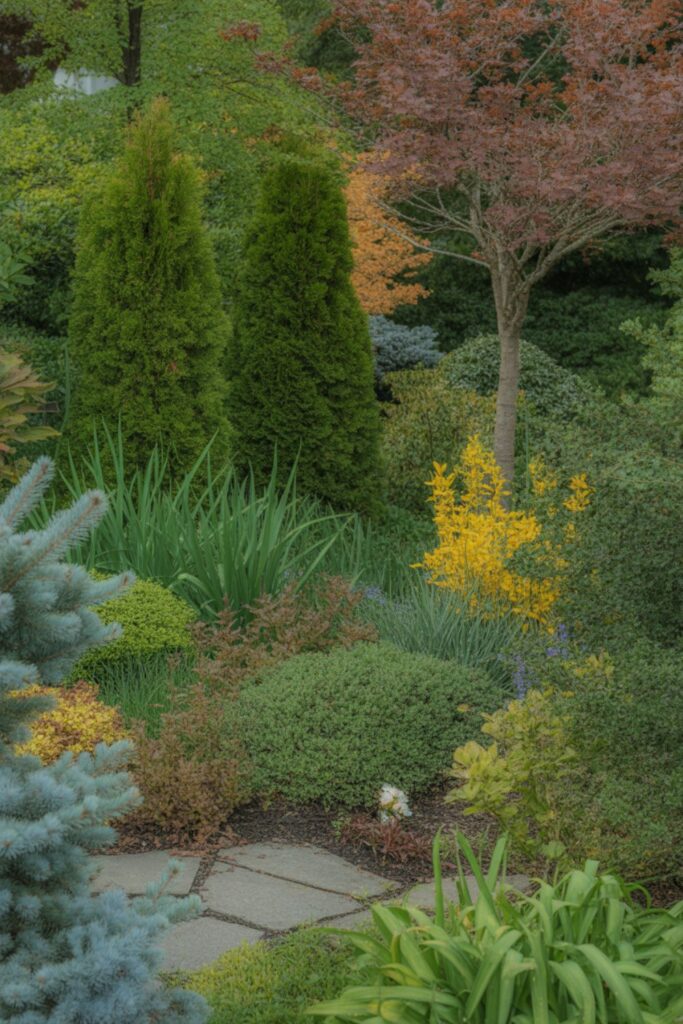
A well-designed garden provides visual appeal across all seasons rather than peaking for just a few weeks then fading into dullness.
Plan bloom succession by selecting plants that flower at different times throughout the growing season. Spring bulbs like tulips and daffodils provide early color, followed by summer perennials like coneflowers and daylilies, then fall bloomers such as asters and sedums. Don’t neglect winter interest ornamental grasses, evergreens, plants with interesting bark (like red-twig dogwood), and those with persistent seed heads or berries provide structure when most plants are dormant. The winter garden reveals your design’s bones, so ensure the hardscaping and evergreen framework remain attractive when flowers disappear.
Consider how light changes seasonally. Low winter sun creates long shadows and illuminates different areas than high summer sun. Deciduous trees that provide welcome shade in summer allow sunlight through in winter when you want warmth. This natural seasonal variation means you can layer planting zones, put spring bulbs under deciduous trees where they’ll receive adequate light before the tree leaves out, then shade-loving hostas that thrive once the canopy fills in. This layering maximizes your planting area and keeps something interesting happening throughout the year in the same space.
Read More About: 27+ best Cozy Backyard Ideas for a Personal Outdoor Retreat
How Can You Create Privacy and Define Boundaries?
Most backyard garden designs need some degree of privacy from neighbors or screening of unattractive views without creating a fortress-like enclosure.
Living screens using evergreen shrubs or trees provide natural, softening privacy that improves over time. Arborvitae, Leyland cypress, and holly grow quickly into dense hedges, while slower-growing options like boxwood or yew offer tighter control and formal appearance. Plant living screens in staggered rows rather than straight lines for fuller coverage and more naturalistic effect. These green walls also buffer noise, filter dust, and provide wildlife habitat. Allow adequate spacing based on mature size to avoid overcrowding that leads to disease and die-back. Most privacy shrubs need 3-5 feet between plants.
Fences and walls create instant privacy but can feel imposing if not softened with plants. Combine hard and soft elements for the best effect, install a fence for immediate screening, then plant climbing vines or layered shrubs in front to soften the structure. Lattice panels, living walls with vertical planting, and mixed-material fences (solid lower portion with lattice or slatted upper section) provide privacy while maintaining airflow and avoiding the closed-in feeling of solid barriers. Position these privacy elements thoughtfully to screen specific sight lines rather than enclosing the entire yard, which can make spaces feel smaller and disconnected from the surrounding landscape.
Budget-Friendly Garden Design Strategies
Creating an impressive home garden design doesn’t require unlimited funds if you prioritize investments and embrace phased implementation.
Start with a master plan even if you can’t afford to install everything immediately. This long-term vision prevents costly mistakes like placing garden beds where you eventually want a patio or running irrigation lines after installing hardscaping. Implement the design in phases over several years, beginning with infrastructure that’s expensive to change later grading, drainage, major pathways, and patios. Then add planting beds gradually, starting with larger structural plants like trees and shrubs that take years to mature. Fill in with perennials and annuals as your budget allows.
Choose cost-effective alternatives that deliver similar effects. Gravel and mulch cost far less than pavers but create attractive garden pathways. Grow plants from seeds or divisions rather than buying large specimens, perennials multiply quickly, and many gardeners happily share divisions. Opt for younger, smaller plants that cost less and often establish faster than larger ones since they experience less transplant shock. DIY projects like building raised beds, installing simple water features, or laying flagstone pathways save substantially versus hiring contractors, though reserve complex work like electrical, major grading, or structural pergolas for professionals to avoid expensive mistakes.
Maintenance Considerations in Garden Design
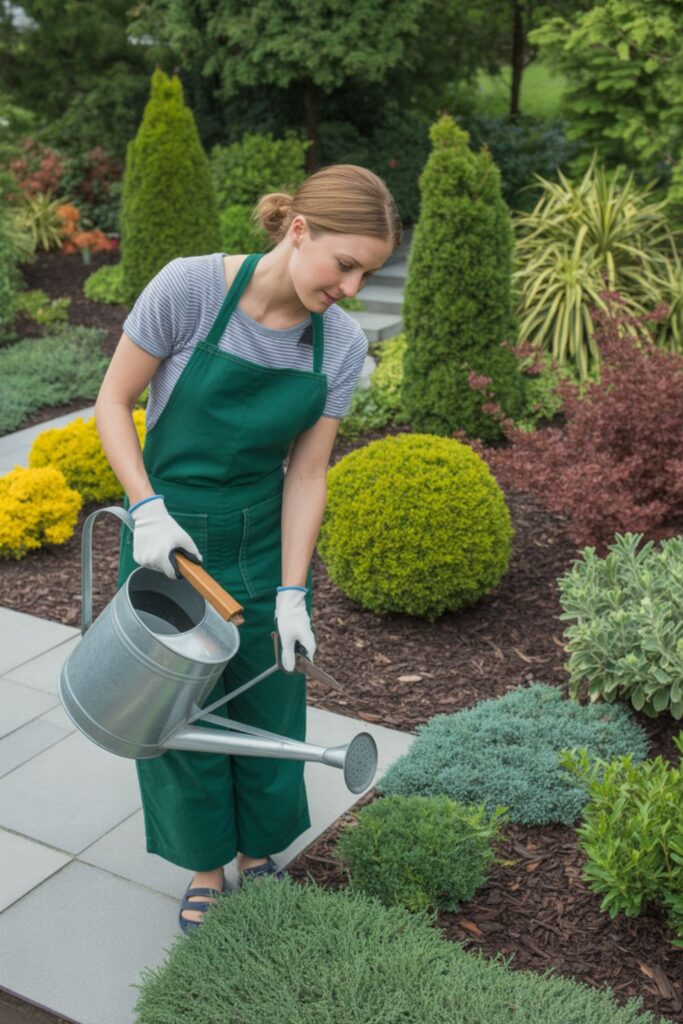
The most beautiful home garden design fails if it requires more maintenance than you can realistically provide. Design for sustainability from the start.
Right plant, right place this mantra prevents most maintenance problems. Plants stressed by wrong sunlight, poor soil, or inappropriate climate zones require constant intervention and often die anyway. Native plants adapted to your region’s conditions typically need less water, fertilizer, and pest management than exotic species. Group plants with similar maintenance needs in the same planting zones so you can water, fertilize, and mulch efficiently. Install drip irrigation or soaker hoses on timers to reduce watering chores while delivering moisture directly to roots where it’s needed.
Reduce lawn area to cut maintenance time and expenses dramatically. Lawns require weekly mowing, regular watering, fertilizing, and often chemical treatments. Replace underused turf with mulched garden beds, groundcovers, or hardscaped areas that need minimal attention. Where you do maintain the lawn, use sharp mowing blades and cut at proper height (3-4 inches for most grasses) to promote deep roots and drought tolerance. Apply 2-3 inches of mulch around plants to suppress weeds, retain moisture, and regulate soil temperature organic mulches like shredded bark or compost also improve soil as they decompose, creating a self-sustaining system that needs less intervention over time.
Small Space Garden Design Solutions
Limited square footage requires creative approaches but doesn’t mean sacrificing beauty or functionality in your home garden design.
Vertical gardening maximizes planting area when ground space is scarce. Wall-mounted containers, tiered planting stands, trellises with climbing plants, and hanging baskets utilize unused vertical surfaces. A 4-foot-wide space can support multiple layers: a trellis with climbing beans or flowering vines in back, medium-height tomatoes or peppers in the middle, and trailing herbs or flowers spilling from the edge. Espaliered fruit trees trained flat against walls or fences produce harvests without requiring the space of standard trees. Vertical elements also draw the eye upward, making small spaces feel larger than their actual dimensions.
Multi-functional design becomes essential in compact yards. A bench with built-in planting boxes provides seating and gardening space simultaneously. Containers on casters can move to catch optimal sunlight or clear space when you need the area for entertaining. Fold-down tables attached to fences disappear when not in use. Choose plants that earn their keep through multiple seasons or purposes a flowering shrub that also produces berries, perennials with attractive foliage and flowers, or edible landscaping where ornamental kale and rainbow chard provide beauty and food. Keep the color palette limited to create cohesion rather than the chaotic effect that many different plants and colors produce in small spaces.
Frequently Asked Questions
What is the best garden layout for beginners?
Start with simple rectangular or curved garden beds along your property boundaries and house foundation. This border-style garden layout is easy to maintain, provides clear definition between lawn and planting areas, and allows you to expand gradually. Choose low-maintenance perennials and shrubs that suit your sunlight and soil conditions, grouping three to five of each plant type for cohesive impact rather than single specimens scattered throughout.
How much does professional home garden design cost?
Professional landscape design fees typically range from $2,000 to $5,000 for design plans alone, while full-service design and installation projects average $10,000 to $50,000 depending on yard size and complexity. Many homeowners choose a hybrid approach hiring a designer for a master plan ($500-$2,000) then implementing it themselves over time. This strategy provides professional expertise for the crucial planning phase while keeping overall costs manageable through DIY installation.
What are the most common garden design mistakes to avoid?
The biggest mistakes include planting without understanding mature plant size, resulting in overcrowding within a few years, placing plants in wrong sunlight or soil conditions, making garden beds too small to create visual impact, and failing to plan for year-round interest. Other common errors are ignoring drainage issues, choosing high-maintenance plants that don’t match your available time, and implementing designs without considering how you actually use your outdoor space. Always research plant requirements and create a scaled plan before purchasing or planting anything.
How do I choose plants for my climate zone?
Identify your USDA hardiness zone and select plants rated for that zone or colder a plant rated for zone 5 will survive in zones 5, 6, 7, and higher but not zone 4. Beyond cold hardiness, consider heat tolerance, humidity levels, and rainfall patterns in your region. Native plants automatically match your climate zone conditions and support local wildlife. Extension service websites and local nurseries provide plant lists specifically suited to your area’s growing conditions, removing guesswork from selection.
Can I design a garden on a tight budget?
Absolutely focus on hardscaping first using economical materials like gravel for pathways and mulch for bed edging, then add plants gradually. Start from seeds or small plugs rather than large specimens, divide existing plants or trade with neighbors, and choose fast-growing varieties that fill in quickly. Perennials multiply rapidly and can be divided after a few years, essentially giving you free plants. Implement your home garden design in phases over multiple seasons, which spreads costs while allowing you to adjust the plan as you observe how the space functions.
What is the easiest garden style to maintain?
Naturalistic or cottage garden styles require less maintenance than formal designs since imperfect edges and casual plant arrangements are part of the aesthetic. Prairie gardens using native grasses and wildflowers need minimal watering, fertilizing, or pest control once established. Xeriscaping with drought-tolerant plants reduces watering demands dramatically. Regardless of style, the right-plant-right-place principle matching plants to your soil, sunlight, and climate zone creates the easiest maintenance since properly sited plants thrive without constant intervention.
Conclusion
Home garden design transforms your outdoor space from an afterthought into an extension of your living area that provides beauty, functionality, and personal satisfaction. By understanding your site conditions, creating a thoughtful garden layout, selecting appropriate plants, and incorporating structural elements like pathways and focal points, you can develop a cohesive design that reflects your style while meeting practical needs. The key is planning before planting, matching plants to your climate zone and sunlight conditions, and implementing your vision in manageable phases that fit your budget and timeline.
Remember that gardens evolve continuously, improving as plants mature and you refine your design based on how you actually use the space. Start with solid infrastructure like drainage and hardscaping, build on that foundation with long-lived trees and shrubs, then fill in with perennials and seasonal color. Your home garden design should reduce stress rather than create it, so choose maintenance levels that match your available time and physical capability. Whether you’re creating an edible backyard garden, a tranquil retreat, or an entertaining space, thoughtful design transforms any yard into a personal paradise that enhances your daily life for years to come.