50+ Easy Home Landscaping Ideas for a Beautiful Home Exterior
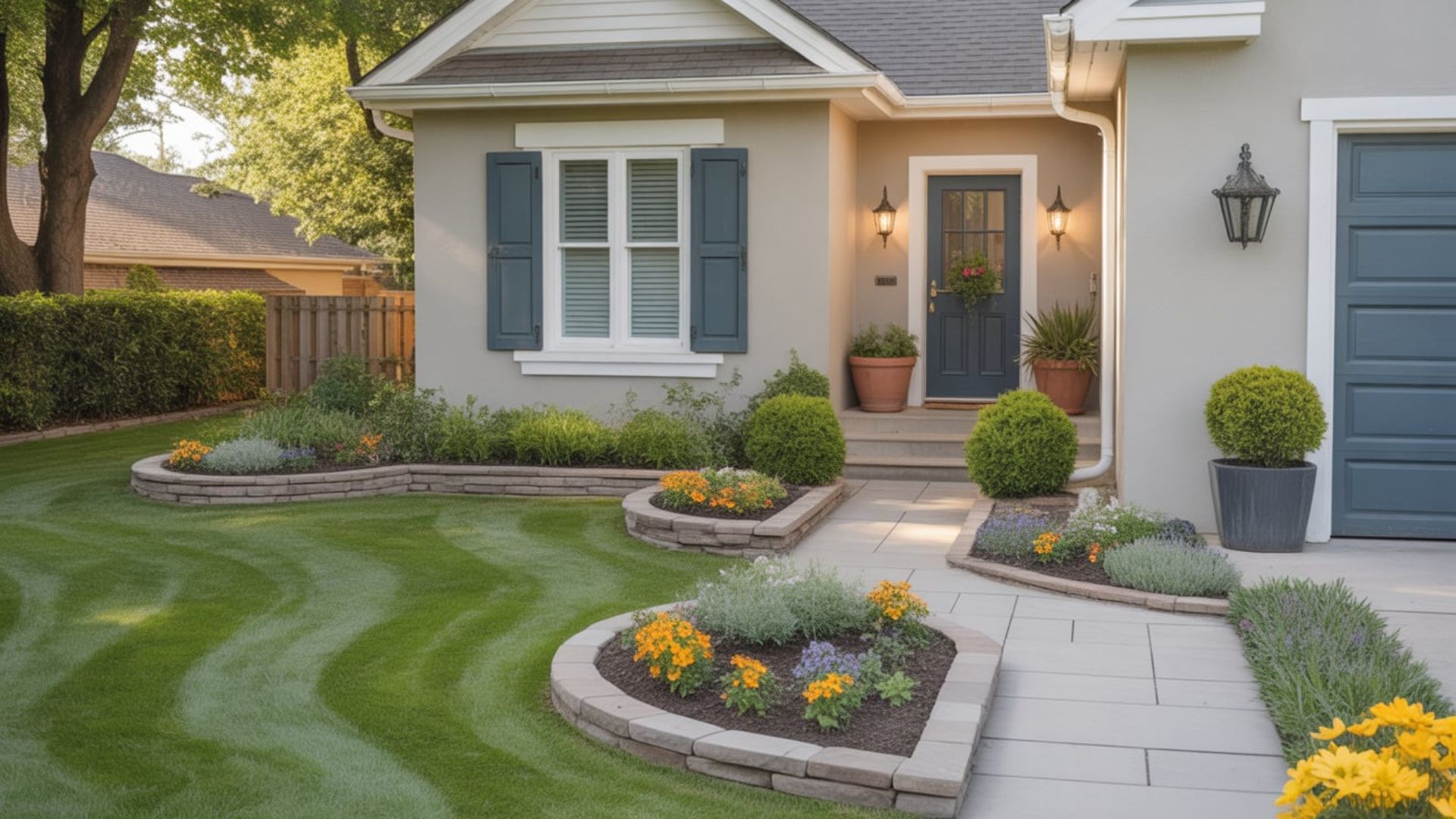
our home landscaping looks tired and uninspired. Every time you pull into your driveway, you notice the patchy lawn, overgrown shrubs, and boring front yard that does nothing for your property value or pride of ownership. Meanwhile, neighbors invest in professional landscape design while you’re stuck with builder-grade plants from a decade ago that barely survived. The frustration intensifies when you realize poor landscaping actively hurts curb appeal, making your entire home feel neglected regardless of interior updates.
Here’s the reality: transforming your yard doesn’t require a professional landscaper’s budget or a horticulture degree. With strategic home landscaping ideas and proven design principles, you can create a stunning exterior that delivers immediate visual impact, increases property value by up to 20%, and gives you a landscape that actually works with your lifestyle instead of against it.
Why Strategic Home Landscaping Matters for Your Property
Smart landscaping represents one of the highest-return home improvements you can make. The National Association of Realtors reports that quality landscape design recovers 100-200% of costs at resale, outperforming most interior renovations. Beyond financial return on investment, proper home landscaping ideas creates psychological value buyers form first impressions within 7 seconds of seeing your curb appeal, often deciding whether to even view interiors based solely on exterior presentation.
Home landscaping also delivers functional benefits beyond beauty. Strategic tree placement reduces energy costs by 25% through summer shade and winter windbreaks according to the U.S. Department of Energy. Well-designed hardscaping prevents erosion, manages water runoff, and creates usable outdoor space. Native plant selections support local ecosystems while requiring minimal maintenance, water, and chemical inputs once established.
How to Start Planning Your Home Landscaping Project
Successful home landscaping ideas begin with thorough site analysis before buying a single plant. Walk your property at different times of day noting sun exposure patterns, existing problem areas like poor drainage or erosion, and features worth highlighting or hiding. Take measurements and photos from multiple angles to reference during planning.
Identify your property’s style and work with it rather than against architectural lines. Ranch homes suit horizontal planting beds and low-profile shrubs, while Victorian houses handle ornate gardens and vertical elements beautifully. Modern homes shine with clean geometric lines, ornamental grasses, and minimalist plant palettes. Matching home landscaping ideas style to home architecture creates cohesive aesthetic appeal that feels intentional.
Budget allocation matters more than total spending. Invest 10-15% in quality soil preparation and drainage improvements; these invisible elements determine long-term plant health. Allocate 40-50% to plants and materials, 20-30% to hardscaping if included, and reserve 10-20% for unexpected issues or splurge items that complete the vision.
Read More About: 30+ Backyard Inspiration outdoor Ideas for a Stunning Space
What Are the Essential Elements of Good Landscape Design?
Professional home landscaping ideas follow proven principles that create visual harmony. Unity brings cohesion through repeated colors, textures, or plant forms throughout your yard using the same flowering shrub in multiple locations ties diverse areas together. Balance arranges elements symmetrically or asymmetrically depending on your home’s style and personal preference.
Proportion ensures plant sizes match their setting appropriately. Foundation plantings should reach roughly one-third to two-thirds your home’s height at maturity; anything taller overwhelms architecture while shorter plantings disappear. Consider mature sizes when spacing plants to avoid future crowding that ruins design principles within a few seasons.
Focal points direct attention intentionally through specimen plants, hardscaping features, or outdoor art. Every well-designed landscape needs at least one strong focal point visible from primary viewing angles like your driveway or street. Pathways, bed edges, and plant placement should naturally guide eyes toward these features rather than competing for attention randomly.
Front Yard Landscaping Ideas That Maximize Curb Appeal
Your front yard delivers first impressions that color perceptions of your entire property. Foundation plantings frame your home and soften harsh architectural lines, layer tall evergreens at corners, medium shrubs below windows, and low perennials or groundcovers along the front edge. This classic approach works across architectural styles when plants suit your specific home.
Entry pathways deserve special attention as they literally invite people toward your door. Widen standard 3-foot walks to 4-5 feet for welcoming presence, then line with low maintenance perennials, solar path lights, or decorative edging. Consider curves rather than straight lines when space allows gentle arcs to feel more natural and interesting than rigid geometry.
Lawn alternatives reduce maintenance while boosting visual interest. Replace high-maintenance grass strips between sidewalk and street with drought tolerant groundcovers, ornamental grasses, or decorative rock mulch. These “hell strips” handle foot traffic and poor soil better than turf while adding color and texture that standard lawns can’t provide.
How Can You Create Low Maintenance Landscape Design?
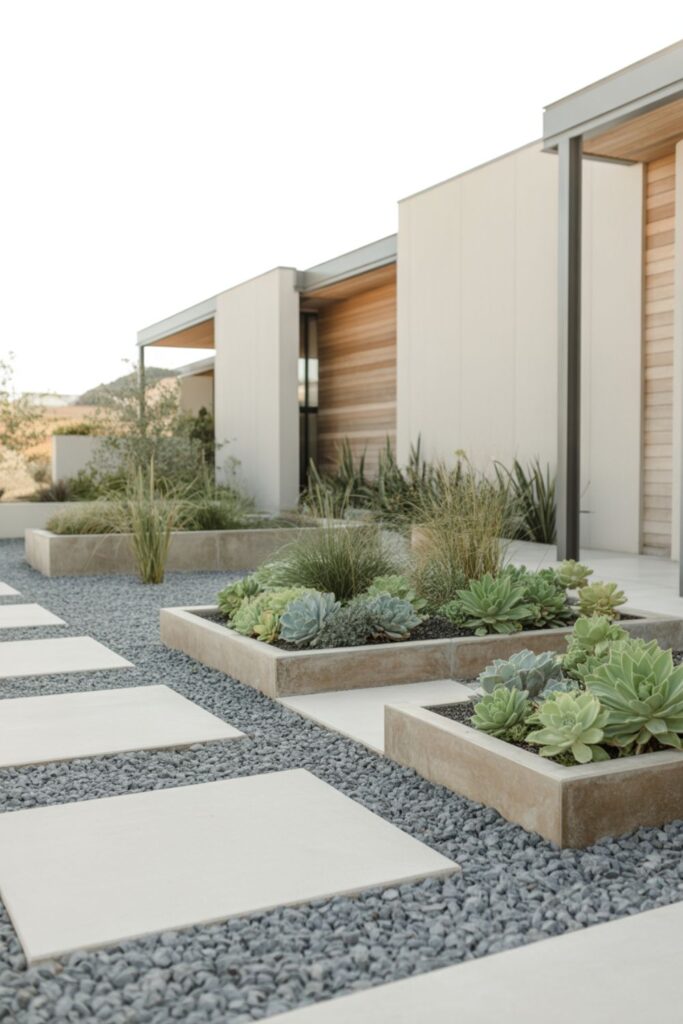
Low maintenance landscaping starts with appropriate plant selection for your climate zone and site conditions. Native plants evolved to thrive in your region without fertilizers, pesticides, or excessive watering once established. They resist local pests naturally and handle temperature extremes that exotic species struggle with, reducing replacement costs and care time dramatically.
Hardscaping reduces ongoing work significantly compared to all-plant landscapes. Patios, pathways, retaining walls, and decorative rock areas require zero mowing, watering, or seasonal cleanup. Mixing hardscape with strategic planting creates visual interest while cutting maintenance hours by 40-60% compared to traditional lawn-and-bed layouts.
Mulching serves as the single most effective low maintenance practice. Apply 2-4 inches of organic mulch around plants annually to suppress weeds, retain moisture, regulate soil temperature, and improve soil as it decomposes. This simple layer eliminates most weeding, cuts watering frequency in half, and protects plant roots from temperature stress year-round.
What Are the Best Plants for Year-Round Landscape Interest?
Evergreens provide structure and color through winter when deciduous plants sleep. Incorporate varieties with different textures and growth habits upright junipers contrast beautifully with spreading yews, while blue spruce adds color variety against standard greens. These backbone plants define your landscape design regardless of season.
Four-season plants deliver multiple interest periods through flowers, foliage, bark, or berries. Serviceberry offers spring blooms, summer fruit, fall color, and attractive winter bark. Hydrangeas bloom for months, hold dried flowers into winter, and feature interesting branching patterns. Choose plants pulling double or triple duty to maximize visual impact without increasing maintenance.
Ornamental grasses add movement, texture, and seasonal interest with minimal care requirements. Feather reed grass stands tall and structured, maiden grass provides soft, weeping forms, and blue fescue creates low mounding accents. These workhorses look stunning from spring green-up through winter when their tan seed heads catch snow and frost beautifully.
Budget-Friendly Home Landscaping Ideas Under $1000
Major curb appeal improvements don’t require luxury budgets. Fresh mulch transforms tired garden beds instantly covering 500 square feet costs $150-250 including delivery. This single weekend task makes overgrown or sparse plantings look intentional and cared for while preventing weed growth that makes landscapes appear neglected.
Strategic tree and shrub placement delivers outsized impact. One well-chosen ornamental tree creates a focal point and structure for $75-150. Three matching shrubs flanking an entry or defining a corner run $120-180 total. These anchor plants establish your landscape design framework that smaller additions fill over time.
DIY edging projects create professional polish for under $200. Install metal landscape edging along beds, pathways, or between lawn and mulch areas to define borders crisply. This clean separation prevents grass encroachment and gives even modest plantings an upscale, maintained appearance that dramatically improves overall presentation.
How Do You Choose the Right Landscape Design Style?
Your home’s architecture should guide landscape style selection for cohesive aesthetic appeal. Colonial and traditional homes suit formal, symmetrical gardens with clipped hedges, structured beds, and classic plant palettes dominated by greens with seasonal flower accents. These properties look awkward with overly casual or wildly colorful cottage garden approaches.
Contemporary homes demand clean lines, minimal plant varieties, and architectural specimens. Use mass plantings of single species rather than mixed borders, incorporate geometric hardscaping, and favor grasses, succulents, and plants with strong forms over billowing perennials. Color palettes stay restrained with greens, silvers, and single accent colors rather than rainbow mixes.
Regional styles connect your property to its environment naturally. Southwest homes embrace xeriscaping with drought tolerant succulents, decorative rock, and native desert plants. Pacific Northwest properties showcase woodland gardens with ferns, shade perennials, and evergreens. Southern landscapes feature azaleas, camellias, and live oaks. Working with regional expectations rather than importing incompatible styles reduces maintenance and improves success rates.
What Hardscaping Elements Should You Include?
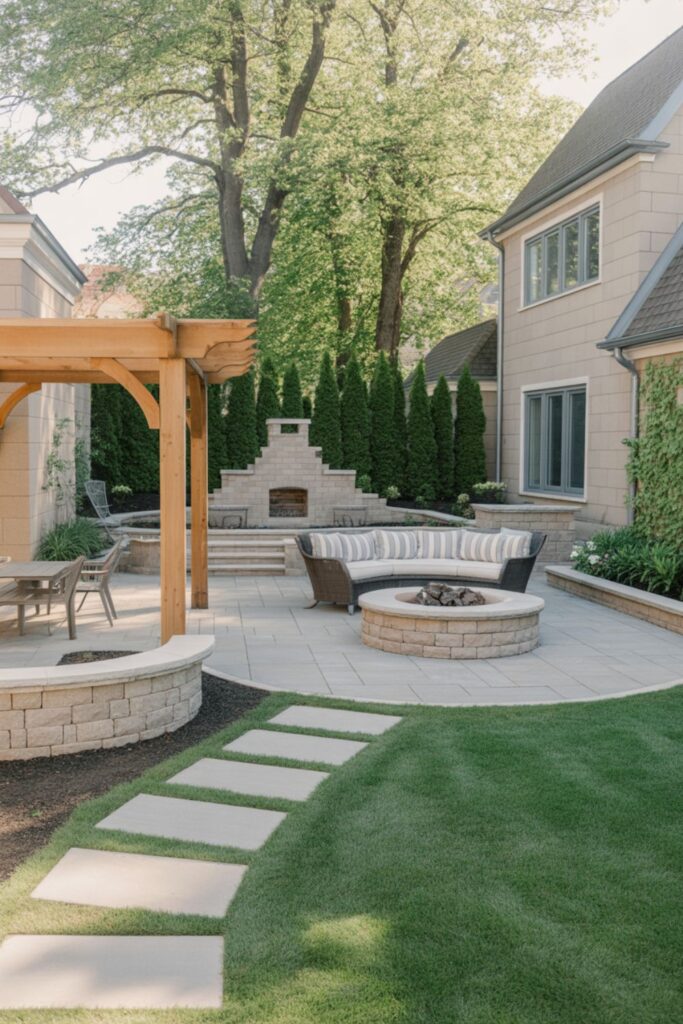
Pathways organize traffic flow while adding structure to soft plantings. Materials matter tremendously for longevity and aesthetic appeal; flagstone and natural stone offer premium looks with higher costs, while concrete pavers provide durability and affordability. Gravel paths work beautifully in informal gardens and cost least, though they require edge restraint and occasional refreshing.
Retaining walls solve functional problems while creating design opportunities. They prevent erosion on sloped properties, create level planting terraces, and add vertical interest to flat yards. Stacked stone walls suit traditional homes, while poured concrete with modern finishes complement contemporary architecture. Even low walls of 18-24 inches significantly impact landscape design without requiring engineering permits.
Patios extend living space outdoors and serve as destinations that give home landscaping ideas purpose. Position patios where they’re actually usable morning sun for coffee spots, afternoon shade for summer dining. Connect patios to your home visually through material choices that complement exterior finishes. A well-placed patio justifies surrounding landscape investments by creating functional space worth maintaining.
How Can You Improve Landscape Lighting Design?
Layered landscape lighting transforms properties after dark while improving safety and security. Start with path lighting along walkways, driveways, and stairs using low-voltage LED fixtures spaced 6-8 feet apart. These functional lights prevent trips while creating a welcoming ambiance from street view and interior windows.
Uplighting adds drama by washing light up trees, architectural features, or hardscaping elements. Place fixtures at the base of specimen trees angled upward to highlight branch structure and create striking shadows. This technique makes even modest landscapes feel professionally designed and draws attention to your best features intentionally.
Accent lighting highlights specific elements like garden beds, water features, or outdoor art. Use narrow-beam spotlights to create pools of light that guide eyes through your landscape rather than flooding everything uniformly. Dimmer controls and smart timers allow adjusting intensity seasonally and for different occasions without permanent brightness levels.
Front Yard Versus Backyard Landscaping Priorities
Front yard landscaping prioritizes curb appeal and neighborhood presentation over personal use. Invest in foundation plantings, entry enhancements, and street-visible features that potential buyers notice. Keep designs relatively conservative and well-maintained since neglected front landscapes dramatically hurt property value and daily satisfaction.
Backyard landscaping can embrace personal style more freely since neighbors and buyers see less of it. Prioritize functionality for how you actually use space play areas for families, gardens for hobby growers, entertaining zones for social homeowners. Privacy plantings and screening deserve higher investment in backyards where you’re creating retreat spaces rather than public displays.
Budget allocation should favor front yards proportionally despite smaller size. Plan to spend 60-70% of landscaping budgets on the front 30-40% of your property since this area delivers maximum return on investment and daily satisfaction. Backyard improvements can phase over years as budget allows without hurting resale value significantly.
What Are the Most Common Landscaping Mistakes to Avoid?
Planting too close to foundations damages both homes and plants. Most shrubs need 3-5 feet clearance from walls at maturity to allow air circulation, prevent moisture issues, and avoid root damage to foundations. Research mature sizes before planting to space correctly from the start rather than moving or removing overgrown specimens later.
Ignoring maintenance requirements at planting creates frustration within months. That adorable knockout rose seems manageable until you’re deadheading weekly all summer. Ornamental grasses look tidy in photos but require annual cutting back. Choose plants matching your realistic maintenance availability and skills rather than aspirational gardening commitment levels.
Monoculture lawns waste resources while looking generic. Traditional turf grass requires 50% more water than mixed landscaping, demands weekly mowing, and provides zero wildlife benefit or visual interest. Replace portions of lawn with garden beds, hardscaping, or alternative groundcovers to reduce maintenance while increasing curb appeal and environmental benefits.
How Do Native Plants Improve Your Landscape?
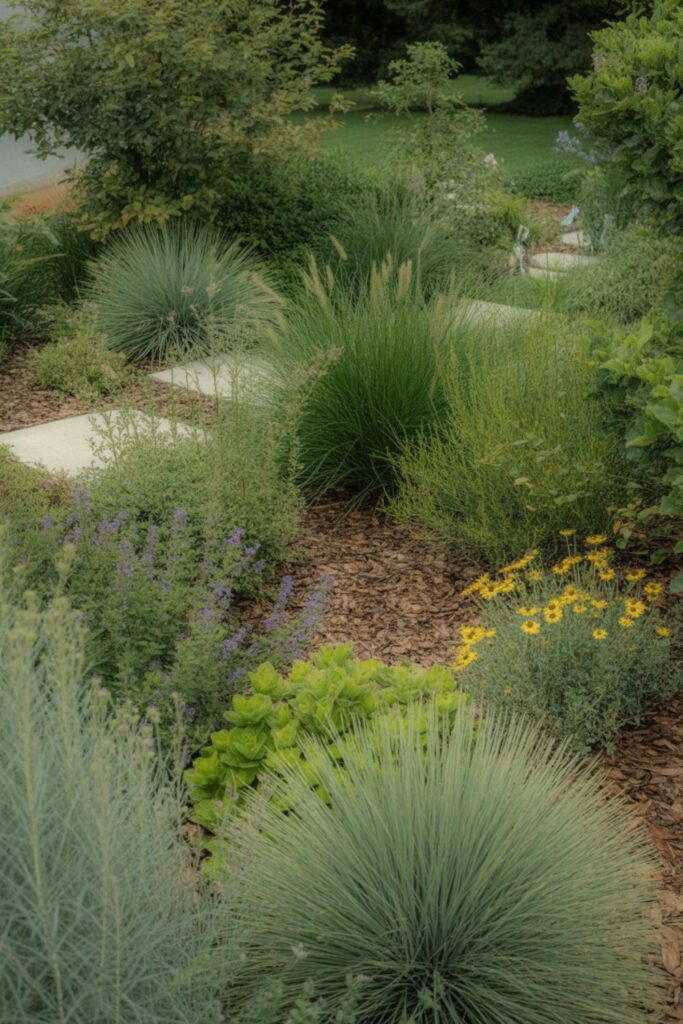
Native plants adapted to your region over millennia handle local climate extremes without coddling. They tolerate natural rainfall patterns, resist indigenous pests, and thrive in regional soil types that make exotic plants struggle. This natural hardiness eliminates fertilizer needs, reduces watering by 60-80% after establishment, and cuts pesticide use to nearly zero.
Wildlife benefits multiply with native plant selections. Indigenous plants support 4x more butterfly and bird species than non-native ornamentals according to Xerces Society research. Native berry producers feed birds through winter, native flowers support pollinators throughout growing seasons, and native tree species host beneficial insects that control pests naturally.
Regional aesthetic appeal emerges naturally when using native plants suited to your area. Mountain gardens featuring columbines and aspens look authentic, while coastal landscapes with beach grasses and rugosa roses feel right in context. These regionally appropriate plantings also satisfy increasingly common HOA requirements for water conservation and sustainable landscaping practices.
What Are Some Creative Edging and Border Ideas?
Professional edging separates landscape zones cleanly while preventing grass encroachment into beds. Metal edging installs easily and creates invisible barriers that last decades. Stone or brick edging adds traditional character and works particularly well with formal garden styles. Plastic edging costs least but looks cheap skip it unless burying completely under mulch.
Living edges use low-growing plants instead of manufactured materials for soft, natural transitions. Creeping thyme, mondo grass, or low sedums define bed borders while adding color and texture. These living edges require occasional trimming but integrate beautifully with cottage gardens and informal landscape styles where hard edges would feel too rigid.
Creative alternatives include upended wine bottles creating colorful barriers, log rounds in rustic settings, or decorative rock borders in contemporary designs. These personalized touches distinguish your property from generic builder landscaping while serving the functional purpose of defining spaces clearly.
How Can You Create Privacy Through Landscaping?
Fast-growing evergreen screens provide year-round privacy when placed strategically. Leyland cypress, arborvitae, and certain holly varieties grow 3-5 feet annually when established, creating solid barriers within 3-4 years. Space them at two-thirds their mature width for full coverage closer for faster screening, wider for individual specimen development.
Layered planting creates depth and interest while blocking views more effectively than single rows. Use tall trees as backdrop, medium shrubs in the middle layer, and low perennials along edges. This approach mimics natural woodland edges that feel organic rather than fortified while providing better wind buffering and sound dampening.
Living fences combine structural support with planted screening for hybrid solutions. Install simple wire or wood frameworks, then train climbing vines like clematis, honeysuckle, or climbing hydrangea to cover supports. This technique works beautifully in small spaces where traditional hedge rows would consume too much property width.
Drought Tolerant Landscaping for Water Conservation
Drought tolerant landscaping reduces water consumption by 50-75% compared to traditional landscapes while maintaining visual appeal. Start by grouping plants with similar water needs and place thirsty specimens near irrigation sources while positioning drought tolerant varieties in outlying areas that fend for themselves after establishment.
Succulent gardens deliver striking modern aesthetics with minimal water requirements. Agaves, sedums, and certain cacti create architectural interest in warm climates while needing water only during prolonged droughts. These sculptural plants look intentional and stylish rather than water-deprived, changing perceptions that water-wise equals sparse.
Soil preparation matters even more for drought tolerant success than plant selection. Amend soil with compost to improve water retention, apply thick mulch layers to reduce evaporation, and create slight basins around plants to catch and hold rainfall. These site improvements allow adapted plants to thrive rather than merely survive dry conditions.
Read More About: 30+ Backyard Inspiration Ideas for a Dream Outdoor Space
What Role Does Mulch Play in Landscape Design?
Mulch serves multiple functions that justify its importance in quality landscapes. Weed suppression occurs when mulch layers block sunlight from reaching soil, preventing most seed germination. This single benefit eliminates 70-80% of weeding tasks throughout growing seasons, saving countless hours over a landscape’s life.
Moisture retention improves dramatically with 2-4 inches of organic mulch covering soil. Mulch reduces evaporation rates by insulating soil from direct sun and wind, allowing plants to access water longer between rainfall or irrigation. This benefit becomes critical during droughts when unmulched gardens stress while mulched counterparts thrive.
Temperature moderation protects roots from extreme heat and cold through insulating properties. Summer soil temperatures stay 10-15 degrees cooler under mulch, preventing root stress. Winter mulch prevents freeze-thaw cycles that heave plants from soil. These consistent conditions improve plant health and survival rates significantly compared to bare soil exposure.
How Do You Landscape on a Slope or Hill?
Terracing transforms unusable slopes into functional landscape levels through retaining wall construction. Multiple short walls work better than single tall walls both structurally and aesthetically. Each terrace creates level planting or lawn areas that prevent erosion while adding architectural interest to otherwise challenging topography.
Groundcovers prevent erosion on slopes too steep for grass or foot traffic. Creeping juniper, creeping phlox, or vinca minor spread quickly to hold soil while requiring no mowing. These low maintenance solutions look intentional and attractive rather than like problems you gave up solving.
Switchback pathways make steep slopes accessible while adding visual interest. Zigzagging paths reduce grade percentages to manageable levels for comfortable walking. Add landings at direction changes, install handrails where slopes exceed 10%, and surface paths with materials providing good traction like textured concrete or decomposed granite.
Adding Color Through Seasonal Flower Plantings
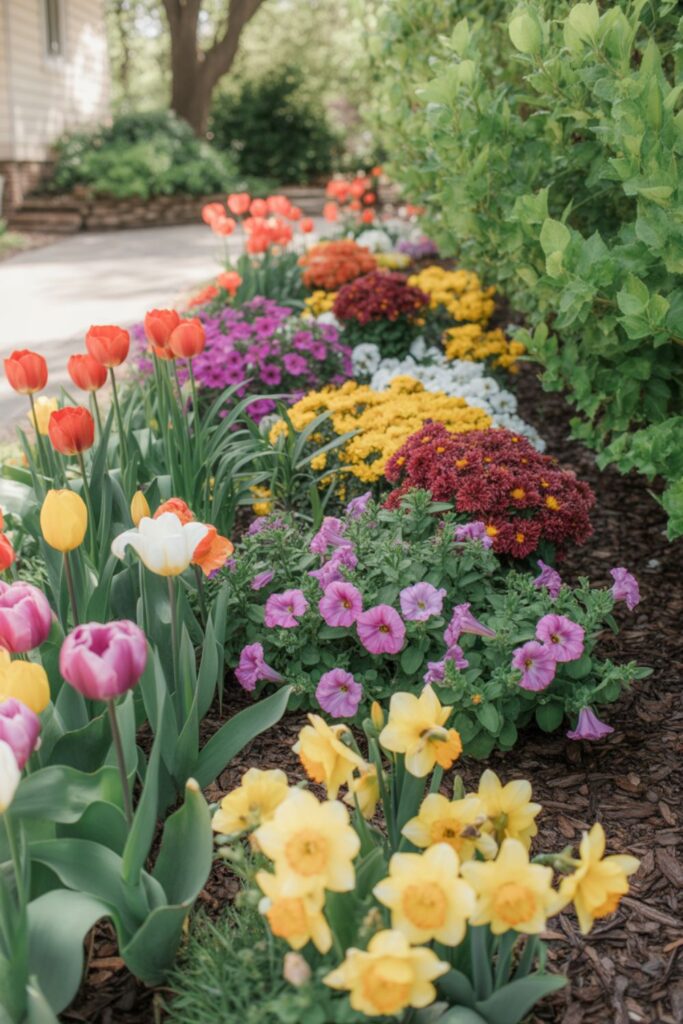
Annual flowers deliver maximum color impact for minimal long-term commitment. Plant begonias, petunias, or marigolds in spring for summer-long blooms, then replace with pansies or ornamental kale for fall and mild winter color. This rotation keeps beds looking fresh and allows experimenting with color schemes annually without permanent changes.
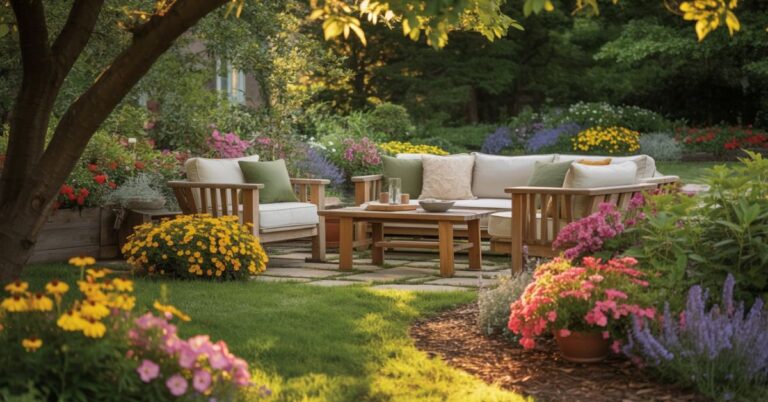
Perennial borders provide reliable color with less replanting effort. Establish mixed beds featuring early bloomers like daffodils and tulips, midseason showstoppers like coneflowers and daylilies, and late-season performers like asters and sedum. This succession keeps color flowing from spring through fall with minimal maintenance beyond spring cleanup.
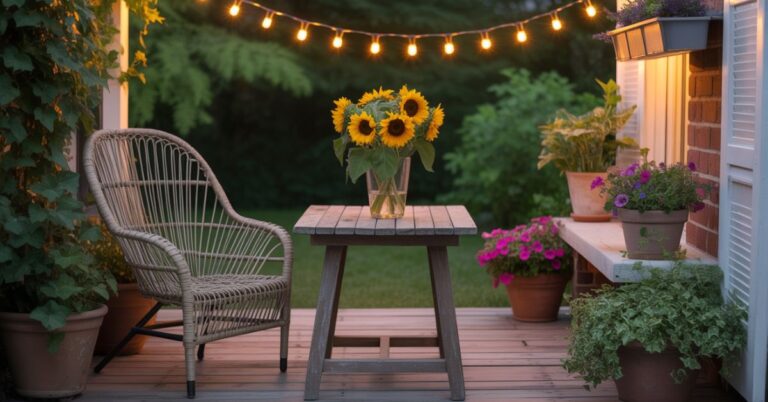
Container plantings add flexible color exactly where needed. Group large pots near entries, on patios, or flanking focal points for seasonal impact you can change completely when plants fade. Containers also solve challenging growing conditions like heavy shade or poor soil by providing ideal environments for specific color plants.
What Are the Best Trees for Home Landscaping?
Shade trees provide massive return on investment through energy savings and property value increases. Red maples, oaks, and elms grow large enough to shade entire house sections, reducing cooling costs by hundreds annually. Position deciduous shade trees on south and west sides for summer cooling while allowing winter sun to warm homes.
Ornamental trees add focal point presence without overwhelming smaller properties. Japanese maples, dogwoods, and redbuds stay under 30 feet while offering stunning spring flowers, fall color, or interesting bark and branch patterns. These statement trees work beautifully as entry specimens or front yard anchors that draw attention positively.
Evergreen trees provide year-round structure and screening. Colorado blue spruce, eastern red cedar, and certain pine varieties maintain color through winter while blocking wind and views. These workhorses suit corners where vertical accent is needed or property lines requiring privacy screening without seasonal gaps.
How Can You Incorporate Edible Plants Into Landscaping?
Edible landscaping blends food production with ornamental appeal seamlessly. Blueberry bushes offer spring flowers, summer fruit, and spectacular fall color while requiring similar care to traditional shrubs. Substitute them for boring foundation evergreens to gain beauty plus harvest without extra maintenance.
Herb gardens deliver fragrance, texture, and culinary usefulness in low maintenance packages. Rosemary, lavender, and thyme handle drought, poor soil, and neglect while looking attractive year-round. Plant them along pathways where brushing releases scents, or use them as edging plants that serve double duty.
Fruit trees function as ornamental specimens in home landscapes when given proper space. Dwarf varieties fit smaller yards while providing spring blooms that rival purely decorative trees. Choose disease-resistant cultivars to minimize spraying requirements, and accept that some pest damage occurs imperfect homegrown fruit still tastes better than perfect supermarket alternatives.
Lighting Walkways and Garden Paths Effectively
Path lighting serves safety and aesthetics simultaneously when installed correctly. Place fixtures on alternating sides of walkways every 8-10 feet rather than lining both sides continuously; this rhythm guides movement without harsh brightness or light pollution. Choose fixtures casting downward light rather than glowing globes that create glare.
Solar path lights improve dramatically in recent years and eliminate wiring costs entirely. Modern solar LED technology provides bright, consistent light that rivals low-voltage systems while costing $20-40 per fixture. Position them where they receive direct sun at least 6 hours daily for reliable evening illumination.
Step lighting prevents dangerous falls on staircases and level changes. Install low-voltage LED lights into riser faces or along step edges to clearly define each tread without overwhelming brightness. This subtle lighting improves safety dramatically while adding professional polish to hardscaping features.
What Are Some Low Cost High Impact Landscaping Ideas?
Power washing instantly refreshes hardscaping, siding, and fences for the cost of rental equipment or a few hours of labor. This single task removes years of dirt, algae, and staining that makes properties look neglected. The before-and-after difference rivals much more expensive improvements.
Fresh paint transforms fences, sheds, doors, and trim affordably. Choose colors complementing your home’s exterior while considering how plantings will look against new backgrounds. Dark fence colors make greenery pop while hiding imperfections, while crisp white trim creates classic curb appeal against any house color.
Strategic plant division multiplies existing specimens for free. Divide overgrown hostas, daylilies, or ornamental grasses into 4-8 new plants per clump, filling empty spaces without purchases. This single technique can populate entire beds over 2-3 years using only plants you already own.
How Do You Maintain Your Landscape Through Different Seasons?
Spring maintenance focuses on cleanup and preparation. Remove winter debris, cut back ornamental grasses and dead perennial stems, refresh mulch layers, and edge beds crisply. Apply pre-emergent weed control if used in your system, and divide overcrowded perennials before active growth begins.
Summer care emphasizes watering efficiency and weed control. Water deeply but infrequently to encourage deep root growth rather than daily shallow watering that promotes weak roots. Hand-pull weeds when small before they set seed. Deadhead spent flowers on repeat bloomers to encourage continued flowering through the season.
Fall preparation prevents spring problems while protecting investments. Continue watering evergreens until ground freezes, plant spring bulbs, divide summer-blooming perennials, and apply final weed control before dormancy. Leave ornamental grass plumes and perennial seed heads for winter interest and wildlife food rather than cutting everything back.
Creating Outdoor Rooms Through Landscape Design
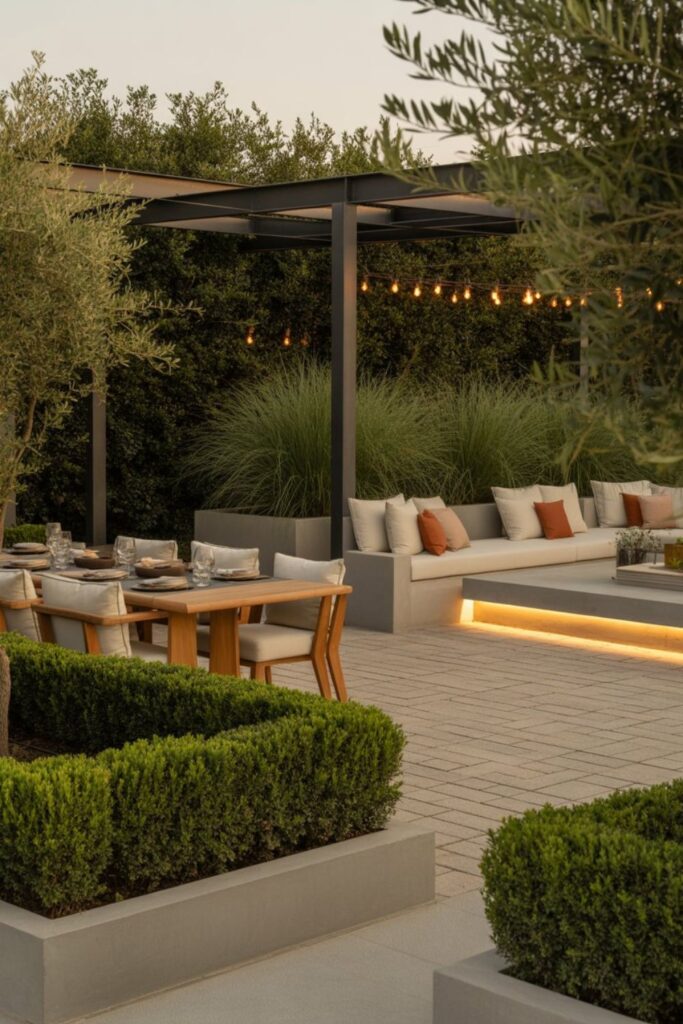
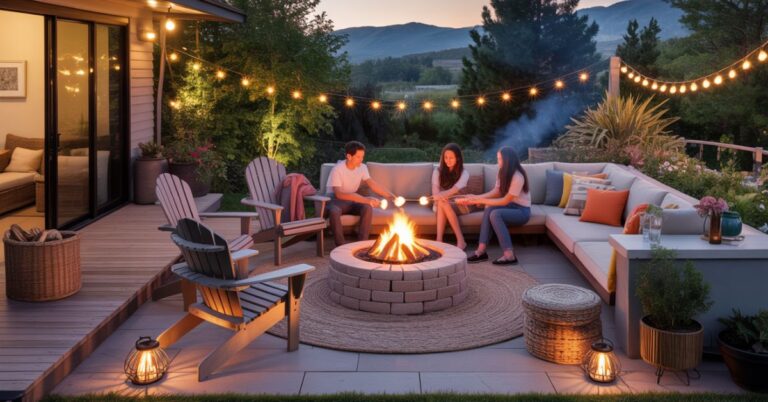
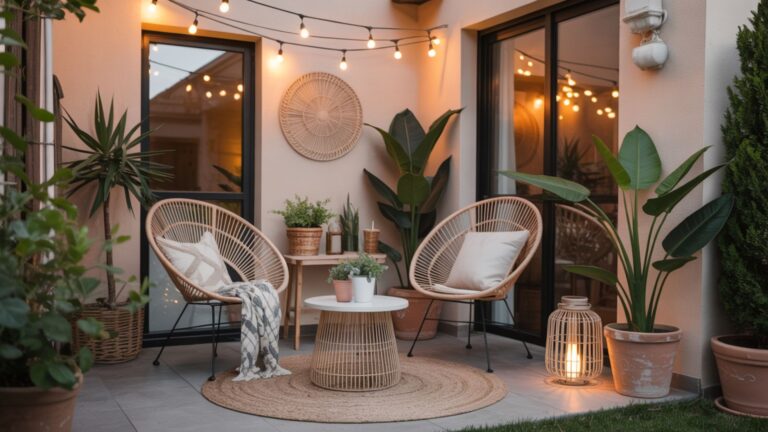
Outdoor rooms extend usable square footage by defining specific activity zones. Create a dining room with patio, table, and overhead structure for weather protection. Establish a living room with comfortable seating around a fire feature. Design a garden room with benches surrounded by fragrant plantings for meditation or reading.
Walls and ceilings make outdoor rooms feel enclosed and intimate. Living walls using hedges or vine-covered trellises provide privacy without solid barriers. Pergolas, shade sails, or tree canopies create ceiling elements that define space overhead. These boundaries make even large yards feel organized and purposeful.
Flooring differentiates rooms through material changes. Use flagstone for dining areas, gravel for pathways, deck boards for lounging zones. These surface transitions signal function changes naturally without walls or signage, guiding movement through your landscape intuitively.
What Are Xeriscaping Principles for Dry Climates?
Xeriscaping reduces water needs by 60-80% through seven core principles. Start with planning and design that groups plants by water requirements. Improve soil with compost to increase water retention capacity. Limit turf to truly functional areas rather than default planting.
Select appropriate plants adapted to dry conditions naturally. Use efficient irrigation only where necessary, applying water directly to root zones through drip systems rather than spraying entire areas wastefully. Apply 3-4 inches of mulch around all plantings to reduce evaporation dramatically.
Maintain xeriscapes appropriately to keep water savings realized. Monitor irrigation systems for leaks or inefficiencies. Remove thirsty weeds promptly before they consume water meant for adapted plants. Proper maintenance ensures xeric landscapes stay beautiful while using minimal resources.
Incorporating Water Features Into Home Landscapes
Water features add sensory dimension through sound and movement while serving as powerful focal points. Fountains work beautifully in formal gardens, providing symmetrical elegance and soothing sounds. Modern urn fountains or bubbling rocks suit contemporary landscapes while requiring minimal space and maintenance.
Ponds create entire ecosystems when properly installed and maintained. Include filtration, circulation, and varied depth zones for plant and fish health. Surround ponds with moisture-loving plants and natural stone to integrate them seamlessly into landscape designs rather than looking like afterthought additions.
Pondless waterfalls offer water feature drama without open water concerns. These recirculating systems pump water over rocks into hidden reservoirs rather than visible ponds, eliminating mosquito breeding, child safety worries, and extensive cleaning. They provide waterfall sounds and appearance with a fraction of the maintenance commitment.
Frequently Asked Questions
How much should I budget for professional home landscaping?
Professional landscape design and installation typically costs $5,000-$25,000 depending on property size, regional labor rates, and project scope. Basic plantings and mulch for average suburban lots start around $3,000-5,000, while comprehensive makeovers with hardscaping easily reach $15,000-30,000. Phased implementation spreads costs across multiple seasons while allowing budget flexibility and design adjustments.
Can I landscape my front yard myself without hiring professionals?
Most homeowners can successfully handle front yard landscaping through DIY efforts with proper planning and realistic project selection. Start with simpler tasks like planting, mulching, and edging before attempting complex hardscaping or grading changes. Consult professional landscapers for design guidance even if executing work yourself many offer affordable design-only services that prevent costly mistakes.
What landscaping adds the most value to my home?
Foundation plantings, mature shade trees, and professional lawn care deliver the highest return on investment according to real estate studies. Well-maintained front yards with defined beds, healthy plants, and clean edges recover 100-150% of costs at resale. Focus improvements on curb appeal visible from the street rather than elaborate backyard features buyers might not value equally.
Conclusion
Strategic home landscaping ideas transform your property from forgettable to remarkable while delivering measurable financial returns and daily satisfaction. Whether you’re enhancing curb appeal for resale, creating outdoor spaces that extend your living area, or simply fixing eyesore areas that diminish your home’s presentation, thoughtful landscape design improves every aspect of property ownership. The most successful projects balance aesthetic appeal with practical considerations like maintenance requirements, regional climate adaptation, and how you actually use outdoor spaces.
Start with high-impact changes in your front yard where improvements deliver maximum visibility and return on investment. Choose low maintenance plants suited to your climate and lifestyle rather than high-maintenance specimens requiring constant attention. Your ideal landscape reflects your home’s architecture, respects your region’s environmental conditions, and serves your specific needs whether that means entertaining spaces, privacy screening, or simply a beautiful view from your windows. Take the first step today by implementing even one idea from this guide, and you’ll quickly understand why quality landscaping ranks among the most satisfying home improvements you can make.