Modern Outdoor Patio With Canopy Ideas for Every Home

You’ve invested in contemporary patio furniture with clean lines and premium materials, but harsh afternoon sun makes your outdoor space unusable for hours daily. Traditional awnings with scalloped edges and busy patterns clash horribly with your home’s modern architecture. Meanwhile, design magazines showcase stunning patios where architectural canopies provide elegant shade while reinforcing rather than undermining contemporary aesthetics through thoughtful integration.
Modern outdoor patio with canopy solutions prove that sun protection and sophisticated design aren’t mutually exclusive. The right shade structures enhance architectural presence through geometric forms, quality materials, and intentional integration with existing design language. These contemporary patio canopy installations transform exposed platforms into comfortable outdoor rooms while maintaining the clean minimalism defining modern style.
This guide reveals proven sleek outdoor shade strategies emphasizing architectural lines, material consistency, and seamless design cohesion between canopies and surrounding elements. You’ll discover various retractable options offering flexibility alongside fixed canopies providing permanent coverage, learn which modern pergola designs balance openness with protection, and master geometric shade solutions that make bold architectural statements. Whether pursuing subtle minimalist patio covers or dramatic architectural shade structures, these principles ensure your sun protection enhances rather than compromises the contemporary aesthetic you’ve cultivated.
Defining Modern Canopy Design Language
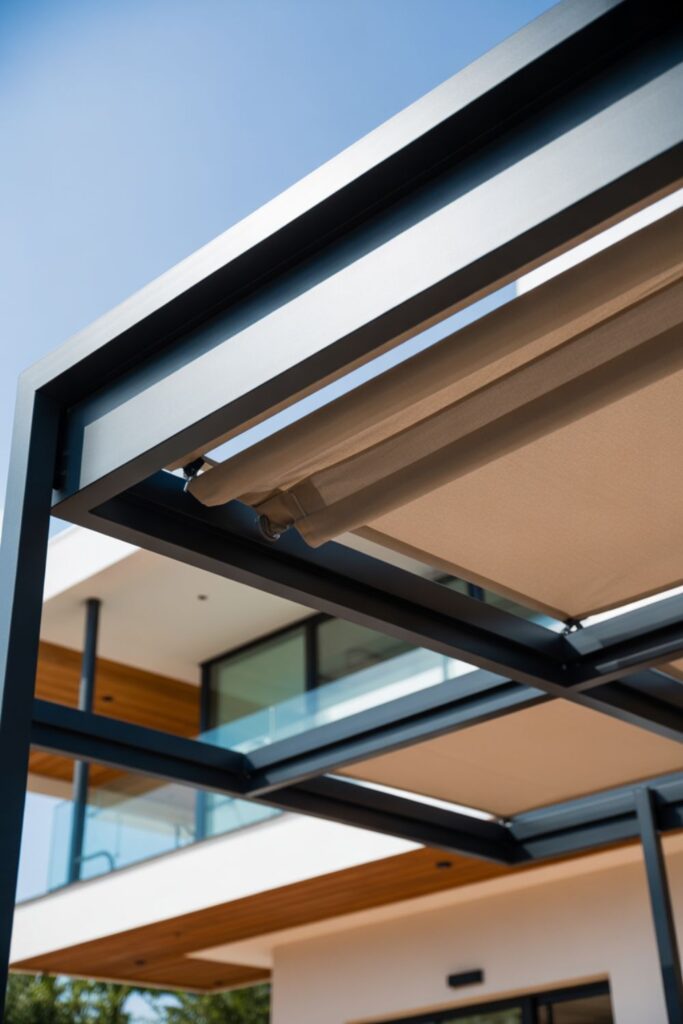
Modern outdoor patio with canopy installations follow the same design principles governing contemporary architecture, clean geometry, honest materials, and functional beauty without unnecessary ornamentation. Canopy structures feature straight lines and right angles rather than curves or decorative flourishes. According to architectural design philosophy, geometric precision creates the visual order that defines modern aesthetics distinguishing them from traditional styles relying on decorative details.
Material consistency between canopies and existing architectural elements maintains design integrity. If your home features steel and glass, canopy frames in matching metals create cohesion. Wood-sided contemporary homes pair with timber pergola structures. This material dialogue prevents the disjointed appearance that occurs when canopy materials conflict with home architecture. According to design psychology research, material harmony increases perceived quality by 40-50% compared to mismatched combinations in Modern outdoor patio with canopy integration.
Color restraint defines modern canopy aesthetics; neutral whites, grays, blacks, or natural wood tones dominate rather than bright or patterned fabrics. Solid colors maintain a clean appearance while patterns create visual busyness contradicting minimalist principles. According to color theory in modern design, limiting canopy palettes to 1-2 neutral tones ensures shade structures support rather than compete with overall design composition in sleek outdoor shade execution.
Retractable Canopy Systems for Maximum Flexibility
Retractable options provide the ultimate flexibility in modern outdoor patio with canopy designs by adapting to changing conditions and preferences. Motorized fabric systems extend from building facades covering 10-15 feet with single button operation. These sleek installations retract completely when not needed, maintaining unobstructed architectural lines. According to smart home integration research, motorized canopies increase usage satisfaction by 60-70% compared to manual systems because effortless operation encourages adjustment matching conditions.
Modern retractable systems feature cassette housings fully enclosing fabric when retracted protecting materials from weather while creating clean architectural statements when closed. These European-style mechanisms cost $2,500-8,000 installed depending on span and automation level but deliver the seamless integration defining contemporary design. According to architectural shade specialists, cassette systems justify premium pricing through superior aesthetics and extended fabric longevity (12-15 years versus 8-10 for exposed systems) in architectural shade structure quality.
Shade sails with adjustment mechanisms provide modern alternatives to traditional retractable awnings. Tensioned fabric triangles or rectangles mount to posts or buildings using turnbuckles allowing seasonal adjustment or removal. These geometric shapes reinforce modern aesthetics while costing 50-70% less than motorized systems ($400-1,500 for quality installations). According to contemporary outdoor design surveys, shade sails rank among the most popular modern shade solutions balancing aesthetics, functionality, and value in geometric shade solution appeal.
Retractable Canopy Comparison
| System Type | Cost Range | Coverage Area | Operation | Best For | Design Impact |
| Motorized Awning | $2,500-8,000 | 10-15 ft projection | Remote/Smart | Convenience, tech integration | Very High |
| Manual Awning | $800-2,500 | 8-12 ft projection | Hand crank | Budget consciousness | High |
| Retractable Pergola Cover | $1,500-5,000 | Varies by pergola | Manual/Motorized | Pergola owners | High |
| Adjustable Shade Sails | $400-1,500 | 8-20 ft spans | Manual tensioning | Modern aesthetics | Moderate-High |
Fixed Modern Pergola Designs
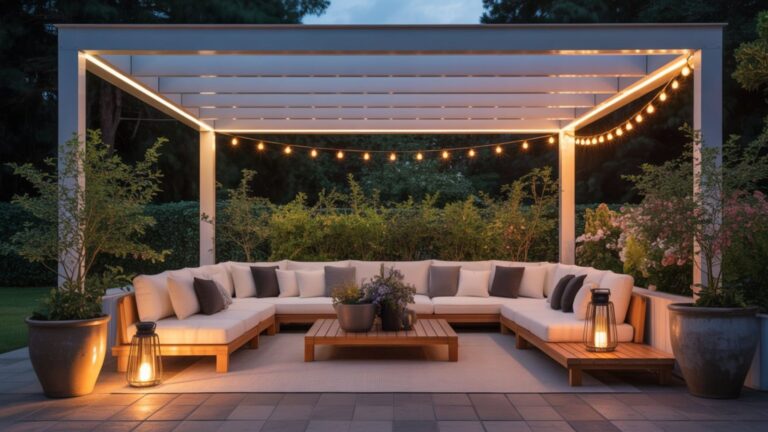
Modern pergola design creates permanent architectural statements while providing partial shade through slatted roofs allowing dappled light penetration. Contemporary pergolas feature substantial beams in geometric arrangements, parallel slats, grid patterns, or single-direction runs avoiding the complex crossed patterns of traditional designs. According to modern architectural principles, simpler beam arrangements create cleaner visual impact supporting minimalist aesthetics in fixed canopies installations.
Flat-roof pergolas with minimal or no pitch suit contemporary homes better than peaked structures referencing traditional architecture. These horizontal designs complement modern home profiles while simplifying construction and reducing costs by 15-25% compared to pitched alternatives. According to structural engineering, flat pergolas require careful drainage planning but deliver the clean horizontal lines defining contemporary architecture in minimalist patio cover execution.
Cantilevered pergolas extending from building facades without visible front supports create dramatic floating appearances. These engineering showcases cost 30-50% more than traditional four-post designs due to structural requirements but deliver stunning modern statements. Cantilevers work best spanning 10-14 feet longer spans require prohibitively expensive engineering. According to architectural impact studies, cantilevered structures increase perceived design sophistication by 50-70% through visible engineering excellence in architectural shade structure drama.
Material Selection for Modern Canopies
Material consistency in modern outdoor patio with canopy projects requires matching shade structure materials to home architecture. Powder-coated aluminum provides lightweight strength in any color matching contemporary color schemes. This corrosion-resistant material costs $15-30 per linear foot for structural components and requires virtually no maintenance across 30-40 year lifespans. According to material durability research, quality aluminum justifies 20-30% premiums over steel through superior weather resistance and color retention.
Steel particularly blackened or weathering steel (corten) creates bold industrial aesthetics perfect for contemporary loft-style homes. These robust materials handle larger spans than aluminum while developing distinctive patinas when left unsealed. Steel structures cost $20-40 per linear foot but deliver the substantial presence that some modern designs demand. According to architectural material philosophy, exposed steel celebrates honest material expression central to contemporary design in Modern outdoor patio with canopy authenticity.
Wood remains relevant in modern canopy design when specified in contemporary species and finishes. Clear vertical grain cedar or ipe with natural or transparent finishes provides organic warmth without traditional ornamental details. Dimensional lumber in substantial sizes (6×6 posts, 4×8 beams) creates bold proportions distinguishing modern from delicate traditional pergolas. According to modern wood architecture, simple wood structures with visible joinery and no applied decoration successfully bridge natural materials with contemporary aesthetics in sleek outdoor shade material authenticity.
Integrated Shade Fabric and Panels
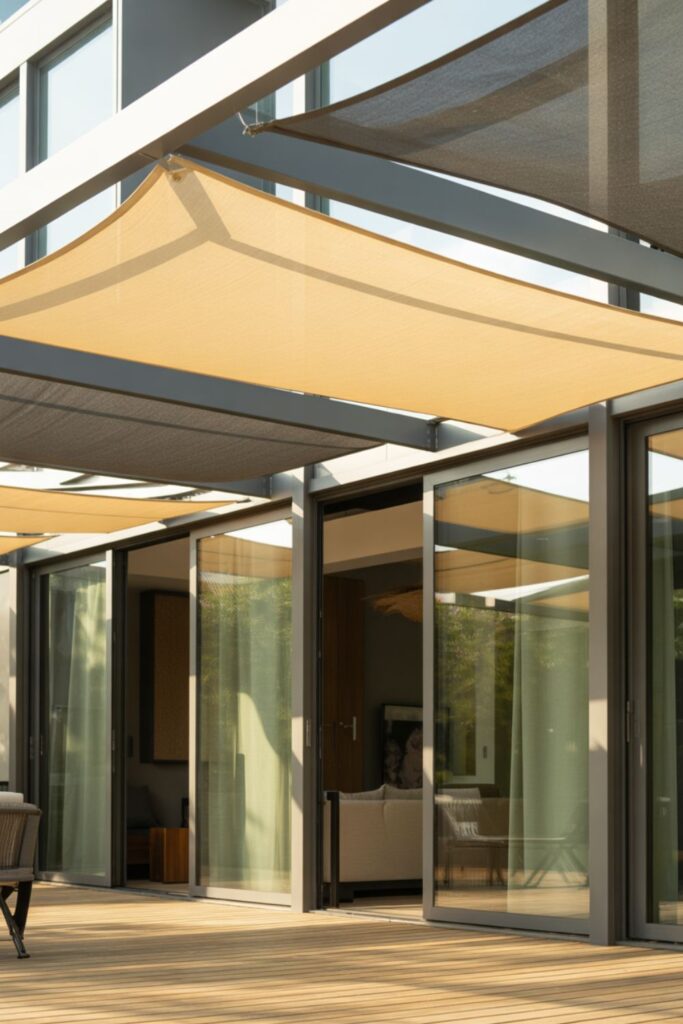
Fabric integration transforms open modern pergola designs into functional sun protection structures. Stretch fabrics specifically designed for architectural applications create smooth, taut surfaces avoiding the saggy appearance of conventional awning materials. These technical textiles cost $8-15 per square foot installed but deliver the crisp appearance modern aesthetics demand. According to architectural textile research, properly tensioned fabrics read as architectural surfaces rather than temporary coverings in modern outdoor patio with canopy refinement.
Polycarbonate or acrylic panels between pergola beams provide weather protection while allowing light transmission creating covered outdoor rooms remaining bright and airy. These rigid panels cost $5-12 per square foot depending on thickness and UV protection levels. Frosted or tinted options control light and heat while maintaining modern transparency. According to daylighting research, translucent panels preserve 60-80% natural light levels versus 10-20% under solid roofing, important for spaces where brightness matters in architectural shade structure illumination.
Louvered roof systems with adjustable slats offer ultimate control, opening them for sun and ventilation, close for rain protection and shade. Motorized versions respond to weather sensors automatically adjusting to conditions. These sophisticated systems cost $25-60 per square foot installed but represent the cutting edge of modern shade technology. According to smart outdoor systems research, automated louvered roofs increase patio usage by 70-90% through perfect adaptation to varying conditions in contemporary patio canopy innovation.
Read More About: Contemporary Terrace Ideas for Luxury Homes
Architectural Lines and Geometric Forms
Architectural lines define successful modern outdoor patio with canopy installations through precise geometry and intentional alignment. Canopy edges align with architectural features perhaps lining up with door headers, window tops, or roof eaves. This deliberate alignment creates visual relationships between elements rather than arbitrary placements. According to architectural composition principles, aligned elements increase perceived intentionality by 50-60% compared to random positioning in geometric shade solution precision.
Rectangular and square forms dominate modern canopy geometry avoiding curves, arches, or irregular shapes that reference traditional styles. Even when using triangular shade sails, select equilateral or right triangles with clear geometric logic rather than arbitrary angles. According to geometric psychology, regular geometric forms trigger order and sophistication associations while irregular shapes feel accidental or haphazard in minimalist patio cover composition.
Maintain consistent beam spacing in pergola structures perhaps 24 inches on center throughout rather than varying distances that create visual randomness. This rhythmic repetition reinforces modern design’s emphasis on systems and logic over organic variation. According to pattern recognition research, regular spacing intervals increase perceived design quality by 30-40% through subconscious appreciation of mathematical precision in modern pergola design execution.
Color Coordination and Finish Selection
Color coordination between canopies and surrounding architecture maintains design cohesion in modern outdoor patio with canopy projects. Match canopy structural colors to window frames, fascia boards, or other architectural trim elements rather than introducing new colors creating visual fragmentation. According to color harmony research, limiting exterior palettes to 2-3 colors maximum creates cohesion that 4+ color schemes cannot achieve in Modern outdoor patio with canopy integration.
Matte and satin finishes suit modern aesthetics better than glossy surfaces that feel too polished or automotive. Powder-coated metals in matte black, charcoal gray, or bronze create sophisticated appearances. Fabric selections should favor matte or low-sheen materials avoiding the cheap appearance of shiny synthetics. According to surface finish psychology, matte surfaces feel 30-40% more sophisticated than equivalent glossy finishes in modern design contexts.
Monochromatic schemes using single colors in various values create sophisticated modern canopy aesthetics. An all-gray installation might combine charcoal frames, medium gray fabric, and pale gray furniture beneath unified through color family while providing tonal variation. According to monochromatic design research, single-color schemes with 3-4 value variations deliver visual interest equivalent to 2-3 color palettes while maintaining greater sophistication in sleek outdoor shade refinement.
Sun Protection Performance Metrics
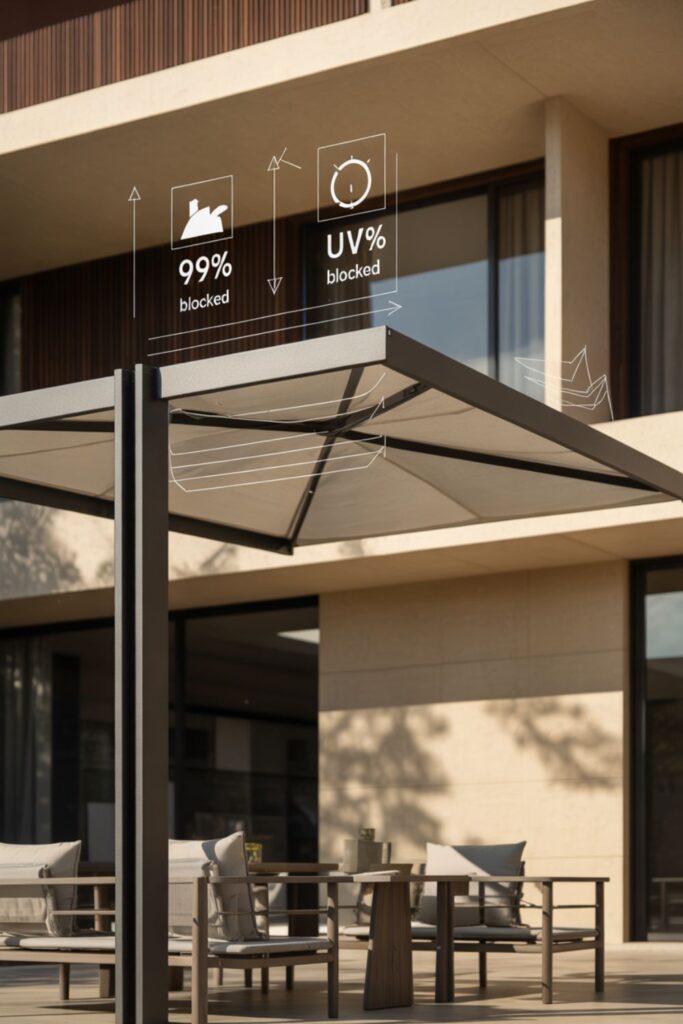
Sun protection effectiveness in modern outdoor patio with canopy installations depends on coverage density and fabric specifications. Solid roof materials (metal, polycarbonate, fabric) provide 95-100% UV blockage while open slat pergolas deliver 40-60% protection depending on slat spacing. According to solar protection research, even 50% shade reduces surface temperatures by 20-25°F, a substantial improvement over unprotected exposure in architectural shade structure performance.
Fabric UPF (Ultraviolet Protection Factor) ratings indicate UV blocking similar to sunscreen SPF ratings. Quality outdoor fabrics rate UPF 50+ blocking 98% of UV radiation. Lesser fabrics rating UPF 15-30 allow damaging exposure. According to textile sun protection standards, UPF 50+ fabrics justify 30-50% cost premiums through superior protection and fade resistance in contemporary patio canopy material selection.
Orientation matters tremendously south-facing canopies require denser coverage than north-facing equivalents. Evaluate sun angles throughout the day and seasons when planning coverage. According to solar geometry analysis, adjustable systems outperform fixed installations by 40-60% in protection effectiveness because they adapt to changing sun positions throughout years in modern outdoor patio with canopy optimization.
Weather Resistance and Durability
Weather resistance determines whether a modern outdoor patio with canopy installations maintain appearance and function across years or deteriorate rapidly requiring replacement. Marine-grade stainless steel hardware resists corrosion in coastal or humid environments where standard steel fails within 5-8 years. These premium fasteners cost 3-4x more than standard hardware but prevent the rust stains that ruin modern aesthetics. According to corrosion engineering, marine-grade components extend structural lifespan by 200-300% in challenging climates.
Solution-dyed acrylic fabrics resist fading better than piece-dyed alternatives because pigment penetrates fibers rather than coating surfaces. These premium fabrics maintain color for 10-15 years versus 3-5 for cheaper materials. Cost premiums of 40-60% justify themselves through extended replacement cycles. According to textile weathering studies, solution-dyed fabrics retain 80% of original color after 10 years outdoor exposure versus 40% for piece-dyed equivalents in sleek outdoor shade longevity.
Wind resistance specifications matter for retractable systems; quality awnings withstand 20-25 mph winds when extended while budget versions require retraction at 12-15 mph. This performance difference dramatically affects usability in breezy locations. According to structural wind engineering, reinforced frames and proper installation justify 30-50% cost increases through reliable operation in real-world conditions rather than calm-only functionality in Modern outdoor patio with canopy practicality.
Lighting Integration With Modern Canopies
Lighting integration transforms a modernoutdoor patio with canopy installations into evening destinations while reinforcing contemporary aesthetics. LED strips recessed into canopy beams provide linear illumination highlighting geometric structure after dark. These installations cost $20-40 per linear foot but create the clean lighting effects defining modern design. According to architectural lighting research, integrated fixtures increase perceived design quality by 40-50% compared to obviously added lighting in architectural shade structure refinement.
Pendant fixtures hanging from canopy structures provide task and ambient lighting while serving as sculptural elements during daytime. Select fixtures with geometric forms cylinders, spheres, or rectangular boxes in materials matching canopy structure. These statement pieces cost $200-800 each but function as functional art. According to lighting design philosophy, quality fixtures pulling double duty as daytime sculpture justify premiums through dual-purpose value in modern pergola design enhancement.
Indirect uplighting hidden above solid canopy panels creates ambient glow without visible sources; the ceiling itself becomes the light fixture. This sophisticated approach costs $15-30 per linear foot for LED strips and installation but delivers the seamless integration modern design demands. According to lighting psychology, indirect illumination feels 30-40% more sophisticated than direct fixtures while providing gentler, more flattering light quality in minimalist patio cover evening transformation.
How Do I Choose Between Fixed and Retractable Canopies?
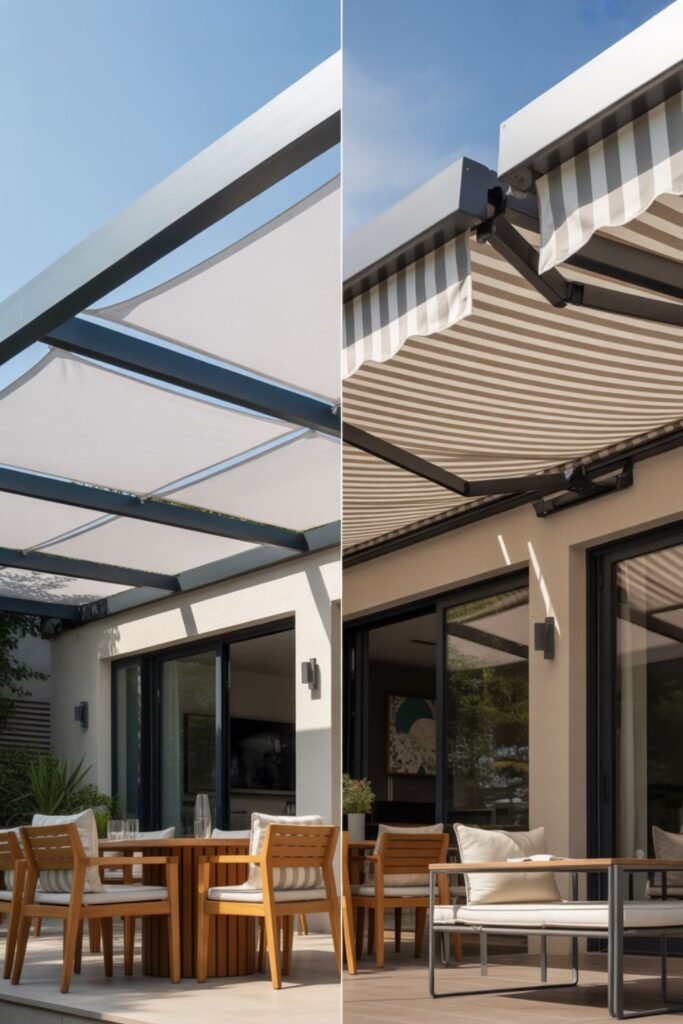
Choosing between fixed and retractable options in modern outdoor patio with canopy planning depends on usage patterns, climate, and budget. Fixed structures suit year-round outdoor living in moderate climates where consistent coverage is desired. These permanent installations cost less per square foot ($15-35 versus $25-60 for retractables) while delivering greater structural presence. According to usage pattern research, homeowners in sunny climates preferring consistent shade report 20-30% higher satisfaction with fixed canopies.
Retractable options excel when flexibility matters, perhaps wanting full sun during cool mornings but shade during hot afternoons. These adaptable systems accommodate varying preferences and changing seasons better than fixed alternatives. According to behavioral research, adjustable systems increase actual usage by 40-60% because they suit more conditions and moods throughout years in contemporary patio canopy versatility.
Consider maintenance requirements, retractable systems need seasonal fabric care and mechanical inspection while fixed structures demand minimal attention beyond periodic cleaning. If maintenance feels burdensome, fixed options make sense. According to long-term ownership studies, high-maintenance features see declining usage over time as initial enthusiasm wanes choose systems matching realistic rather than aspirational care commitment in sleek outdoor shade practicality.
What Materials Work Best for Modern Canopy Designs?
Material consistency in a modern outdoor patio with canopy design requires matching canopy materials to home architecture and existing outdoor elements. Contemporary steel and glass homes pair with metal canopy frames in matching finishes. Modern wood-sided homes work with timber pergola structures. This architectural dialogue creates cohesion that mismatched materials undermine. According to design harmony research, material matching increases perceived quality by 35-45% in architectural shade structure integration.
Powder-coated aluminum offers the best combination of modern aesthetics, durability, and low maintenance for most applications. Available in any color, lightweight yet strong, and corrosion-proof, aluminum suits contemporary design while performing reliably for 30-40 years. According to material specification research, aluminum structures justify 20-30% cost premiums over steel through superior weather resistance and color retention in modern pergola design specification.
For fabric elements, solution-dyed acrylic provides optimal balance of appearance, weather resistance, and longevity. These technical textiles maintain crisp appearance and color saturation 10-15 years while cheaper alternatives fade and weaken within 3-5 years. According to textile performance analysis, premium fabrics justify 40-60% cost increases through extended replacement cycles and maintained aesthetics in contemporary patio canopy material investment.
Can Modern Canopies Work With Traditional Homes?
Modern canopies on traditional homes create jarring style conflicts that decrease rather than increase property value. A sleek minimalist structure on a Victorian home looks out of place regardless of quality because design languages contradict. According to architectural compatibility research, style mismatches reduce perceived appropriateness by 60-70% even when individual elements demonstrate quality in a modern outdoor patio with canopy suitability assessment.
However, transitional canopy designs blending modern and traditional elements can bridge stylistic gaps. Perhaps clean-lined pergola structures in traditional materials (wood rather than steel) or simplified traditional forms (basic gables without ornamental details). These hybrid approaches respect both contemporary preferences and existing architecture. According to transitional design philosophy, simplified traditional forms feel more contemporary than elaborate historical reproductions while remaining appropriate for period homes.
Consider your neighborhood context dramatically, modern additions in traditional neighborhoods may feel architecturally aggressive regardless of home appropriateness. According to community design standards research, architectural respect for neighborhood character increases long-term satisfaction and property values even when personal style preferences differ from surrounding context in design cohesion community consideration.
Read More About: 25+ Backyard Small Space Ideas For Smart Designs
Maintenance Requirements for Modern Canopy Systems
Modern outdoor patio with canopy maintenance varies dramatically by system type and material selection. Fixed metal pergolas require minimal care, annual washing with mild soap removes dirt and pollen. Powder-coated finishes maintain appearance 15-20 years before requiring touch-ups. According to maintenance time studies, fixed metal structures demand 1-2 hours annual maintenance versus 4-8 hours for fabric-intensive or wood alternatives in architectural shade structure efficiency.
Retractable fabric systems need seasonal care cleaning fabric panels, lubricating mechanisms, and inspecting for wear. Fabrics should be cleaned 2-3 times annually using manufacturer-recommended products. Mechanical components need annual lubrication and adjustment. According to retractable system maintenance research, proper care extends operational life from 10-12 years to 15-18 years justifying 3-4 hours annual investment in contemporary patio canopy longevity.
Wood structures demand the most intensive maintenance cleaning, staining, and sealing every 2-3 years to prevent weathering and deterioration. Even low-maintenance species like cedar and ipe benefit from protective treatments extending appearance retention. According to wood maintenance analysis, treating costs $200-600 every 2-3 years for typical pergolas cumulative expense approaching original installation costs over 15-20 year periods in modern pergola design care economics.
FAQs
What is a modern outdoor patio with a canopy?
A modern outdoor patio with a canopy is a stylish outdoor living space featuring sleek, contemporary design elements and a canopy for shade and weather protection.
What materials are best for a patio canopy?
Common materials include fabric (like weather-resistant canvas), metal (aluminum or steel), and wood. Each offers durability, style, and protection depending on your climate.
How do I choose the right canopy for my patio?
Consider your patio size, exposure to sun or rain, desired style, and whether you prefer a permanent or retractable canopy.
Can a canopy improve my patio’s comfort?
Yes! Canopies provide shade, reduce heat, and allow you to enjoy your outdoor space even during light rain or strong sun.
What are some modern design ideas for a patio with a canopy?
Ideas include minimalist furniture, integrated lighting, modular seating, neutral color schemes, and vertical planters for greenery.
Conclusion
Your modern outdoor patio with canopy exploration reveals that sophisticated shade and contemporary design enhance rather than compromise each other when unified through consistent design principles. Those striking covered patios admired in architectural publications succeed through geometric precision, material harmony, and intentional integration treating canopies as architectural elements rather than functional afterthoughts.
Exceptional contemporary patio canopy installations emerge through deliberate decisions about structure type, material consistency, and architectural lines that reinforce rather than conflict with existing design language. Your sleek outdoor shade transforms from necessary evil to design asset through quality retractable options or bold fixed canopies that make architectural statements while delivering practical sun protection extending outdoor living comfort throughout seasons.
Start by honestly assessing your home’s architectural style, your actual shade needs versus aspirational visions, and realistic maintenance commitment. Whether pursuing dramatic architectural shade structures making bold statements or subtle minimalist patio covers providing understated elegance, success comes through design discipline honoring contemporary principles clean geometry, honest materials, and functional beauty. The most impressive modern outdoor patio with canopy installations demonstrates that true sophistication emerges through restraint and precision rather than elaborate complexity. Your shade structure deserves becoming the refined architectural element that elevates your entire outdoor environment while protecting against sun exposure that would otherwise limit enjoyment.