20+ Modern Outdoor Flooring Ideas for Redefine Outdoor Living

You step onto your patio and cringe. The cracked concrete screams 1980s contractor-grade minimum effort, while your neighbor’s warped pressure-treated deck looks like it’s auditioning for a horror film. Your outdoor space has potential good bones, decent layout, southern exposure but the flooring undermines everything, making the entire area feel dated and uninviting. You know replacing outdoor surfaces ranks among home improvement’s pricier projects, which makes choosing wrong feel especially risky. Here’s the reality: modern outdoor flooring ideas have evolved dramatically beyond basic wood decking and poured concrete, offering materials that combine cutting-edge aesthetics with performance that previous generations couldn’t imagine.
From porcelain tiles that mimic natural materials with zero maintenance to composite decking that resists fading and splintering, contemporary surfaces deliver the clean lines and sophisticated textures that define modern design. This guide explores materials, installation methods, costs, and design strategies that transform ordinary outdoor floors into architectural statements worthy of your home’s interior sophistication.
What Defines Modern Outdoor Flooring?
Modern outdoor flooring ideas prioritize clean lines, minimal visual clutter, and materials that age gracefully rather than deteriorate obviously. Contemporary surfaces favor large-format elements, oversized pavers, wide deck boards, seamless poured materials that reduce grout lines and fastener visibility. This approach creates expansive, uninterrupted planes that make outdoor spaces feel larger and more cohesive than traditional small-unit materials like brick or narrow deck boards.
Minimalist outdoor flooring ideas embraces neutral color palettes dominated by grays, blacks, whites, and natural wood tones, avoiding the reds, oranges, and busy patterns that date outdoor spaces to specific eras. Texture options provide interest without color brushed concrete, wood-grain porcelain tiles, and linear-grain composite decking deliver visual depth through surface variation rather than pattern or hue. Modern materials also excel at mimicking natural substances while eliminating their maintenance headaches porcelain that replicates marble or travertine without sealing requirements, or composites that capture wood’s warmth without rot or splinters.
Why Choose Porcelain Tiles for Outdoor Spaces?
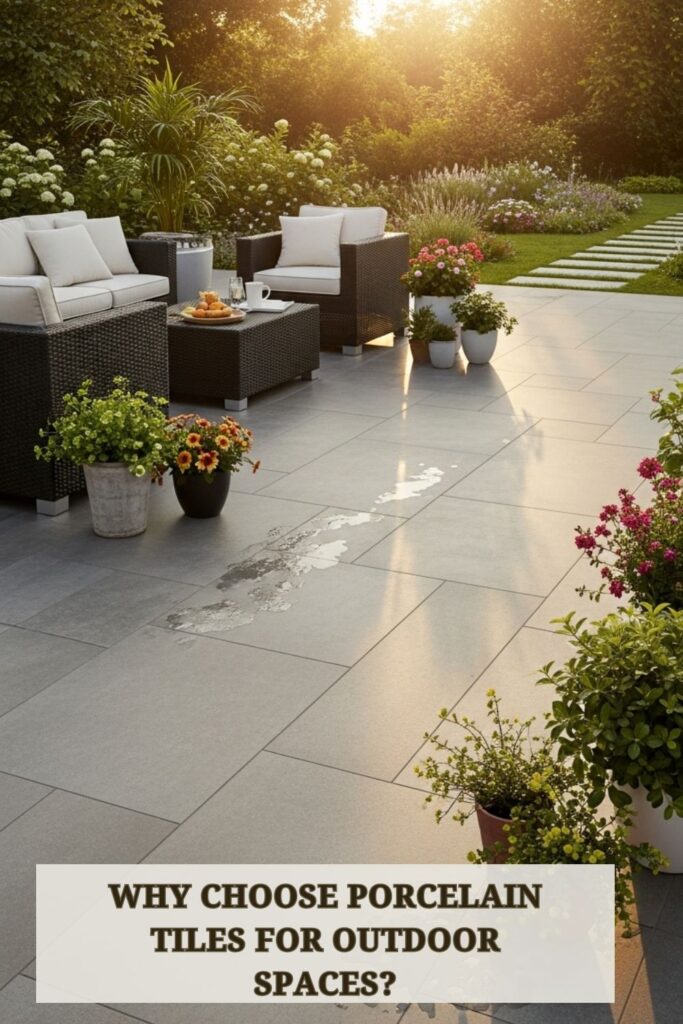
Porcelain tiles dominate contemporary patio flooring because they combine luxury aesthetics with commercial-grade performance. These manufactured tiles resist staining, fading, scratching, and moisture absorption better than natural stone while costing 30-50% less. Modern manufacturing techniques create tiles indistinguishable from marble, limestone, concrete, or wood, offering authentic design aesthetics without natural material limitations. Large-format tiles measuring 24×24 inches or larger minimize grout lines that fragment spaces visually, while plank-format tiles create the linear patterns that contemporary design favors.
The durability of outdoor-rated porcelain exceeds most alternatives; properly installed tiles withstand freeze-thaw cycles, pool chemicals, and heavy furniture without cracking or degrading. Unlike natural stone requiring annual sealing, porcelain maintains its appearance through simple cleaning with water and mild detergent. For modern terrace surfaces, rectified porcelain tiles feature precisely cut edges that allow minimal grout joints sometimes as narrow as 1/8 inch creating nearly seamless expanses that emphasize space over material. This installation technique particularly suits modern aesthetics where continuous surfaces trump traditional tile patterns.
Read More About: 37+ Colorful Backyard Ideas to Brighten Your Outdoor Space
How Does Composite Decking Compare to Natural Wood?
Composite decking has revolutionized outdoor deck materials by eliminating wood’s primary weaknesses while capturing its visual warmth. These engineered boards combine wood fibers with polymer binders, creating surfaces that resist rot, insects, warping, and splintering that plague pressure-treated lumber. Modern composites feature capped surfaces protective polymer shells encasing structural cores that resist fading, staining, and scratching better than first-generation products that disappointed early adopters with performance issues.
Installation methods for composites mirror wood decking but offer hidden fastening systems that eliminate visible screws, creating the clean surfaces modern design demands. Grooved board edges accept concealed clips that lock boards together while allowing the expansion and contraction that temperature changes cause. This approach particularly suits minimalist outdoor flooring ideas where exposed fasteners compromise clean aesthetics. Premium composites now feature multi-tonal coloring and realistic wood grain that avoids the artificial uniformity that made early products obviously synthetic. Expect composite decking to cost 50-100% more than pressure-treated wood initially, but lifetime costs favor composites when you account for staining, sealing, and board replacement that wood requires.
What Makes Concrete Pavers Modern?
Concrete pavers achieve contemporary status through size, finish, and color rather than material innovation. Large-format pavers measuring 24×24 inches or 12×24 inches create the expansive, uncluttered surfaces that modern outdoor flooring ideas prioritize. These oversized units reduce the quantity of joints compared to traditional 4×8 inch brick pavers, creating smoother transitions and cleaner sight lines. Texture options range from smooth-troweled finishes mimicking poured concrete to brushed surfaces revealing aggregate, with each providing visual interest through subtle surface variation.
Color palettes in modern concrete pavers stick to neutral charcoal, slate gray, warm gray, and white sometimes incorporating subtle color blending within individual units for organic variation. These sophisticated tones integrate seamlessly with contemporary architecture’s metal, glass, and stucco facades, whereas traditional terra cotta and tumbled pavers read as dated. Installation in linear patterns running bond, stacked, or plank-style arrangements reinforces modern aesthetics better than herringbone or basket-weave layouts associated with traditional design. The durability of concrete pavers equals or exceeds poured concrete while offering flexibility that solid slabs lack individual units to accommodate ground movement without cracking, and damaged pavers replaced individually rather than requiring entire slab demolition.
How Do You Install Modern Outdoor Flooring?
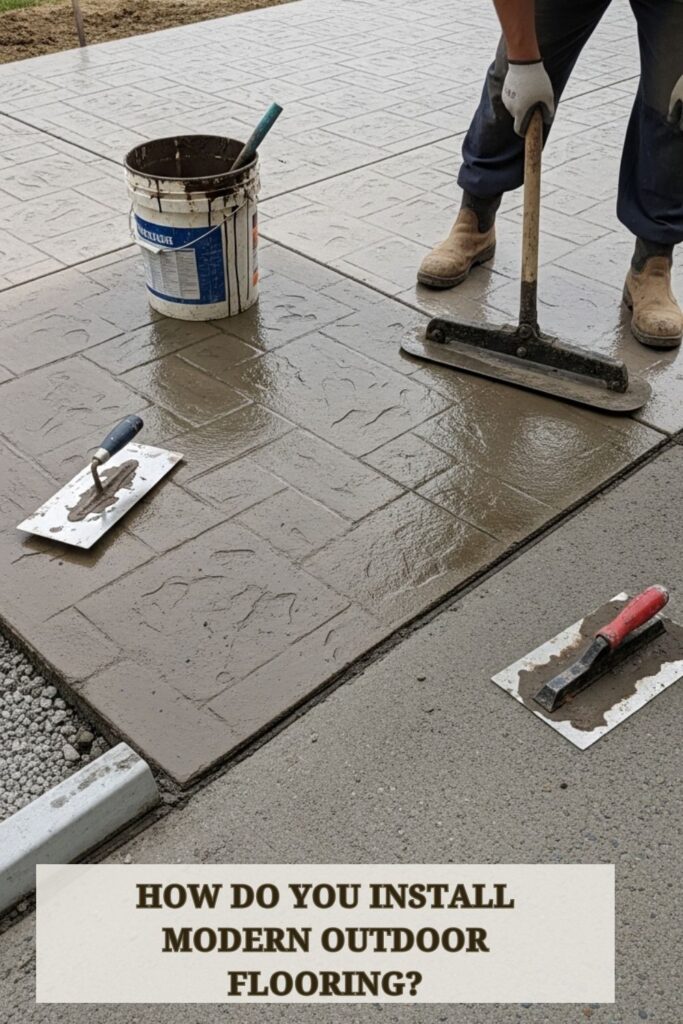
Installation methods vary significantly by material, affecting both initial costs and long-term performance. Porcelain tiles for outdoor use require professional installation over properly prepared substrates either concrete slabs or specially designed pedestal systems that elevate tiles above ground level. The pedestal approach solves drainage issues while creating level surfaces over uneven terrain, though it costs more than traditional mortar installation. Proper waterproofing beneath tiles prevents moisture damage that causes tiles to delaminate or crack during freeze-thaw cycles.
Composite decking installation follows conventional framing methods but demands attention to manufacturer specifications regarding joist spacing, fastener types, and gap requirements. Modern composites expand and contract with temperature changes more than wood, requiring specific end-to-end and side-to-side spacing that prevents buckling. Hidden fastening systems require groove-matched boards and specialized clips, with most manufacturers offering proprietary systems optimized for their products. DIY-capable homeowners can install composite decking successfully by following detailed instructions, though professional installation ensures warranty compliance and optimal performance. Concrete paver installation requires proper base preparation compacted gravel, leveling sand, and edge restraints before setting pavers in desired patterns, making it accessible for determined DIYers willing to invest labor over multiple weekends.
What Are the Best Modern Stone Options?
Natural stone brings timeless elegance to contemporary outdoor flooring ideas through materials that literally outlast generations. Bluestone, limestone, and slate deliver the neutral color palettes modern design favors while providing authentic material character that manufactured products approximate but never fully replicate. Bluestone’s blue-gray tones and subtle surface texture create sophisticated expanses, while thermal-finished granite offers slip resistance and dimensional stability that polished versions lack outdoors.
Large-format stone slabs measuring 24×36 inches or larger reduce joint frequency, creating the continuous surfaces that modern terrace surfaces demand. Cut stone with sawn edges installed with tight joints that emphasize stone over grout, contrasting with irregular flagstone’s rustic appearance. The maintenance requirements for natural stone include annual sealing to prevent staining and efflorescence, plus occasional power washing to remove organic growth. Despite these demands, stone’s durability and authentic beauty justify the investment for high-end projects where the budget accommodates premium materials. Expect natural stone to cost 2-4 times more than concrete pavers or porcelain tiles, with installation requiring professional expertise to achieve level surfaces and proper drainage.
How Does Poured Concrete Fit Modern Design?
Poured concrete delivers the seamless, monolithic surfaces that epitomize minimalist outdoor flooring ideas. When properly finished, concrete creates expansive planes without visible joints, making spaces feel larger and more cohesive than unit-based materials. Modern finishing techniques extend far beyond basic broom finishes: polished concrete exposes aggregate for terrazzo-like effects, while acid staining creates variegated coloring that mimics natural stone. Stamped concrete replicates wood, stone, or tile patterns, though these textured surfaces read as traditional rather than contemporary.
Industrial outdoor flooring ideas embraces concrete’s utilitarian origins through raw finishes that celebrate material honesty rather than disguising concrete as something else. Smooth-troweled surfaces in natural gray or integrally colored concrete create calm, neutral backdrops that let furniture and plantings provide visual interest. Control joints necessary to manage cracking become design elements when thoughtfully placed, dividing large slabs into geometric sections that feel intentional. The cost comparison favors basic poured concrete as the most affordable outdoor flooring option, though high-end finishes like polishing or decorative scoring approach mid-range material costs. Proper installation requires professional expertise in grading, reinforcement, and finishing techniques that prevent the cracking and settling that plague poorly executed concrete work.
What Color and Texture Combinations Work Best?
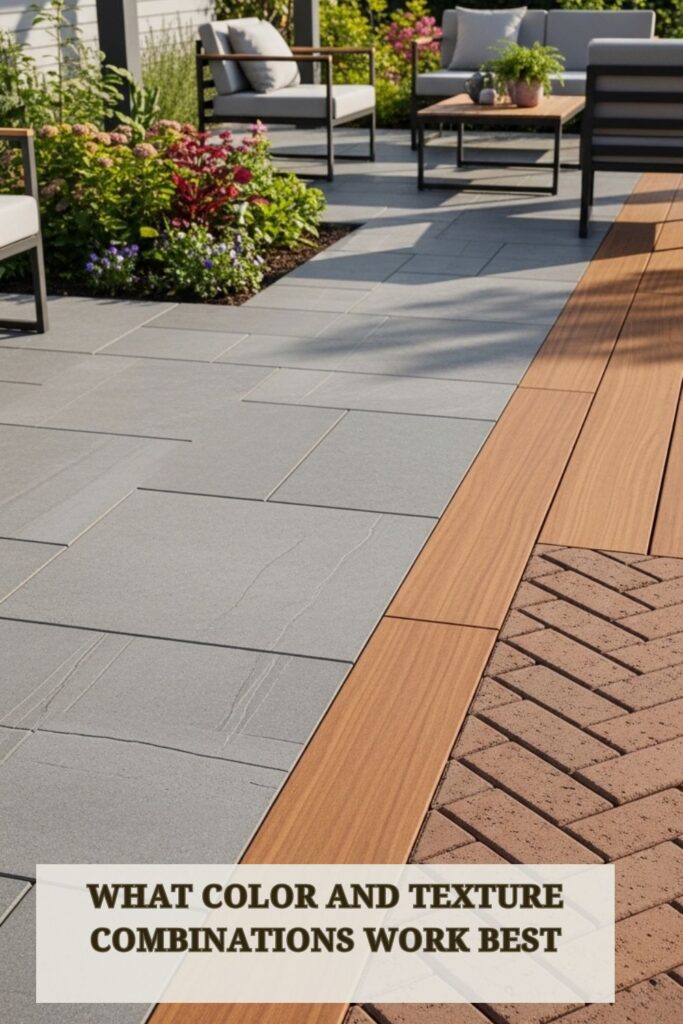
Color palettes in modern outdoor flooring ideas trend toward restrained neutrals that age gracefully without appearing dated. Warm grays bridge the gap between stark white and heavy charcoal, providing versatile backgrounds that complement both cool and warm architectural palettes. Black or near-black surfaces create dramatic statements suitable for bold contemporary designs, though they show dust and scratches more readily than mid-toned alternatives. Natural wood tones, whether authentic timber or wood-grain composites introduce warmth without compromising modern aesthetics, particularly when boards feature consistent coloring and minimal knots.
Texture options prevent neutral color palettes from reading as bland or institutional. Brushed finishes reveal underlying material structure: wood grain, concrete aggregate, stone crystalline patterns through subtle surface relief that catches light differently than smooth surfaces. Linear textures emphasize direction and movement, making spaces feel longer or wider depending on orientation. Combining textures within projects adds layering without color smooth porcelain at seating areas transitioning to textured pavers in planting zones, or wood decking adjacent to polished concrete creates visual zones while maintaining neutral palettes. Avoid mixing more than two textures in single views to prevent busy, cluttered appearances that undermine modern simplicity.
How Do Different Materials Handle Weather?
Weather resistance varies dramatically among outdoor deck materials, affecting long-term appearance and maintenance demands. Porcelain tiles excel in all climates; they’re impervious to moisture, won’t fade in intense sun, and handle freeze-thaw cycles without cracking when properly installed. Salt exposure from snow treatment or coastal environments doesn’t affect porcelain, making it ideal for challenging locations. The durability of outdoor porcelain means surfaces installed today will look essentially identical decades later with minimal intervention.
Composite decking resists moisture and insects perfectly but fades in direct sunlight despite manufacturers’ improved UV protection. Expect 5-10% color shift in the first year, then stabilization. Snow and ice don’t damage composites, though some products become slippery when wet check slip-resistance ratings for pool decks or areas receiving frequent precipitation. Natural wood decking weathers dramatically without maintenance, silvering to gray as UV radiation degrades lignin. This patina appeals to some aesthetics but represents actual material degradation. Proper sealing every 2-3 years maintains original appearance while extending lifespan. Concrete weathers through efflorescence (white mineral deposits), surface erosion, and occasional cracking, with sealed surfaces performing better than untreated concrete in harsh climates.
What Are the Cost Considerations for Modern Flooring?
Cost comparison across materials reveals wide ranges based on quality tiers and installation methods. Basic poured concrete starts around $6-12 per square foot installed, making it the most economical option for large areas. Concrete pavers range from $12-20 per square foot installed, with large-format modern styles typically costing toward the higher end. Composite decking installed costs $25-35 per square foot including framing, fasteners, and labor roughly double pressure-treated wood’s $12-18 per square foot.
Porcelain tiles for outdoor installation run $15-30 per square foot for materials, plus $10-15 per square foot for professional installation over proper substrates. Pedestal-mounted systems add $8-12 per square foot for the pedestal framework but solve drainage and leveling challenges elegantly. Natural stone represents the premium choice at $30-60 per square foot installed, with exotic varieties and large slabs commanding higher prices. These initial costs tell only partial stories; maintenance requirements dramatically affect lifetime expenses. Wood decking requiring biennial staining at $2-3 per square foot quickly accumulates costs that maintenance-free materials avoid. Calculate total cost of ownership over expected material lifespans rather than comparing initial prices alone.
How Do You Create Seamless Indoor-Outdoor Transitions?
Contemporary patio flooring that extends indoor floor levels and materials creates coveted seamless transitions between interior and exterior spaces. Large sliding or folding glass doors maximize this effect when outdoor flooring sits at identical heights to interior floors, eliminating thresholds that visually separate spaces. Porcelain tiles excel at this application identical or coordinating tiles flow from living rooms onto patios, blurring boundaries between inside and out. This continuity makes both spaces feel larger while creating the cohesive design aesthetics that characterize high-end modern homes.
Wood-look porcelain planks bridge aesthetic gaps when interior wood floors meet outdoor spaces; they capture wood’s warmth while handling exterior exposure that genuine wood cannot. Composite decking in dark tones complements interior hardwoods through tonal similarity, though material differences remain apparent. Consider running flooring materials in consistent directions across transitions to reinforce visual connections boards or plank tiles oriented perpendicular to doors emphasize width, while parallel installations draw eyes outward into yards. Matching grout colors in tiled applications and using similar-width planks maintains rhythm across thresholds, preventing jarring material changes that call attention to boundaries you’re trying to minimize.
What Maintenance Do Modern Materials Require?
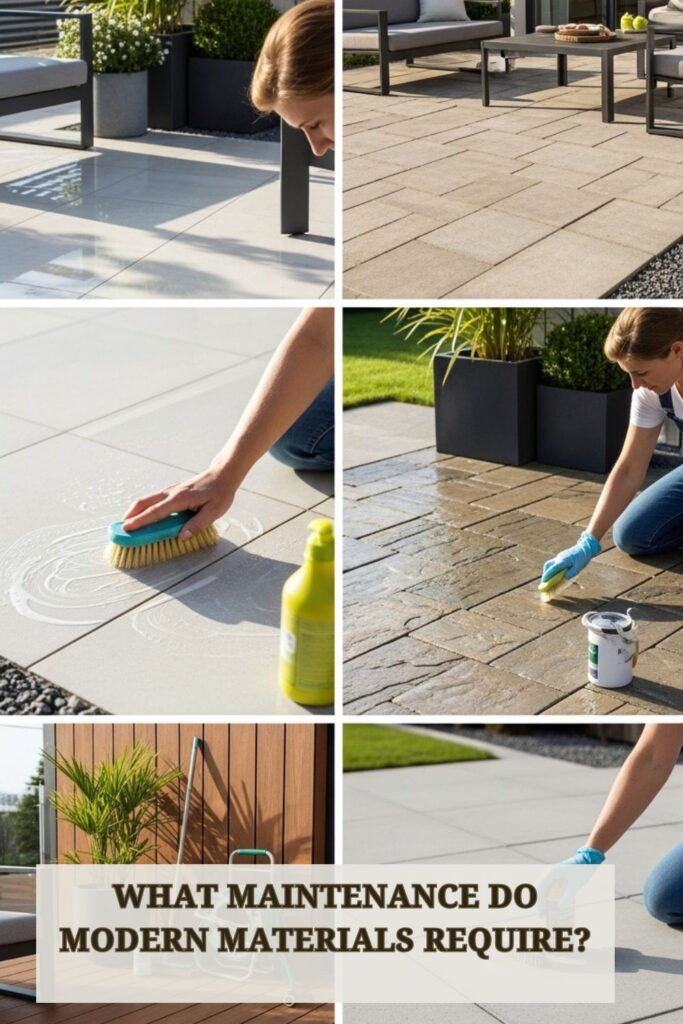
Maintenance requirements for modern outdoor flooring ideas vary widely, from virtually none to seasonally demanding, depending on material choices. For example, porcelain tiles have minimal maintenance requirements for modern outdoor flooring ideas, needing only periodic sweeping and occasional washing with water, with no sealing, staining, or refinishing required. This near-zero maintenance requirement for modern outdoor flooring ideas makes porcelain tiles ideal for vacation homes or busy households unable to commit to regular upkeep. Grout joints also contribute to the overall maintenance requirements for modern outdoor flooring ideas, requiring occasional cleaning to prevent organic growth, though sealed grout reduces staining and biological colonization compared to untreated grout.
Composite decking presents a different level of maintenance requirements for modern outdoor flooring ideas, needing annual cleaning with soap and water to remove pollen, dirt, and organic debris that can cause surface mildew. Most composites resist staining, but prompt spill cleanup is important to meet maintenance requirements for modern outdoor flooring ideas, particularly from grease, wine, or rust. Excessive pressure from washers above 1,500 PSI can damage composites, which is a critical consideration in maintenance requirements for modern outdoor flooring ideas. Concrete surfaces carry moderate maintenance requirements for modern outdoor flooring ideas, including resealing every 2–5 years and power washing to remove stains and organic growth.
Natural stone has some of the highest maintenance requirements for modern outdoor flooring ideas, requiring annual sealing, regular cleaning, and prompt stain treatment to preserve appearance. Similarly, wood decking entails the most demanding maintenance requirements for modern outdoor flooring ideas, with annual or biennial cleaning, sanding, and refinishing with stain or sealant to prevent rot and maintain its look. Considering these maintenance requirements for modern outdoor flooring ideas upfront helps homeowners make informed material choices instead of facing unexpected upkeep challenges after installation.
How Do You Design Patterns with Modern Materials?
Minimalist outdoor flooring ideas patterns emphasize simplicity over complexity, with running bonds (brick-style) and linear arrangements dominating contemporary installations. Many minimalist outdoor flooring ideas favor composite decking and porcelain planks oriented in parallel runs to create clean, directional statements. Boards or planks positioned perpendicular to primary viewing angles—decking running away from houses—enhance depth, while materials running parallel to buildings emphasize width, a key principle in minimalist outdoor flooring ideas design. This directional strategy often proves more effective than complex patterns that fragment visual flow in minimalist layouts.
Large-format materials are ideal for stacked patterns, where units align rather than offset, reinforcing the crisp geometry celebrated in minimalist outdoor flooring ideas. Mixing material sizes within projects can define zones without relying on color changes: for instance, 24×24-inch pavers in primary gathering areas transitioning to 12×24-inch planks in secondary spaces creates hierarchy through scale, a hallmark of minimalist outdoor flooring ideas. Inset accent materials can be used judiciously—a band of river rock between poured concrete sections, or contrasting porcelain borders framing primary areas—but excessive pattern mixing undermines the essence of minimalist outdoor flooring ideas, which prioritize simplicity and cohesion. Over time, patterns can blend into visual noise as furniture, plants, and accessories accumulate; beginning with simple minimalist outdoor flooring ideas allows layering of complexity through adaptable design aesthetics.
What Are Innovative Edge Treatments?
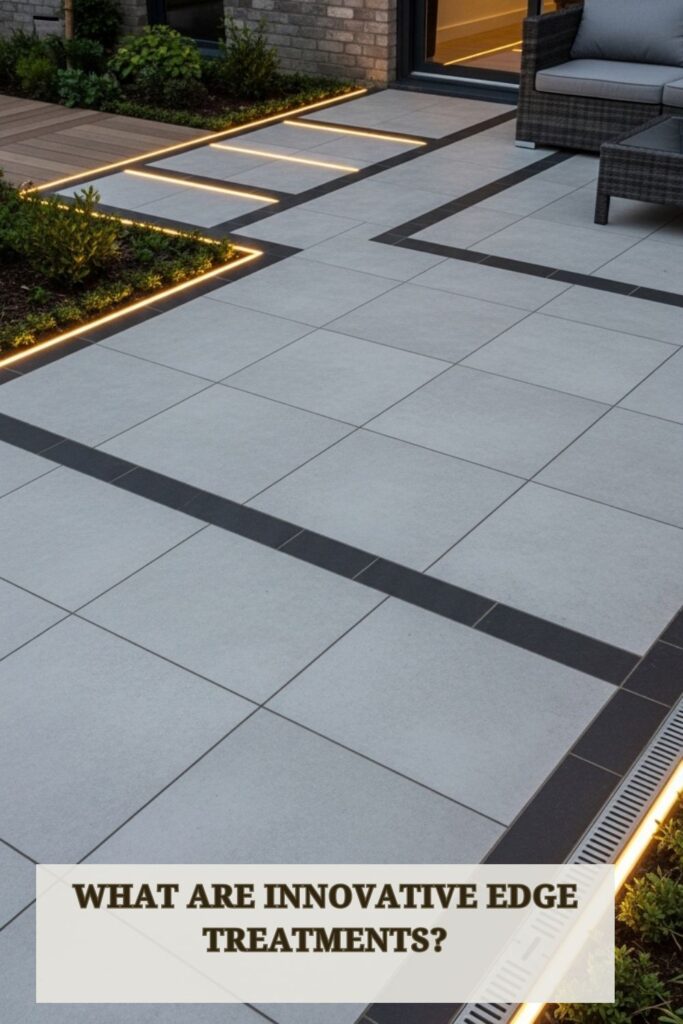
Edge details separate professional modern terrace surfaces from amateur attempts. Flush edges where flooring terminates at grade create clean lines impossible with raised platforms; this approach requires excellent drainage planning but delivers uninterrupted surfaces meeting lawns or gravel without visible borders. Metal edging in aluminum or steel provides crisp boundaries that contain unit materials like pavers or gravel while introducing industrial accents that complement contemporary architecture.
Cantilevered edges where decking or pavers extend beyond structural supports create floating effects that lighten visual mass. These overhangs work particularly well with darker materials that might otherwise appear heavy. For composite decking, fascia boards in matching or contrasting materials conceal joist ends and mounting hardware, creating finished appearances from all angles. Consider lighting integrated into edge details LED strips beneath overhanging deck edges or within low walls capping patio perimeters to extend usability after dark while emphasizing architectural edges. Negative edges where outdoor flooring drops into drainage channels or disappears into gravel borders create the seamless transitions that contemporary patio flooring designs prize, though they require careful engineering to prevent surface water from undermining materials.
How Do Modern Floors Integrate With Smart Technology?
Modern outdoor flooring ideas increasingly incorporate technology that enhances comfort and functionality. Radiant heating systems beneath porcelain tiles or within concrete slabs extend outdoor season use by warming surfaces that would otherwise remain uncomfortably cold. These systems cost $10-20 per square foot installed but transform winter patios into usable spaces where bare feet tolerate surfaces that unheated materials make intolerable. Programmable controls let you pre-warm spaces before use, optimizing energy consumption while ensuring comfort.
Integrated lighting transforms surfaces into luminous elements after dark. Fiber optic or LED systems embedded in concrete during pours create star-field effects or accent patterns without visible fixtures. Porcelain tiles with translucent sections backlit by LED strips offer dramatic effects in modern designs where innovation trumps tradition. Permeable paving systems connect to smart irrigation controllers, allowing surfaces to capture and meter rainwater to landscape zones during dry periods. These advanced applications cost 20-50% more than standard installations but deliver functionality and wow-factors that traditional surfaces cannot approach. Wireless speakers and charging stations integrated into built-in seating blur lines between outdoor surfaces and technology, creating the connected outdoor deck materials that contemporary lifestyles demand.
Read More About: 45+ Courtyard Garden Design Ideas
What Are Common Installation Mistakes to Avoid?
Inadequate drainage undermines even premium modern outdoor flooring ideas, causing standing water, frost heave, and premature material failure. Slope all surfaces minimum 2% (1/4 inch per foot) away from structures to prevent water accumulation. This requirement applies to every material porcelain, composite, concrete, and stone though installation methods vary. For porcelain tiles, proper waterproofing membranes beneath tiles prove as crucial as the tiles themselves, yet many contractors skip this step to save costs.
Ignoring manufacturer specifications regarding joist spacing, fasteners, and expansion gaps causes most composite decking failures. These engineered materials expand and contract more than wood, requiring specific installation practices that traditional carpenters often dismiss as overly cautious. Improper base preparation dooms concrete paver projects skipping compaction steps or using insufficient base depth allows settling and undulation that emerges within seasons. Professional installation costs 30-50% more than DIY attempts but includes expertise preventing expensive failures that require complete reinstallation. When hiring contractors, verify they have specific experience with your chosen material rather than assuming general construction knowledge translates to specialized flooring systems with unique installation methods and performance requirements.
Frequently Asked Questions
What is the most durable modern outdoor flooring?
Porcelain tiles rate highest for durability, resisting staining, fading, cracking, and moisture damage better than alternatives. Properly installed outdoor porcelain outlasts wood, composite, and even natural stone while requiring minimal maintenance. Natural granite and bluestone offer comparable longevity but need periodic sealing that porcelain never requires.
Can you install modern outdoor flooring yourself?
DIY installation succeeds with concrete pavers and composite decking if you follow detailed instructions and possess basic carpentry skills. Porcelain tiles require professional installation due to substrate preparation and setting techniques that amateurs rarely execute correctly. Poured concrete demands expertise in grading, finishing, and reinforcement that makes professional installation advisable for quality results.
How long does modern outdoor flooring last?
Porcelain tiles and natural stone last 50+ years with minimal maintenance. Composite decking provides 25-30 year lifespans before requiring replacement, while properly maintained wood decking lasts 15-20 years. Poured concrete serves 30-40 years before needing resurfacing, with decorative finishes requiring renewal every 5-10 years. Cost comparison should account for these lifespan differences when evaluating options.
What outdoor flooring stays coolest in summer?
Light-colored materials reflect heat better than dark surfaces white or light gray concrete, porcelain, or pavers remain coolest underfoot. Natural wood and composite decking in lighter tones heat less than dark alternatives. Avoid black or dark charcoal materials in full-sun locations where barefoot traffic occurs, as surface temperatures can exceed 140°F on hot days.
Which modern flooring works best around pools?
Textured porcelain tiles with slip-resistant surfaces excel in pool environments; they won’t absorb moisture, resist chlorine damage, and maintain traction when wet. Brushed concrete and certain composite products with textured surfaces also work well. Avoid smooth-finished porcelain, polished concrete, or untreated natural stone that becomes dangerously slippery when wet.
Conclusion
Modern outdoor flooring ideas prove that surfaces beneath your feet deserve the same design consideration you invest indoors. The materials you’ve explored from virtually maintenance-free porcelain tiles to authentic wood-alternative composite decking offer performance characteristics previous generations couldn’t access, eliminating the compromises that plagued traditional outdoor flooring. Contemporary surfaces deliver the clean design aesthetics, sophisticated color palettes, and minimal maintenance requirements that align with how people actually want to live rather than how contractors default to building.
Your outdoor flooring choice ripples through every subsequent design decision, establishing the visual foundation that furniture, plants, and accessories build upon. Invest in quality materials installed properly rather than cutting corners that compromise long-term satisfaction. Whether you choose the seamless elegance of large-format porcelain, the warm authenticity of premium composites, or the timeless luxury of natural stone, modern materials transform outdoor spaces from afterthoughts into extensions of your home’s architectural vision places where flooring doesn’t apologize for being outdoors but celebrates it through materials designed specifically for the challenge.