17+ Outdoor Kitchen Patio Ideas for miraculous Alfresco Dining

Your patio gets occasional use for basic grilling, but you’re constantly running back inside for utensils, ingredients, and drinks. The awkward dance between indoor kitchen and outdoor grill interrupts conversations, cools food, and turns simple cookouts into exhausting logistics exercises. You’ve seen those magazine-worthy outdoor kitchens where hosts prepare entire meals outside while guests relax steps away, and you wonder why you’re still using a lone grill on concrete. The gap between your current setup and that dream feels overwhelming. Where do you even start with appliances, utilities, and layout?
Here’s what transforms basic grilling into genuine outdoor living: a properly designed outdoor kitchen patio integrates cooking, prep, storage, and dining into cohesive spaces that eliminate indoor trips while creating entertainment destinations. This isn’t about installing a $50,000 professional setup, it’s about strategically adding the right appliances, work surfaces, and amenities that match how you actually cook and entertain. Your backyard can absolutely become the gathering space where meals happen entirely outdoors, where cooking becomes part of the party rather than isolating hosts from guests, and where warm evenings extend into memorable gatherings that nobody wants to end.
Why Outdoor Kitchen Patios Change How You Live
Outdoor kitchen patios fundamentally alter entertaining dynamics and daily living patterns. These aren’t luxury additions, they’re practical solutions that justify investments through constant use and lifestyle improvements.
Entertainment capacity expands dramatically when cooking happens where guests gather. Traditional indoor kitchens isolate hosts during meal preparation. Outdoor kitchens position cooks at the party’s center, maintaining conversations while grilling steaks or tossing salads. This social cooking transforms hosting from stressful isolation to enjoyable participation.
Indoor kitchen relief occurs during hot summer months. Running ovens and stovetops heat entire homes, forcing air conditioners to work overtime. Moving cooking outdoors eliminates this heat burden while keeping food smells outside. The energy savings during peak cooling seasons offset utility installation costs over several years.
Property value increases measurably with quality outdoor kitchen installations. Real estate appraisers recognize these features as premium amenities commanding significant market premiums. A well-executed outdoor kitchen patio typically adds $10,000-$25,000 to home values while costing $8,000-$20,000 to install. The ROI rivals or exceeds most interior renovations.
Meal variety expands beyond basic grilling. With proper prep surfaces, sinks, and storage, you’ll prepare complete meals, appetizers, sides, and desserts entirely outdoors. Pizza ovens bake authentic pies. Smokers handle overnight briskets. Side burners simmer sauces. This culinary flexibility encourages creativity and experimentation.
Season extension through covered structures and heating allows year-round use in many climates. Covered outdoor kitchens function during light rain and provide shade during scorching afternoons. Patio heaters and fire features extend comfortable cooking into cooler months. These weather adaptations multiply usable days from seasonal to nearly constant.
Family dynamics improve when cooking becomes an inclusive activity. Kids help prepare meals outdoors more readily than in formal indoor kitchens. The casual atmosphere encourages participation and teaching moments. Outdoor meal prep becomes quality family time rather than a solitary chore.
Essential Components Every Outdoor Kitchen Needs
Outdoor kitchen functionality depends on including key elements that support complete meal preparation. Understanding essential components prevents building pretty but impractical spaces.
Grills anchor most outdoor kitchens as primary cooking appliances. Built-in grills offer superior performance over portable units through better insulation and larger cooking surfaces. Quality stainless steel grills measuring 32-42 inches wide handle most family needs. Infrared burners sear steaks perfectly while standard burners provide versatile heat. Expect $1,500-$5,000 for quality built-in grills depending on size, features, and brand reputation.
Countertop space for prep work ranks as critically important as grills themselves. Plan minimum 24-36 inches of counter space on each side of grills for staging food and resting cooked items. Additional prep zones away from heat prevent crowding. Total countertop lengths of 8-12 feet accommodate serious cooking comfortably. Granite, concrete, and tile provide durable weather-resistant surfaces.
Storage through cabinets and drawers organizes utensils, serving pieces, and dry goods. Stainless steel cabinets resist weather while looking professional. Polymer cabinets cost less while still providing durability. Plan storage for grilling tools, cleaning supplies, propane tanks, and entertaining essentials. Minimum 6-8 linear feet of base cabinets prevents constant indoor trips.
Sinks with hot and cold running water eliminate the biggest frustration of outdoor cooking. Wash vegetables, rinse utensils, and clean hands without leaving your patio. Small bar sinks measuring 15-18 inches work for most applications. Larger prep sinks suit serious cooks. Proper plumbing installation costs $500-$2,000 depending on water line distances.
Refrigeration keeps ingredients fresh and beverages cold within arm’s reach. Outdoor-rated refrigerators withstand temperature fluctuations and humidity. Compact undercounter units measuring 24 inches wide fit most designs. Models with separate freezer compartments add versatility. Budget $800-$2,500 for quality outdoor refrigerators with stainless steel exteriors.
Side burners provide supplemental cooking surfaces for sauces, sides, and sautéing. These gas burners mount into countertops beside grills. Double burner units handle multiple pots simultaneously. They expand cooking capabilities dramatically during large gatherings. Quality side burners cost $300-$800 installed.
Layout Designs That Maximize Workflow Efficiency

Outdoor kitchen layouts follow work triangle principles from indoor kitchens while adapting to open-air conditions. Strategic arrangement prevents wasted motion and creates efficient cooking zones.
L-shaped configurations position appliances and prep areas along two perpendicular walls or counters. This layout works beautifully in corners, using space efficiently while creating defined work zones. Place grills on one leg with sink and refrigerator on the perpendicular section. The open side faces dining or seating areas, maintaining guest interaction during cooking.
Galley-style kitchens feature parallel counters creating efficient work corridors. Position grills and primary cooking on one side, with prep surfaces and storage opposite. This layout suits narrow patios or spaces along building walls. The defined pathway prevents guests from wandering through work zones. Minimum 48-inch separation between parallel counters ensures comfortable movement.
Island configurations place kitchens in open patio centers with access from all sides. This design maximizes guest interaction as cooks work centrally. Position grills facing main seating areas with prep counters and storage around the perimeter. Islands require substantial space minimum 10×8 feet but deliver impressive visual impact and functionality.
U-shaped layouts wrap three sides creating enclosed cooking zones. Grills anchor the center section with prep and storage flanking both sides. This arrangement provides maximum counter space and storage in relatively compact footprints. The enclosed feeling suits cooks preferring defined work areas. Ensure the U-opening measures at least 6 feet wide preventing cramped feelings.
Linear designs align all appliances and counters along single straight runs. This simple approach works for smaller patios or budget-conscious projects. Position elements logically storage, prep, grill, side burner, sink following natural workflow from left to right. Linear layouts expand easily by extending counter lengths as budgets allow.
Work triangle principles place grill, sink, and refrigerator at triangle points with each leg measuring 4-9 feet. This classic kitchen design minimizes steps while cooking. Counters connecting these appliances provide continuous work surfaces. The triangle approach works within any overall layout configuration.
Counter heights typically measure 36 inches matching indoor kitchen standards. This height suits most adults comfortably. Consider raising bar-height sections to 42 inches creating separation between work and guest areas while providing casual dining ledges.
Read More About: 21+ Patio Deck Ideas to Elevate Your Outdoor Space
How Do You Run Utilities to Outdoor Kitchens?
Utility installation gas, water, and electrical represents critical infrastructure enabling outdoor kitchen functionality. Proper planning prevents costly corrections and ensures code-compliant installations.
Gas lines for grills and side burners require professional installation following strict codes. Natural gas provides economical unlimited fuel where available. Run a hard pipe from home gas meters to outdoor kitchen locations. Professional plumbers size lines appropriately typically 3/4 inch for single grills, larger for multiple appliances. Expect installation costs of $500-$2,000 depending on distance and complexity.
Propane systems work anywhere without natural gas access. Bury propane tanks underground maintaining yard aesthetics or position them discretely nearby. Regulators and safety shutoffs protect against leaks. Exchange empty tanks easily. Professional installation costs $300-$1,200. Operating costs exceed natural gas but provide location flexibility.
Water lines for sinks require both supply and drainage. Run copper or PEX supply lines from house plumbing, burying them 12-18 inches deep below frost lines. Install shutoff valves allowing winter winterization. Drainage connects to home sewer lines with proper venting or uses dry wells where codes permit. Expect $1,000-$3,000 for complete water installations depending on distances and drainage solutions.
Hot water delivery improves functionality dramatically. Tankless water heaters mounted near outdoor kitchens provide instant hot water. Alternatively, insulated hot water lines from home heaters work when distances stay reasonable. Budget an additional $500-$1,500 for hot water capabilities.
Electrical service powers lighting, outlets, and appliances. Dedicated circuits running from home electrical panels ensure adequate capacity. GFCI outlets mandatory for all outdoor receptacles prevent shock hazards. Weatherproof covers protect connections. Plan multiple outlets minimum four 20-amp circuits for serious kitchens. Licensed electricians charge $1,500-$4,000 for complete outdoor kitchen electrical systems.
Outdoor-rated conduit protects wiring from weather and physical damage. PVC conduit buried underground or metal conduit surface-mounted both meet codes. Proper installation prevents dangerous situations and code violations.
Permit requirements vary by jurisdiction but typically mandate inspections for gas, plumbing, and electrical work. Submit plans showing utility routes, appliance locations, and safety features. Schedule inspections at rough-in stages before covering work. Never skip permits, unpermitted work affects insurance coverage and resale value while potentially creating dangerous conditions.
Winter preparation in freezing climates requires draining water lines and shutting off gas. Blow out pipes using compressed air preventing freeze damage. Disconnect and store delicate components. Cover appliances protecting from snow and ice. These seasonal maintenance tasks prevent thousands in repair costs.
Materials That Withstand Weather and Heavy Use
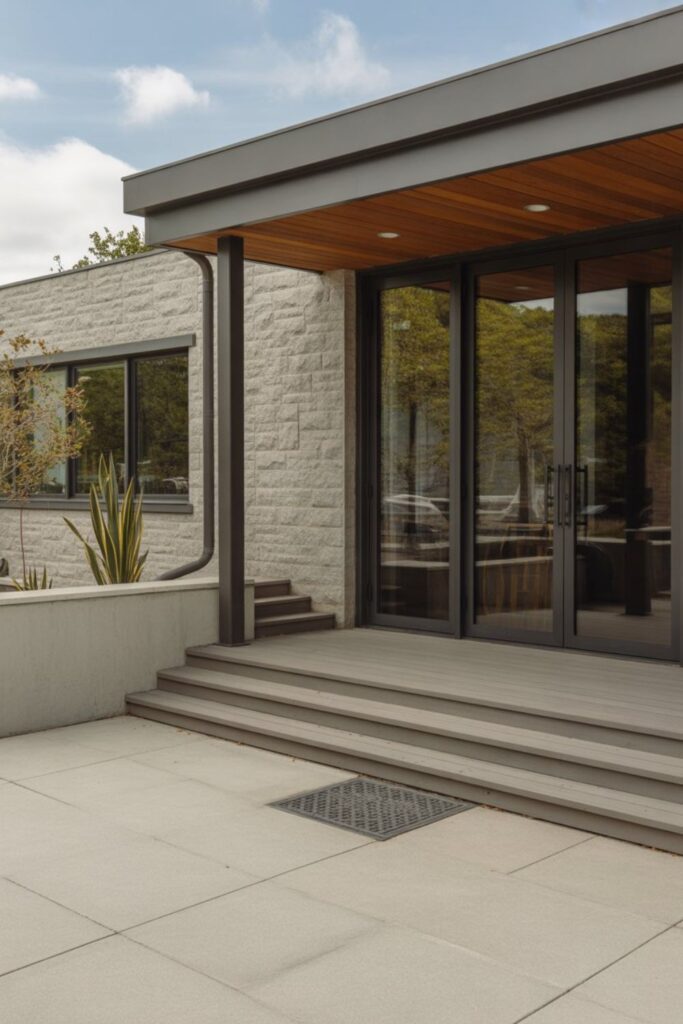
Material selection determines outdoor kitchen longevity, maintenance requirements, and aesthetic appeal. Choosing weather-resistant options prevents premature deterioration and costly repairs.
Stainless steel dominates professional outdoor kitchens through superior durability and weather resistance. Appliances, cabinets, and countertops in 304-grade stainless steel resist rust and corrosion. The material handles temperature extremes without warping. Polished finishes look sleek but show fingerprints brushed finishes hide minor marks. Quality stainless steel components cost 30-50% more than alternatives but last decades with minimal maintenance.
Stone countertops including granite, soapstone, and quartzite provide natural beauty with excellent durability. These dense materials resist heat, stains, and weather when properly sealed. Granite offers the widest color selection. Soapstone develops an attractive patina over time. Expect $60-120 per square foot installed for natural stone counters. Annual sealing maintains weather resistance.
Concrete counters deliver custom colors, textures, and integral sinks. Modern concrete mixes reinforced with fibers resist cracking. Sealed properly, concrete handles weather beautifully while aging gracefully. This versatile material costs $75-150 per square foot for quality poured-in-place or precast installations. Reseal every 2-3 years maintaining protection.
Tile counters and backsplashes offer budget-friendly weather resistance with unlimited design options. Porcelain and ceramic tiles handle freeze-thaw cycles when properly installed. Grout lines require periodic sealing to prevent water infiltration. Tile costs $15-40 per square foot installed, a fraction of stone prices. This practical option suits Mediterranean and Spanish-inspired designs beautifully.
Polymer cabinets made from HDPE plastics resist moisture, insects, and temperature extremes without rotting. These lightweight cabinets cost 40-60% less than stainless steel while providing similar weather resistance. Available in various colors mimicking wood or solid tones. Expect 15-20 year lifespans with zero maintenance beyond cleaning.
Masonry bases built from concrete block, brick, or stone create permanent structures supporting counters and appliances. Stucco or stone veneer finishes integrate with home architecture. These substantial bases handle weight easily while resisting all weather. Construction costs $20-40 per square foot but creates furniture-quality permanence.
Framing materials including pressure-treated lumber or steel studs support countertops and house utilities. Treated wood resists rot when shielded from direct weather. Steel framing provides maximum durability in coastal or humid climates. Proper framing ensures structural integrity supporting heavy stone counters and appliances.
Covered Outdoor Kitchen Options for Weather Protection
Covered outdoor kitchens extend usability dramatically through weather protection. Overhead structures transform seasonal cooking spaces into nearly year-round amenities.
Pergolas with retractable canopies provide flexible coverage adapting to conditions. The open beam structure maintains airiness while supporting fabric shades. Extend shades during rain or harsh sun, retract them for stargazing. Motorized systems operate via remotes or weather sensors. Pergola costs run $3,000-$8,000 for quality installations over 12×16 foot kitchen areas.
Solid roof extensions project from homes creating permanent weather protection. These attached structures match home roofing materials and architectural styles. Gable or shed roofs shed rain and snow effectively. Ceiling heights accommodate range hoods and lighting fixtures. Expect $8,000-$15,000 for basic roof extensions covering 200-300 square feet.
Pavilions position away from homes as freestanding covered structures. These gazebo-like buildings house complete outdoor kitchens with 360-degree access. Hip or gable roofs provide full weather protection. Screened options add bug protection. Pavilion costs reach $10,000-$25,000 for substantial permanent structures.
Patio covers using polycarbonate panels deliver transparent weather protection admitting natural light. These lightweight panels attach to aluminum or wood frames quickly. They block rain while maintaining bright, open feelings. This economical option costs $2,000-$5,000 for materials and basic installation over typical kitchen areas.
Outdoor living rooms integrate kitchens into larger covered entertaining spaces. These comprehensive structures include cooking, dining, and lounge zones under single roofs. They function as true outdoor rooms with ceiling fans, lighting, and sometimes heating. These premium installations cost $25,000-$60,000 depending on size and amenities.
Partial coverage strategies protect critical zones without enclosing entire spaces. Cover grills and prep areas while leaving dining sections open. This balanced approach provides functional protection at lower costs than fully covered designs. It also prevents the closed-in feeling some homeowners dislike.
Drainage integration prevents water from pooling on covered patio surfaces. Slope floors away from kitchens toward drains or yard edges. Rain gutters on roof edges channel runoff appropriately. Proper drainage prevents standing water that damages materials and breeds mosquitoes.
What Should You Include in Outdoor Kitchen Dining Areas?
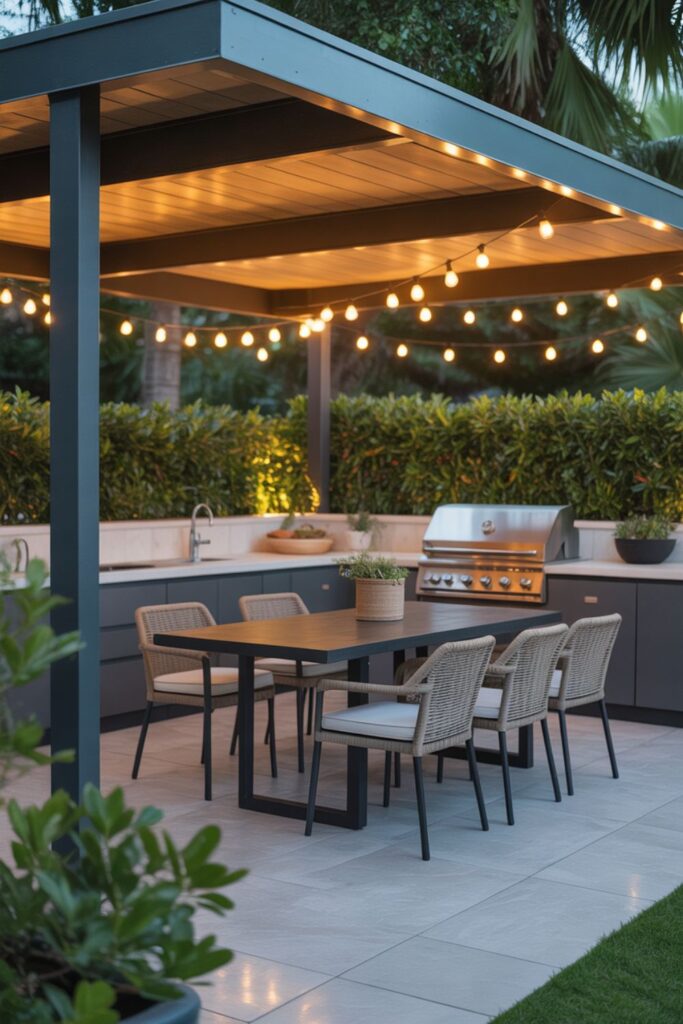
Dining integration transforms outdoor kitchens from cooking zones into complete entertaining spaces. Strategic furniture placement and amenities create seamless transitions from preparation to consumption.
Dining table sizing accommodates your typical guest count plus two. Families of four benefit from six-person tables allowing flexibility. Larger households or frequent entertainers need an eight-person capacity minimum. Rectangle tables measuring 36×72 inches seat six comfortably. Round tables work well in smaller spaces 48-inch diameter seats four, 60-inch seats six.
Counter-height dining ledges extend from kitchen islands creating casual eating areas. These 42-inch high surfaces with bar stools encourage interactive dining where guests watch cooking. Overhang counters 12-15 inches providing knee room. Space stools 24-26 inches apart. This setup works brilliantly for 2-4 people dining casually.
Comfortable seating matters as much as cooking equipment. Weather-resistant dining chairs in aluminum, resin wicker, or treated wood withstand elements. Cushioned seats improve comfort dramatically choose outdoor fabrics resisting mildew and fading. Budget $150-400 per quality outdoor dining chair.
Shade over dining areas prevents afternoon sun from driving everyone indoors. Large market umbrellas tilting to track sun angles provide portable shade. Permanent structures like pergolas or roof extensions deliver consistent protection. Position shade strategically covering dining tables during typical meal times.
Proximity to kitchens keeps food hot and service convenient. Position dining tables 6-10 feet from kitchen work zones close enough for easy serving, far enough to keep guests clear of cooking activities. This separation prevents accidents while maintaining interaction.
Serving areas between kitchens and dining zones facilitate buffet-style meals. Bar-height counters or side tables hold platters and serving pieces. This intermediate zone prevents crowding around prep areas during large gatherings. Budget 2-3 linear feet of serving surface for every 8 guests.
Lighting over dining tables creates ambiance after sunset. Pendant lights or chandeliers rated for outdoor use hang 30-36 inches above table surfaces. Dimmer controls adjust brightness from bright dining to soft conversation levels. These fixtures range from $150-$600 depending on style and outdoor ratings.
Read More About: 20+ Plant Decor Ideas to Transform Your Space extraordinary
Lighting Design for Outdoor Kitchen Patios
Comprehensive lighting transforms outdoor kitchen patios from daytime-only spaces into evening destinations. Layered illumination provides task, ambient, and accent lighting for complete functionality.
Task lighting directly illuminates cooking surfaces and prep areas. Install LED strip lights under cabinets lighting countertops. Mount directional spotlights above grills for safe nighttime cooking. These bright focused beams prevent accidents while preparing food. Undercabinet LED strips cost $30-100 per linear foot installed.
Pendant lights over kitchen islands provide both task and decorative lighting. Industrial metal shades, rustic lanterns, or modern glass globes establish design themes. Hang them 30-36 inches above counter surfaces. Multiple pendants over long islands create balanced illumination. Quality outdoor pendants cost $150-$500 each.
Recessed ceiling lights in covered areas deliver clean ambient illumination. Space LED downlights every 4-6 feet for even coverage. Dimmable fixtures adjust brightness matching activities bright for cooking, low for ambiance. Outdoor-rated recessed lights cost $50-150 per fixture installed.
Step and pathway lighting prevents nighttime accidents. LED lights recessed into stair risers illuminate each tread. Low-voltage path lights mark routes between kitchens and dining areas or home entrances. These safety features cost $300-$1,000 for typical installations while preventing injuries.
Accent lighting highlights architectural features and landscaping. Uplight stone columns supporting roofs. Wash light across textured walls. Illuminate plantings around patio perimeters. These decorative layers add depth and visual interest after dark.
String lights draped overhead create a magical ambiance that no other lighting achieves. Edison bulb strands emit warm glows perfect for entertaining. Globe lights add playful character. LED versions last 50,000 hours using minimal electricity. This single addition transforms spaces dramatically for $30-100 per strand.
Separate lighting circuits control different zones independently. Operate task lighting for cooking while keeping accent lights low. Brighten dining areas while dimming kitchen zones after meals conclude. This flexibility adapts to changing activities throughout evenings.
Smart controls integrate lighting with home automation systems. Schedule lights automatically, control them remotely via apps, or activate via voice commands. Motion sensors turn lights on when entering patios after dark. These modern conveniences add $200-$1,000 to electrical costs but deliver impressive functionality.
Budget Breakdown: Outdoor Kitchen Patio Cost Expectations
Outdoor kitchen patio costs vary dramatically based on size, appliances, materials, and complexity. Understanding typical ranges prevents budget shocks and helps prioritize spending.
Basic setups start at $5,000-$10,000 including modest built-in grills ($1,500-$2,500), simple countertops and storage ($2,000-$4,000), basic utility connections ($1,000-$2,000), and minimal lighting ($500-$1,000). These entry-level kitchens deliver core functionality without premium finishes or extensive amenities. They suit budget-conscious homeowners prioritizing essentials.
Mid-range outdoor kitchens cost $15,000-$30,000 providing quality appliances and finishes. This includes premium grills with multiple burners ($3,000-$5,000), stone or concrete countertops ($3,000-$6,000), stainless steel or polymer cabinets ($2,000-$4,000), outdoor refrigerators ($1,000-$2,000), sinks with plumbing ($1,500-$3,000), comprehensive lighting systems ($1,500-$3,000), and professional installation labor. Most families find this range delivers excellent value with features supporting serious cooking.
Premium outdoor kitchens reach $40,000-$75,000 featuring extensive layouts and luxury amenities. These include high-end grills with infrared burners and rotisseries ($6,000-$10,000), expansive granite or concrete countertops ($8,000-$15,000), commercial-grade stainless steel cabinets ($6,000-$12,000), wine refrigerators and ice makers ($3,000-$6,000), pizza ovens or smokers ($2,000-$8,000), complete covered structures ($8,000-$20,000), and sophisticated lighting and audio systems ($3,000-$6,000).
Luxury installations exceeding $100,000 create resort-quality outdoor living environments. These feature complete covered pavilions, commercial-grade appliances, custom stonework, outdoor fireplaces, multiple cooking stations, automated systems, and professional landscape integration. Such investments suit properties where outdoor entertaining represents primary lifestyle focus.
Cost factors beyond basic construction include site preparation ($1,000-$3,000 for grading and drainage), permits and engineering ($500-$2,000), extensive utility runs from distant connection points (add $1,000-$5,000), furniture and accessories ($2,000-$8,000), and landscaping integration ($2,000-$10,000).
Phasing strategies spread costs across multiple years. Build basic kitchen infrastructure first grills, counters, storage then add refrigeration, sinks, and covered structures later. This approach delivers immediate functionality while allowing budget recovery between phases.
DIY savings reach 30-40% for homeowners handling finish work personally. Hire professionals for utility connections requiring permits and inspections. Complete cabinet installation, countertop sealing, and decorative elements yourself. This hybrid approach balances skill requirements with cost savings.
Common Outdoor Kitchen Design Mistakes to Avoid
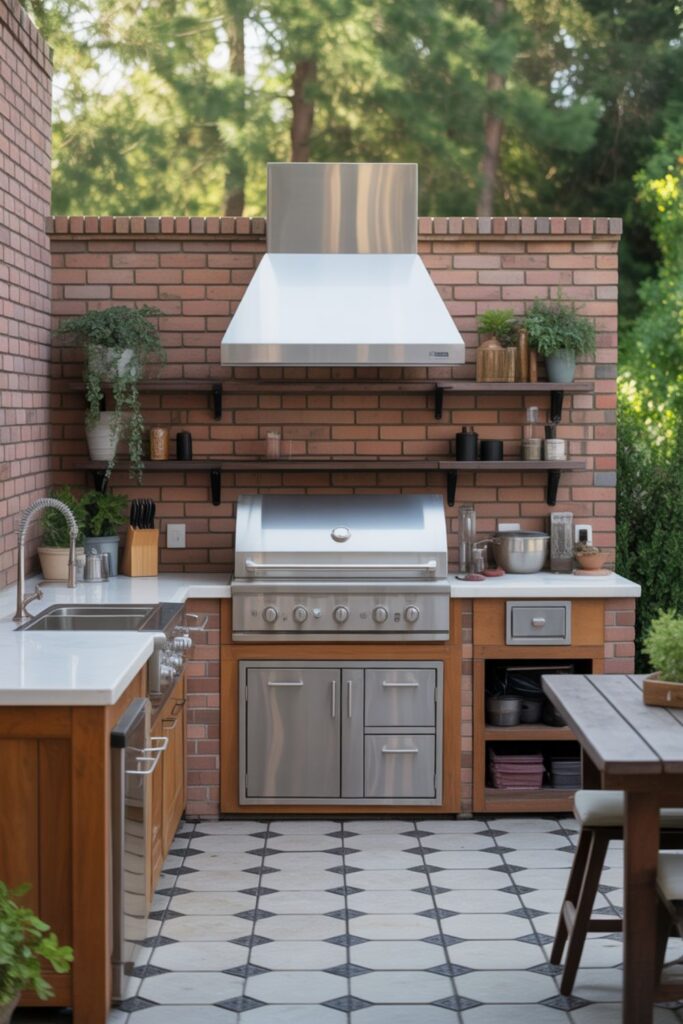
Outdoor kitchen projects fail when common errors compromise functionality or create maintenance headaches. Learning from others’ mistakes prevents expensive corrections.
Undersizing counter space creates cramped cooking conditions. Calculate generously minimum 8-10 linear feet of counter for serious cooking. Provide landing zones on both sides of grills. Dedicated prep areas away from heat prevent congestion. Insufficient counter space ranks as the top functionality complaint.
Neglecting storage forces constant indoor trips for supplies. Plan cabinets holding grilling tools, serving pieces, cleaning supplies, and pantry staples. Minimum 6 linear feet of base cabinets prevents most frustrations. Drawer storage organizes small items better than shelves alone.
Poor traffic flow positions kitchens where they block access to other patio areas. Maintain 42-48 inch clearances behind working cooks. Avoid placing kitchens along only access routes. Create circulation paths around rather than through work zones.
Ignoring wind patterns places cooking areas where prevailing winds blow smoke into houses or seating areas. Observe wind direction throughout days and seasons before finalizing layouts. Position grills with smoke blowing away from structures and guests. This consideration prevents unusable kitchens on breezy days.
Insufficient lighting limits evening usability. Plan comprehensive task lighting over work surfaces plus ambient lighting throughout patios. Dark outdoor kitchens become dangerous and discouraging after sunset. Budget adequately for complete lighting systems from project starts.
Skipping weather protection creates seasonal limitations. Even simple pergolas with retractable shades dramatically extend usable hours. Full roof coverage transforms occasional-use spaces into daily destinations. Weather protection justifies costs through increased functionality.
Mismatching appliances to actual cooking styles wastes money. Serious grillers need powerful burners and large cooking surfaces. Casual cooks function fine with basic grills. Assess honestly how you’ll actually use spaces before buying commercial-grade equipment you don’t need.
Poor material choices accelerate deterioration. Interior-grade cabinets rot within seasons outdoors. Inadequate countertop sealing allows water infiltration. Invest in proper outdoor-rated materials preventing premature failures. Quality materials cost more initially but last decades versus years.
Frequently Asked Questions
How much does an outdoor kitchen patio cost?
Basic setups start at $5,000-$10,000 for essential grills, counters, and storage. Mid-range kitchens cost $15,000-$30,000 with quality appliances and materials. Premium installations reach $40,000-$75,000+ with extensive layouts and luxury amenities including covered structures and high-end appliances.
Do I need a permit for an outdoor kitchen?
Most jurisdictions require permits for permanent outdoor kitchens, especially when running gas, water, or electrical utilities. Permit requirements ensure code-compliant installations preventing dangerous situations. Applications typically require detailed plans showing appliance locations and utility routes. Always check local building departments before construction.
What appliances do you need in an outdoor kitchen?
Essential appliances include built-in grills, adequate counter space for prep work, storage cabinets, and side burners. Highly recommended additions include sinks with running water, outdoor refrigerators, and task lighting. Optional upgrades include pizza ovens, ice makers, and wine coolers depending on cooking preferences.
How far should an outdoor kitchen be from the house?
Position outdoor kitchens 10-15 feet from homes for convenient access while maintaining safety clearances. This distance allows easy movement between indoor and outdoor spaces without excessive walking. Ensure adequate clearances from combustible materials per fire codes typically 10 feet minimum from wood structures.
Can you use an outdoor kitchen year-round?
Covered outdoor kitchens with weather protection function nearly year-round in moderate climates. Add patio heaters or fire features extending comfort into cooler months. In freezing climates, winterize water lines and protect appliances but continue using grills and covered spaces during mild winter days.
What is the best countertop material for outdoor kitchens?
Granite, concrete, and tile all perform excellently outdoors when properly sealed. Granite offers natural beauty and durability. Concrete allows custom colors and integrated features. Tile provides budget-friendly weather resistance. All three materials handle heat, weather, and heavy use when installed correctly with proper sealing and maintenance.
Conclusion
Your transformation from basic patio grilling to comprehensive outdoor kitchen living doesn’t require starting from scratch; it requires strategic planning that aligns appliances, layout, and utilities with how you actually cook and entertain. The principles presented here prove that functional outdoor kitchens emerge from thoughtful component selection, efficient workflow design, and proper infrastructure rather than simply spending maximum budgets. Whether you’re working with modest spaces and entry-level appliances or expansive patios with premium equipment, these proven strategies create cooking environments that keep hosts engaged with guests while delivering culinary results rivaling indoor kitchens.
Start planning your outdoor kitchen patio by honestly assessing your cooking style, typical guest counts, and budget realities. Begin with essential components quality grills, adequate counter space, basic storage then expand with refrigeration, sinks, and covered structures as finances allow. Research utility requirements and permit processes early preventing mid-project surprises. Interview contractors experienced with complete outdoor kitchen installations rather than general contractors learning on your project. Within months, you’ll have created the outdoor cooking space that transforms summer entertaining, extends your home’s functional square footage dramatically, and becomes the feature that guests remember and neighbors envy. The investment pays dividends through constant use, reduced indoor cooling costs, increased property value, and the simple pleasure of preparing meals in fresh air while staying connected to the people you’re feeding.