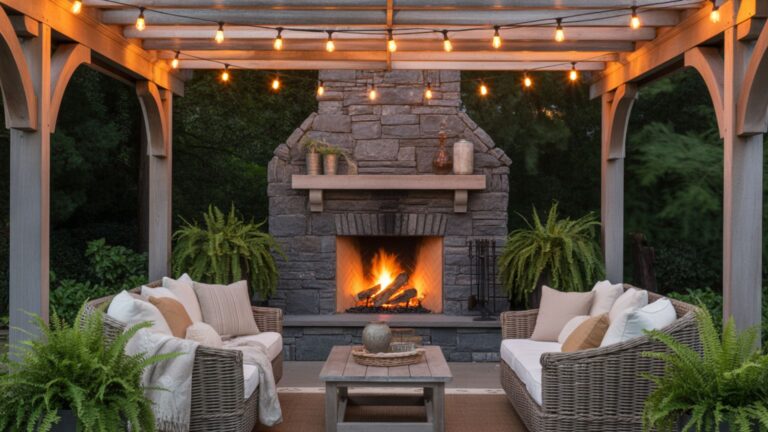
25+ Patio Design Ideas for Your Dream Outdoor Living Space

You step outside and face a blank canvas of concrete or bare ground. The potential is there, but turning that empty space into something extraordinary feels overwhelming. You’ve scrolled through countless images of gorgeous patios, yet translating those visions into your specific yard with your actual budget seems impossible.
This paralysis stops homeowners from enjoying outdoor spaces that could add thousands to property value and countless hours of enjoyment. Maybe you’re worried about making expensive mistakes, choosing the wrong layout, or ending up with a design that doesn’t match how you actually live. Every decision from furniture placement to material selection carries weight, and getting it wrong means living with disappointment or spending more to fix it.
Here’s the solution: successful patio design ideas follow proven principles that work regardless of style preferences or budget constraints. By understanding spatial planning, material options, and design fundamentals, you can create a patio that looks professionally designed while perfectly serving your lifestyle. This comprehensive guide provides actionable patio design ideas that transform confusion into confidence, helping you build an outdoor living space you’ll love for decades.
Foundation: Understanding Patio Design Principles
Great patio design ideas starts with understanding how people actually use outdoor spaces. Traffic flow matters enormously; guests shouldn’t navigate obstacle courses to reach seating areas, and pathways need at least 36 inches of clearance for comfortable passage. Observe how sunlight moves across your yard throughout the day; afternoon sun might make west-facing patios unbearably hot without shade solutions, while morning light creates perfect breakfast spots.
Patio layout decisions shape functionality more than any decorative choice. Define distinct zones for different activities cooking, dining, lounging, and playing rather than creating one multipurpose area that serves no purpose well. Visual balance comes from distributing visual weight evenly; a large grill on one side needs balancing elements like substantial planters or seating groups opposite. Scale matters tremendously in outdoor spaces furniture that looks perfect in showrooms often overwhelms or underwhelms actual patios. Measure your space precisely and create scaled paper cutouts of furniture to experiment with arrangements before purchasing.
Read More About: Best Back Patio Ideas For Ultimate Outdoor Living Space
Modern Patio Design Ideas for Contemporary Homes
Modern patio design ideas embraces simplicity, clean lines, and intentional material choices that create sophisticated outdoor living spaces. Concrete pavers in large-format rectangles establish contemporary foundations, while polished concrete with integrated color delivers seamless, minimalist surfaces. Steel-framed furniture with weather-resistant cushions in neutral tones maintains the sleek aesthetic without sacrificing comfort.
Built-in features define patio design ideas, concrete bench seating with hidden storage, integrated planters that double as dividers, and linear fire features that become sculptural focal points. Color palettes stay restrained with grays, blacks, whites, and warm wood accents creating visual harmony. Incorporate geometric patterns through tile arrangements, privacy screen cutouts, or pergola beam configurations that add interest without ornamentation. Modern outdoor spaces benefit from strategic greenery; architectural plants like ornamental grasses, bamboo, or sculptural agaves complement rather than compete with clean design lines. Modern outdoor design has grown 43% in popularity since 2020, with homeowners prioritizing functionality and low-maintenance aesthetics over elaborate traditional styles.
Small Patio Design Ideas That Maximize Space
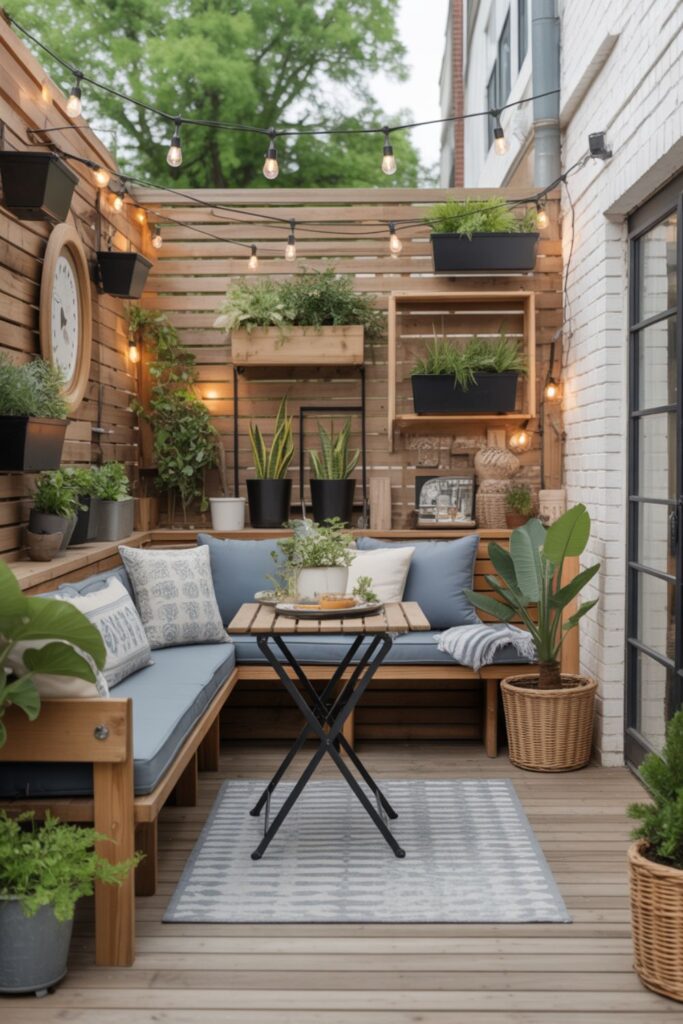
Small patio design ideas requires creative thinking that makes every square foot count. Built-in seating along perimeter walls eliminates bulky furniture while providing abundant seating and storage underneath hinged seats. Corner arrangements maximize usable floor space L-shaped benches or sectionals fit snugly against walls, leaving center areas open for movement and visual breathing room.
Vertical elements draw eyes upward, making compact patio design ideas feel more spacious. Install wall-mounted planters, hanging gardens, or trellises that utilize often-wasted vertical real estate. Choose furniture with exposed legs rather than solid bases; seeing floor beneath pieces creates the illusion of more space. Glass or acrylic furniture coffee tables, side tables maintain functionality while appearing nearly invisible. Mirrors strategically placed on fences or walls reflect light and views, effectively doubling perceived space through optical illusion. Light color schemes in flooring and furnishings enhance the airy feeling small patio design ideas desperately need. Multi-functional pieces like ottomans that serve as seating, tables, and storage prevent the clutter that makes small areas feel cramped.
Covered Patio Design Ideas for All-Season Use
Covered patio design ideas extends outdoor living well beyond fair-weather months, protecting furniture and creating comfortable spaces regardless of sun or rain. Pergolas with retractable canopies offer flexibility open for stargazing on clear nights, closed during unexpected showers or harsh midday sun. Solid roof structures like gable or shed roofs provide permanent protection, allowing upholstered furniture and entertainment systems that wouldn’t survive exposure.
Design covered patios with proper drainage; even covered areas need gutters directing water away from foundations and gathering spaces. Ceiling fans mounted to overhead structures circulate air during humid weather, making summer evenings bearable without costly air conditioning. Install recessed lighting or pendant fixtures in ceilings for ambiance and functionality after dark. Covered outdoor living spaces accommodate heating elements like infrared heaters, fire features, or outdoor fireplaces that extend usability into cool seasons. Consider adding outdoor curtains on pergola or pavilion sides for wind protection, privacy, and visual softness that balances hard structural elements. Outdoor renovation projects now include covered elements, reflecting homeowner desire for year-round outdoor access.
Backyard Patio Design Ideas for Entertainment
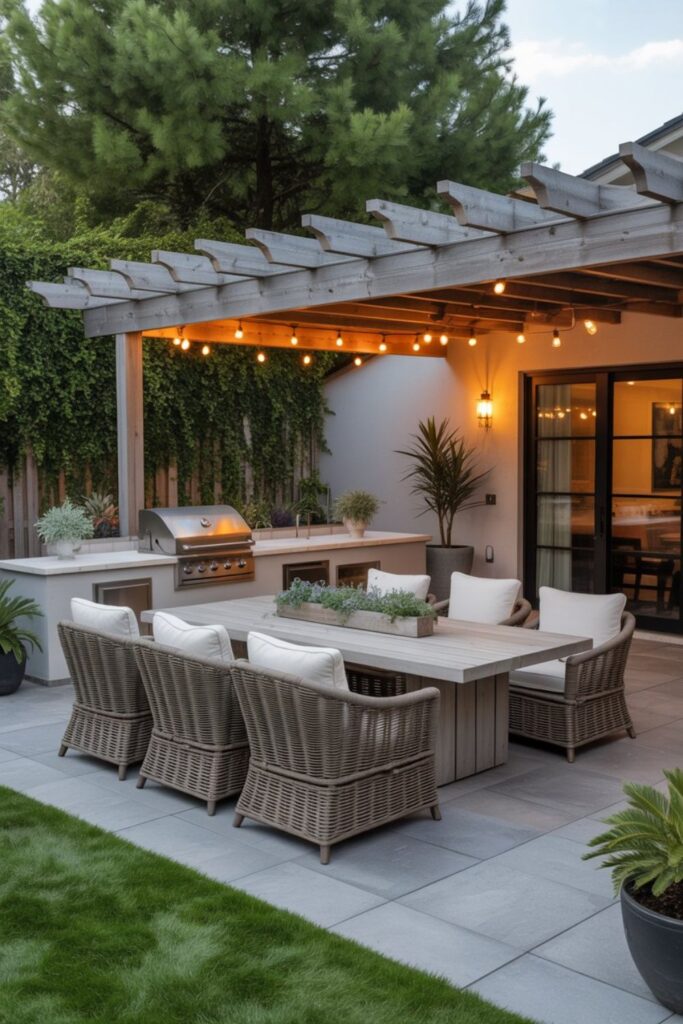
Entertainment-focused patio design ideas prioritizes comfortable seating capacity, convenient serving areas, and atmosphere that encourages lingering. Create conversation zones with furniture arranged in U-shapes or circles where everyone sees everyone else avoid theater-style rows that prevent natural interaction. Outdoor kitchens or well-equipped grilling stations keep hosts engaged with guests rather than disappearing inside for extended periods.
Bar height counters with stools provide casual gathering spots and additional serving surfaces during parties. Built-in beverage coolers or mini-refrigerators eliminate trips inside for drinks, improving host convenience and guest comfort simultaneously. Patio lighting sets mood; layer multiple sources including overhead ambient lights, task lighting near cooking areas, and accent lights highlighting landscaping or architectural features. Dimmable systems let you adjust intensity for different events bright for dinner parties, subdued for intimate gatherings. Install weatherproof sound systems with strategically placed speakers creating even coverage without overwhelming conversation. Consider traffic flow carefully; guests need clear paths to bathrooms, kitchens, and seating areas without navigating through active cooking zones or dining tables.
Rustic Patio Design Ideas with Natural Materials
Rustic patio design celebrates natural materials and textures that create warm, inviting outdoor spaces with organic character. Flagstone or irregular-cut natural stone pavers establish foundations with inherent variation and earthiness. Reclaimed wood beams form pergola structures or privacy screens, bringing history and patina that new materials lack.
Furniture crafted from weathered wood, wrought iron, or natural wicker reinforces the rustic aesthetic while providing durability for outdoor conditions. Incorporate stone elements beyond flooring fire pits ringed with stacked stone, retaining walls, or stone veneer on structural columns add textural richness. Rustic patio design ideas embrace imperfection; slightly uneven stone surfaces, visible wood grain, and natural color variations create authenticity. Plantings lean toward cottage garden abundance rather than formal precision mix flowering perennials, herbs, and ornamental grasses in varied heights and textures. Vintage finds like galvanized buckets as planters, antique lanterns, or weathered garden tools as wall art inject personality. Earth-tone color palettes in browns, greens, rusts, and creams complement natural materials without competing for attention.
Luxury Patio Design Ideas on Any Budget
Luxury patio design doesn’t require unlimited budgets, strategic splurges and thoughtful details create high-end impressions affordably. Invest in one statement piece like a designer outdoor sofa or stunning fire feature, then surround it with budget-friendly supporting elements. High-quality outdoor fabrics in rich textures elevate inexpensive furniture; solution-dyed acrylic cushions in jewel tones or sophisticated neutrals add instant polish.
Professional-looking patio layouts require symmetry and balance matching planters flanking entrances, evenly spaced lighting, and coordinated furniture groupings create intentional, designed appearances. Integrate permanent features like built-in seating with storage, custom planters, or outdoor kitchens that feel architecturally connected rather than added afterthoughts. Luxury outdoor spaces prioritize comfort obsessively; deep cushions, throw pillows in varying sizes, plush outdoor rugs, and ambient lighting make spaces irresistible. Attention to detail separates luxury from ordinary concealed wiring, hidden storage, coordinated hardware finishes, and thoughtful transitions between materials demonstrate refinement. Perceived luxury comes more from cohesive design execution than expensive price tags, with well-planned spaces outperforming randomly assembled expensive pieces.
Mediterranean Patio Design Ideas
Mediterranean patio design ideas evokes sun-drenched courtyards through warm colors, abundant plantings, and time-tested materials. Terracotta tiles or pavers in earthy reds and oranges establish authentic foundations, while stucco walls in cream, ochre, or soft yellow create enveloping warmth. Wrought iron furniture with scrollwork details and mosaic-topped tables inject Old World charm.
Water features fountains, small ponds, or wall-mounted spouts provide cooling sounds and visual focal points central to Mediterranean outdoor living. Incorporate arches, columns, or pergolas with climbing vines like bougainvillea, jasmine, or wisteria that provide shade while delivering intoxicating fragrances. Potted plants in terracotta containers at varying heights create layered, lush arrangements; mix olive trees, citrus, lavender, and rosemary for authentic Mediterranean character. Outdoor dining becomes central to the design; substantial tables with benches or upholstered chairs encourage leisurely meals extending through multiple courses. Textiles in vibrant patterns striped awnings, printed cushions, colorful table linens add visual energy. Mediterranean patio design ideas embrace outdoor living as lifestyle rather than occasional activity, with spaces designed for extended daily use.
Tropical Patio Design Ideas for Paradise Vibes
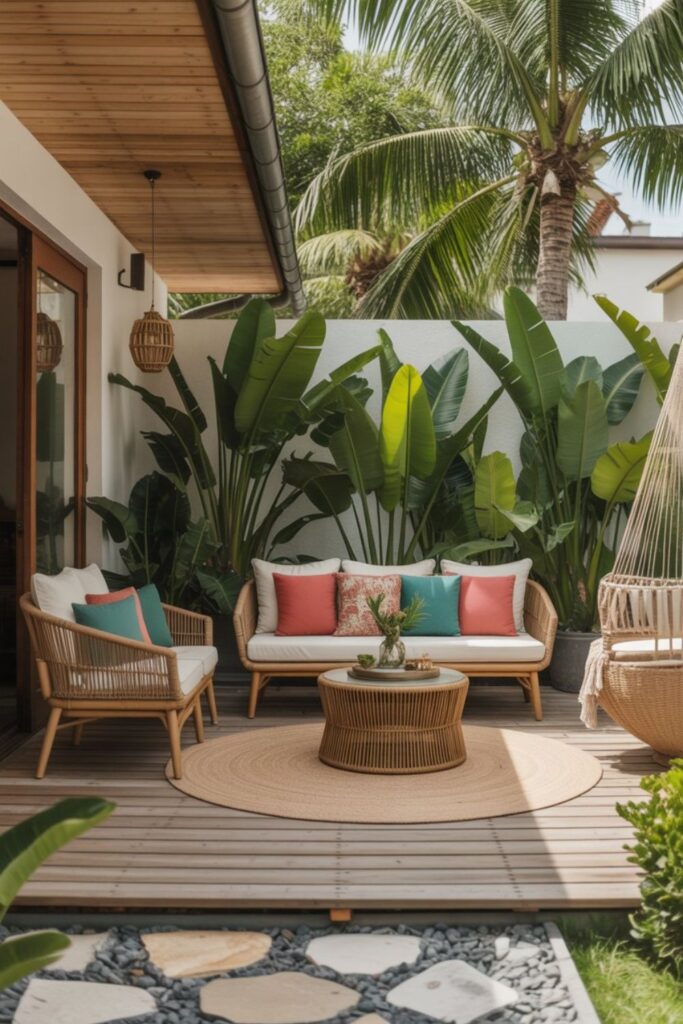
Tropical patio design transforms backyards into vacation-like retreats through bold colors, lush vegetation, and resort-inspired furnishings. Natural materials dominate teak furniture, bamboo screening, palm thatch umbrellas, and woven rattan seating establish island aesthetics. Vibrant color schemes in turquoise, coral, lime green, and sunny yellow create energetic outdoor spaces that celebrate nature’s palette.
Oversized tropical plants become living architecture; banana plants, bird of paradise, palms, elephant ears, and hibiscus create jungle-like abundance even in small spaces through container gardening. Water features with natural stone and tropical plantings enhance the paradise feeling while providing cooling ambient sound. Tropical patio design ideas embrace pattern mixing floral prints, geometric designs, and solid colors layered through cushions, rugs, and table settings to create collected-over-time authenticity. Incorporate natural shade through palm trees, large umbrellas, or thatched structures rather than solid roofs that block tropical breezes. Outdoor bars with thatched roofs, string lights wrapped around tree trunks, and casual lounge seating with deep cushions complete the resort experience. Tropical design elements have expanded beyond warm climates, with homeowners nationwide creating temporary summer transformations through strategic plant and decor choices.
Minimalist Patio Design Ideas
Minimalist patio design ideas removes everything non-essential, creating serene outdoor living spaces through restraint and intentionality. Monochromatic color schemes in blacks, whites, grays, or single-hue variations eliminate visual noise. Furniture selection stays sparse; only pieces serving clear functions make the cut, with clean-lined designs in metal, concrete, or simple wood.
Minimalist patios feature extensive negative space; open floor areas balance occupied zones, giving eyes places to rest and minds space to decompress. Material palettes stay limited, perhaps concrete flooring, black steel furniture, and white cushions with one wood accent tone. Plantings embrace minimalism through single-species groupings or carefully chosen specimens with architectural forms like Japanese maples, grasses, or sculptural succulents. Hide practical necessities like storage, hoses, and utilities behind integrated solutions or screening rather than leaving them visible. Minimalist outdoor spaces prove that less truly becomes more when every element serves purpose and contributes to a cohesive aesthetic. Lighting stays subtle and functional; recessed fixtures, simple pendant lights, or strip lighting provide illumination without becoming decorative statements. Maintenance becomes easier when fewer elements require attention, making minimalism particularly appealing for busy homeowners.
What Size Should My Patio Be?
Patio size calculations start with intended use and available space. Dining areas need approximately 10×12 feet minimum for a four-person table with chair clearance for standing and serving. Lounging zones require at least 8×10 feet for a small conversation grouping with a coffee table. Outdoor kitchens demand 12×16 feet or more depending on appliances and counter space.
Combine uses by adding square footage, a patio for dining and lounging needs roughly 300-400 square feet minimum for comfortable functionality. Proportion matters relative to yard size; patios consuming more than 30% of backyard space may feel overwhelming, while tiny patios in large yards appear disconnected and awkward. Patio design professionals often recommend sizing at least as large as your main living room to ensure adequate entertaining capacity. Consider future needs and budget expansion; building in phases works better with oversized foundations than cramped initial installations requiring expensive expansions. Local building codes may dictate maximum impervious surface percentages, affecting how much hardscaping your property legally accommodates.
How Do I Choose Between Materials?
Patio material selection balances aesthetics, durability, maintenance, and budget across multiple options. Concrete pavers offer excellent durability, endless pattern possibilities, and moderate costs at $8-15 per square foot; they resist cracking better than poured concrete while allowing individual piece replacement if damage occurs. Natural stone delivers upscale appearance with unique character but commands premium pricing at $15-30 per square foot depending on stone type.
Poured concrete remains budget-friendly at $6-12 per square foot and accepts decorative techniques like stamping, staining, or exposed aggregate for custom looks. Porcelain tiles designed for outdoor use resist freeze-thaw cycles and maintain colors beautifully while offering indoor-style elegance outside at $12-20 per square foot. Wood decking creates warm, natural patio spaces at $8-18 per square foot but requires regular sealing and careful species selection for weather resistance composite alternatives that increase upfront costs but eliminate maintenance. Consider your climate’s temperature swings, freeze-thaw cycles, and precipitation patterns when choosing materials. Hot climates need light-colored surfaces that don’t retain heat, while freeze-prone areas require materials proven against cracking. Match materials to your home’s architecture; contemporary homes suit sleek concrete or porcelain while traditional styles complement natural stone or brick.
What Layout Works Best for My Space?
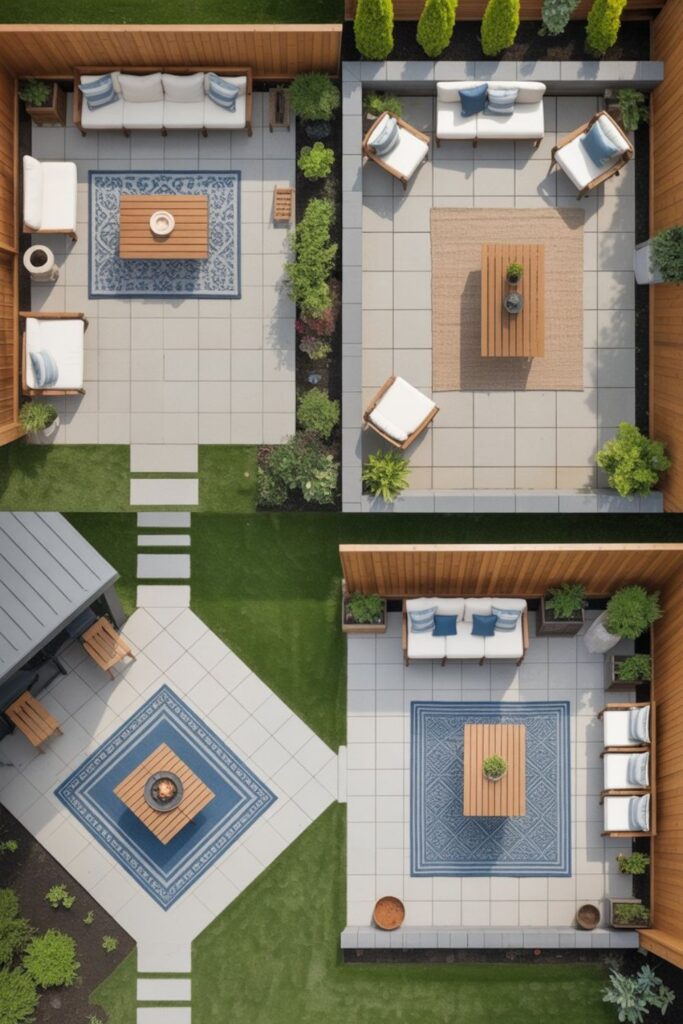
Patio layout depends on yard configuration, house placement, and intended uses. Attached patios directly off house doors create seamless indoor-outdoor transitions and convenient access for serving food and entertaining. Detached patio designs positioned away from houses become destination spaces, particularly effective for creating quiet retreats or capitalizing on yard areas with superior views or sun exposure.
L-shaped patios wrap house corners, providing distinct zones for different activities while maintaining connection. Multi-level designs work beautifully on sloped properties, creating defined areas for dining, lounging, and cooking at different elevations connected by steps or pathways. Island patio layouts situated in yard centers surrounded by landscaping establish focal points and maximize sun exposure. Consider privacy needs when positioning; patios near property lines may require screening, while house-adjacent locations often receive natural privacy from structure itself. Traffic patterns matter enormously and place patios where they logically connect to frequently used house exits rather than requiring long treks through yards. Optimal patio placement receives 4-6 hours of desired sun exposure daily while maintaining reasonable proximity to kitchen access points for entertaining convenience.
How Can I Make My Patio Feel Like an Outdoor Room?
Creating genuine outdoor living rooms requires replicating indoor comfort and definition in exterior settings. Define space boundaries through outdoor rugs that anchor furniture groupings while adding softness underfoot. Establish “walls” through strategic plantings, privacy screens, pergola sides, or partial fencing that enclose without completely blocking views or airflow.
Furniture arrangement mimics indoor spaces conversation groupings with sofa, chairs, and coffee table facing each other rather than lined against edges. Layer lighting just as you would inside; overhead fixtures for general illumination, table and floor lamps (weatherproof versions) for task lighting, and candles or string lights for ambient mood. Textiles bring indoor comfort outside cushions, throw pillows, blankets, and curtains, soften hard surfaces and add color while creating a cozy atmosphere. Outdoor rooms need focal points like fireplaces, water features, or striking plantings that anchor attention similar to indoor architectural features. Storage solutions deck boxes, built-in cabinets, or benches with hidden compartments keep spaces tidy by housing cushions, blankets, and entertainment essentials. Ceiling definition through pergolas, umbrellas, or tree canopy creates the enclosed feeling that transforms open patios into defined rooms. Personal touches like artwork (weatherproof), decorative objects, and book displays make spaces feel curated and lived-in rather than staged.
Read More About: Outside Patio Ideas Design for a Beautiful and Relaxing Retreat
What Are the Biggest Patio Design Mistakes to Avoid?
Patio design mistakes often prove expensive to correct, making awareness crucial during planning phases. Undersizing ranks among the most common errors, patios that look adequately empty become cramped with furniture and guests, limiting functionality and enjoyment. Ignoring drainage creates standing water problems that damage materials and make spaces unusable after rain; proper grading directing water away from structures remains essential.
Neglecting shade planning leaves patios unusable during peak summer hours when outdoor living would be most enjoyable. Poor furniture scale pieces too large or small for the space creates awkward arrangements that never feel quite right. Forgetting lighting until after construction makes retrofitting expensive and often impossible for certain features. Choosing maintenance-intensive materials without realistic assessment of upkeep commitment leads to neglected, deteriorating outdoor spaces within years. Skipping permits and building code compliance may necessitate expensive teardowns or modifications later. Ignoring natural yard characteristics like mature tree roots, drainage patterns, or seasonal sun exposure causes functional problems and no amount of design skill fixes. Improper planning accounts for 65% of homeowner dissatisfaction with completed patio projects, with most regrets involving size, placement, or material selections that seemed reasonable on paper but failed in practice.
Frequently Asked Questions
How much does professional patio design cost?
Professional patio design services range from $500-3,000 depending on project complexity and designer qualifications. Landscape architects charge $75-200 per hour or 10-15% of total construction costs. Many design-build firms include design services when clients commit to construction contracts. DIY design using online tools, borrowed ideas, and careful planning saves design fees but requires significant time investment and carries risk of costly planning mistakes.
Can I design a patio myself or should I hire a professional?
Straightforward patio designs with simple shapes, standard materials, and uncomplicated sites suit DIY planning, particularly when homeowners research thoroughly and learn from quality resources. Complex projects involving grading changes, drainage solutions, structural elements, or integration with existing landscapes benefit enormously from professional expertise. Compromise approaches include hiring designers for concept and layout while handling material selection and contractor coordination independently, capturing professional vision while controlling costs.
What’s the best patio design for resale value?
Neutral patio designs with broad appeal return investment best at resale avoid highly personalized styles that limit buyer appeal. Focus on quality materials, proper construction, and flexible spaces accommodating multiple uses rather than single-purpose designs. Outdoor kitchens, covered areas, and well-integrated lighting add substantial value.
Conclusion
Successful patio design ideas transform outdoor spaces from afterthoughts into essential living areas that enhance daily life and property value simultaneously. Whether pursuing modern minimalism, rustic charm, or tropical paradise aesthetics, the fundamental principles remain constant: understand your space’s unique characteristics, plan for actual usage patterns rather than idealized visions, and invest strategically in quality materials and construction that endure decades of use.
Your patio design journey begins with honest assessment of needs, realistic budget setting, and thorough research of options before committing to specific directions. Start with foundational decisions about size, location, and materials, then layer in personality through furniture, lighting, and plantings that reflect your style. The most successful outdoor living spaces evolve over time, allowing you to refine and expand as budget permits and preferences clarify. Take your first step today by measuring your available space, creating a realistic budget, and sketching rough layouts that accommodate your must-have features. Transform that underutilized outdoor area into the patio you’ve envisioned, creating memories and value that last for years to come.