Side Patios Attached To House for Functional Designs
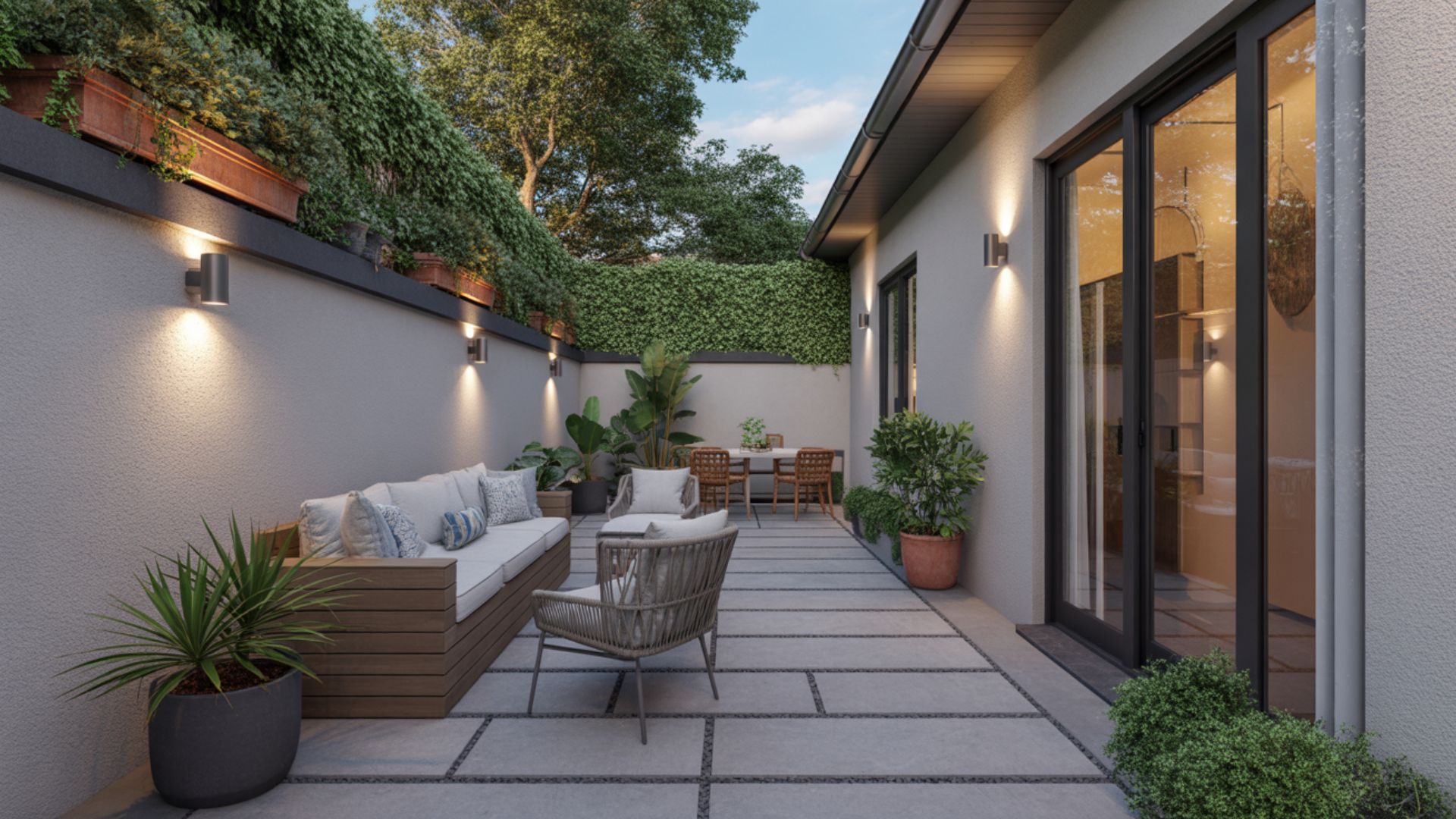
That forgotten side yard between your house and fence collects weeds, stores garbage cans, and contributes nothing to your home’s value. You walk past it daily, never considering its potential as a functional living space. The problem runs deeper than aesthetics: you’re wasting valuable square footage while overcrowding your backyard and missing opportunities to create private outdoor retreats. Most homeowners dismiss side patios attached to house structures as impossible due to narrow dimensions or drainage concerns.
Here’s the reality: these challenging spaces offer unique advantages that traditional patios cannot match weather protection from house walls, natural privacy from neighboring properties, and convenient access from interior rooms. This comprehensive guide reveals 30+ proven side yard patio ideas with specific measurements, material recommendations, budget breakdowns, and code-compliant solutions that transform unusable corridors into high-value attached patio designs.
Why Side Patios Attached To House Make Sense
Side patios attached to house structures solve multiple property challenges while creating unexpected outdoor rooms. These spaces utilize otherwise dead zones typically 4-8 feet wide and 15-30 feet long that serve no purpose beyond equipment storage or dog runs. According to landscape architects, converting side yards adds 100-200 square feet of usable outdoor living area without sacrificing lawn or garden space in primary yards.
The attached configuration provides inherent advantages over freestanding patios. One wall already exists (your house), cutting material costs by 25-40% compared to building standalone structures. The house wall blocks prevailing winds, creating naturally sheltered microclimates that extend comfortable outdoor time. You gain direct interior access through existing doors or newly installed French doors, connecting indoor and outdoor spaces seamlessly. These narrow patio spaces work particularly well in urban and suburban lots where side setbacks limit building options but zoning allows ground-level hardscaping.
Planning Your Side Yard Patio Dimensions
Successful side yard patio ideas start with accurate measurements and realistic space assessment. Measure the distance from your house foundation to the property line or existing fence. Subtract 6-12 inches from property lines to avoid encroachment disputes and allow fence maintenance access. Most functional side patios attached to house require minimum 5-foot widths, though 6-8 feet provides comfortable furniture placement and circulation.
Length depends on available run and intended use. A 10-foot length accommodates a bistro dining set for two. Fifteen feet fits a small lounge area with chairs and side table. Twenty-plus feet supports multiple zones dining at one end, seating at the other. Consider door and window locations when planning length. Align patio endpoints with architectural features for visual cohesion. Check basement window wells, utility meters, HVAC equipment, and hose bibs that might interfere with your house-attached patio footprint.
Building Codes and Permit Requirements
Building permits for side patios attached to house vary by municipality but typically apply when projects exceed certain square footage (often 120-200 square feet) or include electrical work. Ground-level patios without roofs generally require simpler permits than elevated decks or covered side patio structures. Contact your local building department before starting work unpermitted construction creates costly problems during home sales.
Code compliance focuses on several critical areas. Foundation clearance rules mandate 4-8 inches between finish patio surfaces and wood siding to prevent moisture damage and termite access. Grading requirements specify a minimum 2% slope away from the house foundation (1/4 inch drop per foot) to direct water away from basement walls. Setback regulations dictate how close you can build to property lines, typically 3-5 feet but sometimes less for ground-level hardscaping. Some jurisdictions limit impervious surface coverage to the percentage of your lot covered by non-absorbing materials like concrete. Research these restrictions early to avoid expensive redesigns.
Drainage Solutions for Side Yard Areas
Proper drainage solutions determine whether your side yard patio succeeds or creates foundation problems. Side yards naturally channel water from downspouts and roof runoff, concentrating flow in narrow corridors. Install the patio surface with a consistent 2-3% slope away from the house. Never slope toward the foundation, even slightly this invites basement leaks and structural damage.
Capture and redirect water using multiple strategies. French drains along the outer patio edge collect subsurface water and channel it to lower grade areas or storm drains. These systems use perforated pipe surrounded by gravel, wrapped in landscape fabric, buried 12-18 inches deep. Surface channel drains installed across patio walkways intercept sheet flow before it reaches foundations. Permeable pavers allow water infiltration while providing solid surfaces paver installation using permeable options reduces runoff by 30-50%. Extend downspouts at least 6 feet from the house, using underground piping that daylights beyond patio areas.
Foundation and Structural Considerations
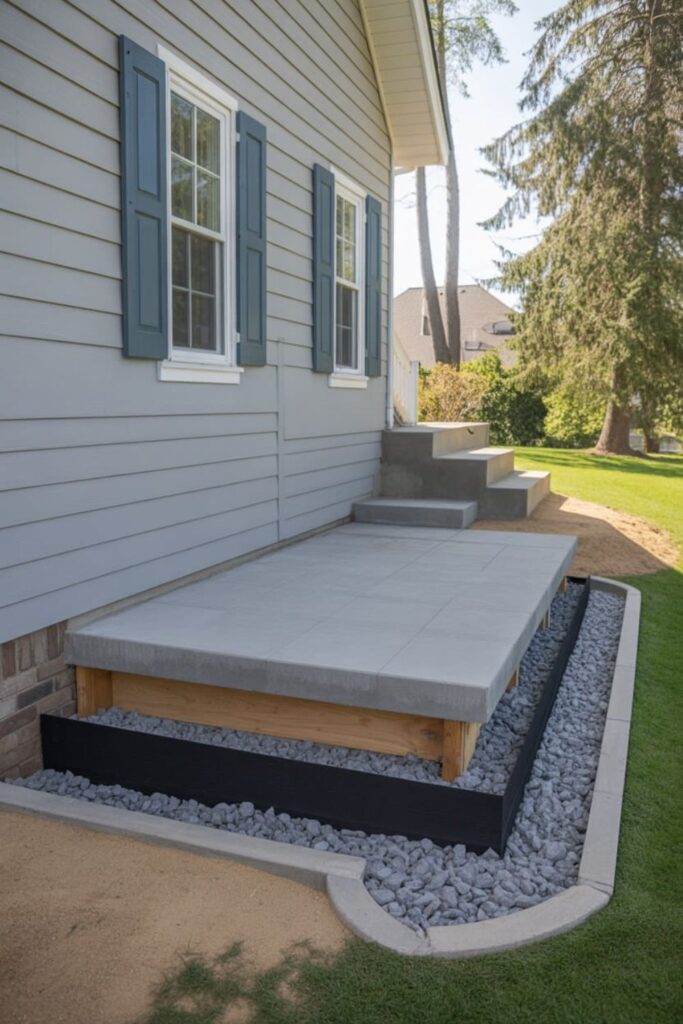
Protecting your home’s foundation while building side patios attached to house requires attention to moisture management and structural loading. Maintain the required gap between patio surfaces and wood siding using gravel or river rock borders, PVC trim boards, or galvanized metal flashing. This air gap allows moisture evaporation and prevents wood rot. Seal any foundation cracks before patio installation to prevent water infiltration behind new hardscaping.
Avoid placing heavy loads directly against foundation walls. Retaining walls built to level sloped side yards must be positioned with proper drainage behind them, backfill with gravel and install weep holes every 4-6 feet at base level. If constructing enclosed side patio structures with roof connections, attach ledger boards using lag screws into floor joists or band boards, never into siding alone. Flash all roof-to-house connections properly to prevent water entry. Consult structural engineers for projects involving significant grade changes or heavy roof loads.
Concrete Slab Side Patio Construction
Poured concrete slab patios offer durable, low-maintenance outdoor flooring for side patios attached to house. Prepare the base by excavating 6-8 inches below finish grade, removing all organic material and loose soil. Install 4 inches of compacted gravel base, then 2-4 inches of concrete (4 inches for vehicle traffic areas, 2-3 inches for foot traffic only). Reinforce with welded wire mesh or rebar for crack resistance.
Form edges using 2×4 lumber staked firmly at proper slope angles. Pour concrete in sections no wider than 10 feet without control joints expansion joints prevent random cracking as concrete cures. Finish options range from basic broom textures ($4-6 per square foot installed) to stamped patterns mimicking stone or brick ($8-15 per square foot) to exposed aggregate surfaces ($10-18 per square foot). Color can be added during mixing (integral color) or applied to surfaces afterward (acid stains, concrete dyes). Standard gray concrete slab installations cost $6-10 per square foot for materials and labor in most markets.
Read More About: 25+ Family Patio Ideas for Multi-Generational Spaces
Paver Installation for Side Patios
Paver installation creates flexible, attractive attached patio designs that handle ground movement better than solid concrete. Excavate to proper depth typically 7-9 inches for pedestrian areas (4 inches gravel base, 1 inch sand leveling layer, 2-3 inch pavers). Compact base material thoroughly using plate compactors rented from equipment centers. Install landscape fabric under gravel to prevent weed growth through joints.
Edge restraints are critical for paver installation success using commercial plastic or aluminum paver edging systems, not simple landscape timber. Set pavers in herringbone, running bond, or basketweave patterns depending on space dimensions. Narrow side yard patio designs look wider using running bond patterns oriented perpendicular to the house. Sweep polymeric sand into joints this specialized sand hardens when wetted, locking pavers together and preventing weed growth. Brick pavers cost $10-20 per square foot installed, natural stone $15-30 per square foot, and concrete pavers $8-15 per square foot.
Gravel and Decomposed Granite Options
Budget-friendly outdoor flooring alternatives like gravel and decomposed granite work beautifully in side patios attached to house where formal hardscaping feels too rigid. These materials cost $3-7 per square foot installed, drain naturally without complicated grading, and create casual cottage garden atmospheres. Prepare bases similarly to paver installations, excavate 4-6 inches, install compacted gravel sub-base, add landscape fabric, then finish with 2-3 inches of decorative surface material.
Pea gravel (3/8 inch smooth stones) provides soft surfaces comfortable for bare feet but shifts underfoot and scatters into lawn areas. Use metal or wood edging to contain migration. Crushed rock (1/4 to 3/4 inch angular stones) compacts better than pea gravel, stays in place more reliably, but feels rougher underfoot. Decomposed granite (DG) compacts into firm, smooth surfaces resembling natural earth paths ideal for modern desert landscapes. Stabilized DG products mixed with binding agents create nearly solid surfaces that still allow water infiltration. Refresh loose stone surfaces annually by adding 1/2-1 inch of new material and re-compacting.
Covered Side Patio Roof Designs
Covered side patio structures transform side patios attached to house into all-weather outdoor rooms usable during rain and intense sun. Shed-style roofs sloping away from the house offer simplest construction: attach a ledger board to house framing, install support posts along the outer edge, and run rafters between ledger and beam. Minimum roof pitch of 3:12 (3 inches rise per 12 inches run) ensures water runoff.
Gable roofs require more complex framing but look more finished and allow higher ceiling heights. Flat or low-slope roofs need specialized waterproofing membranes and adequate drainage planning. Roofing materials should match your house asphalt shingles for traditional homes, metal panels for modern designs, clear polycarbonate for maximum light transmission. Most covered side patio projects cost $15,000-$35,000 including materials, labor, permits, and electrical work. Partial covers using retractable awnings ($1,500-$5,000) or shade sails ($200-$800) provide affordable alternatives without permanent construction.
Privacy Screening Solutions
Side yard landscaping focused on privacy screening converts exposed corridors into secluded retreats. Fence height regulations typically allow 6-foot fences in side yards, though some areas permit 8 feet. Solid panel fences provide complete visual blocking but can feel claustrophobic in narrow spaces. Alternating board styles with 1-2 inch gaps maintain airflow while obscuring views.
Living screens using fast-growing evergreens create natural barriers arborvitae, Italian cypress, or clumping bamboo grow 2-4 feet annually when established. Plant in 15+ gallon containers if ground planting isn’t possible. Trellises with climbing vines (jasmine, clematis, passionflower) combine vertical interest with seasonal privacy. Metal or wood lattice panels mounted 12 inches off the ground allow air circulation underneath while blocking sight lines. Outdoor curtains hung from cable wires provide adjustable privacy draw them closed for intimate gatherings, open for breeze. Choose mildew-resistant outdoor fabrics in neutral colors that won’t show dirt.
Lighting Design for Side Patios
Strategic lighting transforms side patios attached to houses from afterthought spaces into evening destinations. Layer three lighting types for functionality and atmosphere. Ambient light from wall-mounted sconces flanking doors or spaced every 8-10 feet along the house wall provides overall illumination. Choose dark sky-compliant downward-facing fixtures that concentrate light on patio surfaces rather than spilling into neighbor’s windows.
Task lighting above dining tables or seating areas ensures adequate brightness for activities pendant lights suspended from covered side patio roofs or adjustable spotlights mounted on walls work well. Accent lighting highlights architectural features, plants, or artwork using uplights, spotlights, or well lights recessed into hardscape. LED strip lighting tucked under bench seating or step risers adds safety and modern style. Solar path lights along patio edges cost nothing to operate. Budget $500-$2,000 for complete lighting systems depending on fixture quality and whether professional installation is required.
Furniture Selection for Narrow Spaces
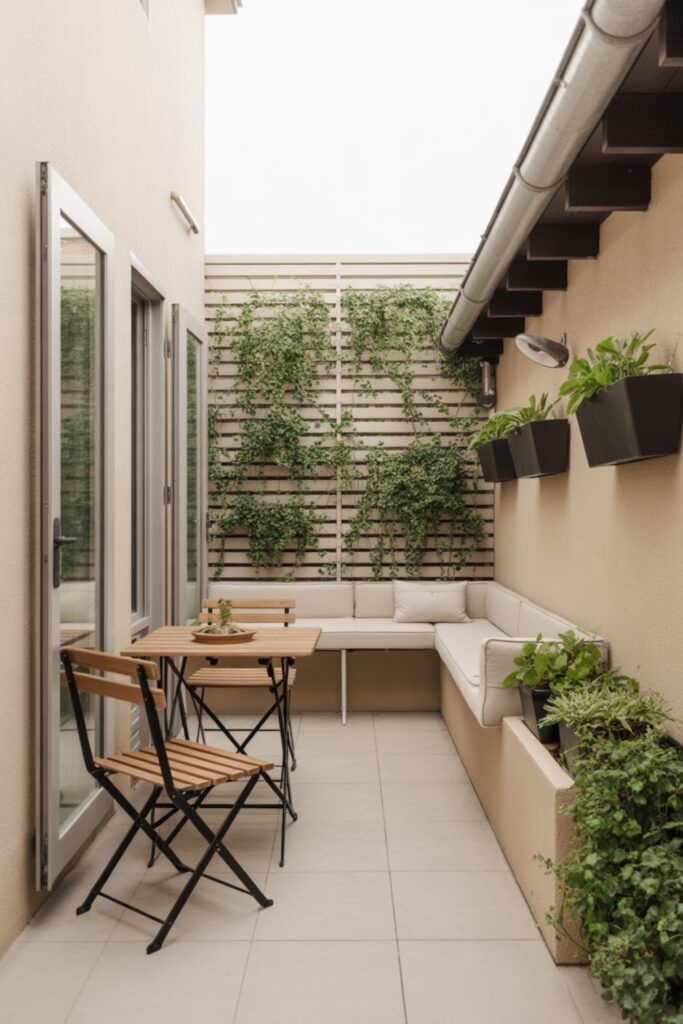
Space planning furniture for narrow patio spaces requires careful measurement and multi-functional pieces. Benches work better than chairs in tight quarters: a 5-foot bench seats three people in the same linear footage as one and a half standard chairs. Wall-mounted fold-down tables provide dining surfaces that disappear when not needed. Bar-height counters attached to house walls with overhang stools create eating areas using minimal floor space.
Choose furniture scaled appropriately for dimensions. Standard dining chairs need 24 inches of space, but slim bistro chairs fit in 18-20 inches. Armless chairs or backless stools tuck under tables more completely. Sectional seating in L-configurations maximizes corner areas. Measure carefully leave 24 inches minimum for walkways and 30-36 inches for circulation around furniture. Select weather-resistant materials appropriate for sheltered locations the house wall provides rain protection, allowing fabric cushions and wood furniture that might deteriorate in fully exposed settings.
Small Side Patio Ideas Under 100 Square Feet
Compact side yard patio ideas prove that square footage matters less than smart design. A 6×12 foot patio (72 square feet) comfortably fits a bistro table and two chairs plus container gardens. Use vertical space aggressively, wall-mounted planters, hanging baskets, and tall narrow plant stands add greenery without consuming floor area. Mirrors mounted on fences create illusions of expanded space and reflect light into narrow corridors.
Keep color palettes light and cohesive whites, creams, pale grays, and soft blues make small attached patio designs feel airy. Monochromatic schemes read as less busy than multi-color combinations. Choose one statement piece rather than multiple small decorations: a bold outdoor rug, colorful accent wall, or sculptural planter provides visual interest without clutter. Built-in benches with storage underneath serve dual purposes. Murphy bar tables fold down from walls when entertaining, fold up when space is needed. Every element should earn its place through beauty or function.
Medium Side Patios 100-200 Square Feet
Side patios attached to house in the 100-200 square foot range support multiple functions and furniture groupings. A 7×20 foot space (140 square feet) accommodates a distinct dining area with a four-person table at one end, lounge seating with loveseat and chairs at the other. Use area rugs, changes in flooring materials, or overhead structures to visually separate zones without physical barriers that shrink perceived space.
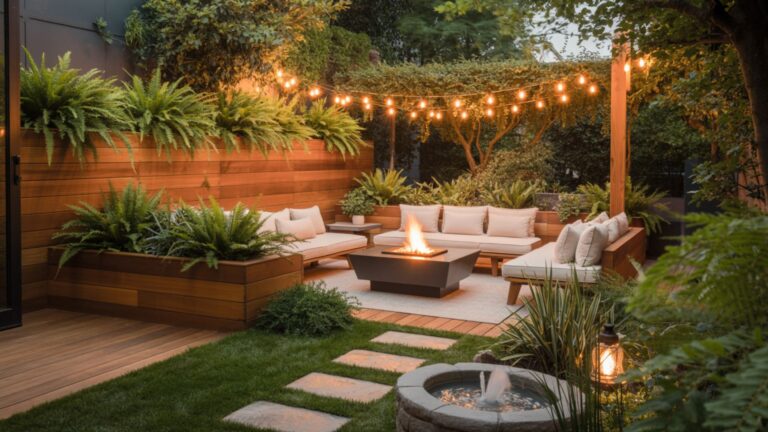
These mid-sized patios benefit from focal points that draw eyes through the length a fire feature, water fountain, or statement plant at the far end creates visual depth. Vary paving patterns within the space run pavers lengthwise to emphasize distance or in basketweave patterns to suggest width. Add dimensional interest through different surface levels if grading allows a 6-inch step up or down creates distinct areas. Built-in planters along one side define edges while leaving open circulation along the opposite side. String café lights overhead in parallel lines running the length to reinforce the corridor’s natural geometry.
Large Side Patios Over 200 Square Feet
Generous side yard patio dimensions exceeding 200 square feet support complete outdoor living suites. An 8×30 foot design (240 square feet) incorporates dining for six, lounge seating, and activity areas like outdoor kitchens or home gym spaces. Consider creating partial enclosures with enclosed side patio sections with three walls and roof at one end for weather protection, open sections at the other for sun exposure.
Invest in infrastructure that supports serious outdoor living. Run water lines for sinks, hose bibs, or misting systems. Install adequate electrical service 20-amp circuits for refrigerators or heaters, dedicated outlets for lighting and entertainment systems. Ceiling fans under covered side patio roofs improve comfort during hot weather. If side yard access connects front and back yards, maintain a 36-48 inch clear pathway through the patio for wheelbarrows, lawnmowers, and furniture delivery. Design traffic flow to route through one patio side, leaving the opposite side for stationary furniture arrangements.
Connecting Interior Rooms to Side Patios
Direct access between indoor and outdoor spaces multiplies the value of side patios attached to house. Installing French doors, sliding glass doors, or accordion glass walls from kitchens, dining rooms, or home offices creates seamless transitions. These modifications cost $1,500-$5,000 per opening including doors, installation, and trim work. Ensure door thresholds sit flush with interior floors maximum 1/2 inch height difference for safe passage and accessibility compliance.
Convert existing windows into doors where structural conditions permit. This requires cutting through wall studs, installing proper headers to carry roof loads, and potentially obtaining permits. Kitchen-to-patio connections work especially well, turning side yard patio ideas into outdoor dining extensions with easy food service. Home office doors provide quick access to fresh air breaks and alternative workspaces. Master bedroom doors offer private morning coffee spots. Consider sun angles when planning openings: south-facing doors bring warmth and light, north-facing doors provide consistent indirect light.
Year-Round Use Strategies
Extending attached patio designs into cool seasons requires heating and weather protection strategies. Propane or natural gas patio heaters ($150-$600) warm 10-15 foot diameter circles, allowing autumn and spring use in moderate climates. Electric infrared heaters mounted under covered side patio roofs cost less to operate but require 220-volt circuits. Fire tables combine ambiance with functional warmth choose propane models ($400-$1,500) for movable heat or natural gas units ($800-$3,000+) for permanent installations.
Wind protection makes marginal weather comfortable. Clear vinyl panels attached to open sides of covered side patio structures block wind while maintaining views that roll up during nice weather. Outdoor curtains provide flexible wind barriers at lower cost. Electric or gas fireplaces built into house walls create cozy focal points. Add outdoor-rated heaters to furniture heated bench cushions and heated throws extend shoulder seasons. In hot climates, misting systems installed along roof edges cool air by 20-30 degrees through evaporation, costing $200-$800 for DIY kits.
Plant Selection for Side Yard Conditions
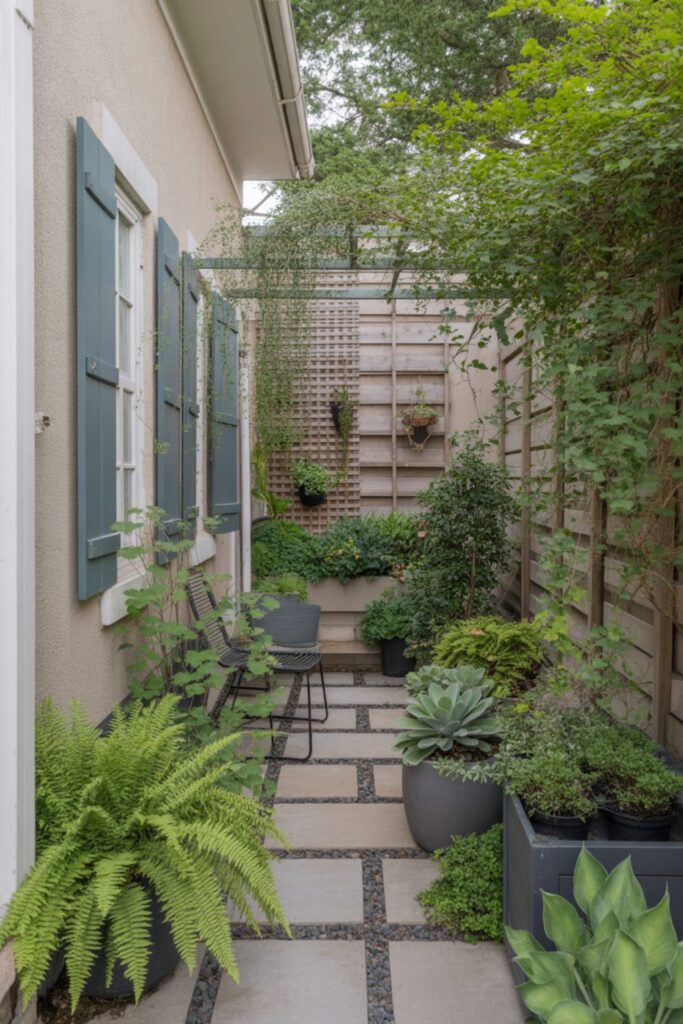
Side yard landscaping success depends on matching plants to specific light conditions found between houses. These spaces typically receive limited direct sun, often morning sun only (east-facing), afternoon sun only (west-facing), or no direct sun (north-facing). South-facing sides get maximum sun exposure. Measure actual light levels over several days before selecting plants. Areas receiving 3-6 hours of sun support part-sun plants, while under 3 hours requires shade specialists.
East-facing side patios attached to house suit morning glory vines, hostas, astilbe, and impatiens. West-facing spaces handle black-eyed susans, coneflowers, Russian sage, and ornamental grasses. North-facing locations need shade lovers like ferns, heuchera, caladiums, and bleeding hearts. Vertical space is precious climbing plants on trellises and adding greenery without floor space. Clematis, climbing hydrangea, and jasmine provide seasonal color. Container gardens allow mobility to rotate plants to follow sun patterns or refresh seasonal displays.
Side Patio Cost Breakdown by Material
Patio addition to house budgets vary significantly based on material choices and labor decisions. DIY concrete slabs cost $3-5 per square foot (materials only, requiring mixer rental and heavy labor). Professional installation runs $6-10 per square foot for basic finishes, $10-18 for decorative options. A 150 square foot concrete patio costs $900-$2,700 installed with standard finishes.
Pavers require less physical labor but more time for proper base preparation and pattern work. Materials cost $3-12 per square foot depending on paver type (concrete cheapest, natural stone most expensive). Professional installation adds $4-8 per square foot for labor. That same 150 square foot space runs $1,050-$3,000 installed using mid-grade pavers. Natural stone costs $2,250-$4,500 installed. Gravel patios hit lowest price points $450-$1,050 installed for 150 square feet. Budget additional 20-30% for site prep challenges like poor drainage, removal of old hardscaping, or significant grading work.
Maintenance Requirements by Surface Type
Long-term care needs factor into outdoor flooring decisions for side patios attached to house. Concrete requires least maintenance power wash annually, reseal every 2-3 years ($0.25-$0.50 per square foot for sealer), and repair cracks as they appear using concrete patching compound. Stained or colored concrete needs reapplication every 3-5 years to maintain appearance.
Pavers need joint sand replenishment every 1-2 years and power washing to remove organic growth. Individual damaged pavers can be replaced without redoing entire sections, a major advantage over concrete. Seal pavers every 3-5 years for stain resistance and color preservation. Gravel surfaces require the most ongoing work rake weekly to maintain even coverage, replenish material annually, edge trimming to prevent grass encroachment, and weed control through landscape fabric or regular herbicide application. Wood decking (if used instead of ground-level paving) demands yearly cleaning, staining every 2-4 years, and board replacement as wood weathers.
Adding Outdoor Kitchens to Side Patios
Converting side patios attached to house into outdoor kitchens makes sense when patio width exceeds 7 feet and kitchen access exists nearby. Compact outdoor kitchens fit in 4-6 feet of depth with a built-in grill, small refrigerator, and basic counter space. Full outdoor kitchens with sinks, storage, and cooking zones need 6-8 feet of depth. Position cooking areas away from house walls to prevent smoke staining and maintain 12-18 inches clearance from combustible siding.
Built-in grill islands cost $2,000-$8,000 depending on materials (concrete block cheapest, stainless steel most expensive) and appliance quality. Add $800-$2,000 for outdoor-rated refrigerators, $500-$1,500 for sinks with proper plumbing, $300-$800 for storage cabinets. Natural gas or propane lines require licensed plumbers to budget $500-$1,500 for gas connections. Electrical outlets on dedicated 20-amp circuits support refrigerators and task lighting. Protect investments with covered side patio roofs over kitchen areas smoke and grease buildup cleans easier from roofing than from house siding.
Read More About: 24+ Private Backyard Oasis Ideas For Yard into a Serene Retreat
Creating Side Patio Home Offices
Remote work trends make side yard patio ideas practical as outdoor office spaces. The quiet separation from household activity promotes focus while maintaining home comfort. A 6×10 foot area accommodates a desk, chair, and small storage cabinet. Power outlets every 6 feet support laptops, monitors, and task lighting. Weather-resistant furniture designed for contract or hospitality use handles daily office duty better than standard patio furniture.
Wi-Fi extenders or mesh network nodes ensure strong internet connectivity in outdoor locations. Shade structures or strategic positioning prevents screen glare position desks perpendicular to bright exposures rather than facing them. Weatherproof storage boxes protect equipment and supplies. If building enclosed side patio offices, insulate walls and add heating/cooling to support year-round use. Permit requirements increase for enclosed heated/cooled spaces these often classify as habitable space requiring full building permits. Portable structures like high-end outdoor cabanas ($3,000-$8,000) provide office functionality without permanent construction permits.
Side Patio Design Mistakes to Avoid
Common planning errors undermine attached patio designs before construction begins. Inadequate drainage tops the list, never install patios that trap water against foundations or create standing water puddles. The second-most frequent mistake is ignoring utility locations. Call 811 before digging to locate underground power, gas, water, and communication lines. Hitting buried utilities creates dangerous situations and expensive repairs.
Building too close to property lines invites neighbor disputes and code violations verify actual property boundaries using surveys, not fence locations. Skipping permits risks fines and forced removal of non-compliant work. Choosing inappropriate materials for your climate wastes money porous pavers in freeze-thaw regions crack within years without proper base depth. Neglecting foundation clearance allows moisture damage and termite access. Inadequate lighting makes patios unusable after dark. Poor furniture scaling makes narrow spaces feel cramped. Finally, forgetting future maintenance access leaves removable sections in fencing or hardscape for equipment that needs periodic replacement.
How Wide Should Side Patios Be?
Minimum functional width for side patios attached to house depends on intended use. Four feet accommodates walking paths with wall-mounted narrow shelves or planters. Five feet fits a narrow bistro table and chairs pushed against the house wall with circulation space. Six feet allows small seating groups and feels less corridor-like. Seven to eight feet supports standard patio furniture including dining sets and lounge furniture with comfortable circulation. Widths beyond 8 feet offer generous space but may not be possible in typical residential side yards.
Measure your available width accurately, accounting for required foundation clearance and property line setbacks. Don’t assume fence location marks the property line verify with surveys or property pins. Consider tapering widths if space varies along the length create wider areas for furniture placement at visually prominent locations, narrower sections for passage only. If width is severely limited (under 5 feet), consider using the space as a garden path with stepping stones rather than a full patio; this requires less grading work and permits while still beautifying neglected areas.
What Permits Do I Need for Side Patios?
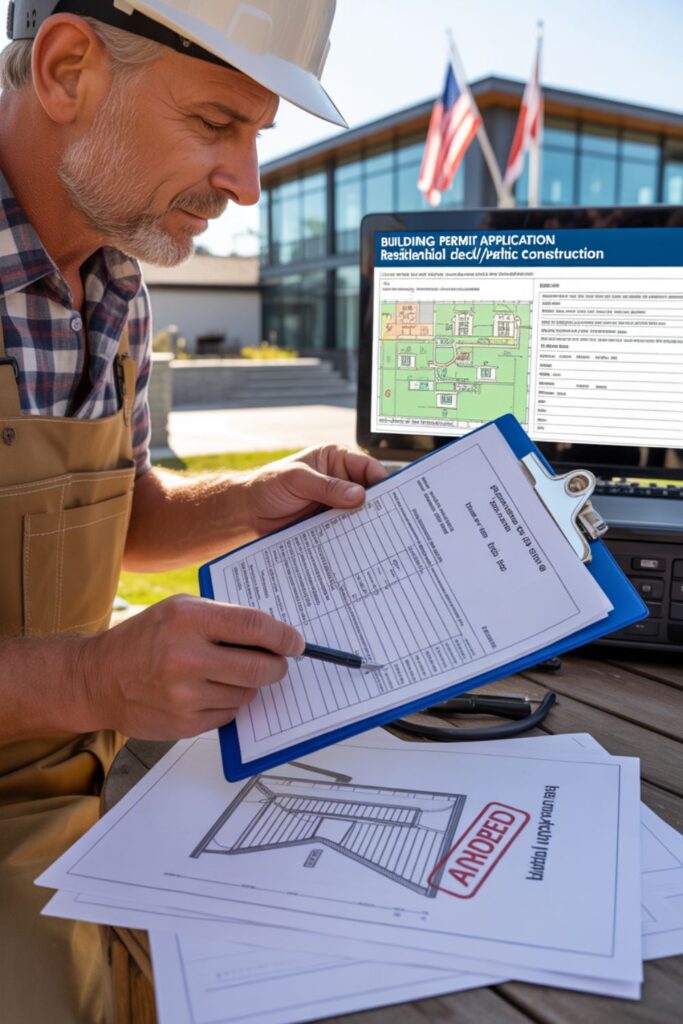
Building permits for side patios attached to house depend on project scope and local regulations. Ground-level patios under 120-200 square feet (thresholds vary by jurisdiction) often qualify for exemptions when they don’t include electrical, plumbing, or structural roof elements. Simple paver or concrete patios typically need only zoning approval confirming setback compliance. Always check before assuming exemption penalties for unpermitted work include fines, mandatory removal, and disclosure requirements during home sales.
Projects requiring full permits include covered side patio structures with roofs, raised decks over 30 inches high, any work involving electrical circuits, plumbing connections, or gas lines. Permit applications need site plans showing property lines, existing structures, proposed construction, and setback dimensions. Some jurisdictions require engineered drawings for roofed structures or retaining walls over 4 feet high. Application fees run $100-$500 depending on project value. Plan review takes 2-8 weeks. Inspections verify foundation placement, framing, electrical, plumbing, and final completion before issuing certificates of occupancy.
Can I Build a Side Patio Myself?
DIY construction of side patios attached to house saves 40-60% compared to professional installation but requires appropriate skills, tools, and physical capability. Simple gravel or loose paver patios suit confident beginners. These projects need basic tools (shovels, rakes, wheelbarrows, hand tampers) and primarily involve excavation, base preparation, and material placement. Rent plate compactors ($80-$100 per day) for proper base compaction rather than relying on hand tampers for areas over 100 square feet.
Concrete work demands more expertise: proper mixing, forming, reinforcement placement, finishing, and curing require experience to avoid costly mistakes. Concrete doesn’t allow do-overs once poured. Consider hiring professionals for concrete while handling other aspects yourself. Paver installation falls between gravel and concrete in difficulty for DIYers willing to learn proper techniques through online tutorials, though physically demanding. Roofed structures require carpentry skills, understanding of structural loads, and comfort working on ladders. Hire licensed contractors for all electrical and plumbing work unless you hold appropriate certifications most jurisdictions prohibit unlicensed work on these systems.
Frequently Asked Questions
What are side patios attached to a house?
Side patios attached to a house are outdoor living spaces built along the side of a home, directly connected to the structure. They are ideal for narrow yards, providing functional outdoor space without using the main backyard.
Are side patios attached to a house worth it?
Yes, side patios attached to a house increase usable outdoor space, improve airflow and natural light, and add property value especially on narrow or urban lots where backyard space is limited.
What is the best size for side patios attached to a house?
Most side patios attached to a house range from 4 to 10 feet wide. Even a narrow layout works well for seating, walkways, or compact dining areas when designed efficiently.
Do side patios attached to a house require permits?
In many areas, side patios attached to a house require permits, especially if they include permanent structures, foundations, or roofing. Always check local building codes before construction.
How much do side patios attached to a house cost?
The cost of side patios attached to a house typically ranges from $1,500 to $6,000, depending on materials, size, drainage work, and added features like privacy screens or pergolas.
What materials work best for side patios attached to a house?
Popular materials include concrete pavers, stamped concrete, porcelain tiles, and natural stone. Slip-resistant surfaces are recommended for shaded side patios attached to a house.
Conclusion
Side patios attached to house transform neglected passages into valuable outdoor living spaces that enhance your daily life and property value. These unique locations offer weather-protected environments, inherent privacy advantages, and direct interior access that typical yard patios cannot match. Whether your side yard measures 4 feet or 10 feet wide, proper planning addresses drainage, foundation protection, and space optimization while incorporating your personal style through material selection and furnishing choices. Success depends on understanding local regulations, choosing appropriate materials for your climate, and scaling designs realistically to actual dimensions.
Start your side yard patio project by obtaining accurate measurements, checking with your building department about permit requirements, and solving drainage concerns before any construction begins. The investment pays immediate dividends through expanded living space and elevated home aesthetics. Your transformed narrow patio space becomes the breakfast spot you use daily, the private retreat that provides escape after long workdays, and the unexpected architectural feature that distinguishes your home from similar properties.