Spring Wedding Ideas: Create Your Perfect Seasonal Celebration
You’ve just gotten engaged and now you’re staring at a blank planning canvas wondering how to turn your spring wedding vision into reality. The season feels perfect, not too hot, not too cold, with nature bursting into bloom but translating that into actual decisions about flowers, colors, venues, and themes feels overwhelming. Every Pinterest board looks stunning, yet somehow none of them feel quite right for your unique celebration.
The pressure intensifies when you realize spring weddings book fast because everyone wants those ideal weather conditions and gorgeous natural backdrops. Meanwhile, you’re drowning in options: garden ceremonies or ballroom receptions, pastel palettes or bold jewel tones, formal affairs or relaxed outdoor gatherings. The fear of making expensive mistakes or creating a wedding that feels generic rather than personal keeps you second-guessing every choice. Your dream spring celebration exists somewhere in your imagination, but figuring out how to bring it to life feels impossibly complex.
Spring wedding ideas harness the season’s natural beauty through fresh florals, vibrant color palettes, and outdoor celebration opportunities that create romantic, memorable events. From spring wedding themes that reflect seasonal renewal to spring wedding flowers showcasing nature’s awakening, strategic planning transforms standard ceremonies into extraordinary experiences. This comprehensive guide explores proven spring wedding planning strategies covering everything from seasonal color schemes and venue selection to weather contingencies and budget optimization, helping you design a celebration that perfectly captures your love story during the year’s most beautiful season.
What Are the Best Color Palettes for Spring Weddings?
Spring wedding ideas set the entire aesthetic tone for your celebration, with palettes ranging from soft romantic pastels to bold vibrant statements that reflect seasonal renewal and personal style.
Blush and sage green creates the quintessential soft romantic spring palette that photographs beautifully and flatters diverse skin tones. Blush pink bridesmaids dresses pair gorgeously with sage green accents in florals, table linens, and groomsmen accessories. Add ivory and gold metallics for sophistication, or incorporate deeper mauve tones for dimension. This palette works beautifully in garden settings, vineyards, and rustic venues while maintaining elegance for formal ballrooms. The muted tones feel fresh without overwhelming, making this combination perpetually popular among spring brides.
Lavender and yellow captures spring’s essence through complementary colors that energize without feeling childish. Soft lavender bridesmaid dresses or floral arrangements pop against sunny yellow accents in bouquets, table settings, or statement pieces like welcome signs. This palette particularly suits outdoor celebrations where natural greenery provides balancing neutral tones. Add white and cream to soften the contrast, or incorporate deeper purple for evening formality. The combination works beautifully with both modern minimalist aesthetics and romantic garden party themes.
Coral and navy offer sophisticated contrast perfect for spring weddings wanting bold personality beyond traditional pastels. Vibrant coral introduces warmth and energy while navy grounds the palette with classic elegance. This combination photographs dramatically against spring’s natural greenery, working beautifully for seaside venues, modern urban spaces, or preppy garden settings. Add gold metallics and white for refinement, or incorporate blush tones to soften the boldness. Navy suits grooms and groomsmen naturally while coral flatters most complexions in bridesmaid attire.
Peach and mint creates fresh, cheerful palettes perfect for daytime spring celebrations with playful romantic vibes. These soft hues feel light and airy, complementing outdoor venues beautifully without competing with natural surroundings. Peach-toned florals including roses, ranunculus, and tulips pair gorgeously with mint greenery and eucalyptus. Add cream and champagne tones for sophistication, or incorporate terra cotta for boho warmth. This palette suits brunch weddings, garden parties, and casual elegant celebrations beautifully.
Jewel tones (emerald, sapphire, amethyst) create luxurious dramatic spring palettes for couples wanting richness over traditional pastels. Deep saturated colors feel opulent and sophisticated, working beautifully for evening celebrations or couples with bold personal style. Mix multiple jewel tones for eclectic vibrancy, or focus on single colors with metallic accents for refined elegance. These rich hues photograph beautifully in spring’s natural light while standing out against seasonal greenery. Jewel tones suit formal ballrooms, historic venues, and modern industrial spaces equally well.
Read More About: 23+ Outdoor Lighting Ideas for Stylish Spaces
How Do You Choose the Perfect Spring Wedding Flowers?
Spring wedding flowers offer unparalleled variety and beauty as seasonal blooms reach peak availability, providing budget-friendly options that look expensive while capturing spring’s essence naturally.
Peonies reign as the most coveted spring wedding flower, with lush, romantic blooms available April through early June. These full, fragrant flowers create stunning bouquets, centerpieces, and installations that photograph beautifully. Peonies work across color palettes from white and blush to coral and deep pink, though expect premium pricing ($8-15 per stem) due to limited seasonal availability. Substitute garden roses during off-season months if you’re marrying early spring or late spring when peony availability dwindles.
Tulips provide quintessential spring charm at budget-friendly prices ($1-3 per stem) with incredible color variety from white and cream to vibrant orange, pink, and purple. These versatile flowers suit both modern minimalist arrangements and romantic garden-style bouquets. Tulips continue growing after cutting, creating organic movement in arrangements while occasionally drooping in warm conditions embraces this natural quality rather than fighting it. French tulips with longer stems work beautifully for tall centerpieces and installations.
Ranunculus offers a peony-like appearance at a fraction of the cost ($3-6 per stem), with delicate layered petals in soft romantic hues. These flowers photograph beautifully with subtle dimensions that add visual interest without overwhelming. Ranunculus works gorgeously in bridal bouquets, boutonnieres, and compact centerpiece arrangements. Combine with anemones, garden roses, and greenery for romantic organic designs. Peak season runs February through May, making them perfect for early and mid-spring celebrations.
Cherry blossoms create ethereal springtime statements when available, though timing proves challenging as blooming periods last only 2-3 weeks regionally. Incorporate cherry blossom branches in tall dramatic centerpieces, ceremony installations, or photo backdrops for quintessential spring aesthetic. Substitute flowering dogwood, apple blossoms, or quince branches for similar effects with more reliable availability. These flowering branches add height and drama without excessive cost since single branches create significant visual impact.
Wildflower mixes including sweet peas, cosmos, delphiniums, and snapdragons create relaxed garden-party aesthetics perfect for outdoor spring celebrations. This approach works beautifully for bohemian, rustic, or casual elegant weddings wanting organic rather than structured arrangements. Wildflower bouquets and centerpieces feel abundant and romantic while often costing less than formal arrangements due to variety and availability. Work with florists offering seasonal selections rather than importing specific blooms from distant locations.
Lilacs bring incredible fragrance and soft romantic appearance to May weddings when these beloved flowers bloom regionally. Lilac branches work beautifully in ceremony installations and tall centerpieces, though they wilt relatively quickly (plan for delivery day-of rather than advance prep). The distinctive scent creates memorable sensory experiences that guests associate with your celebration. Combine with white roses, ranunculus, and greenery for soft romantic palettes.
What Are Popular Spring Wedding Themes?
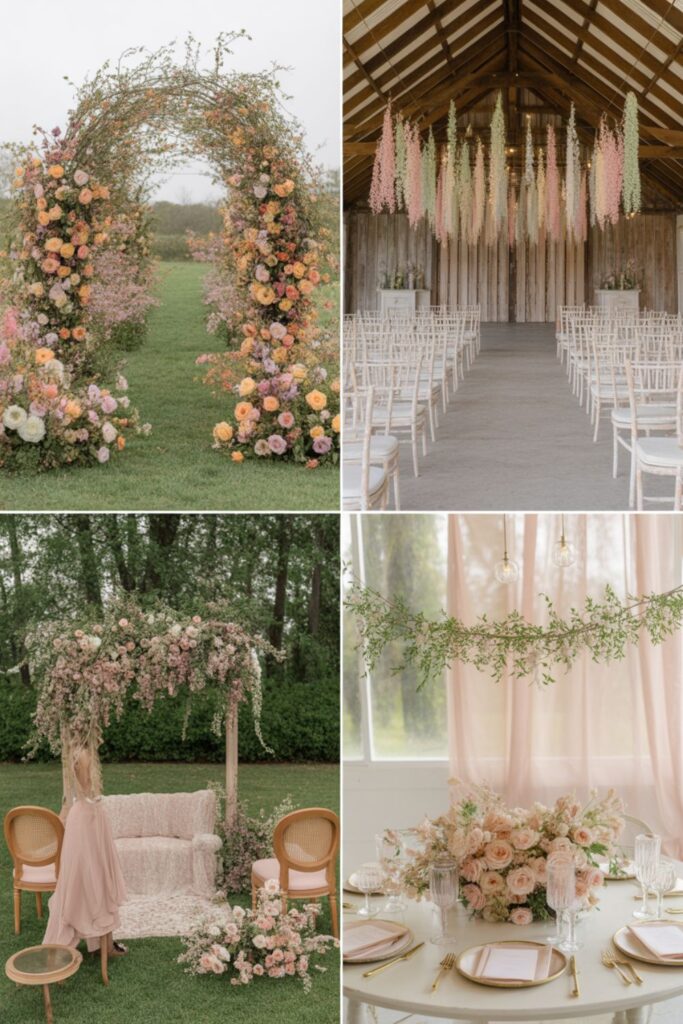
Spring wedding themes provide cohesive design frameworks that guide decisions about decor, attire, florals, and overall aesthetic while reflecting seasonal characteristics and personal style.
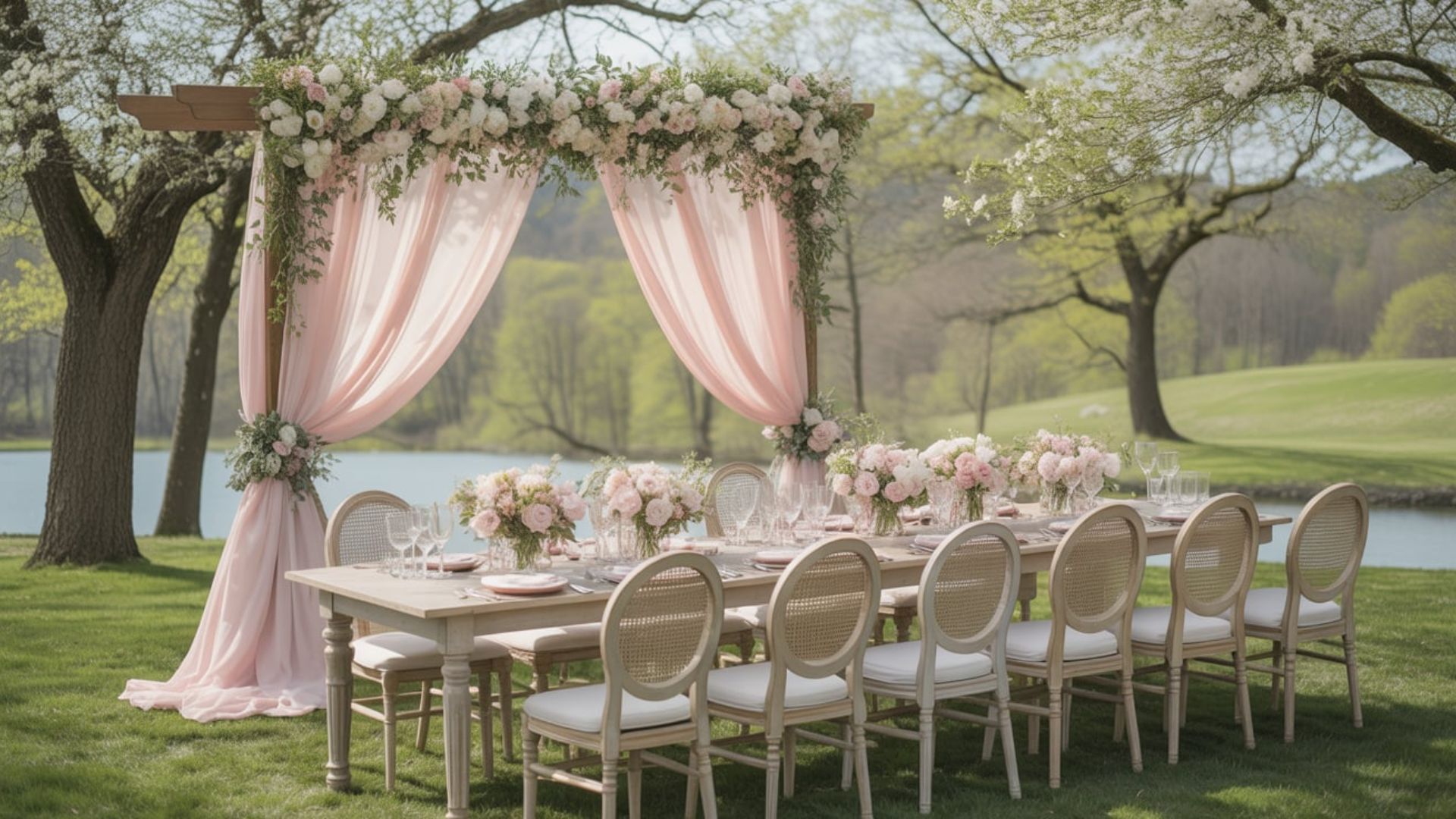
Garden romance embraces spring’s natural beauty through lush florals, soft color palettes, and outdoor or garden-inspired venues. Think overflowing floral centerpieces, flower crowns or floral hair accessories, romantic flowing fabrics, and natural wood elements. This theme works beautifully for outdoor ceremonies in botanical gardens, estate lawns, or vineyard settings. Incorporate vintage elements like antique furniture, delicate china, and handwritten calligraphy for enhanced romantic character. Garden romance suits couples wanting timeless elegance with organic feminine touches.
Modern minimalism proves that spring weddings don’t require pastel overload, focusing instead on clean lines, monochromatic or limited color palettes, and architectural elements. Feature statement installations like suspended florals or geometric arbors rather than abundant decor everywhere. Choose sleek venues with interesting architecture or natural beauty requiring minimal decoration. This aesthetic works perfectly for couples with contemporary style who appreciate spring’s beauty without wanting overtly romantic or traditional presentations. Incorporate greenery, white florals, and single accent colors for refined sophistication.
The Bohemian garden party combines relaxed vibes with romantic spring elements through mismatched vintage elements, macramé details, flowing fabrics, and wildflower-heavy florals. Think mix-and-match table settings, floor cushions or rugs in lounge areas, dreamcatcher or textile backdrops, and natural wood elements. This theme suits outdoor celebrations particularly well, working beautifully in fields, farms, or rustic venues. Bohemian style gives creative freedom for personal expression through collected vintage pieces, DIY elements, and eclectic combinations that feel authentic rather than overly coordinated.
Rustic elegance balances refined sophistication with natural organic elements through wood details, neutral palettes with greenery, and mix of polished and raw materials. Feature farm tables with elegant place settings, wood slice chargers under china, refined florals in natural wood or copper containers, and bistro lighting creating warm ambiance. This approachable theme works across venue types from barns to estates to wineries. Rustic elegance particularly suits couples wanting relaxed sophisticated celebrations that feel special without being overly formal or stuffy.
Classic formal embraces traditional wedding elegance perfect for ballroom venues, historic estates, or country clubs. Think symmetrical floral arrangements, formal seating charts, black-tie attire, champagne toasts, and refined color palettes in ivory, blush, or navy. This timeless approach focuses on elegance and tradition rather than trendy elements, creating celebrations that won’t feel dated in photographs years later. Classic spring weddings incorporate seasonal flowers and softer color palettes while maintaining formal structure and sophistication.
Whimsical fairytale taps into spring’s magical quality through dreamy elements like flowing fabrics, soft lighting, abundant florals, and romantic details. Incorporate elements like flower crowns, ribbon backdrops, vintage furniture, delicate china, and soft ethereal color palettes. This theme works beautifully in gardens, vineyards, or venues with architectural interest like conservatories or historic estates. Whimsical styling suits couples wanting romantic celebrations with playful personal touches that feel special and memorable.
How Do You Plan for Spring Weather Unpredictability?
Spring weather creates the biggest planning challenge for seasonal weddings, requiring contingency strategies that protect celebrations while maintaining flexibility for ideal conditions when possible.
Tent rentals provide essential insurance for outdoor spring receptions, protecting against rain, wind, and temperature swings while allowing celebration of beautiful weather through open tent sides. Clear-top tents showcase spring skies and maintain outdoor ambiance while providing full protection. Sailcloth tents offer a romantic aesthetic with natural light filtering through fabric. Budget $2,000-8,000+ depending on guest count, with pricing including installation, flooring, lighting, and climate control if needed. Book tents 6-9 months advance since spring wedding season creates high demand.
Backup ceremony locations protect the most important moment from weather disruption without forcing entirely indoor celebrations. Identify covered areas (porticos, pavilions, covered terraces) on your venue property that accommodate ceremony setups. Many venues offer ballrooms or indoor spaces as rain alternatives confirm backup plans during venue tours and ensure your contract specifies these arrangements. Have clear weather decision timelines (typically 2-4 hours before ceremony) to avoid last-minute panic while maximizing chances for outdoor celebrations.
Heaters and fans address temperature unpredictability in spring when mornings start cool but afternoons warm considerably, or evening temperatures drop significantly. Rent standing patio heaters for outdoor cocktail hours or reception areas when temperatures may dip below 60°F. Consider fans or portable air conditioning for unseasonably warm days, particularly in tents that trap heat. Communicate with guests through wedding websites about expected weather and dress code so they prepare appropriately with layers or lighter fabrics.
Appropriate attire choices acknowledge spring’s variable conditions through fabric selection and styling. Choose bridesmaid dresses in comfortable fabrics that work across temperatures chiffon breathes well if warm, while long sleeves work if cool. Consider shawls, wraps, or light jackets for evening temperature drops. Grooms and groomsmen might skip vests in favor of just suit jackets that can be removed if warm. Brides should discuss weather considerations with dress consultants, considering dress weight and coverage appropriate for variable spring temperatures.
Ceremony timing strategies work around typical spring weather patterns late morning and early afternoon often provide the most stable conditions, while late afternoon can bring rain showers in many regions. Consult historical weather data for your region and date to understand typical patterns. April weddings face more weather unpredictability than May or early June celebrations when conditions stabilize. Consider Friday or Sunday weddings if weather flexibility matters significantly since you’ll have adjacent days as potential rain dates.
Professional vendor experience proves invaluable when weather challenges arise since experienced teams smoothly execute contingency plans. Discuss weather strategies with photographers (having umbrella shots planned, knowing best indoor photo locations), coordinators (timeline adjustments if moving indoors), and caterers (protecting food service in challenging conditions). Vendors familiar with your venue know exactly how backup plans execute, preventing confusion and delays on wedding day.
What Are the Best Spring Wedding Venue Options?
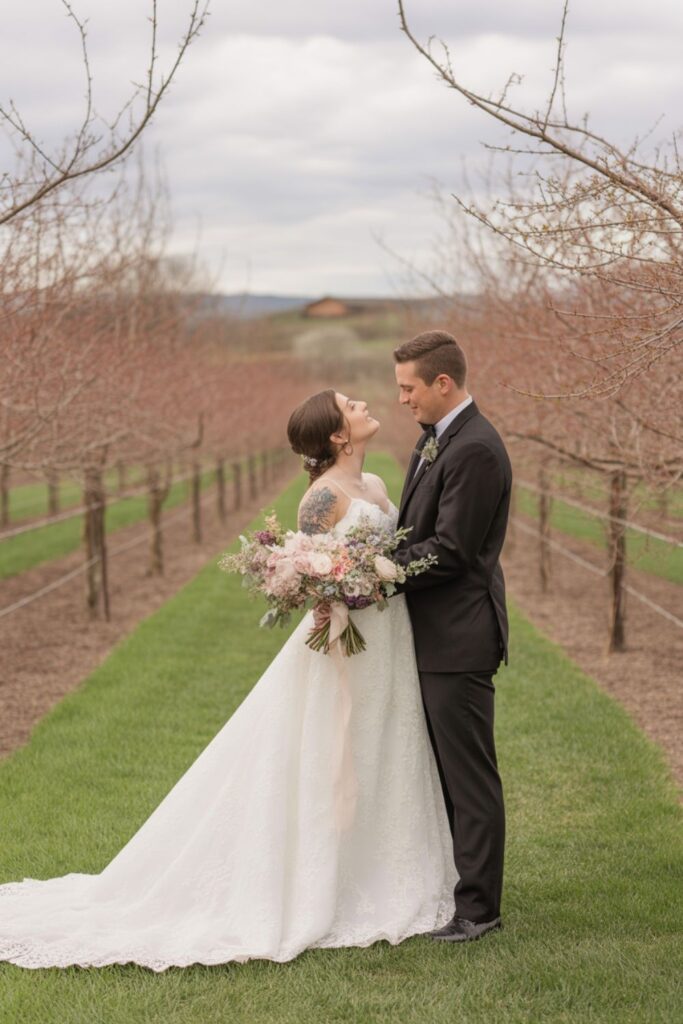
Spring wedding venues range from outdoor garden settings that celebrate seasonal beauty to versatile spaces accommodating weather contingencies while showcasing spring’s natural backdrop.
Botanical gardens offer professionally maintained landscapes bursting with spring blooms, requiring minimal additional decoration since nature provides the aesthetic. These venues photograph beautifully with diverse backdrops for ceremonies and photos. Garden venues typically limit guest counts (often 100-150 maximum) and restrict loud music or extended hours due to municipal regulations. Expect venue fees of $2,000-8,000 depending on location and exclusivity. Book 12-18 months advance since spring dates fill quickly at desirable gardens.
Outdoor estates and vineyards provide expansive grounds with manicured lawns, established gardens, and often spectacular views perfect for spring celebrations. These properties typically offer multiple ceremony site options and reception areas, providing weather flexibility while maintaining outdoor celebration feeling. Many include getting-ready spaces, bridal suites, and accommodation options. Vineyard settings particularly shine in spring when vines begin leafing and surrounding hills turn vibrant green. Costs range widely ($3,000-15,000+) based on location, inclusions, and exclusivity.
Barn and farm venues embrace rustic charm enhanced by spring’s natural beauty through rolling fields, blooming trees, and pastoral settings. These spaces typically require full rental of tables, chairs, linens, and sometimes catering since they’re blank slate venues. The trade-off provides complete creative control over aesthetic and logistics. Barn venues work beautifully for rustic, bohemian, or casual elegant spring weddings. Ensure facilities include proper restrooms, electricity, and vendor access. Rental fees run $2,000-6,000 with additional costs for rentals and services potentially doubling total investment.
Conservatories and greenhouses create stunning spring settings with glass architecture showcasing plants and natural light while providing weather protection. These unique venues feel like outdoor celebrations with indoor reliability. Conservatories often limit candle use and open flames due to plant safety, requiring battery-operated alternatives. The dramatic architecture and lush greenery minimize decoration needs, saving budget while creating memorable backdrops. Capacity typically ranges from 50-200 guests depending on facility size.
Country clubs and historic estates offer elegant flexibility through beautiful grounds for ceremony and outdoor cocktails with ballroom backup for reception or weather issues. These established venues typically include preferred vendor lists, experienced coordinators, and refined amenities. Country club weddings suit couples wanting classic elegance with reliable infrastructure and professional service. Historic estates provide architectural interest and maintained gardens perfect for spring photography. Expect all-inclusive packages or venue fees plus catering minimums totaling $100-300+ per guest.
Waterfront locations including lakeside venues, riverbanks, or coastal properties provide stunning backdrops enhanced by spring weather and extended daylight hours. Water features photograph beautifully while breezes keep comfortable temperatures for outdoor celebrations. Consider seasonal factors like water levels (spring runoff), breeding waterfowl (noise and mess), and wind exposure. Waterfront venues often charge premium rates ($4,000-12,000+ venue fees) but create memorable settings that minimize decoration needs through natural beauty.
Read More About: 25+ Creative Wall Art Ideas to Transform Blank Walls
How Do You Create Stunning Spring Wedding Decorations?
Spring wedding decorations should enhance rather than compete with seasonal beauty, using natural elements, fresh color palettes, and romantic details that feel cohesive and intentional.
Floral installations create dramatic focal points through ceremony arches abundant with seasonal blooms, hanging floral arrangements above reception tables, or flower walls as photo backdrops. Spring’s flower availability and relatively mild temperatures make elaborate floral designs more practical and affordable than summer heat or winter scarcity. Work with florists to create installations using in-season flowers mixed with greenery and flowering branches for volume without excessive cost. Budget $1,500-5,000+ for significant installations depending on scale and flower choices.
Natural elements including moss, branches, wood slices, and stones bring organic texture that complements spring’s aesthetic. Create moss table runners with candles and florals for centerpieces. Use flowering branches (cherry, dogwood, quince) in tall arrangements adding height without heavy floral cost. Incorporate wood elements through signs, chargers, or cake stands. These natural materials work beautifully with any spring color palette while adding dimension and visual interest beyond florals alone.
Romantic lighting transforms spring celebrations as daylight fades, creating magical ambiance through string lights, lanterns, candles, and uplighting. Bistro lighting strung overhead creates an intimate atmosphere for outdoor receptions. Lanterns in varying heights add warmth to tables and pathways. Uplighting in your wedding colors transforms plain walls or highlights architectural features. For tented receptions, chandelier rentals or cafe lighting creates elegant overhead interest. Budget $800-3,000+ for comprehensive lighting depending on venue needs and desired ambiance level.
Fresh greenery garlands dress reception tables, ceremony aisles, or architectural features affordably while looking lush and romantic. Eucalyptus, olive branches, and ivy work beautifully as garland bases, with florals added at intervals for color. DIY-friendly couples can create garlands themselves day-before using wholesale greenery, or hire florists for professional installations. Greenery garlands photograph beautifully while costing significantly less than full floral runners, making them popular for budget-conscious spring weddings wanting abundant romantic decor.
Colorful linens and tableware introduce your palette when venues or budgets limit floral abundance. Colored table linens in your wedding colors create immediate impact sage green, dusty blue, or mauve linens set romantic tones. Colored glassware (pink, amber, or smoke) adds sophistication to place settings. Mix-and-match vintage china creates eclectic charm for bohemian or garden party themes. These decor elements, while requiring rental investment, significantly impact overall aesthetic while remaining weather-independent unlike some floral choices.
Personalized details make spring celebrations feel unique through custom signage, thoughtful favors, and meaningful touches reflecting your story. Hand-lettered welcome signs, seating charts, or menus add artisanal charm. Seed packet favors embrace spring planting themes. Photo displays of your relationship journey personalize cocktail areas. These touches don’t require massive budgets but create memorable experiences that distinguish your celebration from generic events. Focus on a few meaningful personalized elements rather than attempting to DIY everything.
What Are the Best Spring Wedding Menu Ideas?
Spring wedding menus celebrate seasonal ingredients through fresh vegetables, light proteins, and bright flavors that complement the season’s character while satisfying diverse guest preferences.
Seasonal appetizers might include asparagus wrapped in prosciutto, pea and mint crostini, radish toasts with herb butter, spring vegetable tarts, or strawberry and goat cheese bites. These light fresh flavors suit spring celebrations while offering elegant passed options during cocktail hours. Incorporate local seasonal produce when possible farm-to-table approaches impress guests while supporting regional growers and ensuring peak freshness. Budget $15-25 per person for passed appetizers during cocktail hour.
Bright salad courses showcase spring greens through arugula with strawberries and goat cheese, butter lettuce with peas and radishes, or mixed greens with citrus and almonds. Fresh spring salads feel lighter than heavy winter dishes while looking vibrant on plates. Offer simple vinaigrettes rather than heavy creamy dressings to maintain a fresh spring feeling. Spring salads work beautifully for both plated meals and buffet presentations.
Light protein options including herb-crusted chicken, lemon salmon, spring lamb, or grilled vegetables as vegetarian mains suit spring celebration aesthetics. Avoid heavy braised meats or rich cream sauces that feel winter-appropriate but don’t match spring’s fresh character. Fresh herb marinades, citrus accompaniments, and light sauces complement the seasonal menu approach. Offer protein variety accommodating different dietary preferences chicken, fish, and vegetarian options cover most needs.
Spring vegetables like baby carrots, new potatoes, asparagus, snap peas, and baby squash make beautiful colorful sides that elevate plates visually while celebrating seasonal availability. Roasted spring vegetables with olive oil and herbs, creamy risotto with peas and mint, or herb-roasted baby potatoes all work beautifully. Spring vegetables typically need minimal preparation since peak-season flavor speaks for itself simple preparations showcase rather than mask natural tastes.
Lighter desserts beyond traditional cake might include lemon tarts, berry pavlova, strawberry shortcake, or key lime pie embracing spring’s bright flavors. These options feel seasonally appropriate while offering alternatives for guests who prefer fruit-forward desserts over heavy buttercream cakes. Consider dessert bars with multiple options cookies, tarts, seasonal fruit giving guests variety and creating interactive stations. Spring fruit like strawberries, raspberries, and early peaches make beautiful garnishes for any dessert presentation.
Signature spring cocktails using seasonal ingredients like strawberry basil margaritas, lavender lemonade with vodka, cucumber mint mojitos, or elderflower gin cocktails add personalized touches while embracing spring flavors. Feature 1-2 signature drinks during cocktail hour or at reception bar alongside standard options. Garnish with fresh herbs, edible flowers, or seasonal fruit for a beautiful presentation that photographs well and creates memorable experiences.
How Do You Choose a Spring Wedding Attire?
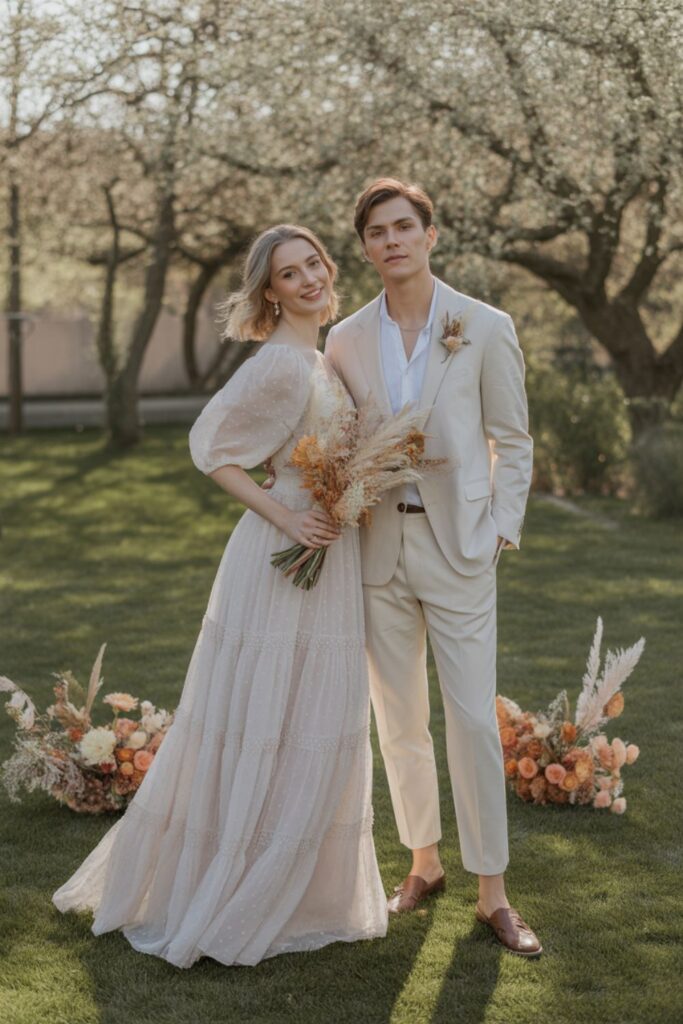
Spring wedding attire balances seasonal weather considerations with aesthetic preferences, requiring fabric and styling choices that work across potential temperature variations while looking beautiful.
Bridal gown considerations for spring include lighter fabrics like chiffon, tulle, or organza that breathe well if temperatures warm while still photographing beautifully. Consider sleeve options cap sleeves, three-quarter sleeves, or detachable sleeves that provide versatility if the weather cools. Avoid heavy satins or layered ball gowns more suitable for fall and winter. Lighter fabrics also suit outdoor venues where movement and comfort matter. Lace details feel romantic and spring-appropriate without adding excessive weight or warmth.
Bridesmaid dress fabrics should accommodate variable spring temperatures chiffon, georgette, and jersey work beautifully across conditions. Consider dress length based on venue and formality: floor-length gowns suit formal celebrations while tea-length or midi dresses work for garden parties or casual elegant affairs. Mismatched bridesmaid dresses in coordinating colors create a relaxed spring aesthetic while allowing individual style expression. Order dresses with 6-month lead time and schedule alterations for 4-6 weeks before wedding.
Groom and groomsmen attire ranges from full suits to lighter options like suits without vests or even dress pants with suspenders and dress shirts for ultra-casual outdoor celebrations. Light gray, tan, navy, or even sage green suits feel more spring-appropriate than black or dark charcoal. Linen suits work beautifully for warm-weather spring weddings though they wrinkle easily, embrace the relaxed aesthetic or stick with wool blends. Coordinate tie or bow tie colors with bridesmaid dresses for cohesive photos. Consider optional jackets if the ceremony is outdoors but reception indoors or if temperature may drop.
Footwear considerations particularly matter for outdoor spring celebrations; stiletto heels sink into grass while block heels or wedges provide stability. Brides planning garden or lawn ceremonies might choose two shoe options: special ceremony shoes and comfortable reception alternatives. Consider providing heel protectors for bridesmaids and female guests if significant grass time is involved. Grooms and groomsmen might skip socks with loafers for relaxed spring garden aesthetics or stick with traditional dress shoes for formal celebrations.
Accessory opportunities abound in spring weddings through flower crowns, floral hair accessories, fresh flower boutonnieres, and seasonal jewelry. Delicate gold or rose gold jewelry complements soft spring palettes beautifully. Consider lighter veils or skip veils entirely for relaxed outdoor celebrations. Incorporate meaningful accessories like inherited jewelry or personalized items that add sentimental value. Spring’s softer aesthetic suits romantic accessories without overwhelming bridal looks.
What Are Creative Spring Wedding Save-the-Dates and Invitations?
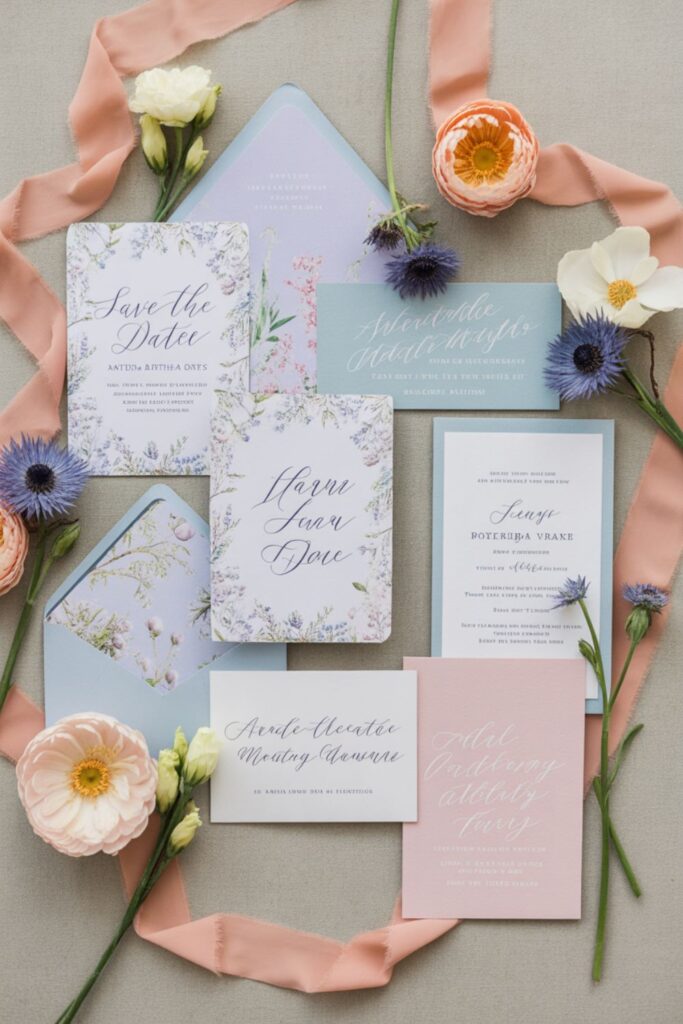
Spring wedding invitations set tone for celebrations through design choices reflecting seasonal aesthetic, color palette, and formality level while providing essential information guests need.
Floral illustrations including watercolor botanicals, pressed flowers, or line-drawn florals create quintessentially spring invitation aesthetics. These designs work beautifully across formality levels from casual garden parties to formal ballroom celebrations depending on color choices and typography. Soft watercolor florals feel romantic and whimsical while line drawings suit modern minimalist aesthetics. Work with designers offering customization to incorporate your specific wedding flowers or colors.
Fresh color palettes beyond traditional white or ivory including blush and sage, lavender and yellow, or coral and navy immediately communicate spring wedding aesthetic through invitation design. Colored envelopes, patterned liners, or watercolor washes introduce color while maintaining readability. Balance colorful elements with neutral backgrounds ensuring text remains clear and professional. Your invitation palette should coordinate with overall wedding colors, serving as guests’ first glimpse of your aesthetic vision.
Nature-inspired details like greenery borders, garden scenes, or outdoor venue illustrations connect invitations to spring celebration settings. If marrying at a distinctive venue (botanical garden, vineyard, estate), consider custom illustrations featuring recognizable elements. Leaf patterns, garden gates, or architectural details add visual interest while reinforcing seasonal outdoor aesthetics. These design elements work whether your overall style is rustic, elegant, modern, or bohemian.
Sustainable options including seed paper invitations (embedded with wildflower seeds guests can plant), recycled paper stock, or digital invitations reduce environmental impact considerations that matter to eco-conscious couples. Seed paper embraces spring planting themes naturally while creating functional favors from invitations themselves. Digital invitations save significantly on costs ($100-300 versus $800-2000 for printed suites) while reducing paper waste, though some traditional guests may prefer physical invitations for formal celebrations.
Timing considerations mean spring wedding invitations should mail 8-10 weeks before wedding date (earlier for destination weddings). Save-the-dates go out 6-9 months advance, particularly important for popular spring dates when guests may have multiple wedding invitations. Include wedding website information where guests access accommodation details, registry information, and updates as planning progresses. Spring invitations should clearly communicate outdoor ceremony expectations so guests dress and prepare appropriately.
How Do You Create Memorable Spring Wedding Favors?
Spring wedding favors thank guests while extending celebration memories, with best options feeling personal, useful, or consumable rather than destined for donation bins.
Seed packets with spring wildflower mixes embrace seasonal planting themes while giving guests something they’ll actually use. Customize packets with your names, wedding date, and planting instructions. Pair with small terra cotta pots or burlap bags for enhanced presentation. These favors cost $1-3 per guest while feeling thoughtful and seasonally appropriate. Spring planting season means guests can immediately use favors, watching flowers bloom as reminders of your celebration.
Local honey jars work beautifully for spring weddings, particularly those at farms, vineyards, or garden venues. Small 2-4 ounce jars with custom labels cost $3-6 per guest while supporting local beekeepers. Honey’s long shelf life means it won’t spoil before guests use it. Consider flavor varieties like lavender, orange blossom, or clover reflecting spring floral sources. Honey favors rustic, garden, and natural wedding themes perfectly.
Succulent plants in small pots provide living favors that guests can nurture long after your celebration. These hardy plants suit guests with varying gardening abilities since they require minimal care. Customize pots with painted designs, custom tags, or decorative wrapping. Succulents cost $2-5 per guest depending on size and pot choices. Display favors as table decor elements during reception, serving dual purposes as decoration and guest gifts.
Artisan food items including locally made jams, infused oils, specialty tea blends, or small batch cookies feel special while ensuring guests will actually use favors. Package items in glass jars with custom labels featuring your names and wedding date. These favors typically cost $4-8 per guest but create memorable impressions through quality over quantity. Spring flavors like strawberry preserves, lemon curd, or herb-infused olive oils tie to seasonal themes.
Personalized drinkware like etched wine glasses, monogrammed shot glasses, or custom koozies provide functional favors guests will actually keep and use. While not specifically spring-themed, quality drinkware feels more valuable than trinkets. Costs range $3-10 per guest depending on item and customization. Consider eco-friendly options like reusable bamboo straws or stainless steel tumblers aligning with sustainable wedding values.
Charitable donations in guests’ honor eliminate physical favors while supporting causes meaningful to you as couple. Display cards at each place setting explaining donation details. This approach particularly suits couples uncomfortable with favor traditions or wanting to minimize waste. Donate to environmental causes, local food banks, or charities reflecting your values. Some guests appreciate this alternative while others miss tangible takeaways from knowing your audience.
Frequently Asked Questions
What is the best month for a spring wedding?
May typically offers the best spring wedding weather with stable temperatures (60-75°F in most regions), blooming landscapes, and lower rain probability than April. Late May and early June provide peak spring beauty with established blooms and comfortable conditions. April offers budget advantages with lower venue demand but faces more weather unpredictability. March counts as early spring with higher rain chances and limited flower availability in many regions. Considering your specific location’s climate southern regions have earlier optimal spring months while northern areas peak later.
How much does a spring wedding typically cost?
Spring weddings average $25,000-35,000 for 100-150 guests, though costs range dramatically based on location, venue choice, and included services. Spring ranks as shoulder season in many markets, potentially offering 10-20% savings versus peak summer months. However, popular spring dates (especially May Saturdays) command premium pricing comparable to summer. Budget largest portions for venue and catering (50-60% of total), followed by photography (10-15%), florals (8-10%), and attire (5-8%). Consider Friday or Sunday dates for better rates if flexibility exists.
What flowers are cheapest for spring weddings?
Tulips ($1-3 per stem), carnations ($1-2 per stem), and alstroemeria ($2-4 per stem) offer budget-friendly options in the abundantly available spring. Baby’s breath creates affordable volume while mums and daisies provide color inexpensively. Seasonal availability makes common spring flowers like daffodils, hyacinths, and ranunculus ($3-6 per stem) cost less than imported roses or off-season blooms. Incorporate greenery like eucalyptus and italian ruscus for volume without excessive flower costs. Local seasonal wildflowers often cost less than cultivated varieties consult florists about regional availability.
Should I have an outdoor or indoor spring wedding?
Choose venues offering both options with flexible contingency plans since spring weather remains unpredictable. Outdoor ceremonies with indoor reception backup provide ideal compromise: you can celebrate beautiful weather while having protection if conditions deteriorate. Fully outdoor weddings work in regions with reliably dry springs (like California or Southwest) but risk discomfort in areas with frequent spring rain or temperature swings. Indoor weddings at venues with large windows, terraces, or garden views capture spring beauty with weather reliability. Your risk tolerance and venue options should guide this decision.
How far in advance should I book spring wedding vendors?
Book venues and photographers 12-18 months advance since spring dates fill quickly popular May weekends often book 18+ months ahead at desirable venues. Secure caterer, florist, videographer, and entertainment 9-12 months before wedding. Hair, makeup, transportation, and rentals can book 6-9 months advance though earlier is better for peace of mind. Spring wedding demand means waiting until 6 months before may leave limited vendor options or force compromise on preferred choices. Destination spring weddings require even earlier booking begin venue search 18-24 months advance.
What should I include on my spring wedding registry?
Register for items you’ll actually use rather than traditional expected items. Include outdoor entertaining essentials perfect for spring and summer quality grill, patio furniture, outdoor dinnerware, and bar accessories. Add kitchen upgrades like stand mixers, quality cookware, and knife sets. Include experiential gifts like honeymoon funds, date night packages, or home improvement contributions. Register across price points ($20-500+) accommodating different guest budgets. Most couples need 2-3 gifts per invited guest across multiple retailers. Update registry as items purchase to maintain adequate options for later guests.
Conclusion
The right spring wedding ideas harness seasonal beauty through fresh florals, vibrant color palettes, and thoughtful details that create celebrations feeling both timeless and uniquely personal. Whether you’re planning garden wedding ceremonies surrounded by blooming landscapes, incorporating spring wedding flowers like peonies and tulips at peak availability, or designing comprehensive spring wedding themes from romantic gardens to modern minimalism, strategic seasonal planning creates memorable events that guests will treasure. Spring’s moderate weather, natural beauty, and symbolic renewal make it ideal for couples beginning married life together.
Start planning by securing venues and key vendors 12-18 months in advance since spring dates work quickly, then develop comprehensive weather contingency plans protecting your celebration while remaining flexible for beautiful conditions. Embrace seasonal advantages through locally available flowers, fresh seasonal menus, and outdoor ceremony opportunities while preparing backup options for unpredictable spring weather. Focus budget on elements mattering most to you as a couple whether spectacular florals, amazing photography, or incredible food rather than trying to maximize every detail. Your spring wedding should reflect your authentic style and love story while celebrating the season’s natural beauty, creating a day you’ll remember fondly for decades to come.