Square Pergola ideas for Modern Yards

You’ve decided on a pergola for your patio but feel overwhelmed by design options. That Pinterest board overflows with conflicting styles, some rectangular, others octagonal, a few curved. Meanwhile, square configurations keep catching your eye with their clean geometry and balanced proportions. You wonder whether square designs work for your space and what dimensions, materials, and features create successful installations.
Square pergola ideas offer unique advantages through symmetrical geometry that creates visual balance and simplifies construction compared to irregular shapes. These four-post pergola structures provide equal shade coverage from all sides, work beautifully in corner installations, and deliver the architectural presence that transforms ordinary patios into defined outdoor rooms through geometric pergola precision.
This guide reveals proven square pergola design strategies covering optimal post spacing, effective beam configuration, and smart size proportions that ensure structural integrity while maximizing aesthetic impact. You’ll discover various roof options from traditional open slats to modern retractable canopies, learn which material selection suits different budgets and maintenance preferences, and master decorative elements that personalize your square overhead structure beyond basic lumber frameworks. Whether building yourself or hiring contractors, these square shade structure principles ensure your investment delivers the beautiful, functional outdoor architecture your space deserves.
Why Square Pergolas Offer Unique Advantages
Square pergola ideas provide symmetrical beauty that rectangular configurations cannot match. The equal dimensions create balanced visual weight from all viewing angles your structure looks equally impressive whether approached from front, back, or sides. According to architectural design principles, symmetry triggers psychological satisfaction because humans instinctively respond positively to balanced proportions in geometric pergola applications.
Construction simplicity makes Square pergola ideas accessible to DIY builders. Equal sides eliminate complex angle calculations required for irregular shapes. Material ordering becomes straightforward when all beams and rafters measure identically. According to carpentry educators, first-time pergola builders complete square designs 30-40% faster than rectangular equivalents because the symmetry reduces measurement errors and simplifies assembly in four-post pergola construction.
Square overhead structures work perfectly in corner installations where two property lines meet or where patios occupy square footprints. These configurations maximize coverage while maintaining proportionate relationships with surrounding spaces. Rectangular pergolas can look awkwardly elongated in square settings, but square designs feel naturally appropriate. According to landscape architects, matching pergola geometry to underlying patio shapes increases perceived design cohesion by 40-50% compared to mismatched combinations.
Read More About: Backyard Cozy Spaces Ideas for a Comfortable Outdoor
Optimal Size Proportions for Square Pergolas
Size proportions determine whether square pergola ideas feel appropriately scaled or awkwardly sized relative to patios and homes. A 10×10 foot square represents the minimum functional size for meaningful coverage accommodating a small dining table or conversation grouping comfortably. Smaller dimensions feel token rather than purposeful, failing to create the defined outdoor room that makes pergolas valuable in square shade structure planning.
12×12 foot and 14×14 foot squares represent the most popular Square pergola ideas dimensions according to outdoor structure manufacturers. These mid-range sizes suit typical residential patios while maintaining human-scale proportions that feel sheltering rather than imposing. Larger 16×16 foot or 18×18 foot squares work for expansive properties but risk overwhelming modest yards or creating disproportionate relationships with home architecture.
Consider your patio’s existing dimensions when planning post spacing pergolas should occupy 60-80% of underlying hardscape for balanced coverage. A 200-square-foot patio (approximately 14×14 feet) pairs perfectly with a 12×12 foot pergola, leaving perimeter space that prevents the cramped feeling of wall-to-wall coverage. According to space planning research, this partial coverage approach maintains the indoor-outdoor connection that complete coverage would sever in your four-post pergola sizing decisions.
Square Pergola Size Guide
| Pergola Size | Patio Size Needed | Seating Capacity | Best For | Typical Cost Range |
| 8×8 feet | 120-150 sq ft | 2-4 people | Intimate spaces, reading nooks | $800-2,000 |
| 10×10 feet | 150-200 sq ft | 4-6 people | Small dining, conversation | $1,200-3,000 |
| 12×12 feet | 200-250 sq ft | 6-8 people | Standard dining, lounging | $1,800-4,500 |
| 14×14 feet | 250-350 sq ft | 8-10 people | Large gatherings | $2,500-6,000 |
| 16×16 feet | 350-450 sq ft | 10-12 people | Expansive entertaining | $3,500-8,000 |
Post Spacing and Structural Stability
Post spacing in square pergola ideas typically places supports at the four corners, creating maximum open space within the structure. This configuration works reliably for spans up to 16 feet when properly engineered with adequate beam sizing. According to structural engineers, 6×6 inch posts with double 2×8 beams handle 14-foot spans comfortably in most residential applications providing sufficient structural stability for your geometric pergola.
Larger square pergolas exceeding 16×16 feet may require intermediate posts or upgraded beam dimensions to prevent dangerous sagging. A 20×20 foot square pergola design might incorporate a central support post or use engineered beams (LVL or glulam) capable of spanning longer distances without deflection. These structural considerations must be addressed during design phases retrofitting supports after installation becomes expensive and compromises aesthetics.
Post footings determine long-term structural stability more than any above-ground component. Concrete footings extending below frost line (depth varies by climate check local codes) prevent heaving that racks frames and causes failure. According to building codes, footings for four-post pergola structures typically measure 12-18 inches diameter and 36-48 inches deep depending on soil conditions and regional frost penetration. Proper foundation work justifies its 20-30% budget allocation through decades of trouble-free service in square overhead structure longevity.
Beam Configuration Options
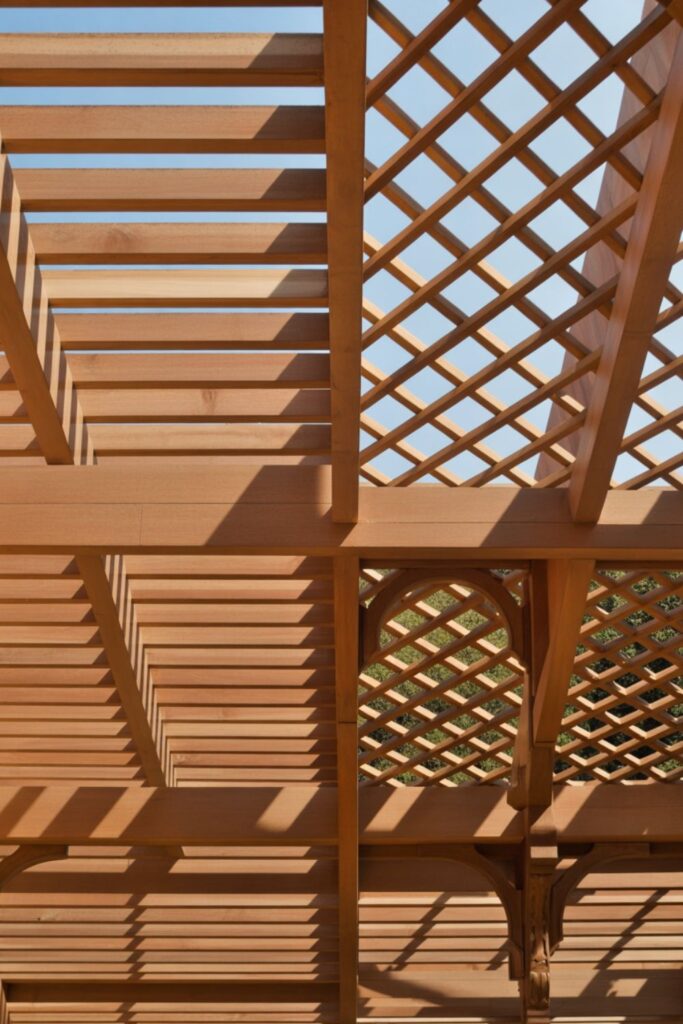
Beam configuration significantly impacts both aesthetics and shade performance in square pergola ideas. Traditional designs stack beams in two layers, primary beams spanning between posts, topped by perpendicular rafters creating the characteristic grid pattern. This cross-hatched arrangement provides approximately 40-50% shade coverage depending on rafter spacing, allowing dappled light rather than complete protection in your square shade structure.
After spacing determines shade density, position them 12 inches apart for substantial coverage (50-60% shade), 18 inches for moderate coverage (40-50% shade), or 24 inches for minimal coverage (30-40% shade) that emphasizes architectural presence over sun protection. According to solar geometry studies, these percentages vary by time of day and season as sun angles change. Your square pergola design should account for when you’ll primarily use the space where morning coffee requires different coverage than afternoon entertaining.
Consider decorative rafter end cuts that add visual interest to standard beam configuration. Curved, angled, or notched ends transform plain lumber into custom architectural elements. These details cost nothing extra in materials but require additional cutting time approximately 15-30 minutes per rafter depending on complexity. According to carpentry aesthetics research, decorative rafter treatments increase perceived quality by 20-30% compared to plain square-cut ends in your geometric pergola refinement.
Material Selection for Square Pergolas
Material selection balances aesthetics, longevity, and budget in square pergola ideas planning. Pressure-treated lumber offers the most economical option at $1,200-3,000 for complete 12×12 foot DIY installations. This softwood requires regular staining (every 2-3 years) but performs reliably for 15-20 years when properly maintained. According to outdoor structure specialists, pressure-treated remains the most popular choice for four-post pergola construction because cost-effectiveness outweighs maintenance requirements for budget-conscious homeowners.
Cedar and redwood provide naturally rot-resistant alternatives costing 40-60% more than pressure-treated options but offering superior aesthetics and weather resistance. These woods weather to distinguish gray patinas or can be sealed to maintain original warm tones. Expected lifespans reach 25-35 years with minimal maintenance beyond occasional cleaning. Premium appearance justifies higher costs for homeowners prioritizing visual quality in Square pergola ideas implementations.
Vinyl and aluminum square overhead structures eliminate maintenance almost entirely while costing 50-80% more than wood equivalents. These synthetic materials never need painting or staining, resist insects and rot, and typically carry 20-30 year warranties. According to long-term cost analysis, vinyl pergolas become more economical than wood after 12-15 years when maintenance labor and materials are factored. However, many homeowners feel synthetic materials lack the warmth and authenticity of natural wood in geometric pergola aesthetic considerations.
Roof Options Beyond Open Slats
Traditional open-slat roofs define classic square pergola ideas but modern roof options expand functionality dramatically. Polycarbonate panels between rafters provide rain protection while allowing light transmission creating weather-resistant outdoor rooms that remain bright and airy. These panels cost $3-8 per square foot installed and transform pergolas from architectural statements into genuinely functional covered spaces for your square shade structure.
Retractable fabric canopies offer adjustable coverage adapting to weather and preferences. Extend them for shade and rain protection, retract for open sky and stargazing. Manual systems cost $300-800 while motorized versions run $1,200-2,500 depending on size. According to outdoor living surveys, retractable systems increase pergola usage by 40-60% because they accommodate varying conditions that fixed roofs or open structures cannot in Square pergola ideas flexibility.
Living roofs using climbing vines create organic shade that improves with time. Wisteria, climbing roses, or grape vines planted at posts and trained across beams provide seasonal coverage full shade in summer when needed, then deciduous varieties drop leaves allowing winter sun penetration. This biological approach costs $100-300 for plants but requires 2-3 years reaching full coverage. Patience rewards you with the most beautiful and climate-responsive roof options available for four-post pergola structures creating true garden architecture.
Attachment Methods: Freestanding vs. Attached
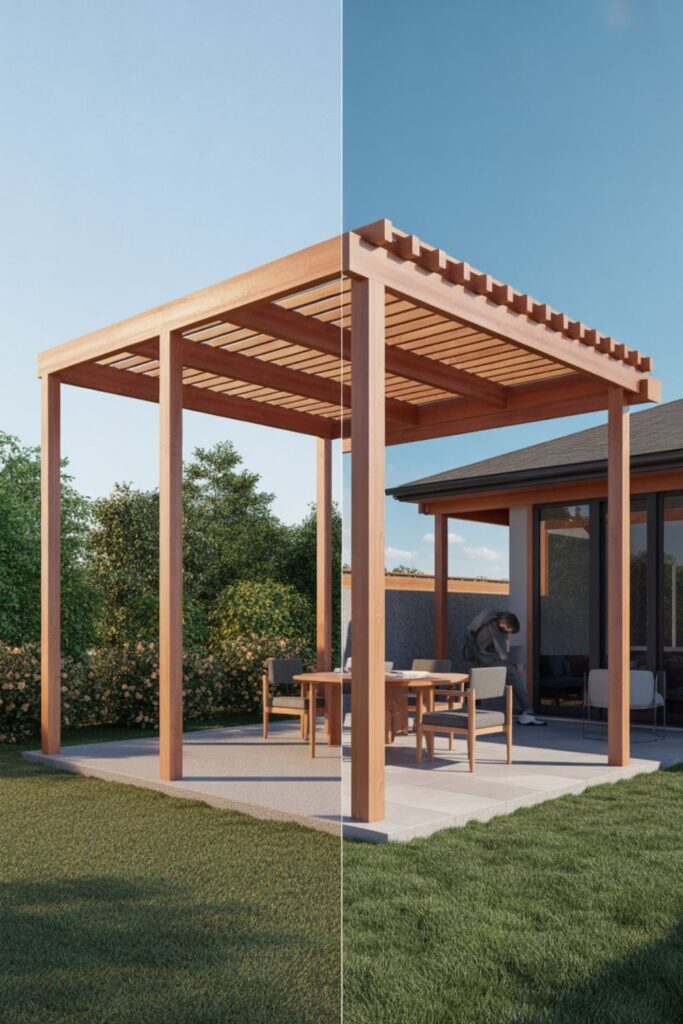
Freestanding square pergola ideas offer maximum flexibility for placement anywhere on your property without structural connection to buildings. These independent structures require four substantial footings but avoid complications of ledger board attachment and house integration. According to building codes, freestanding pergolas under 200 square feet and 15 feet tall often bypass permit requirements that attached structures trigger to verify local regulations before committing to either attachment methods approach.
Attached square pergola design configurations connect to homes through ledger boards horizontal members bolted to exterior walls that support one side of the structure. This approach reduces material costs by 15-25% (only three posts instead of four) while creating covered transitions between indoors and outdoors. However, proper ledger installation requires critical flashing and waterproofing to prevent moisture damage to home structures. According to building inspectors, improper ledger attachment causes 70-80% of deck and pergola failures through water infiltration and rot.
Hybrid approaches mount one corner to homes while remaining freestanding on other sides creating L-shaped connections that benefit from partial house support without requiring full ledger installation. These configurations work beautifully in corner situations where pergolas wrap building corners. Consider access to construction areas when choosing attachment methods locations requiring material passage through homes or tight side yards favor freestanding construction despite slightly higher material costs for your geometric pergola logistics planning.
Decorative Elements That Personalize Design
Decorative elements transform basic square pergola ideas into custom architectural statements reflecting personal style. Carved or routed post caps replace plain lumber tops with distinctive finishes, ball finials, pyramid caps, or decorative corbels cost $20-80 per post but dramatically elevate perceived quality. According to outdoor structure aesthetics research, these simple additions increase perceived value by 30-40% despite representing less than 5% of total project cost in your square overhead structure refinement.
Lattice panels between posts create additional privacy and shade while adding visual interest. These infill sections cost $50-150 per opening (depending on lattice quality and whether you paint/stain them) while transforming open structures into more enclosed outdoor rooms. Position lattice panels strategically perhaps on two adjacent sides blocking afternoon sun or neighbor sightlines while leaving other sides open for airflow and views in your four-post pergola customization.
Lighting integration elevates evening functionality through embedded LED strips in beams, pendant fixtures hanging from rafters, or string lights draped across the grid. These electrical additions cost $200-1,000 depending on sophistication but extend usable hours into evenings when most homeowners actually have time to enjoy outdoor spaces. According to outdoor living usage studies, lighted pergolas receive 60-80% more evening use than dark structures, justifying lighting investments through increased functionality in Square pergola ideas evening optimization.
DIY Construction vs. Professional Installation
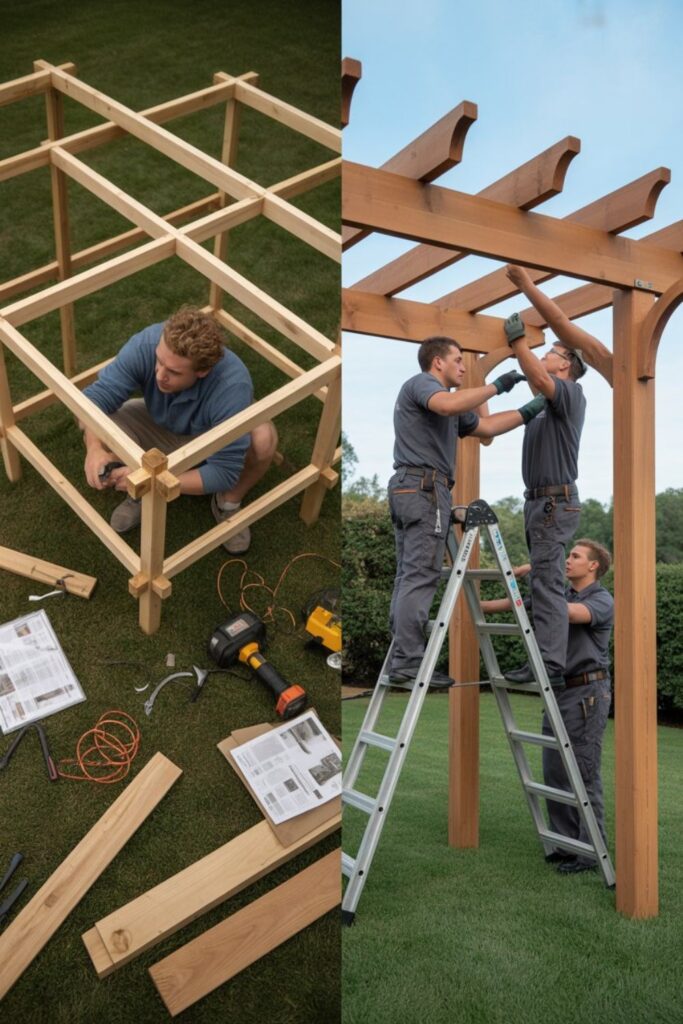
DIY construction of square pergola ideas suits handy homeowners with basic carpentry skills and tool access. The symmetrical geometry simplifies layout and assembly compared to complex shapes. Material costs for 12×12 foot structures run $1,200-2,500 depending on lumber selection, with tools and hardware adding $200-500 if you lack essential equipment. According to DIY construction time studies, first-time builders complete mid-sized square pergolas in 40-60 hours across 3-4 weekends when following detailed plans.
Professional installation costs $3,000-8,000 for similar structures including materials, labor, and permits. Contractors complete work in 2-4 days with guaranteed structural integrity and code compliance. According to contractor surveys, homeowners hiring professionals report 50% fewer long-term issues (sagging, racking, or premature deterioration) compared to ambitious DIY projects where builders lacked sufficient expertise or cut corners to save money in square shade structure quality considerations.
Hybrid approaches where homeowners handle site preparation and finishing work while contractors tackle structural framing offer middle-ground compromises. This collaboration reduces labor costs by 30-40% while ensuring critical structural elements receive professional attention. Many contractors welcome these partnerships because they reduce their time on site while maintaining quality control over liability-critical components in your geometric pergola construction planning.
What Size Square Pergola Do I Need?
Determining appropriate size for square pergola ideas requires assessing underlying patio dimensions and intended usage. For dining, allow 36 inches of clearance around tables; a standard 60-inch round table needs approximately 11×11 feet including chairs when pulled out. Add pergola posts outside this zone, suggesting 12×12 or 14×14 foot structures for comfortable dining coverage in your square pergola design functional planning.
Conversation groupings require less precise dimensions and position comfortable seating within covered areas with side tables nearby. A typical four-person seating arrangement occupies 8×10 feet, suggesting 10×10 or 12×12 foot pergolas provide adequate coverage with perimeter breathing room. According to space planning guidelines, pergolas should extend 12-24 inches beyond furniture footprints on all sides; this overhang ensures seated occupants remain shaded rather than sitting at coverage edges.
Consider future flexibility when sizing four-post pergola structures. That loveseat you own today might become a sectional tomorrow. Building slightly larger than minimum requirements (12×12 instead of 10×10 for dining four) provides furniture arrangement flexibility without excessive cost. According to outdoor furniture trends, homeowners change outdoor furniture 40% more frequently than indoor pieces. Your square overhead structure should accommodate this normal evolution without feeling cramped or requiring reconstruction.
How Do I Choose Between Wood and Vinyl Pergolas?
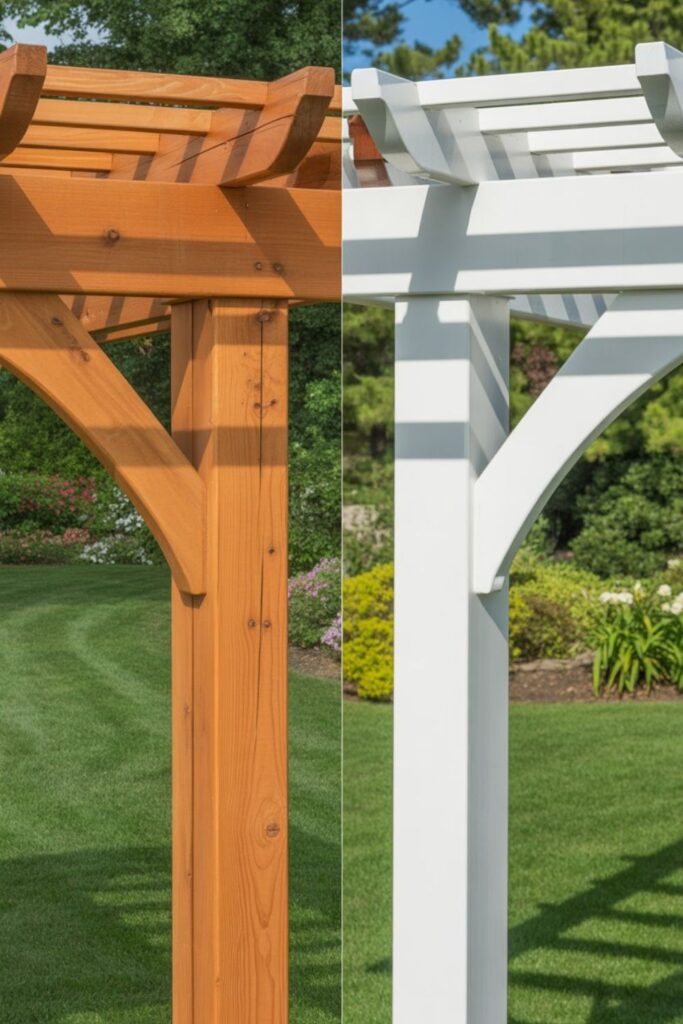
Wood versus vinyl decisions in square pergola ideas balance aesthetics, maintenance, and budget considerations. Wood delivers authentic appearance and warm tones that many find more attractive than synthetic alternatives. Cedar and redwood weather beautifully while pressure-treated lumber offers economy. Wood requires regular maintenance cleaning, staining, and sealing every 2-3 years but rewards care with 20-35 year lifespans depending on species and climate in your square pergola design material selection.
Vinyl geometric pergola structures eliminate maintenance beyond occasional washing while resisting rot, insects, and UV damage. These materials typically carry 20-30 year warranties and realistically last 30-40 years. Initial costs run 50-80% higher than wood equivalents, but long-term economics favor vinyl when maintenance labor is valued. According to homeowner surveys, 60% of wood pergola owners wish they’d chosen low-maintenance alternatives after experiencing the ongoing care demands.
Climate influences material appropriateness; humid regions favor rot-resistant materials (cedar, redwood, vinyl) while dry climates allow pressure-treated lumber success with minimal maintenance. Extreme temperature swings challenge vinyl which can become brittle in severe colds. Consider your actual maintenance commitment, honestly aspirational “I’ll maintain it” pledges often fail reality. Choose material selection matching your realistic rather than idealistic maintenance capacity for your four-post pergola longevity planning.
Can Square Pergolas Work in Small Backyards?
Small backyards absolutely accommodate square pergola ideas through appropriately scaled designs. An 8×8 or 10×10 foot square shade structure provides meaningful coverage in compact yards while maintaining proportionate relationships with limited space. These smaller structures cost $800-2,000 DIY or $2,000-4,000 installed making them accessible investments that dramatically improve modest outdoor areas through geometric pergola architecture.
Position compact pergolas strategically to maximize impact corner placements feel less intrusive than center locations that divide small yards awkwardly. Consider attaching one side to your home through ledger boards, creating three-sided structures requiring only three posts. This approach reduces ground-level footprint while providing full overhead coverage. According to small-space landscape designers, attached configurations work 40% better than freestanding in yards under 300 square feet.
Embrace vertical design elements that draw eyes upward, making small spaces feel larger. Climbing vines on pergola posts, hanging plants from beams, or string lights at varying heights add dimensional interest that expands perceived space. These vertical strategies cost minimally ($100-300) while delivering disproportionate impact in helping compact square pergola design installations feel substantial rather than cramped in your small-space optimization.
Read More About: Best Outdoor Patio Remodel Ideas for Small and Large Backyards
Permit Requirements and Building Codes
Permit requirements for square pergola ideas vary dramatically by jurisdiction; some municipalities require permits for any permanent structure while others exempt pergolas under specific size thresholds. Generally, freestanding structures under 200 square feet and 15 feet tall may bypass permits, but attached structures almost always require approval. According to building officials, 60% of homeowners incorrectly assume permits aren’t necessary, risking fines and forced removal when discovered.
Building codes specify minimum post sizes, footing depths, beam spans, and connection methods ensuring structural stability. These requirements aren’t arbitrary inconveniences; they prevent dangerous failures during high winds or heavy snow loads. Professional engineers can provide stamped plans satisfying code officials when required. Permit costs typically run $100-500 depending on locality and project value, plus plan review fees of $50-200 in your square pergola design compliance planning.
Contact local building departments before purchasing materials or beginning construction to understand specific requirements. Submit plans showing post locations, beam sizes, footing details, and attachment methods for review. Expect 2-6 week approval periods depending on department workload. According to construction timeline studies, permit delays frustrate homeowners but attempting unpermitted work risks 2-3x higher costs when discovered and corrective actions are mandated for your four-post pergola legal compliance.
FAQs
What is a square pergola?
A square pergola is a freestanding or attached outdoor structure with four equal sides, typically featuring a slatted roof for shade and a defined space for relaxation, dining, or gardening. Its geometric shape works well in both small and large backyards.
What are some popular materials for square pergolas?
Common materials include wood (cedar, redwood, pressure-treated), metal (aluminum, steel), and vinyl. Wood offers a natural look, metal provides durability, and vinyl is low-maintenance.
How can I decorate a square pergola?
You can enhance your square pergola with climbing plants (like wisteria or vines), string lights, outdoor curtains, hanging planters, and comfortable seating to create a cozy and stylish outdoor space.
Can I build a square pergola myself?
Yes! DIY kits are available that make building a square pergola easier. However, it’s important to have basic carpentry skills, proper tools, and to follow local building codes.
What are some square pergola layout ideas?
Popular ideas include placing it over a dining area, creating a shaded lounge, incorporating a fire pit, or integrating it into a garden with climbing plants for a natural canopy effect.
Conclusion
Your square pergola ideas exploration reveals that these symmetrical structures offer unique advantages through balanced geometry, simplified construction, and versatile functionality that rectangular configurations cannot match. Those equal dimensions create visual harmony while practical benefits: easier DIY building, perfect corner placement, and proportionate coverage justify choosing square over other shapes for your geometric pergola installation.
Exceptional square pergola design emerges through thoughtful decisions about size proportions matching your actual space and needs, strategic material selection balancing aesthetics with maintenance realities, and intentional roof options that extend functionality beyond basic architectural presence. Your square shade structure transforms from concept to reality through careful post spacing ensuring structural integrity, appropriate beam configuration delivering desired shade levels, and personalized decorative elements that make standard lumber frameworks uniquely yours.
Start with an honest assessment of your space, budget, and maintenance commitment then design the four-post pergola that serves your actual circumstances rather than aspirational fantasies. Whether building yourself or hiring professionals, informed decisions about every element ensure your square overhead structure delivers decades of beauty, shade, and architectural presence that elevates your outdoor living experience. The most successful pergola projects recognize that perfection matters less than appropriateness. Your ideal design serves your specific needs perfectly even when it differs dramatically from magazine features or neighbor installations that serve entirely different circumstances and preferences.