25+ Creative Wall Art Ideas to Transform Blank Walls

You stare at those empty walls every single day and they stare back blank, boring, lifeless. Your furniture looks fine, your floors are decent, but those bare walls make your entire space feel unfinished and sterile like a hotel room waiting for guests. You’ve walked past that empty hallway wall hundreds of times thinking “I should do something about that,” but the overwhelming choices and fear of making expensive mistakes keep you paralyzed.
The frustration builds when you see beautifully styled homes on social media where every wall tells a story. Meanwhile, your spaces feel generic and temporary even though you’ve lived there for years. You’ve probably bought a few pieces impulsively that now lean against walls gathering dust because you’re not sure where they should go or how to hang them properly. The blank walls aren’t just aesthetic failures, they’re missed opportunities to express your personality and make your house feel like home.
Wall art ideas transform empty vertical spaces into stunning focal points that define your style, create visual interest, and make rooms feel complete and intentional. From gallery walls that showcase personal memories to large canvas art that commands attention, strategic wall decoration solves the blank wall problem while adding color, texture, and dimension. This comprehensive guide explores proven wall decor ideas for every room, budget, and skill level, helping you create spaces that genuinely reflect who you are and how you want to live.
What Are the Most Popular Types of Wall Art?
Understanding the fundamental categories of wall art helps you select pieces that match your aesthetic preferences, space requirements, and budget constraints. Each type offers distinct advantages for different applications and design goals.
Canvas prints dominate modern wall decor because they’re affordable, lightweight, and available in unlimited designs and sizes. Stretched canvas over wooden frames creates gallery-ready pieces without glass or heavy framing. Custom canvas prints let you transform personal photographs into wall-worthy art for $30-150 depending on size. Pre-made canvas art spans every style from abstract expressionism to photographic landscapes, with quality varying dramatically based on print resolution and canvas weight. Look for gallery-wrapped edges (image continues around sides) rather than white borders for professional presentation.
Framed prints and posters offer classic versatility with protection behind glass and customizable frames matching any decor style. Museum-quality giclée prints reproduce fine art with exceptional color accuracy and detail, while standard prints provide budget-friendly options for trendy or temporary displays. Frame selection dramatically impacts overall appearance: sleek black frames suit modern spaces, ornate gold frames complement traditional rooms, natural wood frames work with bohemian or rustic aesthetics. Standard poster sizes (18×24, 24×36 inches) cost less to frame than custom dimensions.
Metal wall art introduces three-dimensional texture and contemporary edge through laser-cut designs, sculptural pieces, or printed images on aluminum. Metal artwork withstands humidity beautifully, making it perfect for bathrooms and kitchens where paper-based art deteriorates. Geometric patterns, nature scenes, and abstract designs translate especially well to metal mediums. Prices range from $40 for small decorative pieces to $500+ for large custom sculptures. The reflective qualities catch light dynamically, creating visual interest that changes throughout the day.
Textile wall hangings including tapestries, macramé, and woven art add warmth and softness that balance hard surfaces in rooms. These pieces suit bohemian, eclectic, and global-inspired aesthetics while providing acoustic benefits by absorbing sound. Vintage textiles bring authenticity and history, while contemporary fiber art offers modern interpretations of traditional techniques. Textile art scales beautifully small weavings fill awkward spaces while oversized tapestries substitute for headboards or cover entire feature walls.
Photography transforms walls into storytelling spaces through personal images or professional fine art prints. Black and white photography suits nearly any decor style with timeless elegance, while color photography injects personality and vibrancy. Large-format photography (30×40 inches or bigger) creates dramatic focal points, while smaller prints work in groupings or gallery walls. Printing options include traditional photographic paper behind glass, canvas wraps, metal prints, or acrylic face mounting each offering distinct visual qualities and price points.
Read More About: 17+ Outdoor Kitchen Patio Ideas for miraculous Alfresco Dining
How Do You Create a Stunning Gallery Wall?
Gallery walls rank among the most impactful wall decor ideas because they transform collections of individual pieces into cohesive statements that fill large spaces beautifully. Success requires planning rather than haphazard hanging.
Start by gathering more pieces than you’ll actually use having 15-20 options lets you curate the best 8-12 for final display. Mix frame sizes and orientations (horizontal and vertical) for dynamic visual interest rather than uniform grids that feel static. Include various art types photographs, prints, small paintings, even three-dimensional objects like small shelves or mirrors to create depth and personality. Consistent framing color (all black, all white, all natural wood) unifies diverse content, while mixed frame styles suit eclectic aesthetics but require careful balance.
Plan your layout on the floor before touching walls. Arrange pieces with 2-3 inches between frames, adjusting until the overall shape feels balanced. Photograph successful arrangements from above for reference during hanging. The overall gallery wall shape matters rectangular configurations suit spaces above sofas or beds, while organic shapes work on staircase walls or in entryways. Keep the visual center at 57-60 inches from the floor (standard gallery height) for proper viewing.
Create paper templates matching each frame’s dimensions and tape them to walls in your planned arrangement. This lets you visualize spacing and make adjustments before creating permanent holes. Mark hanging points on templates, then drill through paper into walls templates stay in place until you’ve hung the corresponding frame. This methodical approach prevents the frustration of multiple holes and misaligned pieces that plague rushed installations.
Begin hanging from the center outward rather than starting at edges. Identify your largest or most important piece as the anchor, hang it first, then work outward maintaining consistent spacing. Use a level for each piece even slight tilts become glaringly obvious once the wall is complete. Gallery wall ideas work in every room, but living rooms, hallways, and staircases offer ideal opportunities for these impactful displays. Update gallery walls seasonally or annually by swapping 2-3 pieces to keep displays fresh without complete redesigns.
What Are Creative Large Wall Art Solutions?
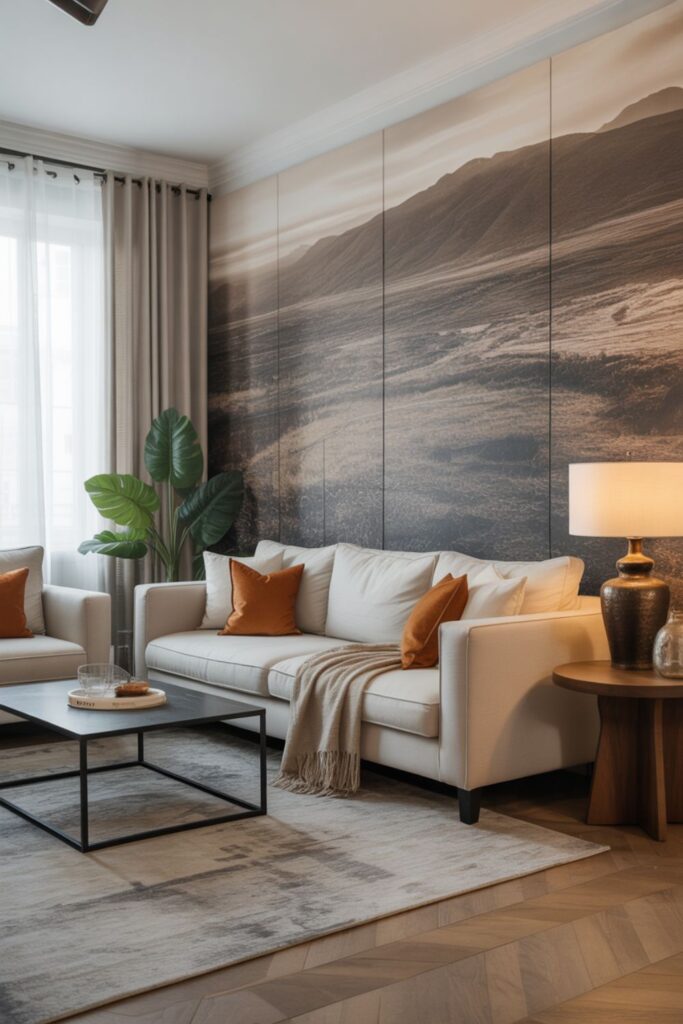
Large wall art solves the common problem of oversized blank walls that feel overwhelming when approached with small pieces. Single statement pieces or coordinated multi-panel installations create instant impact with minimal effort.
Oversized canvas prints (40×60 inches or larger) anchor living rooms, bedrooms, and dining areas with bold presence that eliminates the need for multiple smaller pieces. Abstract art in colors matching your palette ties rooms together visually. Landscape photography brings nature indoors, particularly effective in urban apartments lacking outdoor views. Portrait-oriented oversized pieces suit narrow wall spaces flanking windows or doors, while landscape-oriented works fill horizontal expanses above sofas or console tables.
Multi-panel art (diptychs, triptychs, or larger sets) spreads single images across 2-5 separate canvases hung with small gaps between. This technique creates visual interest through intentional separation while maintaining cohesive imagery. Panoramic landscapes and cityscapes work beautifully as multi-panel installations. Hang panels with 2-4 inches between edges closer spacing reads as single piece, wider spacing emphasizes individual panels. Ensure all panels align perfectly at top edges for professional presentation.
Murals and wall decals provide dramatic coverage for entire walls when painted or traditional art feels insufficient. Removable wallpaper murals offer temporary solutions perfect for renters or those who redecorate frequently. Peel-and-stick decals range from simple geometric patterns to elaborate forest scenes that transform rooms into immersive environments. Professional murals painted directly on walls create permanent custom art but require skilled artists and significant investment ($500-5000+ depending on complexity and size).
Shelving installations function as dynamic wall art when styled thoughtfully with books, plants, sculptures, and decorative objects. Floating shelves in asymmetric arrangements create visual sculpture while providing functional storage. Display collections thematically all white ceramics, vintage cameras, travel souvenirs to create intentional compositions rather than cluttered randomness. Changing shelf styling seasonally keeps large wall treatments fresh and interesting.
Oversized mirrors technically aren’t art but function similarly by filling large walls while adding light reflection and spatial depth. Leaning huge mirrors (6-8 feet tall) against walls creates casual elegance in bedrooms and dressing areas. Ornate antique mirrors bring character to traditional spaces, while frameless or minimally framed contemporary mirrors suit modern aesthetics. Position mirrors opposite windows to maximize natural light reflection throughout rooms.
How Can You Use DIY Wall Art to Personalize Spaces?
DIY wall art offers budget-friendly customization that perfectly matches your style since you’re creating exactly what you envision. Handmade pieces add authentic personality that mass-produced art can’t replicate.
Abstract painting requires zero artistic training pour, drip, or brush acrylic paints onto canvas in colors matching your decor. Watch basic technique videos online, buy inexpensive canvases from craft stores ($10-30), and experiment freely. Layer colors, create texture with palette knives, or embrace drip techniques popularized by Jackson Pollock. The beauty of abstract work lies in interpretation rather than technical skill your “mistakes” often create the most interesting effects. Create multiple pieces in coordinated colors for cohesive gallery wall installations.
Wood plank art transforms reclaimed lumber or new boards into rustic statement pieces. Arrange boards horizontally, vertically, or in patterns like herringbone. Paint designs, stencil quotes, or leave natural wood tones with clear protective coating. Whitewashing or distressing techniques add vintage character. Cut boards to desired dimensions (24×36 inches works well for single pieces), attach to backing boards, add hanging hardware, and display. Material costs run $20-60 for most projects depending on wood selection and size.
Fabric art involves stretching interesting textiles over canvas stretcher frames or embroidery hoops. Vintage scarves, beautiful remnants, or even eye-catching bedsheets become instant wall art. This technique works brilliantly for renters since it’s completely reversible and portable. Create cohesive sets using fabrics in similar color families or patterns. Costs stay minimal stretcher frames cost $5-15, fabric often comes from existing items or clearance bins at fabric stores.
Photo printing and framing transforms digital photos gathering dust on phones into meaningful wall displays. Print services like Shutterfly, Mpix, or local photo labs produce high-quality prints affordably 8×10 prints cost $2-5, larger sizes scale proportionally. Create themed collections (vacation memories, family portraits, nature photography) and frame uniformly for polished gallery walls. Black and white conversions make amateur photos look more artistic and create cohesion across images taken in different lighting conditions.
Typography and quote art combines meaningful words with visual design using free tools like Canva or paid software like Adobe Illustrator. Print favorite quotes, song lyrics, or family mottos in beautiful fonts with complementary graphics or patterns. This personalized approach ensures your bedroom wall decor ideas or office art genuinely resonates rather than displaying generic mass-market phrases. Standard paper prints work beautifully when professionally framed, or upgrade to canvas prints for frameless presentation.
What Are the Best Wall Art Ideas for Small Spaces?
Small space wall art requires strategic selection since scale mistakes make cramped rooms feel even smaller while proper choices create visual expansion and organization.
Vertical orientation draws eyes upward, creating perceived height in rooms with standard 8-foot ceilings. Tall narrow pieces (like 16×48 or 20×60 inch dimensions) emphasize verticality without consuming excessive wall width. This technique works particularly well in small entryways, narrow hallways, and compact bathrooms where horizontal pieces overwhelm limited wall space. Hanging art higher than typical 57-60 inch center point (try 65-70 inches in small rooms) further enhances height perception.
Light-colored and airy artwork prevents visual weight that makes small spaces claustrophobic. Pieces with white or light backgrounds, minimal compositions, or translucent qualities maintain openness. Avoid dark, heavy, or intensely detailed art that dominates small rooms. Watercolors, line drawings, and photography with negative space all work beautifully in compact areas. Living room wall decor in small apartments particularly benefits from this restrained approach.
Mirrors as art serve dual purposes by functioning as decorative elements while reflecting light and creating spatial depth. Arrange multiple small mirrors in geometric patterns for artistic impact with spatial benefits. Antiqued or tinted mirrors add vintage character while maintaining reflective qualities. Position mirrors to reflect windows or light sources rather than clutter or unflattering angles.
Floating shelves with minimal styling provide artistic wall interest while adding essential storage in space-starved rooms. Install 1-2 floating shelves and style with 3-5 carefully selected objects rather than cluttered arrangements. This approach creates intentional composition that reads as wall art while remaining functional. Rotate objects seasonally to refresh looks without new purchases or wall damage.
Small gallery walls work in compact spaces when scaled appropriately use 4-6 smaller pieces (5×7 to 8×10 inches) rather than trying to fit 10-15 frames. Tighter spacing (1-2 inches between frames rather than 2-3 inches) creates cohesion in limited areas. Stick to simple consistent framing to avoid visual chaos. All matching black frames or all white frames maintain clarity.
How Do You Choose Wall Art Colors That Complement Your Room?
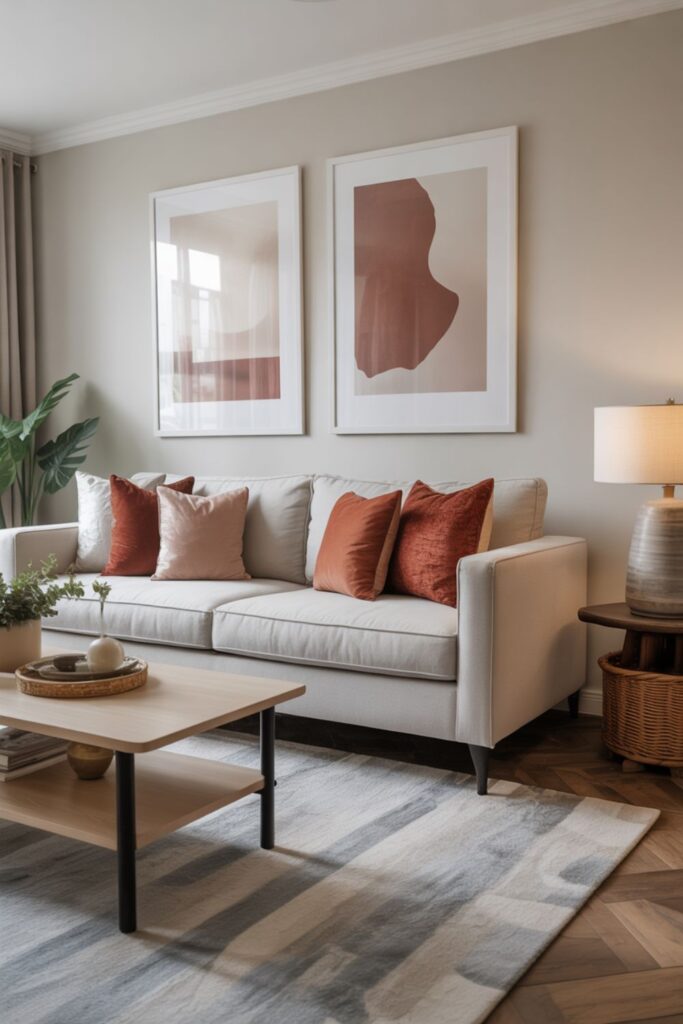
Wall art colors dramatically impact room cohesion and atmosphere, with strategic selection tying design elements together or creating intentional contrast that energizes spaces.
Matching existing palette creates harmonious rooms where art feels integral rather than added as afterthought. Pull 2-3 colors from your dominant furniture, rugs, or curtains and seek art featuring those hues. This doesn’t mean exact matching artwork with tones in the same color family achieves cohesion. If your living room features navy sofa and gold accents, art incorporating blues, teals, yellows, or oranges ties everything together beautifully.
Complementary contrast injects energy through colors opposite on the color wheel from dominant room tones. Purple art energizes yellow-toned rooms, orange pieces enliven blue spaces, red artwork contrasts against green elements. This bolder approach suits personalities wanting dynamic rather than soothing environments. Use complementary colors in artwork as accent rather than dominance pieces that are 60-70% neutral with 30-40% contrasting color provide impact without overwhelming.
Neutral art with colorful accents offers flexibility since it complements any room evolution. Black and white photography, grayscale abstract art, or beige-toned pieces work with every color scheme. Add interest through colorful frames, mats, or by grouping neutral art with one or two vibrant pieces. This approach particularly suits people who redecorate frequently or lack confidence in color selection.
Monochromatic schemes using various shades and tints of single colors create sophisticated cohesion. All-blue rooms with navy, teal, sky blue, and powder blue art feel intentional and designer-crafted. Monochromatic approaches work especially well in bedrooms where calming atmosphere matters. Add visual interest through varying textures and patterns rather than color contrast.
Seasonal rotation lets you enjoy different palettes throughout the year without commitment to permanent color choices. Store summer art (bright, warm tones) and display winter pieces (cool, muted tones) during cold months, then swap. This approach keeps spaces feeling fresh while accommodating changing preferences. Budget-conscious collectors build seasonal artwork collections gradually, adding 2-3 pieces annually until rotations feel complete.
What Are Effective Wall Art Arrangements for Different Room Types?
Different spaces serve distinct purposes requiring tailored wall art ideas that enhance functionality while expressing appropriate aesthetic sensibilities for each environment.
Living room wall art should anchor seating areas and create conversation focal points. Hang primary art piece centered above sofas at 8-10 inches above furniture top this creates visual connection between furniture and wall. For large sectionals, consider multiple coordinated pieces or single oversized work (48×72 inches or larger) that balances substantial furniture scale. Avoid tiny art above big furniture the disproportion looks unintentional. Flanking art on either side of windows or fireplaces creates symmetry, while asymmetric gallery walls add dynamic energy to contemporary spaces.
Bedroom wall art benefits from calming imagery and colors since this room prioritizes rest and relaxation. Position primary art above headboards as focal points visible upon entering rooms. Horizontal pieces (like 40×30 or 48×36 inches) suit standard double and queen beds, while king beds accommodate larger scale (60×40 inches or bigger). Soft landscapes, abstract art in muted tones, or meaningful personal photography all work beautifully. Avoid overly stimulating imagery, intense colors, or stressful subject matter that interferes with sleep quality.
Dining room wall decor creates atmosphere for gatherings through art scaled to furniture proportions. Large statement pieces anchor spaces, or create impactful gallery walls that provide conversation topics during meals. Food-related art (still life paintings, botanical prints, wine country photography) connects thematically, though any art you love works when scaled appropriately. Hang pieces lower in dining rooms than living spaces center at 54-57 inches since people view art while seated at tables.
Kitchen wall art handles humidity and temperature fluctuations, making material selection crucial. Metal prints, laminated pieces, or glass-covered works withstand conditions that damage canvas or paper art. Keep art away from stoves where grease and heat cause deterioration. Open shelving styled with attractive dishware functions as dynamic wall art, as do vintage signs, botanical herb prints, or food photography. Scale matters less in kitchens since most art fills small wall segments between cabinets rather than dominating large expanses.
Bathroom wall art requires moisture-resistant materials and appropriate subject matter. Frame prints behind glass rather than using canvas, or choose metal or acrylic prints designed for wet environments. Small spaces mean small art works best 8×10 or 11×14 inch pieces suit most bathrooms unless you have spa-sized spaces. Botanical prints, abstract patterns, beach scenes, and spa-like imagery create appropriate atmosphere. Avoid valuable or sentimental art in bathrooms since humidity eventually damages even protected pieces.
Hallway art arrangements transform transitional spaces into gallery experiences. Long corridors accommodate linear gallery walls or series of evenly-spaced pieces creating rhythm as you walk past. Staircase walls suit ascending arrangements where pieces rise with stairs rather than maintaining uniform heights. Use consistent framing throughout hallways to create cohesion despite multiple pieces. Mix sizes while maintaining consistent spacing (typically 2-3 inches between frames) for professional results.
How Can You Incorporate Texture and Dimension in Wall Art?
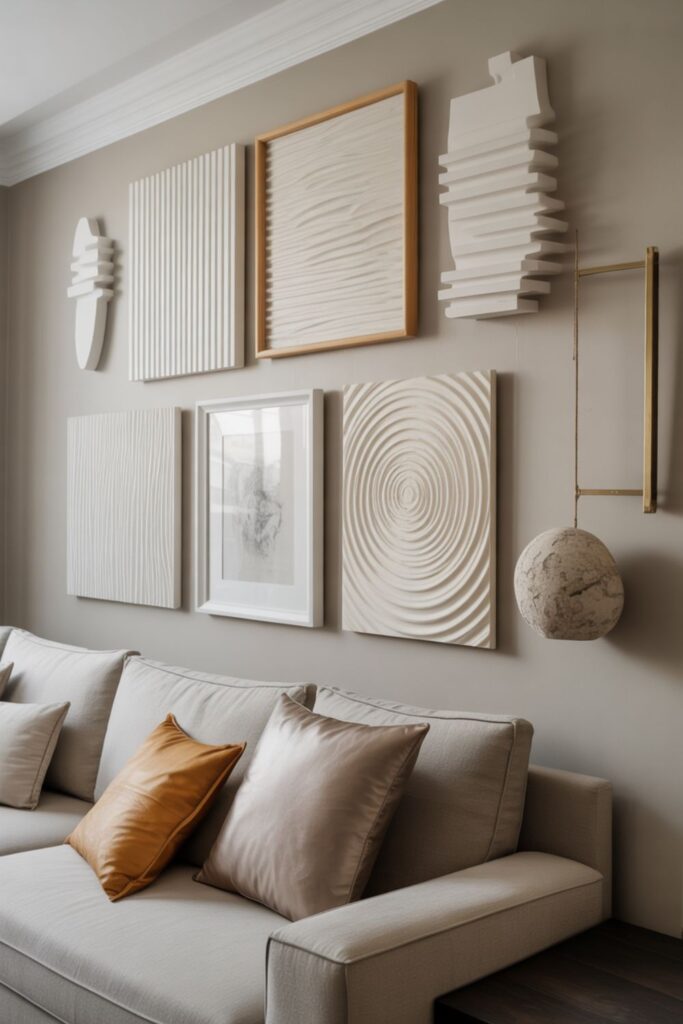
Textured wall art adds sensory richness that flat prints can’t match, creating visual interest through light play across three-dimensional surfaces and varied materials.
Layered canvas paintings with thick impasto techniques (paint applied so heavily it creates texture) catch light dynamically throughout the day as angles change. This technique works beautifully in abstract pieces where texture itself becomes content rather than just medium. Oil and acrylic paints build up in layers, creating peaks and valleys that cast micro-shadows adding depth. Commission custom textured paintings from local artists ($200-800 depending on size) or purchase from galleries and online art retailers.
Wood wall sculptures introduce organic three-dimensional elements through carved, assembled, or burned designs. Geometric patterns cut from layered wood sheets create contemporary statements, while carved nature scenes bring traditional craftsmanship. Reclaimed wood pieces add rustic authenticity with visible aging and weathering. Prices range from $50 for small decorative pieces to $1000+ for large custom sculptures. Lighter woods (pine, birch) suit Scandinavian and modern farmhouse styles, while darker woods (walnut, mahogany) complement traditional and masculine spaces.
Mixed media collages combine various materials fabric, paper, metal, wood, found objects into unified compositions. This artistic approach offers unlimited creative possibilities since rules don’t exist. Layer vintage book pages, sheet music, maps, or newspapers under paint and other elements for depth and interest. Add dimensional objects like buttons, wire, or small hardware for tactile elements. Mixed media suits eclectic and bohemian aesthetics perfectly while offering opportunities for meaningful personalization through incorporated objects with sentimental value.
Woven wall hangings and macramé introduce fiber arts that add softness balancing hard architectural surfaces. These pieces range from simple geometric weavings to elaborate macramé with tassels and fringe. Natural fibers (cotton, jute, wool) in neutral tones suit minimalist and boho spaces, while colored yarns inject personality. Large weavings (36×48 inches or bigger) make substantial statements, while smaller pieces (12×18 inches) fill accent spots. Fiber art absorbs sound, making it particularly valuable in echo-prone rooms with hard flooring and minimal soft furnishings.
Shadow boxes and dimensional displays house three-dimensional collections seashells, vintage keys, small antiques, memorabilia creating personal wall museums. Shadow boxes project 2-4 inches from walls, creating actual depth rather than just visual illusion. Arrange objects thoughtfully rather than cramming boxes full of negative space increases the impact of displayed items. Use uniform shadow boxes throughout gallery walls for cohesion, or feature a single large shadow box as a standalone focal point.
Floating shelves styled as art display curated objects arranged with artistic intention. Vary object heights, mix materials (ceramic, metal, wood, glass), incorporate plants, and leave breathing room between items. Arrange objects in triangular compositions (tall object left, medium center, small right) for visual balance. This dynamic approach lets you refresh “art” whenever desired by simply rearranging existing objects or rotating seasonal decorations.
Read More About: 23+ Outdoor Lighting Ideas for Stylish Spaces
What Are Budget-Friendly Wall Art Ideas?
Affordable wall art proves that stunning walls don’t require trust fund budgets when you leverage creative approaches and smart shopping strategies.
Printable art from Etsy, Creative Market, or independent artists costs $5-15 for high-resolution digital files you print locally. Frame shops, office supply stores, or online print services produce quality prints affordably 8x10s for $3-8, larger sizes scaling proportionally. This approach offers unlimited variety since you’re buying designs rather than physical products, and you can reprint if pieces get damaged. Search specific keywords matching your style (mid-century modern, botanical, abstract geometric) to find exactly what you need.
Thrift store and flea market finds provide authentic vintage art, interesting frames, and unique pieces at fraction of retail costs. Ignore existing artwork and focus on quality frames. $3 thrift store frames often hold $30 worth of framing materials you can reuse for your own art. Look for solid wood frames, interesting textures, and good construction. Refresh frames with paint if needed spray paint transforms dated gold frames into contemporary matte black or white versions. Replace existing prints with downloaded art, personal photos, or textured scrapbook paper for instant custom pieces.
Large-scale DIY projects create maximum impact with minimal investment. Paint abstract art on inexpensive canvases using leftover wall paint mixed to create custom colors. Create geometric patterns with painter’s tape for clean lines and professional appearance. Oversized art (36×48 inches or larger) costs $20-40 in materials while comparable purchased pieces run $200-500. Watch online tutorials for technique inspiration, then experiment freely abstract work means there are no mistakes, only creative decisions.
Photo printing on engineering paper provides huge affordable prints of your photography or licensed images. Print services create 24×36 inch prints on quality paper for $3-8 compared to $50-150 for equivalent canvas or photo prints. Frame with inexpensive poster frames or mount directly to foam board with spray adhesive for frameless presentation. This technique works especially well for temporary displays, seasonal decor, or children’s rooms where art gets damaged or outgrown quickly.
Fabric panels transform interesting textiles into instant art at textile-store prices rather than art-gallery markups. Stretch fabric over artist canvases or wrap around foam core boards, securing with staples or spray adhesive. Visit fabric stores during sales (40-60% off is common) and buy single yards of eye-catching prints. One yard of fabric ($8-15) creates multiple small pieces or one large artwork. This approach lets you coordinate wall art perfectly with room textiles since you’re shopping from the same sources.
Trading art with friends creates free personalized galleries while supporting amateur artists in your social circle. Host art-swap parties where everyone brings 2-3 pieces they’ve outgrown or created, then everyone selects different pieces. This builds eclectic collections with personal connections to each piece. Frame children’s artwork professionally for sentimental displays that cost only framing materials. Kids’ art rotates constantly, providing endless free content for playrooms, nurseries, or family spaces.
How Do You Hang Wall Art Properly and Securely?
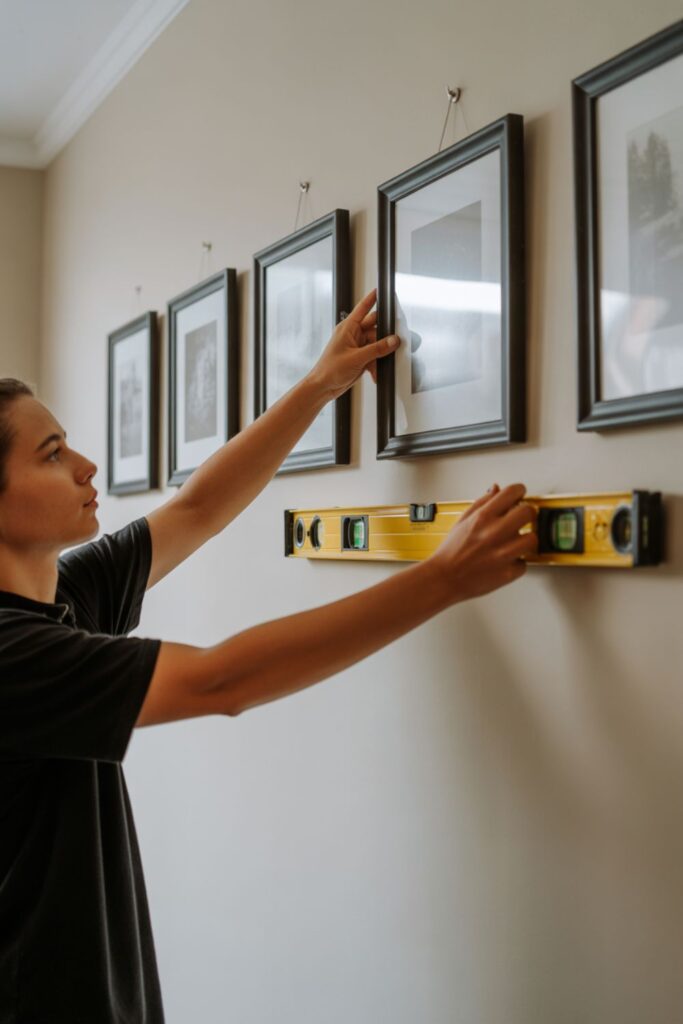
Proper wall art hanging techniques prevent crooked pictures, wall damage, and fallen pieces while creating professional-looking installations that enhance rather than detract from your art.
Find studs for heavy pieces using electronic stud finders or by knocking along walls listening for solid sounds indicating wood framing. Pieces over 30 pounds should always anchor into studs rather than relying solely on drywall anchors. For pieces between studs, use appropriate drywall anchors rated for weight plastic anchors for items under 20 pounds, toggle bolts or molly bolts for 20-50 pounds, multiple anchors for heavier items.
Measure and mark precisely before drilling to avoid multiple holes and misalignment. Use painter’s tape to mark desired positions, then measure from fixed reference points (ceiling, floor, adjacent walls) to ensure level placement. The standard gallery height places artwork centers at 57-60 inches from floor; this viewing height was established by museums and suits most residential spaces. For art above furniture, hang pieces 6-10 inches above furniture tops to create visual connection without excessive gaps.
Use proper hardware matched to artwork weight and wall type. Picture hanging wire threaded through D-rings attached to frame backs distributes weight evenly and allows minor adjustments after hanging. Standard picture hooks with angled nails work for lightweight pieces (under 10 pounds) on drywall. Heavy-duty hooks with multiple nails support 20-30 pounds. Professional installers increasingly use French cleats for heavy pieces interlocking wood or metal strips secured to both wall and frame back that provide exceptional strength and easy removal.
Level every single piece using bubble levels or smartphone level apps. Even slight tilts become obvious once installed, creating an amateur appearance. Check level both horizontally and vertically, especially for square or tall pieces. Pro tip: measure wire tension when hanging rather than relying on hooks being level pull wire tight on frame back, measure distance from wire peak to frame top, transfer this measurement to your wall mark.
Install gallery walls methodically using template method described earlier paper templates taped to walls prevent multiple holes and alignment mistakes. Start from the center working outward, maintaining consistent spacing throughout. For very large gallery walls (10+ pieces), work in sections rather than trying to hang everything in a single session. Step back frequently to evaluate overall balance and spacing from viewing distance rather than up-close where perspective distorts.
Command strips for renters provide removable hanging solutions that don’t damage walls, though weight limits restrict use to lighter pieces (typically under 16 pounds depending on strip quantity). Follow instructions precisely, press firmly for 30 seconds, wait one hour before hanging to allow adhesive curing. Remove by pulling straight down slowly rather than away from the wall to avoid paint damage. Command strips work beautifully for temporary arrangements, seasonal decor, or college housing where permanent holes aren’t allowed.
What Are Current Wall Art Trends Worth Considering?
Contemporary wall art trends reflect evolving aesthetics while offering inspiration for refreshing tired spaces, though timeless personal style should always trump temporary trends.
Oversized botanical prints bring nature indoors through dramatic leaf patterns, flower close-ups, and plant photography. These pieces work in minimalist spaces where organic elements soften stark modern design. Black and white botanical prints offer versatility across color schemes, while vibrant green plant art injects life into neutral rooms. The biophilic design movement (connecting indoor spaces with nature) drives this trend’s popularity and staying power.
Abstract organic shapes featuring curved lines, blob forms, and flowing patterns reflect movement away from rigid geometric minimalism toward softer, more human aesthetics. Muted earth tones (terracotta, sage, ochre, clay) dominate this trend, creating grounding warmth. These abstract pieces suit various design styles from mid-century modern to contemporary bohemian, making them relatively safe trend investments.
Textured plaster and 3D art introduces architectural sculptural elements to walls through raised surfaces, carved patterns, and layered materials. This trend reflects desire for tactile experiences and unique handcrafted quality resisting mass production. Neutral toned plaster art works beautifully in minimalist and Japandi (Japanese-Scandinavian fusion) spaces. Prices range dramatically; DIY versions cost $30-100 in materials, while commissioned pieces run $300-2000+ depending on size and artist.
Gallery walls with personal photography continue gaining popularity as people recognize their own experiences as worthy artistic subject matter. Black and white family photos, travel memories, and life milestones displayed in cohesive arrangements create personalized spaces that commercial art can’t replicate. This trend reflects a broader cultural shift toward authenticity and meaning over aspirational perfection.
Vintage and antique art brings character and history into new spaces, with younger generations particularly drawn to pieces with stories and craftsmanship. Thrifted oil paintings, vintage botanical prints, retro travel posters, and antique maps all enjoy renewed popularity. This trend works beautifully mixed with modern pieces for eclectic collections that feel curated rather than matchy-matchy.
Maximalist gallery walls push back against minimalism through abundant collections covering entire walls floor-to-ceiling. Dense arrangements with minimal negative space create bold statements for personalities wanting visual richness. This trend requires confidence and curation; successful maximalism feels intentional rather than cluttered through color coordination, consistent framing, or thematic coherence.
Frequently Asked Questions
What size wall art should I get for my space?
Wall art should occupy 60-75% of available wall space width for proper visual proportion. For art above sofas, choose pieces 50-75% of sofa width (if your sofa is 84 inches, select art 42-63 inches wide total). Single pieces should be two-thirds to three-quarters furniture width, while gallery walls can extend slightly wider. Vertical spaces like narrow walls flanking windows need tall narrow pieces (16×40 or 20×60 inches). Small art on large walls looks lost and unintentional when in doubt, size up rather than down.
How high should I hang wall art?
Hang artwork with centers at 57-60 inches from floor this museum-standard height aligns with average eye level for most adults. For art above furniture, hang pieces 6-10 inches above furniture tops rather than using the 57-inch rule. In rooms where people are typically seated (dining rooms), lower center height to 54-57 inches. For very tall ceilings (10+ feet), you can raise artwork slightly but maintain visual connection to the room rather than floating near ceilings. Children’s rooms benefit from lower placement (48-52 inches) for kid-level viewing.
How do I choose wall art for my home?
Select wall art reflecting your genuine interests, favorite colors, and aesthetic preferences rather than following trends or buying what you think you should like. Consider room function calming art for bedrooms, energizing pieces for home offices, conversation-starter art for living spaces. Match scale to available wall space (large walls need substantial art). Pull colors from existing room elements or use art to introduce accent colors you want to emphasize. Buy pieces gradually, living with them before committing to permanent arrangements. Trust your instincts if something makes you happy when you see it, it’s probably right for your space.
Can I mix different art styles on the same wall?
Yes, mixing art styles creates dynamic eclectic displays when unified through consistent framing, color palettes, or themes. Black frames unify diverse content from abstract to photography. Alternatively, similar color schemes tie different styles together; all blue-toned pieces work cohesively regardless of whether they’re abstract, photographic, or illustrative. Avoid mixing too many competing styles, select 2-3 distinct approaches rather than randomness. Contemporary abstract pairs beautifully with black and white photography. Vintage botanical prints complement modern geometric patterns when framed similarly. Mixed styles feel intentional when thoughtfully curated rather than randomly accumulated.
What is the best way to light wall art?
Picture lights mounted directly above frames provide focused illumination highlighting individual pieces, ideal for valuable art or gallery-style presentation. Track lighting offers adjustable spotlights you can aim at multiple pieces, working well for gallery walls. Recessed ceiling lights (can lights) with directional trim can spotlight wall art when positioned 2-3 feet from walls. Avoid direct sunlight on valuable art as UV rays cause fading use UV-protective glass or position art away from windows. LED picture lights prevent heat damage while consuming minimal energy. Aim for lighting that makes colors vibrant without creating glare on glass-covered pieces.
How often should I change my wall art?
Change wall art whenever spaces feel stale or your tastes evolve there are no rules requiring permanence. Seasonal rotations (4 times yearly) keep spaces feeling fresh without complete redesigns. Update gallery walls by swapping 2-3 pieces annually while keeping favorite pieces in place. Budget-conscious approaches involve moving art between rooms rather than buying new pieces, bedroom art refreshing living spaces and vice versa. Rearranging existing pieces into new configurations costs nothing while creating different looks. However, if you genuinely love your current art, there’s no obligation to change it; classic pieces remain relevant indefinitely.
Conclusion
The right wall art ideas transform empty walls from decorating challenges into opportunities for personal expression that make your house genuinely feel like home. Whether you’re creating gallery walls that showcase treasured memories, hanging large canvas art that anchors living spaces, or incorporating textured three-dimensional pieces that add sensory richness, thoughtful wall decoration completes rooms while reflecting your unique personality and style preferences. Strategic art selection considering scale, color, placement, and room function creates cohesive spaces that feel intentionally designed rather than haphazardly decorated.
Start by identifying your authentic style preferences and room-specific needs before shopping, then build collections gradually rather than trying to finish every wall immediately. Leverage budget-friendly approaches like printable art, DIY projects, and thrift store finds that deliver visual impact without financial strain. Focus on proper hanging techniques that create professional results while protecting both walls and artwork. Your walls deserve the same consideration as furniture and finishes when decorated thoughtfully with wall decor you genuinely love, they complete your spaces and create environments where you feel truly comfortable and inspired every single day.