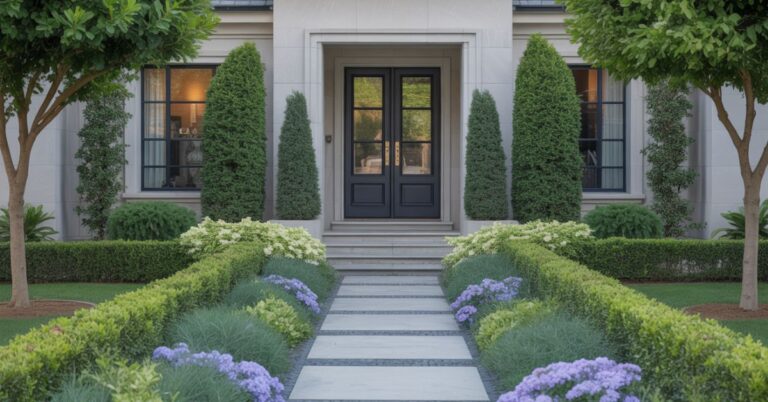
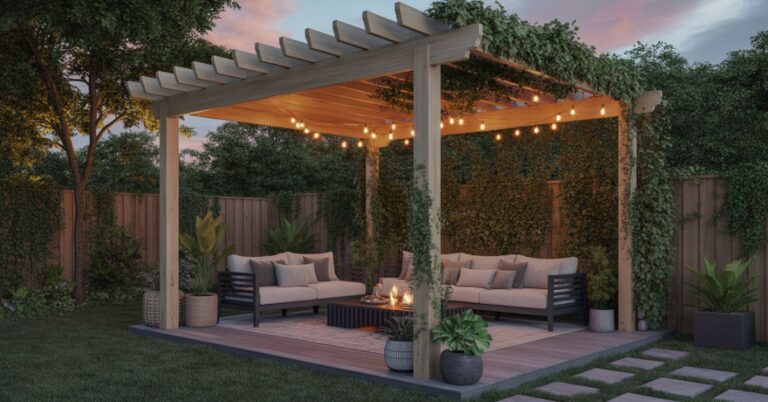
40+ Backyard Patio Inspiration Ideas For Relaxing Outdoor Spaces

Your backyard holds untapped potential while you scroll through perfectly curated outdoor spaces wondering how they achieved magazine-worthy results. The harsh reality hits every time you look outside cracked concrete, mismatched furniture, zero ambiance, and a space nobody wants to use despite thousands spent on your mortgage. You’re missing prime entertaining opportunities, leaving property value on the table, and ignoring the mental health benefits of quality outdoor time. Most homeowners believe stunning backyard patio designs require $50,000 budgets and professional designers, but that’s a costly misconception.
Here’s what actually works: strategic planning using proven backyard patio inspiration principles that balance aesthetics with functionality, phased implementation that spreads costs across seasons, and smart material selections that deliver luxury looks at accessible price points. This comprehensive guide provides 40+ actionable patio makeover inspiration concepts with specific product recommendations, realistic budgets, and step-by-step implementation strategies that transform ordinary backyards into extraordinary outdoor living destinations.
Why Backyard Patios Increase Home Value
Investing in backyard patio ideas generates measurable returns beyond personal enjoyment. The National Association of Realtors reports that quality outdoor entertaining spaces recoup 50-80% of installation costs at resale, with some markets seeing 100%+ returns. Real estate agents consistently note that homes with finished outdoor living areas sell faster and command premium pricing compared to similar properties lacking these features.
The value extends beyond dollars. Well-designed backyard transformation projects effectively add a room to your home without the cost of interior additions. A 300-square-foot patio provides entertainment capacity equivalent to a formal dining room at one-third the construction cost. During warmer months, these spaces become your most-used rooms, hosting daily meals, weekend gatherings, and quiet morning routines. Mental health research shows that spending 20-30 minutes daily in thoughtfully designed outdoor environments reduces stress hormones by 21% and improves mood markers significantly compared to indoor-only living.
Assessing Your Backyard Space and Needs
Successful backyard patio inspiration starts with honest space evaluation before selecting designs. Measure your yard’s dimensions, noting existing features like mature trees, slopes, utilities, and access points. Photograph from multiple angles and at different times of day to understand sun patterns and shadows. South-facing patios receive maximum sunlight ideal for sun lovers but requiring substantial shade solutions. North-facing spaces stay cooler, perfect for hot climates but potentially too shady in northern regions.
Consider how you’ll actually use the space rather than aspirational fantasies. Do you host large gatherings or prefer intimate family dinners? Will children play nearby, requiring supervision sight lines? Do you cook outdoors frequently enough to justify an outdoor kitchen? Honest answers prevent spending thousands on features you rarely use. Create a priority list ranking must-haves (adequate seating, weather protection) versus nice-to-haves (water features, built-in sound systems). This clarity guides budget allocation and prevents scope creep that derails projects.
Determining Your Patio Size and Layout
Patio layout ideas begin with calculating appropriate square footage for intended activities. Dining areas require 10-12 square feet per person including chair pullout space; a six-person table needs roughly 100 square feet minimum. Lounge seating configurations with sofas and chairs demand 8-10 square feet per seat plus circulation space. Outdoor kitchens consume 80-150 square feet depending on appliance count. Fire pit areas work best with 15-20 feet diameter circles allowing proper clearance.
Shape significantly impacts functionality and aesthetics. Rectangular backyard patio designs suit linear yards and provide efficient space usage. Curved or circular patterns soften harsh architectural lines and create intimate gathering spots. L-shaped configurations naturally separate dining and lounging zones. Multiple elevation levels add visual interest; a raised section for dining overlooks a sunken fire pit lounge. Extend patios beyond basic rectangles using transitions to secondary spaces like bocce ball courts, putting greens, or meditation gardens. These connections create backyard “rooms” with distinct purposes that feel larger than their actual square footage.
Hardscape Material Selection Guide
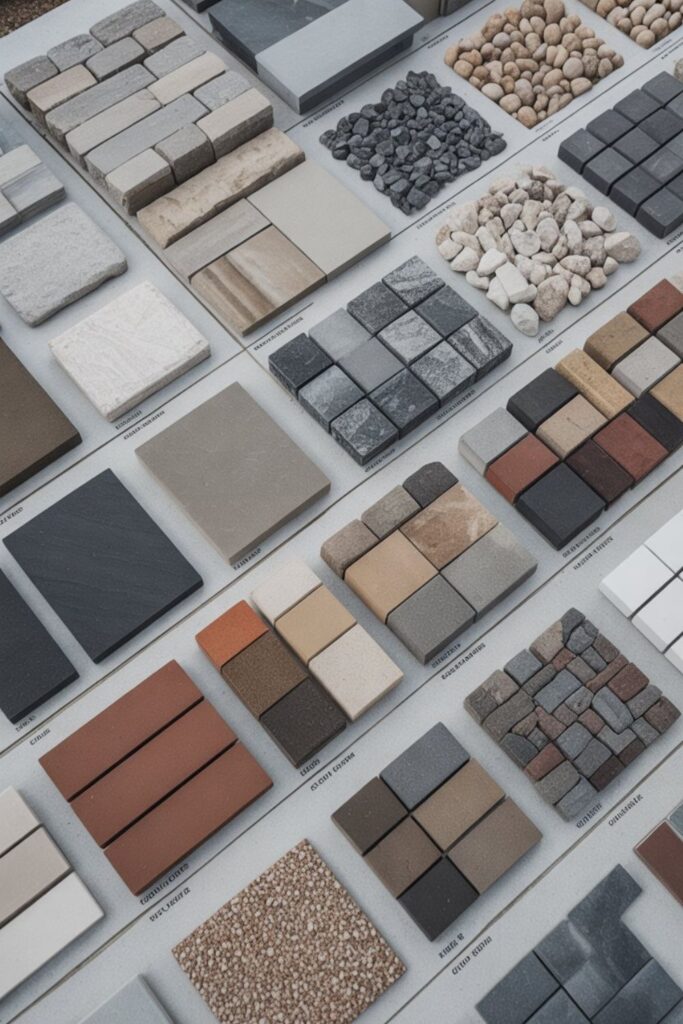
Choosing appropriate hardscape materials balances durability, aesthetics, maintenance, and budget across diverse options. Concrete remains most economical at $6-10 per square foot installed for basic finishes, jumping to $10-20 for stamped or stained treatments. This versatile material handles any shape, accepts various finishes, and lasts 25-40 years with proper maintenance. Downsides include cracking in freeze-thaw climates and heat absorption in hot regions.
Natural stone delivers unmatched beauty and longevity at premium prices $15-30 per square foot installed for flagstone, slate, or bluestone. Each piece is unique, creating one-of-a-kind backyard transformation results. Stone stays cooler underfoot than concrete and ages gracefully, developing attractive patinas. Pavers (concrete or clay) cost $10-20 per square foot installed, offering middle-ground pricing with good durability and easy repairs damaged individual pavers replaced without disturbing surrounding areas. Brick pavers suit traditional architecture, while large-format concrete pavers complement modern designs. Porcelain pavers ($15-35 per square foot) bring indoor tile aesthetics outdoors with superior stain resistance and low maintenance but require professional installation.
Budget-Friendly Backyard Patio Ideas
Stunning patio makeover inspiration doesn’t require unlimited budgets when you prioritize high-impact changes. Start with a thorough cleaning pressure washing existing surfaces, furniture, and house siding costs $150-300 (rental equipment) but dramatically improves appearances. Add $500-800 for outdoor paint transforming tired furniture, planters, and accent walls. Strategic lighting upgrades ($300-600) completely alter evening ambiance through string lights, solar path lights, and LED spotlights.
DIY concrete staining refreshes drab slabs for $200-400 in materials acid stains create variegated earth tones, while water-based stains offer broader color selections. Outdoor rugs ($100-400) define zones and inject color without permanent commitments. Bulk container gardens using affordable annuals ($150-300) provide seasonal color explosions. Repurpose indoor furniture with marine-grade sealant and outdoor fabric ($200-350 total). Build simple fire features using retaining wall blocks and metal fire rings ($150-250). Phase expensive elements like furniture and pergolas across multiple seasons, completing projects as budgets allow rather than financing entire renovations.
Luxury Backyard Patio Designs
High-end backyard patio inspiration incorporates premium materials and integrated technology for resort-quality experiences. Begin with designer-grade hardscape materials, large-format porcelain tiles, premium travertine, or exotic hardwoods like Ipe. Add architectural elements: custom pergola structures in Western Red Cedar or aluminum with integrated LED lighting ($8,000-$25,000), built-in seating with hidden storage and USB charging ports, and automated retractable awnings ($3,000-$8,000).
Luxury outdoor kitchens ($15,000-$50,000+) feature commercial-grade grills, refrigerated drawers, wine coolers, pizza ovens, and full wet bars with running water and ice makers. Install outdoor televisions in weatherproof enclosures ($2,000-$5,000) with surround sound systems. Heated floors using hydronic systems or electric mats extend season usage in cold climates ($15-40 per square foot). Water features custom fountains, reflecting pools, or infinity edges add sensory richness ($5,000-$30,000). Integrate smart home systems controlling lighting, music, temperature, and water features through single interfaces. These investments create backyard sanctuaries rivaling luxury resorts.
Fire Features That Create Focal Points
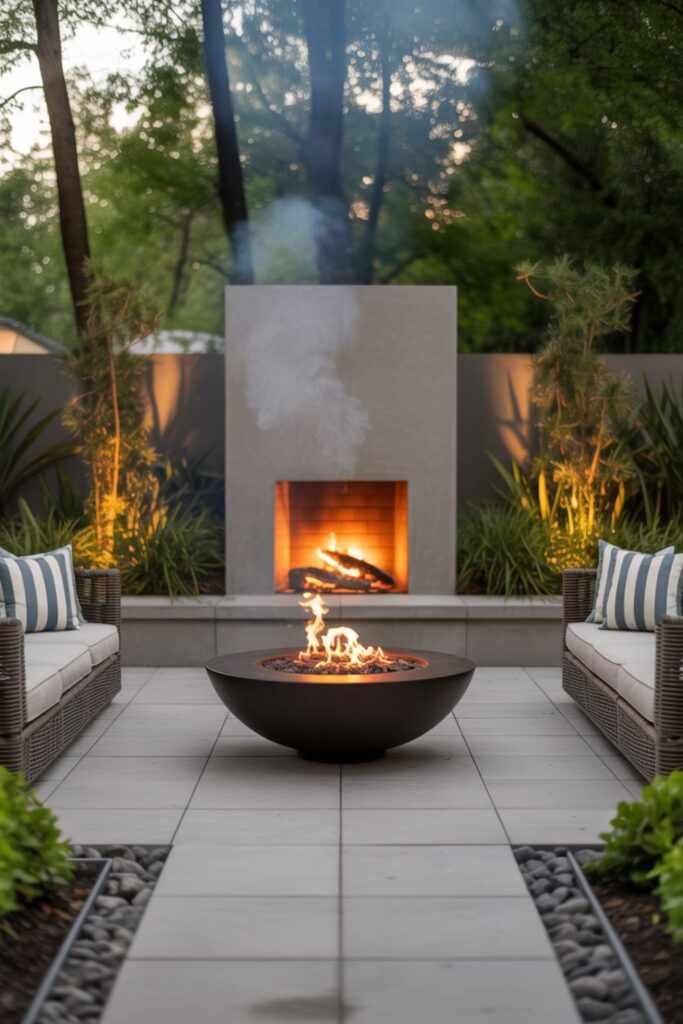
Fire features anchor outdoor entertaining spaces while providing warmth and ambiance that extends seasonal use. Wood-burning fire pits deliver authentic crackling sounds and campfire nostalgia but require wood storage, ash cleanup, and often violate urban air quality regulations. Propane and natural gas alternatives offer instant ignition, adjustable flames, and zero cleanup at $400-$2,000 for quality units. Built-in gas fire pits using stone or concrete surrounds cost $2,000-$8,000 depending on size and material quality.
Fire tables combine flames with functional surfaces, ranging from portable propane models ($300-$1,200) to custom built-in designs with glass wind guards and decorative fire media ($2,000-$6,000). Linear gas fireplaces built into walls create dramatic modern statements ($3,000-$12,000 installed). Position fire features as patio layout ideas centerpieces with seating arranged in semi-circles or full circles maintaining 30-40 inches between seats and fire edges for safety and comfort. Check local regulations and many municipalities restrict wood burning and mandate clearance distances from structures, trees, and property lines. Include fire extinguishers and ensure gas connections meet code requirements.
Outdoor Kitchen Planning and Design
Transforming backyard patio ideas into culinary destinations requires careful outdoor kitchen planning, balancing function and investment. Entry-level setups ($2,000-$5,000) include a quality built-in grill, basic storage cabinet, and small prep counter. Mid-range kitchens ($8,000-$20,000) add refrigeration, sinks with hot/cold water, additional storage, and expanded counter space. Luxury installations ($25,000-$75,000+) incorporate multiple cooking zones (grill, smoker, pizza oven), full wet bars, dishwashers, and custom cabinetry.
Position kitchens near interior kitchens minimizing utility run distances each additional 10 feet of gas line, water, or electrical conduit adds $200-500 in installation costs. Locate cooking zones downwind from primary seating areas preventing smoke issues. Provide adequate counter space 72 linear inches minimum for serious outdoor cooking, with heat-resistant surfaces flanking grills. Include weatherproof storage for utensils, serving pieces, and cleaning supplies. Overhead coverage protects investments and allows cooking during light rain. Stainless steel appliances and cabinets handle weather exposure best, though high-quality marine-grade polymer cabinets cost less and resist corrosion. Install ground fault circuit interrupter (GFCI) outlets on dedicated 20-amp circuits positioned at least 6 feet from water sources.
Read More About: Side Patios Attached To House for Functional Designs
Pergola Structures for Style and Shade
Pergola structures provide architectural definition while offering adjustable shade solutions through various design approaches. Traditional open-rafter pergolas filter 30-50% of sunlight depending on rafter spacing and orientation. Position rafters running east-west for maximum midday shade or north-south for consistent dappled light throughout the day. Standard dimensions start at 10×10 feet for intimate spaces, scaling to 12×16 feet or larger for dining areas.
Materials impact aesthetics, maintenance, and longevity. Pressure-treated pine pergolas cost least ($1,500-$4,000 DIY, $3,000-$8,000 installed) but require annual staining. Cedar resists decay naturally, weathers to silvery gray without treatment, and costs $3,000-$6,000 DIY or $6,000-$15,000 installed. Vinyl and aluminum options ($4,000-$12,000 installed) provide maintenance-free alternatives lasting 20+ years. Enhanced shade using retractable canopies ($500-$2,000), outdoor curtains ($200-$800), or climbing plants wisteria, grapevines, and climbing roses create living roofs in 2-3 growing seasons. Modern louvered pergolas with motorized rotating slats ($6,000-$20,000) adjust from full sun to complete rain protection via remote controls.
Ambient Lighting Design Strategies
Thoughtful ambient lighting elevates backyard patio inspiration from daytime-only spaces into evening destinations. Layer multiple light sources at varying heights creating depth and visual interest. String lights remain most popular Edison bulb strands ($50-$150 for 25-50 feet) provide warm vintage glow, globe lights offer even distribution, and LED options reduce energy costs by 85%. Hang in parallel lines, zigzag patterns, or overhead canopies maintaining 8-10 foot mounting heights for comfortable head clearance.
Supplement string lights with wall-mounted sconces flanking doors and seating areas ($50-$200 each). These fixtures provide task lighting for activities while contributing to overall ambiance. Add uplighting at tree bases and architectural features using adjustable LED spotlights ($30-$80 each) uplights create dramatic shadows and highlight landscaping. Path lights ensure safe navigation along walkways ($15-$40 per fixture, 6-8 fixtures typical). Consider color-changing smart bulbs in key fixtures enabling mood adjustments from warm white for dining to color washes for parties. Install dimmer switches or smart controls allowing brightness adjustments. Total lighting transformations cost $800-$3,000 depending on fixture count and whether professional electrical work is required.
Furniture Arrangements for Different Activities
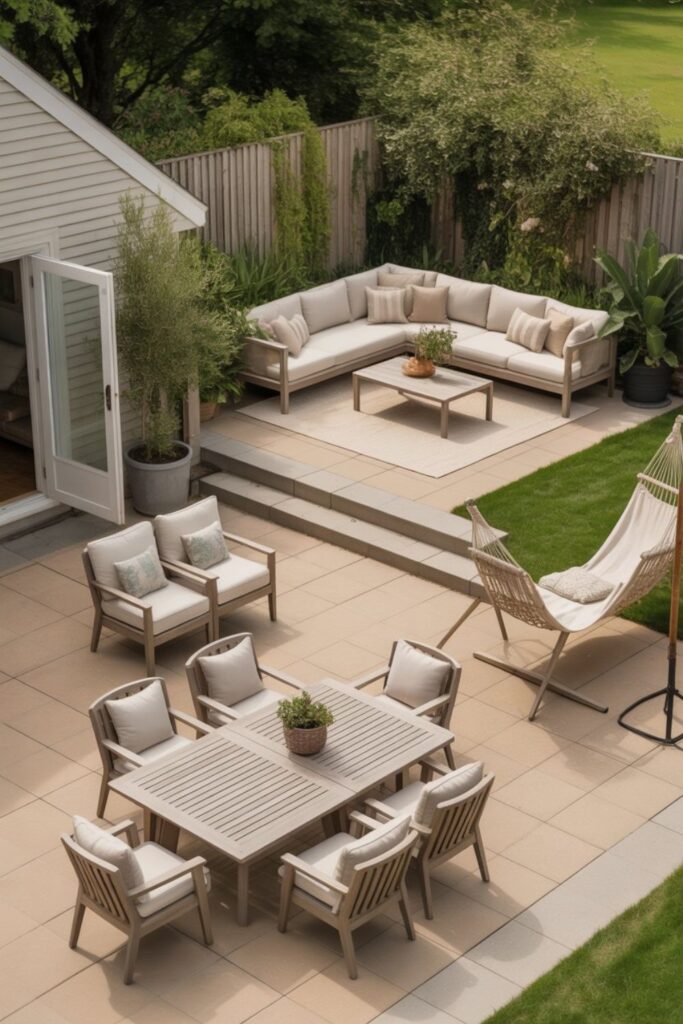
Strategic furniture arrangements maximize backyard patio designs functionality across multiple use cases. Dining configurations center tables with chairs allowing 24-30 inches per person and 36-42 inches behind chairs for pullout and circulation. Rectangular tables suit long narrow patios, round tables work better in square spaces and encourage conversation. Extendable tables adapt from family dinners (seats 4-6) to party mode (seats 8-10).
Lounge seating configurations in L-shapes or U-shapes create conversation pits with coffee tables or ottomans as centerpieces. Position seating to face fire features, water elements, or attractive views. Maintain 18-24 inches between seating and coffee tables, 36 inches of circulation space behind seats. Sectional outdoor sofas provide maximum seating in minimum footprints 6-piece sectionals seat 6-8 people in 10×10 foot areas. Add movable furniture for flexibility ottomans and poufs provide extra seating that tucks away when not needed. Create multiple zones in large patios, dining area near the kitchen, lounge area near fire features, bar seating near outdoor kitchens. Define zones using outdoor rugs, changes in flooring materials, or planters without solid walls that fragment space.
Landscaping Integration Techniques
Seamless landscaping integration blends backyard transformation projects into cohesive outdoor environments rather than isolated hardscape islands. Border patios with planting beds 2-4 feet deep containing layered vegetation low ground covers at edges (creeping thyme, sedum), mid-height perennials behind (lavender, ornamental grasses), and taller shrubs or small trees at the back (hydrangeas, Japanese maples). This layering creates gradual transitions from hardscape to garden.
Soften hard edges using plants that spill over patio borders creeping jenny, sweet alyssum, or trailing rosemary. Container gardens placed at patio corners, flanking doorways, and clustered at zone transitions add flexibility change displays seasonally or move plants following sun patterns. Incorporate vertical elements trellises with climbing vines, tall ornamental grasses, or columnar evergreens that add height without consuming floor space. Use trees strategically for shade deciduous trees planted on south and west sides provide summer cooling while allowing winter sun after leaves drop. Include fragrant plants near seating areas jasmine, gardenia, herbs engaging multiple senses. Native plants require less water and maintenance while supporting local ecosystems.
Small Backyard Patio Inspiration
Limited square footage demands creative backyard patio ideas that maximize every inch without feeling cramped. Vertical elements replace horizontal sprawl wall-mounted planters, hanging baskets, and trellised vines add greenery without consuming floor space. Built-in benches with hidden storage serve dual purposes while providing more seating capacity than standalone chairs in the same linear footage. Murphy-style fold-down tables attach to walls or railings, appearing when needed for dining then disappearing to restore circulation space.
Light color palettes make small outdoor patio designs feel more expansive, whites, creams, light grays, and soft pastels reflect light and read as open. Limit pattern variety to avoid visual chaos. Use mirrors strategically on fences or walls creating illusions of depth and reflecting garden views. Choose multi-functional furniture ottomans that serve as seats, footrests, and side tables; benches with lift-up storage; nesting tables that expand for entertaining. Avoid bulky deep-seated sofas; opt for armless chairs and loveseats with slim profiles. Single statement pieces create more impact than collections of small decorations: one bold outdoor rug, colorful accent wall, or sculptural fire feature versus multiple competing elements.
Large Backyard Patio Designs
Expansive yards support comprehensive backyard patio inspiration incorporating multiple activity zones and luxury amenities. Create distinct outdoor rooms, a formal dining area with 8-10 person table, casual lounge space with sectional seating and fire feature, outdoor kitchen with bar seating, and activity areas like bocce ball courts or putting greens. Define zones using elevation changes, partial walls, pergolas over specific areas, or simply distance and furniture placement.
Large patios benefit from multiple focal points rather than single centers, a fire feature in the lounge zone, water fountain in the dining area, outdoor fireplace in a conversation nook. Vary paving materials between zones flagstone in dining areas, pavers in walkways, decomposed granite in garden paths creating visual interest through texture changes. Incorporate substantial landscaping integration with island planting beds within patio areas breaking up expanses of hardscape. Install comprehensive lighting systems with zones controlled independently bright task lighting over kitchens and dining, soft ambient lighting in lounge areas, accent lighting highlighting landscaping. Don’t feel obligated to furnish every square foot immediately phase expensive elements across seasons as budgets allow.
Modern Contemporary Patio Aesthetics
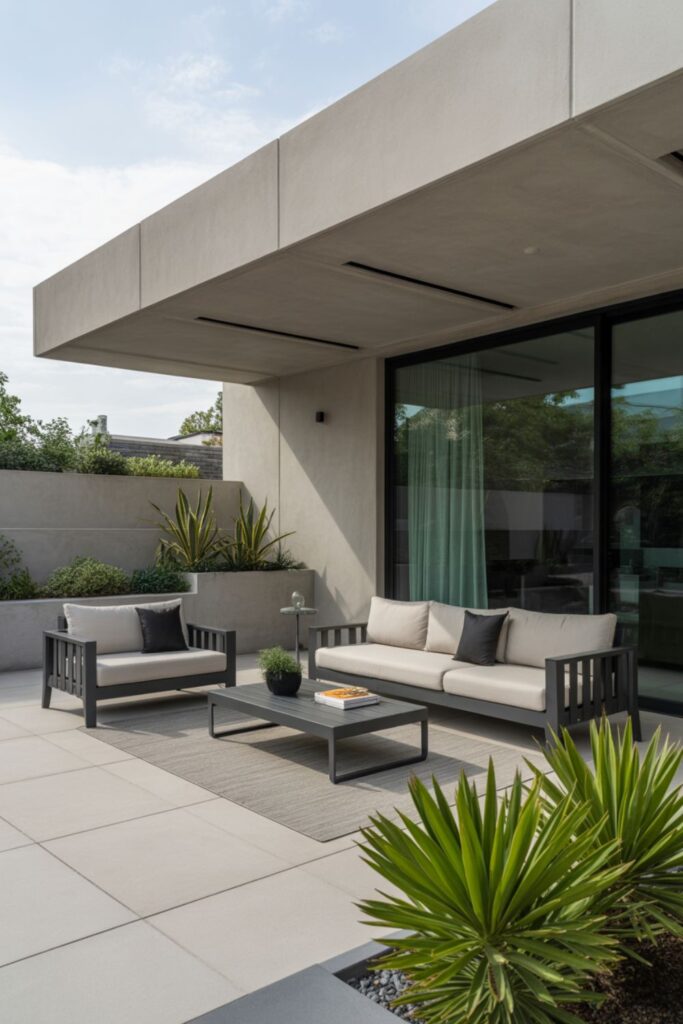
Modern backyard patio designs emphasize clean lines, minimal ornamentation, and quality materials showcasing inherent beauty. Choose furniture with geometric forms in neutral palettes black, white, gray, or natural wood tones. Metal and concrete hardscape materials reinforce contemporary aesthetics. Large-format pavers (24×24 inches or larger) create expansive feels with fewer grout lines. Smooth finishes on concrete surfaces emphasize material purity.
Built-in elements maintain uncluttered appearances integrated bench seating with hidden storage, recessed lighting fixtures, planters formed into walls or floors. Select one or two plant varieties and repeat them for impact rather than collections of many species identical boxwood spheres lining pathways, matching ornamental grasses in uniform planters. Water features should be geometric rectangular reflecting pools, linear waterfall walls, or modern sculptural fountains. Fire features in square or rectangular shapes with glass surrounds and contemporary fire media (glass crystals, lava rock) replace rustic stone fire pits. Color accents, when used, come from single bold elements, one brightly colored furniture piece, accent wall, or dramatic sculpture rather than distributed throughout.
Traditional Classic Patio Design
Classic patio makeover inspiration draws from historical styles creating timeless elegance through symmetry and proven aesthetics. Brick pavers in herringbone or basketweave patterns suit colonial and traditional architecture. Natural stone bluestone, limestone, or flagstone brings refined elegance. Furniture in wrought iron with scrollwork details, teak in Chippendale styles, or wicker with rolled arms evokes established design traditions.
Symmetrical arrangements anchor traditional spaces matching planters flanking doorways, paired lanterns on either side of dining tables, balanced furniture placement mirroring across central axes. Formal elements include boxwood hedges defining borders, rose gardens in structured beds, topiaries in classical urns, and fountain features as centerpieces. Color palettes favor rich but subdued tones hunter greens, burgundies, navy blues, warm terracottas avoiding neon brights or stark contrasts. Pergola structures with columns and decorative brackets add architectural gravitas. Traditional outdoor rugs feature oriental or medallion patterns. Accessorize with classical statuary, formal lanterns on pedestals, and traditional garden ornaments maintaining refined restraint rather than cluttered abundance.
Mediterranean Backyard Inspiration
Mediterranean style transports backyard transformation projects to sun-drenched coastal regions through warm colors and lush plantings. Terracotta emerges as the signature color floor tiles, large planters, roof tiles on pergolas complemented by sunny yellows, deep ocean blues, and crisp whites. Stucco finishes on walls, columns, and planters reinforce the aesthetic. Mosaic tile accents add handcrafted charm on tabletops, planters, or as decorative inserts in walls.
Plant citrus trees in oversized terracotta pots lemon, lime, and orange varieties thrive in containers. Add Mediterranean herbs like rosemary, oregano, lavender, and thyme in rustic planters or dedicated herb gardens. Climbing bougainvillea, jasmine, or grapevines on pergolas and trellises provide color and fragrance. Water features tiled fountains with bubbling water, small recirculating streams contribute soothing sounds. Wrought iron furniture with curved details suits the style. String terracotta or punched metal lanterns overhead for warm evening glow. Including outdoor dining as a centerpiece, Mediterranean culture celebrates meals as social events requiring substantial tables surrounded by comfortable chairs encouraging lingering conversations over wine and food.
Tropical Paradise Backyard Designs
Tropical backyard patio inspiration creates vacation resort atmospheres through bold foliage and vibrant colors. Start with statement plants, banana palms, bird of paradise, elephant ears, philodendrons, and cordylines in oversized planters. Choose furniture in natural materials such as teak, bamboo, or all-weather wicker with cushions in bright tropical prints featuring hibiscus, palms, or bold geometric patterns in turquoise, coral, lime, and sunny yellow.
Install tiki torches around perimeters providing ambient light and mosquito-repelling citronella. Thatched umbrellas or palapa-style roof sections deliver authentic island feels. Water features small ponds with tropical fish, multi-tiered fountains, or wall-mounted waterfalls engage multiple senses. Add hammocks strung between posts or trees for ultimate relaxation. Bamboo fencing provides shade solutions and privacy. Include a tiki bar or beverage station with bamboo accents and grass-skirt bar fronts. String lights with Edison bulbs or paper lanterns create a warm evening ambiance. Accessories might include carved wooden masks, colorful ceramic parrots, pineapple décor, or surfboards as wall art. Embrace bold color without restraint tropical design celebrates exuberance over subtlety.
Desert Southwest Patio Aesthetics
Southwest outdoor patio designs harmonize with arid landscapes through native materials and drought-tolerant plantings. Earthy color palettes terracotta, adobe, sand, sage, and turquoise echo desert vistas. Saltillo tiles, stained concrete with desert tones, or decomposed granite surfaces suit the aesthetic while handling intense sun and minimal rain. Adobe or stucco walls, natural stone accents, and rustic wood beams create architectural authenticity.
Plant desert-adapted species agaves, yuccas, prickly pear cacti, ocotillo, desert marigolds, and palo verde trees in graveled beds requiring minimal irrigation. Group rocks and boulders as sculptural elements reinforcing the desert landscape. Chimineas or Southwestern-style outdoor fireplaces with stucco finishes provide warmth during cool desert nights. Furniture in natural wood with simple lines, wrought iron with Spanish influences, or equipale chairs (pigskin and cedar) maintains regional character. Mexican Talavera tiles add colorful accents on risers, planters, or tabletops. String lights with tin or punched metal shades cast decorative shadows. Include water-wise features like dry stream beds with river rocks, small tiered fountains, or simple water bowls attracting birds while conserving resources.
Cottage Garden Patio Style
Cottage style backyard patio ideas embrace abundant plantings and collected-over-time charm creating romantic, lived-in feels. Irregular flagstone or brick pavers suit the aesthetic better than formal geometric patterns. Paint wooden furniture in soft pastels sage green, powder blue, buttercream yellow or leave natural wood with distressed finishes showing age. Mismatched chairs around tables add eclectic appeal.
Plant billowing perennials and self-seeding annuals in dense borders roses, hollyhocks, foxgloves, delphiniums, catmint, and lady’s mantle spilling generously over patio edges. Include climbing roses, clematis, and sweet peas on arbors and trellises. Fragrance matters, lavender, stock, dianthus, and honeysuckle perfume the air. Use vintage finds as planters, galvanized buckets, enamel colanders, old boots, wooden crates celebrating imperfection and history. Birdhouses, feeders, and baths attract feathered visitors. String delicate fairy lights or vintage Edison bulbs through trees and pergolas. Accessories might include floral cushions, vintage watering cans, weathered garden signs, and found objects with patina. Embrace controlled chaos cottage gardens thrive on abundance rather than restraint.
Farmhouse Rustic Outdoor Spaces
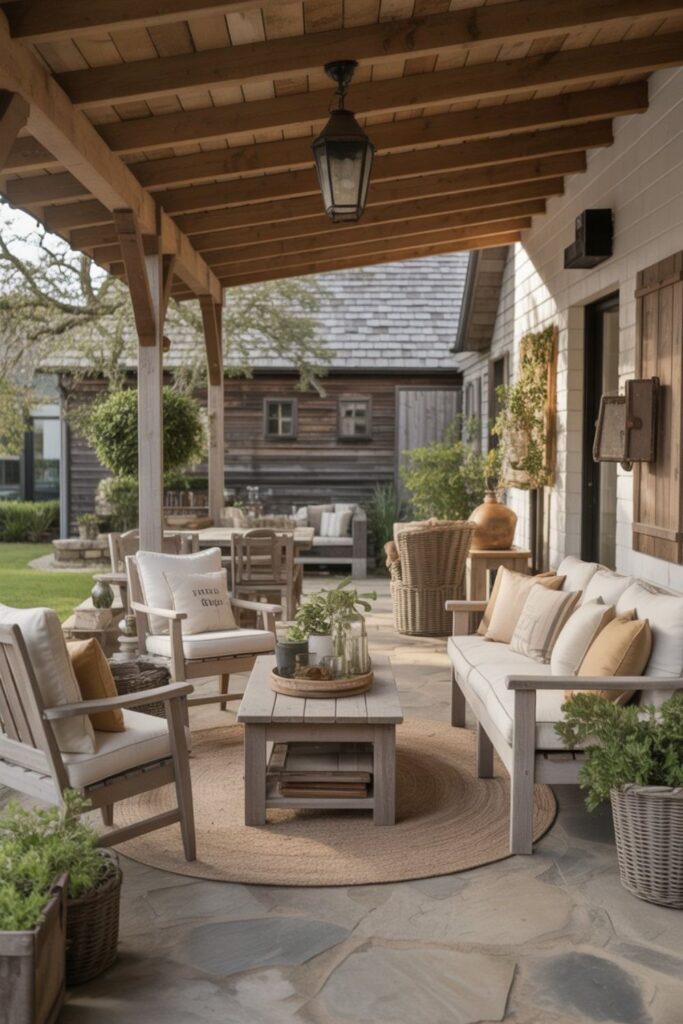
Farmhouse patio makeover inspiration balances rustic charm with functional simplicity through weathered woods and vintage elements. Reclaimed barn wood, distressed painted furniture, and galvanized metal pieces create the foundation. Color palettes favor soft neutrals whites, creams, grays with occasional muted colors like sage, dusty blue, or soft yellow. Shiplap accent walls, wooden plank tables, and metal chairs with worn finishes suit the style.
Display functional vintage items as décor enamelware, old milk jugs, wooden crates, wheelbarrows planted with flowers, and vintage tools mounted as wall art. Mason jars serve as candle holders, vases, or drinking glasses. Buffalo check or ticking stripe patterns appear on cushions and table linens. String Edison bulbs or vintage-style lanterns for lighting. Include a porch swing or rocking chairs evoking country porches. Plant containers might be galvanized buckets, washtubs, or wooden crates. Kitchen herbs in rustic planters add functionality. White picket fence sections, salvaged shutters, or old ladders repurposed as plant stands reinforce farmhouse authenticity. Maintaining simplicity, farmhouse style celebrates humble utility over elaborate decoration.
How Much Does a Backyard Patio Cost?
Backyard patio ideas budgets range dramatically based on size, materials, and feature complexity. Basic patios (200-300 square feet, standard concrete or pavers, minimal amenities) cost $3,000-$8,000 installed. Mid-range projects (300-500 square feet, upgraded materials like natural stone, pergola, basic lighting, furniture) run $12,000-$25,000. Luxury transformations (500+ square feet, premium materials, covered structures, outdoor kitchens, comprehensive lighting, quality furniture) reach $35,000-$80,000+.
Material costs per square foot: basic concrete $6-10, stamped concrete $10-18, concrete pavers $10-15, natural stone $15-30, porcelain tiles $15-35. Labor typically matches material costs for professional installation. Additional elements: pergolas $3,000-$15,000, outdoor kitchens $5,000-$50,000, fire features $400-$8,000, comprehensive lighting $1,000-$5,000, quality furniture sets $2,000-$10,000. Regional labor rates impact totals urban areas cost 20-40% more than rural locations. DIY reduces costs 40-60% but requires appropriate skills, tools, and physical capability. Phase expensive elements across multiple seasons if budget is limited complete basic hardscape first year, add structures second year, finish with premium features third year.
What’s the Best Patio Material for My Climate?
Climate significantly impacts appropriate hardscape materials selection for longevity and performance. Freeze-thaw regions (northern states) demand materials handling ice expansion poured concrete cracks without proper base depth (6+ inches compacted gravel) and reinforcement, thick pavers (2+ inches) perform better than thin versions, natural stone like bluestone and granite withstand freezing cycles well. Avoid porous materials trapping water that expands when frozen.
Hot arid climates need heat-reflective surfaces, light-colored concrete, travertine, and certain light pavers stay cooler underfoot than dark materials absorbing heat. Avoid metal furniture and dark surfaces causing burns on contact. Humid coastal regions require rot-resistant and corrosion-resistant choices synthetic materials like composite decking and resin wicker outperform natural wood, aluminum and stainless steel furniture resist rust better than iron, sealed concrete or porcelain tiles handle moisture better than natural stone requiring regular sealing. Rainy climates benefit from textured slip-resistant surfaces and excellent drainage smooth concrete becomes dangerously slippery when wet, while broom-finished or exposed aggregate surfaces provide traction. Match material selections to your specific climate conditions for durability and safety.
Read More About: 25+ Outdoor Patio Inspo Ideas to Create a Stylish and Relaxing Space
How Do I Make My Backyard Patio More Private?
Privacy transforms outdoor entertaining spaces from exposed fishbowls into secluded retreats using strategic screening. Fence height regulations typically allow 6 feet in side and rear yards, though some jurisdictions permit 8 feet. Solid panel fences provide complete visual blocking but can feel oppressive in small yards. Alternating board styles with 1-2 inch gaps maintain airflow while obscuring views. Horizontal slat fences create modern aesthetics while providing filtered privacy.
Living screens using fast-growing evergreens arborvitae, Leyland cypress, skip laurel, or clumping bamboo create natural barriers growing 2-4 feet annually. Plant in rows or clusters depending on space. Deciduous trees provide summer privacy but lose effectiveness after leaf drop. Trellises with climbing vines (jasmine, clematis, honeysuckle) combine vertical interest with seasonal coverage. Outdoor curtains hung from cables or curtain rods offer adjustable privacy close for intimate gatherings, open for breeze and views. Pergolas with draped fabric panels or retractable shades create overhead privacy from upper-story neighbors. Strategically positioned large planters with tall grasses or small trees block specific sight lines without full perimeter fencing.
FAQs
What are some popular backyard patio design ideas?
Popular backyard patio design ideas include cozy seating areas, outdoor kitchens, fire pits, pergolas, and themed garden décor that blend style and functionality.
How can I make my backyard patio more inviting?
Add comfortable furniture, ambient lighting, greenery, and decorative accents. Layering textures with rugs, cushions, and planters can create a warm and welcoming atmosphere.
What materials are best for backyard patios?
Common materials include natural stone, pavers, concrete, brick, and composite decking. The choice depends on style preference, durability, and maintenance requirements.
How do I choose the right furniture for my backyard patio?
Consider the size of your patio, the climate, and your lifestyle. Look for durable, weather-resistant furniture that complements your design style and provides comfort.
Can I incorporate a small garden into my patio design?
Yes, container gardens, raised beds, and vertical gardens can add greenery and charm without taking up too much space.
Conclusion
Your backyard patio potential extends far beyond current reality when you apply these proven design principles and implementation strategies. Whether your vision leans modern minimalist, tropical paradise, or farmhouse rustic, success depends on honest space assessment, realistic budget planning, appropriate material selection for your climate, and thoughtful furniture arrangements supporting how you’ll actually live outdoors. The most rewarding backyard transformation projects balance aspiration with practicality, creating spaces that photograph beautifully while serving daily life through comfortable seating, adequate shade, proper lighting, and seamless landscaping integration.
Start your patio makeover inspiration journey by identifying your top three priorities from this guide perhaps a fire feature for cool evenings, a pergola for essential shade, or an outdoor kitchen for serious entertaining. Measure your space accurately, research local permit requirements, and tackle one significant improvement this season rather than attempting everything simultaneously. Your transformed backyard retreat becomes the gathering spot friends request for celebrations, the sanctuary providing daily stress relief, and the property value booster that distinguishes your home from comparable listings. The outdoor living space you’ve imagined exists within reach, requiring only vision, planning, and these actionable backyard patio inspiration strategies to become reality.