30+ Small Backyard Patio Pergola Ideas

Your small backyard patio feels cramped and sun baked. Every summer afternoon becomes a choice between sweltering heat or retreating indoors. You’ve scrolled through countless photos of sprawling outdoor rooms with massive pergolas, thinking they’re completely out of reach for your limited space. Here’s the truth: a small backyard patio pergola can actually make your compact area feel larger, more intentional, and infinitely more usable.
The right structure adds architectural interest, defines your space without walls, and creates that coveted outdoor room feeling even in tight quarters. You don’t need a sprawling yard to enjoy shade, style, and increased property value. Smart pergola designs work with your space limitations rather than against them, turning overlooked corners into favorite hangouts.
Why Small Patios Actually Benefit More From Pergolas
Small patio shade structures deliver disproportionate impact compared to their footprint. Think about it: a 10×10-foot pergola covers your entire seating area, while the same structure on a massive patio barely makes a dent.
Pergolas create defined outdoor rooms without physical barriers. They frame views, establish boundaries, and signal “this is a destination space” to your brain. In compact yards where every square foot counts, this psychological boundary becomes crucial. Your patio transforms from an afterthought into an intentional living area.
The vertical space component matters enormously in small yards. When you can’t expand outward, you must build upward. A well-designed pergola draws eyes skyward, making spaces feel taller and more open. Add climbing vines and hanging plants, and you’ve created layers of visual interest that distract from limited square footage.
According to Remodeling Magazine’s Cost vs. Value Report, outdoor structures return 50-70% of their investment at resale. For small properties where expansion options are limited, a pergola becomes one of the few ways to add genuine value without major construction.
What Size Pergola Works in Limited Space?
Compact backyard patio pergola designs usually range from 8×8 feet to 12×12 feet for small patios. The ideal size is often 10×10 feet large enough to accommodate a four-person dining set or cozy seating area, yet small enough to fit most compact yards. These dimensions make planning your backyard patio pergola simple and efficient.
Measure your patio carefully before finalizing your backyard patio pergola dimensions. Leave 18–24 inches of clearance on all sides for walking paths. For example, if your patio is 12×14 feet, an 8×10-foot backyard patio pergola positioned strategically provides coverage while maintaining open flow.
Consider the proportion between your home and your backyard patio pergola. The structure should complement your house’s scale rather than compete with it. Single-story homes pair well with 8-foot post heights, while two-story homes can handle 9–10 feet without the backyard patio pergola appearing oversized.
Attached backyard patio pergola designs save space by using your home as one supporting wall. This is ideal for narrow side yards or shallow patios, requiring only two posts instead of four and reducing both visual clutter and the physical footprint of your backyard patio pergola.
Cantilever-style backyard patio pergolas extend coverage beyond the post placement. Support beams project outward from the posts, creating shaded areas where posts cannot be installed. This approach maximizes coverage for irregular spaces or near property lines, enhancing the versatility of your backyard patio pergola.
Read More About: 21+ Elegant Black Stone Flooring Ideas for Stunning Spaces
Should You Choose Attached or Freestanding Structures?
Attached backyard patio pergolas connect directly to your home, extending like a covered porch. They blend seamlessly with your house’s architecture and simplify installation since one side mounts to an existing structure rather than requiring four independent posts.
These attached backyard patio pergolas are ideal for patios directly adjacent to back doors, creating a natural transition from indoor to outdoor living. Stepping outside under cover makes your patio feel like a true extension of your home rather than a separate area.
Installation costs for attached backyard patio pergolas are typically 20–30% lower than freestanding options because you eliminate two posts and rely on a ledger board for beam support on one side. Materials for a typical attached pergola kit range from $800–2,500, with professional installation adding $500–2,000.
Freestanding backyard patio pergolas, on the other hand, stand independently anywhere on your property. They provide flexibility in placement, allowing you to cover seating areas, dining zones, or hot tubs, even if the patio is far from the house or wraps around corners.
Freestanding backyard patio pergolas create “island” destinations within your yard, establishing separate zones for different activities. A common strategy is placing a freestanding pergola over a fire pit while leaving the dining area open, creating distinct yet connected outdoor rooms.
Local building codes sometimes favor freestanding backyard patio pergolas. Attached versions may require permits and structural calculations to ensure safe house mounting. Always check regulations, as in some areas, freestanding structures under 120 square feet may not require permits at all.
What Materials Work Best for Compact Designs?
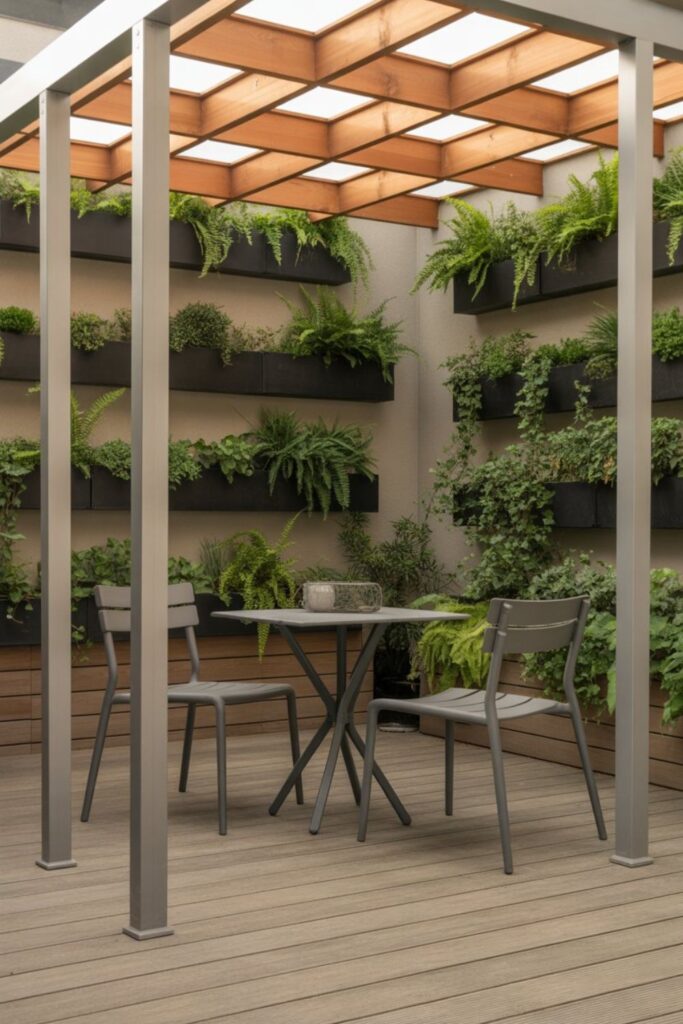
Cedar wood remains the classic choice for backyard pergola ideas. Its natural rot resistance and beautiful grain patterns create warm, inviting structures. Cedar weathers to silvery gray or maintains honey tones with annual sealing. An 8×10-foot cedar pergola costs $1,200-3,000 in materials.
The lightweight nature of cedar simplifies DIY pergola projects. You can handle beams and rafters without heavy equipment. Pre-cut kits reduce labor further assemble components like furniture following included instructions.
Pressure-treated pine offers budget-friendly durability. It resists rot and insects through chemical treatment and costs 30-40% less than cedar. The trade-off comes in appearance treated wood has a greenish tint that fades to gray unless stained. Materials for a 10×10-foot structure run $700-1,500.
Aluminum pergolas deliver modern aesthetics with zero maintenance. Powder-coated finishes resist rust, scratches, and fading indefinitely. These structures suit contemporary homes beautifully with clean lines and slender profiles that feel less bulky in small spaces. Expect to invest $2,500-5,000 for quality aluminum systems.
Vinyl pergolas mimic wood appearance without the upkeep. They never need staining, sealing, or painting. Most manufacturers offer white, tan, and gray options. Vinyl works well for traditional home styles and withstands moisture exposure without rotting. A 10×12-foot vinyl structure costs $2,000-4,000.
Composite materials combine recycled plastic and wood fibers. They resist weather damage while providing wood-like warmth. Composites cost more upfront$3,000-6,000 installed but require literally zero maintenance over their 25+ year lifespan.
How Do You Design for Maximum Shade Coverage?
Standard rafter spacing of 12–18 inches in a backyard patio pergola provides roughly 50% shade coverage. This creates soft, dappled light that’s perfect for ambiance but may not offer enough protection from strong sun. Adjustments can significantly increase shade for your backyard patio pergola.
Reducing rafter spacing to 6–8 inches boosts shade coverage to about 70%. While this uses more material, it greatly improves sun protection and creates dynamic shadow patterns throughout the day, enhancing the visual appeal of your backyard patio pergola.
Retractable canopy systems offer flexible shade options for backyard patio pergolas. Fabric panels slide along cables or tracks mounted between rafters, allowing you to extend them for full shade or retract them for stargazing. Manual systems cost $200–500, while motorized versions run $800–2,000. Performance fabrics like Sunbrella resist fading and mildew, ensuring durability for your backyard patio pergola.
Lattice panels installed between rafters increase shade while maintaining airflow. Pre-made lattice sections from home centers cost $20–40 each and can be painted to match your backyard patio pergola or left natural for rustic charm. This is an excellent solution for compact backyard patio pergolas where every inch of shade counts.
Polycarbonate or corrugated metal roofing panels provide solid coverage, effectively turning your backyard patio pergola into a fully protected outdoor space. Translucent polycarbonate maintains brightness while blocking UV rays, and metal panels handle snow loads in colder climates. Budget $500–1,500 for materials depending on size and style of your backyard patio pergola.
What About Adding Sides and Privacy Elements?
Open backyard patio pergolas define space overhead but leave the sides exposed. Adding vertical elements enhances privacy and blocks wind without enclosing the area, keeping your backyard patio pergola feeling open and airy.
Lattice side panels are a simple way to add privacy to backyard patio pergolas. Standard 4×8-foot sheets cost $25–60 each at home centers. Space them 6–12 inches from pergola edges to maintain an open feel, and train climbing vines over the lattice for a living privacy screen that improves over time.
Outdoor curtains bring softness and flexibility to compact backyard patio pergolas. Mount weather-resistant fabric panels on cables or rods between posts. Draw them closed for privacy or shade, and tie them back when not needed. This approach works especially well around hot tubs or dining areas where occasional privacy is desired without permanent walls. Budget $100–400 for four panels.
Vertical slat walls create modern privacy screens for backyard patio pergolas. Space 1×4 or 1×6 boards vertically with 1–2 inch gaps. This blocks direct views while allowing airflow. Cedar, composite, or metal slats suit different styles. A single 8-foot wall section costs $150–400 in materials.
Planter boxes with tall grasses or bamboo establish living walls for backyard patio pergolas. Build 12–18 inch deep boxes along pergola perimeters and plant clumping bamboo, ornamental grasses, or evergreen shrubs. These grow gradually to create lush, natural privacy. Materials for three boxes typically cost $200–500.
Roll-down shades designed for outdoor use enhance privacy and sun control for backyard patio pergolas. They lower from pergola beams to ground level, blocking low-angle sun during mornings and evenings. Solar shades filter light while maintaining outward visibility. Budget $150–500 per shade depending on size.
Can You Really DIY a Small Pergola?
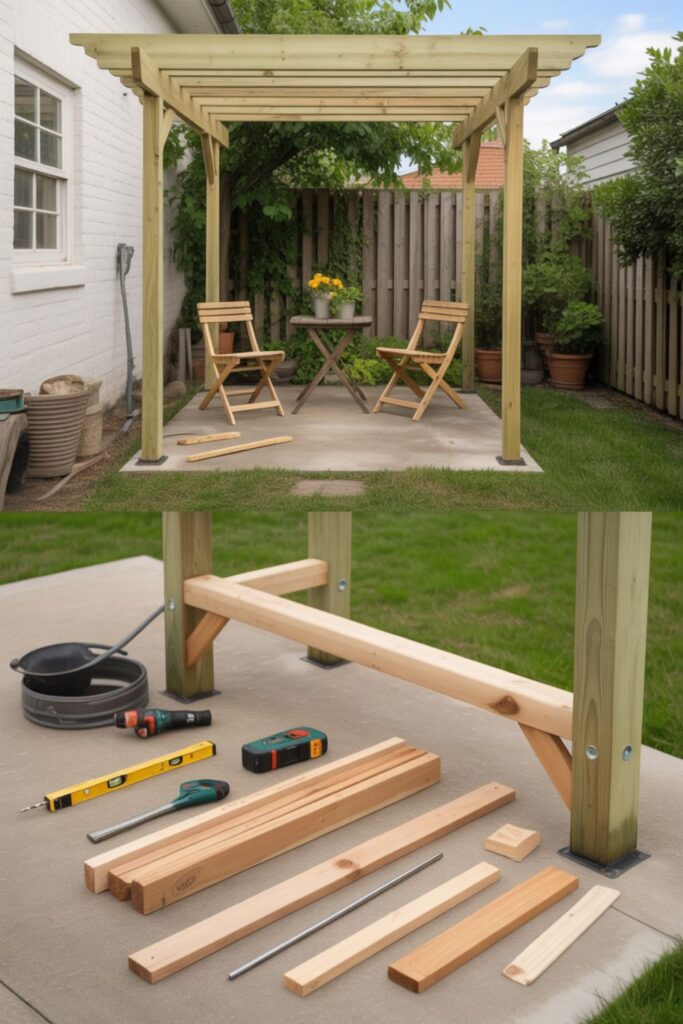
DIY backyard patio pergola projects are among the most achievable outdoor structures for moderately skilled homeowners. Compact sizes make them even more manageable, as you’re working with 10-foot beams instead of larger, cumbersome timbers.
Pre-cut pergola kits simplify installation for backyard patio pergolas. Manufacturers like Outdoor Essentials and Yardistry supply all lumber cut to exact lengths with hardware included. Following the instructions is like assembling furniture. Most people can install a 10×10-foot backyard patio pergola in a single weekend. Kits range from $800–2,500 depending on materials and features.
Building a backyard patio pergola from scratch saves money but requires more skill and tools. You’ll need a circular saw, drill, level, post hole digger, and ladder. The process involves setting posts in concrete, attaching beams, and securing rafters. Cedar and pine are forgiving materials that hide minor mistakes. First-time builders should plan on 20–30 hours for a small backyard patio pergola.
The most challenging part of DIY backyard patio pergola construction is setting posts plumb and level. Proper alignment is crucial for beams to fit correctly. Temporary bracing and repeated checks before concrete sets prevent costly errors. Renting a laser level for around $30 a day is a smart investment to ensure accuracy.
Building permit requirements vary by location for backyard patio pergolas. Some areas exempt structures under 120–200 square feet that sit more than 5 feet from property lines, while others require permits for anything attached to a house. Contact your local building department before starting, as working without required permits can cause issues during resale.
Design decisions can simplify or complicate a DIY backyard patio pergola. Decorative cuts on rafter ends look impressive but add hours of work, while basic square-cut rafters function perfectly. Metal connectors are faster and stronger than complex joinery. Save artisan details for later, once you’ve mastered the fundamentals of backyard patio pergola construction.
How Do Climbing Plants Enhance Small Pergolas?
Climbing plants transform basic structures into lush outdoor rooms. They add color, fragrance, shade, and privacy while softening hard architectural lines. In small backyard patio pergola settings, they maximize visual impact without consuming ground space.
Wisteria creates stunning displays with cascading purple, pink, or white flower clusters in spring. The vigorous vines establish quickly and live for decades. They require annual pruning to prevent overwhelming structures but deliver unmatched romance. Plant wisteria at corner posts and train along beams.
Clematis offers enormous variety in colors and bloom times. These well-mannered vines grow 8-20 feet depending on variety without becoming invasive. They prefer roots in shade with flowers in sun perfect for pergola conditions where posts create shaded bases. Choose varieties with staggered bloom times for continuous color.
Climbing roses bring classic beauty and often fragrance. Rambling varieties cover large areas quickly, while climbing hybrid teas offer larger individual blooms. Roses need more maintenance than other vinesregular deadheading, feeding, and disease monitoring. The payoff comes in spectacular displays that define cottage garden style.
Jasmine vines perfume outdoor spaces with intoxicating fragrance. Star jasmine (not true jasmine but similarly fragrant) thrives in most climates and blooms spring through summer. The evergreen foliage provides year-round coverage. Confederate jasmine works identically with slightly different flowers.
Passion flower vines grow rapidly and produce exotic blooms that look imported from tropical regions. Some varieties yield edible fruit. They’re less fussy than roses and more cold-hardy than you’d expect from such dramatic flowers. The unique blooms become conversation pieces.
Grapevines serve double duty providing shade and producing edible fruit. They handle pruning aggressively and respond with vigorous growth. The large leaves create dense shade by midsummer. Choose table grape varieties for fresh eating or wine grapes if you’re ambitious.
What Lighting Transforms Pergolas After Dark?
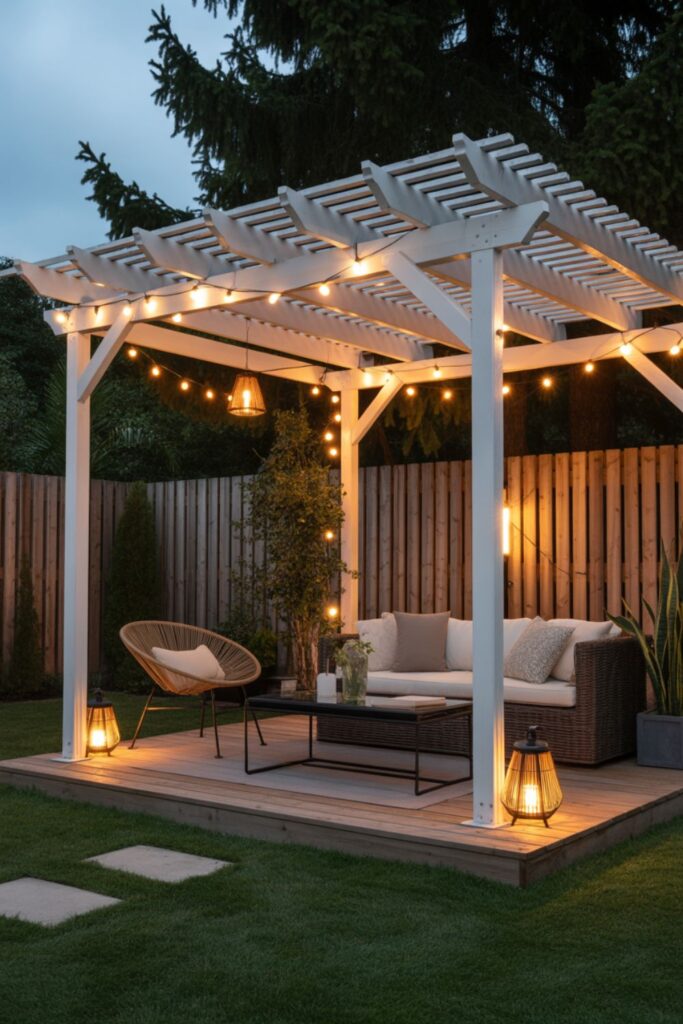
Proper lighting extends small patio shade structure usability into evenings while creating magical ambiance. Compact spaces benefit from thoughtful lighting that doesn’t overwhelm.
String lights remain the most popular choice for pergola decoration. Drape them in straight lines between beams or create crisscross patterns. Edison bulbs provide vintage warmth, while globe lights offer modern simplicity. Quality outdoor string lights cost $30-100 per 25-foot strand. Solar versions eliminate wiring but provide dimmer illumination than plug-in alternatives.
Recessed LED lights installed between rafters wash downward for functional task lighting. These work brilliantly over dining tables or food prep areas where you need actual visibility. Dimmable systems adjust from bright workspace to subtle mood lighting. A set of six recessed lights costs $200-500.
Pendant lights hanging from beams create focal points and intimate lighting. Choose lantern-style fixtures for traditional settings or sleek metal shades for contemporary designs. Position them over key areas, dining tables, seating clusters, or bar counters. Quality outdoor-rated pendants run $75-300 each.
Uplighting mounted on posts illuminates pergola structure from below, highlighting beams and rafters while creating architectural drama. LED spotlights cost $20-60 each and use minimal electricity. This technique makes structures feel more substantial and draws attention to quality craftsmanship.
Post cap lights sit atop support posts like decorative finials. They provide gentle ambient illumination while marking pergola boundaries for safe navigation. Solar versions require no wiring and automatically illuminate at dusk. Budget $20-80 per cap depending on style and light source.
Fairy lights or micro LEDs woven through climbing vines create ethereal effects. The tiny lights disappear during daytime but twinkle magically after dark. Battery-operated strands eliminate wiring challenges. This works especially well for compact pergola designs where you want light without bulky fixtures.
How Do You Integrate Fire Features Safely?
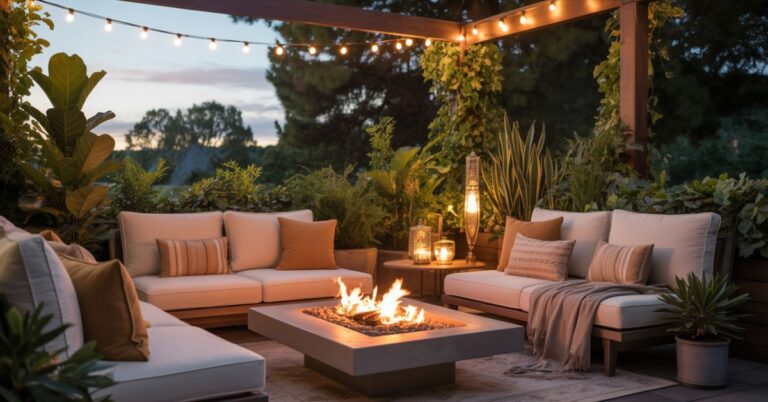
Fire pit and pergola combinations create year-round outdoor rooms. The covered area extends the fire season while flames extend the pergola season. They complement each other beautifully.
Maintain minimum clearances for safety. Most codes require 10 feet between open flames and combustible materials. This means either: positioning your fire feature 10+ feet from the pergola, using it only on windless days with extreme caution, or installing specific fire-rated pergola designs.
Fire tables solve the clearance issue elegantly. Built-in propane or natural gas burners sit within table frames at 18-24 inches high. The lower profile reduces clearance needs to 6-8 feet in most jurisdictions. Guests enjoy flames while resting drinks on surrounding surfaces. Quality fire tables cost $400-2,000.
Tabletop fire bowls offer the smallest footprint. These portable units burn bioethanol, propane, or gel fuel and produce real flames without smoke. They work on coffee tables under pergolas for ambiance without safety concerns. Prices range from $50-400 depending on size and fuel type.
Consider fire-resistant pergola materials if flames are priorities. Steel and aluminum structures won’t ignite. Fiber cement beams resist fire while appearing wood-like. These materials cost more upfront but eliminate clearance worries and reduce insurance concerns.
Install fire features on non-combustible surfaces. Stone, concrete, or brick patios work safely. Never place fire elements directly on wood decks without proper insulation pads. Keep fire extinguishers readily accessible. The $25 investment provides enormous peace of mind.
What Furniture Layouts Maximize Small Pergola Spaces?
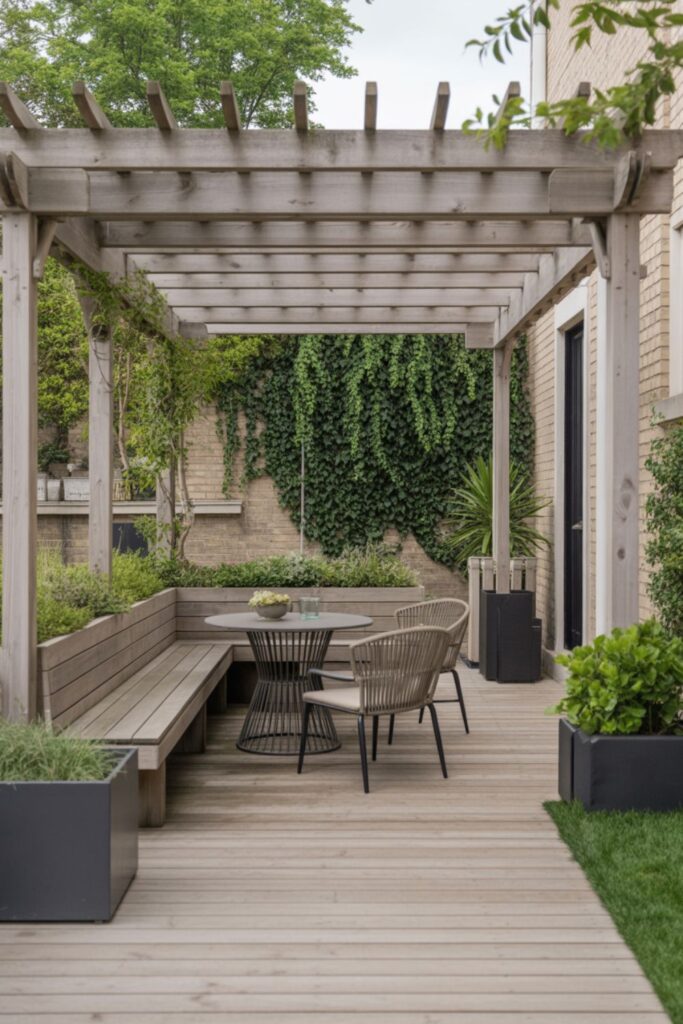
Strategic furniture placement makes space-saving pergola areas feel intentional rather than cramped. Every piece should serve clear purposes without obstructing flow.
L-shaped sectionals maximize seating in corner pergola placements. Position the long side against one edge with the short side perpendicular. This creates natural conversation areas while leaving one side open for entry and exit. Add a coffee table in the open space.
Bistro sets work beautifully in 8×8-foot pergolas. A 30-inch round table with two chairs provides dining for two while consuming minimal floor space. Look for folding options that stow away when not needed. Wrought iron or aluminum sets withstand weather while looking substantial.
Built-in benches along pergola perimeters preserve open centers. Construct simple bench frames between posts and top them with weather-resistant cushions. This approach provides significant seating without freestanding furniture eating up space. Add storage compartments below benches for cushion storage.
Multipurpose furniture pieces serve double duty in compact areas. Ottoman coffee tables provide surfaces and extra seating. Console tables function as bars during parties and potting benches during gardening. Nesting side tables stack when not needed.
Swinging benches or daybeds suspended from pergola beams create relaxation zones without floor footprints. They gently move with breezes while keeping ground areas clear. Hanging beds accommodate naps, reading, or stargazing. Expect to invest $300-1,200 depending on size and quality.
Vertical storage solutions keep belongings organized without horizontal spread. Wall-mounted cabinets, hanging baskets, and post-mounted hooks utilize vertical space efficiently. Store garden tools, outdoor games, or entertainment supplies within reach but out of sight.
Should You Add Heating or Cooling Elements?
Climate control extends pergola usability across seasons. Compact spaces require proportionally less energy to modify temperatures, making these upgrades surprisingly practical.
Patio heaters transform chilly evenings into comfortable hangouts. Freestanding propane models cost $100-400 and heat 15-20 foot diameters. Position them centrally under your pergola for even warmth distribution. Tabletop versions work for intimate two-person setups.
Infrared heaters mounted on pergola beams provide directional warmth without floor clutter. They heat people and objects directly rather than warming air, making them efficient in open structures. Electric models plug into standard outlets while propane versions require gas lines. Budget $200-800 per heater.
Outdoor ceiling fans improve air circulation during summer months. Most pergolas require reinforcement to support fan weight and vibration. Hunter and Hampton Bay make weather-resistant models specifically rated for outdoor use. A quality 52-inch fan costs $150-400 and uses minimal electricity.
Misting systems cool spaces through evaporation. Nozzles installed along pergola beams spray ultra-fine water mist that drops temperatures 10-20 degrees. These work brilliantly in dry climates where evaporation happens rapidly. Complete systems cost $150-600 depending on coverage area.
Fire features obviously add warmth while creating ambiance. Gas fire tables or tabletop fire bowls generate heat without the clearance requirements of full fire pits. They extend shoulder season use economically.
Consider combining strategies for year-round comfort. Ceiling fans plus misters handle summer heat. Fire tables plus infrared heaters tackle winter cold. The investment in climate control transforms seasonal structures into four-season outdoor rooms.
How Do You Handle Drainage Under Covered Patios?
Roof additions change drainage patterns. Water that previously evaporated or absorbed gradually now concentrates at pergola edges, potentially causing problems.
Gutters and downspouts control water flow from solid-roof pergola additions. Standard 5-inch gutters handle most residential applications. Route downspouts away from patio surfaces to prevent pooling. Connect them to underground drain pipes for permanent solutions or splash blocks for simpler approaches. Gutter installation costs $3-7 per linear foot.
French drains along pergola perimeters capture and redirect water. Dig trenches 12-18 inches deep, line them with landscape fabric, fill with gravel, and top with river rock. This handles roof runoff and natural drainage simultaneously. DIY French drains cost $8-15 per linear foot for materials.
Permeable pavers under pergolas eliminate standing water issues. Water passes through joints between pavers into gravel bases below. This prevents puddles while recharging groundwater naturally. Permeable systems cost slightly more than traditional pavers but solve drainage problems permanently.
Grade adjustments ensure water flows away from structures. Patios should slope 1/4 inch per foot minimum. If your patio slopes toward the house, you’ll need regrading before adding solid roofs. Professional grading costs $500-2,000 depending on scope.
Rain chains offer decorative alternatives to downspouts for open-beam pergolas. Water cascades along linked chains or decorative cups, creating pleasant sounds while directing flow. They work beautifully in Japanese-inspired gardens and contemporary settings. Quality rain chains cost $50-200.
Read More About: 25+ Black Patio Floor Ideas for Elegant Outdoor Spaces
What Mistakes Do People Make With Small Pergolas?
Learning from others’ errors saves time and money. These common mistakes plague small backyard patio pergola projects.
Oversizing structures for available space creates claustrophobic feelings. That gorgeous 12×16 foot pergola you saw online overwhelms a 14×18 foot patio. Always leave circulation space around structures. Proportions matter more than raw size.
Skipping building permits causes resale nightmares. Even if your area doesn’t actively enforce codes, lacking permits becomes a problem when selling. Title companies and inspectors discover unpermitted work, delaying or killing sales. The $150-500 permit cost prevents $5,000+ problems later.
Poor post placement creates structural issues and awkward furniture arrangements. Posts positioned randomly interfere with furniture placement and traffic flow. Plan furniture layouts before finalizing post locations. Adjust as needed so posts enhance rather than hinder usage.
Inadequate foundations lead to settling, tilting, and eventual failure. Posts set in bare soil shift within months. Proper technique requires digging below frost lines, adding gravel bases, and securing posts in concrete. Corner-cutting here costs far more to fix later.
Ignoring sun angles results in poor shade coverage. Your pergola provides great coverage at noon but leaves you exposed during afternoon hours when you actually use the space. Track sun movement across your patio at times you’ll occupy the area. Orient structures to block the sun when it matters most.
Cheap materials seem budget-friendly until they fail prematurely. Untreated pine posts rot within 3-5 years. Thin aluminum bends in the wind. Flimsy rafters sag under vine weight. Quality materials cost more upfront but last decades rather than years. Calculate cost-per-year rather than initial prices.
Neglecting drainage planning causes water damage and erosion. Adding roofs without addressing runoff concentrates water where it causes problems. Plan drainage simultaneously with structure design, not as an afterthought.
Can Pergolas Actually Increase Small Property Values?
Well-executed pergola installation enhances both livability and resale value, particularly in properties where square footage expansion isn’t feasible.
Real estate professionals report that quality outdoor shade structures appeal strongly to buyers, especially in sun-intense regions. They signal that outdoor spaces received thoughtful attention. In competitive markets, attractive pergolas become differentiators that justify higher asking prices.
Return on investment varies by region and execution quality. Remodeling Magazine’s data suggests outdoor projects return 50-70% of costs at resale. A $3,000 pergola might add $1,500-2,100 in home value. Custom structures using premium materials perform better than basic DIY versions.
The true value extends beyond dollars. Pergolas increase your enjoyment during ownership. They transform underused patios into favorite gathering spots. The quality-of-life improvements justify investment regardless of financial returns.
Enhanced curb appeal contributes to value perception. Well-designed backyard pergola ideas visible from streets or visible through windows make entire properties more attractive. Buyers form opinions within seconds of arrival, impressive outdoor features create positive first impressions.
Photographability matters in modern real estate. Listings with stunning outdoor photos generate more interest and showings. A beautiful pergola with climbing vines and string lights photographs magnificently, creating that all-important emotional connection with potential buyers.
Frequently Asked Questions
How much does a small pergola cost to build or install?
DIY pergola kits for 8×10 to 10×12 foot structures cost $800-2,500 in materials depending on wood choice and features. Professional pergola installation adds $1,500-4,000 in labor. Custom designs using premium materials like cedar wood or aluminum range from $3,000-8,000 complete.
Do I need a building permit for a small backyard pergola?
Requirements vary by municipality. Many areas exempt structures under 120-200 square feet located 5+ feet from property lines. Attached pergola designs often require permits regardless of size because they connect to homes. Always check with your local building department before starting construction.
What’s the minimum size for a functional pergola?
An 8×8-foot pergola accommodates a small bistro set or two lounge chairs comfortably. For four-person dining, upgrade to 10×10 feet minimum. The smallest practical space-saving pergola measures roughly 6×8 feet enough for two chairs but tight for dining or entertaining.
How long does it take to build a small pergola yourself?
Experienced DIYers complete 10×10-foot pergolas in one weekend using pre-cut kits. Building from scratch adds design and cutting timeplan for 20-30 hours total. Setting posts in concrete requires 48-hour cure time before continuing, extending project timelines to two weekends minimum.
Can pergolas withstand heavy snow or strong winds?
Properly engineered pergolas handle substantial loads when built correctly. Use appropriately sized lumber, secure connections with metal brackets, and embed posts 30-36 inches deep in concrete below frost lines. In extreme climates, consult engineers and consider solid roofing materials designed for snow loads.
What grows best on small pergola structures?
Climbing plants like clematis, climbing roses, jasmine, and passion flower thrive on pergola frameworks without overwhelming compact structures. Wisteria grows beautifully but requires aggressive annual pruning to prevent taking over. Annual vines like morning glories or hyacinth beans provide seasonal color without permanent commitment.
Conclusion
Your small backyard patio pergola represents far more than shade and structure. It’s the difference between avoiding your outdoor space and living in it. The architectural definition transforms ambiguous patios into purposeful outdoor rooms where you’ll actually want to spend time. Whether you choose attached pergola convenience or freestanding flexibility, cedar wood warmth or aluminum modernity, the key is taking action. Your compact space doesn’t limit possibilities, it focuses them. Every design choice matters more when working with limited square footage, which means your finished pergola will feel more intentional and personal than sprawling equivalents.
The investment pays dividends immediately. From the first evening you sit under your pergola watching sunset colors through climbing plants, you’ll understand the transformation. Small backyard patio pergola projects succeed because they’re achievable, affordable, and impactful. They prove you don’t need acreage to create something special. You just need vision, planning, and willingness to maximize what you have.